Jujeongol Valley Autumn Walk: Seoraksan’s Osaek Gorge and Foliage Timing
Jujeongol in Yangyang: the Osaek valley route, rocky scenery and the difference between first color and peak foliage
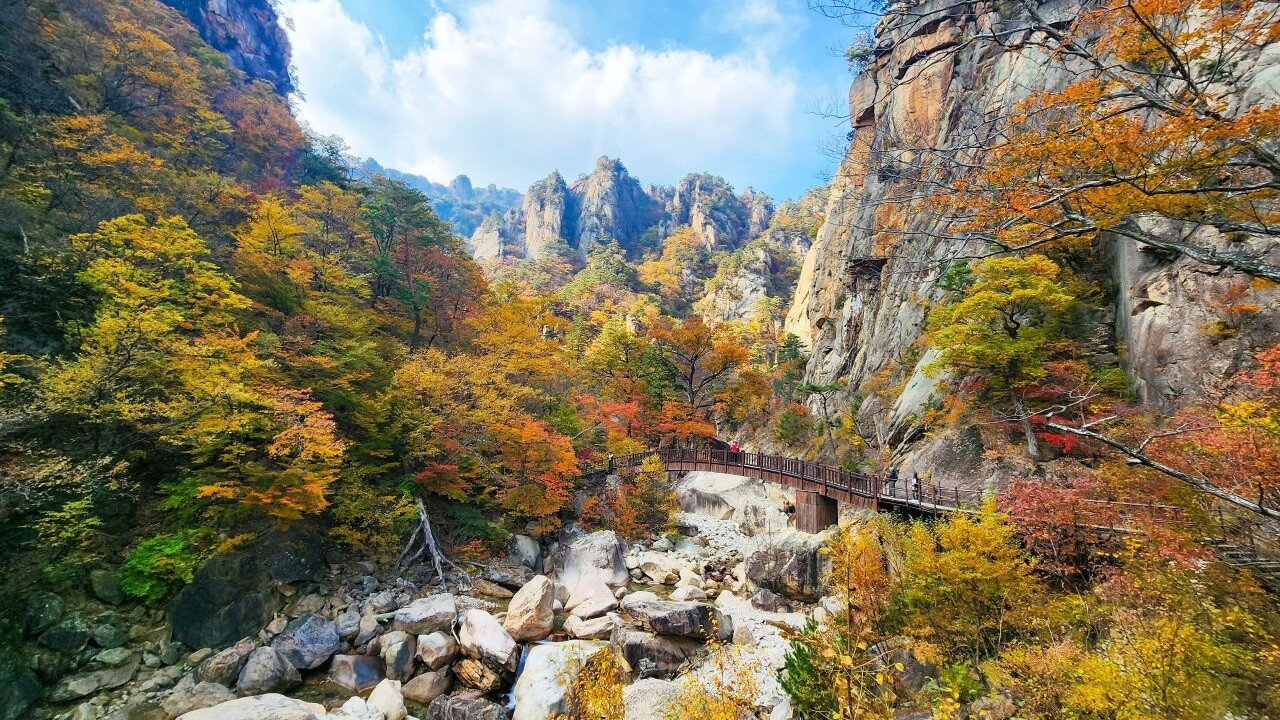
A stream cuts between rock walls while a walking path follows its bends. Trees spread color above the water and partway up the gorge. This is a view of the mountain from within, rather than a panorama from its summit.
A Jujeongol Valley autumn walk belongs to Seoraksan’s Osaek area in Yangyang. Its appeal is the close relationship between water, stone and woodland. It offers a different itinerary from a long ascent to one of Seoraksan’s high peaks.
Korea National Park Service describes the Yongsopokpo course as 3.2 km one way, with a guideline time of about one hour. It connects the Mineral Spring Visitor Support Center, Seongguksa and the Yongsopokpo Visitor Support Center. A return trip, rest stops and photographs require additional time.
A Jujeongol Valley autumn walk beside the stream
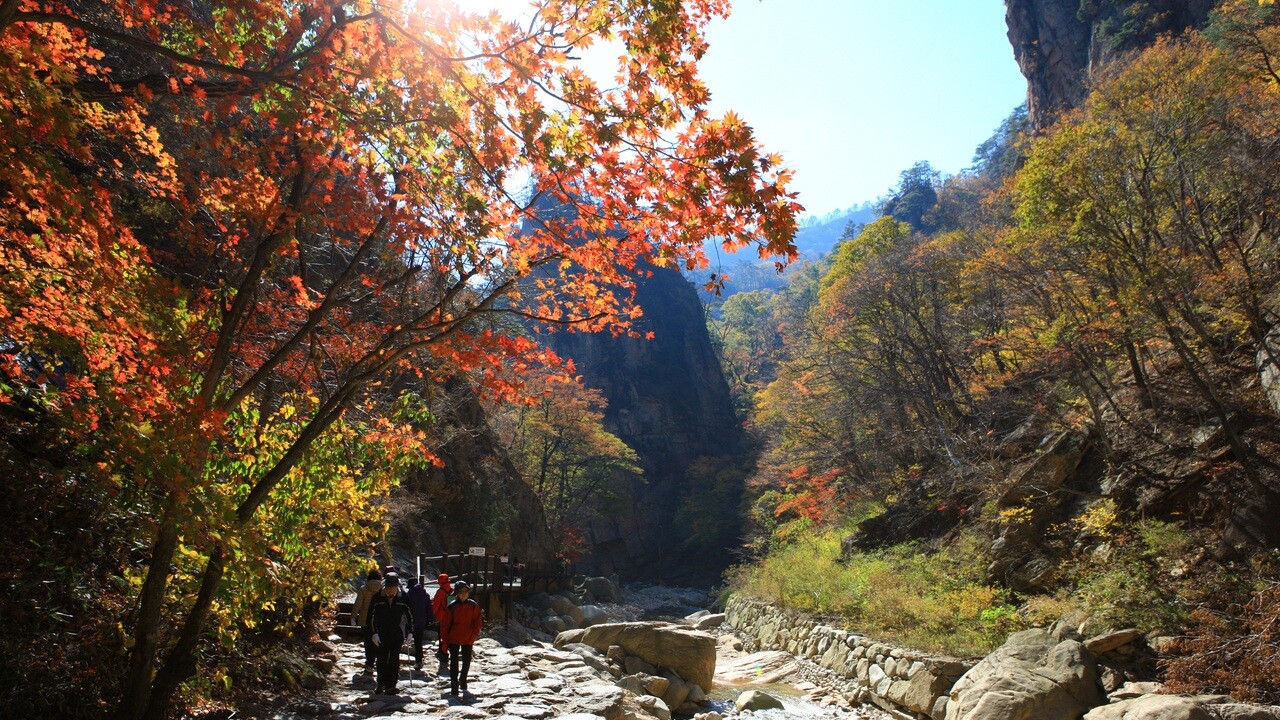
The trail brings walkers alongside the stream and rock formations. Instead of viewing a distant mountainside as one patch of color, the walk reveals individual branches, shaded water and the surfaces of large stones.
Wooden sections make parts of the approach gentler, but the gorge remains a mountain trail. The published distance is a better starting point for planning than the apparent ease of a single photograph.
A gorge route with a return journey
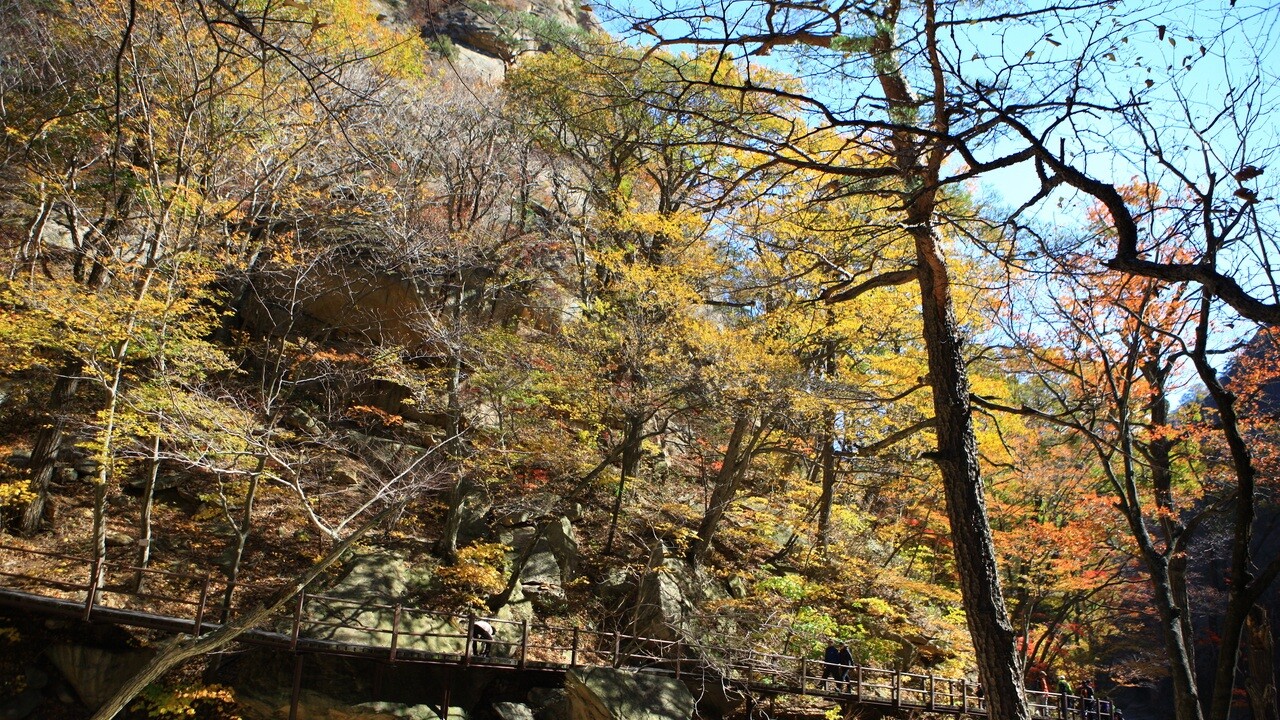
The wooden path changes the viewing angle as it follows and crosses the valley. A nearby trunk may hide the gorge for a moment before the stream and cliff reappear. The landscape has depth even when the trees do not change color together.
The official course guide gives 6.4 km and about two hours for an out-and-back walk. Treat that as a basic guideline, not a promise for every visitor. Rockfall risk after heavy rain and current trail restrictions matter more than an old account of an easy walk.
The smaller scenes between viewpoints
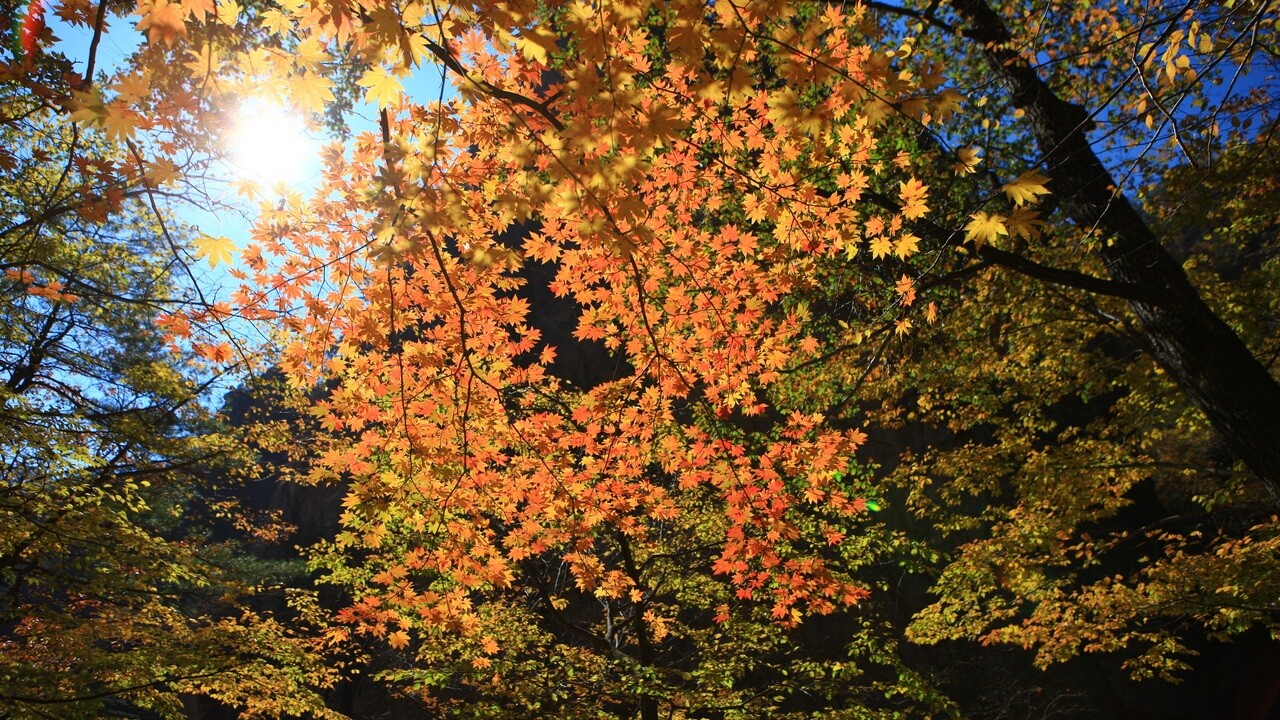
After the broad rock walls, a single branch can draw attention. Light behind the leaves separates warmer colors from the darker forest beyond. The walk offers close views as well as larger compositions.
These smaller scenes are part of the reason to allow time rather than aim only for the end of the route. The stream, canopy and exposed rock continually change their relationship as the path bends.
First color is not the local peak
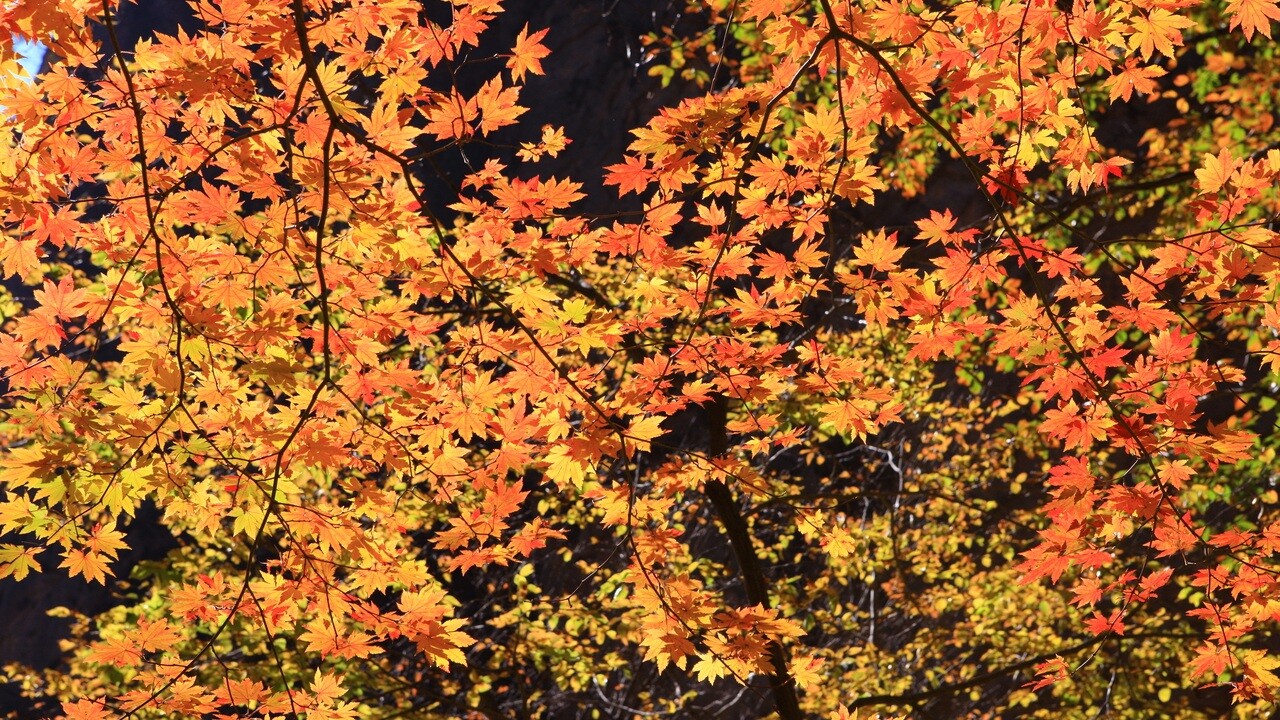
The Korea Meteorological Administration observation page labels its Seoraksan first-color photographs as taken on September 28. Its observation points are Sogongwon in Seorak-dong and the eastern slope. They do not establish the condition of every tree in southern Seoraksan’s Jujeongol Valley.
The peak-foliage field has no date on the observed page. A first-color observation, a peak forecast and the actual color along this valley are different evidence. Preparing an autumn itinerary in advance does not require promising full color on a particular weekend.
Rock walls frame the final impression
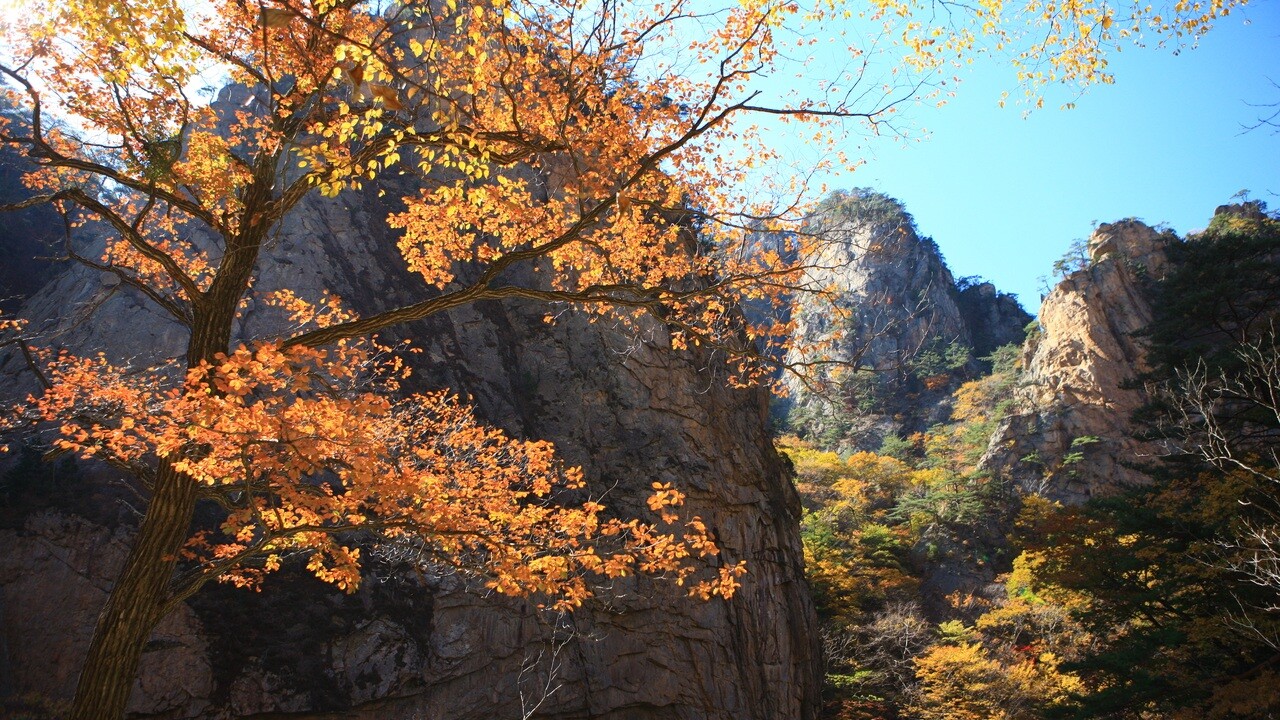
Trees standing in front of the rock faces show how much of this landscape comes from contrast. The stone remains a solid background, while branches and leaves soften its edges. Water connects those scenes along the walking route.
A low difficulty rating does not guarantee access in poor weather. Check the park’s current controls and stay on the permitted route. A valley walk and a summit hike should be planned as separate choices, with different demands on time and energy.
For another Gangwon woodland route, compare the Seonjaegil Trail in Odaesan National Park. Its distance and layout differ; this is a comparison of walking options, rather than a suggestion to combine both into a rushed day.
Jujeongol is an autumn destination for travelers who want the mountain’s texture close at hand. Let the open trail and actual foliage guide the visit, rather than treating the color in one photograph as a fixed appointment.
You May Also Like
by Google Adsense