Sosu Seowon in Yeongju: Fall Courtyards, Pine Groves and Jukgyecheon Stream
Sosu Seowon Confucian Academy — a historic place of learning in Yeongju, set among pines, courtyard buildings, and a stream
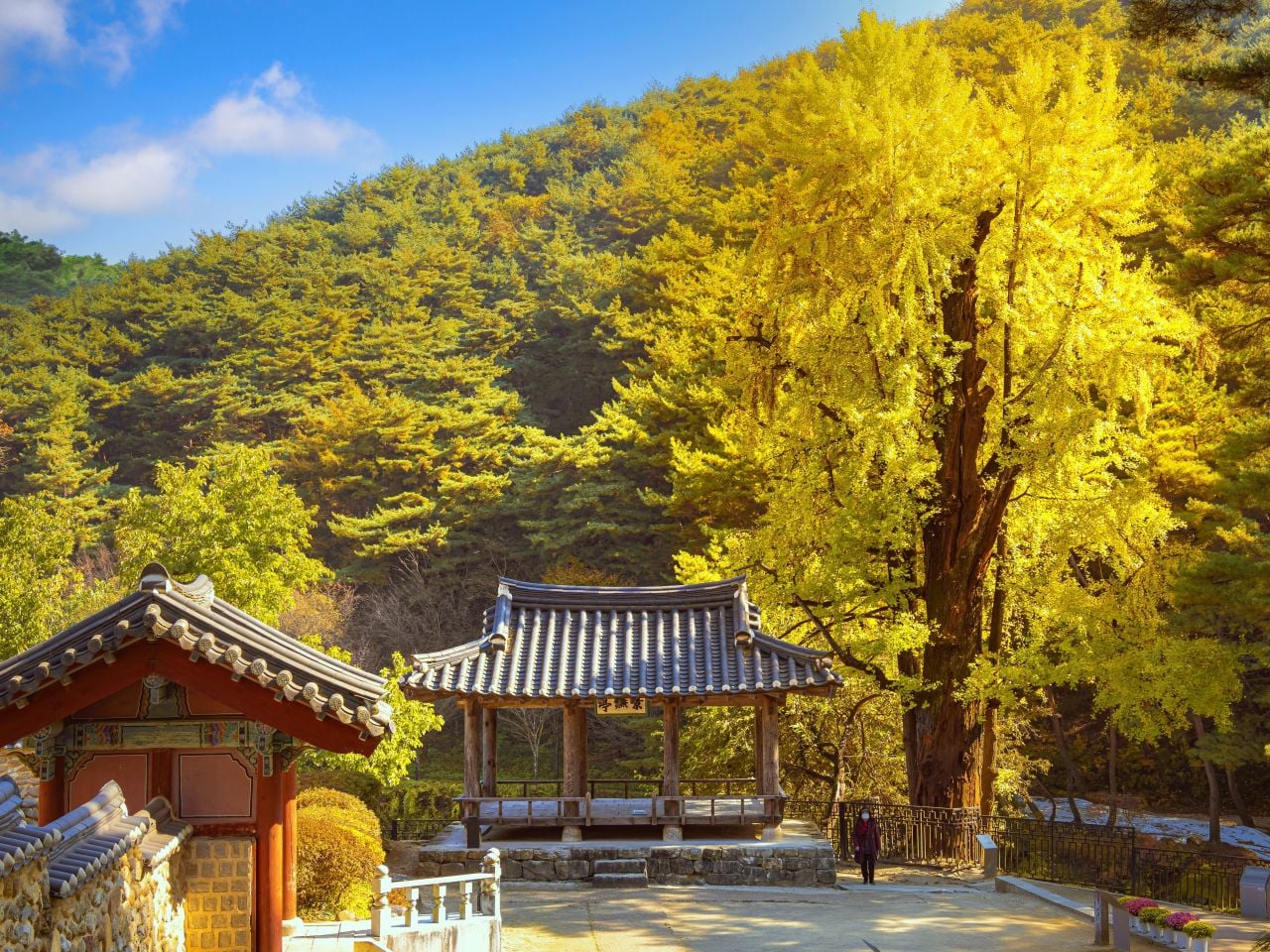
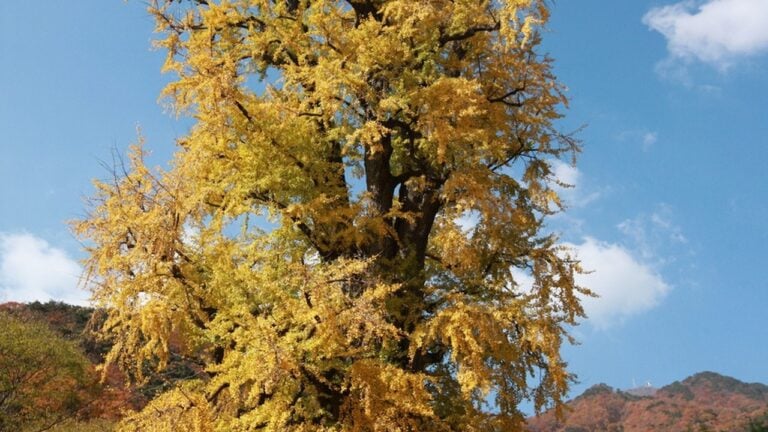
A tiled pavilion stands beside a broad ginkgo canopy. At Sosu Seowon in Yeongju, the first architectural view already includes a tree that changes the scale of the scene.
This historic Confucian academy sits near Jukgyecheon Stream in the Sunheung area of Yeongju. Its buildings served education and commemorative rites, while the surrounding pines and water give a visit a strong landscape dimension.
For readers new to the word seowon, it describes a private Confucian academy of Korea’s Joseon period. Sosu Seowon is an especially significant early example. Walking through its wooded setting and low courtyards provides a way to understand that history through the place itself.
Follow Sosu Seowon’s path between the pine trunks
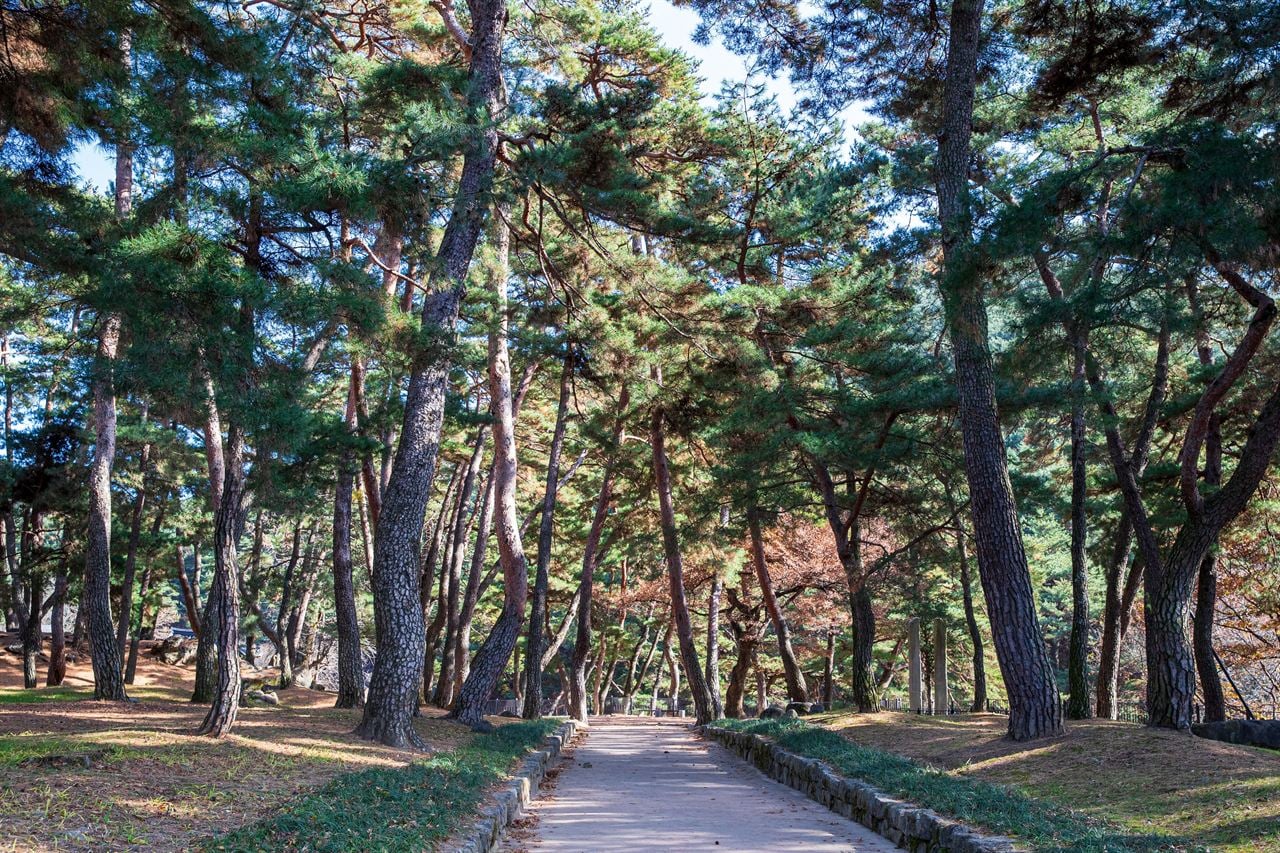
In the pine grove, curved and upright trunks share the same space. An earthen path opens between them, making the depth of the woodland visible even when the view is filled with trees.
Close up, bark provides a rough texture; farther away, trunks overlap into a pattern. The fine needles of the pines also create a different canopy from the broad ginkgo leaves near the entrance.
The wooded setting changes how the architecture is approached. Buildings and their courtyards become one part of a larger place, rather than isolated objects. Time spent noticing the trees can make the transition into the academy’s grounds more gradual and more revealing.
Look beneath the branches toward the halls
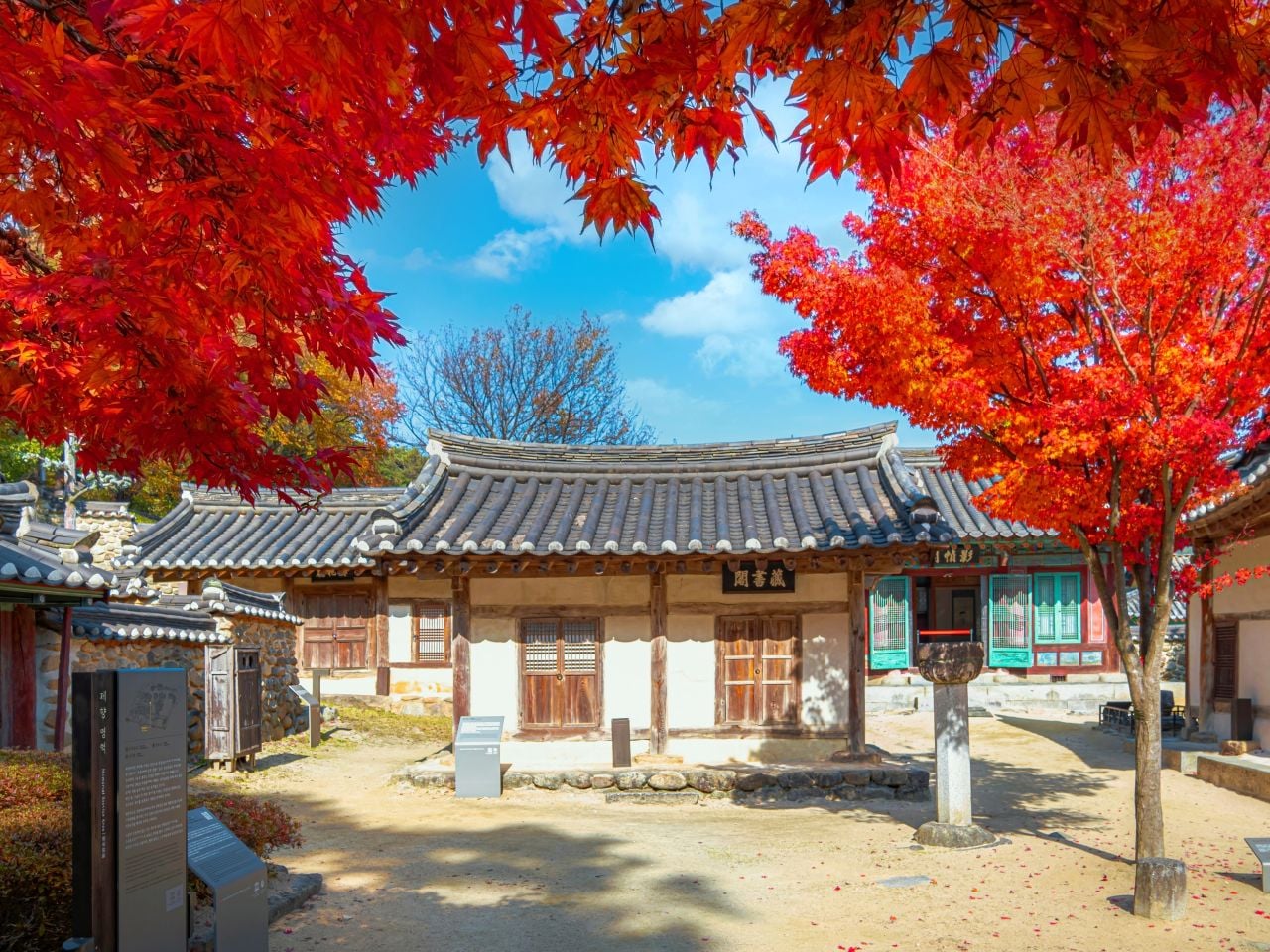
Below spreading branches, the curve of a tiled roof comes into view. The irregular shapes of leaves sit beside the ordered lines of a timber building, giving each a more distinct outline.
The academy grew from a shrine established in 1542 by Ju Se-bung to honor the scholar An Hyang. An educational institution followed in 1543 under the name Baegundong Seowon.
Those dates become easier to picture when considered alongside the open ground in front of the buildings. The site brought learning and commemorative ritual into a shared setting. Its courtyards provide a visible link between the institution’s history and the landscape around it.
Read the timber details at courtyard level
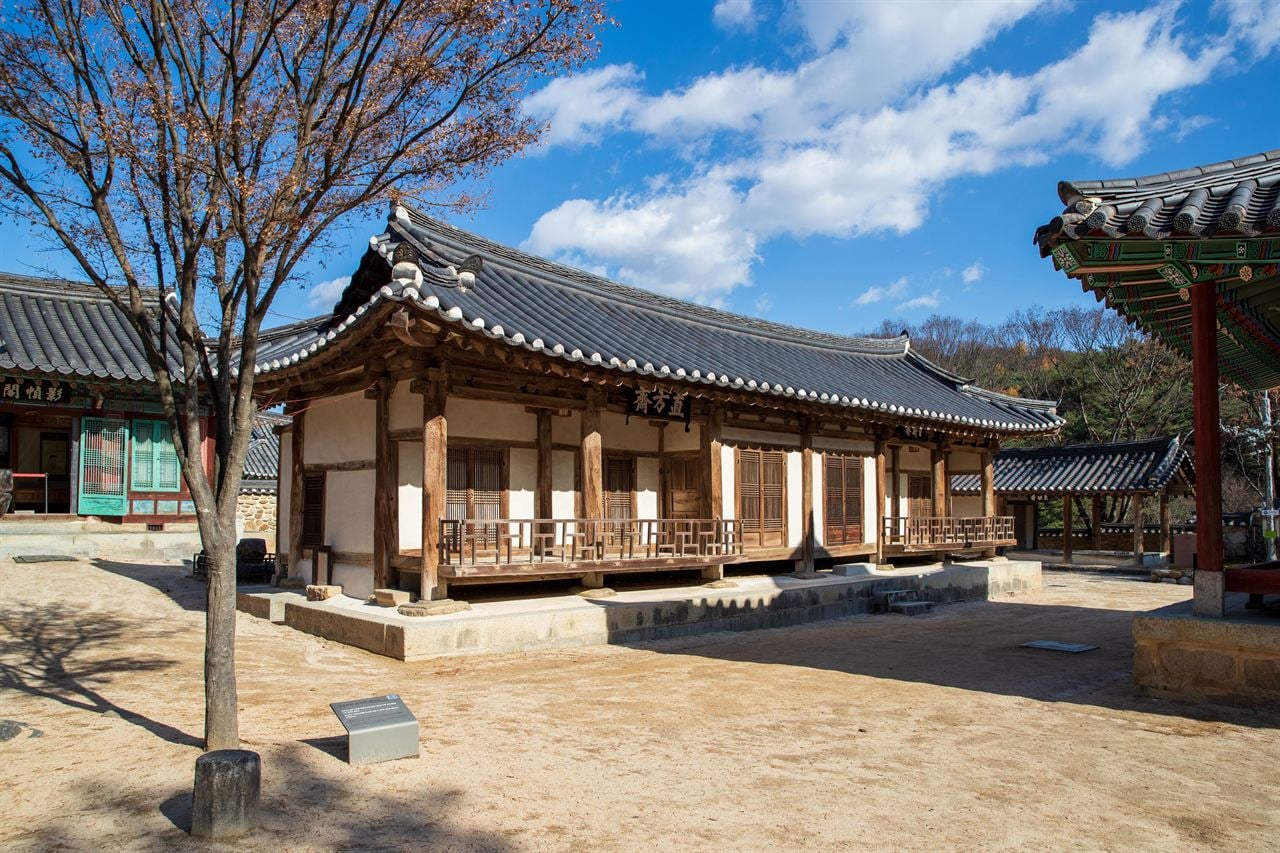
On a plain timber facade, columns, doors, and eaves stand out through their proportions. The low courtyard gives the building’s horizontal line room to extend across the view.
In 1550, the academy received the royal name Sosu Seowon. The naming signified official recognition and support, an important development in its institutional history.
The site’s official introduction identifies the teaching hall and other buildings associated with study and life at the academy. Looking at the spaces between columns and the arrangement of rooms brings that function into focus. The construction makes the practical purpose of a place built around learning easier to understand.
Trace the branches above Jukgyecheon Stream
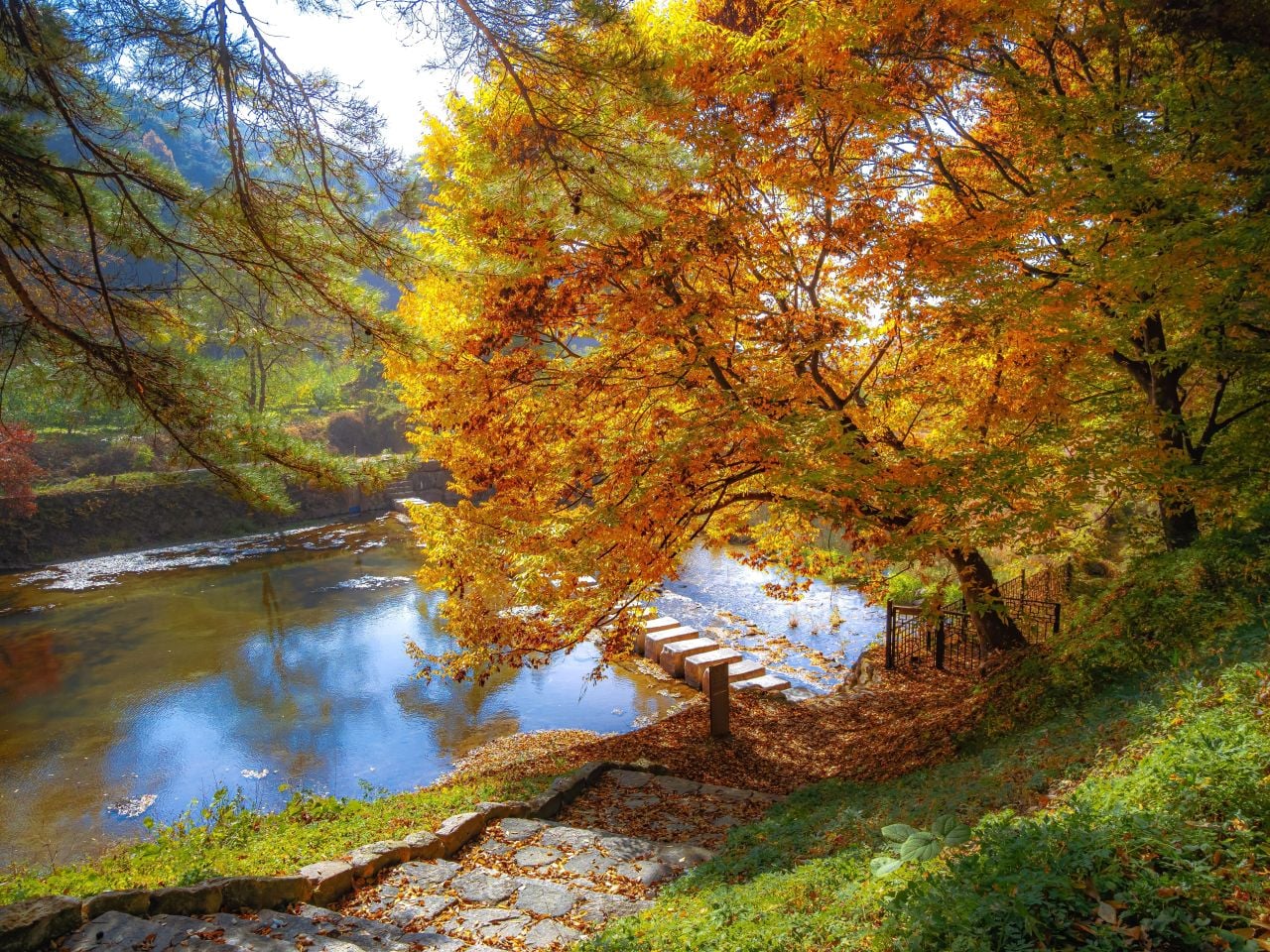
Near the stream, branches extend out above the water. Their curves and the line of the bank introduce a different shape from the squares and straight edges of the academy’s courtyards.
Reflections vary with light and the movement of the surface. The tree itself remains worth examining: follow a branch back toward its trunk, then look at how it reaches into the space above the stream.
After the teaching buildings and woodland, this waterside view brings the wider setting back into focus. The academy’s character comes partly from that relationship between built spaces and the landscape beside them. The water is part of the scene’s changing appearance, rather than a promise of a perfectly still reflection.
See the academy within its wooded setting
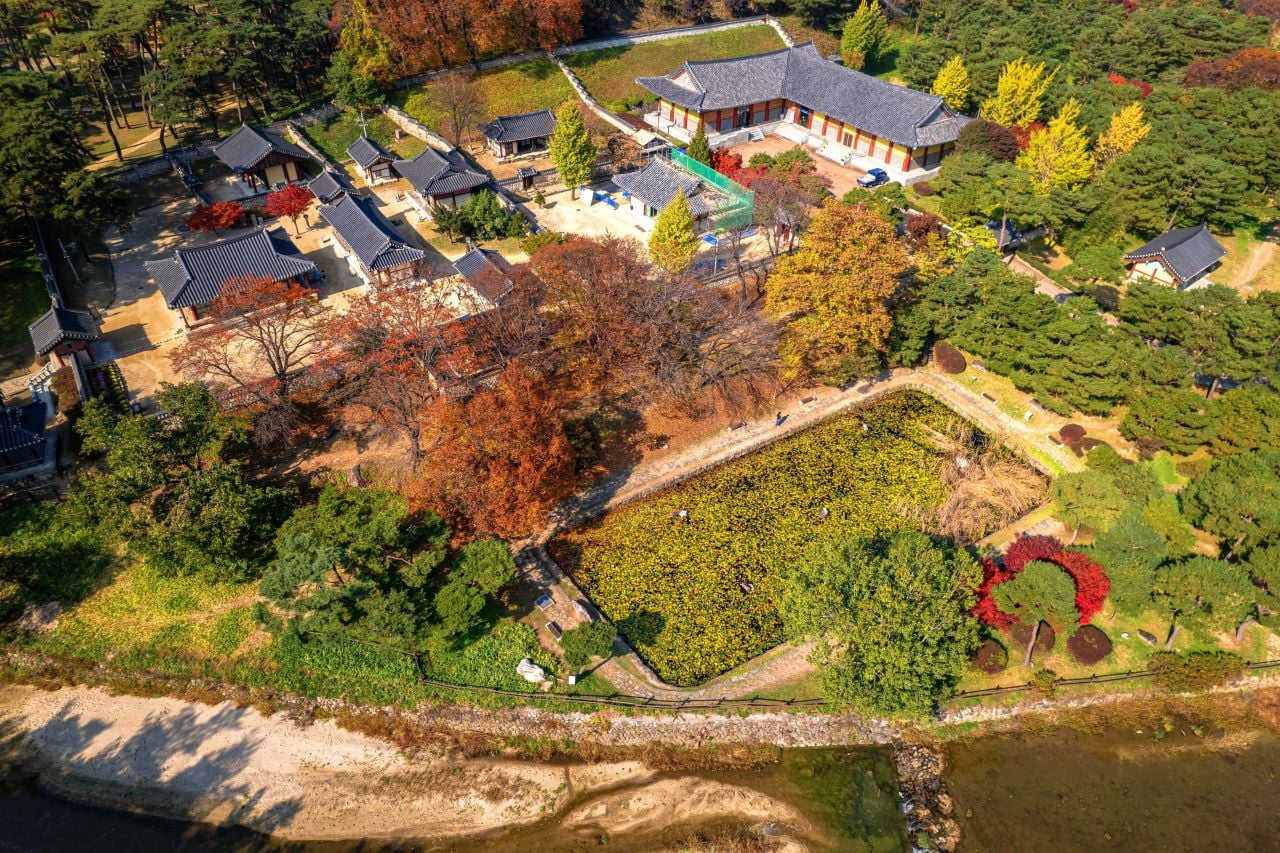
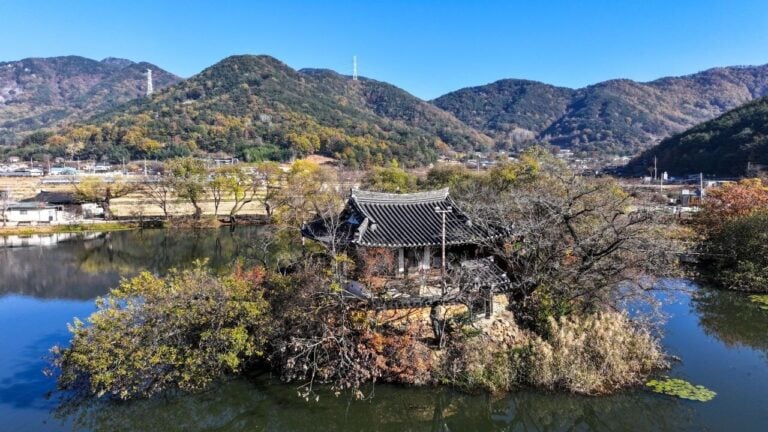
An aerial view reveals the directions of the roofs and the trees that surround them. Separate courtyards seen at ground level become parts of a larger arrangement alongside the stream.
Sosu Seowon was inscribed on the UNESCO World Heritage List in 2019 as part of Seowon, Korean Neo-Confucian Academies. The academy’s official introduction provides its history and identifies its major buildings.
For another view of traditional architecture in Yeongju, Buseoksa Temple’s stairs and elevated halls occupy a different kind of terrain. At Sosu Seowon, the emphasis stays close to the low courtyards, pine trunks, and neighboring water. Together they show how a place of learning can also be experienced as a carefully situated landscape.
Sosu Seowon can be read through several connected landscapes: the pavilion and ginkgo, the pine grove, the teaching spaces, and the stream. Keeping those relationships in view gives a fall visit more depth than a search for a single colorful tree.
You May Also Like
by Google Adsense