Buseoksa Temple in Autumn: Yeongju’s Stone Steps, Muryangsujeon and Mountain Views
Buseoksa Temple, Yeongju — a mountain monastery seen through changing elevations and rooflines
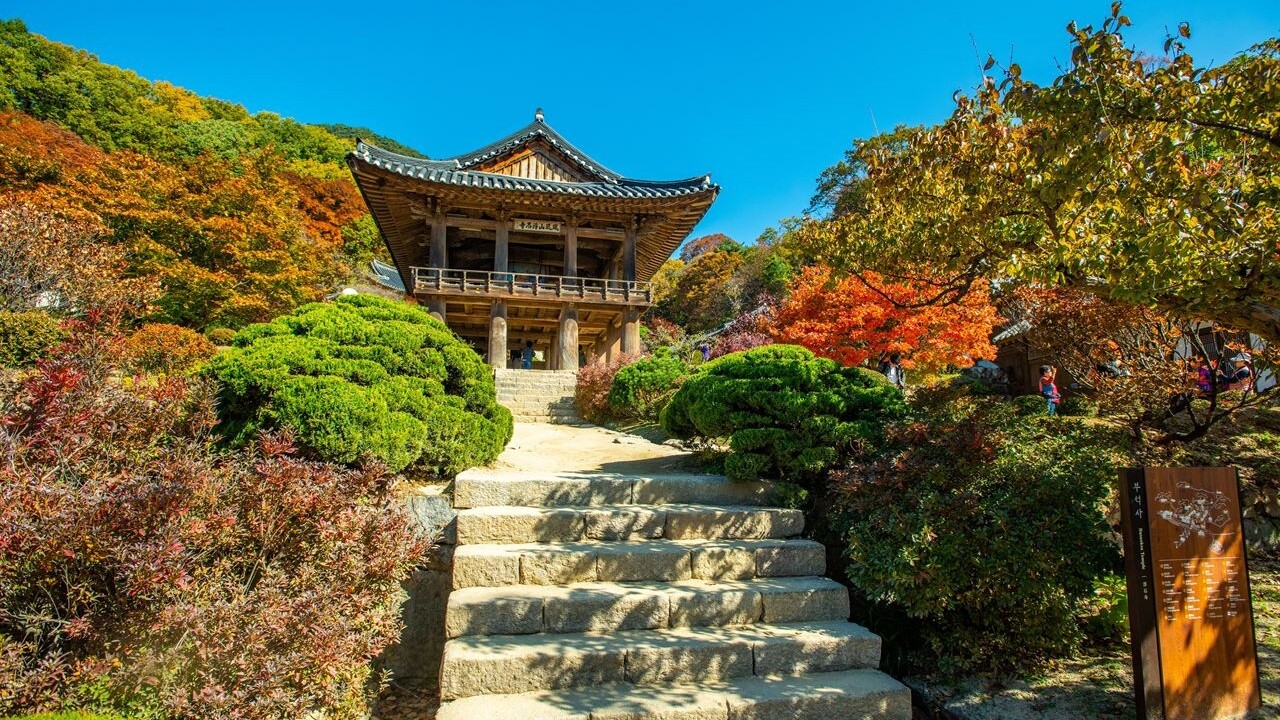
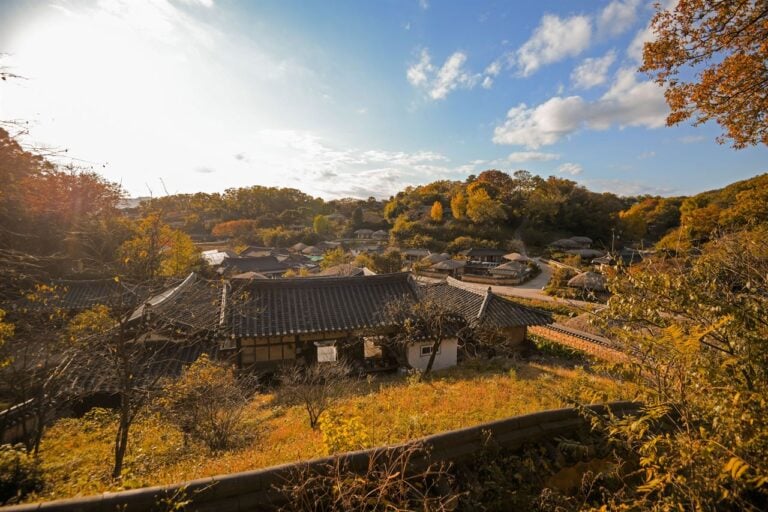
A flight of stone steps leads toward a tiled pavilion at Buseoksa Temple. On the way up, the buildings fill the view. From higher ground, the roofs give way to layers of mountains. The ascent and the view back down are two parts of the same place.
A Buseoksa Temple autumn visit is about those changing levels as much as the leaves. The temple stands in Buseok-myeon, Yeongju, in North Gyeongsang Province. It should not be confused with the temple of the same name in Seosan.
Founded by Uisang in 676, Buseoksa became part of the seven-temple UNESCO World Heritage property Sansa, Buddhist Mountain Monasteries in Korea, in 2018. The founding date describes the institution’s history, not an unchanged age shared by all of its surviving buildings.
For travelers deciding between a woodland stroll and a temple visit, the steps matter. This is a sloping complex with stone terraces and changes in elevation. A rewarding route can focus on its courtyards and viewpoints without trying to see every building.
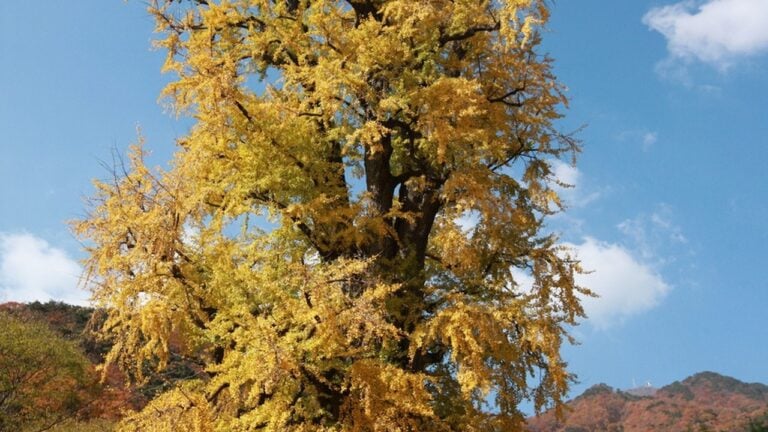
Ginkgo trees introduce the temple approach
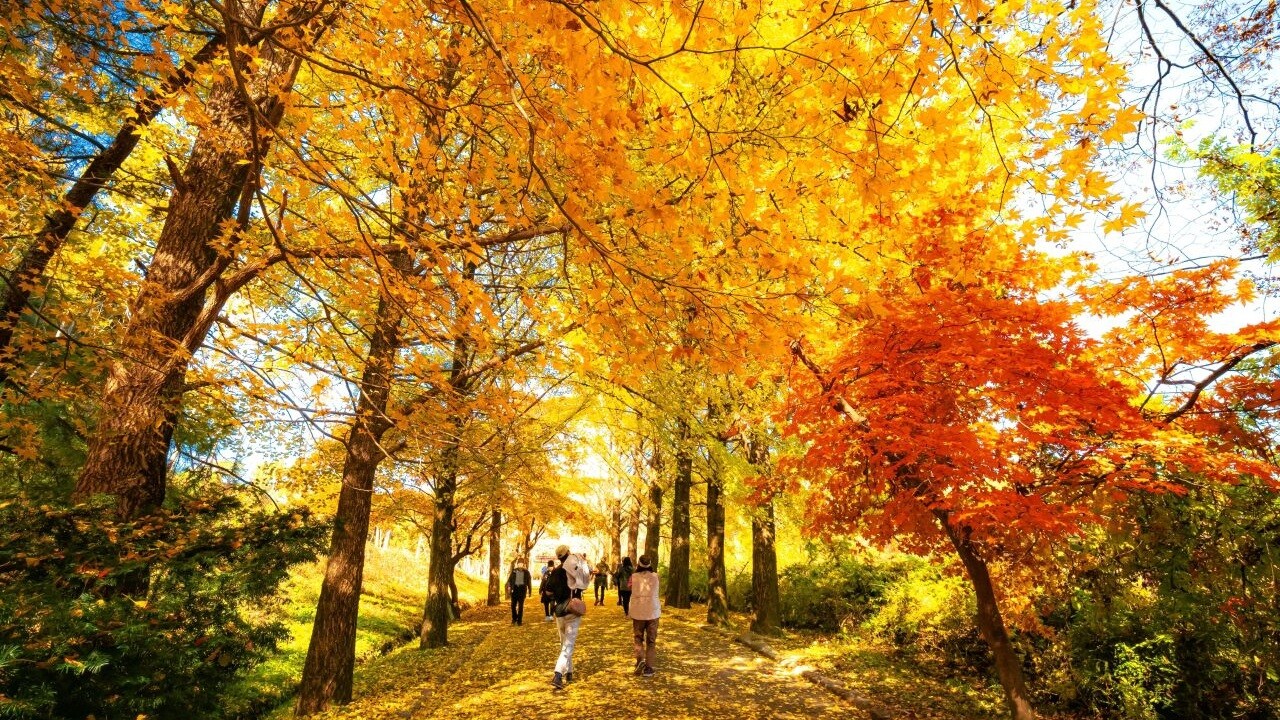
Trees line the approach, and their canopies divide the sky above the path. When leaves turn yellow, they provide a bright opening scene before the stone terraces and wooden architecture become the focus.
The identifying address is 345 Buseoksa-ro, Buseok-myeon, Yeongju-si. Pair that location with Muryangsujeon Hall when searching for the temple. A name alone may return photographs or directions for a different Buseoksa.
Current leaf color and a local peak date are not verified for these grounds. A nearby mountain report or regional forecast is not a direct observation from the approach. The path, terraces and buildings remain the useful basis for choosing the visit.
Gates and terraces reveal the complex gradually
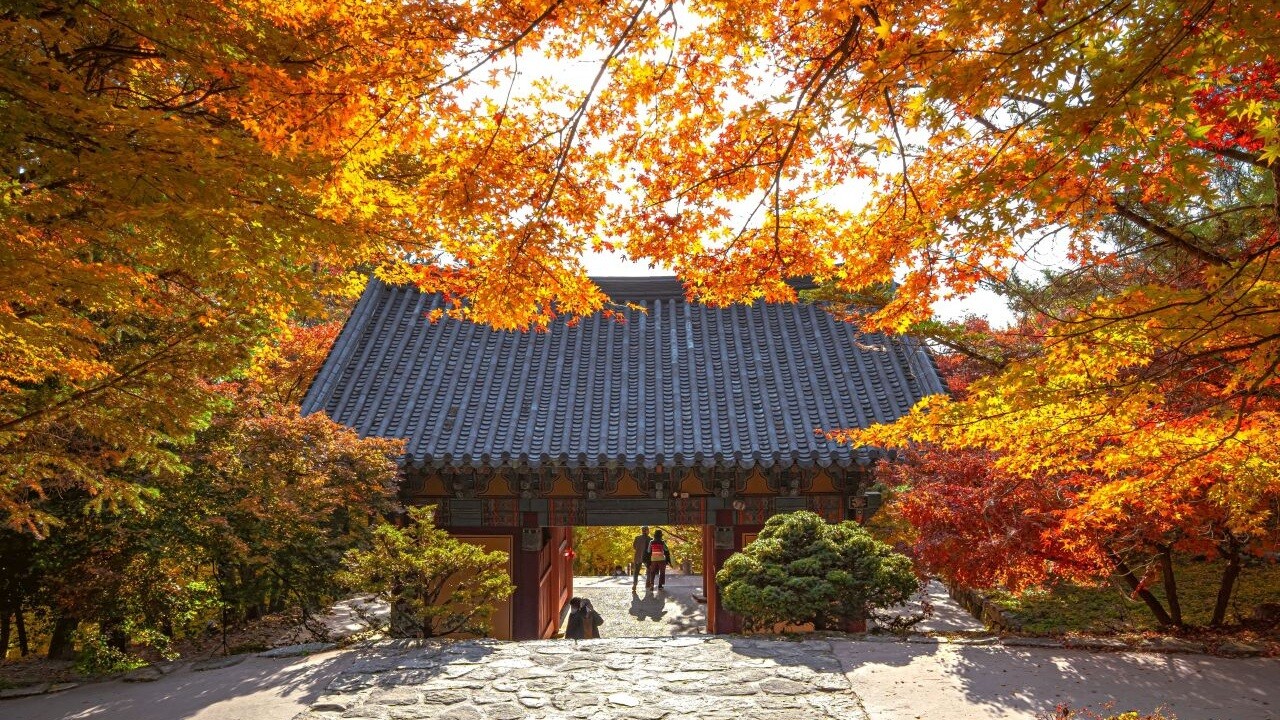
A tiled gate draws the eye upward while the stone path continues beneath it. Trees frame the roof instead of standing apart from the architecture. The view is a sequence of thresholds rather than one open panorama of the entire complex.
As you move between terraces, the roofs change position relative to your eye level. A building that was above you becomes closer, while the route behind turns into a downward view. Those shifts explain the mountain-monastery layout without requiring architectural terminology.
For companions who need a level walk, this is an important planning distinction. Attractive scenery does not remove the effort of stone steps. Choose a manageable part of the complex instead of assuming that every side hall and upper area belongs in the same outing.
Buseoksa Temple autumn views include Muryangsujeon
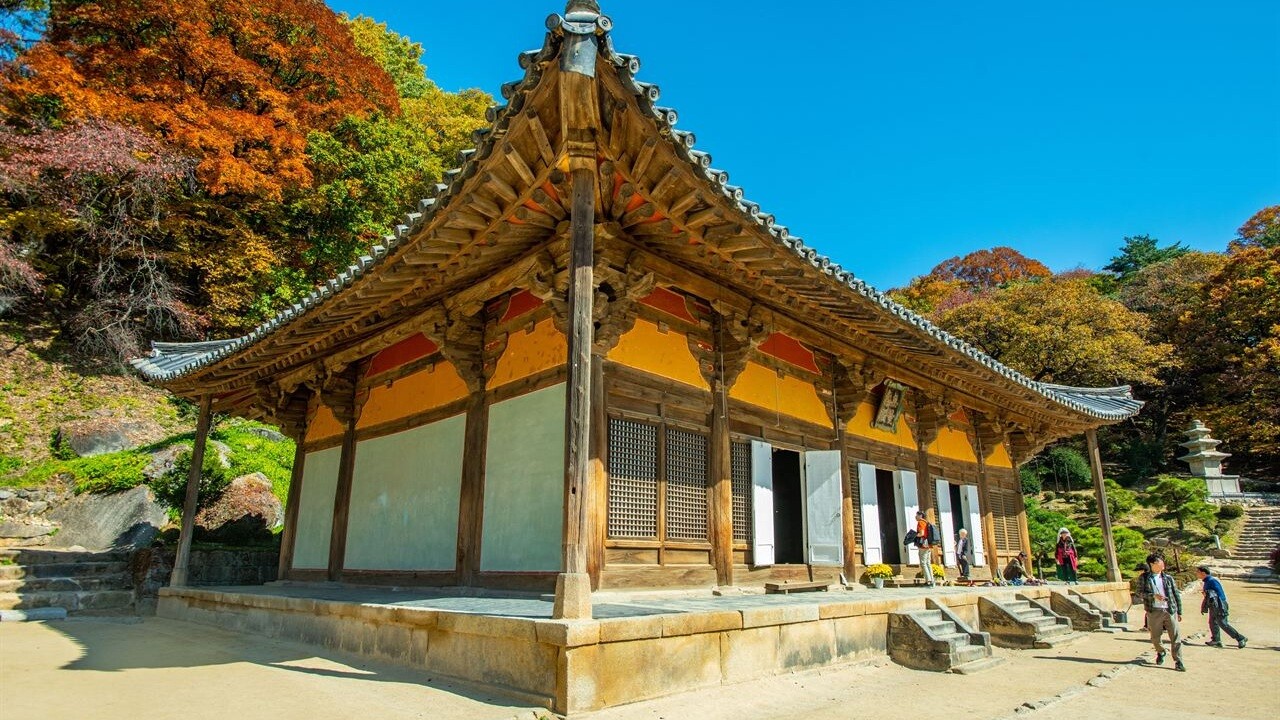
Muryangsujeon brings the visit back to close details: columns, wall surfaces and the curve of the eaves. The restrained wood and roof colors sit against a landscape that may be much brighter in autumn.
The temple’s official hall description identifies Muryangsujeon as its principal hall, housing Amitabha Buddha. It describes five bays across the front and three along the side, with notably swelling wooden columns. These are concrete features to look for, not just reasons to call a building ancient.
The surviving hall represents historic wooden architecture, but it should not be described as an original structure from the temple’s seventh-century foundation. Paying attention to the column profiles and roofline gives the history a visible form without turning it into an unsupported age claim.
Anyangru frames roofs and distant ridges
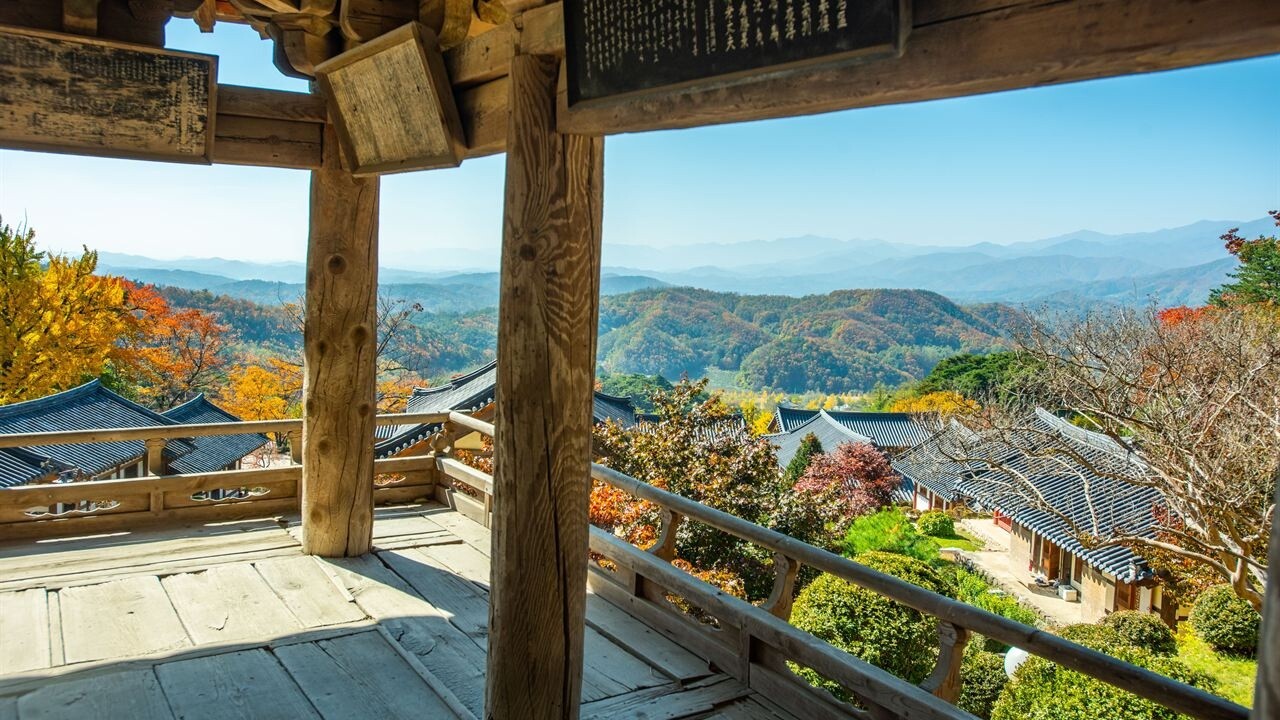
From Anyangru, nearby roofs appear between the wooden posts, with mountain ridges beyond them. The pavilion makes a frame for the landscape. The architecture remains in view even as the eye moves toward the distance.
This is the reverse of the upward-looking approach. The buildings below reveal the levels you have passed, while the mountains show the broader setting. Looking back is part of understanding the temple, not simply a final scenic stop.
The temple is also an active religious place, not only an architectural display. Its place within the mountain-monastery heritage recognizes a continuing relationship between buildings, setting and religious life. Stay within visitor areas while enjoying those views.
A mountain temple seen at several scales
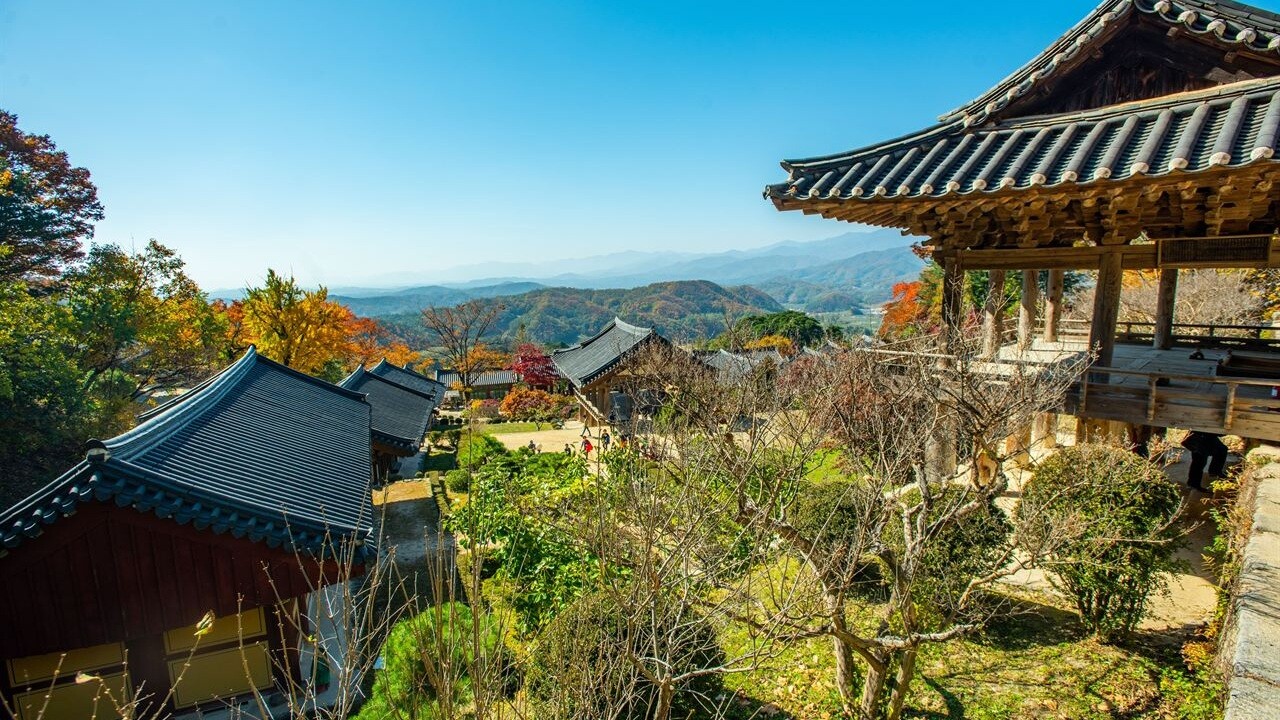
The Korea Tourism Organization’s English Buseoksa overview confirms the Yeongju location and highlights Muryangsujeon. It is a useful identification source when separating this temple from similarly named destinations.
For a different balance of temple scenery and woodland walking, compare Songnisan’s Sejo Trail near Beopjusa. That separate destination places more emphasis on a forest route. Buseoksa’s distinctive view is built from stone steps, terraces and buildings at different heights.
A fall visit here can move from the ginkgo approach to close architectural details, then widen toward the mountains. What holds those scenes together is the temple’s position on the slope. Looking up on the way in and back across the roofs gives the place its shape.
You May Also Like
by Google Adsense