Songnisan Sejo Trail: A Forest Walk Near Beopjusa, Without a Summit Plan
Boeun’s Sejo Trail and nature observation path, with a gentler lower section and a steeper upper continuation
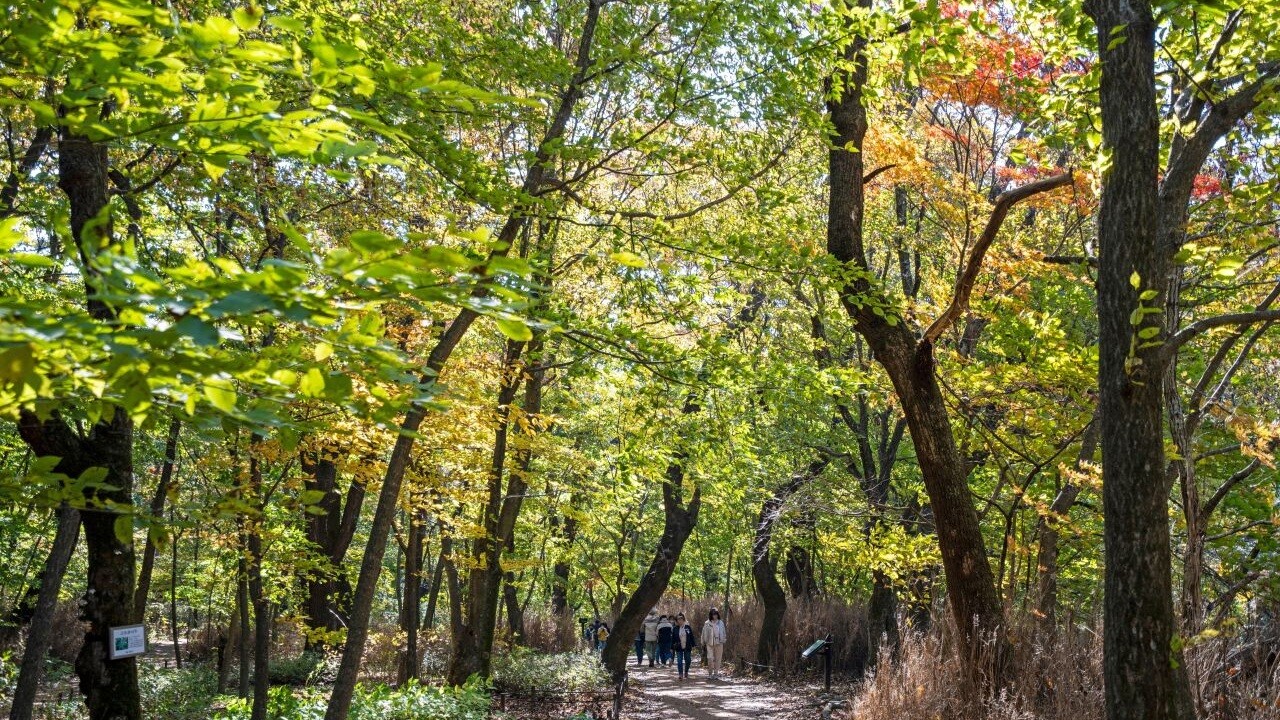
A mountain visit does not have to begin with a summit goal. On the wooded approaches to Beopjusa, the scene is close at hand: branching trunks, patches of sunlight and a path disappearing beneath the canopy.
Songnisan Sejo Trail in Boeun, central South Korea, offers a way to make that forest the focus. The nature observation path and temple approach introduce the landscape before the longer trail continues toward the reservoir and Bokcheonam Hermitage.
The official full course is 4 kilometers one way, about 2.5 miles. For travelers looking for a shorter outing, the important question is where to turn around. The easy beginning does not describe every section farther uphill.
The photograph shows a trail beneath overlapping branches, with green and turning leaves sharing the canopy. It is a useful reminder that an autumn forest can be worth seeing before every tree reaches a matching color.
The scenes here focus on the nature observation trail and the approach to Beopjusa. They introduce the walk’s setting; they are not a photographic record of every point along the full route. Looking at the lower woodland can be the main purpose of a visit, rather than a preliminary step before a summit climb.
Songnisan Sejo Trail: choose a distance first
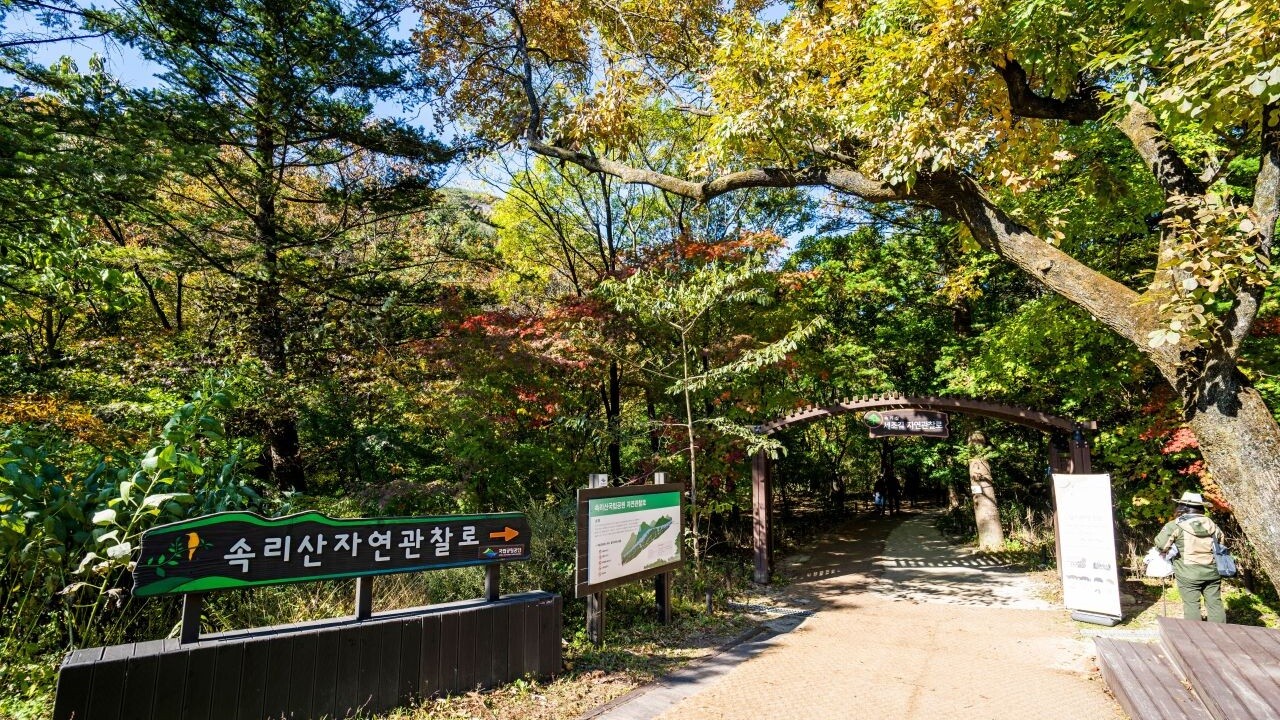
The official route begins at the Songnisan Experience Learning Center and continues through the reservoir, Sesimjeong and Bokcheonam. Korea National Park Service lists 1 hour 20 minutes for the one-way course.
That figure does not include returning to the start, pauses or time inside the temple. It is also not a promise that all visitors will walk at the listed pace. Keeping the direction of the distance clear helps avoid turning a relaxed forest stop into an unexpectedly long outing.
A shorter visit can concentrate on the opening woodland, while a longer plan needs to account for the conditions beyond the reservoir. The trail’s overall low difficulty rating should be read alongside its section descriptions.
What the name Sejo refers to

Sejo was the seventh king of Korea’s Joseon dynasty. The park’s interpretation connects the trail with his visit to Songnisan, giving a name on a sign a historical reference a first-time visitor might otherwise miss.
The route description also recounts a bathing story at Mogyokso and identifies Bokcheonam with the monk Sinmi. These are part of the park’s interpretation of the landscape. They do not need to be embellished into a personal encounter or a certainty beyond what the source says.
On the ground, the more immediate story is the forest itself: a shaded approach, wooden wayfinding and changes in the path as it moves deeper into the mountain.
Autumn color is a condition, not a guaranteed date
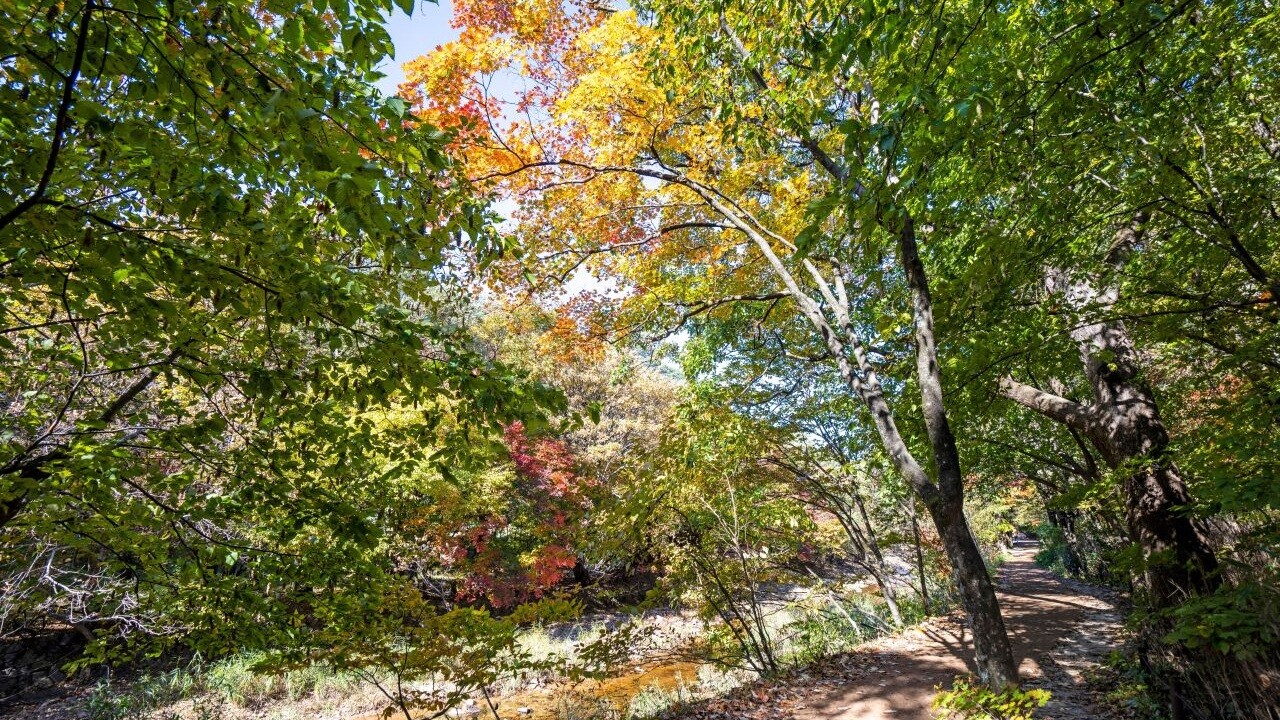
Light changes the appearance of leaves even within a small stretch of woodland. A brighter opening and a shaded slope can look different without representing different stages of a mountain-wide peak.
At present, the Korea Meteorological Administration’s Songnisan observation page has no first-color or peak observation date listed. That leaves the exact stage of this trail’s fall foliage unconfirmed. A photograph showing autumn color is not a live report of today’s conditions.
For a fall itinerary, this is a destination to consider as the season develops, without promising a particular week of red leaves. The forest and temple approach provide a reason to walk that does not depend on a single peak-date claim.
The accessible lower section has a clear boundary
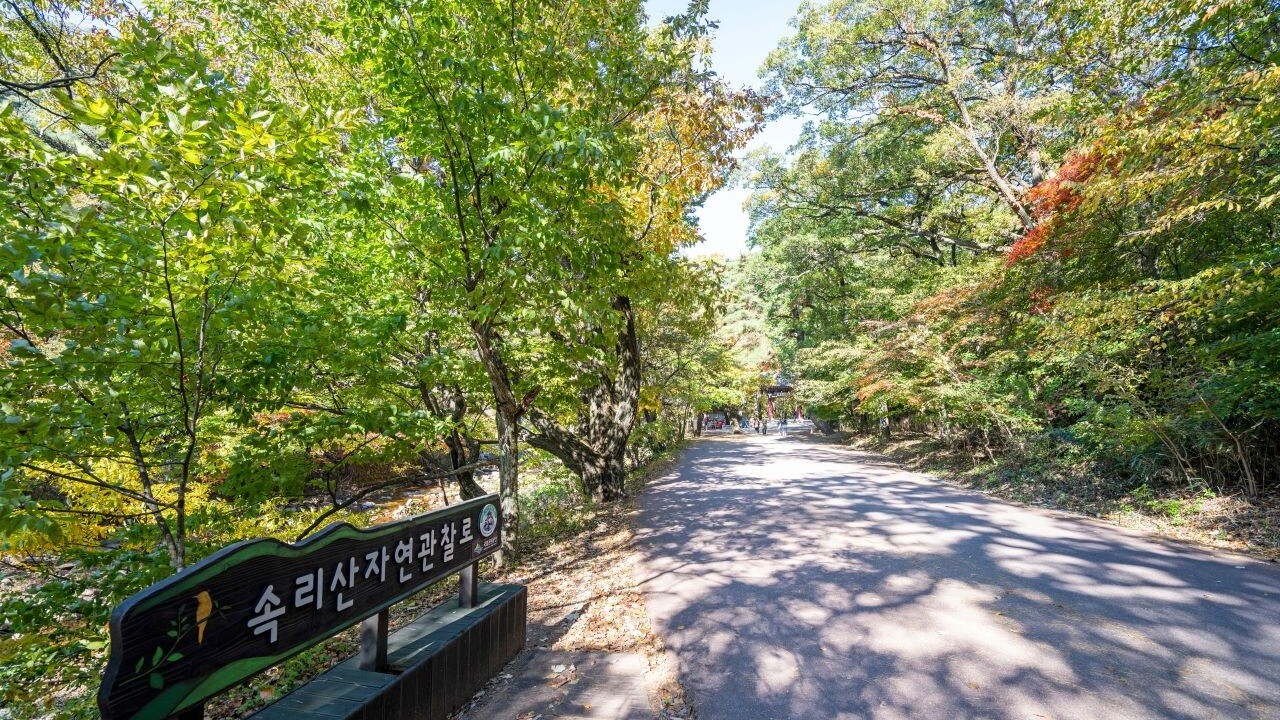
The park describes the first 2.1 kilometers, about 1.3 miles, from the learning center to the reservoir as a gently graded accessible section. It does not extend that description to the whole trail.
Beyond the reservoir, the section toward Sesimjeong has slopes and steps that the park says are difficult for wheelchairs and strollers. That distinction matters more than simply calling Sejo Trail an easy hike.
The official section-by-section route description separates the lower approach from the continuation. Travelers choosing a manageable forest walk can use that boundary when deciding their own out-and-back distance, rather than treating the hermitage as a required endpoint.
A temple approach changes the view
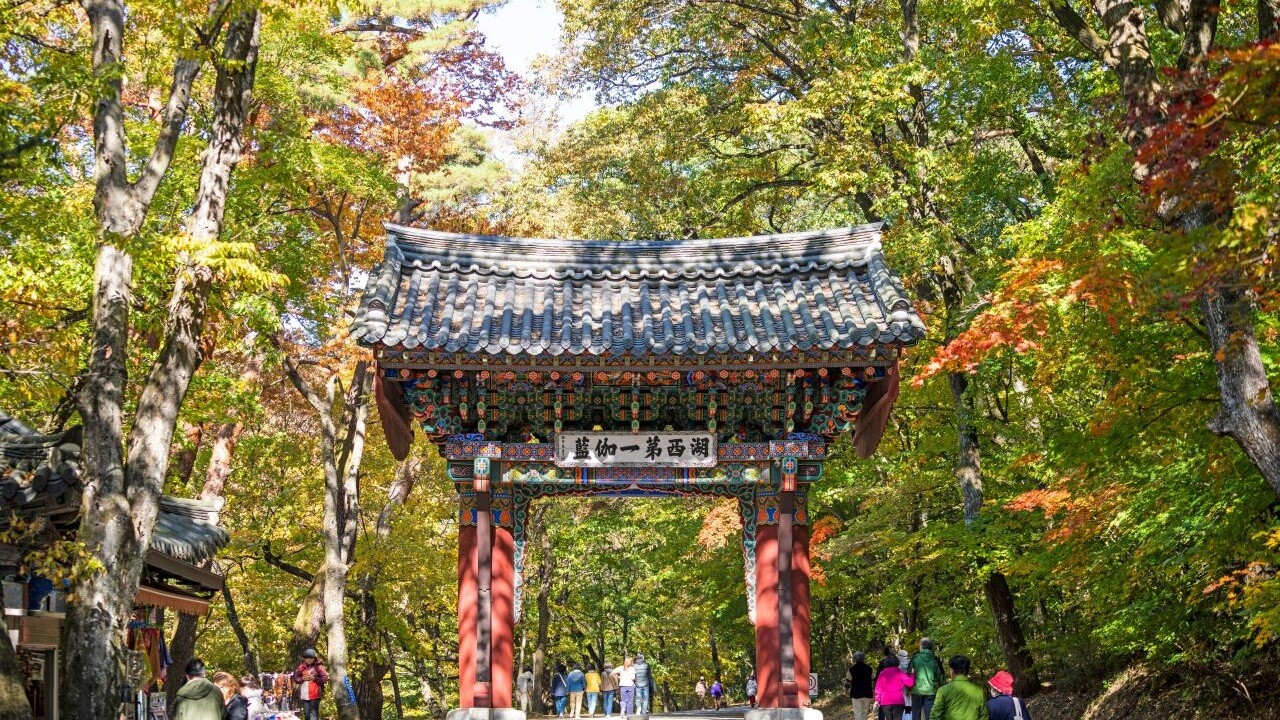
Near the temple, the irregular lines of branches meet the deliberate lines of a tiled gateway. The architecture gives the woodland a different point of focus while keeping the surrounding trees in view.
For another Korean mountain setting that combines temple architecture and woods, compare the Chiaksan Guryongsa autumn walk. It is a separate destination, not a continuation of Sejo Trail. The comparison is useful for choosing the kind of landscape to build a day around.
Songnisan Sejo Trail suits a visit with room to stop below the summit routes. Choosing a sensible distance, then paying attention to the forest and the temple approach, can make a modest walk feel complete.
You May Also Like
by Google Adsense