Seoul Forest Autumn Walk: Tree Paths, Reflections and City Views
A Seongsu park walk shaped by tree-lined paths, garden details and the surrounding skyline
Seoul Forest is a useful answer to a familiar Seoul itinerary question: where can a neighborhood outing include trees and open space without losing the city around it?
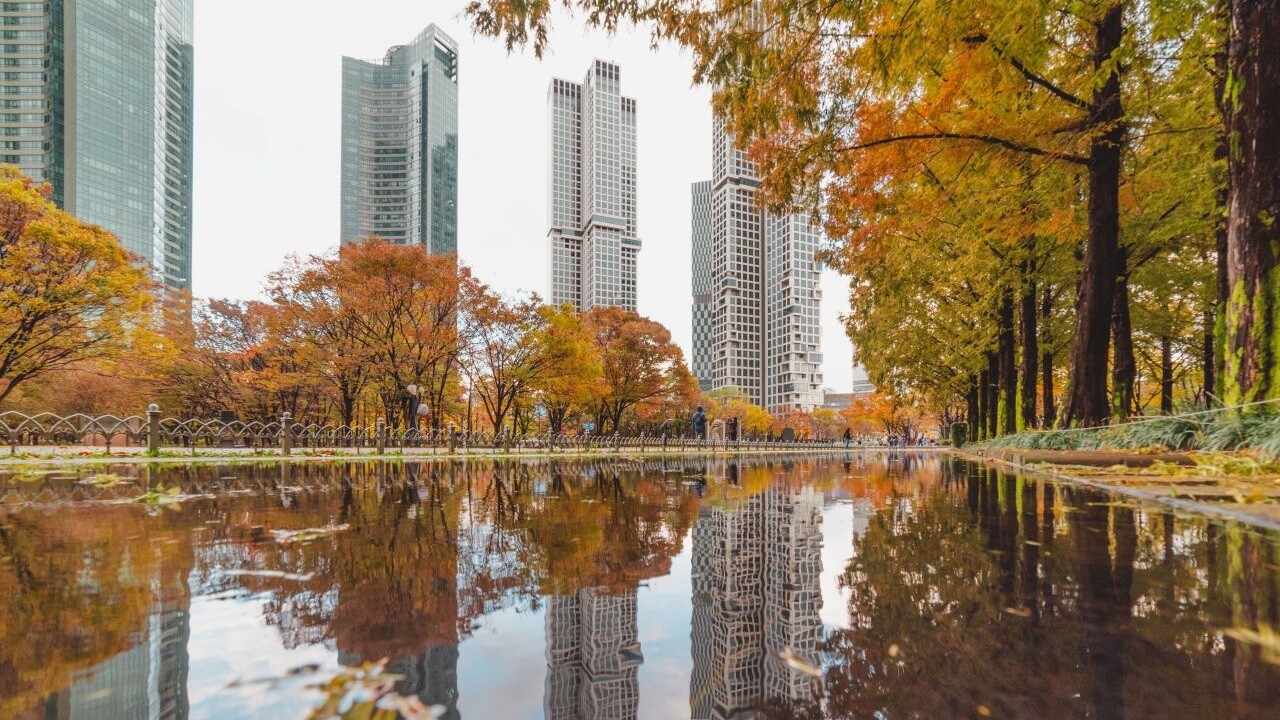
A Seoul Forest autumn walk puts the Seongsu skyline within the landscape. Buildings appear above branches and again in the water, so the park feels like a meeting point between urban height and the smaller scale of paths and gardens.
Fall is a reason to look more closely at the trees, not a guarantee that every section will change color together. Reflections, garden details and a layered history make the outing worthwhile beyond a single foliage photograph.
The opening view places tall buildings and trees on the same reflective surface. Straight architectural edges sit beside the less regular shapes of branches and leaves.
For visitors spending time in Seongsu, the surrounding city is part of the park’s appeal. A green-space stop offers a different perspective on the neighborhood. The water and its reflections create an especially clear meeting point between buildings and trees.
A Seoul Forest autumn walk along the tree paths
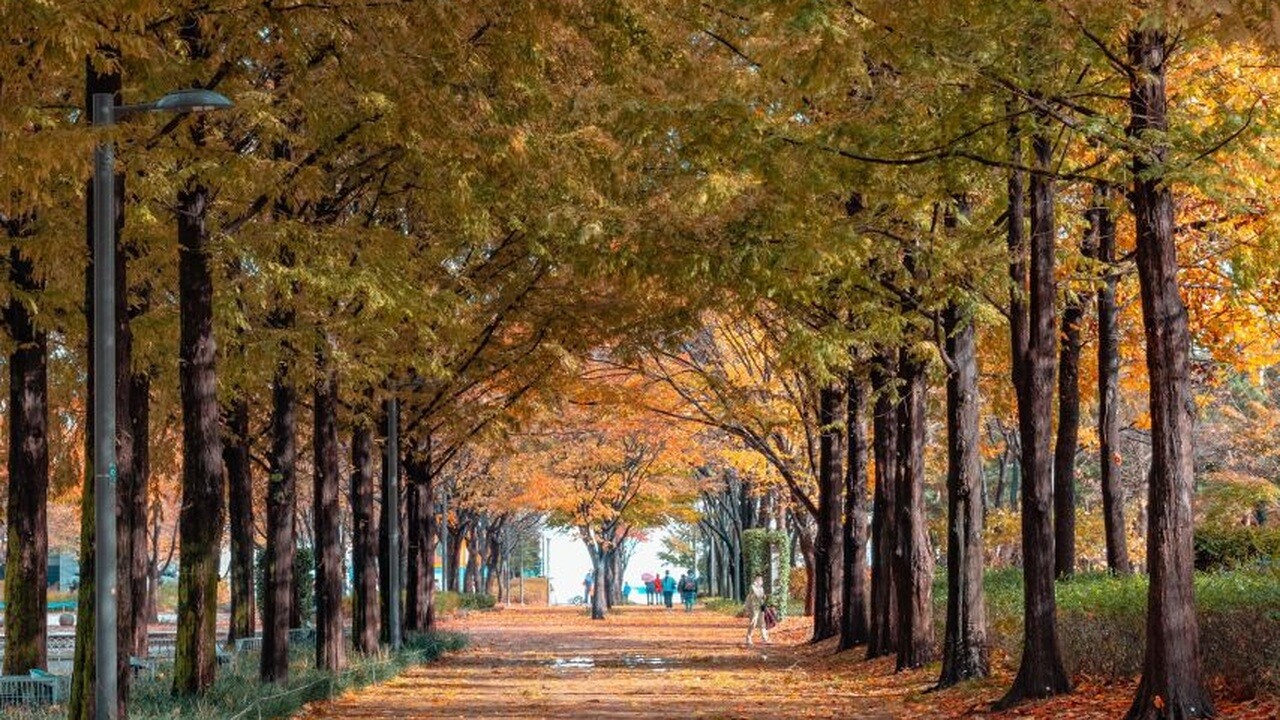
The path photograph replaces the broad reflection with a repeated rhythm of trunks. It directs the eye forward, while leaves and branches form a softer frame around the route.
A walk can move between this enclosed feeling and the openness of lawns or plazas. Those changes in scale are worth noticing even when foliage is uneven. Different trees and different parts of the park should not be expected to deliver identical color on the same day.
Look up for the Seongsu skyline
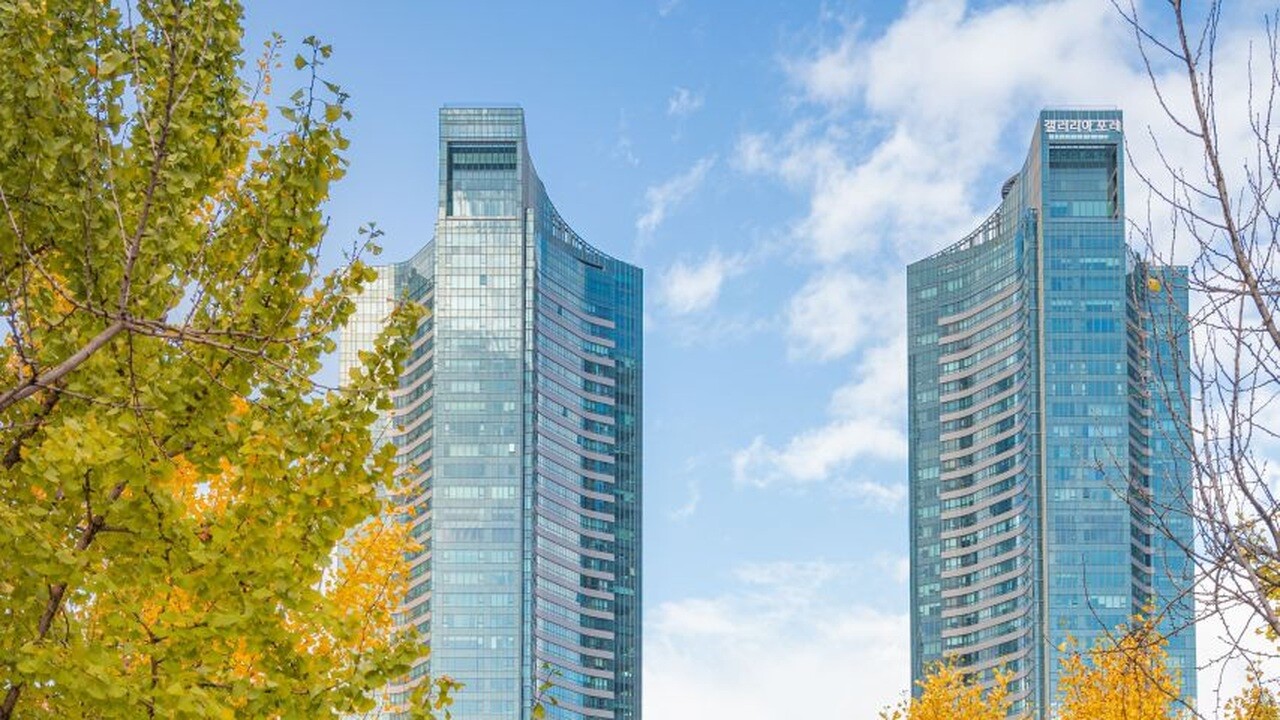
The upward view brings the towers back into focus. It is an urban forest, where a canopy can share the frame with the top of a residential building.
For travelers coming from the surrounding neighborhood, that continuity is useful. The park offers another way to see the area. Street-level buildings, branches overhead and reflections below can all belong to the same afternoon, with each offering a different scale of observation.
The park occupies land with an earlier life
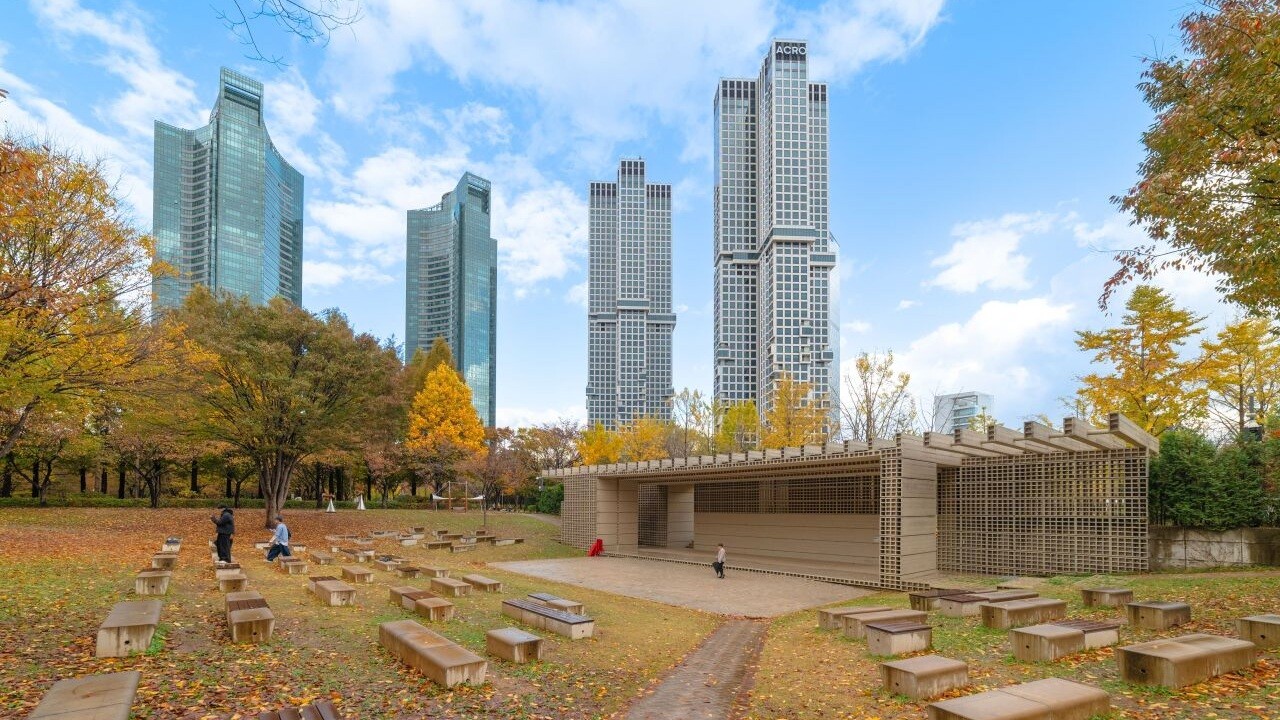
According to Seoul’s official park introduction, the site previously served as waterworks land and later as a racetrack and golf course. Seoul Forest opened on June 18, 2005, bringing new paths and planted spaces to land that already had several urban uses.
The city describes four themed areas: culture and art, natural ecology, experiential learning and wetland ecology. Their variety explains why the park is best explored as a collection of spaces. Its larger history gives context to the mix of open ground, paths and gardens.
A garden offers a closer view
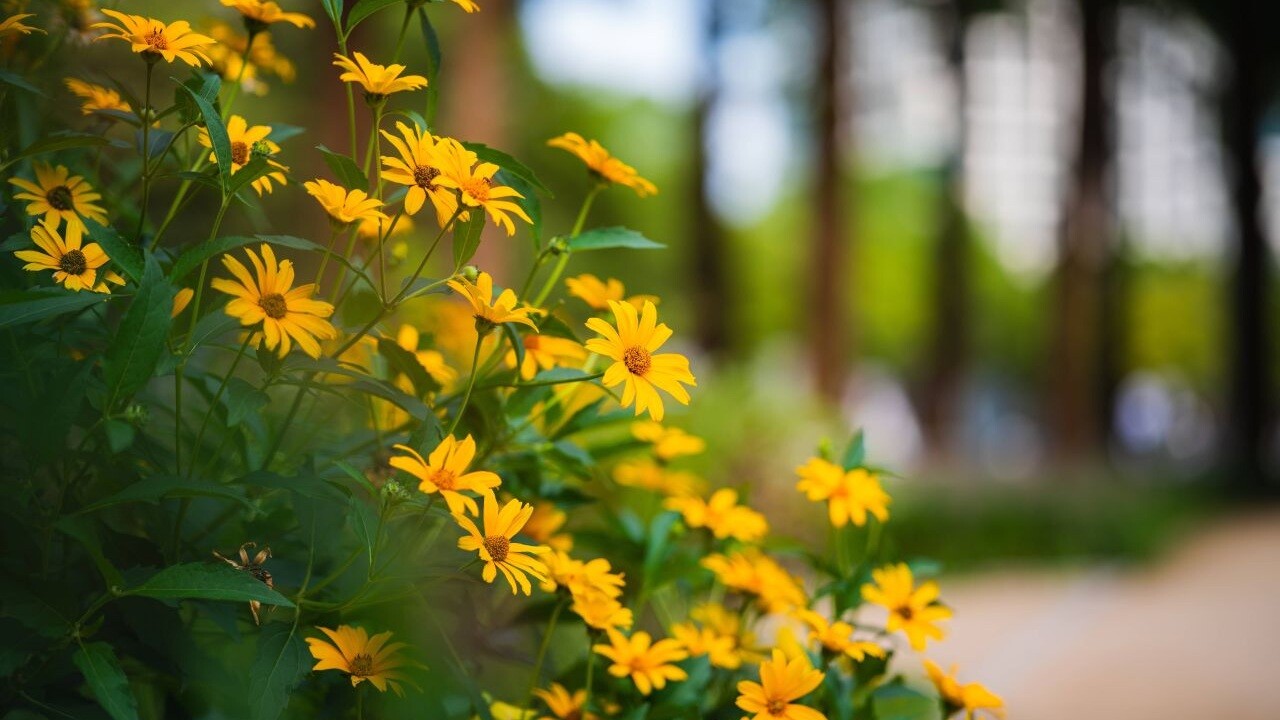
The flower photograph shifts the scale again. A small group of blooms becomes the main subject and the trees soften into the background.
That makes a useful counterpoint to the park’s large spaces. An autumn visit can include a look at smaller planting details as well as changing leaves. Garden planting changes through the seasons, so the pictured flowers are not a promise of the same display on a particular travel date.
Park access and facility access are different
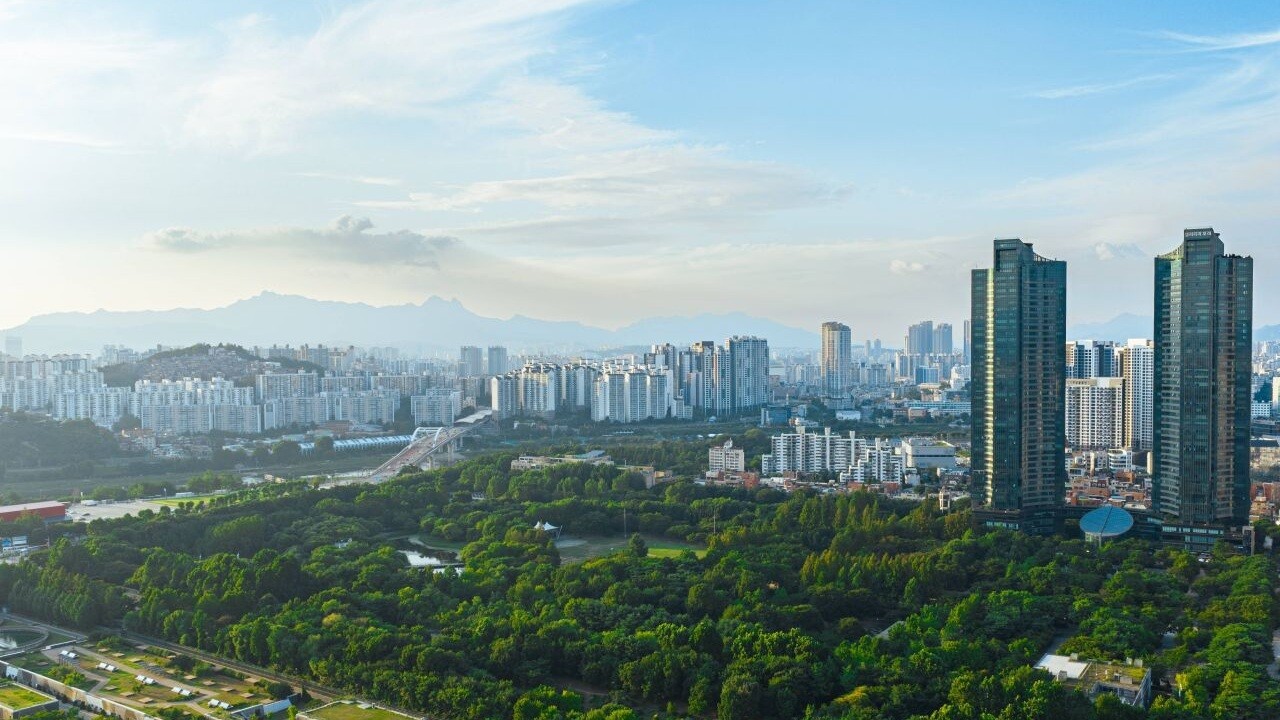
The broad view shows the park within its urban surroundings, but individual attractions follow their own schedules. A general park walk and a visit to an enclosed facility require different timing.
The official facility-hours page lists the ecological forest’s deer enclosure and pedestrian bridge at 5:30 a.m.–9:30 p.m. The insect botanical garden’s March–October schedule is 10 a.m.–5 p.m., with last admission at 4:30 p.m. and Monday closure. These details matter when those facilities are part of the plan.
For a contrasting open-space destination, compare Imjingak Pyeonghwa Nuri Park. This comparison is about choosing a park atmosphere, not joining the two into a neighborhood walking route. Seoul Forest keeps the skyline close; Imjingak emphasizes broader lawns and distant views.
Seoul Forest suits an outing that includes both a city neighborhood and a slower look at trees, water and planted spaces. Its autumn character comes from the coexistence of those elements.
You May Also Like
by Google Adsense