Daedunsan Autumn Scenery: Rock Peaks, Geumgang Bridge and Steep Stairways
Daedunsan’s Wanju side — a rocky mountain landscape with cable-car access and uphill terrain
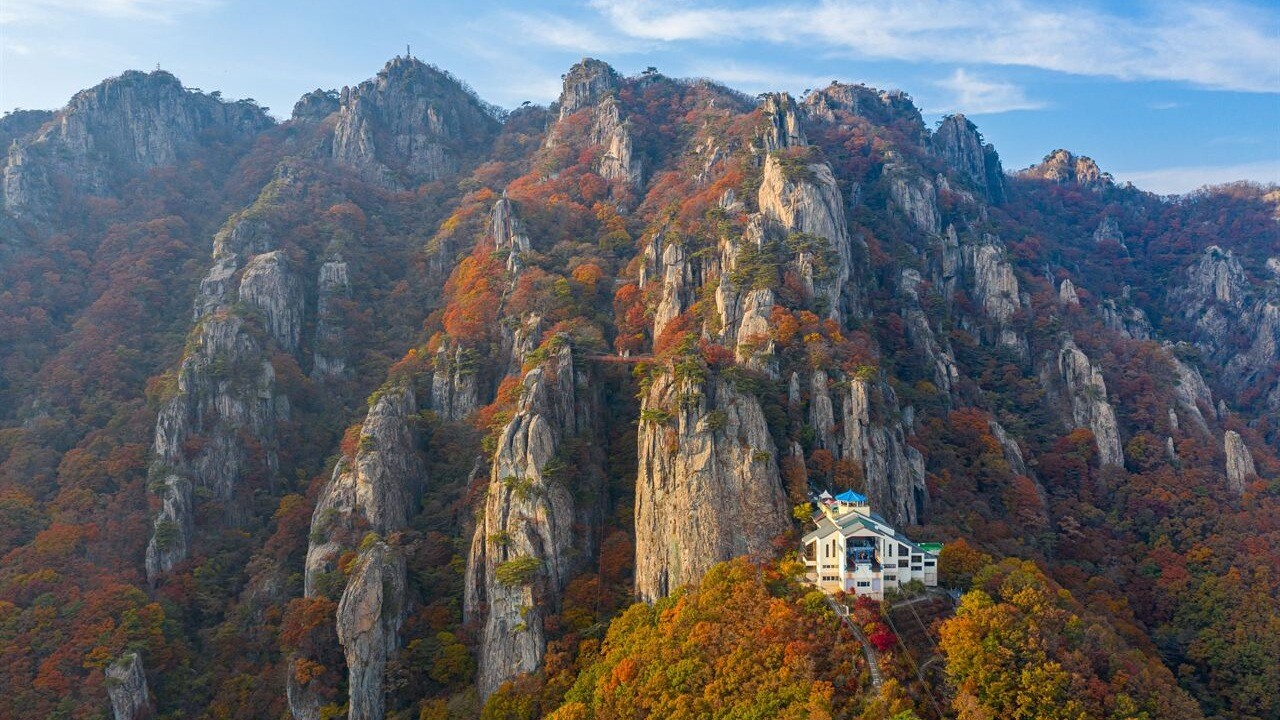
At Daedunsan, the rock peaks remain visible even when autumn leaves fill the slopes around them. A bridge crosses the gap between cliffs, and a red stairway rises toward the rock above it. The mountain’s character comes from that combination of foliage and exposed stone.
This Daedunsan autumn introduction focuses on the Wanju side in Unju-myeon, Jeonbuk State. The mountain also has visitor information for the Nonsan and Geumsan sides, which should not be treated as interchangeable starting points. Korea Tourism Organization’s Wanju-side overview identifies the cable car, suspension bridge and steep stairs.
Cable-car access does not remove the uphill walking and stairs beyond the ride. Reducing one part of an ascent is different from turning the visit into a level park walk. That distinction matters when the bridge or stairway is the reason for choosing this mountain.
Current foliage and a verified 2026 local peak date have not been established here. The photographs show the layout of the rocky landscape. They do not guarantee the same leaf color, weather or permitted route on a particular travel date.
The cable car changes the height of the view
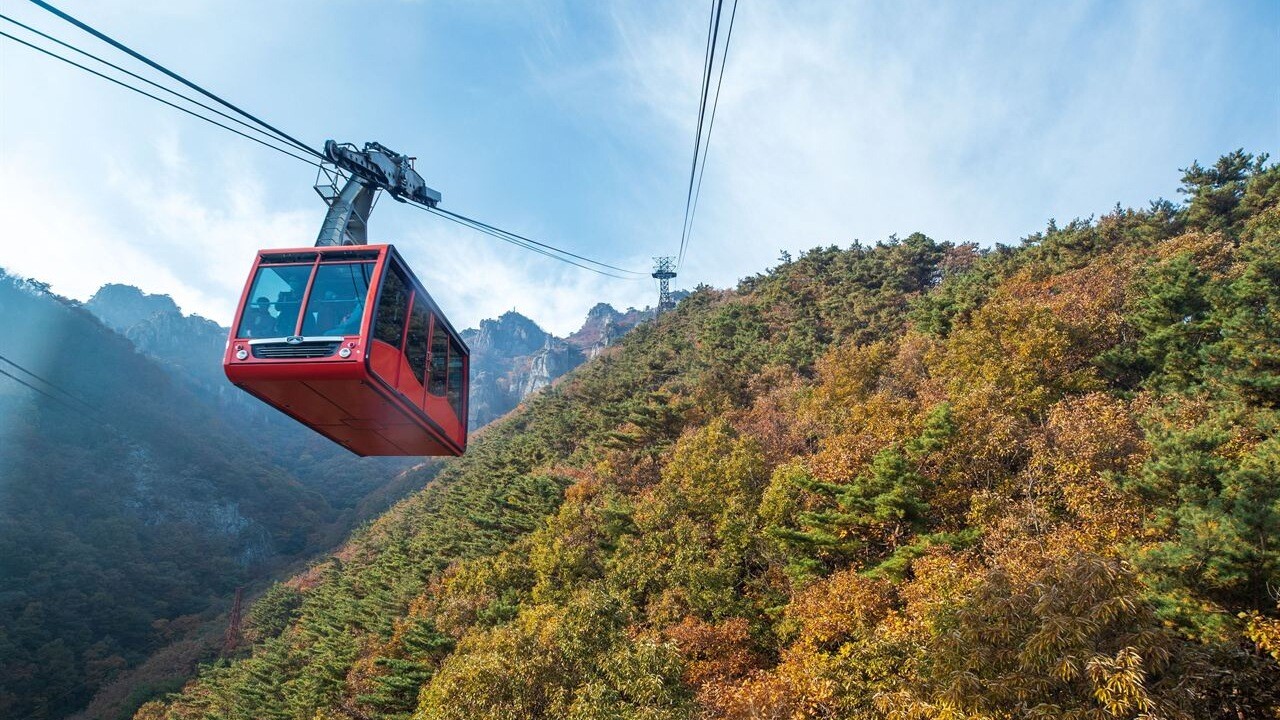
A red cabin moves beside the wooded slope, with the cable drawing a line across the scenery. The view opens from nearby trees toward more distant ridges. Rock peaks become clearer as the visual scale grows.
The cable car is one way to see Daedunsan’s mountain setting. It still needs to be distinguished from the walking terrain after arrival. A view from a cabin and the steps beyond it are different parts of a possible visit.
The operator has published a seasonal notice for fall 2026. Operating conditions can change with weather. A photograph of the cabin should not be read as proof that the same access will be available on every date.
Daedunsan autumn scenery continues below the bridge
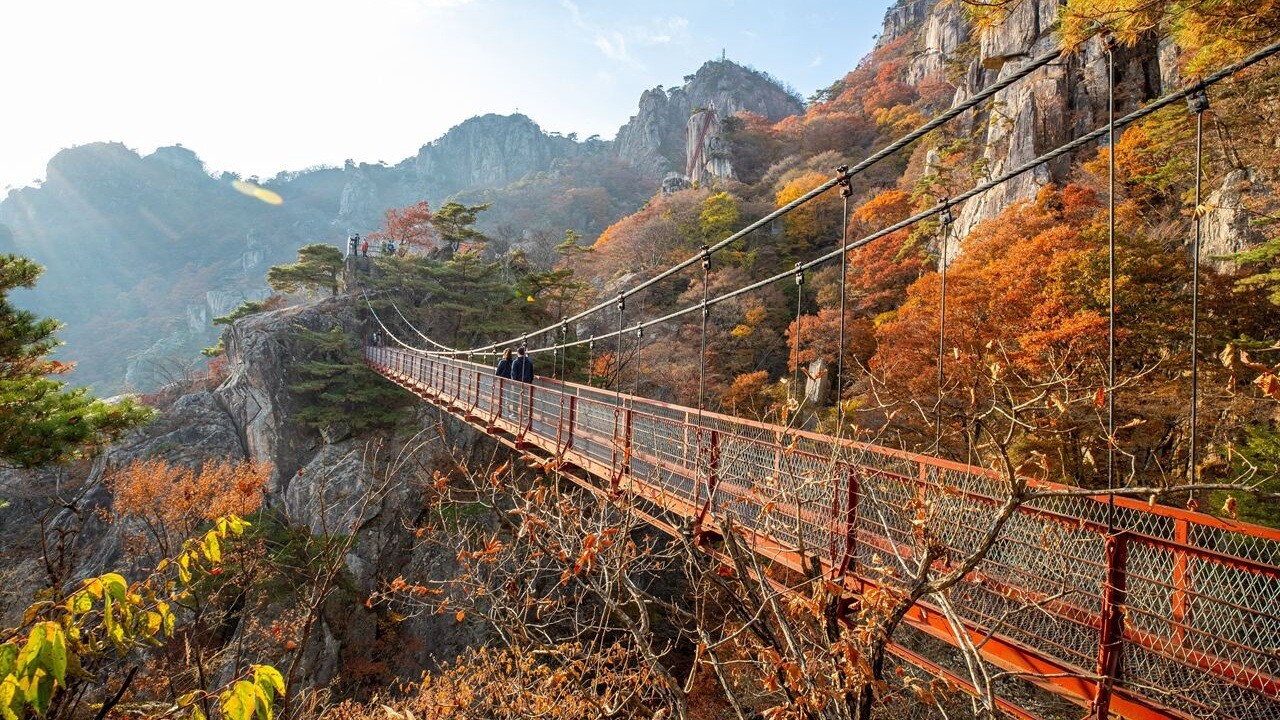
Railings guide the eye across Geumgang Suspension Bridge, but the space beneath it is equally important. Woodland drops below the exposed rock, making the bridge’s position in the mountain more apparent.
The official English description gives the bridge a length of about 50 meters, or 164 feet. The meaningful feature is that this distance crosses an open gap between rocks. It does not feel like the same distance on a level path.
Looking at the bridge from a distance and crossing it are separate experiences. A visit centered on rock formations does not have to include every elevated structure. The photographs help explain the choices without promising one route for all travelers.
The Samseon stairway makes the slope visible
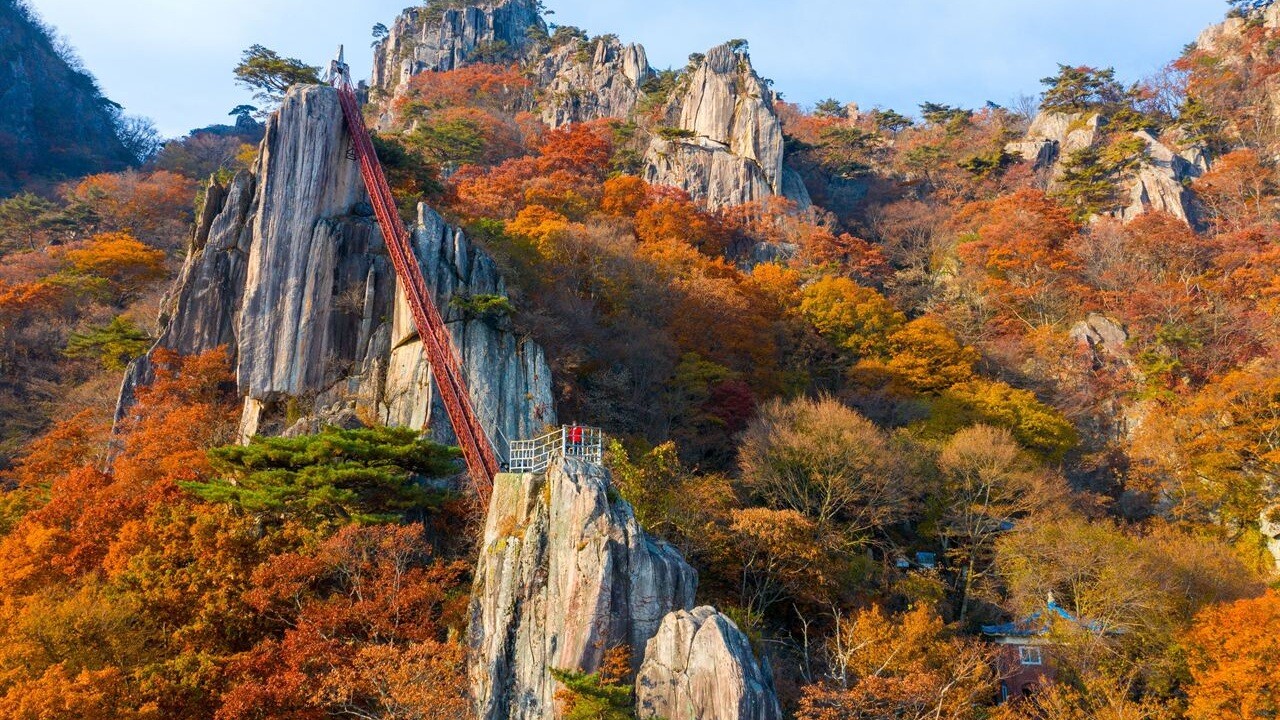
The red stairway rises toward the rock above it. Its straight edges emphasize the incline, while the neighboring trees form softer shapes. A distant view shows how the structure fits between the cliffs.
This should not be treated as another ordinary section of a shaded forest walk. Stairs and high bridges are part of a distinct terrain choice. A cable-car ride does not make that choice equally suitable for every visitor.
The actual permitted route and personal ability determine the scope of a mountain day. Seeing stairs in a scenic photograph is not evidence that all upper sections are open or that a visitor should continue to the summit.
Closer rock faces have a different texture from the trees
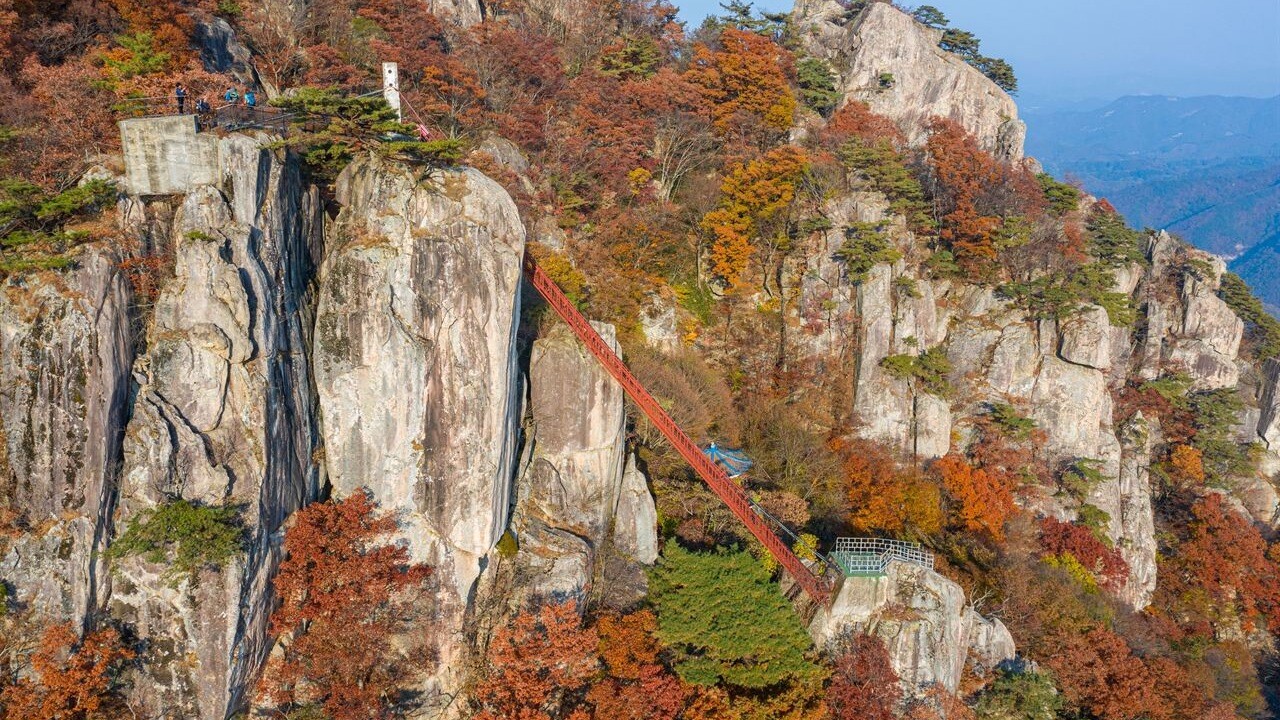
At this scale, cracks and vertical surfaces occupy more of the frame. Foliage becomes a colored layer below them, and the stairway makes the relative heights easier to judge. Stone and woodland keep different visual rhythms.
Even during a colorful fall season, the mountain is more than a canopy of leaves. Following the outline of the rock reveals where the trees gather and where the structures cross between them. That remains a useful way to read the scene without an exact peak date.
For a separate trip with elevated structures, compare Wonju’s Sogeumsan cliff trails and bridges. Wanju and Wonju are different regional destinations. Their terrain and operating arrangements require separate decisions, rather than being extensions of the same mountain visit.
A wider view puts the mountain before the route
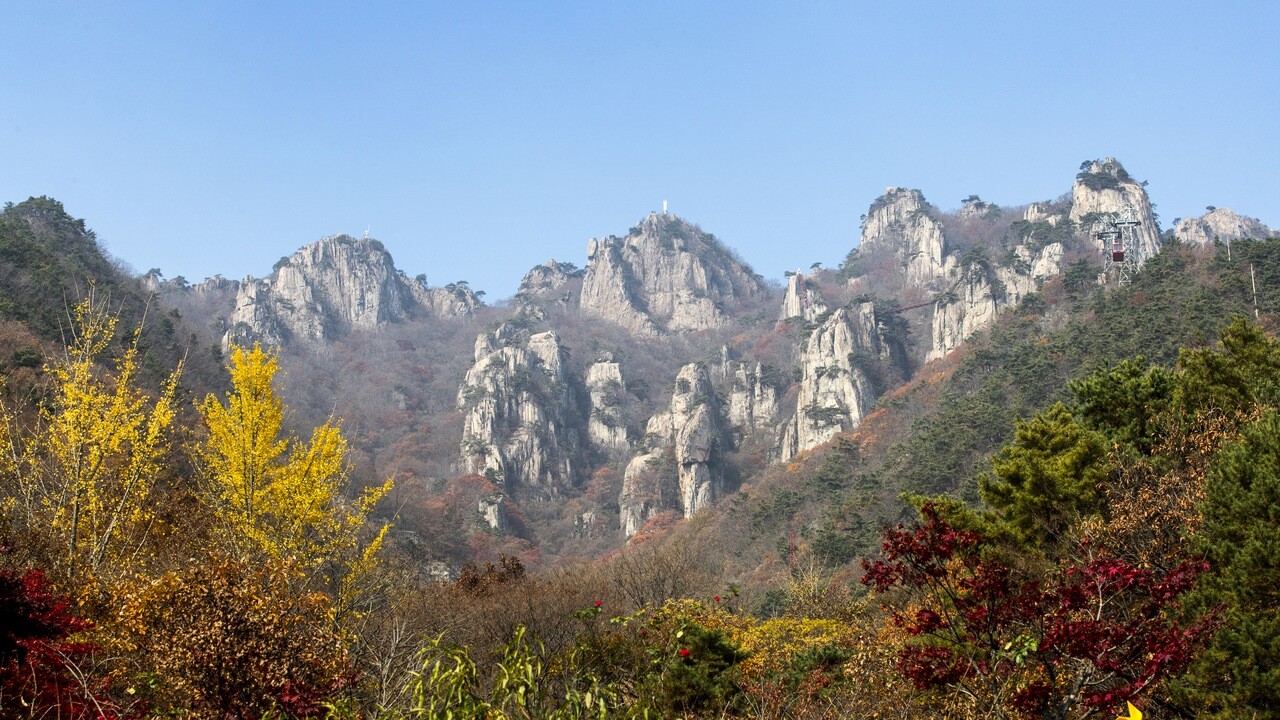
Seen from lower down, several rock peaks overlap behind the trees. The mountain’s outline becomes the main subject, rather than one bridge or stairway. That wider view offers a different understanding of the same exposed terrain.
The operator’s fall 2026 notice addresses seasonal cable-car arrangements. It does not establish a foliage peak or permission to use every mountain trail. Current leaf conditions and route availability cannot be confirmed from the photographs.
Daedunsan’s fall scenery is built around stone standing above the trees, with color filling the slopes between it. Whether considering an elevated route or a broader mountain view, deciding which terrain to include comes before expecting one particular autumn image.
You May Also Like
by Google Adsense