Seonunsa Temple in Fall: Dosolcheon Reflections, Woodland Paths and Gochang Courtyards
Seonunsa Temple, Gochang — stream scenery and temple architecture below Dosolsan
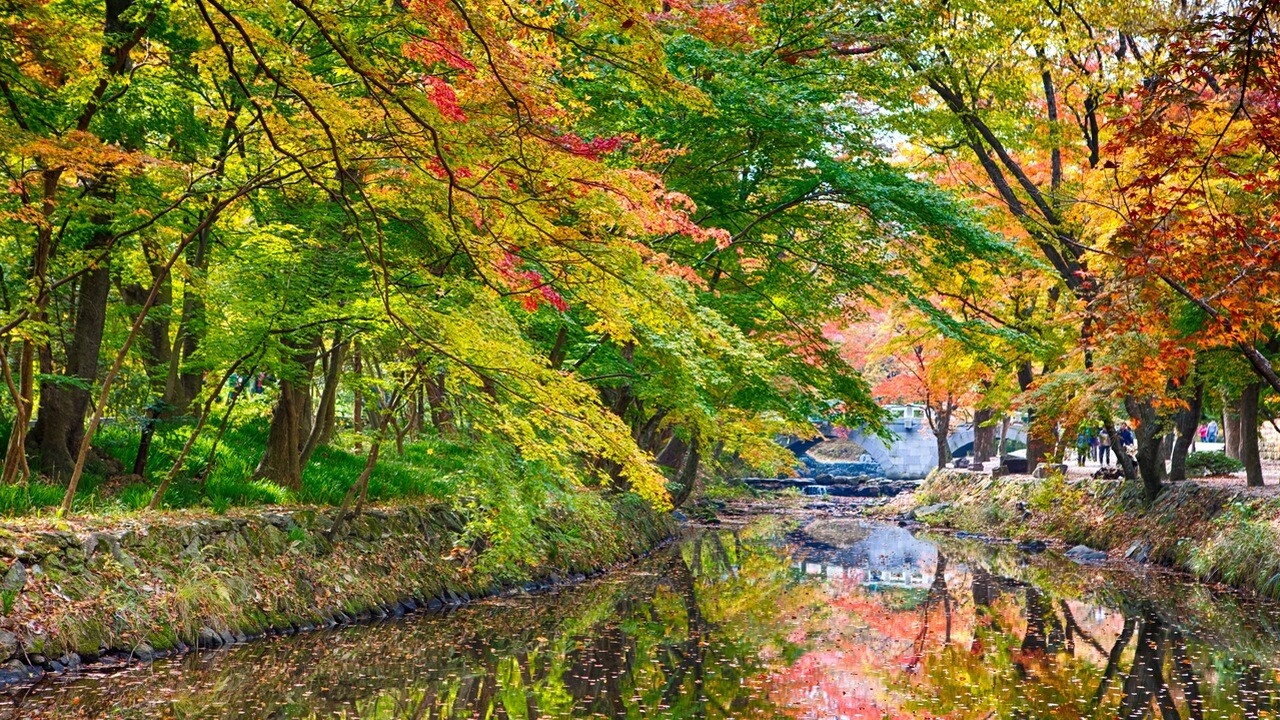
Branches reach over the water and reappear beneath its surface. Along Dosolcheon, the forest has a second layer made from reflections. The nearby temple gives that woodland setting another scale of rooflines and open courtyards.
Seonunsa Temple fall travel can focus on these lower scenes in Gochang, rather than a summit plan. The temple stands at Dosolsan, also known as Seonunsan, in Asan-myeon. A streamside view and a temple courtyard are different parts of understanding the place.
The photographs illustrate the setting, not verified foliage conditions for your travel date. Current leaf color and an exact local peak have not been established here. Water, stone crossings and architecture still offer useful details to notice beyond a fully colored canopy.
A stone bridge frames the moving water
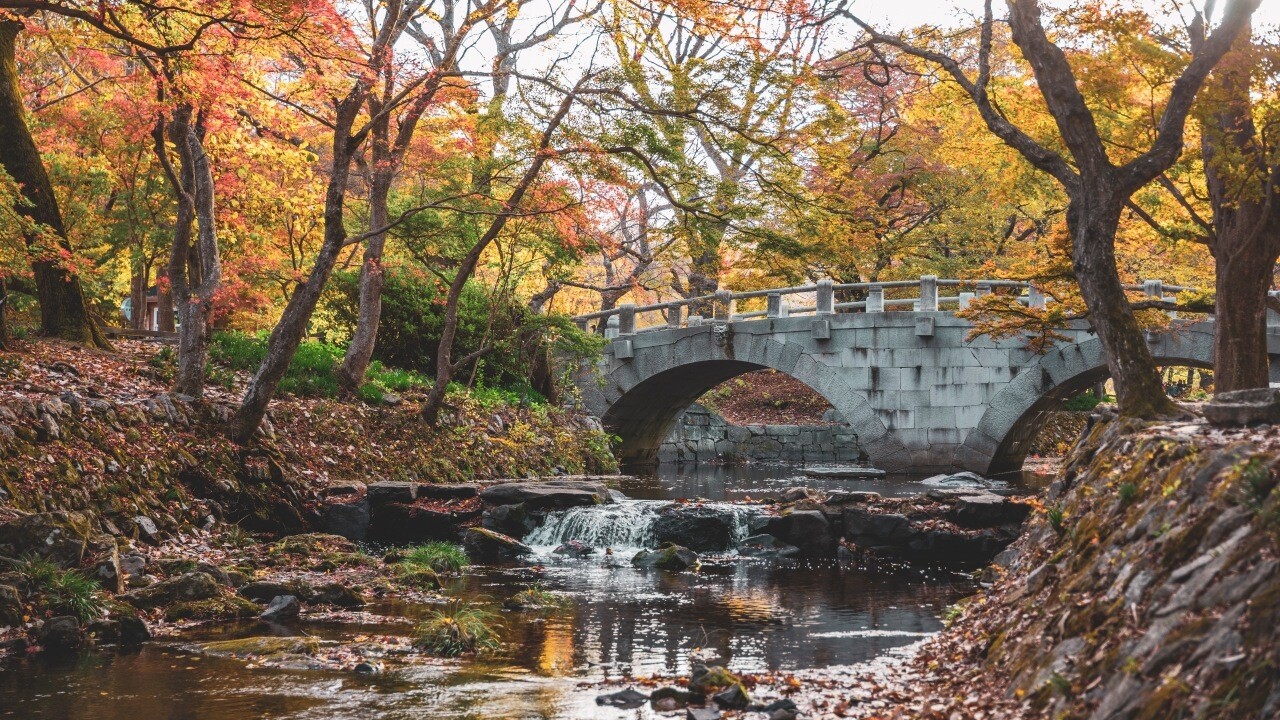
The bridge’s curved opening sits above a rocky channel. Water breaks into small pale lines where the level changes, while quieter patches hold the surrounding trees.
This is a different view from a still reflection. A short stretch of stream can contain both movement and a softer mirror surface. The composition changes as the eye follows it past stones and under the arch.
The bridge is a crossing as well as a shape within the woodland. Looking from the bank makes that relationship visible without treating every photographed feature as a separate attraction to collect.
Tree-lined paths bring the canopy closer
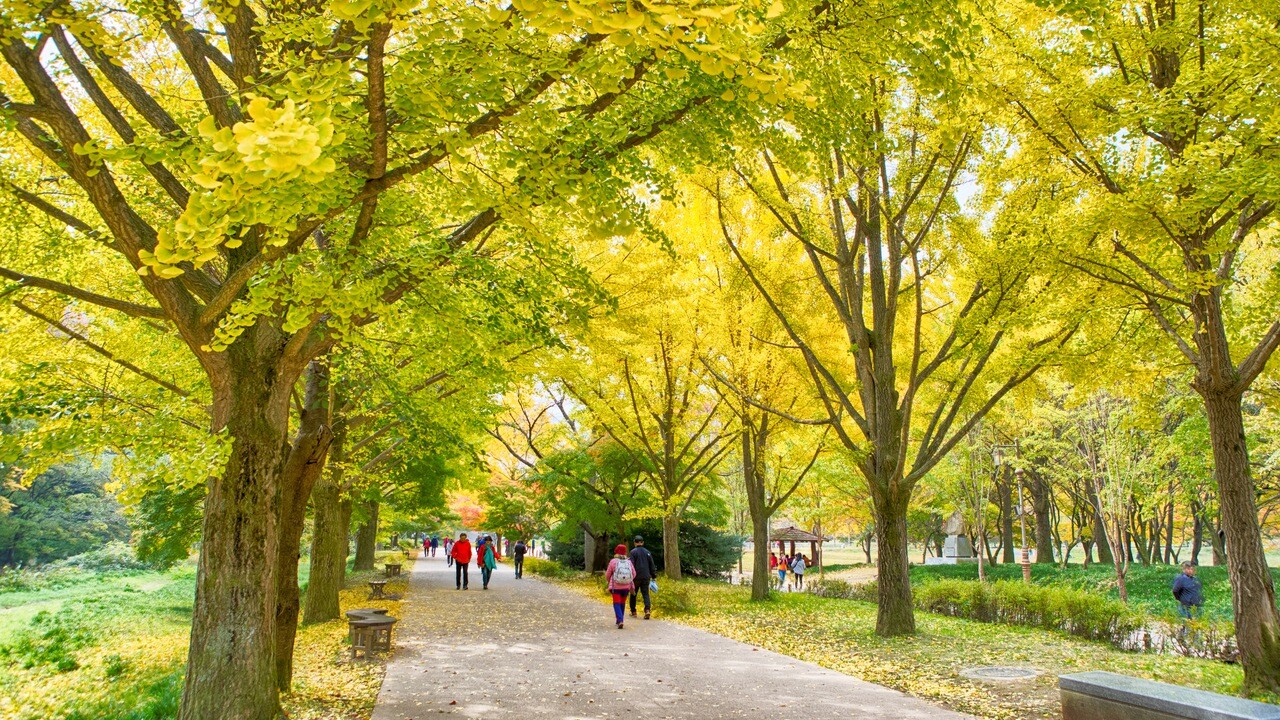
On the photographed path, branches extend toward one another above the walkers. The repeated trunks show the width of the route and the height of the trees.
Instead of looking down toward a reflection, the eye moves upward into the canopy. Yellow leaves, dark branches and the open walking space create distinct layers.
The scene does not establish a date when every tree will have this color. It explains how the woodland is arranged around the path. That remains useful when planning a fall visit without a confirmed peak date.
Daeungbojeon Hall stretches across the courtyard
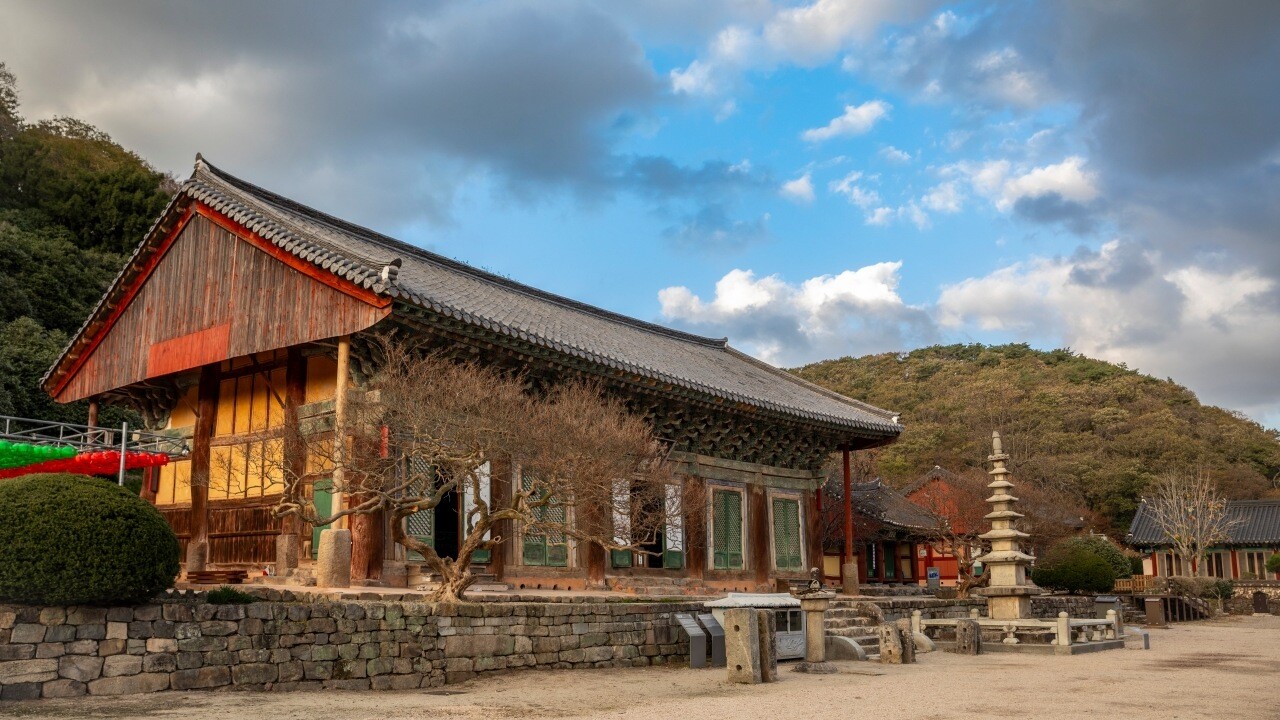
The main hall has a long roof above red wall surfaces and wooden columns. The mountain sits behind it, but the foreground brings the doors and stone base into a closer view.
The temple’s official heritage description identifies the present Daeungbojeon as a rebuilding from 1613. Its five front bays and three side bays help explain the broad outline visible from the courtyard.
The building should not be assigned the same age as the temple’s foundation. Attention to its proportions gives the history a visible form rather than reducing the visit to an unsupported claim about an ancient structure.
Seonunsa Temple fall views include a stone pagoda
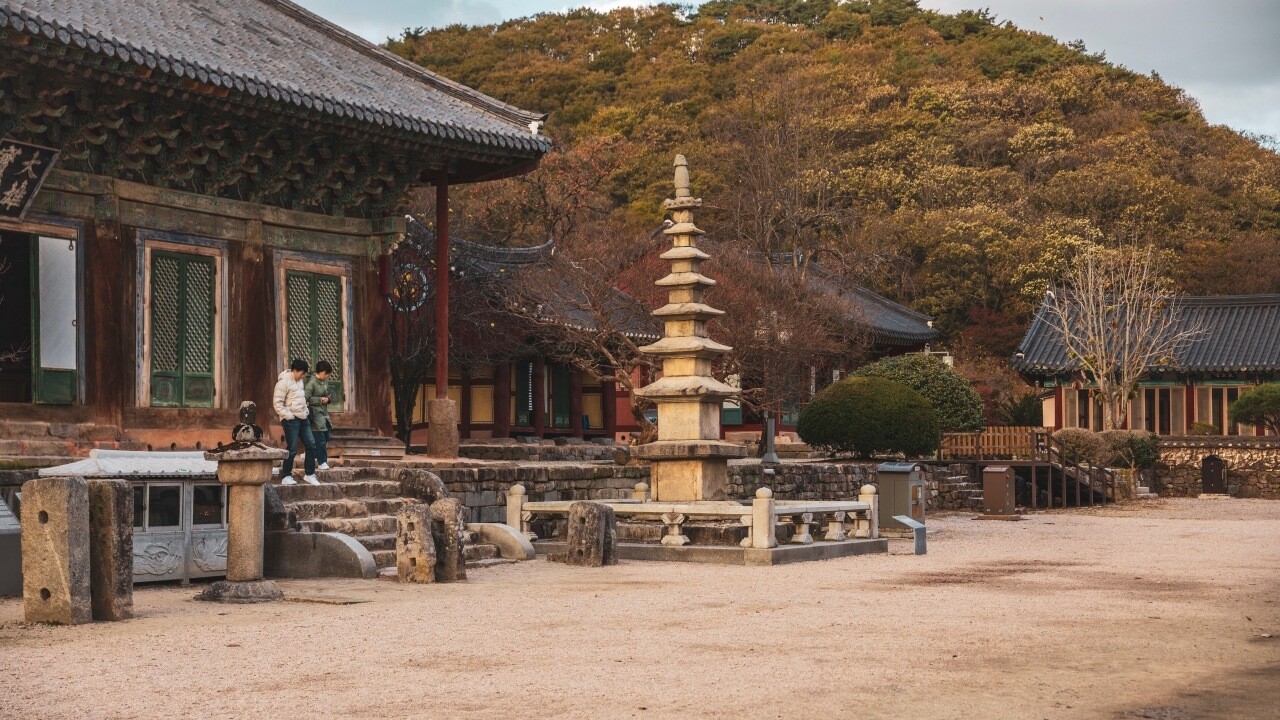
A slender stone pagoda rises beside the wider form of the hall. Their different proportions divide the open space and draw the eye in separate directions.
The temple’s account of its origins favors the founding tradition of the monk Geomdan in 577. It also preserves stories about a pond and a dragon. Those are founding legends, rather than events verified by the photographs.
The courtyard makes the shift from woodland to architecture clear. Outside, branches and water organize the scene; inside, buildings and the pagoda provide a different set of lines.
The wider view reconnects the roofs and the mountain
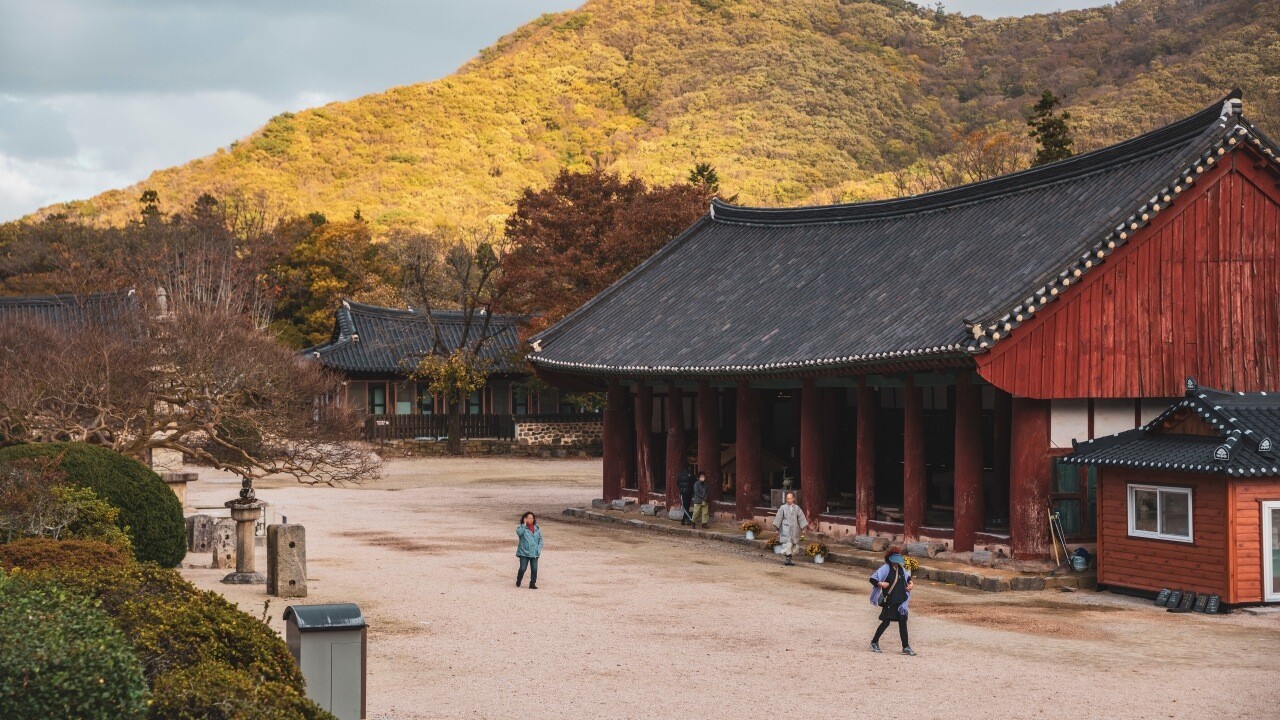
From farther across the courtyard, the roofs sit below a wooded slope. Nearby columns and distant trees return to one view. The temple belongs to the mountain setting without requiring a climb through all of it.
For a separate temple-and-water setting, compare Baekyangsa Temple’s reflections at Ssanggyeru. The two destinations have their own approaches and visitor arrangements; they are not one local walking route.
Seonunsa’s fall scenery is worth reading at several scales: a branch above water, a line of trees along a path and a roof below the mountain. Moving the eye between those scenes gives the place more depth than a foliage date alone.
You May Also Like
by Google Adsense