Gapsa Temple in Gongju: Autumn Woodland, Samseonggak and a Rocky Stream
Gapsa Temple, Gongju — a Gyeryongsan monastery seen through forest paths and smaller temple spaces
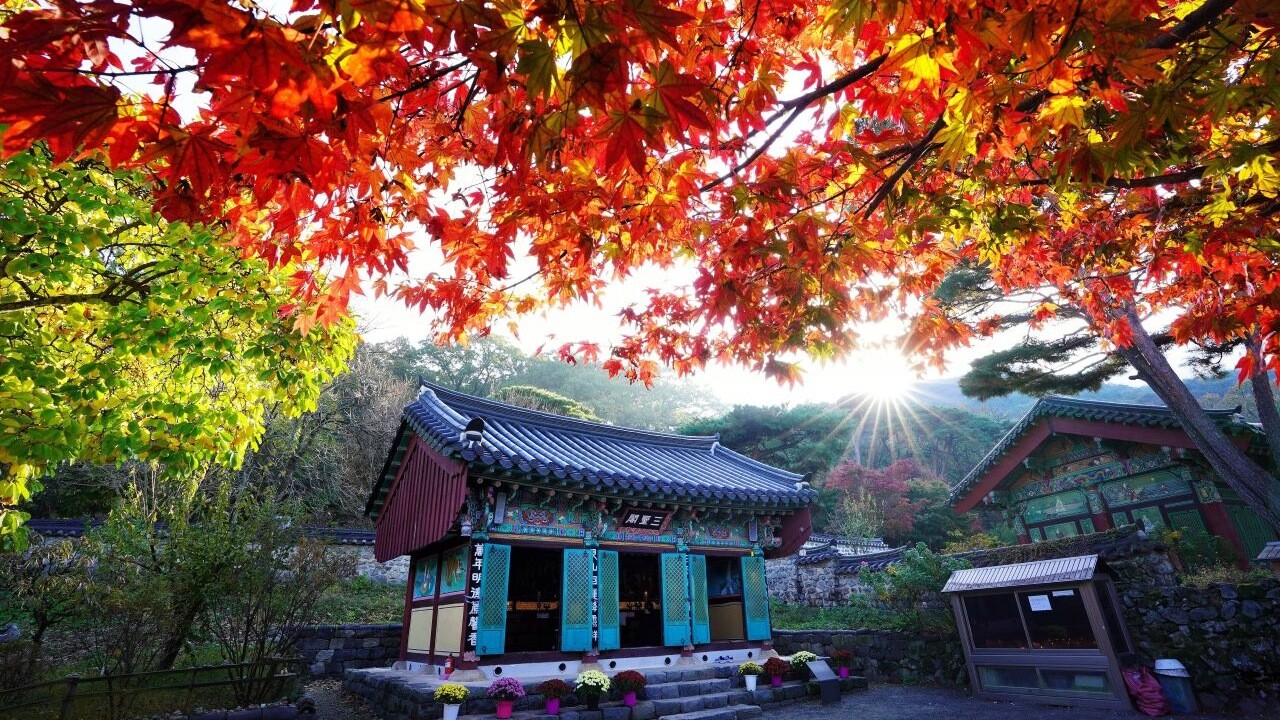
Red branches spread above a small hall with blue-green doors. Behind the roof, sunlight breaks through the leaves. The scale is intimate: a building, a canopy and the space between them.
Gapsa Temple sits on the northwestern side of Gyeryongsan in Gongju. A visit centered on the monastery offers a different subject from a summit hike. The woodland approach, gates, courtyards and nearby rocky stream create the main thread.
Gapsa’s official introduction describes its place among the ten Hwaeom temples of the Unified Silla period. That religious history adds context, but it should not be mistaken for the age of every building visible today.
For an autumn itinerary, the useful question is what you want to notice beyond leaf color. Gapsa lends itself to a sequence of closer views, from the depth of the forest path to a fish-shaped wind chime beneath painted eaves.
Gapsa Temple’s woodland approach
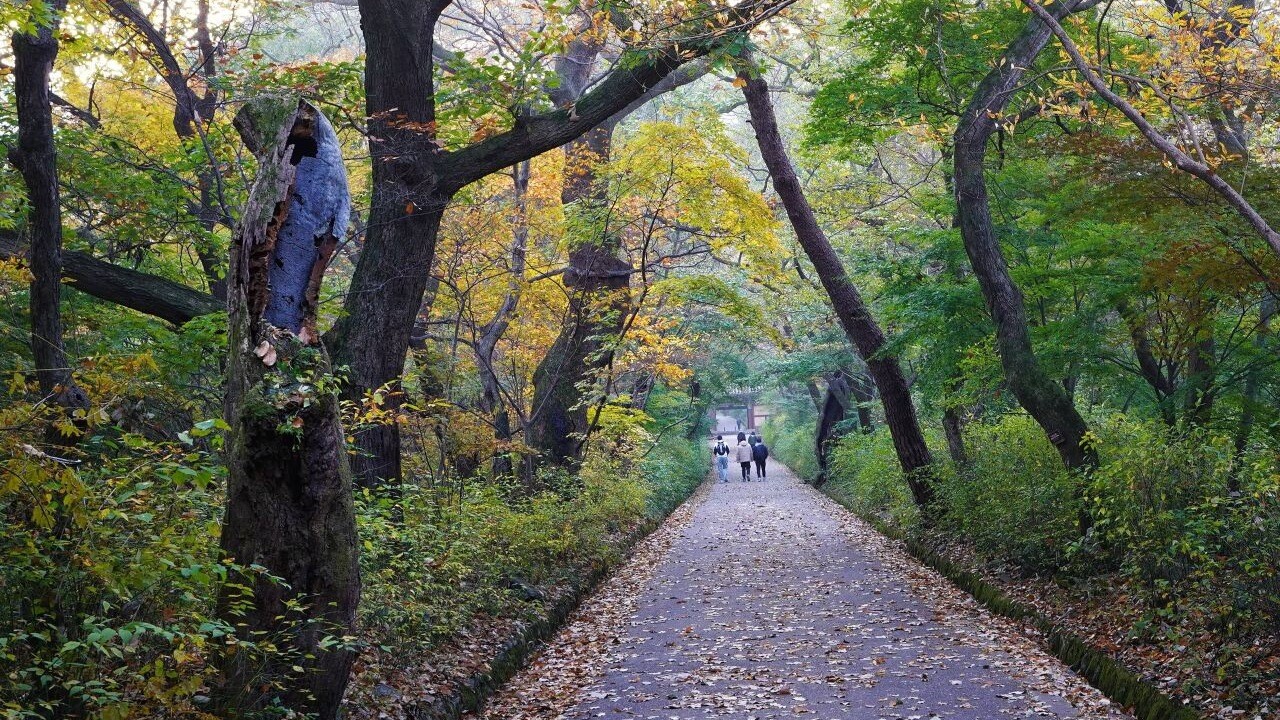
The path holds a long view between trunks and spreading branches. People near its far end give the trees a sense of scale. Fallen leaves lie on the ground while other branches retain green, so the scene contains several seasonal textures at once.
The Korea Tourism Organization’s place description notes old pines and zelkova trees around the temple. It also records a traditional saying that associates Magoksa with spring and Gapsa with autumn. That saying is cultural context, rather than a forecast for a particular travel date.
This is a closer landscape than a view from a ridge. The trees frame a destination ahead, and the architecture enters gradually instead of dominating the whole scene.
A gate as a frame for the forest
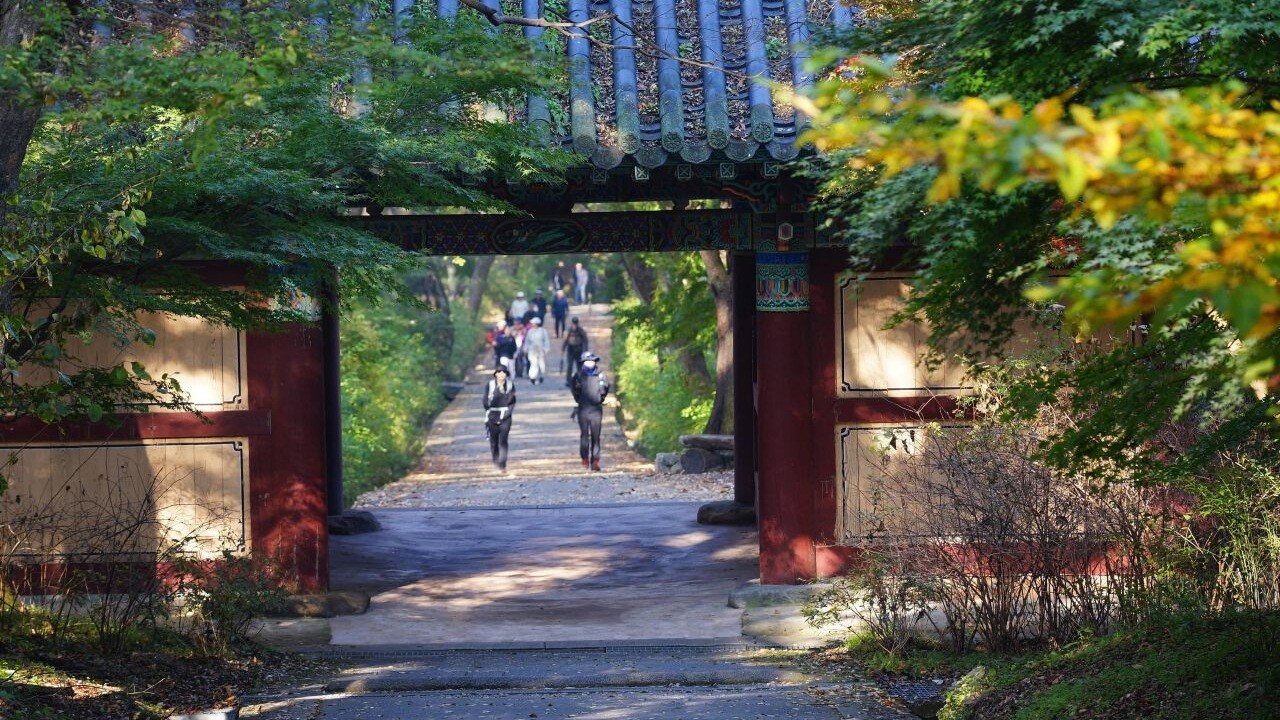
A tiled gate reduces the forest to a smaller rectangle. The red posts remain close, while people and steps recede beyond them. Looking through the opening changes the apparent distance without changing the landscape itself.
The gate also marks a change of light. A darker roof edge surrounds a brighter path, giving the trees a different outline. Gapsa’s buildings do more than occupy the woodland; they repeatedly frame it.
Open ground beneath the mountain ridge
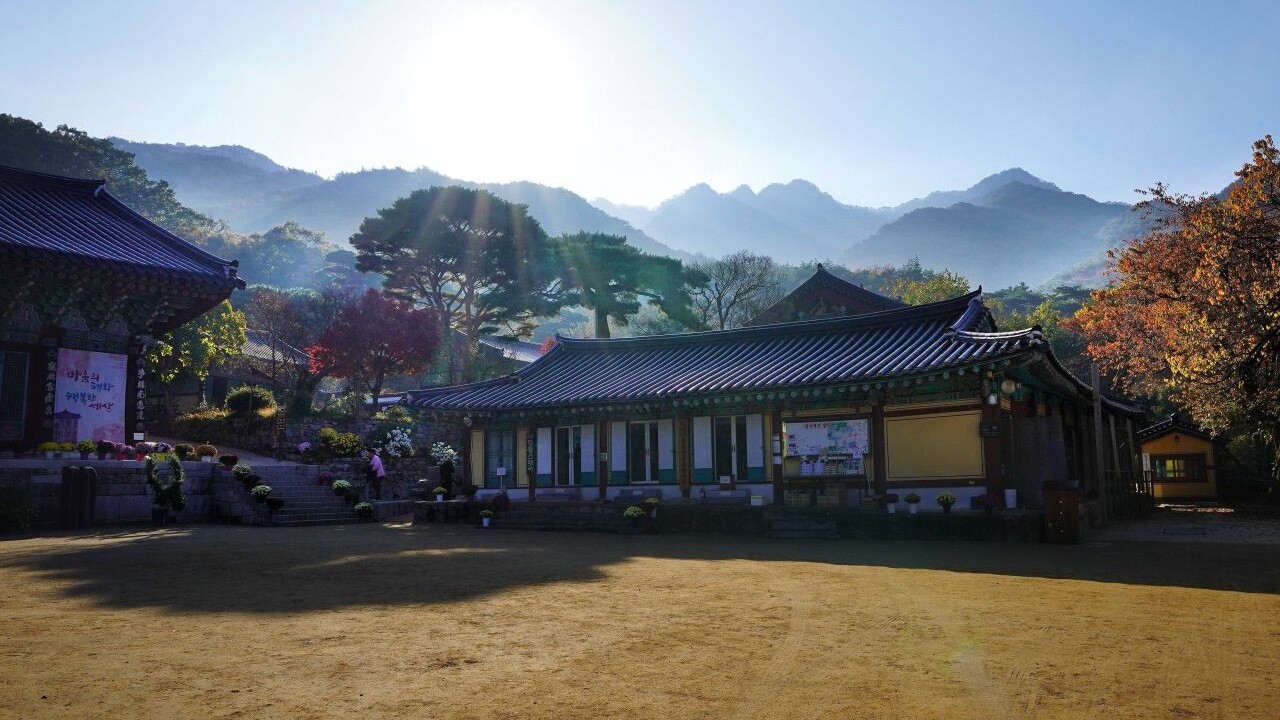
In the courtyard, the emphasis shifts from depth to width. A long tiled roof runs across the view, with the mountain ridge rising behind it. Sunlit ground creates a clear contrast with the shaded building front.
The temple’s history includes wartime destruction and rebuilding. A founding tradition does not establish that every hall has stood unchanged since antiquity. The arrangement of roofs and open ground provides something more tangible to look at.
The courtyard allows several buildings to remain visible at once. It connects views that feel separate along the wooded approach, giving the monastery a broader spatial rhythm.
Samseonggak and the details beneath the eaves
The small hall in the opening photograph is Samseonggak, rather than the main Buddha hall. Gapsa’s official heritage guide identifies it with Chilseong, Sansin and Dokseong, figures associated with a distinct part of Korean temple belief. Recognizing the hall gives the autumn scene a more specific subject.
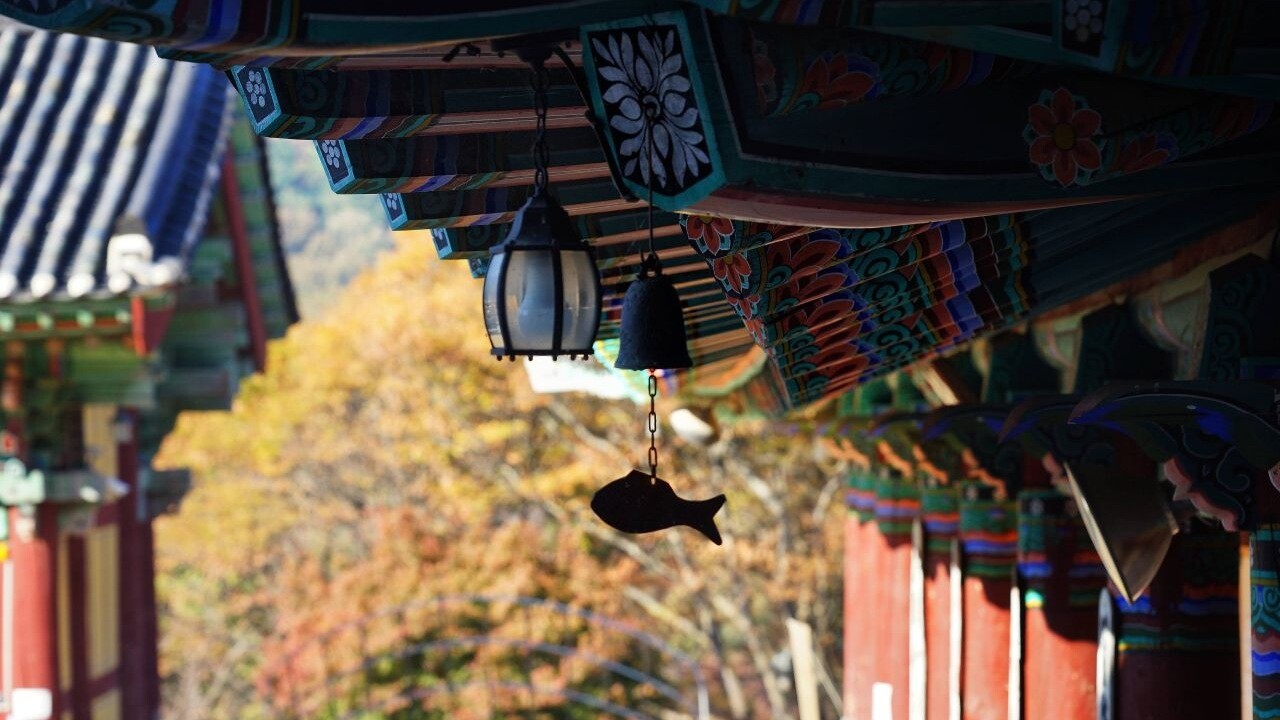
A closer view beneath the eaves brings painted brackets and a suspended fish-shaped chime into focus. Behind them, the trees become a softer layer of color. The shift from courtyard to detail is part of the appeal of looking slowly.
A still photograph cannot establish the sound of a chime at that moment. Its shape and position are enough to show the meeting point between the sheltered building and the air outside.
The rocky stream beside the monastery
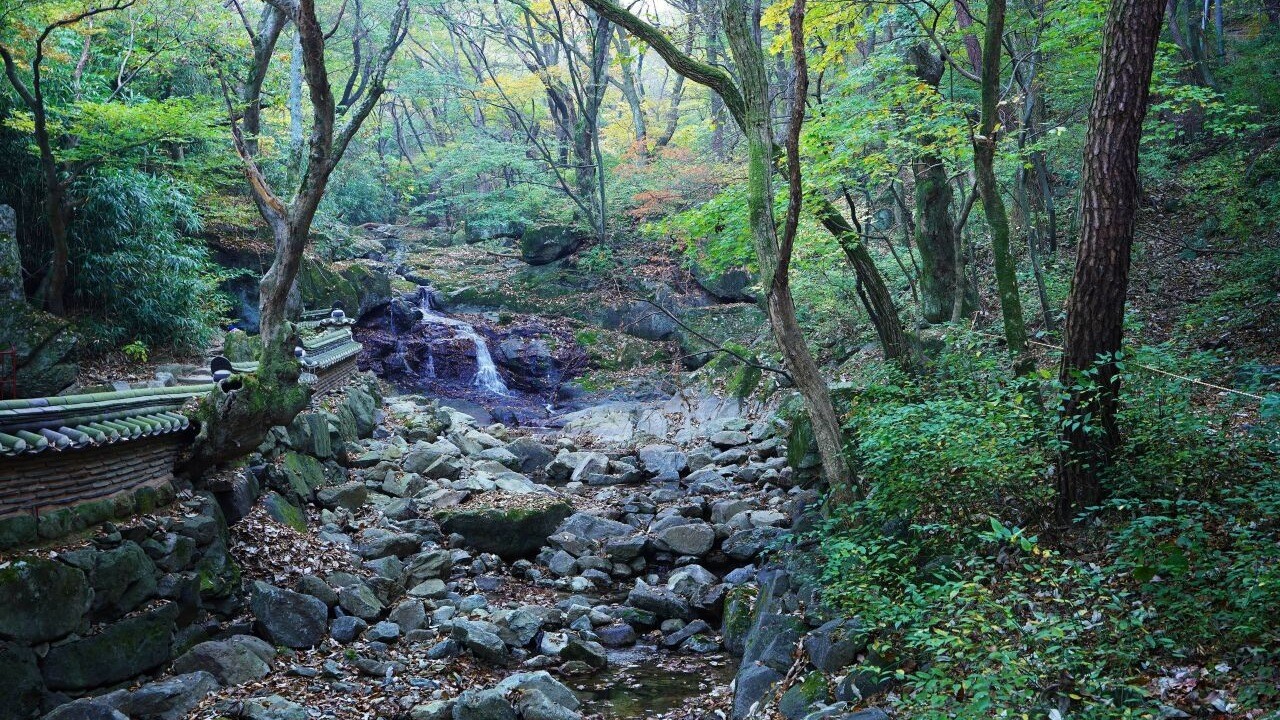
Beside the stream, irregular boulders interrupt the orderly lines of roof tiles and walls. Tree roots and branches occupy another layer. The scene is about how those different materials meet, rather than a guaranteed volume of flowing water.
For another temple landscape within Gongju, Magoksa’s river and two-tier hall offers a different relationship between water and architecture. This is a comparison of settings, not a claim that the two temples form a short connected walk.
Gapsa suits a fall trip built around changing the scale of your attention. A woodland path, a gate, an open courtyard and a small object under the eaves each reveal a different part of the same mountain monastery.
You May Also Like
by Google Adsense