Seonamsa Temple in Suncheon: The Stone Bridge, Gangseonru and Autumn Courtyards
Seonamsa Temple, Suncheon — a living Jogyesan monastery beyond Seungseongyo’s stone arch
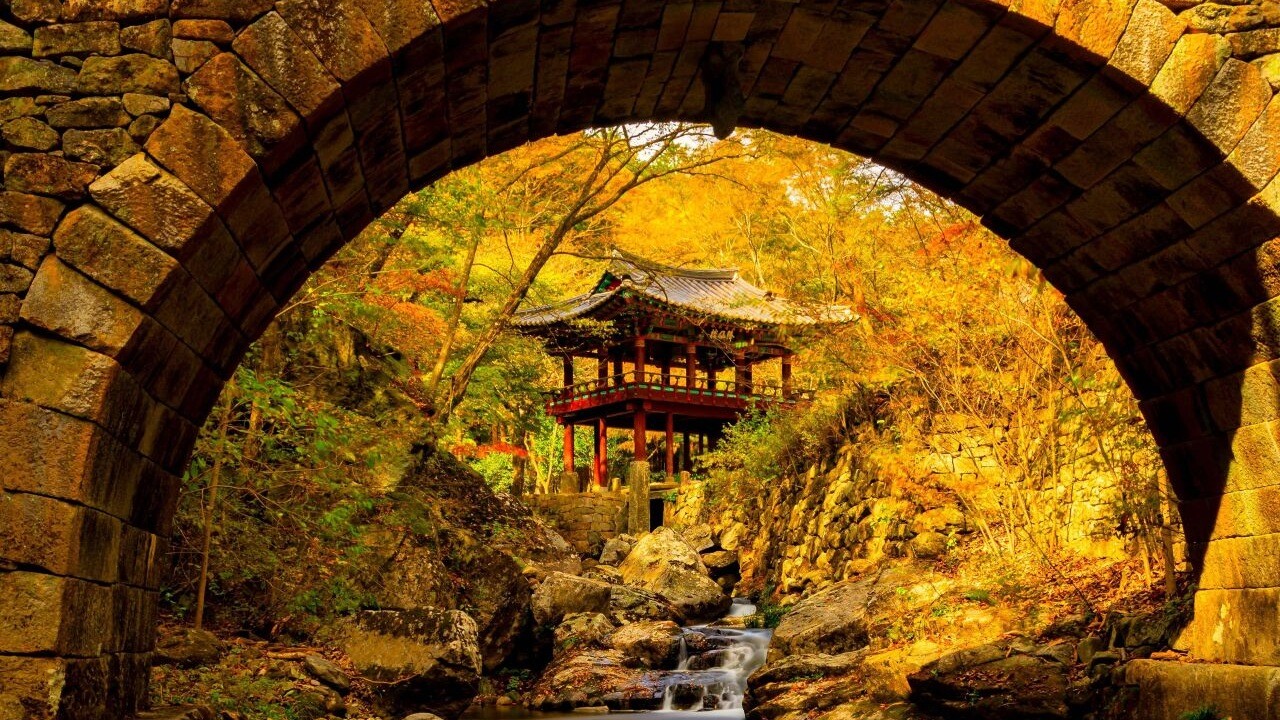
A pavilion appears inside the curve of a stone arch. Water and boulders fill the lower view, while yellow branches surround the roof above. The bridge becomes a frame for the landscape beyond it.
At Seonamsa Temple in Suncheon, that well-known composition links Seungseongyo Bridge with Gangseonru Pavilion. The monastery stands on the eastern side of Jogyesan, where streamside scenery gives way to gates, halls and smaller courtyards.
Seonamsa is one of the seven monasteries in Sansa, Buddhist Mountain Monasteries in Korea, inscribed on the UNESCO World Heritage List in 2018. The official Templestay introduction describes it as a continuing place of monastic life and practice.
The bridge photograph is an opening view rather than the whole story. Looking at low walls, wooden building fronts and the spaces between halls reveals how a living monastery differs from a single scenic landmark.
Seonamsa Temple’s entrance gate
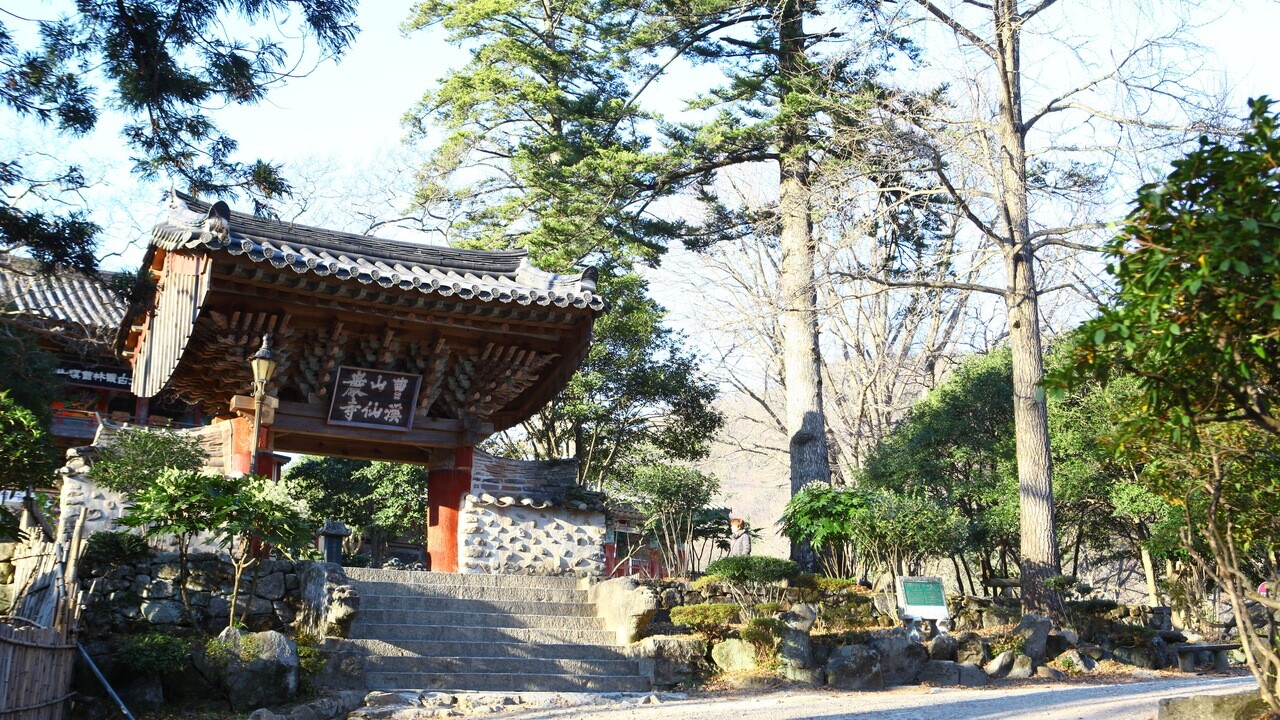
The entrance gate places a tiled roof above an open passage. Trees and stonework surround it, while the center remains empty. Its straight posts provide a different frame from the curved bridge arch.
Iljumun marks an entrance to the temple precinct. It gives a partial view inward instead of revealing the entire monastery at once. The change from a streamside composition to a closer architectural threshold is part of the setting.
Bare branches and darker evergreen foliage can make the roofline especially clear. A fall landscape need not show every tree at the same stage of color to reveal its structure.
Low walls and connected courtyards
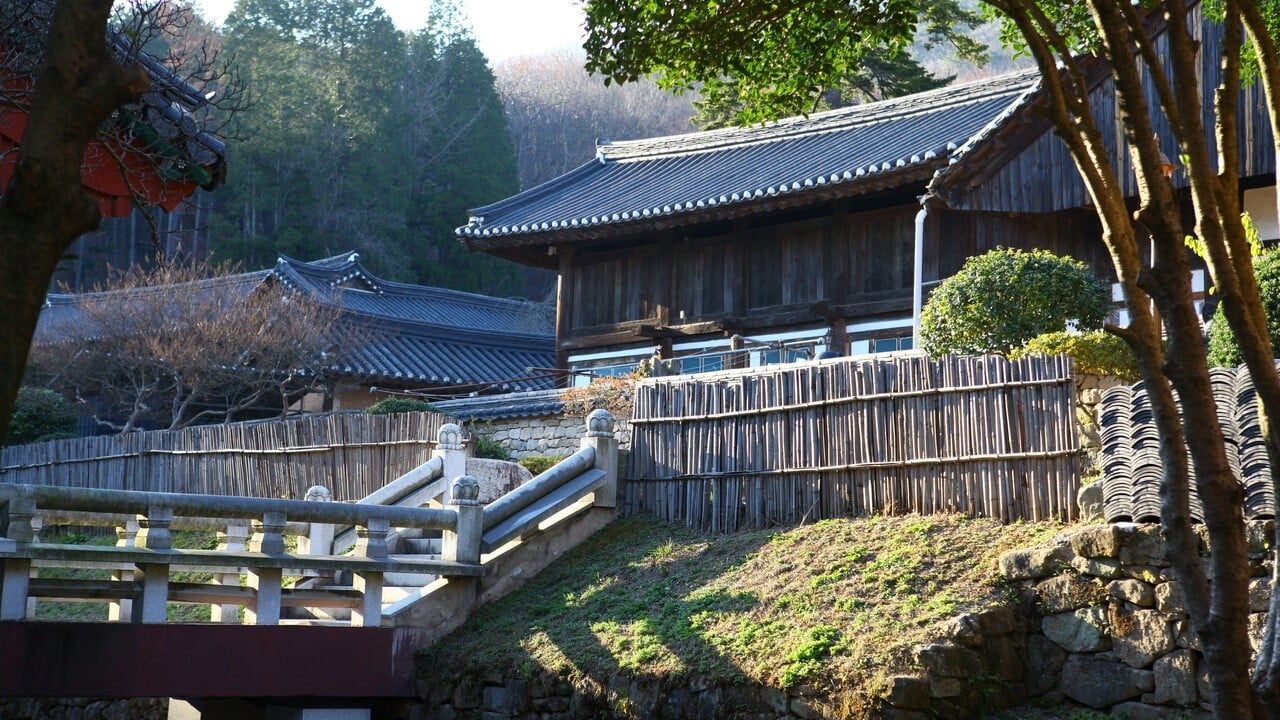
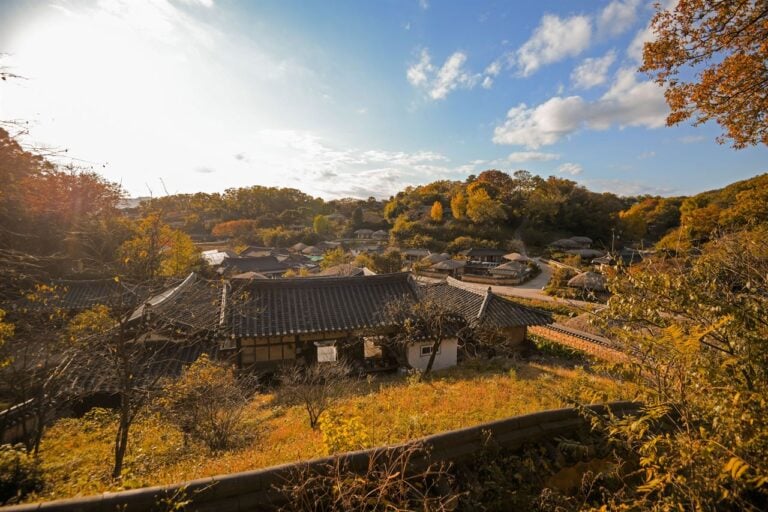
A wooden fence and stone wall divide the foreground from a long building behind. A small bridge leads across the lower space toward the raised ground. These modest boundaries organize the view without hiding the roofs and trees.
A mountain monastery contains more than a main worship hall. Buildings for practice and daily life sit near one another, with paths and courtyards connecting them. The less prominent spaces help make that arrangement visible.
The grounds remain a religious setting. A photograph of a path does not establish unrestricted access to every building or interior, and a visitor’s view is only one part of the life of the monastery.
The steps and eaves of Eungjindang
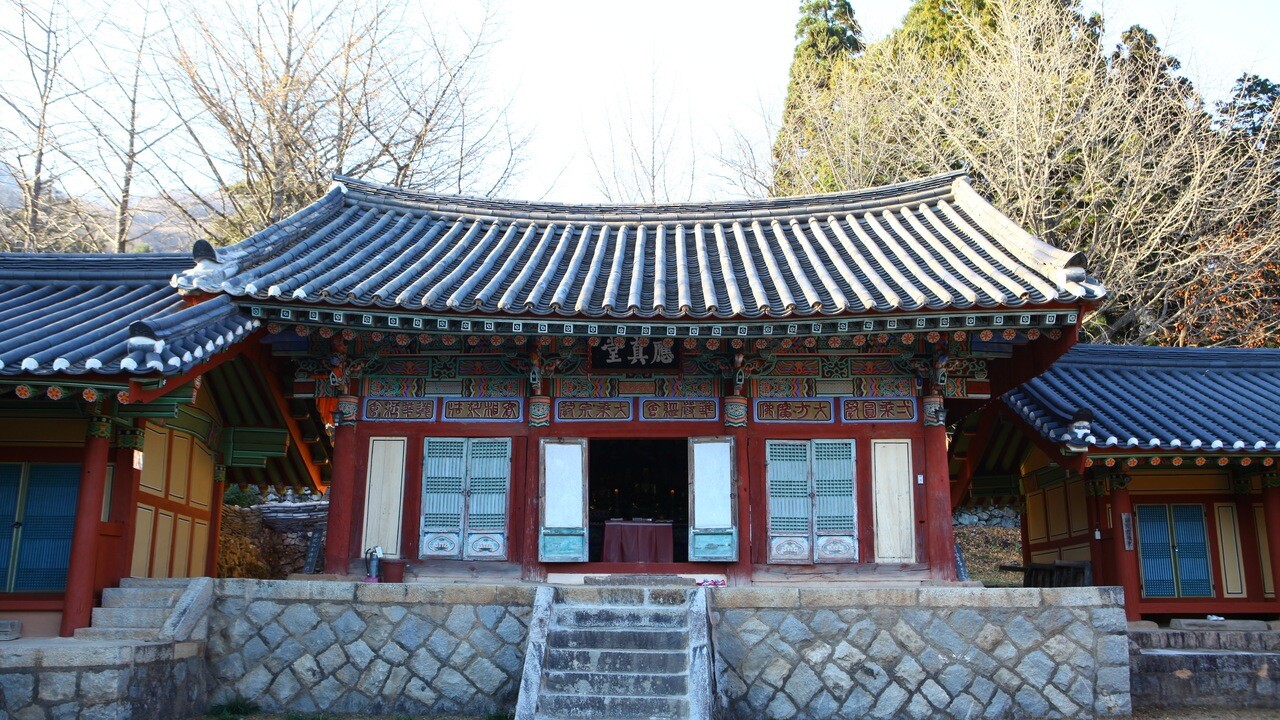
Gray roof tiles, red columns and pale doors form distinct layers above the stone foundation. Steps lead toward the center, while an adjoining roof continues the view sideways. The courtyard gives these lines room to remain separate.
This scene changes the emphasis established by the bridge. A round arch and moving water give way to the more regular geometry of roof, platform and facade. Architecture becomes the main subject, with the woodland behind it.
The temple’s official history records repeated damage, rebuilding and repair. Its long religious history should not be confused with a claim that every visible structure has remained untouched since the temple’s founding.
A stone-walled lane beside wooden buildings
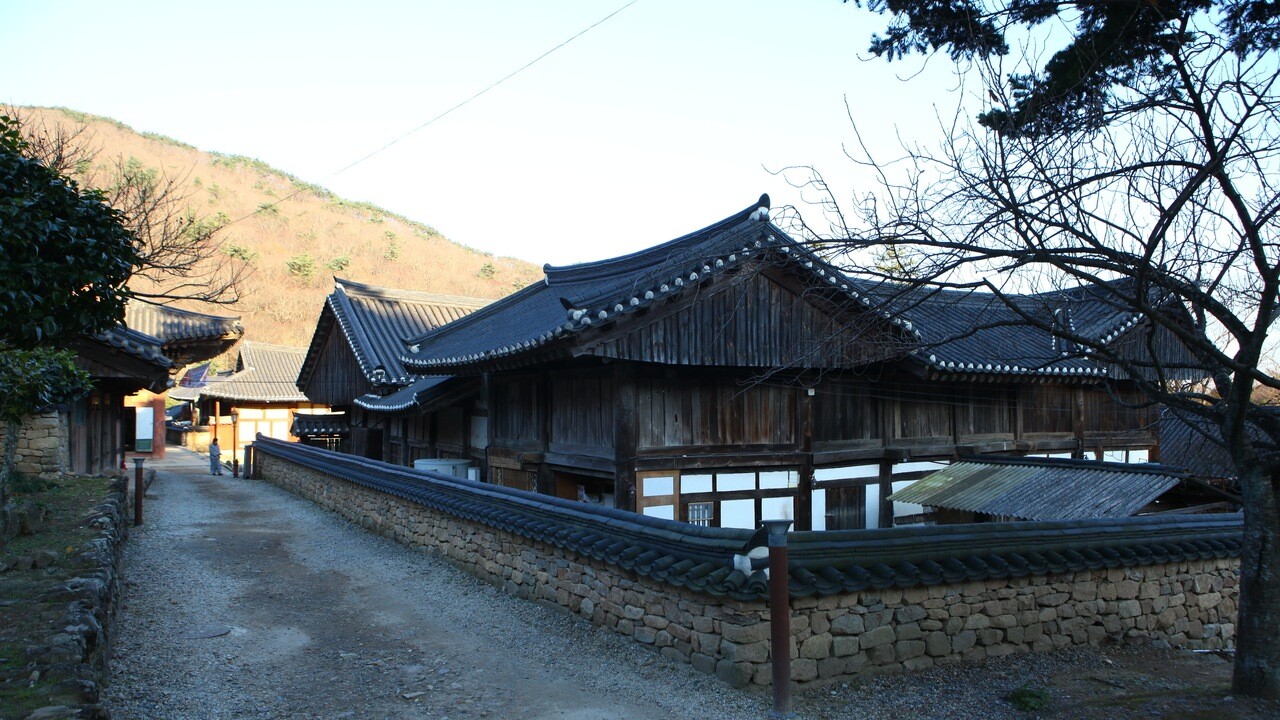
Along the side of the buildings, the view stretches out. Wooden walls rise above stonework, and the eaves cast a long band of shade. Repeated windows and posts draw attention to everyday architectural details.
Seonamsa is a Taego Order chongnim, a monastic complex for religious practice and education. That continuing function gives the less decorative buildings a place in the story. They belong to the monastery’s working setting rather than serving only as a scenic backdrop.
Low walls still define boundaries between spaces. The lane shown in the photograph explains their relationship, without promising that all areas are currently open to visitors.
Woodland beyond the famous bridge view
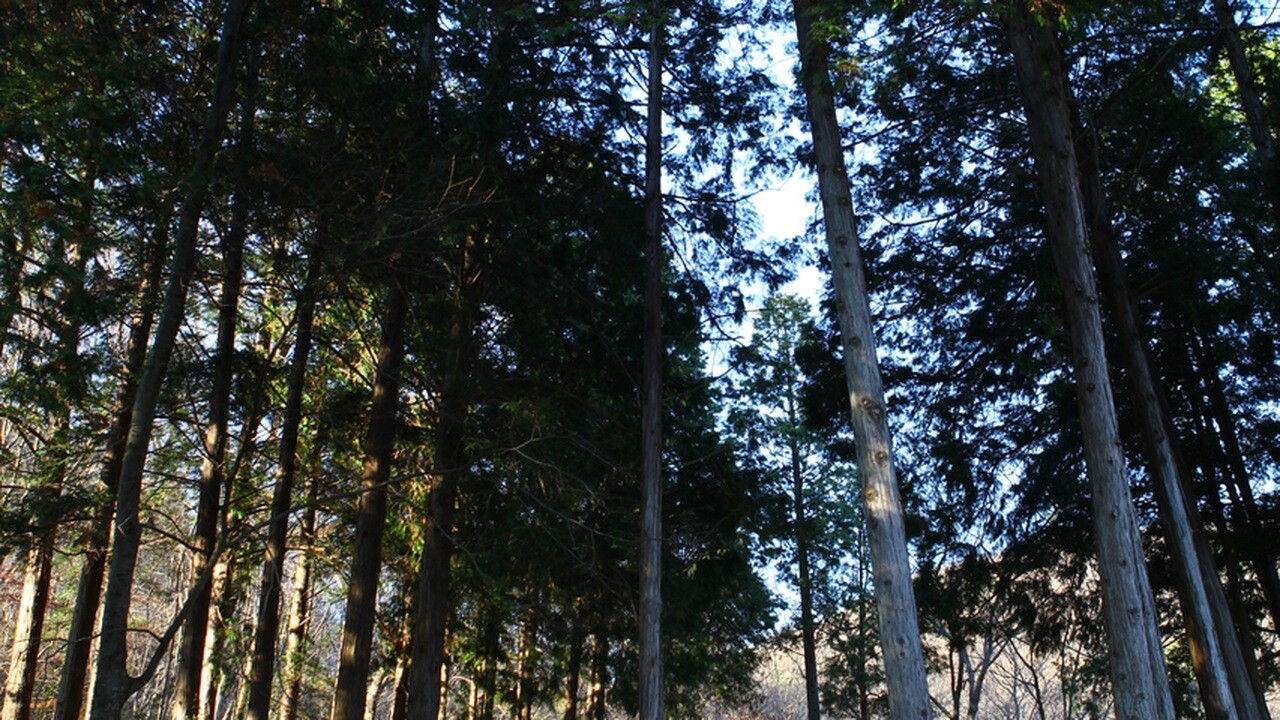
In the forest, trunks take the place of columns and branches replace the roof’s fixed edge. Patches of sky open between them. The view becomes broader again after the enclosed spaces of gate and courtyard.
For a different temple-and-water landscape, Seonunsa’s Dosolcheon reflections in Gochang place greater emphasis on the stream’s surface. Seonunsa and Seonamsa are different temples in different cities, despite their similar English names.
Seonamsa fits an autumn trip that makes room for both the familiar bridge composition and the quieter architecture behind it. The arch, the pavilion, the gates and the long stone walls give the visit a coherent subject beyond a promised peak-color day.
You May Also Like
by Google Adsense