Bulguksa Temple in Fall: Stone Bridges, Twin Pagodas and Gyeongju’s Autumn Colors
Bulguksa Temple, Gyeongju — stone terraces, contrasting pagodas and fall foliage at a Silla Buddhist site
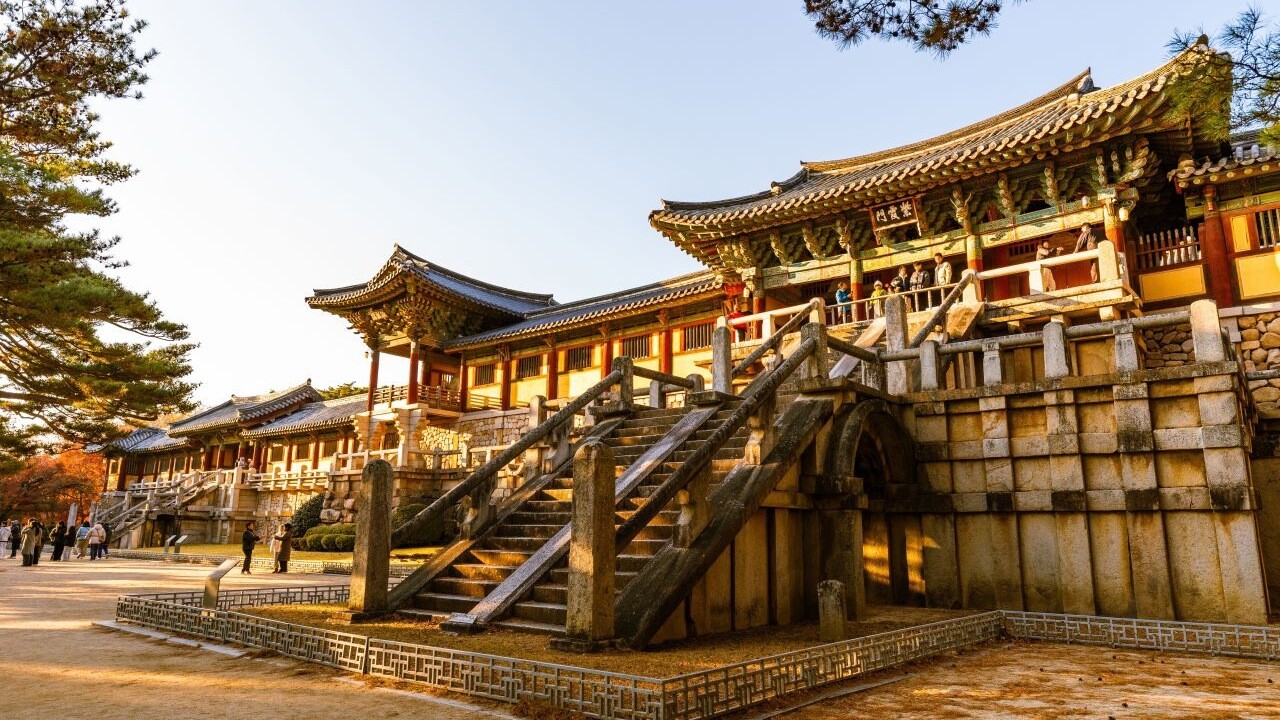
A broad stone terrace lifts a row of tiled roofs above the ground. Steps cut diagonally across the facade; wooden columns and painted brackets occupy the level above them. The first impression comes from layers of material as much as color.
Bulguksa Temple in fall brings a close architectural subject to a Gyeongju itinerary. At the foot of Tohamsan Mountain, this Buddhist temple combines stone terraces, enclosed courtyards and two pagodas with strikingly different outlines.
The Korea Tourism Organization’s destination guide connects the temple with Kim Dae-seong’s rebuilding in 751, while also describing later destruction and restoration. The visible complex represents several periods of work, rather than an untouched group of buildings from a single year.
Fall foliage adds a changing foreground to that structure. Looking between leaves, pond water and carved stone gives a visit several subjects, even when the trees are at different stages of seasonal change.
Bulguksa Temple in fall: a bridge over water
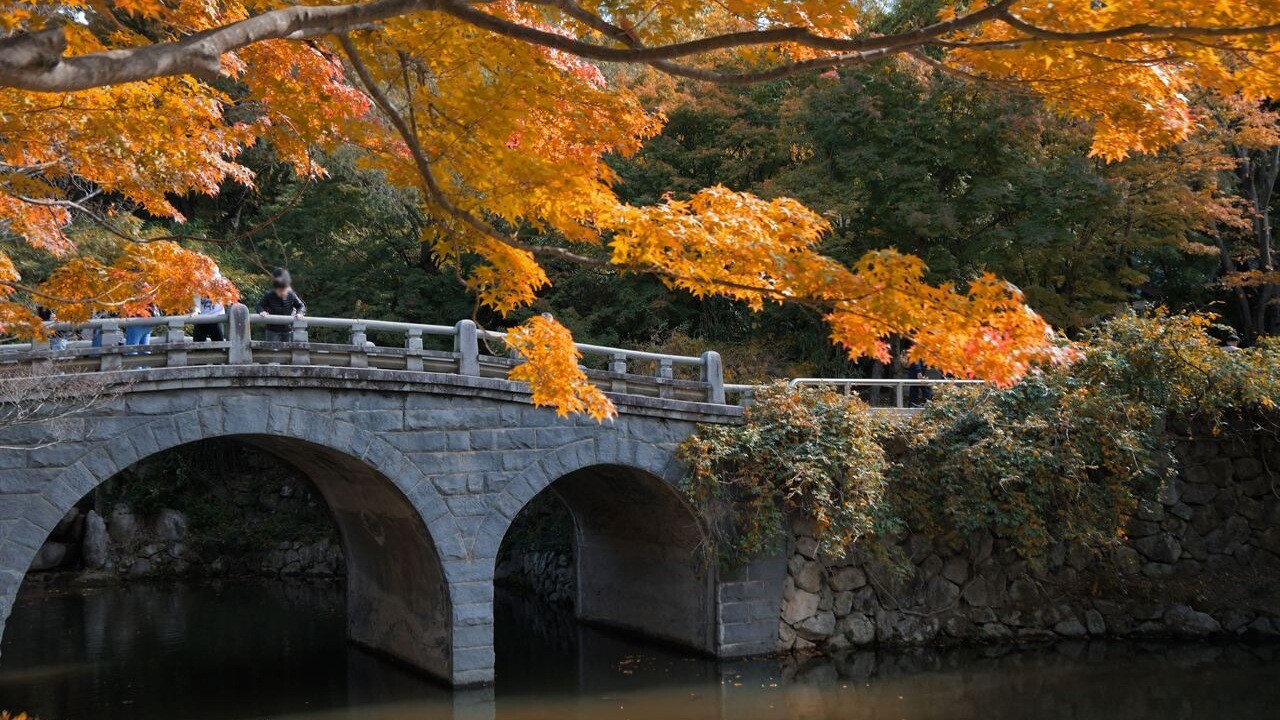
Rounded arches open beneath the stone parapet. Water darkens the space below the bridge, while branches cross its upper edge. The contrast is between a firm curve and a much less regular canopy.
This pond bridge is a separate feature from Cheongungyo and Baegungyo, the historic stair bridges at the main stone terrace. Keeping them distinct helps make sense of photographs that show very different kinds of “Bulguksa bridge.”
Reflections depend on light, wind and the water surface. The meeting of stone and water remains worth looking at without expecting every detail of a still photograph to appear during a visit.
Leaves at close range
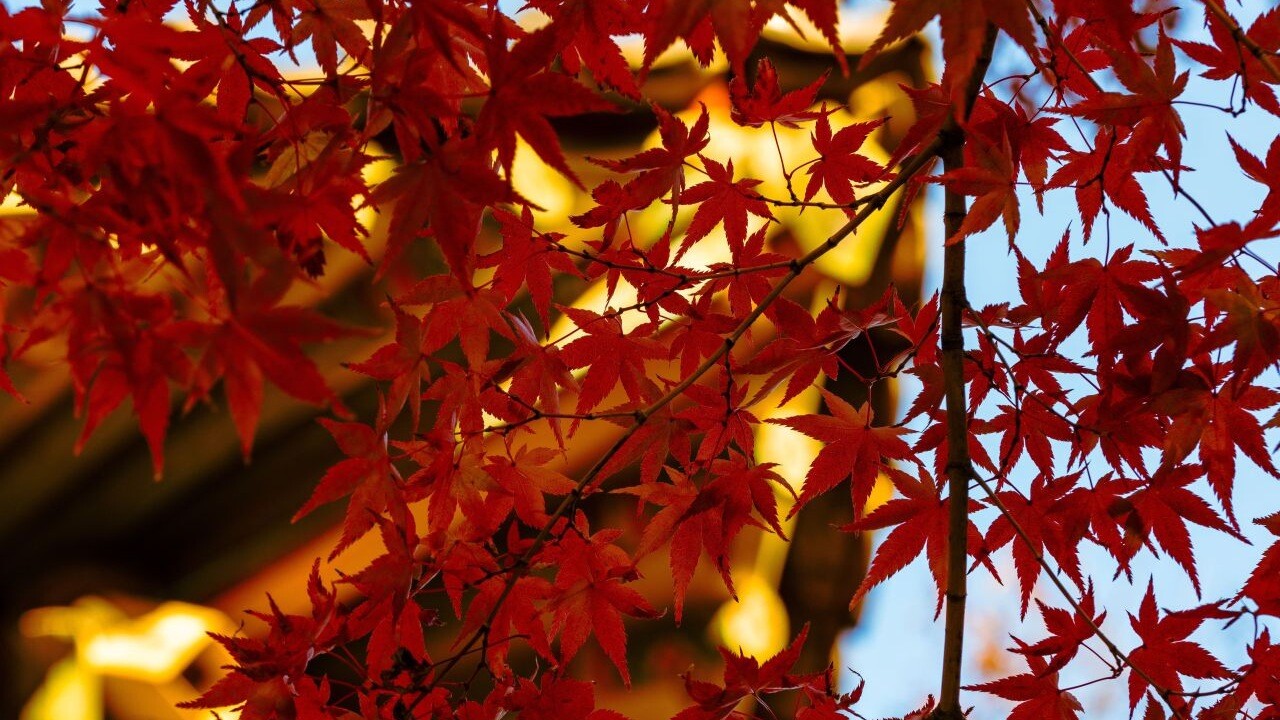
At close range, the canopy contains several shades. Backlit edges appear orange; overlapping leaves create darker red patches. Small pieces of sky separate one leaf from the next.
Gyeongju’s seasonal tourism guide describes early November as a customary foliage period at Bulguksa. That general pattern is not a confirmed forecast for this year or an observation of the trees today. Individual trees and weather can shift the picture.
After this translucent surface, stone feels different: light rests on its face rather than passing through it. Comparing those materials gives the autumn landscape a subject beyond finding the brightest branch.
Dabotap and Seokgatap in one courtyard
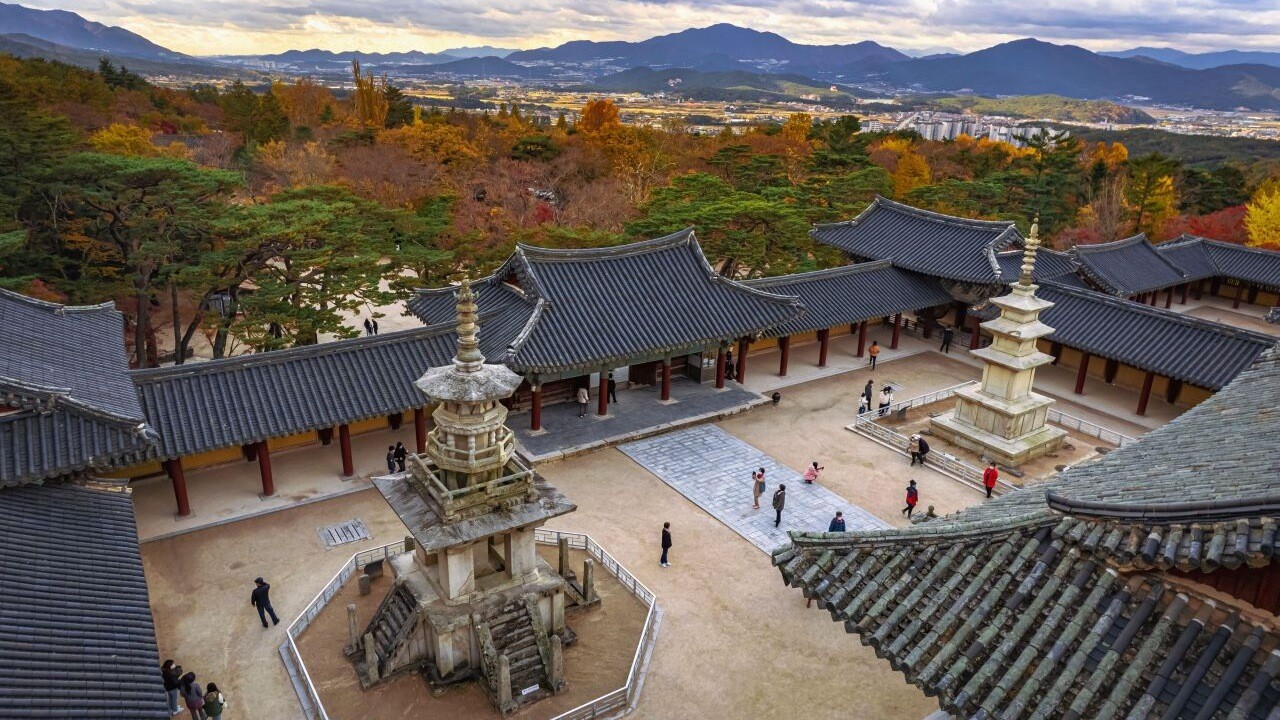
From above, the surrounding corridors define the shape of the courtyard. Two pagodas stand within that space. Their vertical forms contrast with the low, extended roofs around them.
Dabotap has an intricate arrangement of platforms, columns and railings. Seokgatap presents three more restrained tiers. They share a material and a courtyard while offering very different ways of building upward.
The elevated photograph explains the layout; it does not imply that visitors can reproduce this viewpoint from a public platform. At ground level, details of the stones and rooflike tiers become the closer subject.
Dabotap beneath a frame of wooden eaves
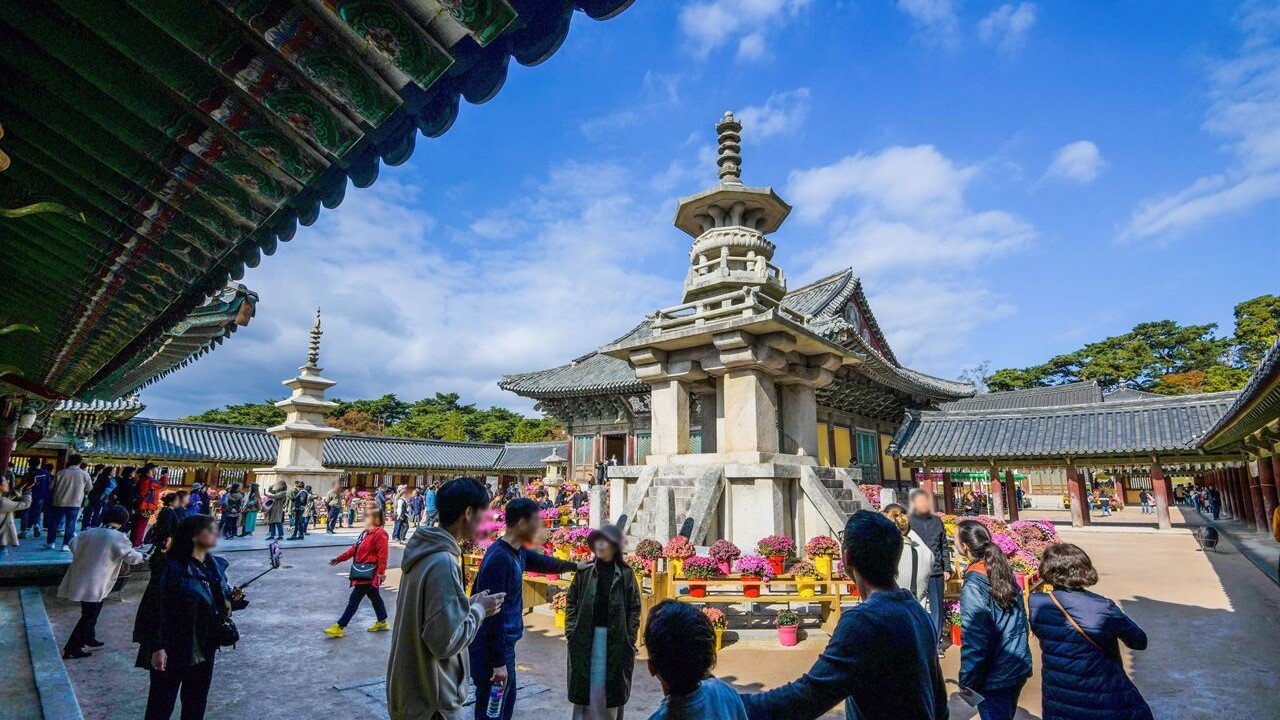
Wooden eaves frame the upper corner, leaving Dabotap against the sky. Nearby people make the pagoda’s scale easier to judge. Its compact stone elements differ from the much broader roof behind it.
A shift in position changes the relationship between tower and courtyard. From the corridor edge, shade creates a foreground; in the open space, more of the tower’s outline separates from nearby buildings.
Bulguksa and Seokguram Grotto were jointly inscribed on the UNESCO World Heritage List in 1995. Here, that broad heritage identity becomes tangible through the smaller differences between carved stone, timber and open ground.
Rooflines behind yellow foliage
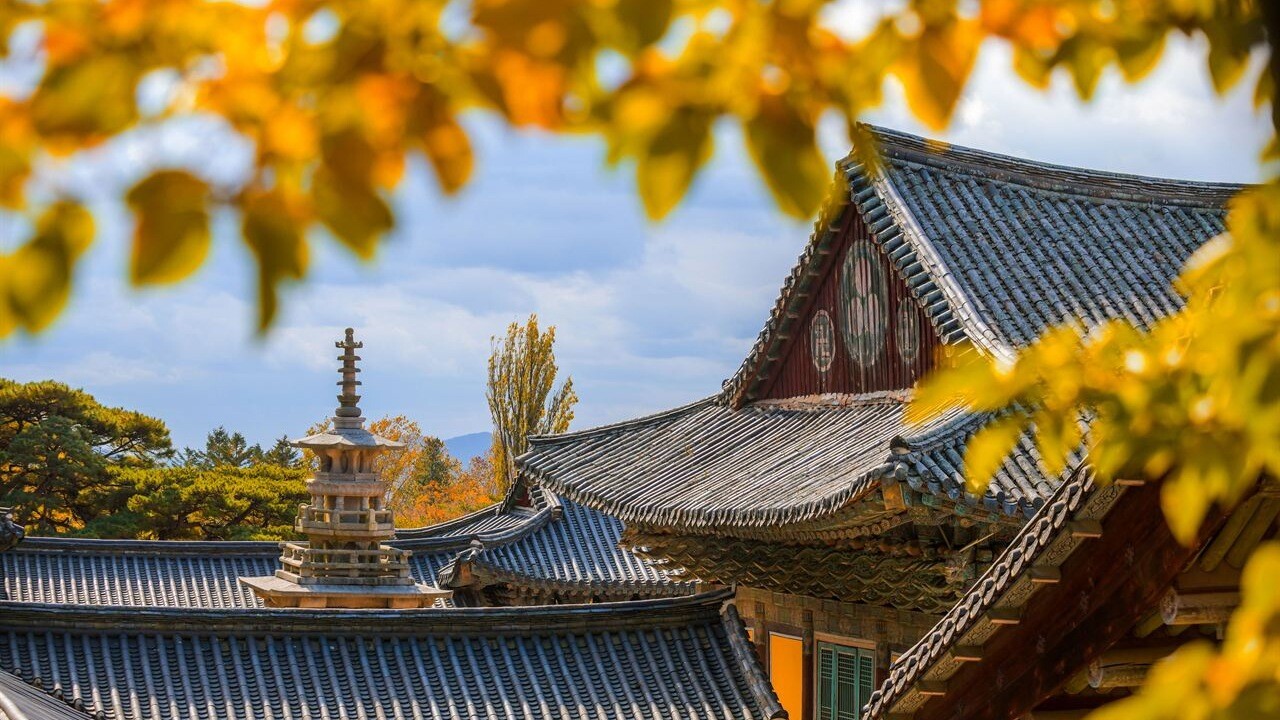
Yellow leaves partly conceal the roofs. Behind them, only a portion of the pagoda remains visible. A subject that occupied the center of the courtyard becomes a smaller marker in a layered view.
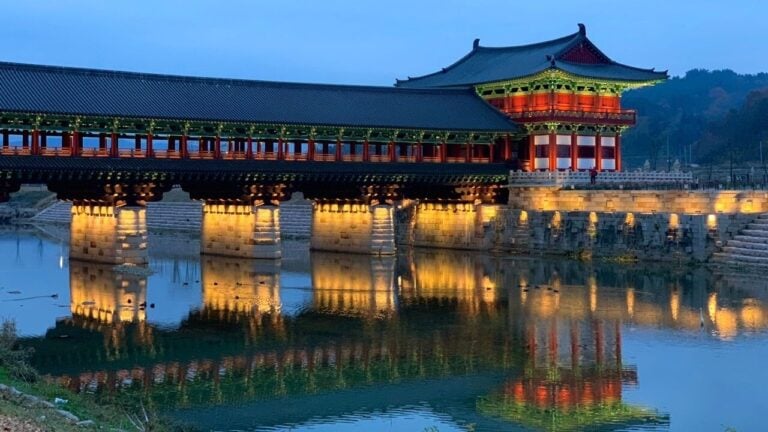
For a different meeting of architecture and water in Gyeongju, Woljeonggyo Bridge after dark puts the emphasis on illuminated timber and river reflections. It offers a contrasting subject rather than a reason to rush through the temple.
Bulguksa suits a fall visit that leaves room for detail. The pond arches, raised terrace and contrasting pagodas offer a clear thread through the grounds, with autumn color changing the frame around them.
You May Also Like
by Google Adsense