Upo Wetland in Autumn: Woodland Paths, Levees and Waterbirds in Changnyeong
Upo Wetland, Changnyeong — a fall landscape of open water, wooded edges and changing perspectives
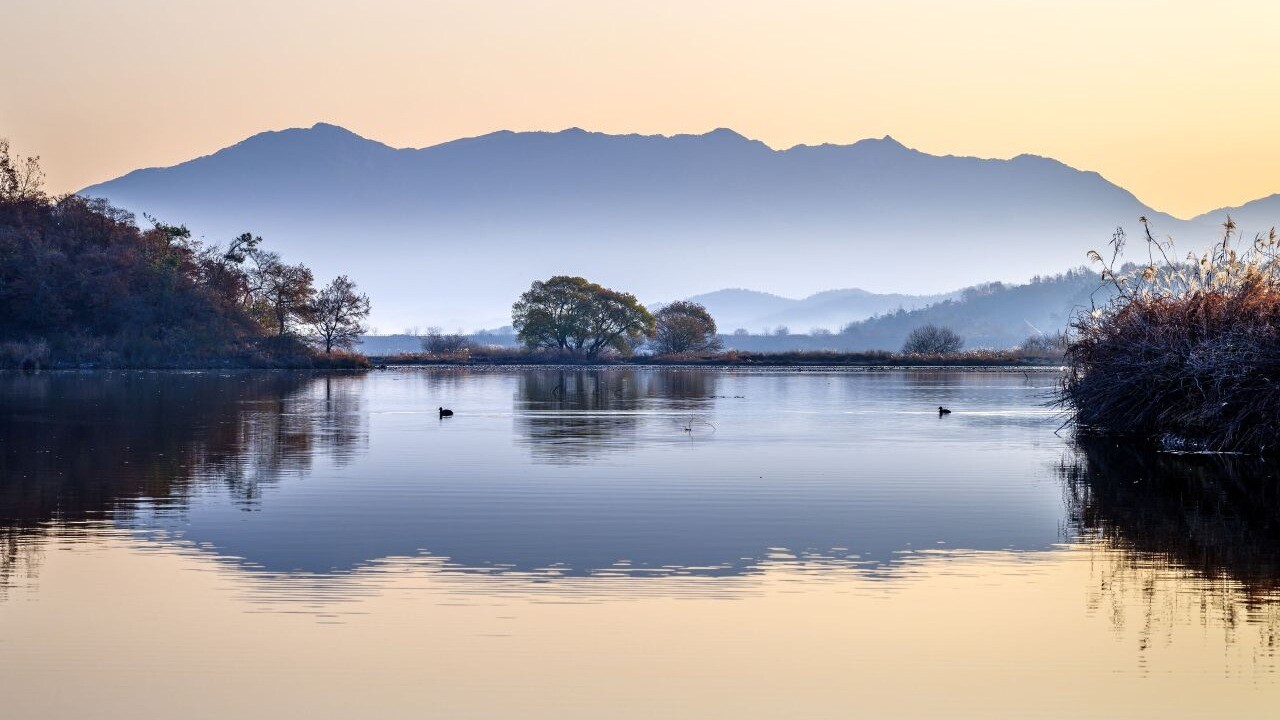
Water carries a second outline of the trees. Dark branches define the near shore, while a low ridge separates the pale sky from its reflection. The view has depth even where the surface looks almost flat.
Upo Wetland is a freshwater wetland in Changnyeong, South Korea. For a fall itinerary, its appeal extends beyond an open-water viewpoint: wooded paths, exposed levees and patches of waterside vegetation create several distinct settings.
The Korea Tourism Organization’s English destination page identifies the wetland and its Changnyeong location. The broader landscape is easier to understand as a connected wetland system than as a single decorative pond with a uniform shoreline.
Autumn here offers a change of scale. Branches can fill the view along a wooded path; a short distance away, sky and water become the dominant shapes. Those transitions give a walk its structure without requiring a particular foliage peak.
Upo Wetland’s wooded paths in fall
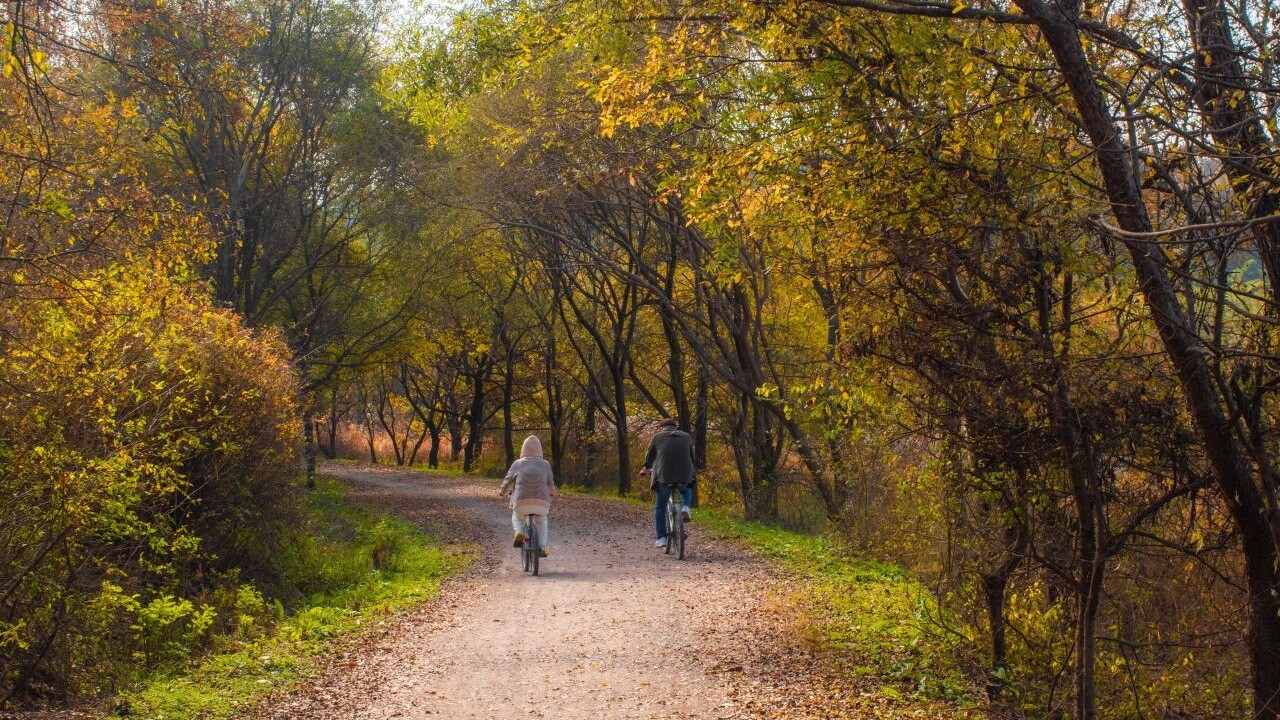
Thin trunks and overhanging branches form a loose canopy. Dry leaves scatter across the pale path, and the far end disappears between trees. The subject is close and enclosed, unlike the wide water in the opening view.
Woodland is part of the wetland experience rather than a separate attraction. It screens the open landscape, then allows it to reappear through gaps. That alternation makes the size of the surrounding water more noticeable.
The wooded edge offers details at eye level: slender trunks, scattered leaves and the curve of the path. These close subjects give a walk a different pace from a distant view across open water.
Open sky along the levee
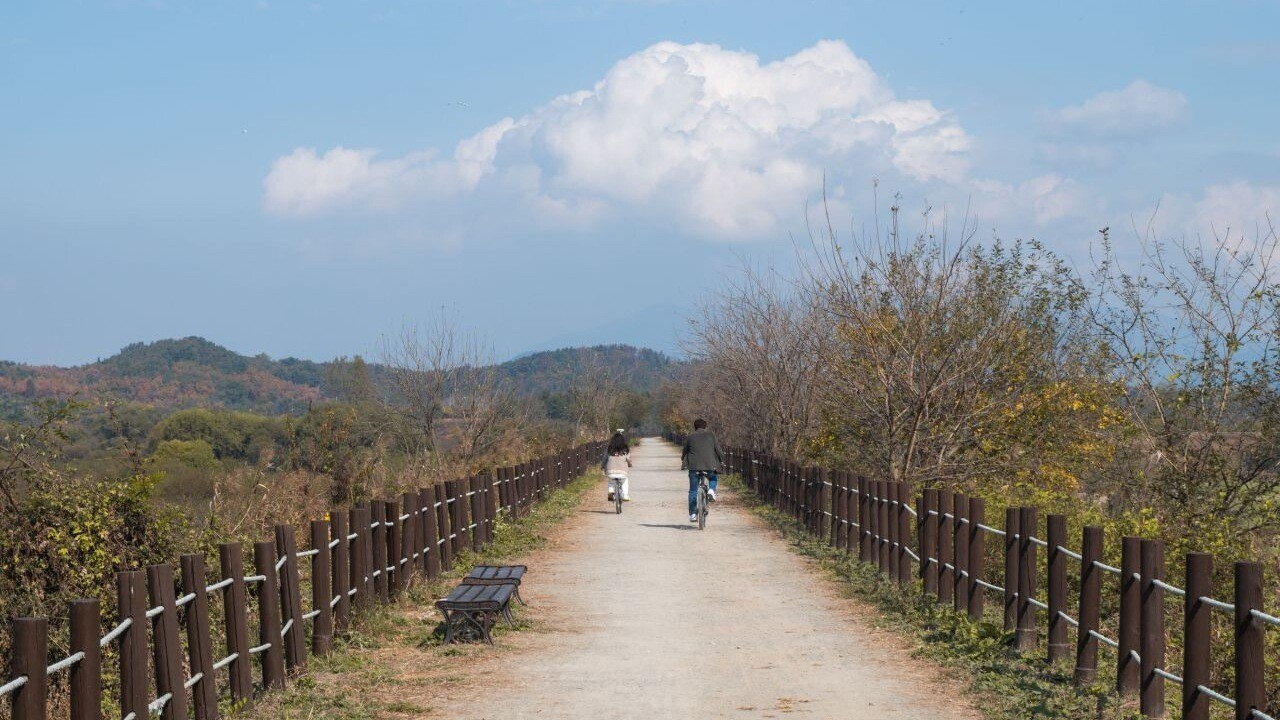
Two low fence lines lead toward distant trees. With no dense canopy overhead, clouds occupy much more of the frame. A bench and the figures farther down the path provide a human scale.
The county’s official walking-route guide lists a short loop from the Eco Center through the first observatory and a forest trail, at 1 kilometer and approximately 30 minutes. That offers a useful sense of scale for a shorter visit, with both a viewpoint and a wooded section in the same outing.
Upo also has longer circuits, but distance alone is a poor measure of what the landscape offers. The shift from a tree-lined passage to an open edge can be more memorable than completing the longest available route.
Waterbirds and the marks they leave
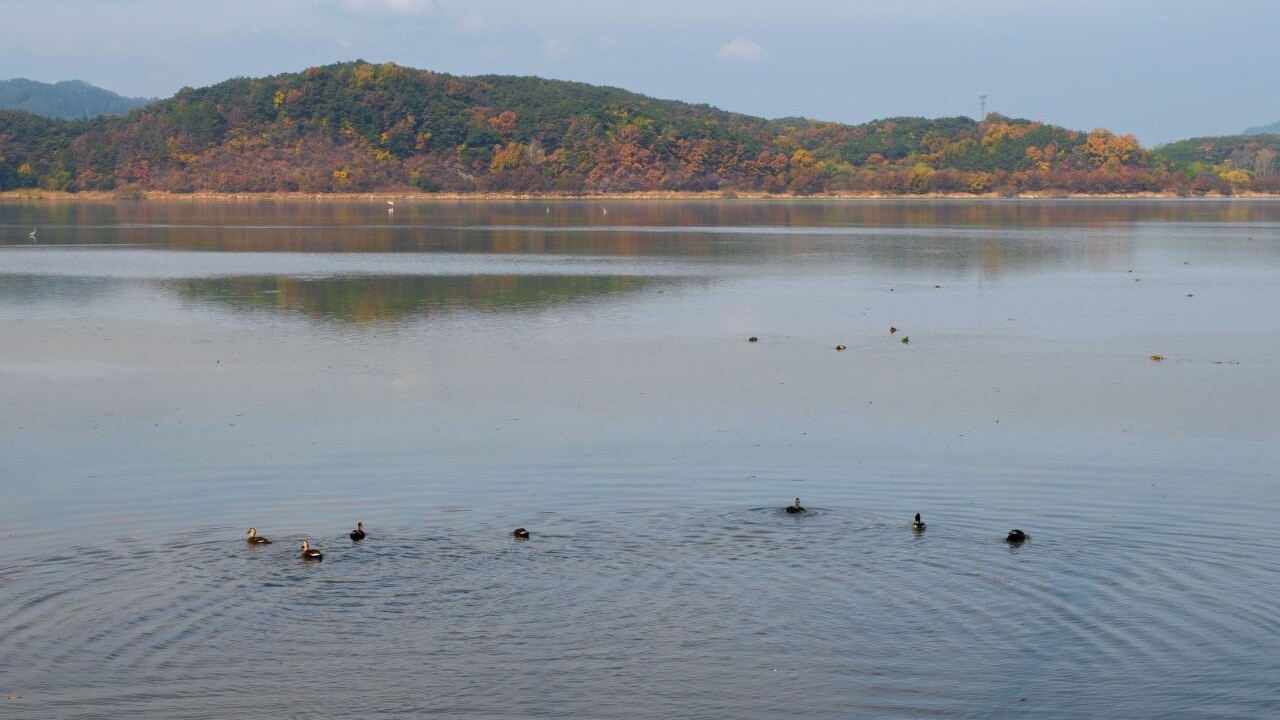
A bird’s wake makes a narrow line across the reflection. Farther away, the wooded shore forms a broad band of color. Small movements and large shapes occupy the same surface.
Birdwatching here can begin with behavior rather than a checklist of species. Watching the direction of a wake or the spacing between birds reveals activity that is easy to miss in a quick panoramic view.
The birds present, their numbers and their positions change. A photographed flock is a record of one moment, not a promise of the same encounter on a future visit.
The wetland edge beyond the water view
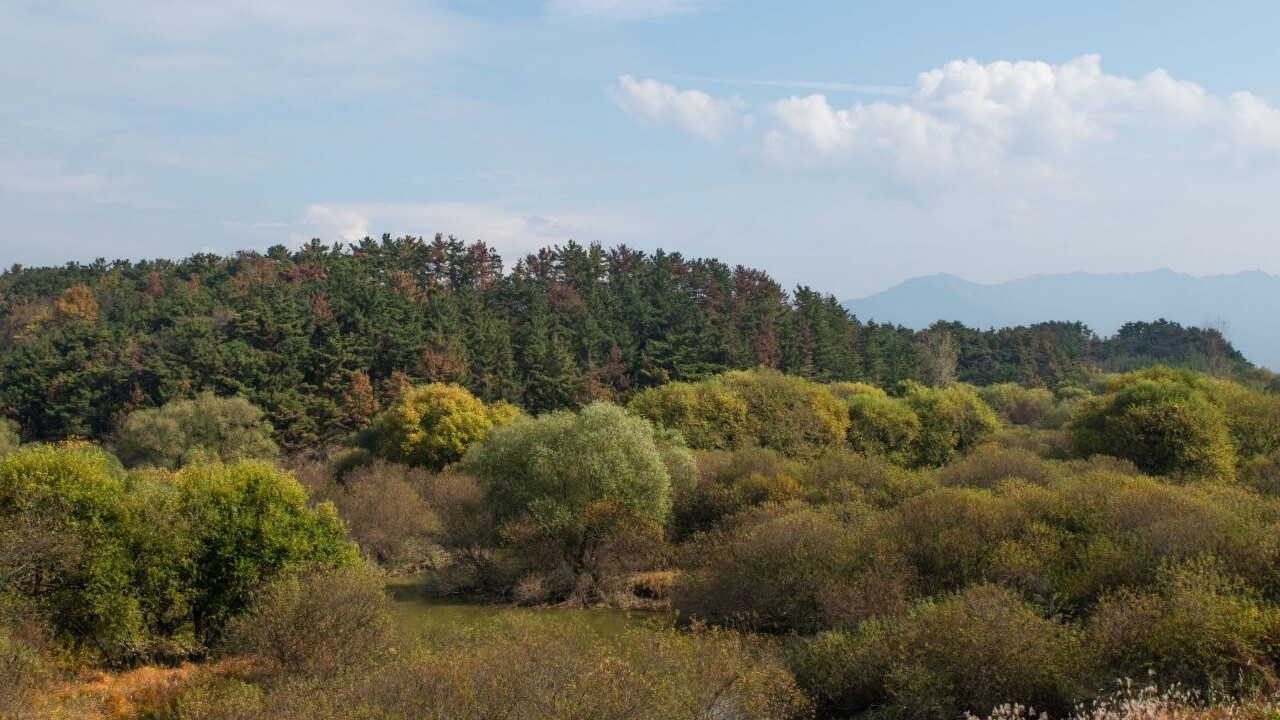
Low grasses give way to rounded shrubs and a taller wooded backdrop. Green foliage remains beside yellow and brown tones. The scene has several levels even where open water is mostly hidden.
A freshwater wetland includes these transitional margins. They keep the landscape from reading as a simple divide between blue water and dry land. Looking across them brings texture and plant height into the picture.
Leaf color, water level and wind do not follow a single schedule. Upo is best approached as a changing wetland landscape, with autumn color as one element among several.
A wide view that holds both activity and space
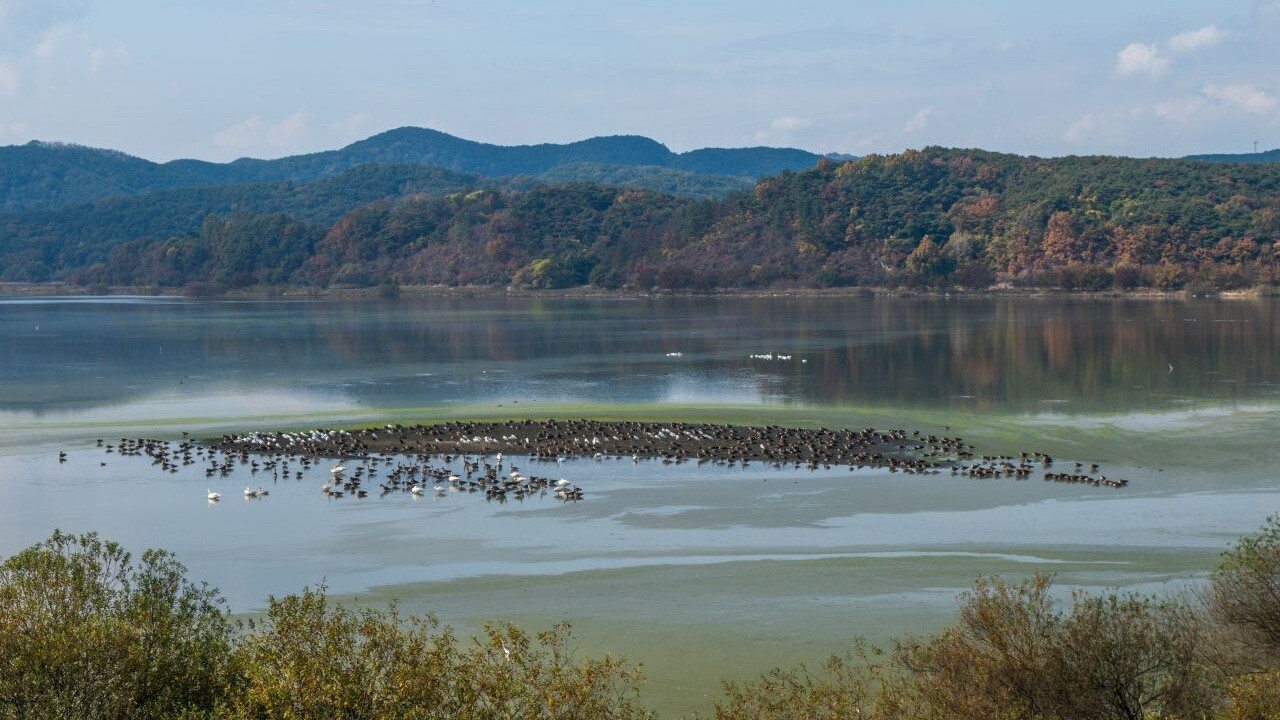
A dense group of birds occupies one part of the water while the surrounding surface stays open. The contrast between clustered shapes and empty space makes the wetland’s width apparent.
For another Korean waterside landscape, Sinseongri Reed Field in Seocheon places tall stems close to the visitor’s eye. Upo offers a different relationship: more space between the near bank, the birds and the far wooded shore.
Upo suits a fall outing centered on those changing perspectives. Moving from woodland to levee, then from a small ripple to a distant ridge, gives the visit a rhythm that lasts beyond a single reflection or patch of bright leaves.
You May Also Like
by Google Adsense