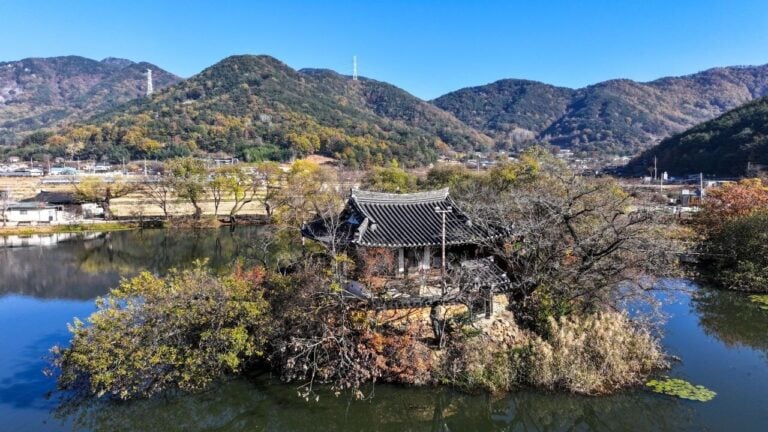
Jeonju Arboretum in Fall: Pond Paths, Garden Rooms and Maple Canopies
Jeonju Arboretum — a Korea Expressway Corporation garden with ponds, wooded paths, and intimate plant displays
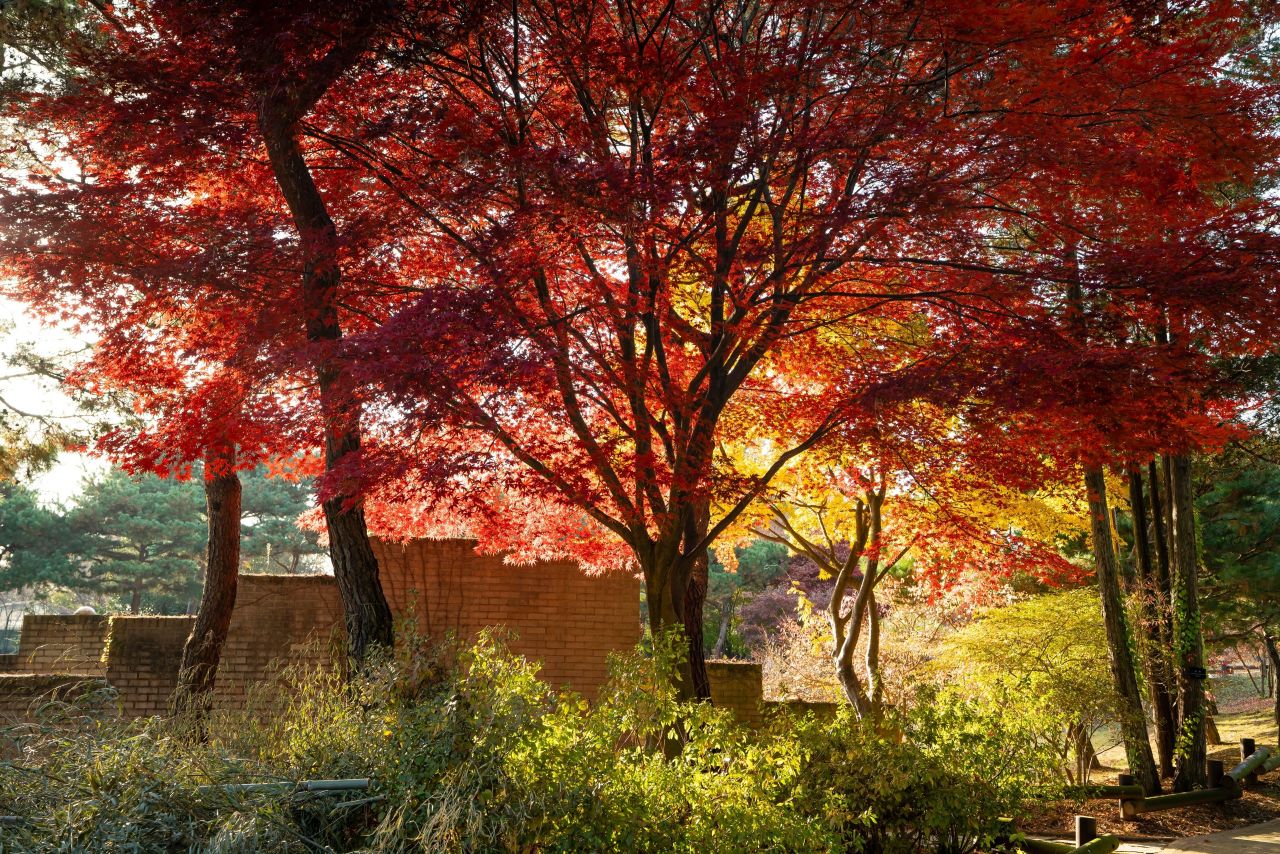
A maple canopy can make the space beneath a tree feel like a room. At Jeonju Arboretum, that close view opens into pond edges, modest pavilions, and smaller gardens divided by hedges and paths.
The arboretum sits in Jeonju’s Deokjin district and is operated by Korea Expressway Corporation. Its setting offers a plant-centered counterpart to the city’s better-known hanok streets: the changing view comes from branches, water, and the arrangement of living collections.
A fall walk here can move between those different scales. Look up into a canopy, follow a bend in the path, then step back to see how a pond organizes the trees around it. The appeal lies in those transitions as much as in any single patch of color.
Follow Jeonju Arboretum’s path toward a pavilion
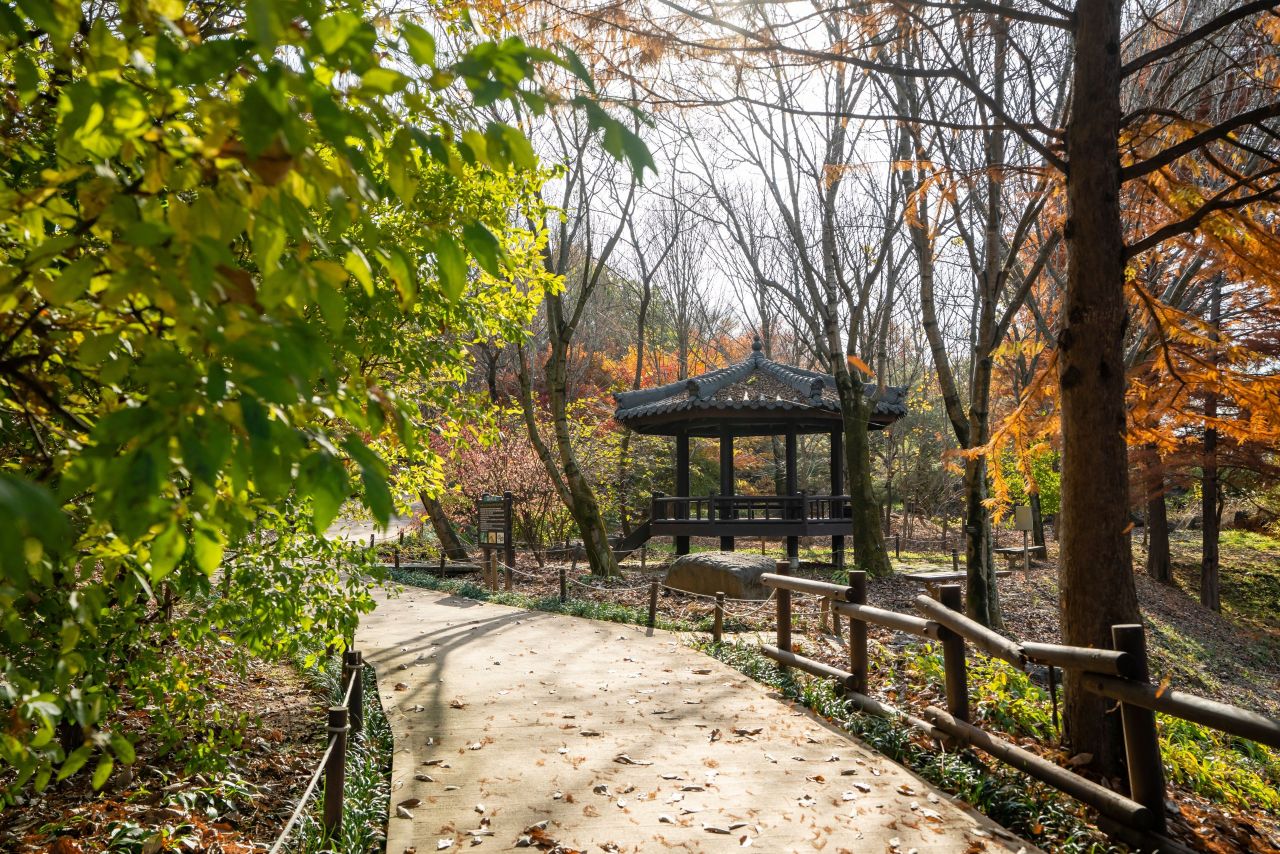
A wooden railing follows the curve of a path while a pavilion sits among the trunks beyond it. The roof gives the eye a destination without revealing the entire garden at once. Nearby leaves change the frame as the path turns.
That makes the smaller structures useful visual markers. From one angle a roof is partly hidden; from another, the space around it becomes clearer. A garden can reveal itself through these short shifts rather than through a long, uninterrupted view.
The arboretum’s planted collections also invite a closer look at spacing. Tall trees, low growth, and open ground each play a part in shaping the path. Reading those relationships gives the walk a rhythm beyond simply moving from one named area to the next.
Read the rows of trees from the pond edge
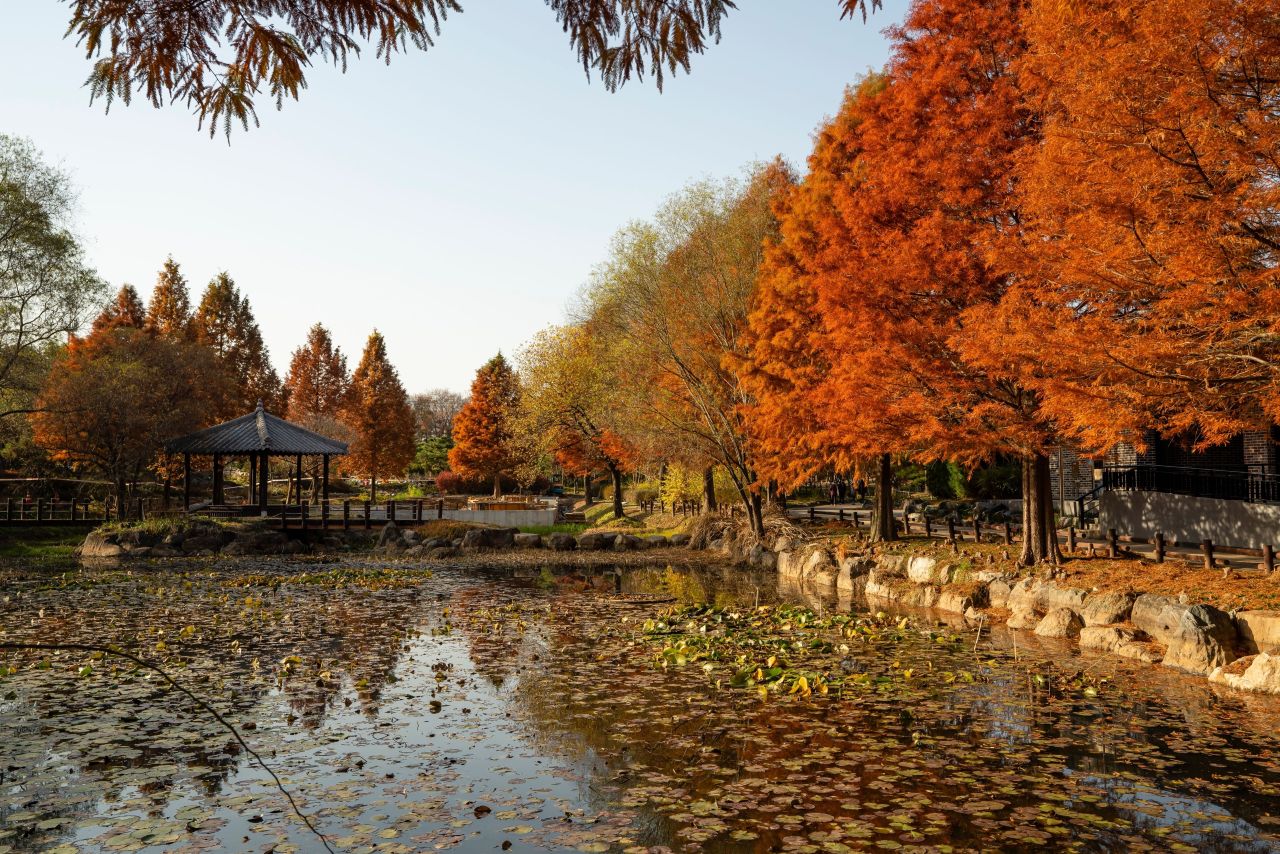
Around the pond, upright trunks meet the low horizontal line of the water. A pavilion roof and the trees on the far bank share the same broad frame, giving the garden a more open character than the shaded paths.
Reflections depend on light and wind. Leaves on the surface add another layer, while rocks and the spacing between trunks remain useful details even when the water is moving. The pond is part of the garden’s structure, as well as a place to notice seasonal color.
From this wider view, individual leaves become bands and patches of color. Moving between the close canopy and the opposite bank changes what stands out. It is an easy way to appreciate the garden without expecting one particular reflection or weather condition.
Look for smaller rooms within the planting
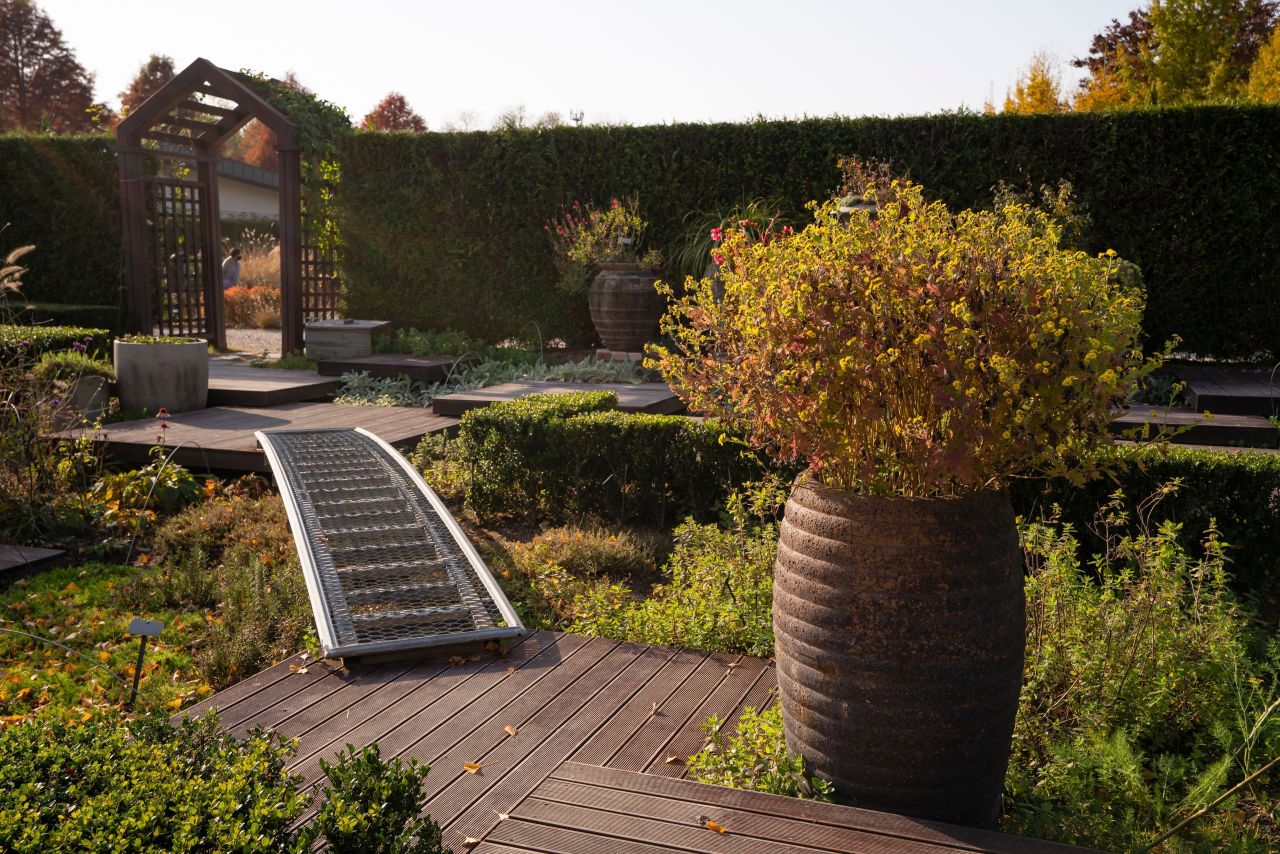
Trimmed hedges and low terraces create a different sort of enclosure. Here, the eye follows the edges of planting beds, the shapes of containers, and the short changes in level within a compact space.
An arboretum collects and cares for plants, so these arrangements can be read as living displays. Notice which plants rise above their neighbors and how a dark hedge provides a backdrop. Their placement helps explain the design even outside a flowering season.
Branches, leaves, and the materials around them continue to define a garden as the year changes. These smaller spaces reward a pause after the broader pond view, bringing the scale of the walk back to details within reach of the eye.
Bring the view down to the details beside the path
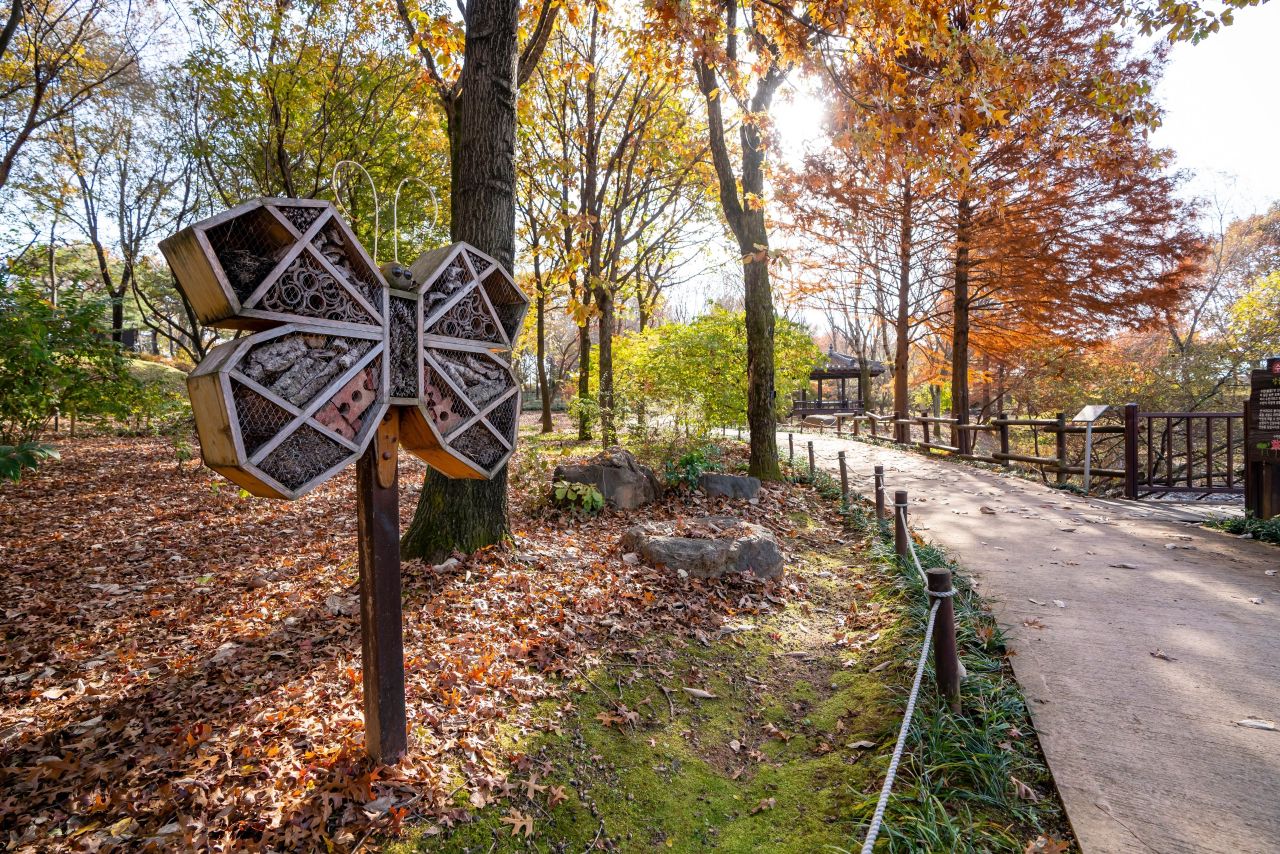
Beside one path, a small structure holds a variety of natural materials. Its compartments and textures offer a close view after the tall trunks and broad water scenes. The setting makes room for observation at more than one scale.
These details invite close observation. A visit can move from the overall planting to the materials and textures beside the path. Tree bark, fallen leaves, and carefully placed structures all add something to that picture.
The paths provide a way to look closely while leaving the planted ground undisturbed. Switching between a whole tree and a small detail can make even a short section feel richer, especially when the most striking color has already drawn the eye upward.
See how the gardens fit into a larger purpose
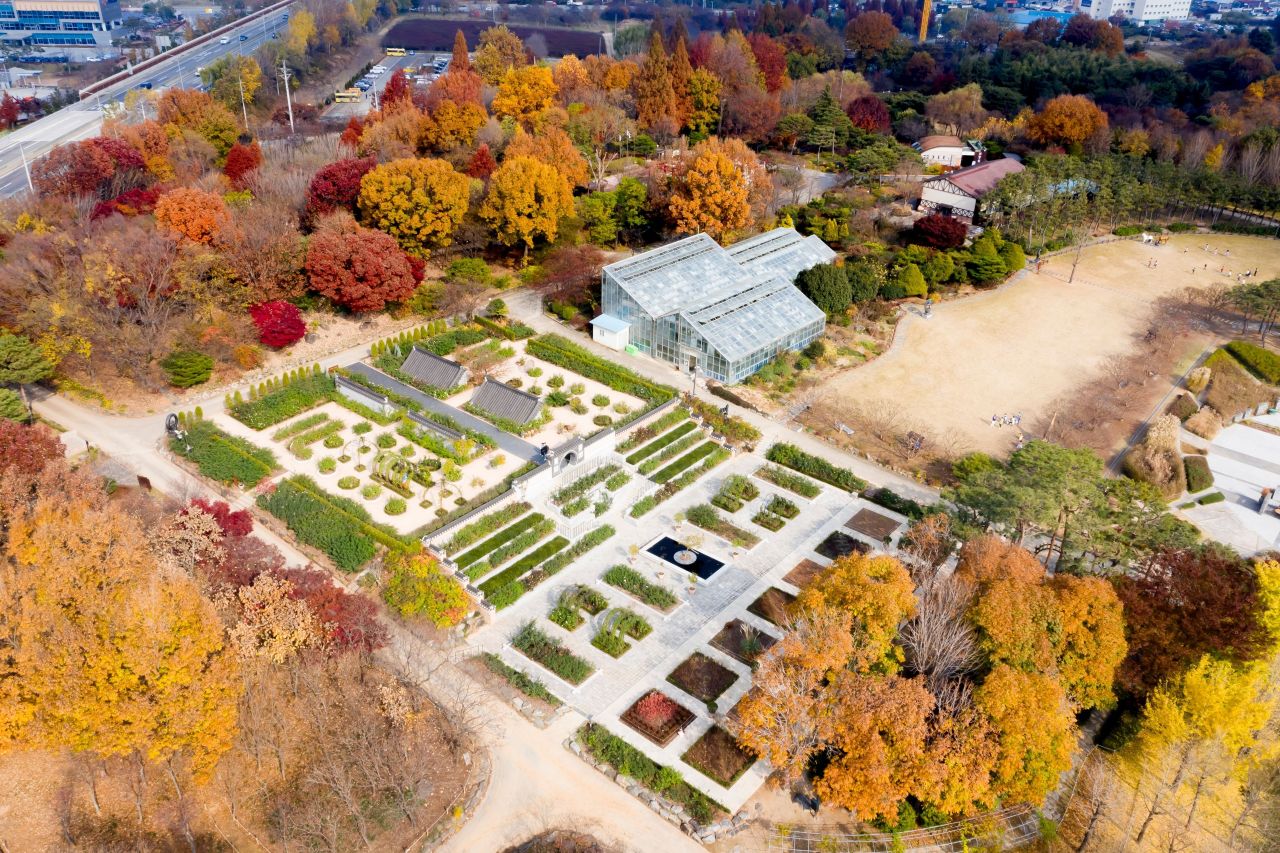
An aerial view shows the smaller gardens as parts of a larger collection, with roads nearby. The pattern is different from the experience at ground level, where a hedge or bend can conceal the next space.
The arboretum’s work is linked to growing plants for the restoration of environments affected by expressway construction, alongside conservation, research, and education. Its public gardens reveal one part of that broader purpose.
Korea Expressway Corporation describes the site through its official arboretum website. For another view of Jeonju’s planted spaces, the courtyards and bamboo at Gyeonggijeon Shrine bring trees into a different architectural setting. Within the arboretum, the movement from canopy to pond to garden room remains the thread that ties the walk together.
Jeonju Arboretum gives a fall outing several changes of scale: a single maple branch, a pond edged by trees, and a collection of intimate gardens. Leaving time for those smaller transitions lets the place unfold beyond its most colorful view.
You May Also Like
by Google Adsense