Daegu Arboretum in Fall: Greenhouses, Woodland Paths and a Restored Landscape
Daegu Arboretum — a former landfill transformed into gardens with glass roofs, waterside planting and bamboo
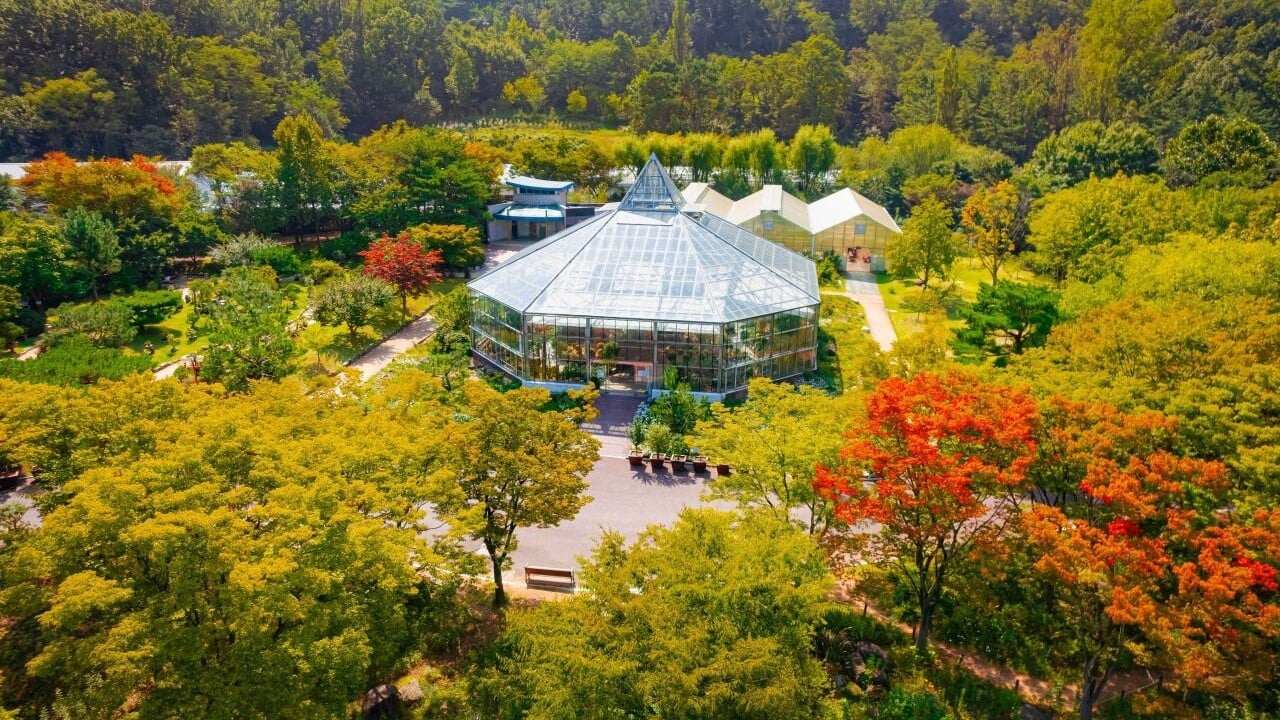
Glass panels divide the roof into angular sections. Around the greenhouse, tree crowns form softer shapes in green, yellow and red. Buildings and planting occupy the same frame without sharing the same geometry.
Daegu Arboretum is an urban botanical landscape in Dalseo-gu, Daegu. For a fall outing, its variety matters as much as leaf color: open lawn, wooded paths, water edges and bamboo offer several settings in one place.
The Korea Tourism Organization’s English guide describes the site’s restoration from a former sanitary landfill and its opening in May 2002. The gardens represent a deliberate change in how the city uses the land.
That background adds meaning to the present view. Trees, paths and greenhouses are parts of a designed landscape that supports plants as well as public recreation, rather than a forest that simply remained within the city.
Daegu Arboretum’s open lawn and planted edges
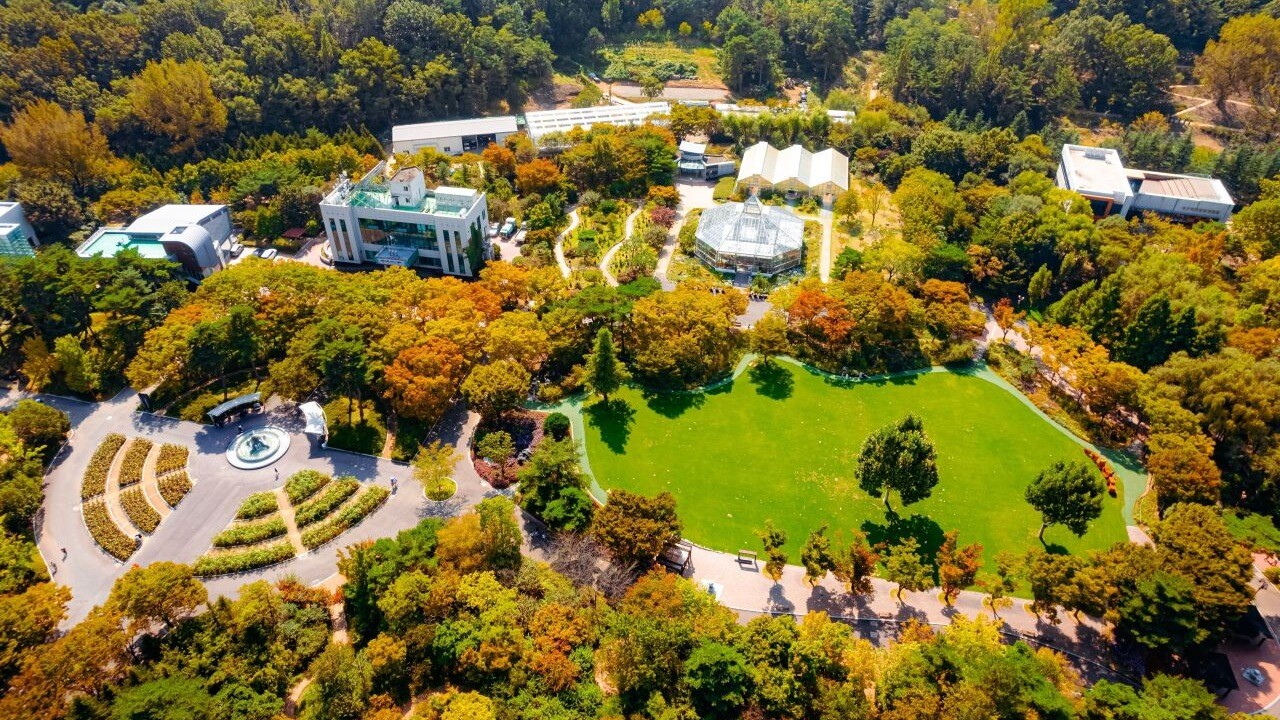
An open patch of lawn sits within much denser planting. Curved paths mark the transition, and glass roofs appear beyond the trees. From above, the contrasting spaces are easy to distinguish.
On the ground, those differences determine how far the eye can travel. A broad view across grass gives way to shorter intervals between trees, shrubs and smaller garden areas.
The city restricts visits to greenhouses and some other facilities on Mondays for maintenance. An outdoor garden walk and an indoor greenhouse visit therefore need to be considered separately.
A narrow channel among trees
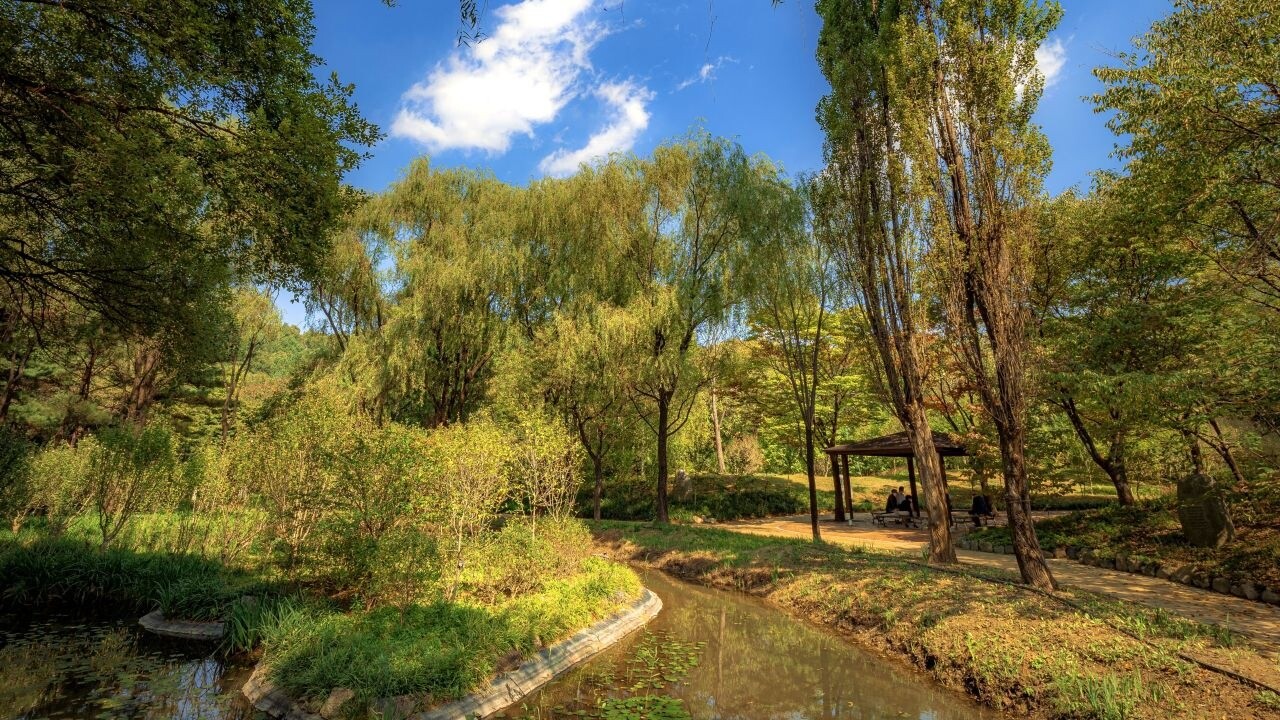
Water curves between low plants. Long branches reach toward the channel, while taller trees rise into a small opening of sky. The water is a narrow connecting line within the planting.
This scene differs from the open lawn. Grasses, branches and tree crowns occupy more of the view, bringing several levels of vegetation close together.
Looking from the near bank toward the upper canopy changes the emphasis again. Ground-level shade and the brighter sky above make the same small area feel layered.
A bend in the woodland path
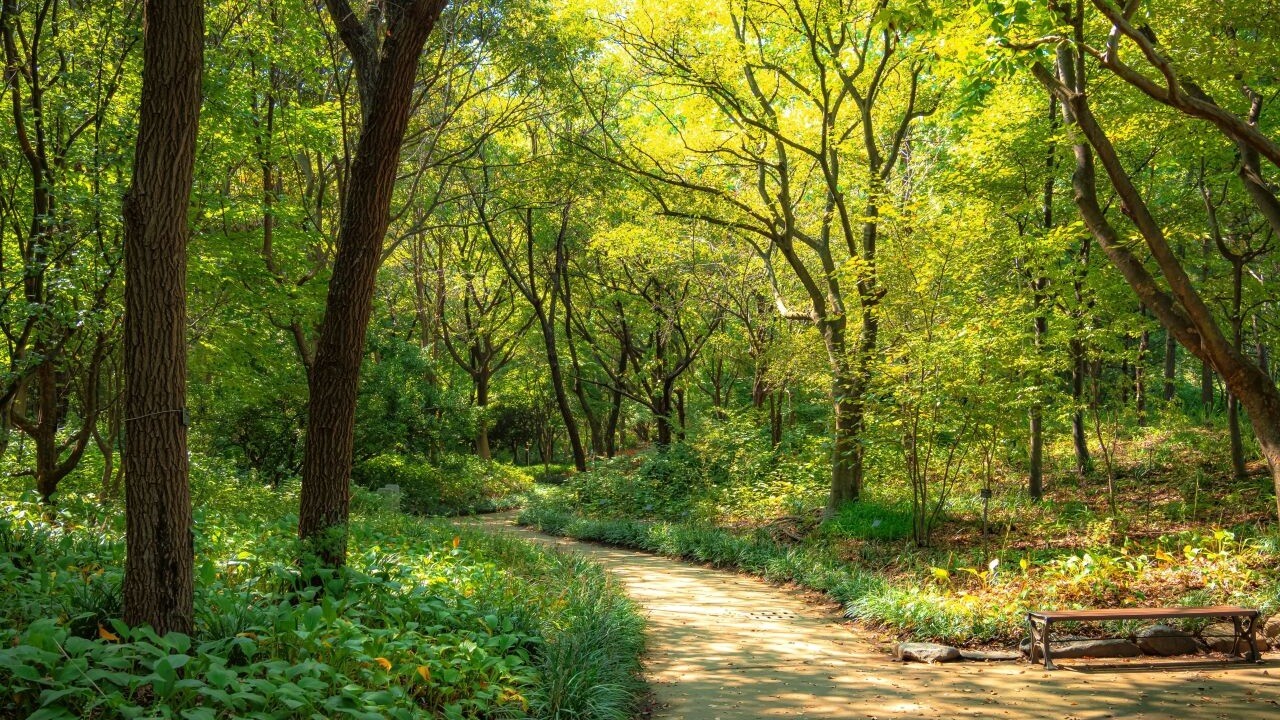
The pale path bends between trunks and low vegetation. Sunlight reaches the ground near a bench, then disappears behind the curve. The next stretch is only partly visible.
Here the canopy replaces the greenhouse roof as the defining overhead structure. Its openings create irregular patches of light instead of the glass building’s repeated panels.
The path gives a fall walk a smaller scale. Rather than trying to take in the whole arboretum at once, it invites attention to the change from one planted space to the next.
Bamboo frames a closer passage
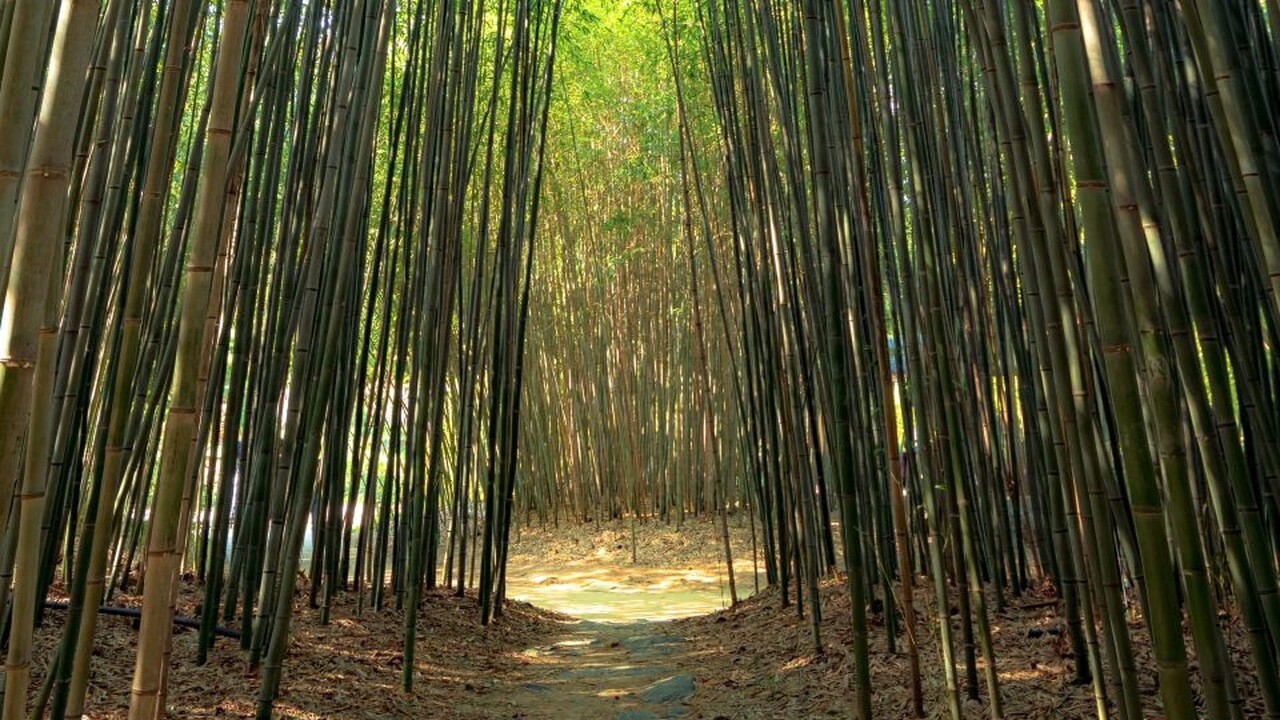
Straight stems repeat along both sides of the path. Small gaps let light pass through, while fallen leaves form a brown layer below. The planting feels more enclosed than the broad-leaved woodland.
Vertical lines dominate this part of the garden. They make the spacing between stems and the width of the path especially noticeable.
Bamboo also keeps a green element in the fall landscape. Nearby deciduous trees can change at a different pace, allowing several seasonal textures to be seen during the same outing.
Autumn leaves and a November display
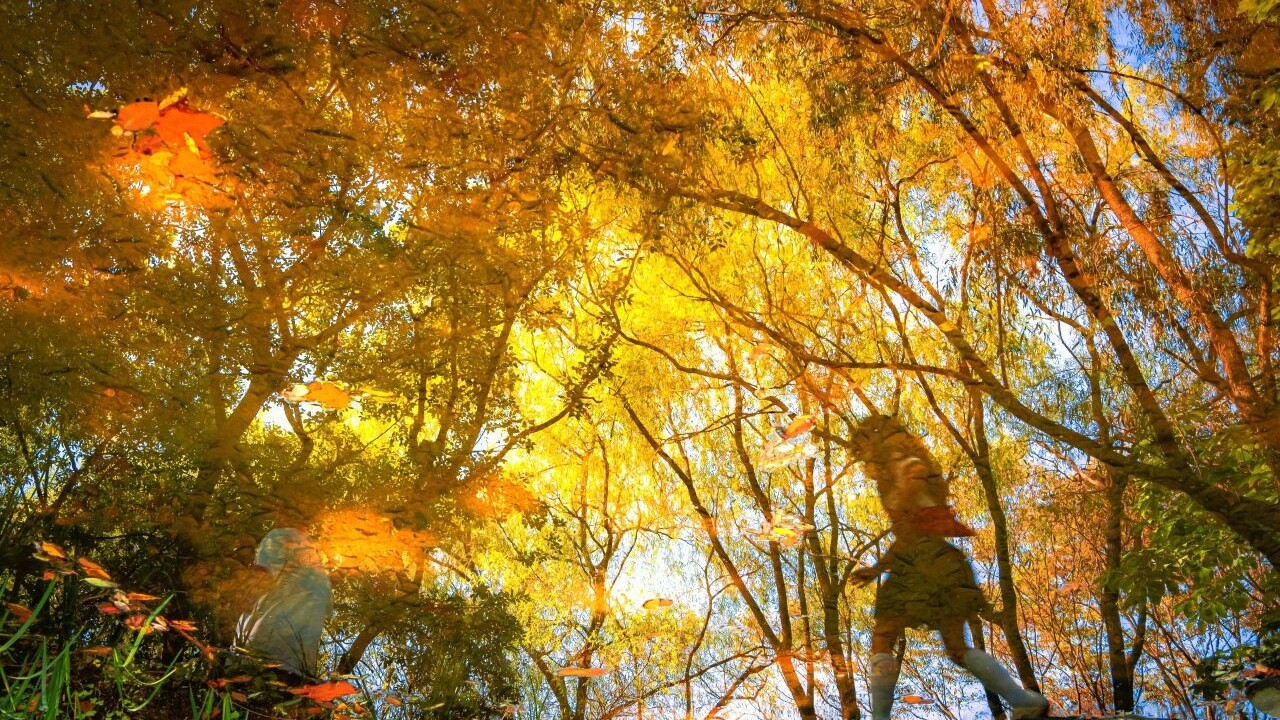
Looking upward changes the view from trunks to a loose ceiling of leaves. Yellow and orange areas brighten where light reaches the canopy, while the wood remains darker below.
The Korea Forest Service’s maple foliage forecast places the arboretum’s 50%-color stage around November 6. This is a modeled date for the maple group; actual color varies between trees and with the weather.
The city’s official chrysanthemum announcement lists November 6–15, 2026 for the arboretum display. These are event dates to consider for a November visit, rather than a prediction of peak foliage.
For another Daegu setting that combines woodland with architecture, Donghwasa Temple in fall offers a different relationship between trees and buildings. The arboretum instead connects a variety of planted environments.
Daegu Arboretum makes the transformation of a former landfill visible through those environments. A walk between glass roofs, water edges and a bamboo passage offers more than a single seasonal view.
You May Also Like
by Google Adsense