Maisan Provincial Park in Fall: Twin Peaks, Forest Paths and Tapsa’s Stone Towers
Maisan Provincial Park, Jinan — contrasting views from Sayang Reservoir, autumn woodland and Tapsa Temple
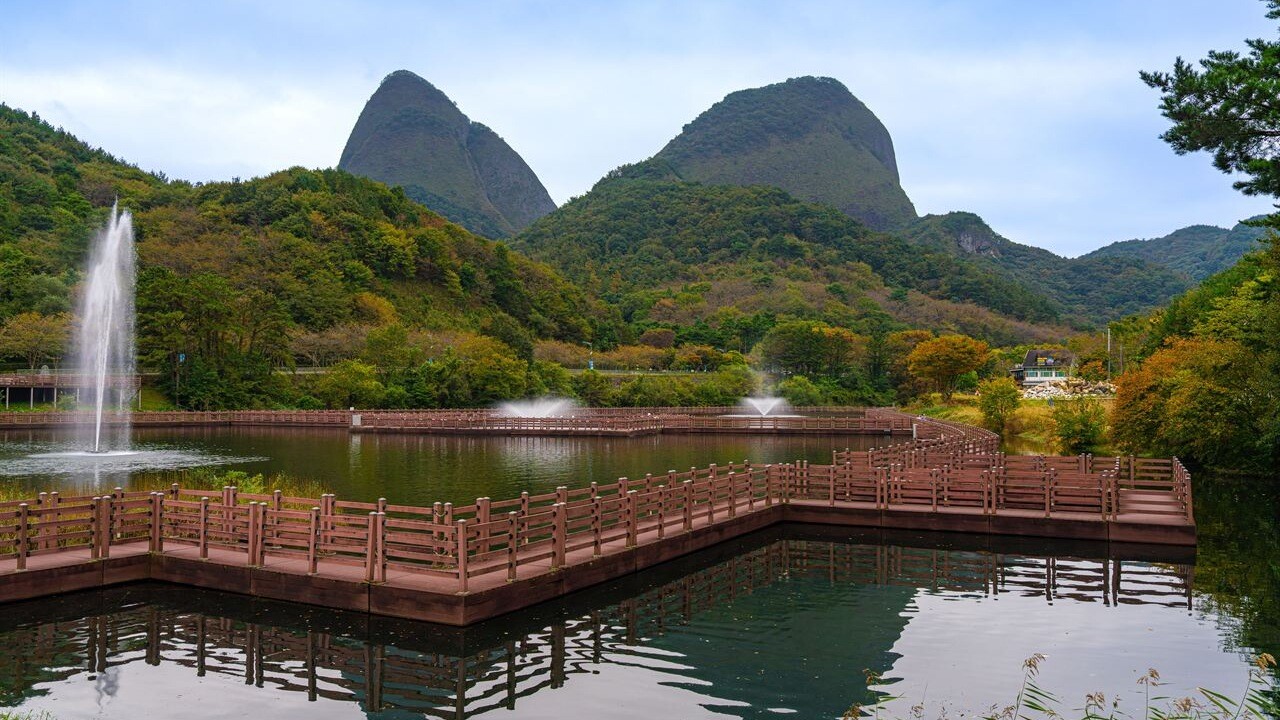
Two steep rock masses rise behind a low wooden boardwalk. Water extends across the foreground, while wooded slopes cover the lower ground. Horizontal lines at the reservoir make the peaks look especially pronounced.
Maisan Provincial Park is in Jinan County, South Korea. Its best-known forms are Ammaibong and Sumaibong, the two peaks that give the mountain its horse-ear silhouette. In fall, nearby woodland adds a changing foreground.
The Korea Tourism Organization’s English park guide identifies the peaks and the temples around them. The landscape is easier to understand through several viewpoints than through a single summit photograph.
Sayang Reservoir is on the northern side of the mountain, while Tapsa Temple occupies the southern side. They are separate areas with different settings: open water in one, a close relationship between rock walls and stone towers in the other.
Maisan Provincial Park’s fall forest paths
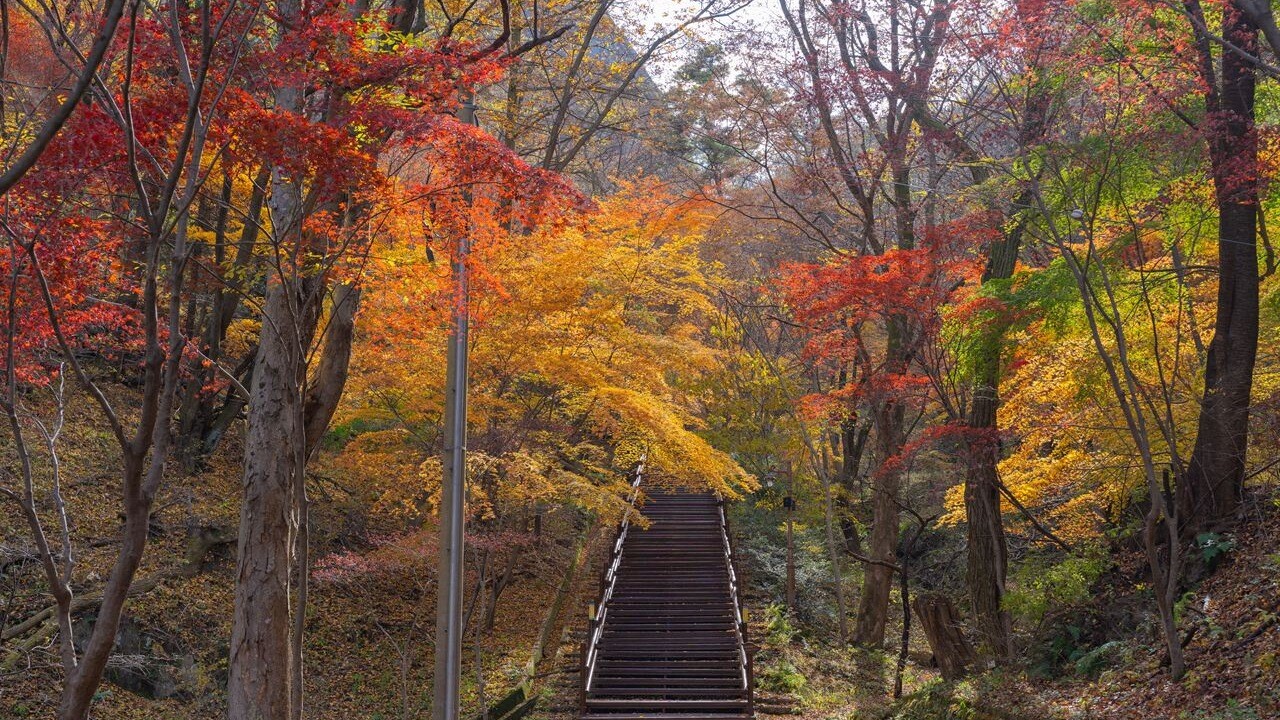
A dark stairway runs upward between the trees. Red branches cross the near foreground; yellow foliage brightens the space behind. The steps provide a firm line beneath the much less regular canopy.
Inside the woodland, small details replace the broad outline of the peaks. Bark, leaf edges and the corners of the steps become close subjects, changing the pace of looking at the mountain.
Trees do not change color uniformly. Green branches can remain beside brighter leaves, creating depth even when the woodland is between stages of fall color.
Tapsa’s stacked stone beneath a rock wall
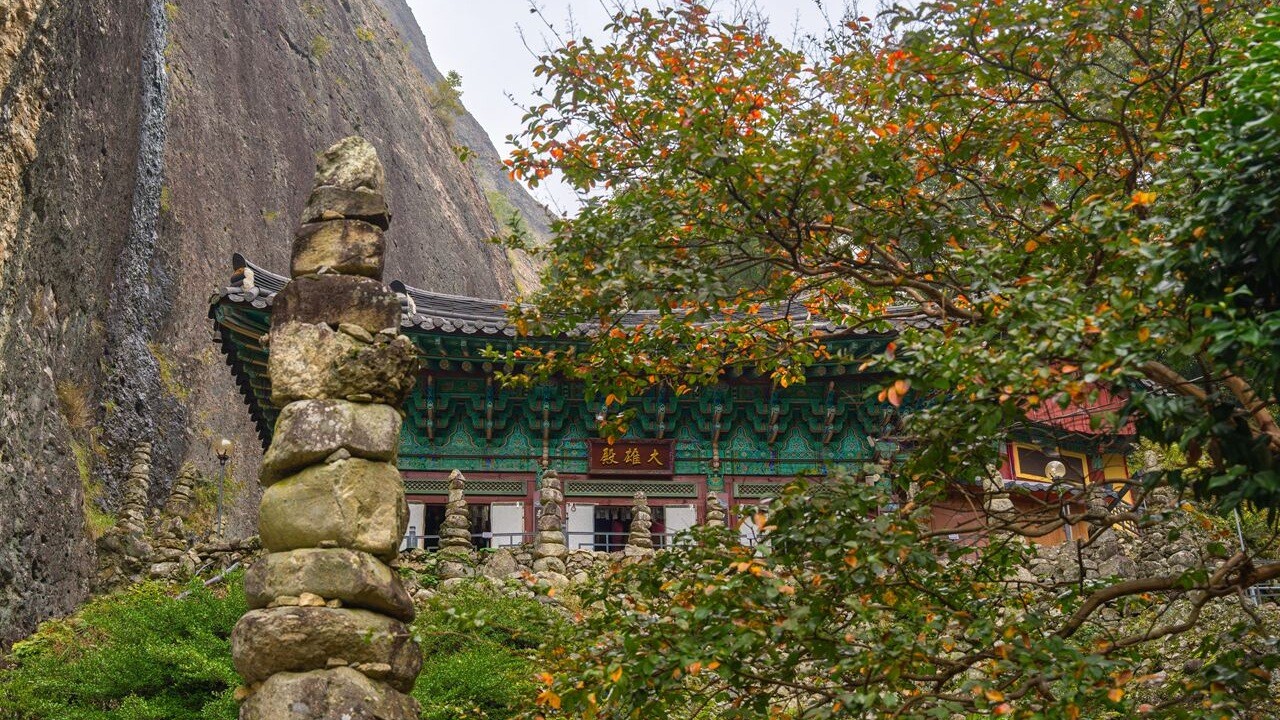
A narrow tower stands in front of a much larger rock surface. Individual stones remain visible in the tower, while the cliff reads as a broad, continuous mass. The difference in scale is immediate.
The county’s account of Tapsa Temple describes stone towers with varied shapes beneath Ammaibong. Their different outlines give the temple a distinct architectural character within the surrounding geology.
The tiled building provides another point of comparison. A modest roof and a small stack of stones can make the height of the cliff more apparent than an isolated view of the rock alone.
Looking closer at the canopy
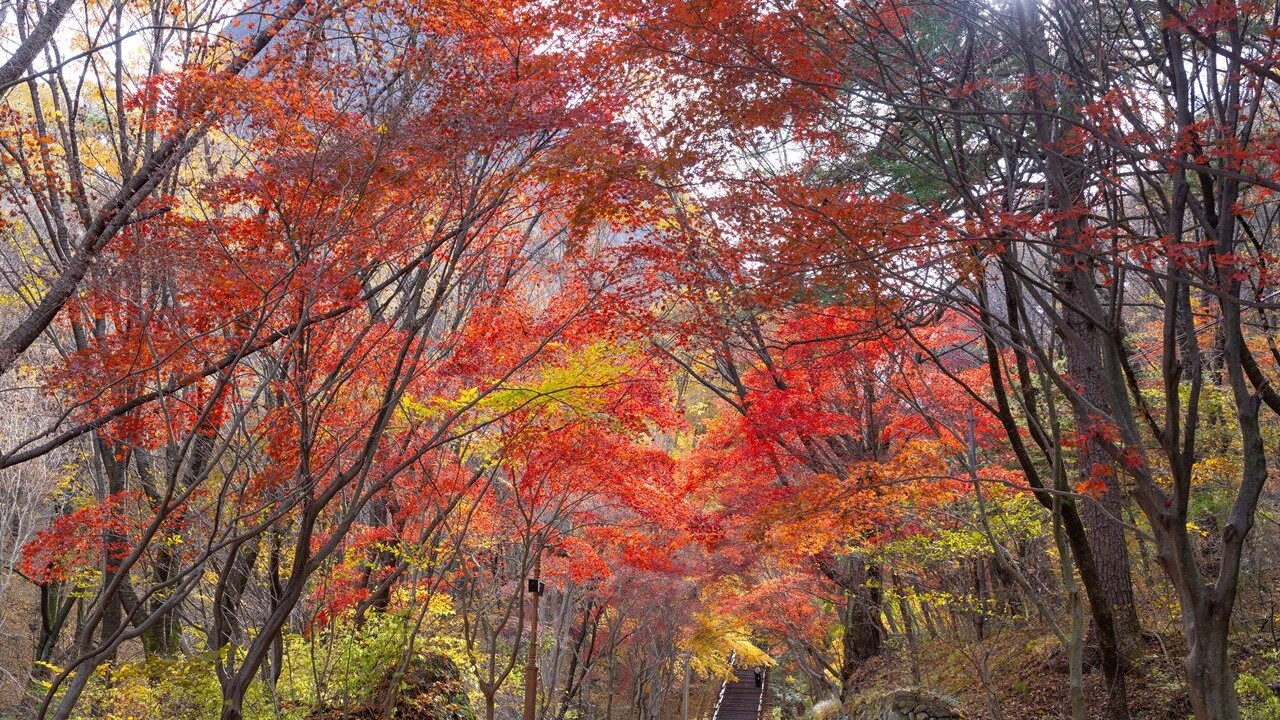
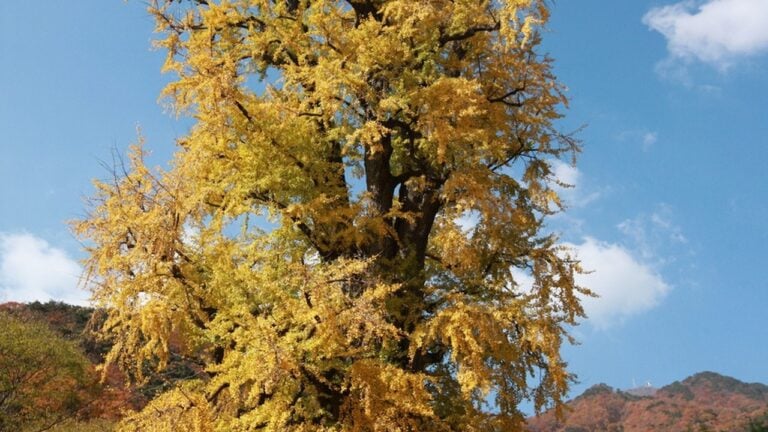
Bright foliage does not fill every gap. Thin branches divide the canopy, leaving small pieces of sky between the leaves. Dark trunks continue down toward the path.
The scene rewards a closer look after the broad rock views. Light passes through thin leaves and brightens their edges, giving them a different surface from the stone at Tapsa.
This change in scale is part of the fall landscape. The mountain can be read through a large silhouette and, a few moments later, through the spacing of leaves on one branch.
An aerial view of the two rock masses
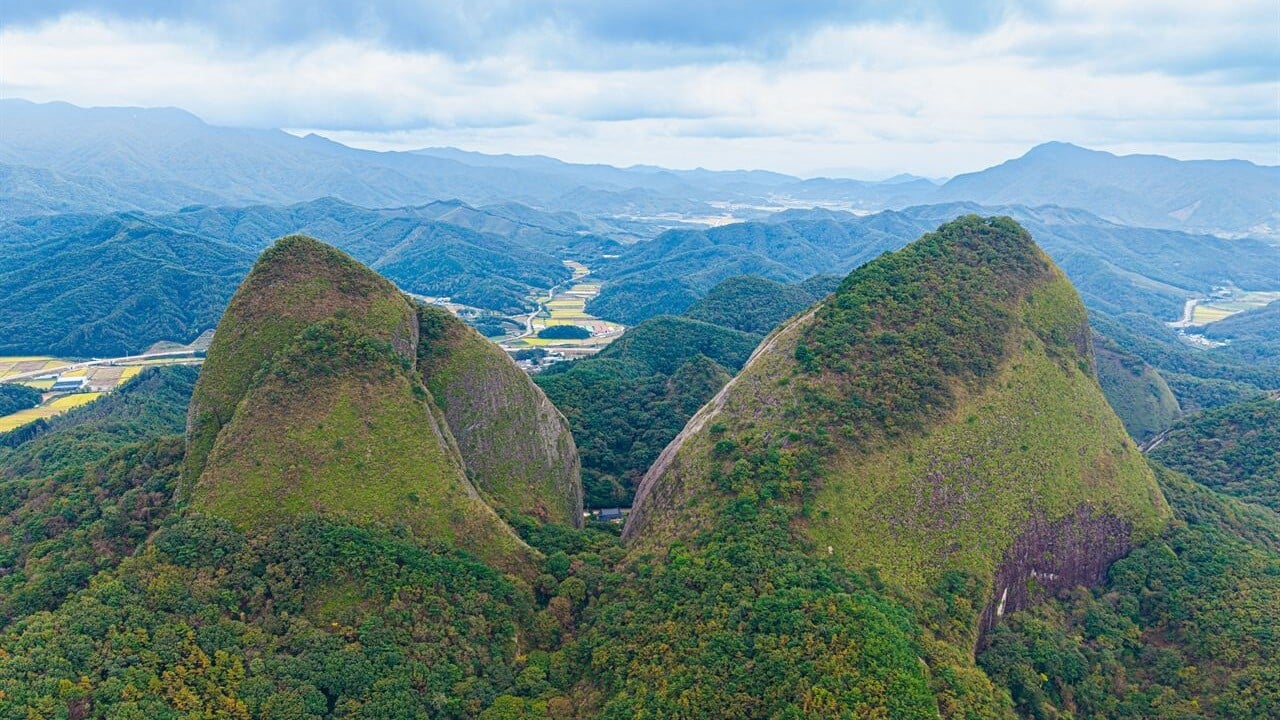
From above, the exposed rock and the surrounding forest become parts of a larger shape. What appeared to be a wall at close range is one face of a rounded peak. Lower ridges and fields extend beyond it.
Vegetation follows the hollows and edges of the rock instead of forming a straight boundary. These irregular patches make the shape of each mass easier to read.
The aerial perspective also explains why Maisan stands apart from the wooded ridges around it. Fall color adds another layer to the lower slopes while the larger rock forms remain recognizable.
When cloud changes the outline
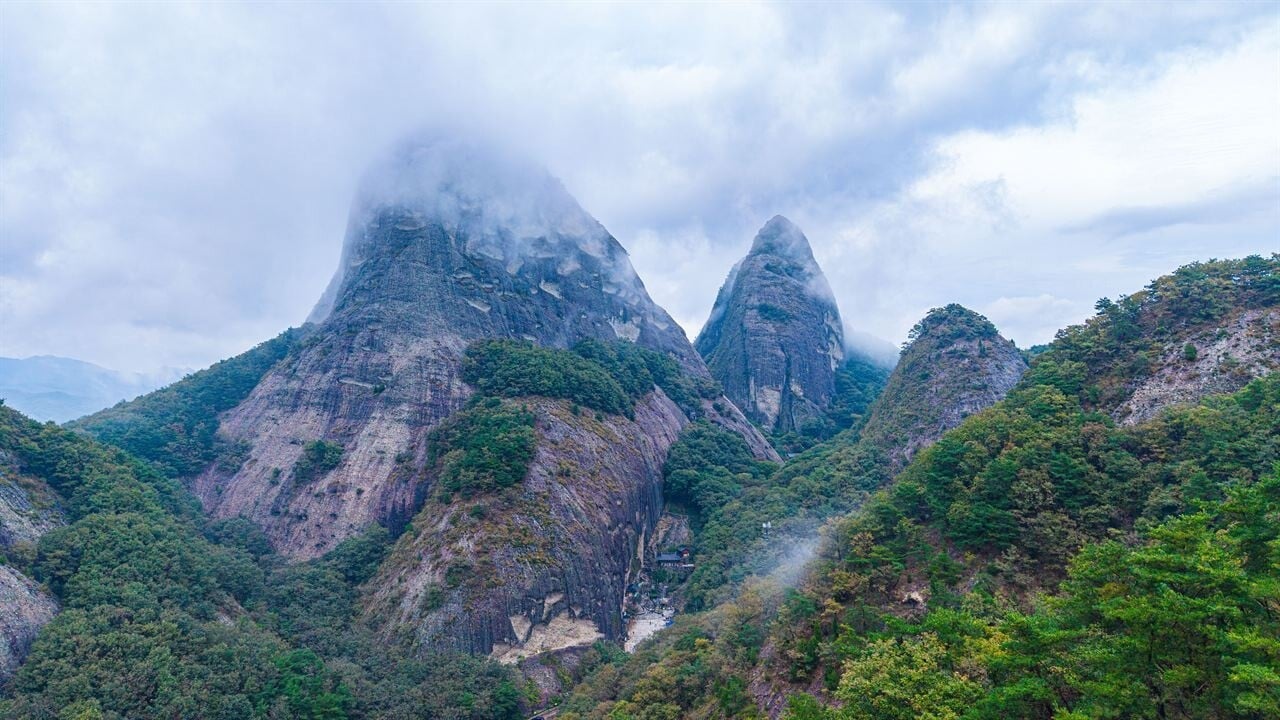
Cloud covers part of the upper peak, leaving the lower rock and wooded valley visible. The outline that looked definite in clear weather becomes softer and less complete.
For another Korean landscape built around exposed rock and fall woodland, Daedunsan’s ridges and autumn colors offer a useful comparison. Its sequence of rocky ridges has a different profile from Maisan’s paired masses.
Cloud, water reflections and foliage vary from day to day. A visit focused on the reservoir view, woodland detail and Tapsa’s stonework offers several ways to appreciate Maisan without depending on one exact fall-color moment.
You May Also Like
by Google Adsense