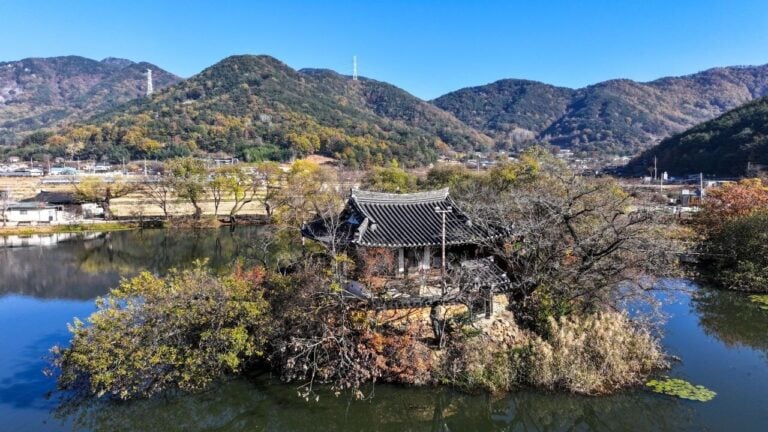
Naesosa Temple in Buan: Fir Forest, Daeungbojeon Hall and Autumn Courtyards
Naesosa Temple, Buan — an evergreen approach leading to floral lattice doors and weathered timber
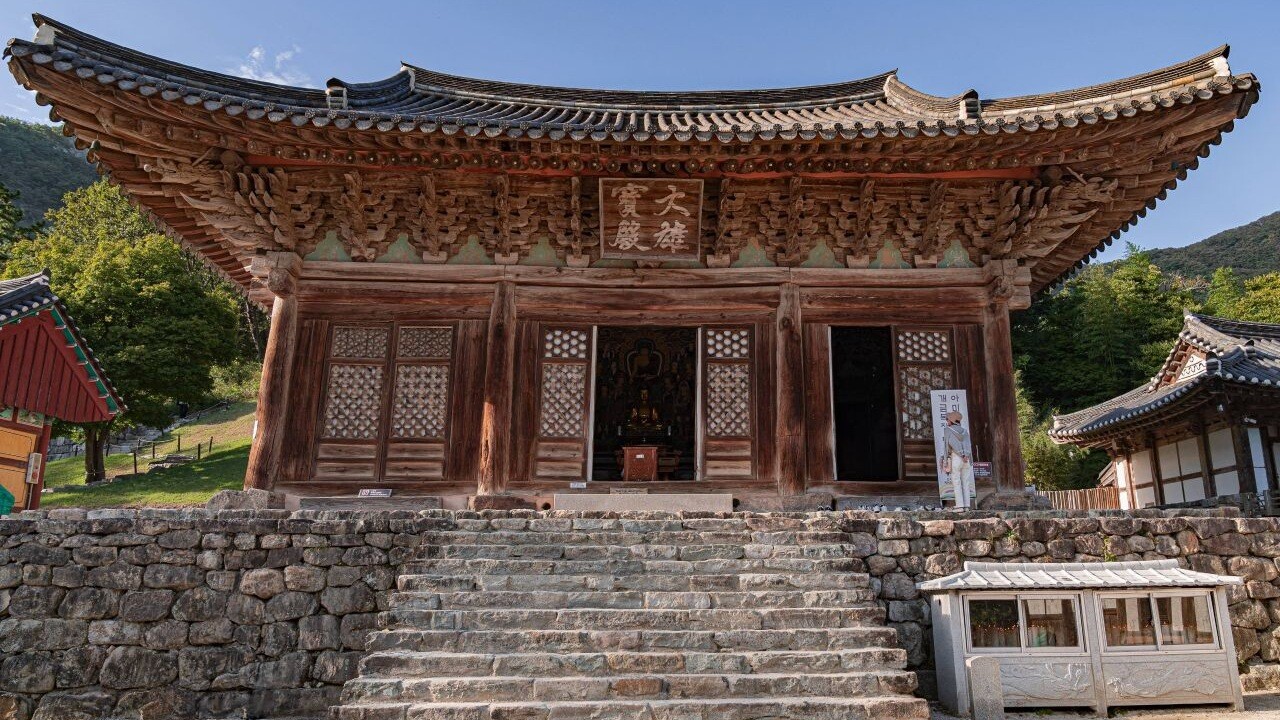
Weathered timber surrounds a set of patterned doors. Beneath the tiled roof, wooden brackets overlap in closely fitted layers; below them, uneven stone steps rise from the courtyard. This is an autumn subject that rewards attention to materials as much as leaves.
Naesosa Temple stands on the Byeonsan Peninsula in Buan. Its fir-lined approach and open temple grounds offer two different scales of woodland and architecture within one setting. The view gradually changes from living trunks to worked wood.
The Korea Tourism Organization’s destination guide dates the present Daeungbojeon Hall to rebuilding in 1633. That is a more useful reference for the building in front of you than treating the temple’s much earlier founding tradition as the age of every hall.
For a fall itinerary, Naesosa offers a clear thread beyond seeking peak color: follow the shape of the trees, then look at the carved doors, brackets and stonework that give the monastery its own character.
Naesosa Temple’s fir-tree approach
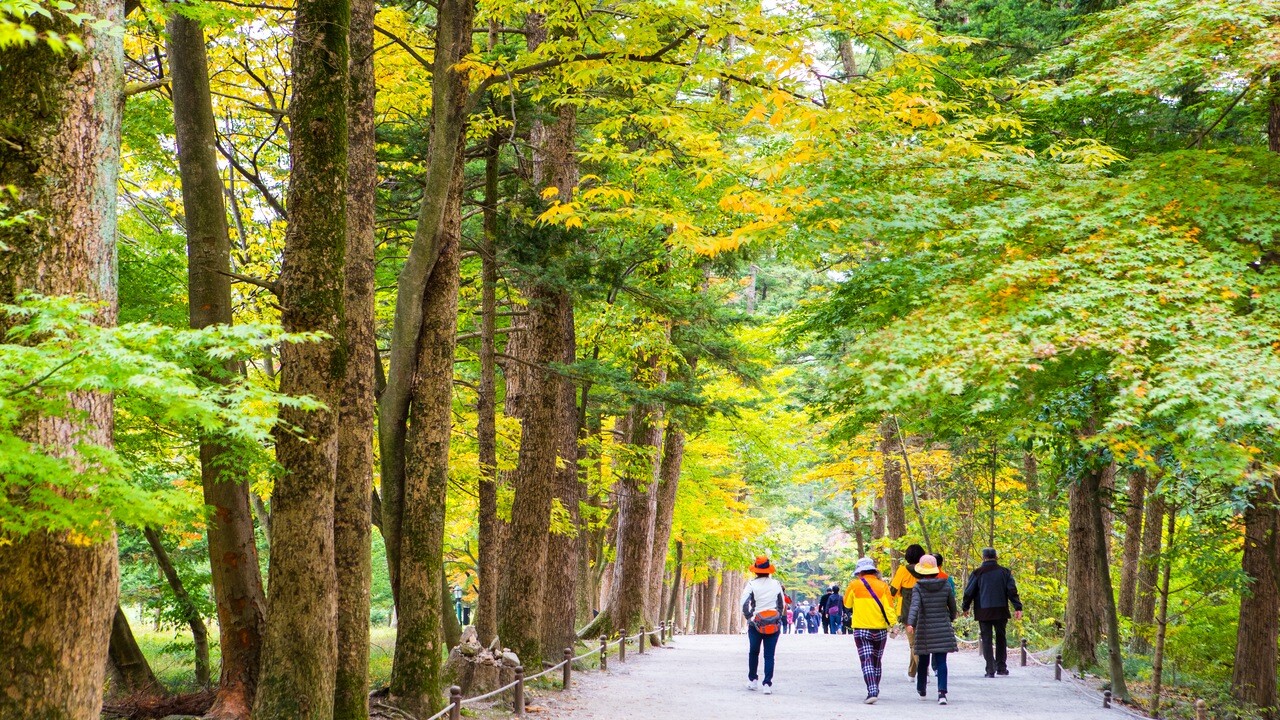
Straight trunks frame the path, extending well above the people beneath them. The view has a strong direction even where the upper canopy falls outside the photograph. Its appeal comes from entering a space between trees rather than surveying an entire forest.
The fir path links Iljumun, the first entrance gate, with Sacheonwangmun, the Four Heavenly Kings Gate. Those names describe thresholds within the temple approach, rather than separate hiking destinations. Evergreen foliage and nearby deciduous trees contribute different seasonal textures.
Spreading branches inside the grounds
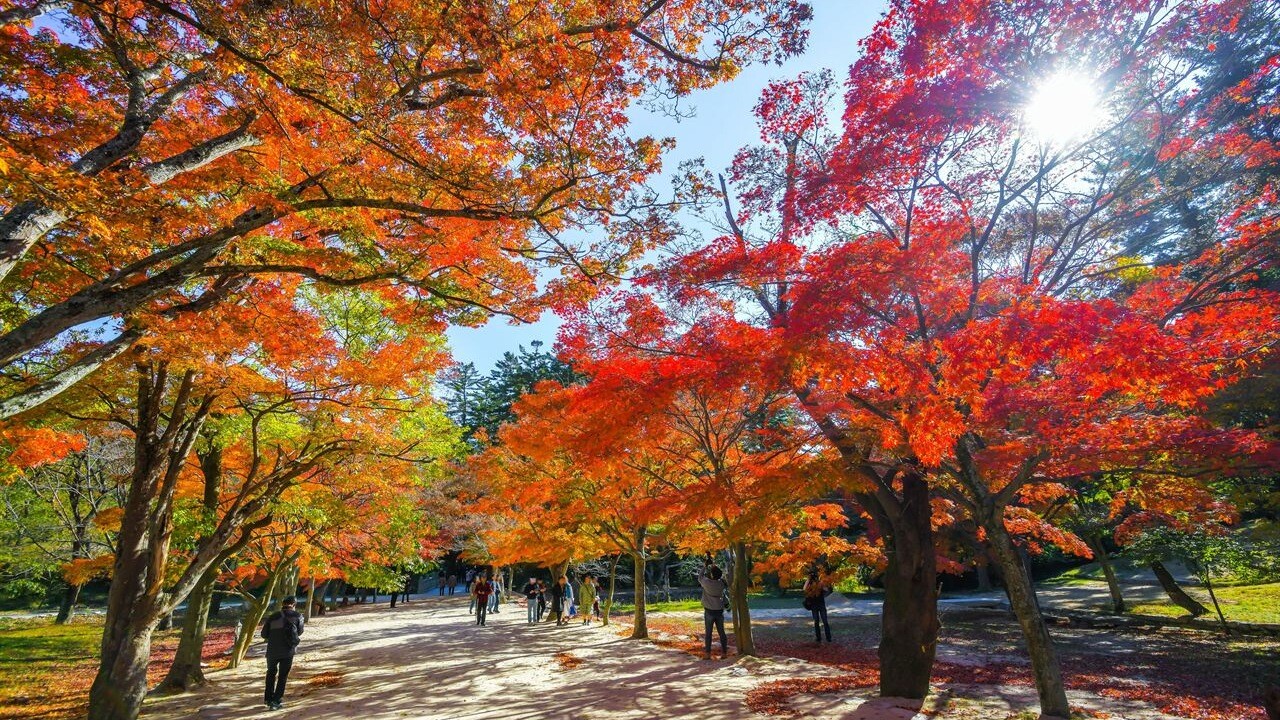
Inside the grounds, spreading branches replace the fir trees’ upright rhythm. Light enters through red leaves, while a fragment of tiled roof remains behind them. The canopy feels broader and closer to the buildings.
People beneath the trees provide a sense of scale. A tree that might appear to be background from the hall’s steps becomes the main frame from another position. The changing view remains interesting without assuming a particular peak-color date.
Daeungbojeon Hall and its floral doors
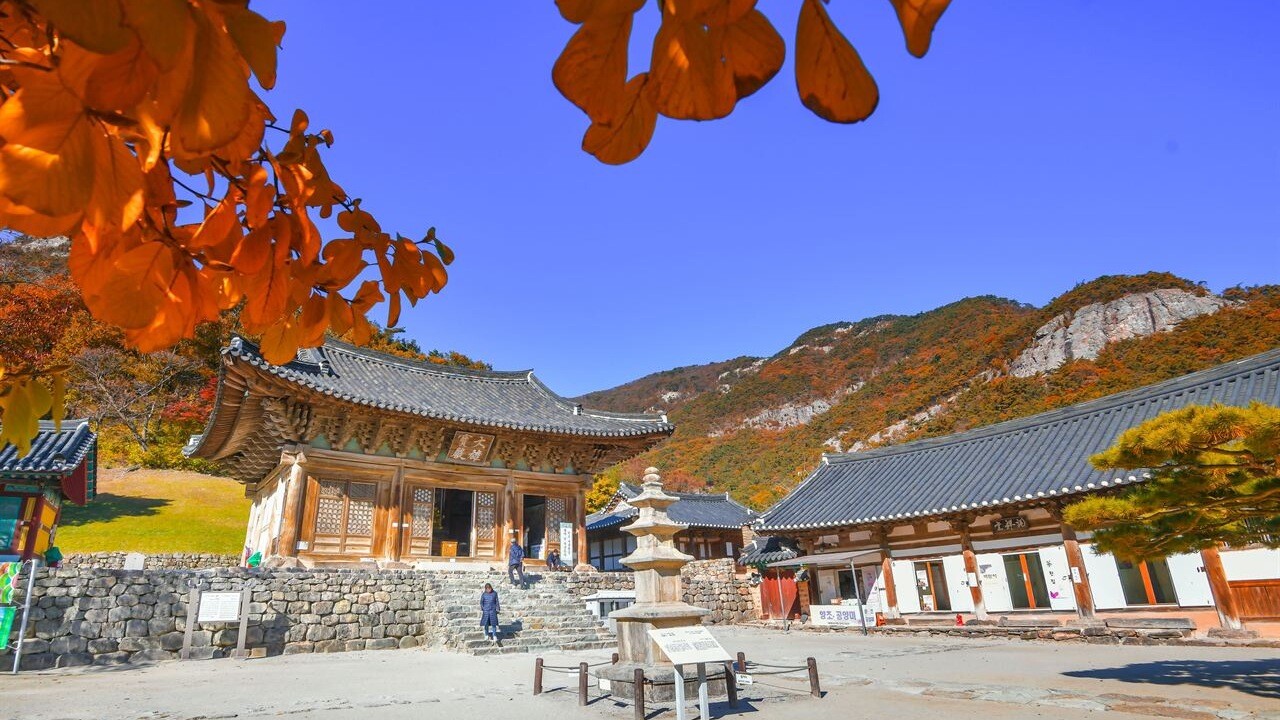
From the courtyard, hall, pagoda and mountain appear together. The building occupies a raised stone foundation, while the pagoda introduces a smaller sequence of stacked roofs. The ground between them makes their different proportions easy to read.
Daeungbojeon’s floral lattice doors include lotus and chrysanthemum patterns. The official Naesosa Templestay introduction also highlights the elaborate woodwork. The doors give a specific reason to look closer after taking in the full facade.
The floral pattern links the building with its wooded setting on a smaller scale. After looking up at living branches, the attention turns toward flowers worked into timber.
Painted eaves beside weathered wood

Another roofline brings bright green-blue and red decoration into view. Leaves overlap its edge, creating a very different surface from Daeungbojeon’s exposed timber. Several kinds of color coexist within the same temple.
Dancheong is the decorative painting used on Korean wooden architecture. Here, its geometry can be compared with carved doors, fitted brackets and the grain of unpainted-looking wood. The contrast is visible without inventing a story about the age of each painted surface.
Looking at one roof at a time keeps the architecture distinct. Naesosa is more varied than a single label such as “colorful temple” or “plain wooden hall” would suggest.
The stone pagoda and the open courtyard
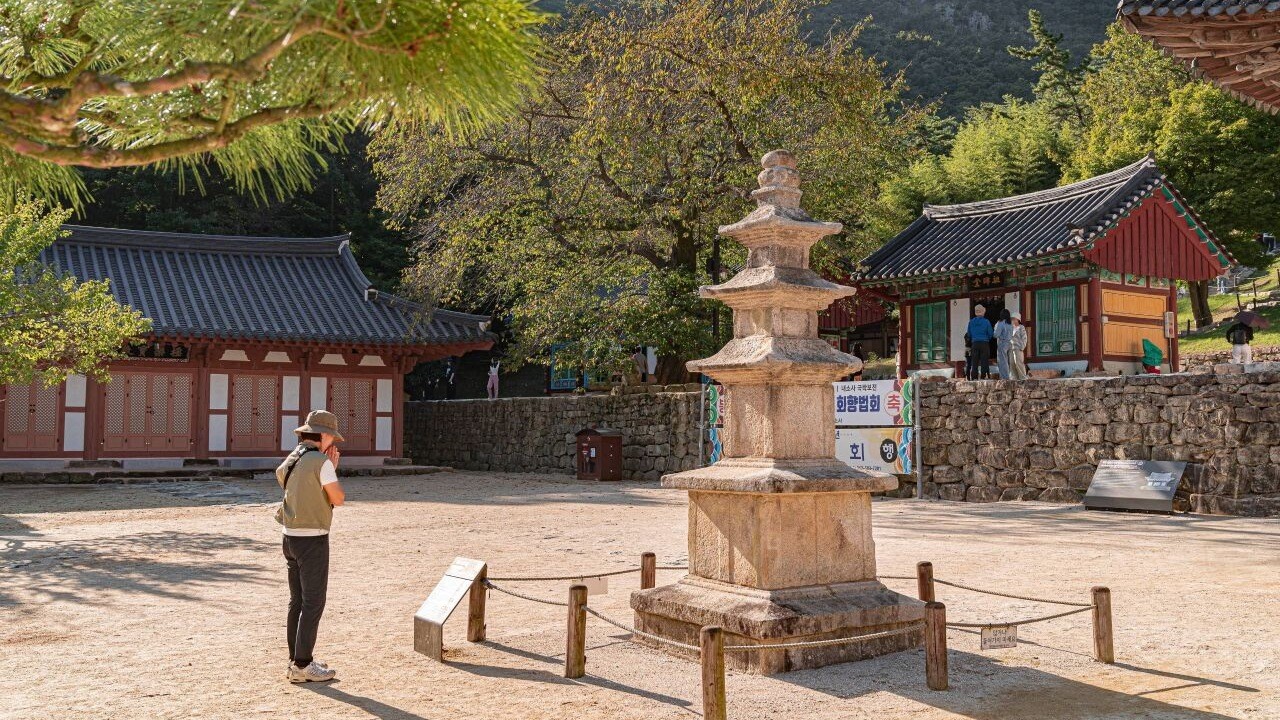
The pagoda repeats the idea of a roof in compact stone layers. Behind it, a much wider tiled roof stretches across the view. A person standing nearby helps connect those different scales.
For another western Korean temple landscape, Seonunsa’s Dosolcheon stream in Gochang places more emphasis on water and reflections. Naesosa’s fir approach and close architectural details offer a different focus; each setting gives the temple landscape a different emphasis.
Naesosa suits a fall outing that moves from forest height to carved detail. The evergreen path, the floral doors and the stone foundation provide a coherent subject even when the trees are at different stages of seasonal change.
You May Also Like
by Google Adsense