Suncheon Bay Wetland Autumn Walk: Reed Trails, Waterways and Yongsan Views
Suncheon Bay Wetland in Suncheon: boardwalk-level reeds, winding channels and a separate uphill viewpoint
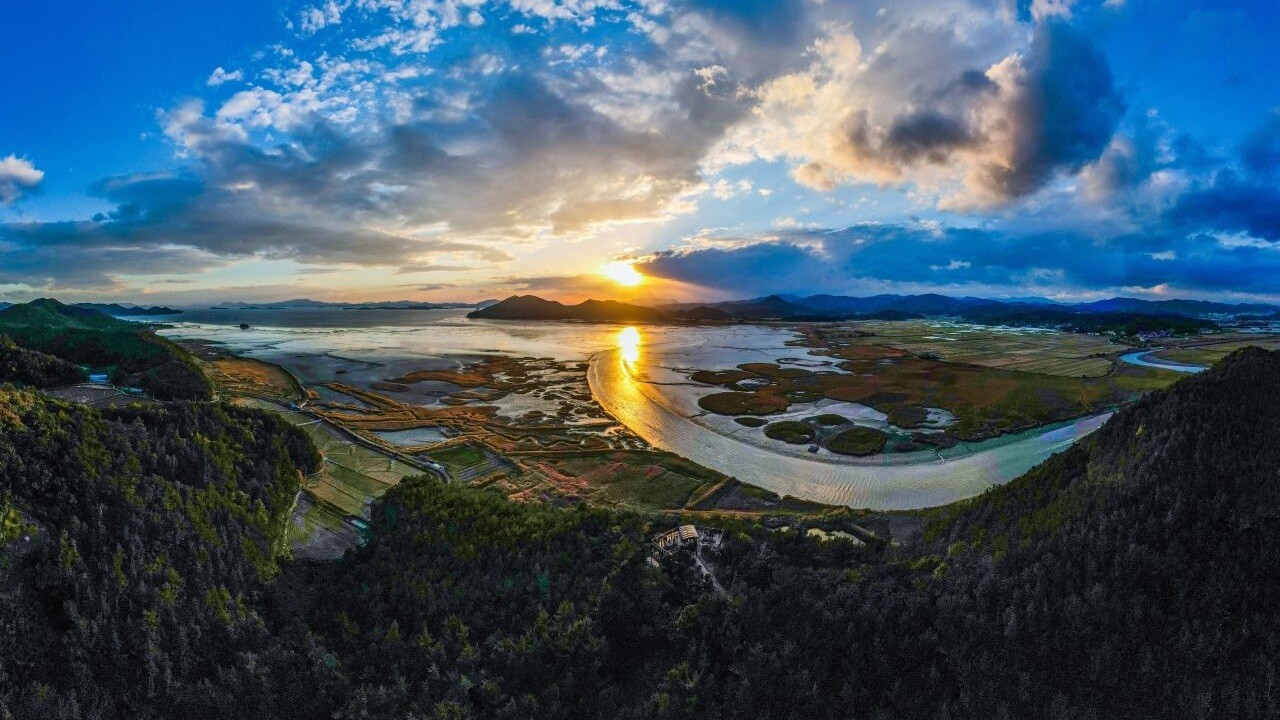
A channel bends through a wide bed of reeds. From the lower paths, stems and flower heads fill the view. From higher ground, the reeds, mudflats and water become separate shapes in a much larger landscape.
A Suncheon Bay Wetland autumn walk is shaped by that change in perspective. The plants grow within an estuary rather than a planted flower garden, and the waterways determine how the reed beds spread.
Suncheon Bay National Garden and Suncheon Bay Wetland are distinct visitor spaces. This article focuses on the wetland in Daedae-dong. Treating the garden’s attractions as part of the reed trail would make it harder to choose an itinerary for the scenery you actually want to see.
A Suncheon Bay Wetland autumn walk at reed height
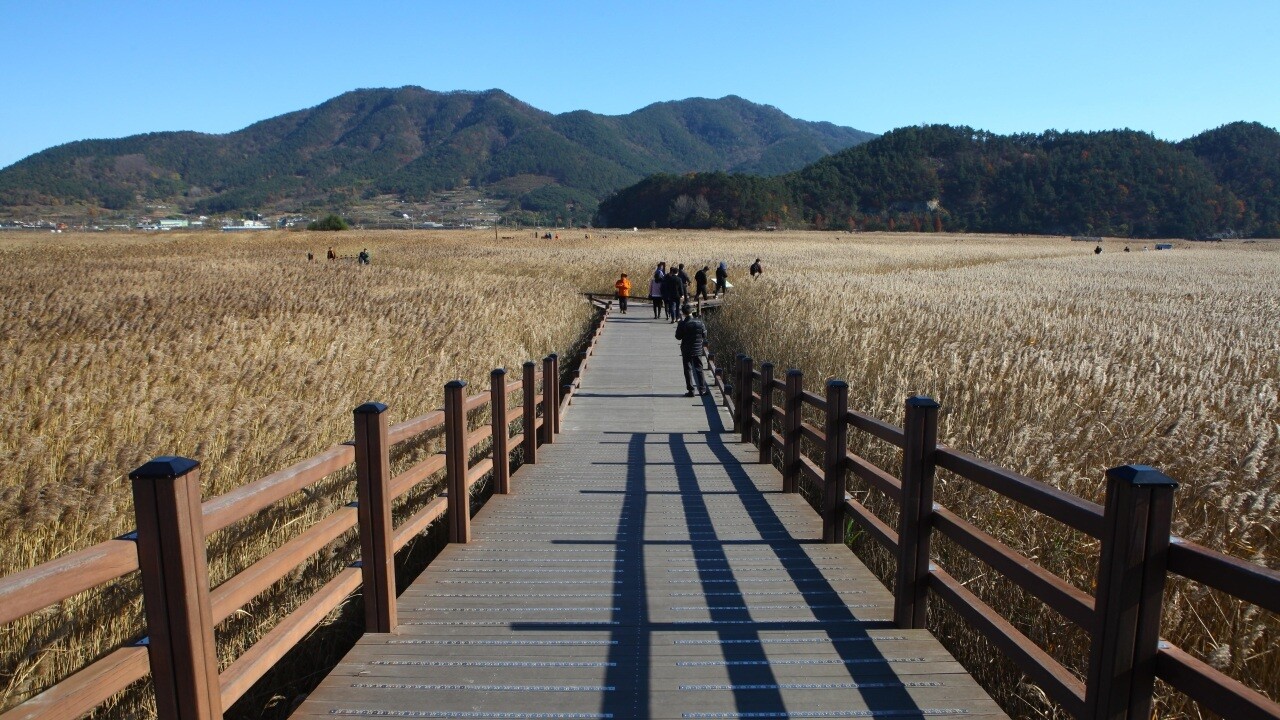
Beyond the boardwalk rails, the plants extend toward low mountains. Nearby stems define the sides of the path, while distant trees remain a backdrop. Moving within the reed bed feels different from viewing its full outline from above.
The wetland’s official explanation describes paths and facilities designed to blend into the reed landscape and appear natural from a bird’s viewpoint. The walking route is meant to sit within the habitat, rather than dominate it.
Small flower heads, a wide landscape
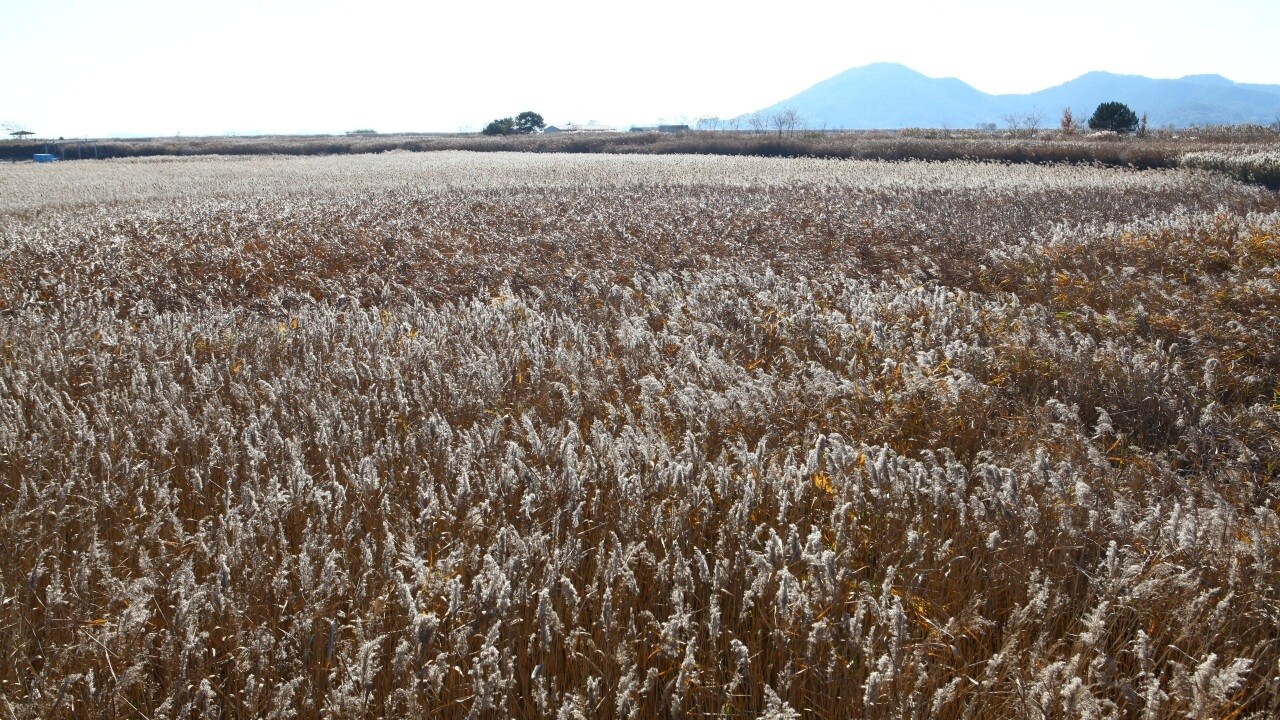
Individual reed flowers are fine and light, but together the plants form a dense surface. Even a bed that first looks uniform has areas of sunlight and shadow. Closer views reveal texture that the distant panorama cannot show.
Color and density vary with the season and weather. Planning a fall visit does not establish how the reeds will look on one particular day. Their forms and relationship to water are part of the destination even beyond a single preferred color.
Following the shape of the channels
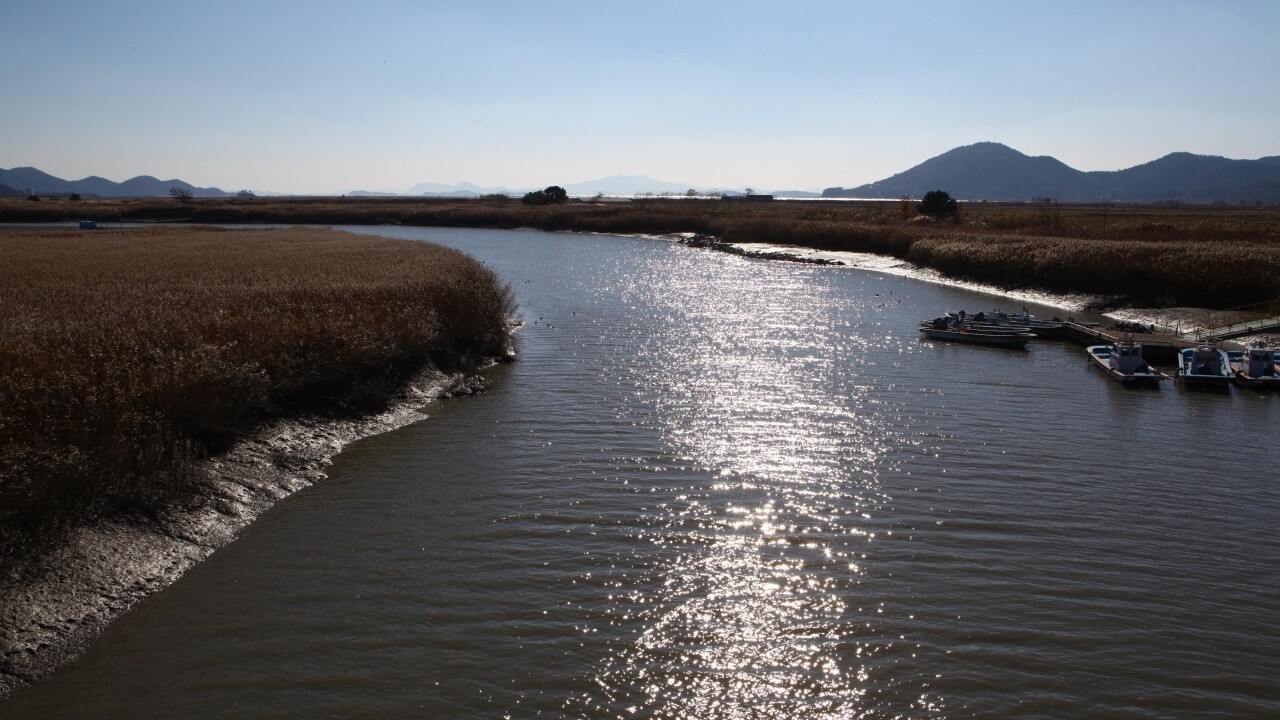
Water divides the reed beds while connecting them. Reflected light draws attention to the channel, and the plants on either side form its edges. A distant curved line becomes a waterway with its own width and direction at ground level.
This wetland sits within the flow of water from the Dongcheon and Isacheon toward the sea. Reed beds, tidal flats and open water belong to the same setting. That context helps explain why a reed photograph shows only one part of the estuary.
Boardwalks and the uphill viewpoint
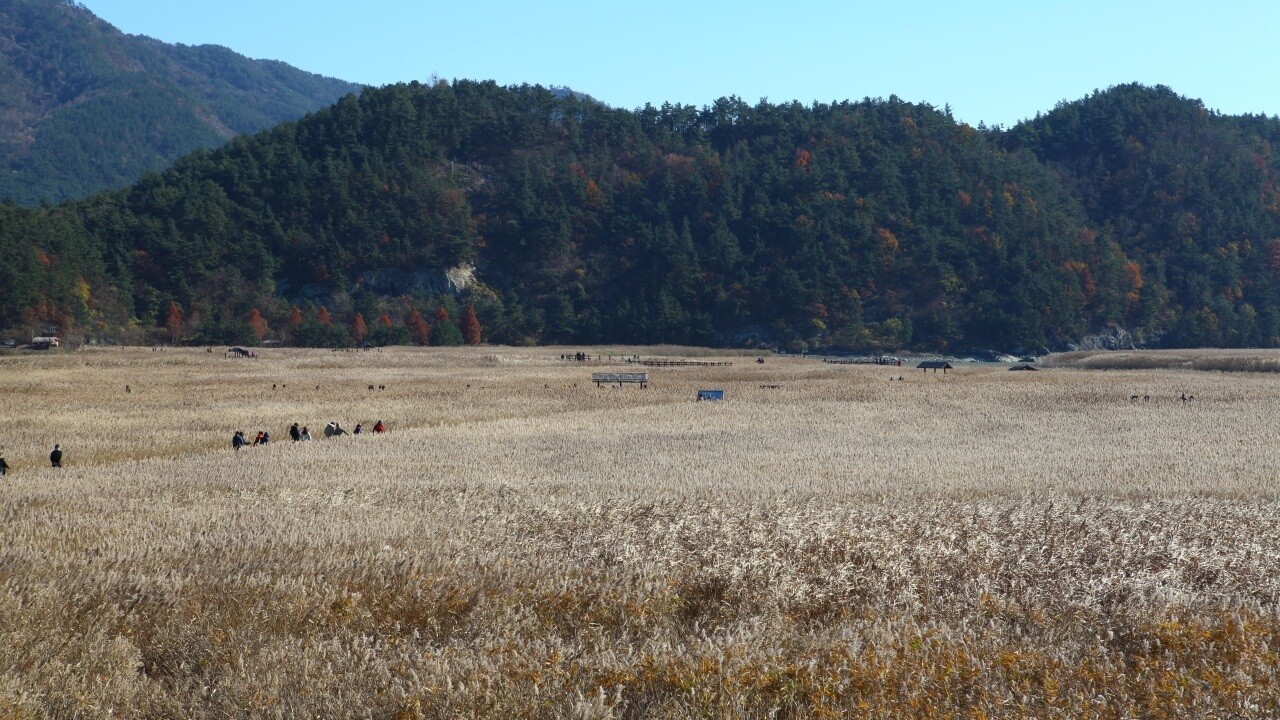
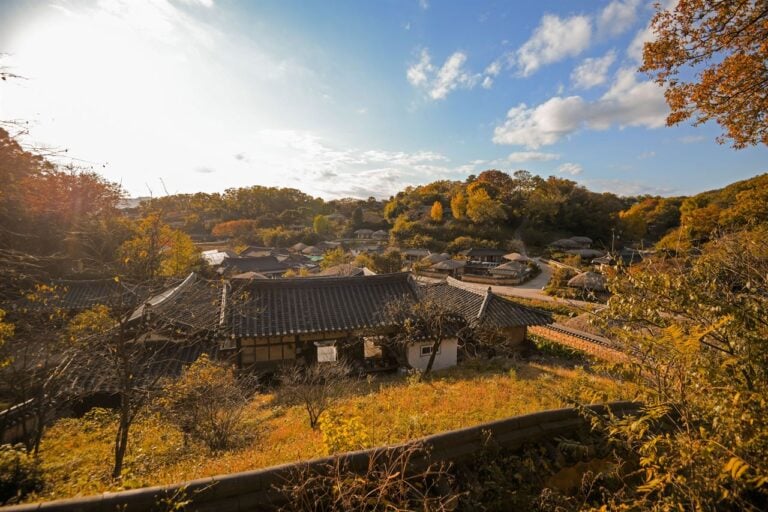
Low woodland rises beyond the reeds. The boardwalk brings the plants close; the Yongsan side reveals the layout of the channels and colonies. Neither view replaces the other, and they require different amounts of walking.
The official Yongsan Observatory guide describes an approximately 30-minute walk from the entrance to Yongsan. That is not the total time from the wetland gate. The current observatory was newly built in 2025, so older descriptions of the structure should also be treated separately.
Returning along the curved trail
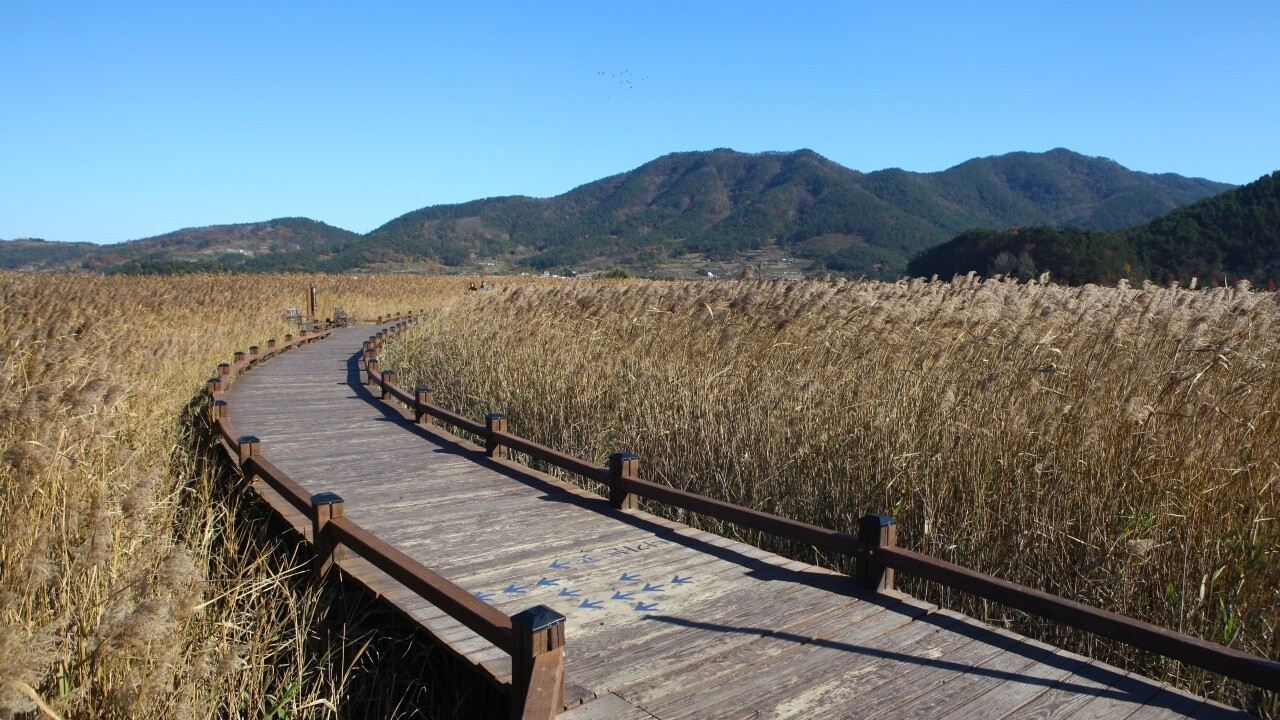
As the boardwalk turns, the reeds change their relationship to the path. Rails lead the eye outward before nearby flower heads draw it back. The lower route can communicate the wetland’s scale without requiring every visitor to seek a high viewpoint.
The official visitor rules call for staying on designated paths, leaving plants and wildlife undisturbed and keeping drones out. The trails have no lighting, so a return after sunset requires care. Watching the reflected light and planning a safe walk out belong in the same decision.
For a different southern landscape, compare the woodland and reflections at Baekyangsa Temple. It is an alternative travel focus rather than a suggested extension to an already full wetland day.
Suncheon Bay Wetland offers more than a field of reeds. Close textures, moving water and larger estuary shapes belong together. An autumn itinerary can leave room for all three while allowing the actual season, weather and open routes to determine the visit.
You May Also Like
by Google Adsense