Imjingak Pyeonghwa Nuri Park Walk: Pinwheels, Sculptures and Open Lawns
Pyeonghwa Nuri at Imjingak in Paju: the Windy Hill installation, Unification Calling sculptures and waterside paths
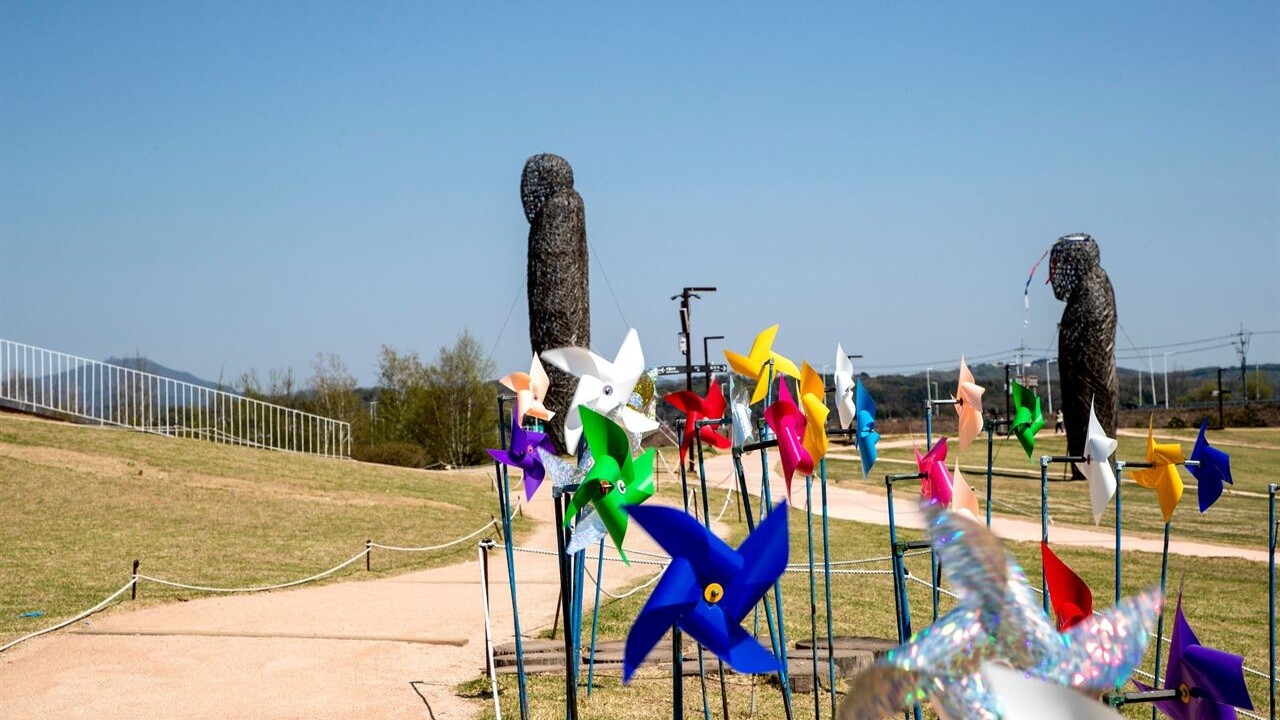
Colorful pinwheels stand in front of large human-shaped sculptures. Paths curve across the grass hill, shifting the view between small objects nearby and larger forms beyond. The park makes the movement of wind visible through color.
An Imjingak Pyeonghwa Nuri Park walk takes place within the Imjingak visitor area in Munsan-eup, Paju. The park is a cultural space in a destination shaped by division and separated families. Its works carry meaning beyond their usefulness as photographic subjects.
For an autumn outing, foliage color is not the only reason to choose a place. Open sky, low hills and paths between artworks give this park its character. A park walk, a separate DMZ tour and a gondola ride should be treated as different visitor arrangements.
An Imjingak Pyeonghwa Nuri Park walk across the lawns
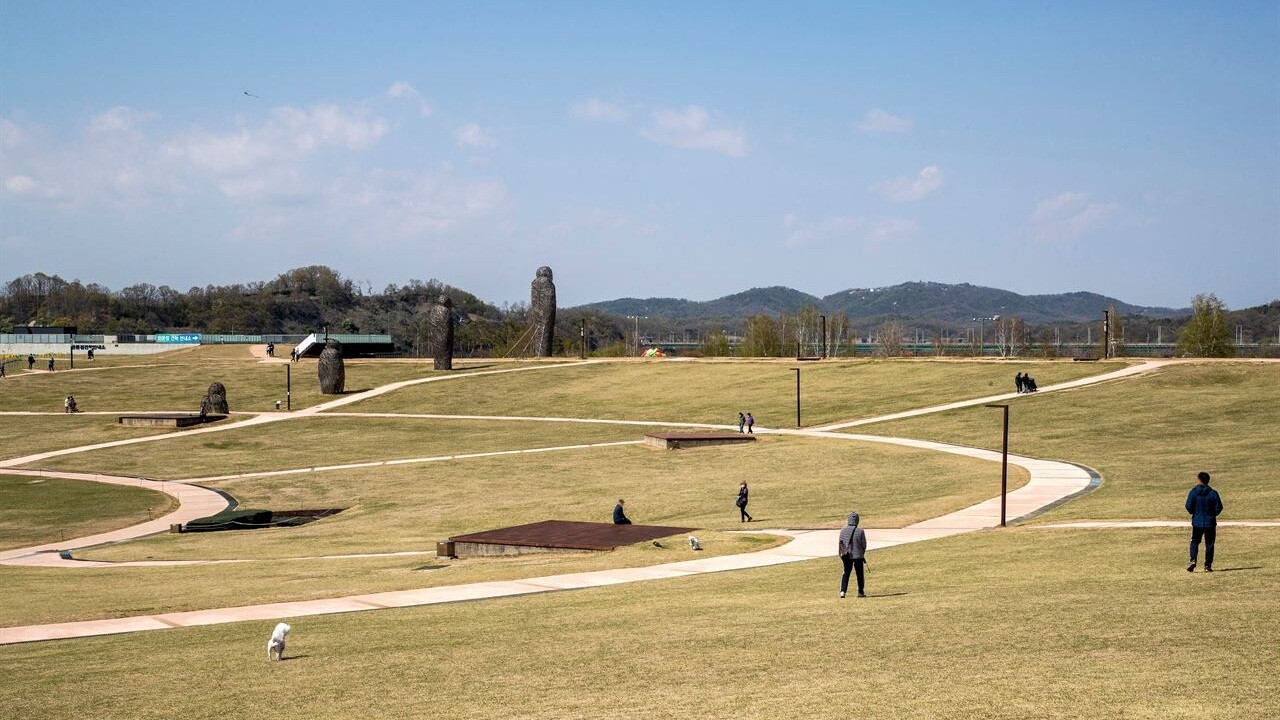
The paths do more than connect one entrance to one attraction. Their curves carry walkers between sculptures, water and open lawn, changing the viewing direction along the way. A broad panorama and a closer look can belong to the same unhurried walk.
Paju’s official description presents Pyeonghwa Nuri as a large grass hill with a waterside outdoor performance space. That layout remains relevant between performances, but it does not mean a concert or a particular program is always taking place.
A lower view beside the water
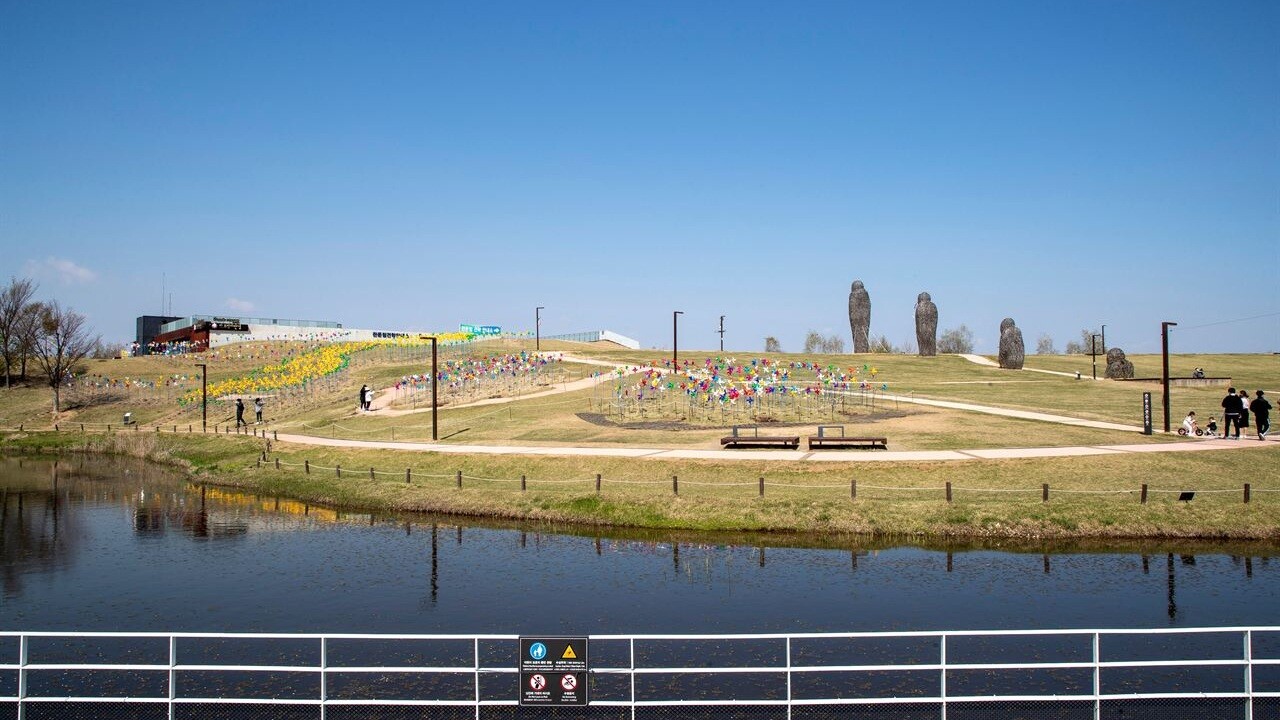
Near the water, the outline of the hill and nearby buildings overlap at another height. Sculptures that stood out across the lawn become part of the background, while the rail and water’s edge sit closer to the viewer.
This waterside park space should not be confused with entering the civilian-controlled area beyond the river. A photograph of an open lawn does not establish free access to every surrounding site. Separate tours and facilities follow their own rules.
Pinwheels give the wind a color
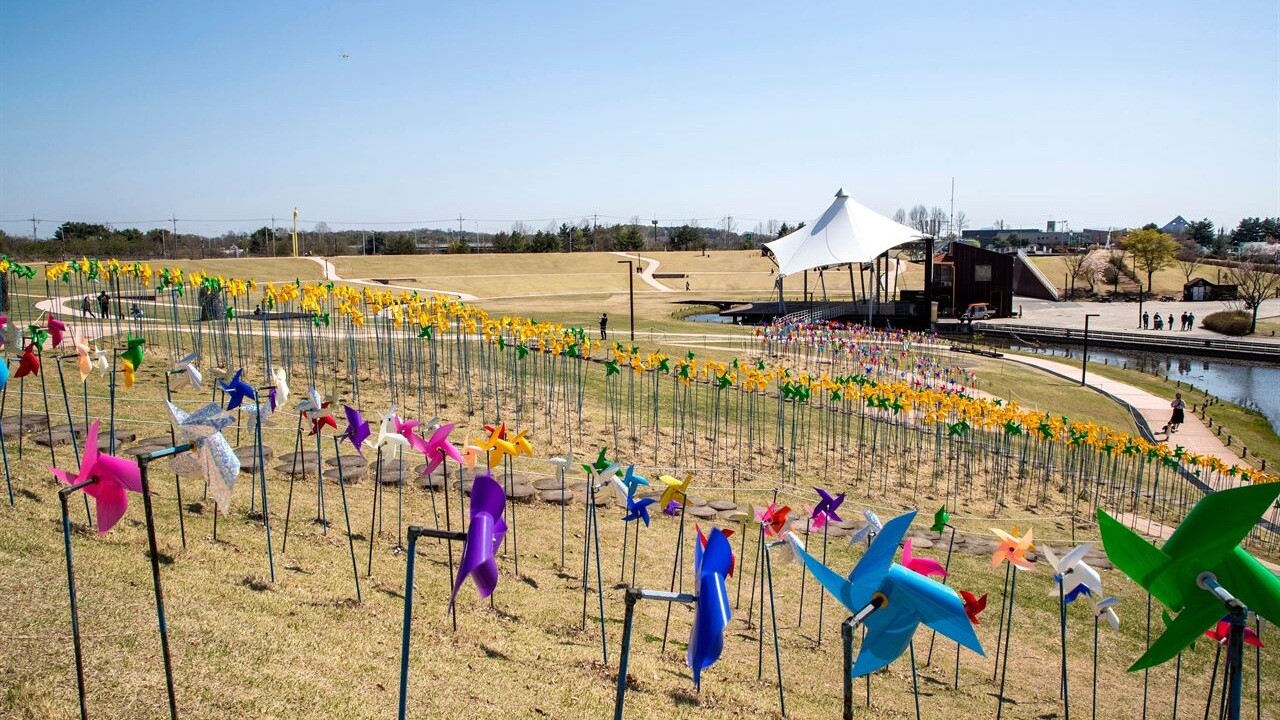
The pinwheels divide the hill into many small patches of color, with grass and sky visible between them. Up close, each has its own shape; from farther away, the installation becomes a wider arrangement across the slope.
The city’s official artwork explanation attributes Windy Hill to artist Kim Eon-kyung in 2005. It represents wind moving freely across the Korean Peninsula. Knowing that idea changes the installation from simple decoration into part of the park’s larger subject.
A straight bridge within a curved landscape
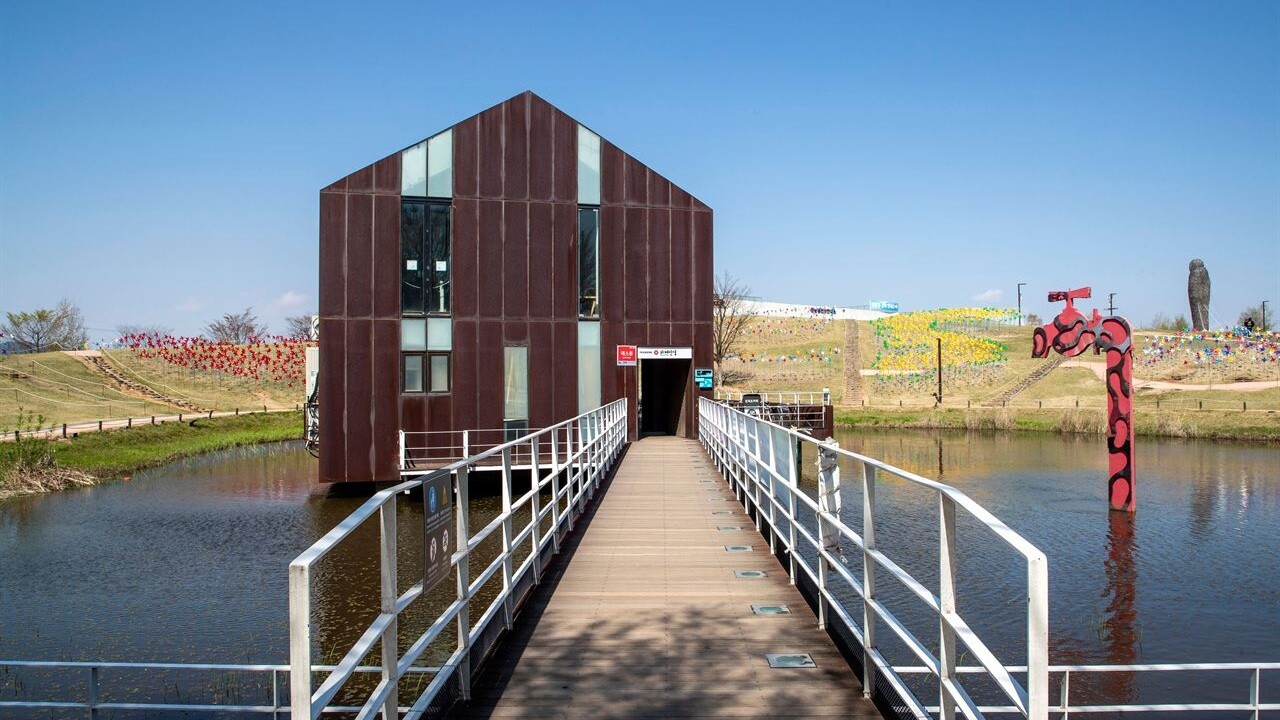
A bridge leads directly toward a building beside the water. Its clear line contrasts with the paths winding across the lawn. The change draws attention from the large hill toward the smaller waterside setting.
Korea Tourism Organization distinguishes the operating arrangements of Imjingak’s individual facilities. If adding a gondola, exhibition or performance to the walk, check its own opening information. A single schedule or admission rule should not be applied to the entire visitor area.
Sculptures that give the hill its outline
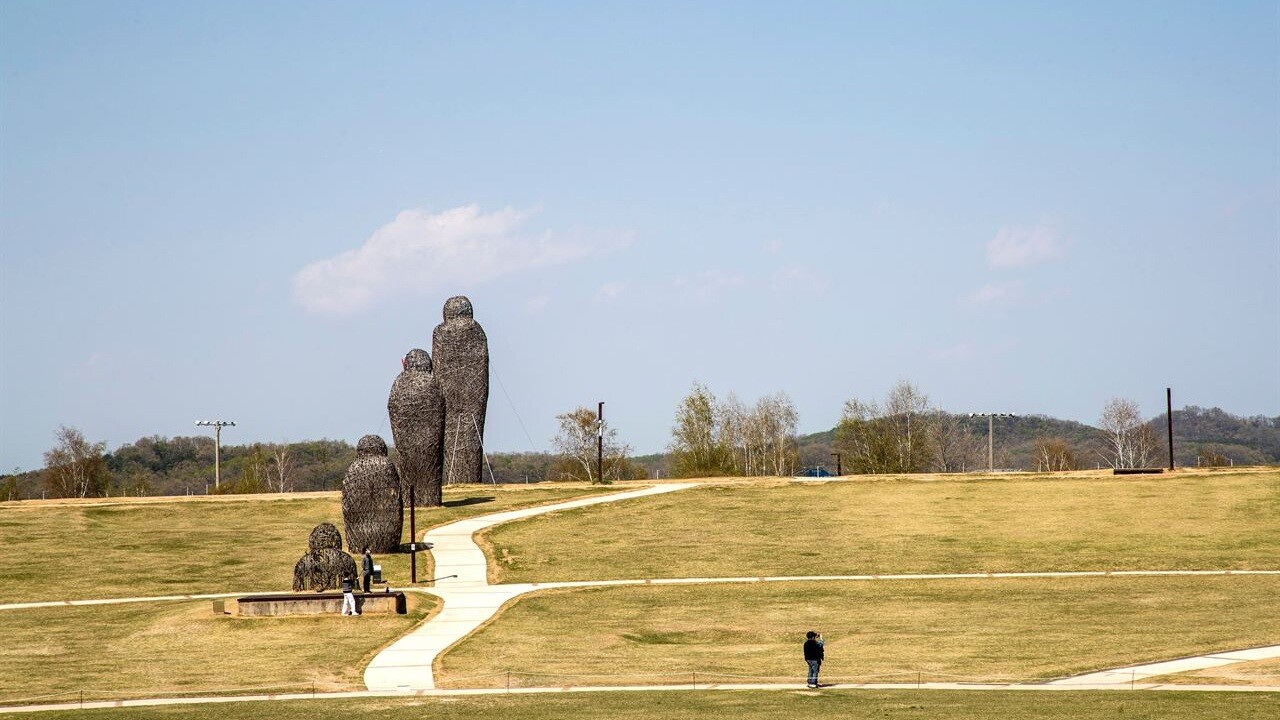
The human-shaped works rise above the low grass and paths. With open ground around them, their silhouettes remain clear. Their substantial forms contrast with the lighter colors of the pinwheel installation.
Paju identifies Unification Calling as a 2007 work by Choi Pyeong-gon, made with bamboo and steel reinforcement. Its theme is the hope for reunification. That context gives the park walk a quieter dimension beyond the visual contrast.
For a different open-space option near Seoul, compare the autumn walk at Haneul Park. Imjingak centers artworks and historical context, while Haneul Park offers elevated grass fields and city views.
Pyeonghwa Nuri holds pinwheels, large sculptures, water and lawn within one landscape. It suits an autumn outing that leaves room for the shape of the space and the story within it, rather than looking only for one particular color of leaves.
You May Also Like
by Google Adsense