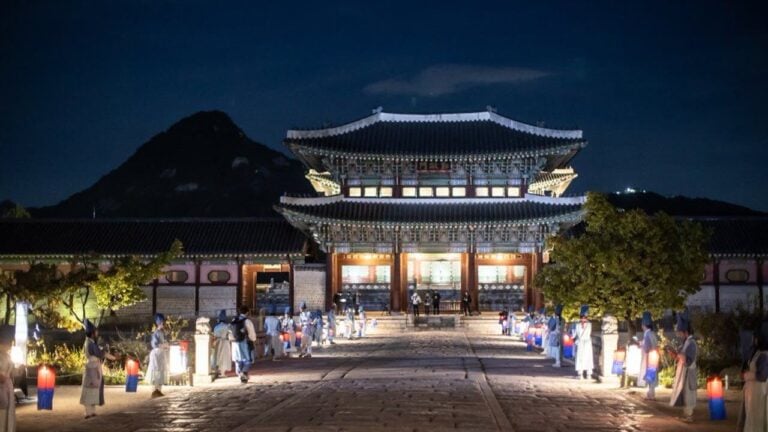
Independence Hall of Korea in Cheonan: Fall Maple Walks and 2026 Night Lights
Independence Hall of Korea, Cheonan — a history museum campus with a maple trail and fall weekend evening events
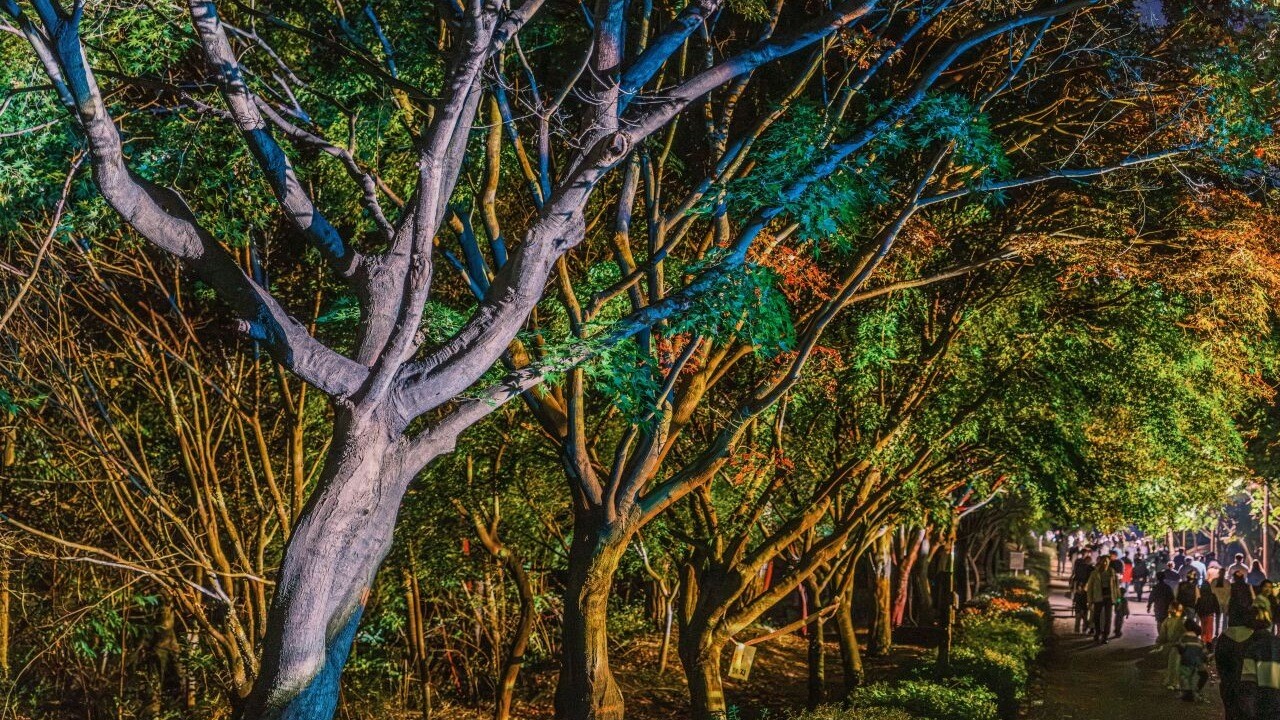
A museum day in Cheonan can end beneath a canopy of maple branches. After dark, light picks out their outlines, turning attention from the broad plaza to the smaller spaces between the trees.
The Independence Hall of Korea is a museum and memorial campus in South Korea, about Korean history and the struggle for independence. Its monumental buildings and wooded grounds make outdoor time a substantial part of a visit.
For 2026, the Maple Forest Healing Festival runs on Fridays, Saturdays, and Sundays from October 16 through November 15, with an evening program on those days. For travelers looking about two weeks ahead, November 6–8 falls within that schedule.
There is one essential planning distinction: the evening program does not include access to the permanent exhibition halls. Museum time belongs earlier in the day; the maple trail provides a different setting afterward.
Start with the Independence Hall of Korea’s monumental plaza
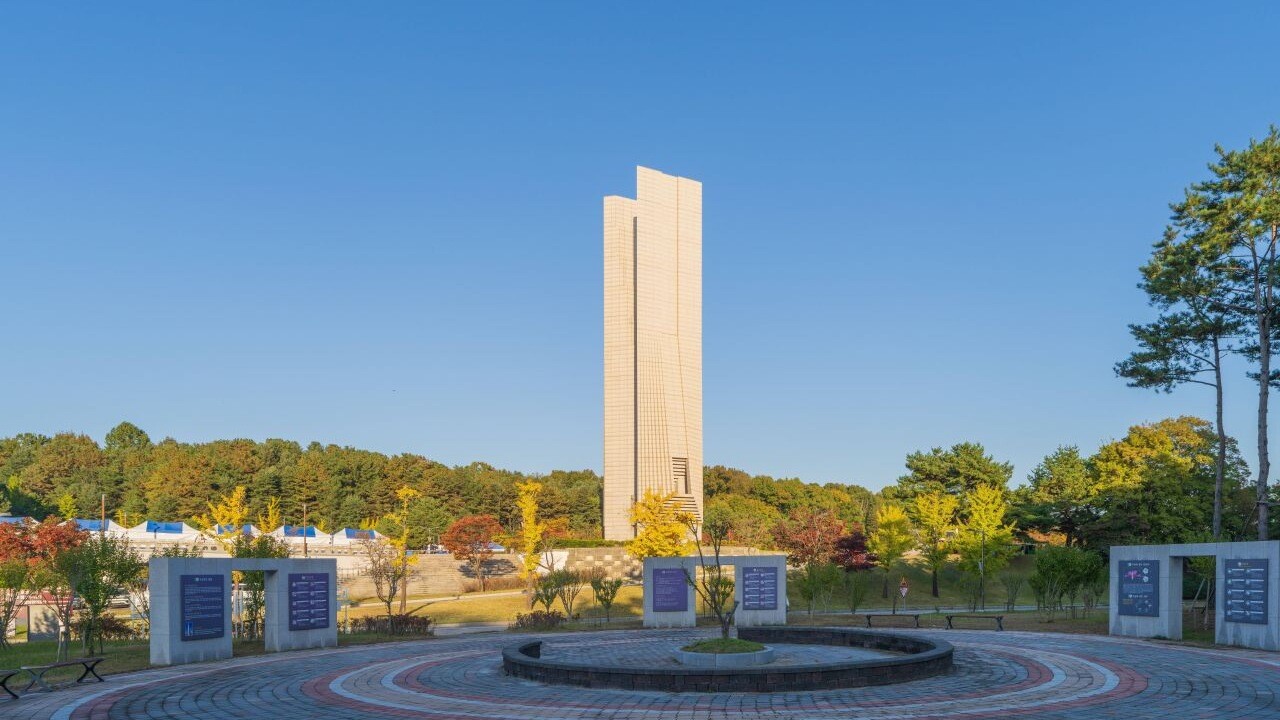
The Monument to the Nation rises above an open approach, its paired forms visible against the sky. Trees sit lower around it, giving the structure room to stand out. This is the broadest view of the visit before the trail brings everything closer.
The museum opened on August 15, 1987, following public fundraising. Its collections and exhibitions focus on Korean history, particularly the independence movements during Japanese colonial rule. That context gives the monuments a purpose beyond their striking shapes.
Leave time to look across the plaza before heading into the trees. The change from large civic space to enclosed woodland is part of what makes the campus rewarding on foot.
A tiled roof at the center of a wooded landscape
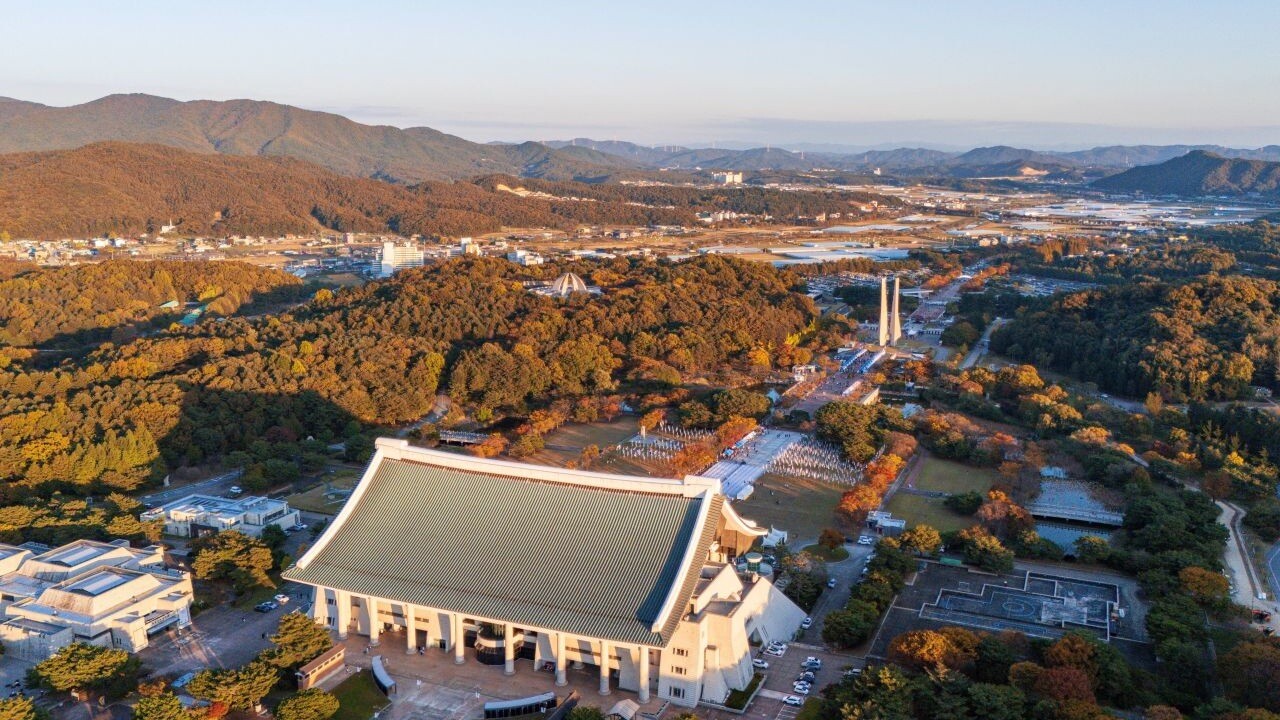
The Hall of the Nation has a long roofline supported by substantial columns. From above, the building appears within a much larger pattern of wooded hills and campus paths. The aerial photograph makes that relationship clear.
A ground-level visit offers a succession of smaller views instead: an open forecourt, a roof edge, then trees beyond it. There is no need to reproduce the aerial viewpoint to appreciate how the architecture fits the landscape.
Give the exhibitions their own part of the daytime visit. The evening event does not extend access to the permanent exhibition halls. Time inside the museum and time beneath the trees offer different experiences on the same grounds.
Follow the maple branches as the sky narrows
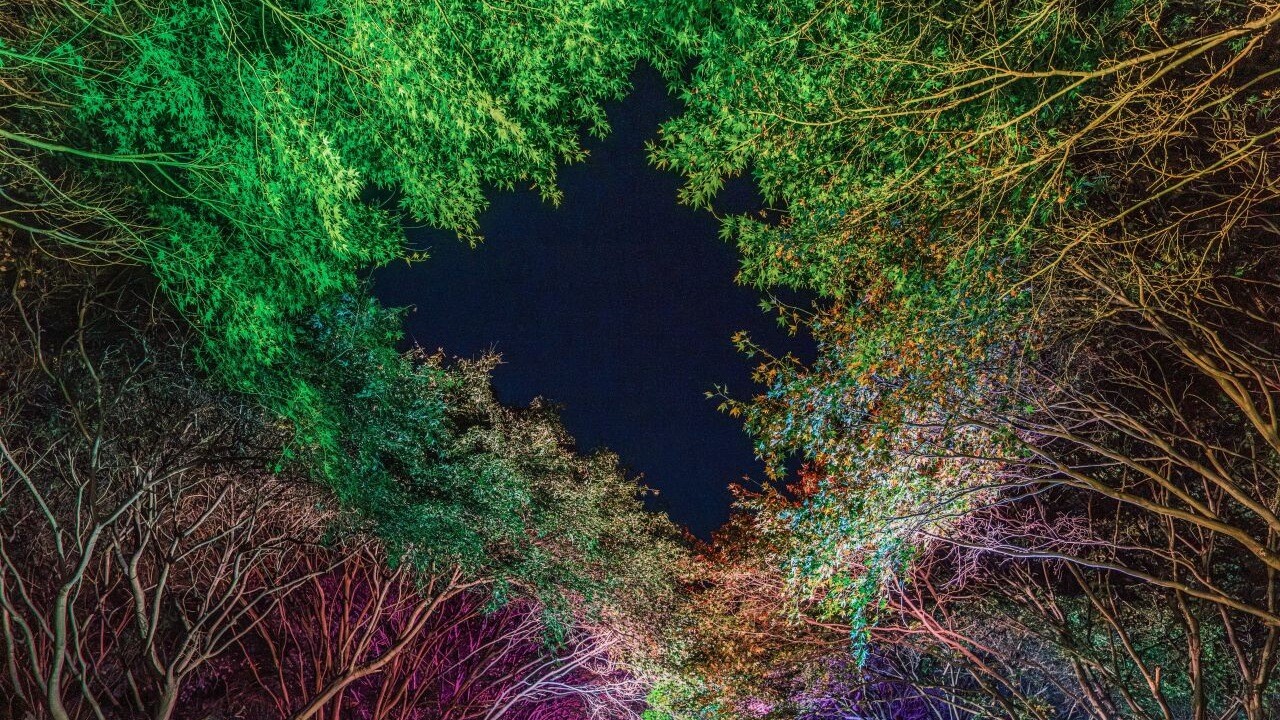
Along the maple trail, branches reach toward one another above the path. The sky becomes a series of openings between leaves and limbs. After the plaza’s long sightlines, the enclosing canopy changes the scale of the walk.
At night, colored lighting adds a second palette to the trees. Green and purple illumination can make the same branches look quite different from their daytime appearance. These lighting effects do not indicate how far natural fall color has progressed.
November 6–8 is a useful event window, rather than a guaranteed peak-foliage weekend. Leaf color and leaf retention vary across the grounds. The trail’s structure and evening atmosphere offer reasons to visit that do not depend on every maple reaching the same stage.
Know which parts of the campus open after dark
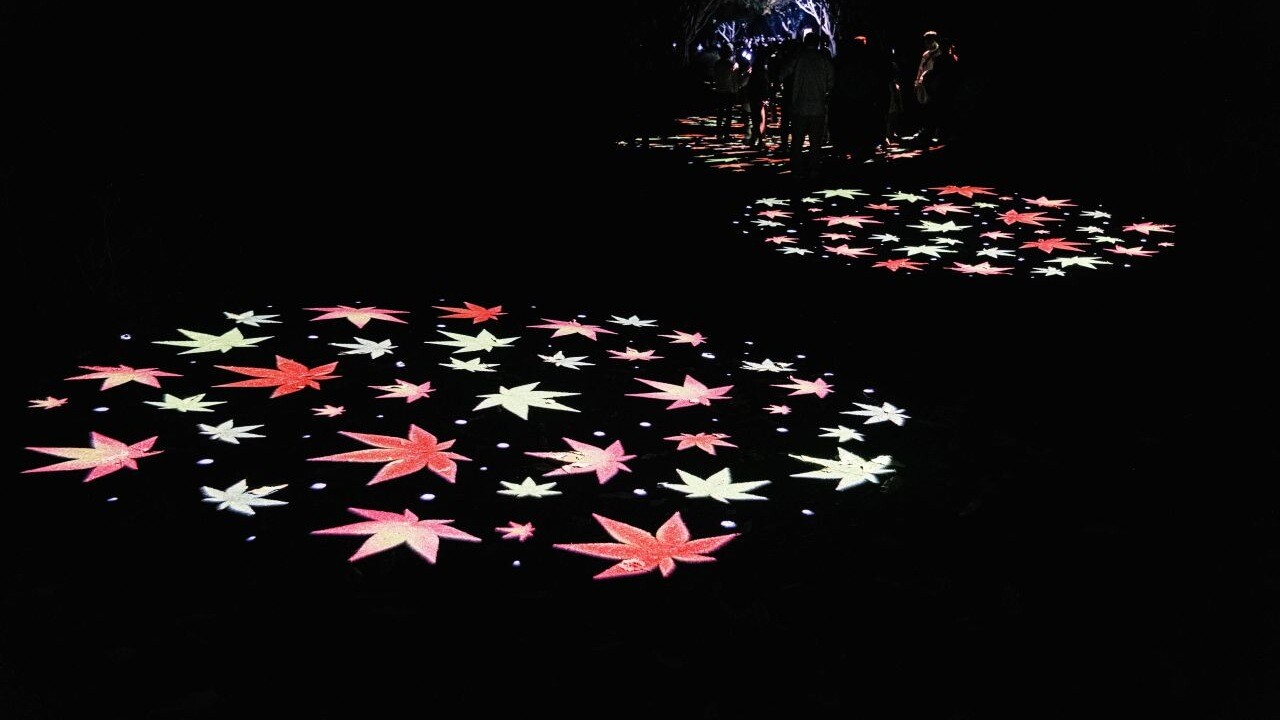
Light can draw attention to the pavement as well as the canopy. Leaf-shaped projections create a different kind of detail at walking level, while illuminated branches frame the route overhead.
The official 2026 festival announcement lists maple-trail lighting and a media facade on the Monument to the Nation. Earlier fall scenes suggest the setting’s possibilities; they do not establish this year’s precise lighting layout or photo installations.
Permanent exhibition halls do not reopen for the evening program. If the historical exhibitions matter to your trip, make them the first part of the visit and keep the evening for the grounds.
Finish with the Hall of the Nation’s evening silhouette
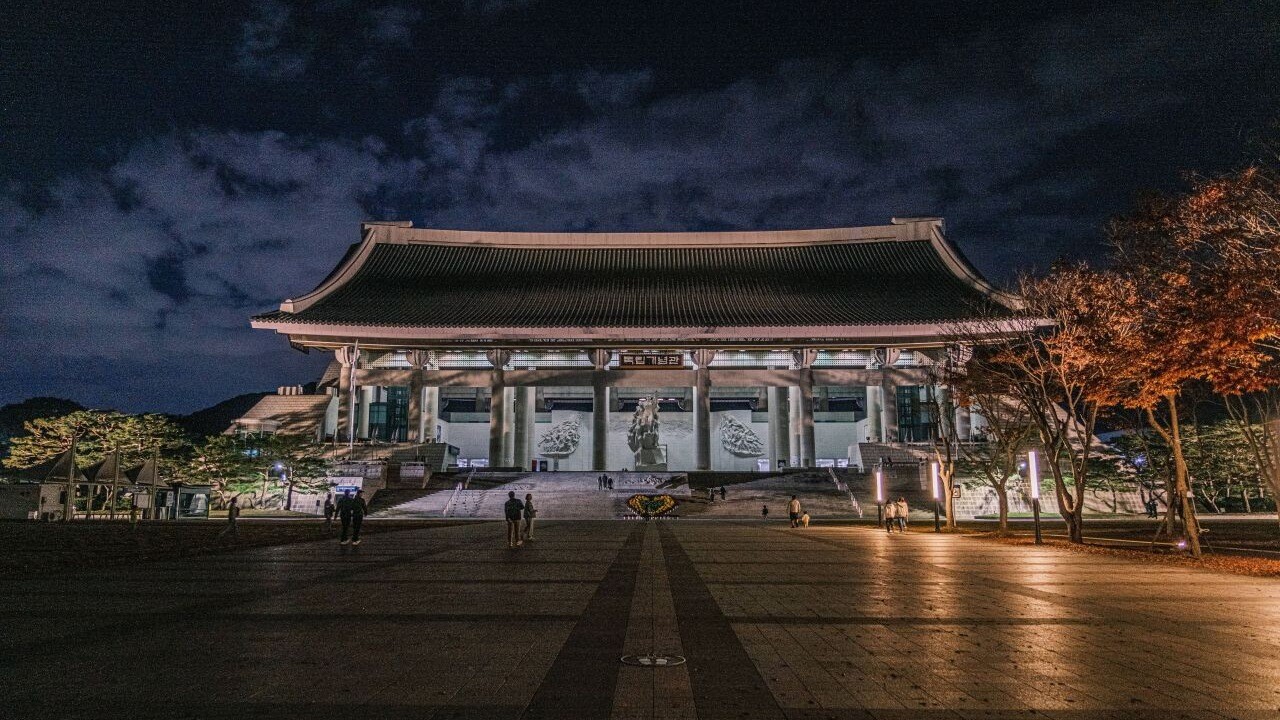
At night, the Hall of the Nation’s roof and columns stand out against a darker backdrop. The surrounding landscape recedes, bringing the building itself into sharper focus. Returning across the plaza can feel visually different from the daytime approach.
The museum’s visitor information explains the daytime museum visit and the outdoor grounds. Pets and smoking are prohibited on the grounds. The wooded trail remains part of a memorial and museum setting.
For another landscape in the broader region, consider the Asan Ginkgo Tree Road along Gokgyocheon. It offers a riverside daytime walk. Treat it as a choice for your itinerary rather than assuming both places need to fit into a tightly packed day.
Cheonan’s museum campus works well for travelers who want history and an outdoor fall walk in the same visit. Give the exhibitions their own time, then let the evening program bring the day to a slower close beneath the trees.
You May Also Like
by Google Adsense