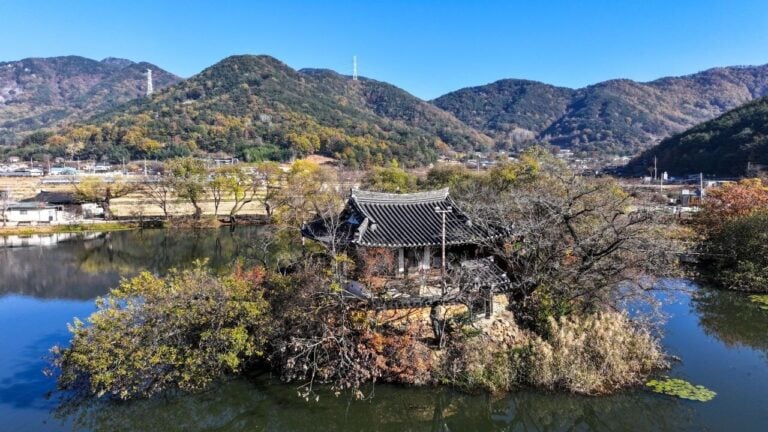
Andong Hahoe Village: An Autumn Walk Through a Living Korean Heritage Village
Traditional roofs, riverside fields and pine woodland inside a bend of the Nakdong River
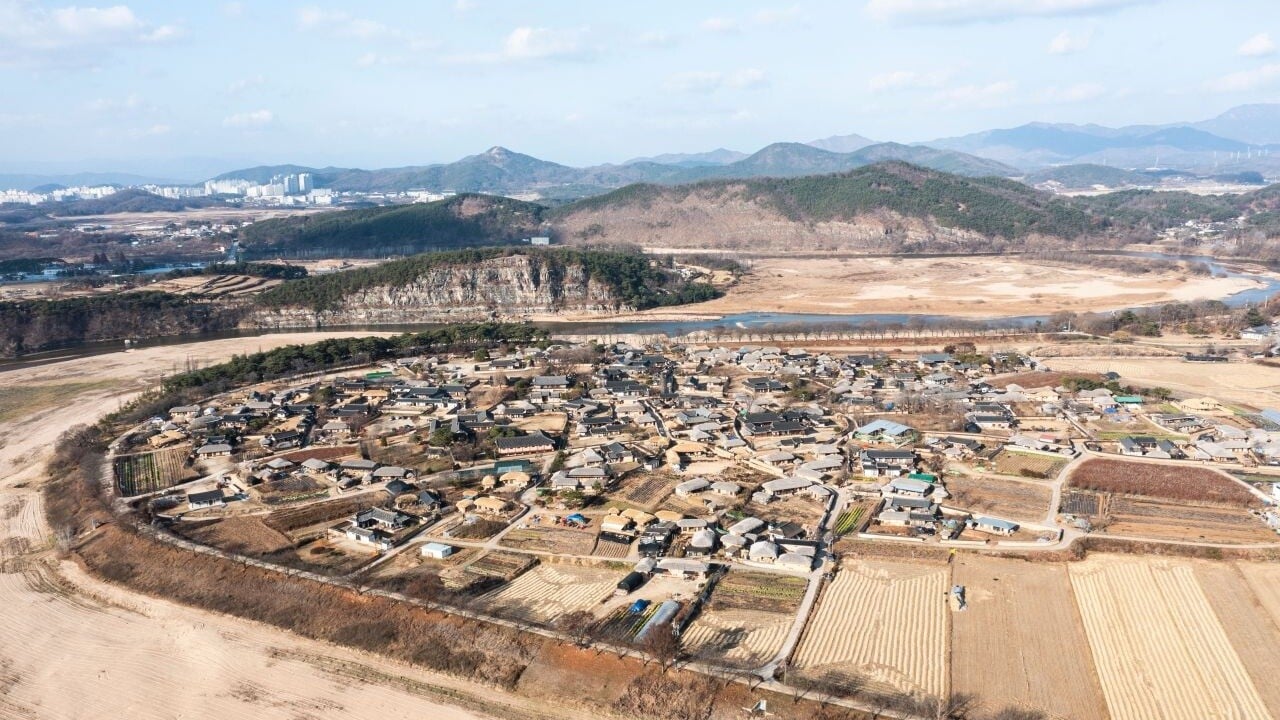
The first impression of Hahoe is its setting. A river bends around a village of low roofs, fields and trees, keeping the settlement connected to the landscape around it.
Andong Hahoe Village in southeastern South Korea is not simply an outdoor collection of old houses. It is a historic clan village where people still live, and an autumn walk moves between heritage buildings and an active community.
For a first visit, the useful angle is how to see that relationship: the wider fields, the different roof materials, the limits around private homes and the pine woodland beyond the lanes. In October, the earlier last-entry time also matters when choosing how late to arrive.
The aerial view shows roofs within a pattern of farmland, wooded edges and water. The houses are one part of the scene, rather than the entire reason the place is distinctive.
Hahoe’s name is associated with the Nakdong River turning around the village. Korea Tourism Organization describes it as a village of the Pungsan Ryu clan, and its heritage designation is shared with Yangdong. These are two separate villages, not two sections of one attraction.
Understanding the setting first gives the smaller views more context. A courtyard, a roof or a tree then becomes part of a settlement, instead of an isolated photo subject.
Look toward the roofs across the fields
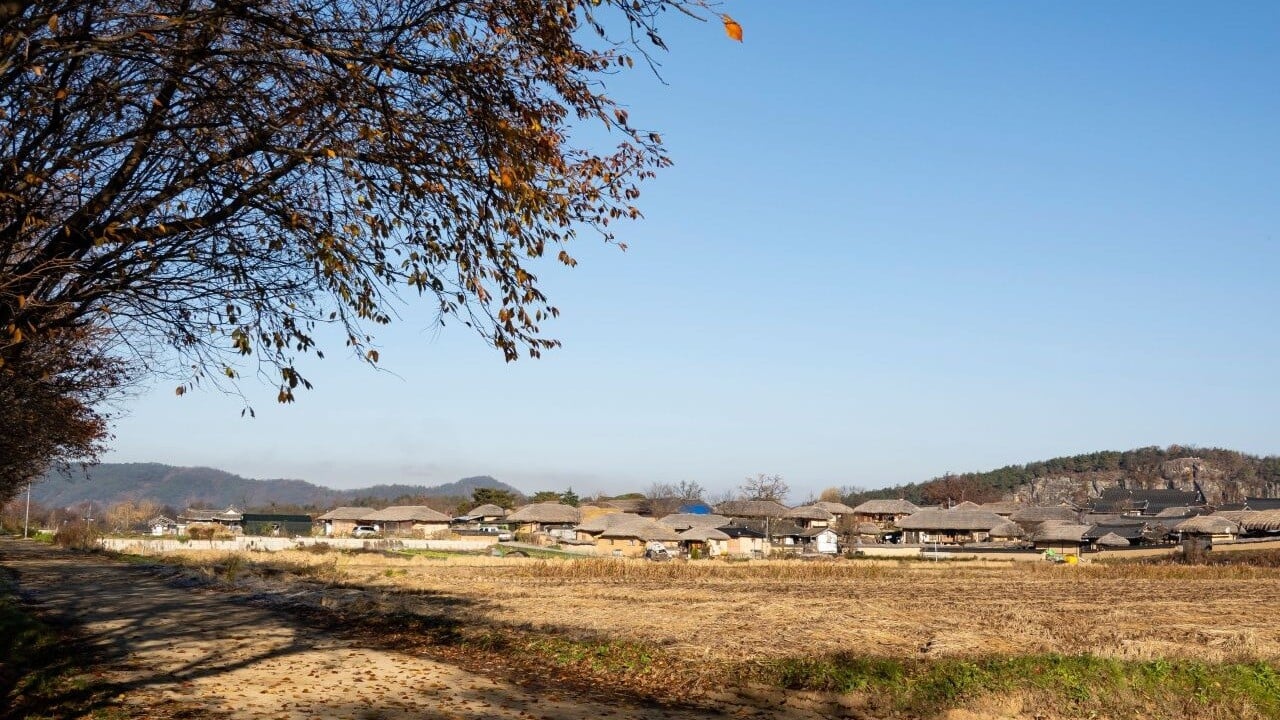
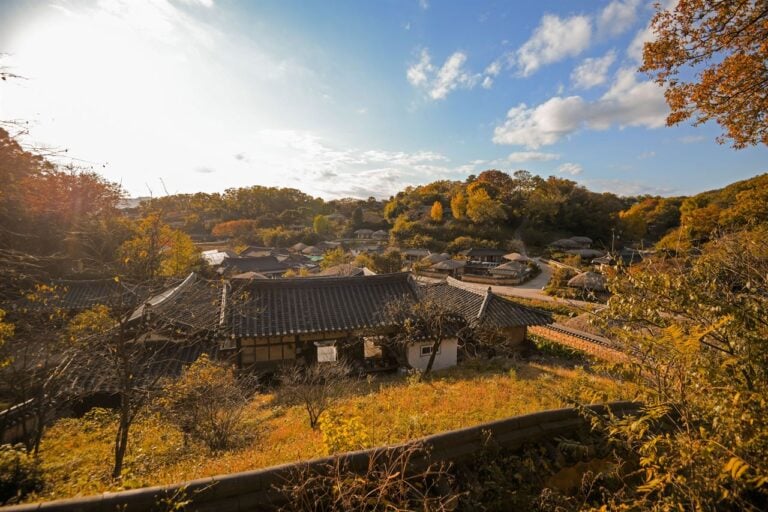
Across the fields, the roofs form a low line against the hills. This viewpoint keeps the agricultural surroundings in the picture, which a close view within a lane can easily leave out.
An autumn visit does not need to be reduced to finding one tree at peak color. Field textures, branches and the materials of the houses also contribute to the seasonal scene. They offer a broader way to look at the village.
The present stage of foliage across Hahoe has not been verified here. The photographs illustrate the destination; they do not establish that every tree or field will look the same on a visit today. A guaranteed peak date would promise more than the available observations support.
Andong Hahoe Village is a living community
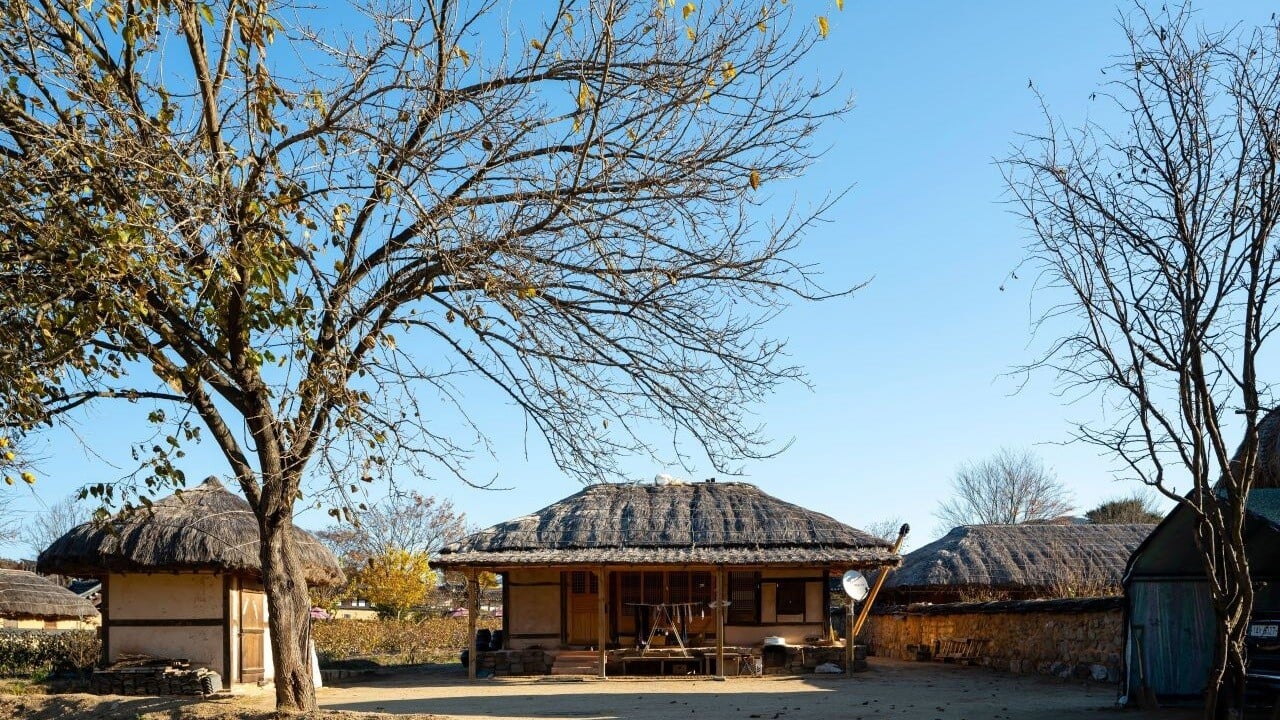
At house level, the scale changes. A courtyard, a wall and the line beneath a roof bring the village close enough to see individual details.
Hahoe’s preservation association asks visitors to understand that residents maintain the traditional village while living modern lives. That is a practical distinction for someone expecting a museum: an attractive doorway is not automatically an invitation to enter.
Respecting indicated visiting boundaries preserves the meaning of the place. The settlement has value because people live there, rather than because every private space can be turned into a visitor experience. This is a reason to slow down within the lanes, not to treat residents as part of an exhibit.
Thatched roofs offer another texture
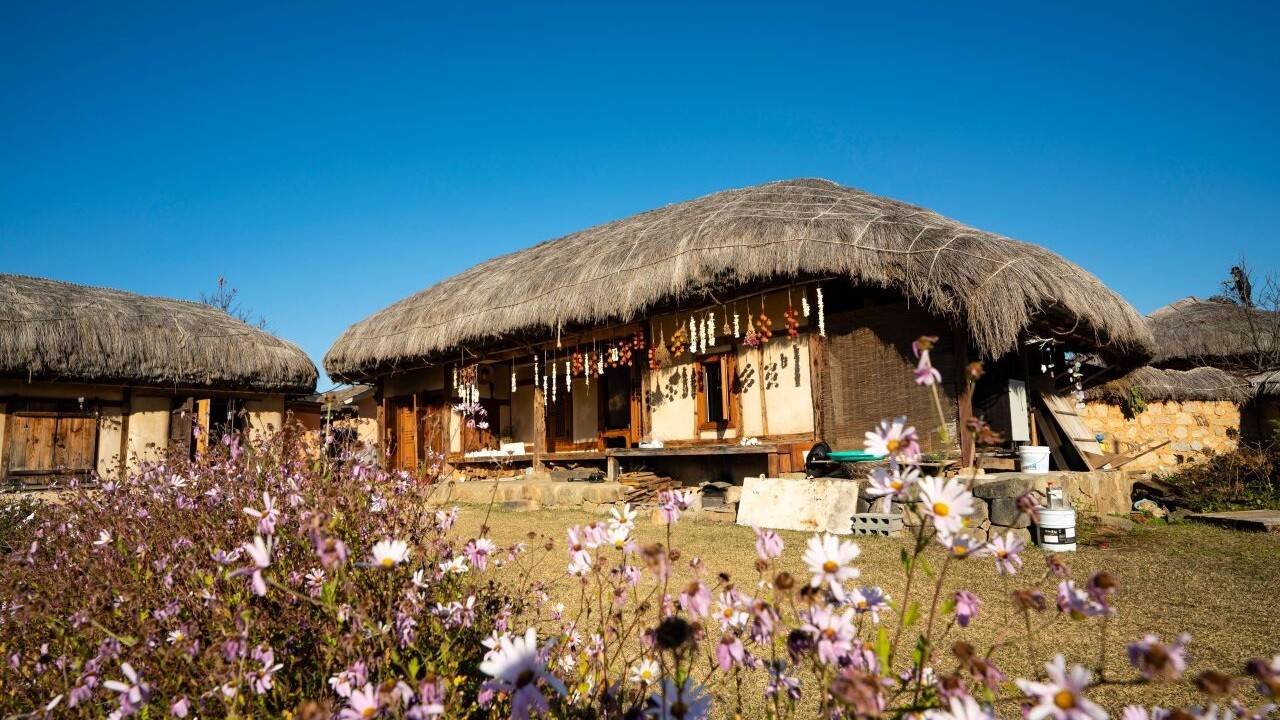
The rounded thatch creates a different outline from the darker, more angular tiled roofs elsewhere in the village. Timber, earth tones and flowers give the scene several textures within one small space.
Looking at those materials helps distinguish the houses instead of describing every building with the same word, “traditional.” Their forms can be observed without inventing a particular house name or an unverified story about its interior.
The photograph does not establish that this house is open for interior visits or that its flowers are a current seasonal attraction. Its value here is the visible relationship between roof, courtyard and planting.
Keep the river behind the architecture
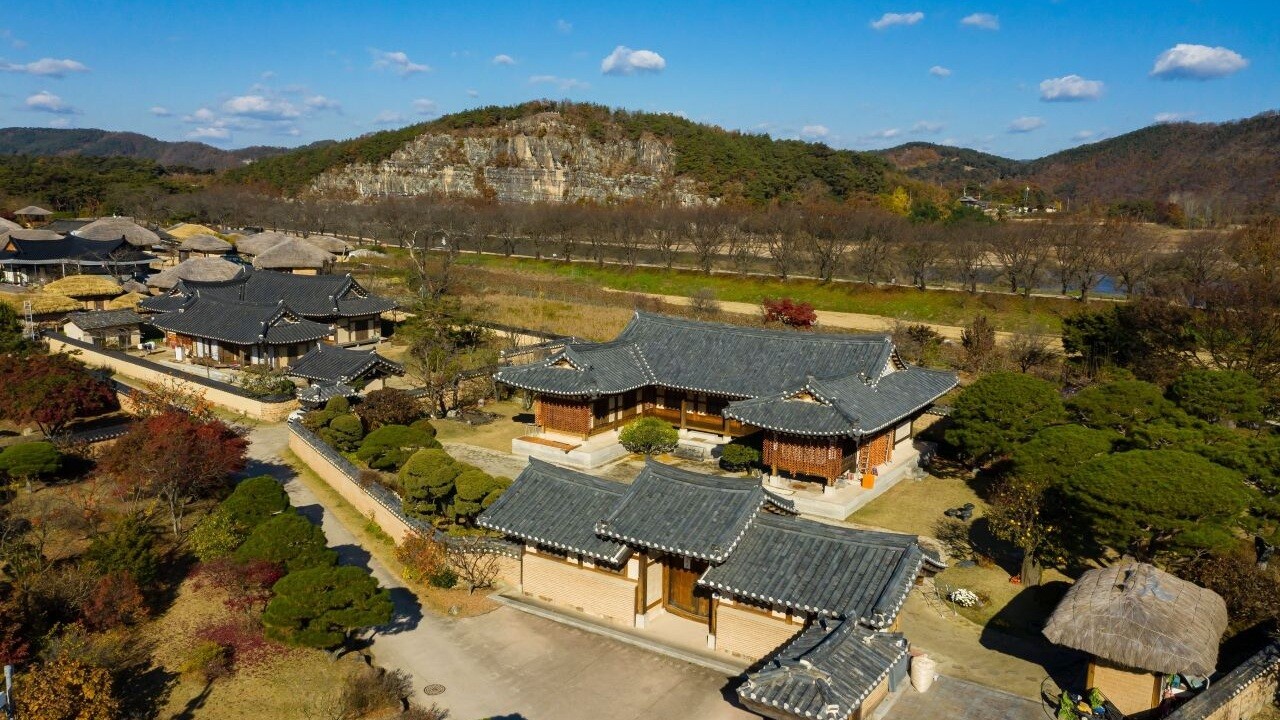
A wider roofscape returns the river and the opposite cliff to the view. That relationship is central to reading Hahoe as a village within a landscape.
The UNESCO World Heritage description emphasizes the clan villages’ placement among wooded hills, rivers and cultivated land. It also identifies different house forms as expressions of the social structure of Joseon-era communities. The heritage story therefore extends beyond admiring one roof.
For a different Korean heritage setting, compare the Suwon Hwaseong fortress walk. The urban walls and this riverside village are different places and forms of heritage, not adjacent stops on one walk.
A distant view of Buyongdae does not make a trip across the river part of the village walk described here. This introduction stays with Hahoe’s buildings, fields and wooded edges, allowing the wider view to explain their setting.
Finish with the pine woodland, and allow enough daylight
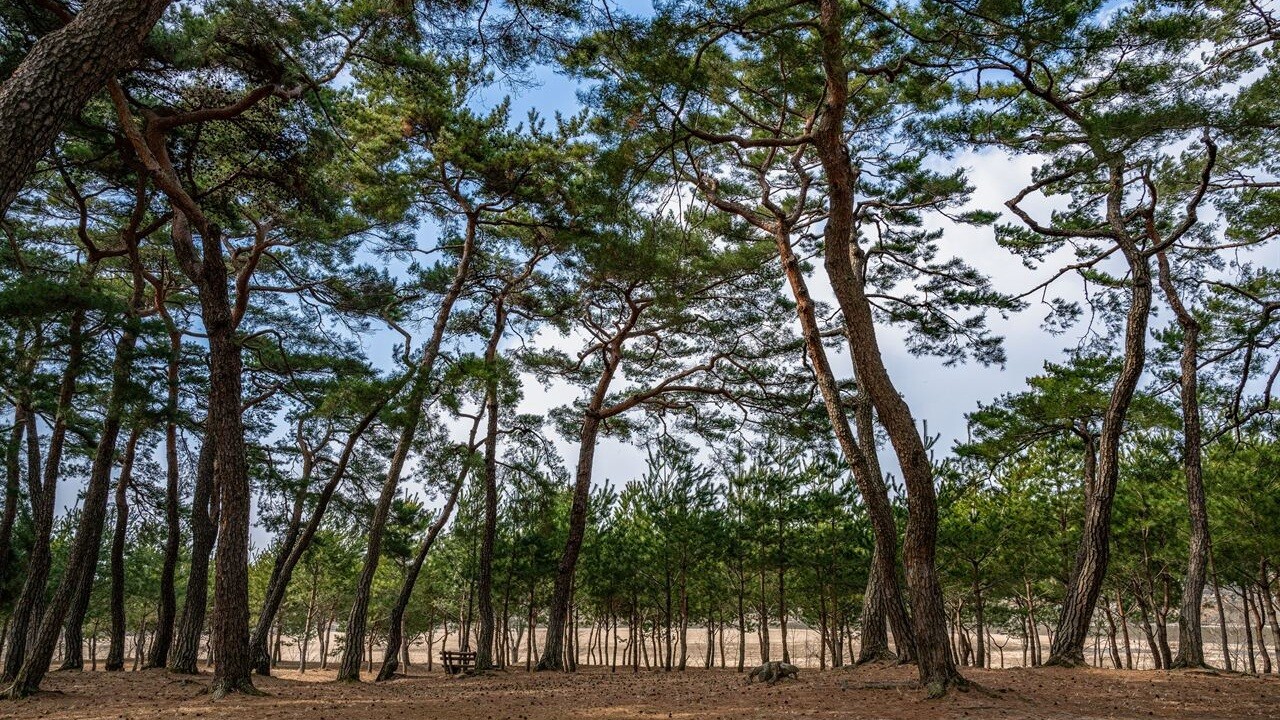
In the pines, trunks and branches replace the lines of walls and roofs. The spaces between the trees offer another way to look at the village’s surroundings after the closer views of houses.
The official visitor information lists last admission at 4:30 p.m. from October through March. That is an entry cutoff, not a recommendation to start a full visit at that time. Korea Tourism Organization lists the winter-season visiting period as 9 a.m. to 5 p.m.
Hahoe Village suits an autumn outing that leaves time to see more than its best-known roofscape. Reading the fields, homes and pine woodland together, while respecting the people who live here, gives the walk a fuller sense of place.
You May Also Like
by Google Adsense