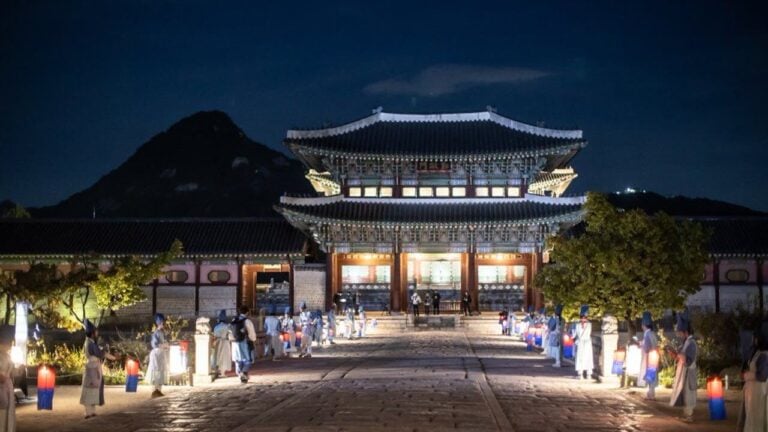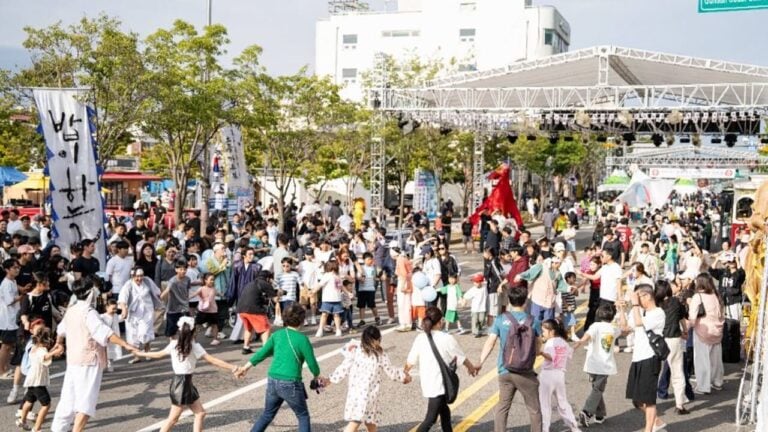
Suwon Hwaseong Festival 2026: Dates and a Fortress Walk
October 4–11 in Suwon, where a royal procession story meets the city walls
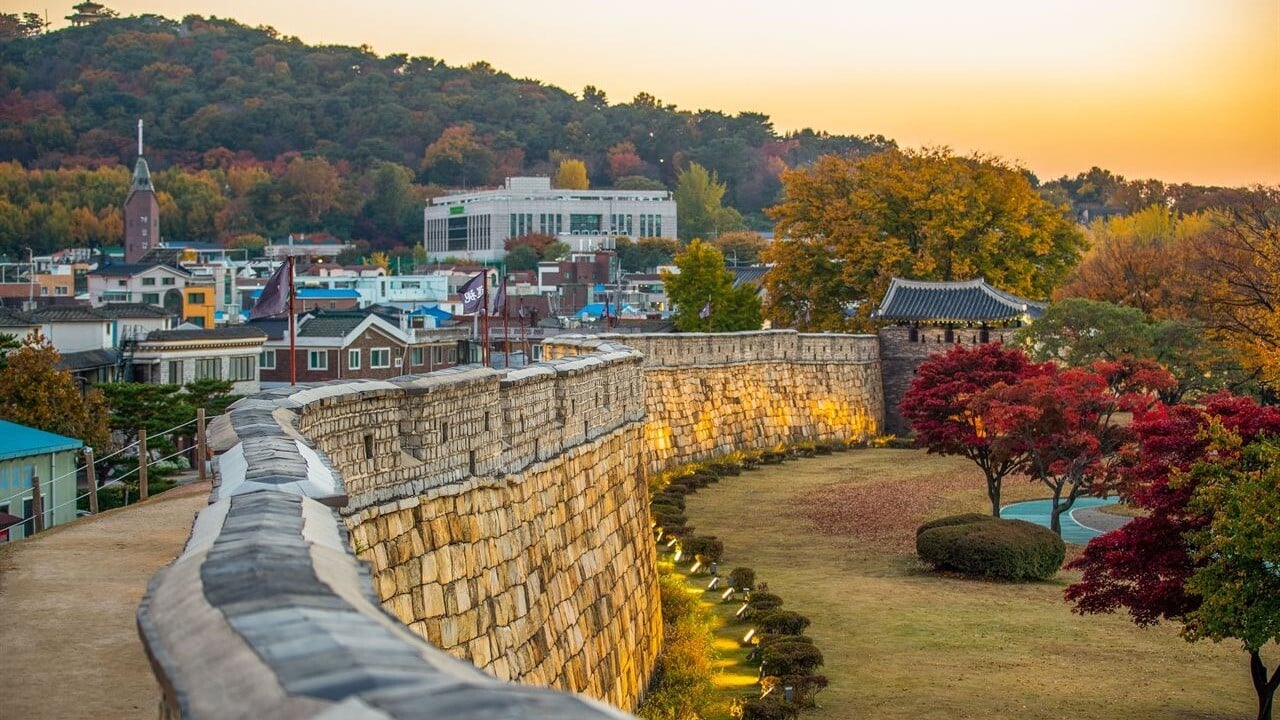
The wall bends with the ground. Houses and streets fill the space behind it, bringing an old defensive structure into the same view as a working city. Suwon Hwaseong is a place to look across a wall as much as to walk beside one.
The Suwon Hwaseong Festival runs October 4–11, 2026. It gives that setting a different rhythm, with cultural programs built around King Jeongjo’s journey to Hwaseong. For travelers planning the following weekend, October 10–11 falls within the final two days.
A performance may bring you here, but the fortress deserves its own part of the visit. Looking toward a gate from street level and looking back toward the city from a raised path are two distinct ways to understand the same place.
The gate and the city around it
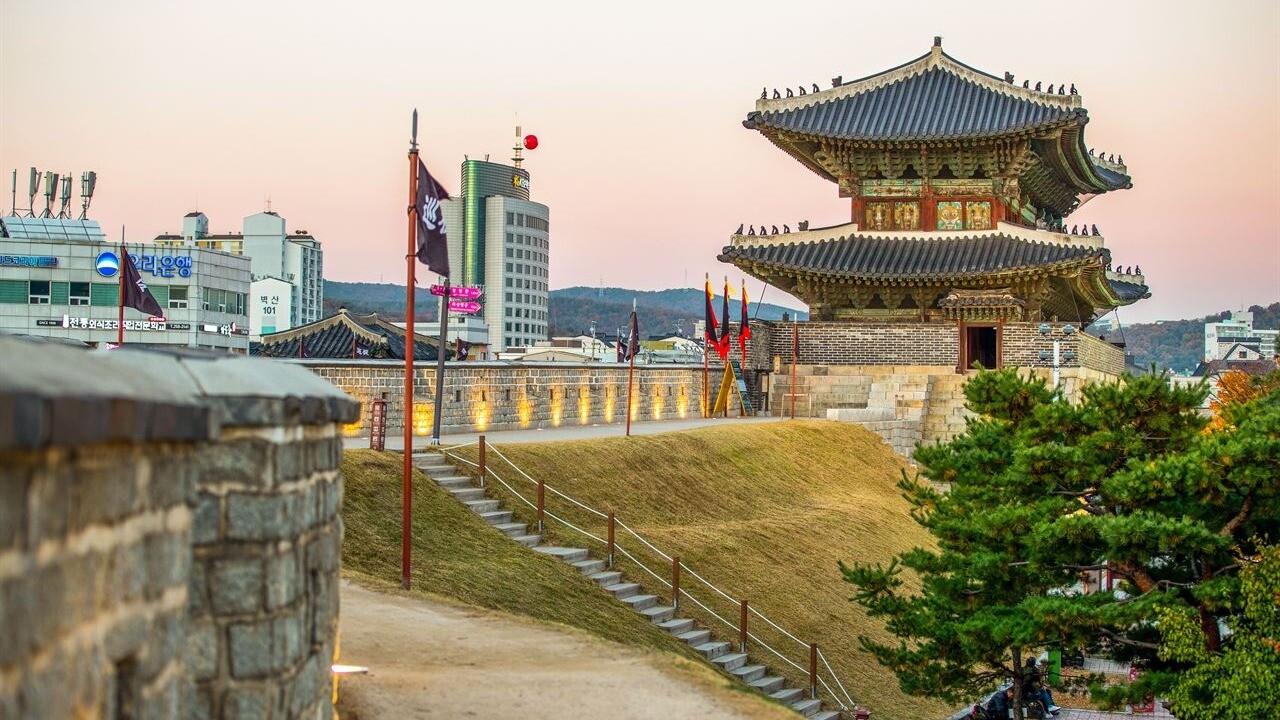
Stone supports the gate tower, while a tiled roof raises its outline above the wall. In the photograph, the lower path makes that difference in height easy to read. The gate is a piece of defensive architecture and an entrance into an inhabited city.
Hwaseong has four principal gates at the cardinal points. Seeing all four is one possible approach, rather than a requirement for enjoying the setting. A single gate and its adjoining walls provide a smaller, more focused architectural walk.
Walls and rooflines at dusk
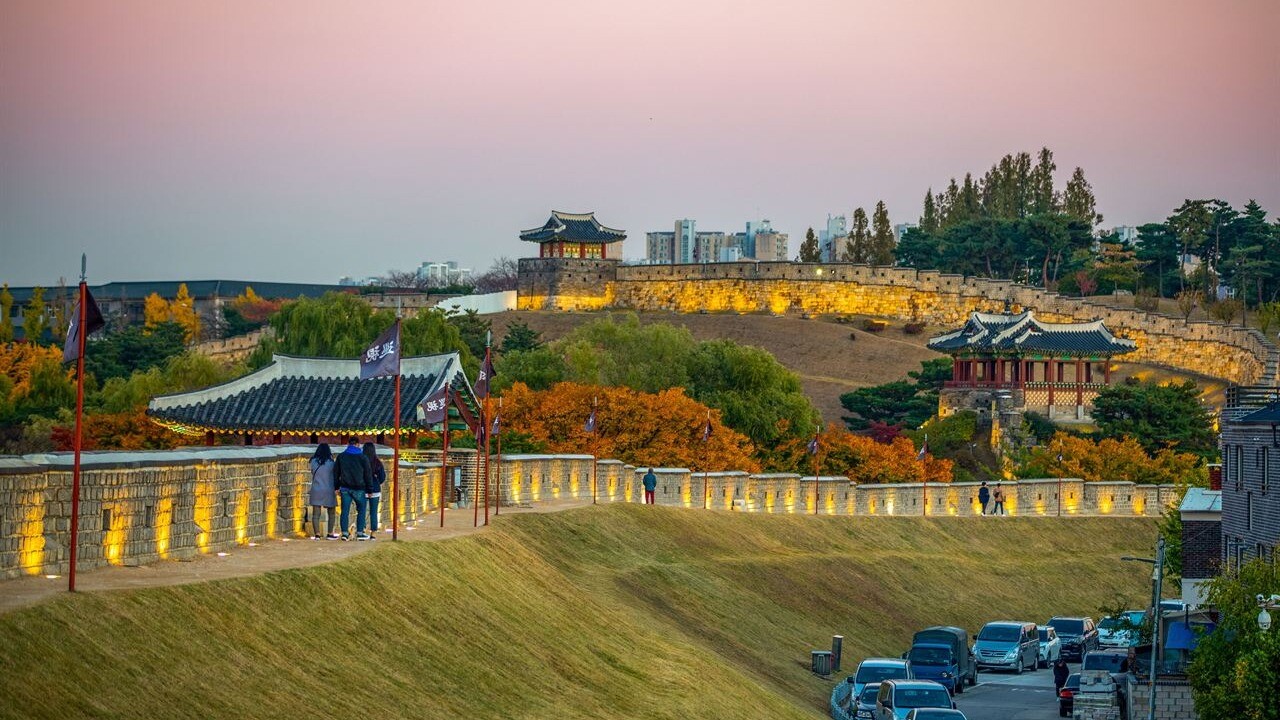
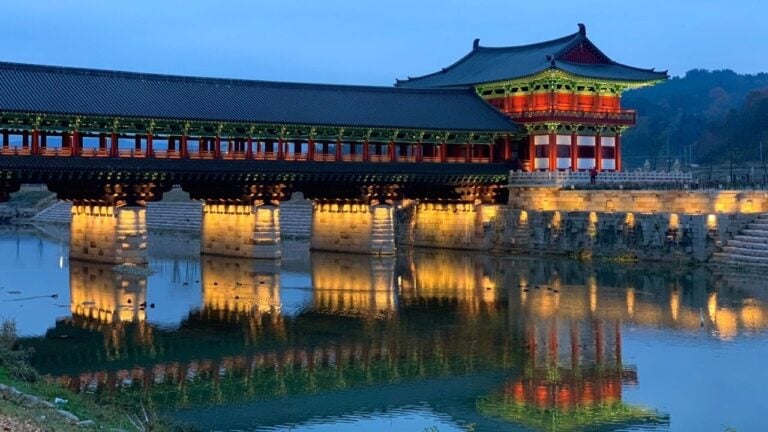
The rooflines overlap with the wall below, and the changing light makes the outline of each structure stand out. The wall becomes a sequence of surfaces and silhouettes, connecting the lower streets with the buildings above.
The Korea Tourism Organization lists cultural performances in the festival program, including Yajo and a water performance. Those listings are not a promise that every program runs at every gate or on every evening. A chosen performance and a general fortress walk belong to separate parts of the plan.
A wall shaped by flat ground and hills
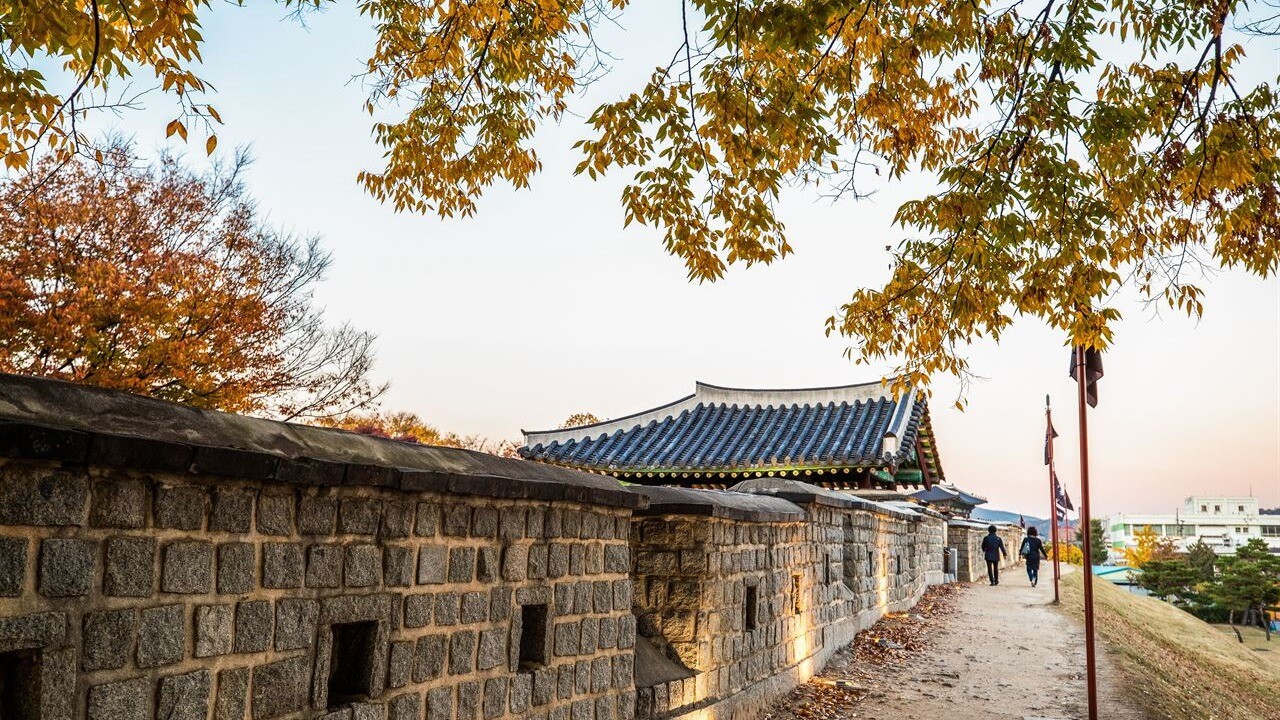
UNESCO records a wall length of 5.74 kilometers. The fortification follows both flat and hilly terrain, enclosing an urban area rather than sitting apart from it. That relationship is visible in the path alongside the stonework.
Walking a selected section lets you notice the masonry, openings and changes in height. It also leaves room to look back at the city. The full perimeter is a different undertaking, and this guide does not assign a fixed walking time to every visitor.
The royal journey behind the festival
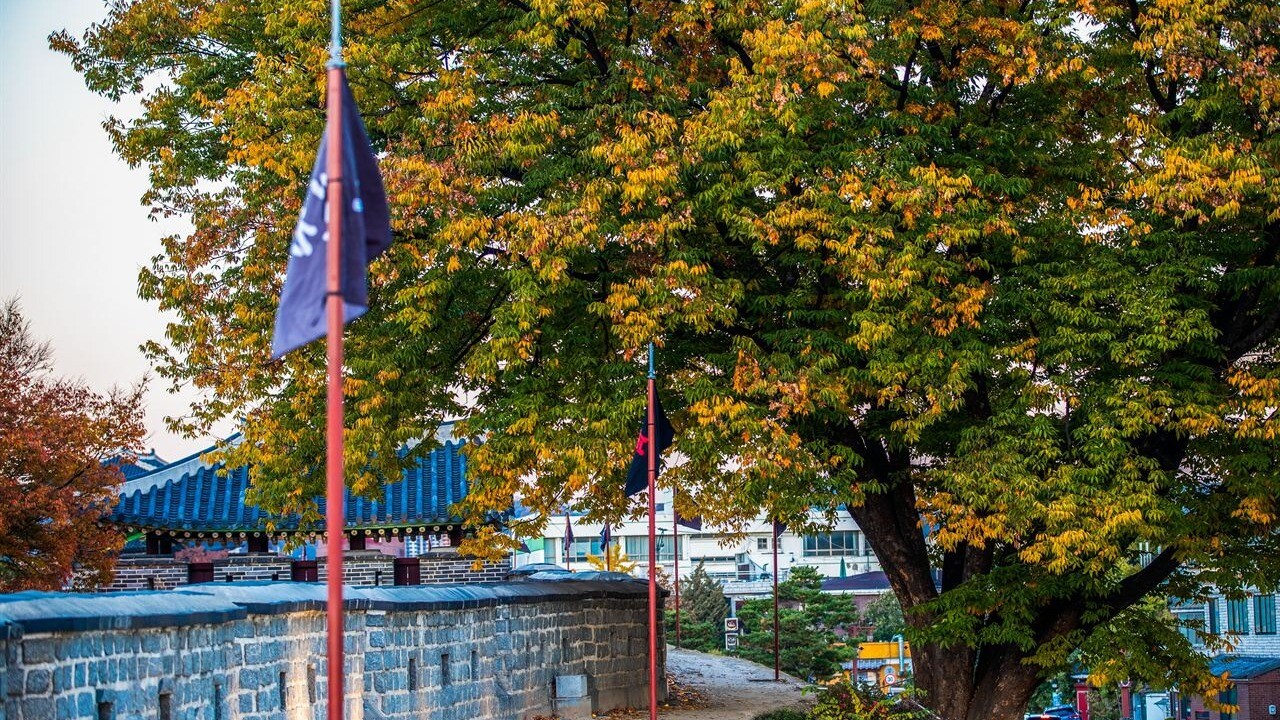
The festival draws on King Jeongjo’s 1795 journey to Hwaseong. Historical records provide the basis for cultural programs and the royal procession reenactment described by the Korea Tourism Organization.
That story gives the gate towers another dimension. They become part of a city people traveled through, rather than a collection of monuments viewed individually. The surrounding streets remain important to that sense of a lived-in place.
Suwon Hwaseong Festival dates and the fortress setting
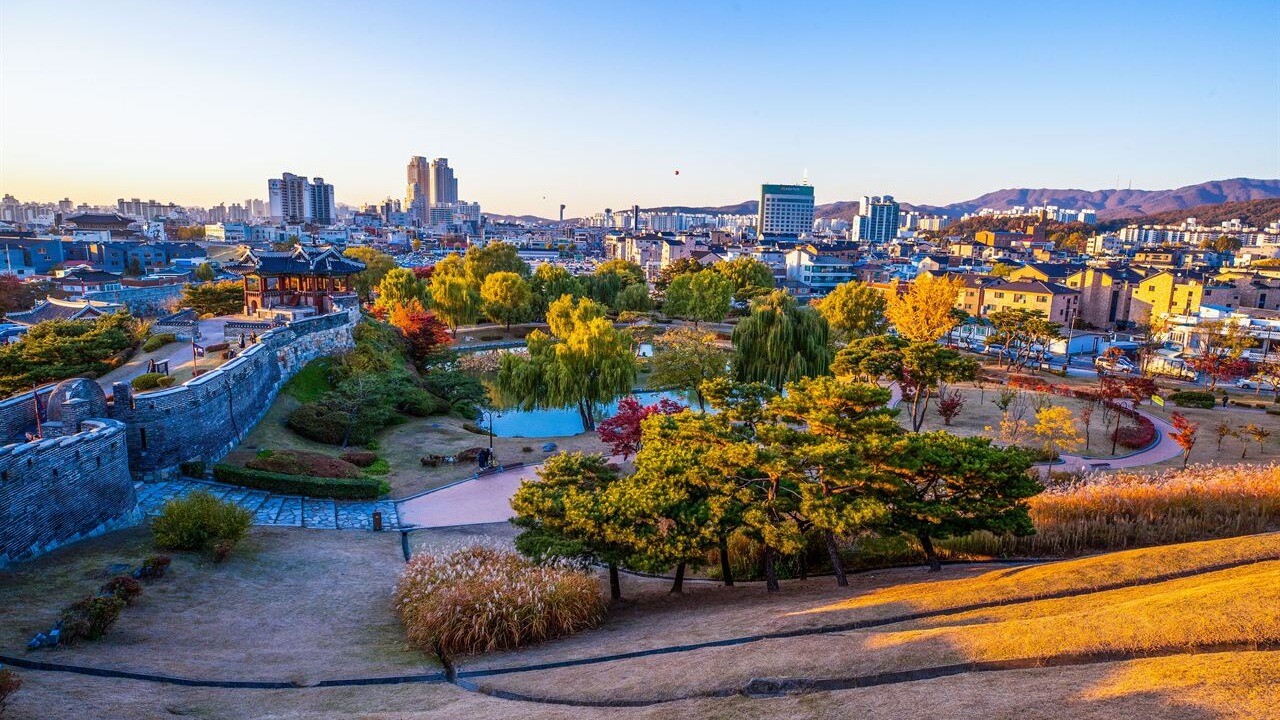
The listed festival setting is Suwon Hwaseong Fortress. The Haenggung Square address is 825 Jeongjo-ro, Paldal-gu, Suwon-si, Gyeonggi-do. General festival admission is listed as free, with charges varying by program. This does not establish that every performance or neighboring attraction is free.
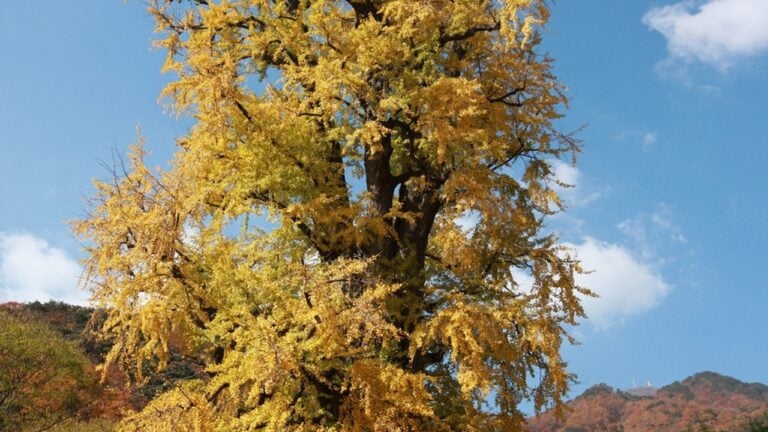
Early October also does not guarantee peak fall foliage. The walls, rooflines and city views provide an architectural reason to visit even when leaf color differs from the autumn scenes shown here.
For October 10–11, the final festival weekend, the royal journey story and the fortress can sit together in one day’s itinerary. Choose the wall section that interests you, then use the official program information to identify a performance that fits.
Sources: Korea Tourism Organization festival information and UNESCO’s Hwaseong Fortress description.
You May Also Like
by Google Adsense