Jeongnamjin Cypress Forest Woodland in Jangheung: Boardwalks, Bridges and Timber Spaces
Jeongnamjin Cypress Forest Woodland, where tall trees and wooden paths meet on the slopes of Eokbulsan
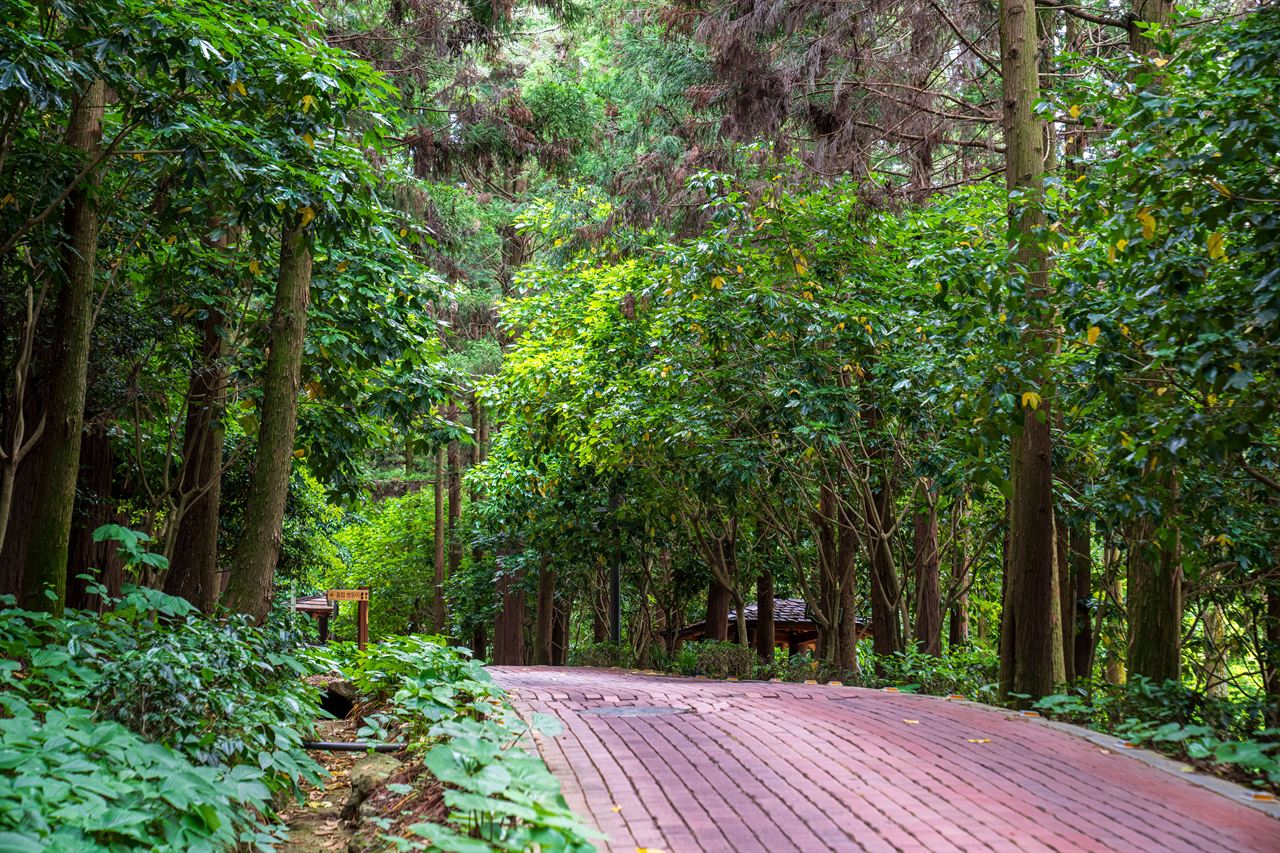
The trees rise vertically, but the wooden path bends. Its reddish boards disappear behind leaves, bringing the eye down from the canopy to another form of timber underfoot. This is a forest where living trees and built wooden spaces belong in the same picture.
Jeongnamjin Cypress Forest Woodland is in Jangheung, on the slopes of Eokbulsan in southwestern South Korea. Often shortened to Jangheung Woodland, the site combines a cypress forest with walking paths and spaces devoted to wood culture.
For a late-November trip, its appeal extends beyond a brief burst of fall color. Evergreen canopies, curved boardwalks and open timber structures offer different ways to look at trees. The setting connects the shape of a growing trunk with the lines of wood used in everyday spaces.
Jeongnamjin Cypress Forest Woodland from the boardwalk
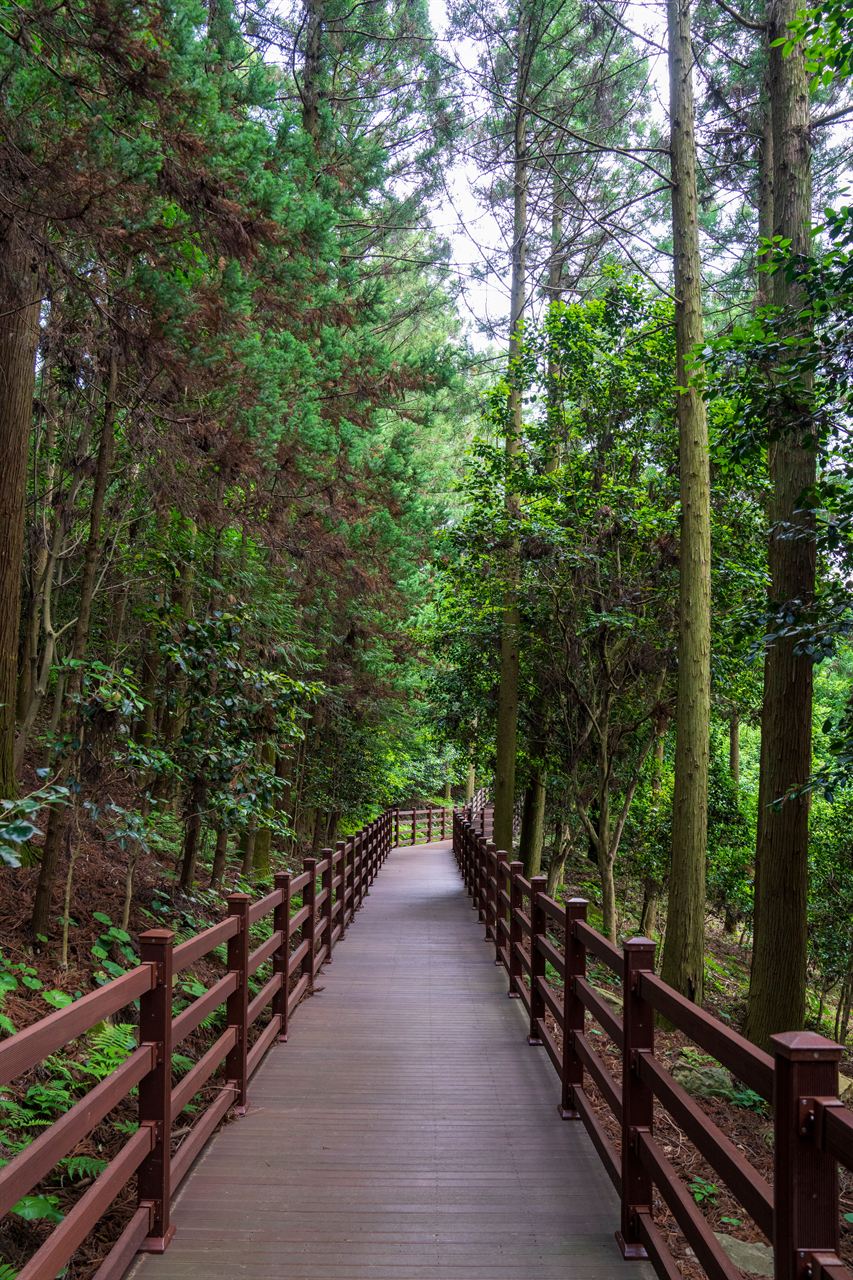
Two rails converge toward a bright opening between the trunks. Above them, the trees continue far beyond the height of the walkway. The regular width of the boardwalk makes the varied spacing and thickness of the trunks easier to notice.
There is more than a canopy here. Low plants, sloping ground and rough bark create separate layers beside the smooth boards. Looking along the railing draws those layers into one view rather than reducing the forest to a wall of green.
This straight stretch is one part of a varied setting. Other scenes show earthen paths and roofed spaces, each changing the relationship between the visitor, the ground and the trees.
A bridge where the forest opens
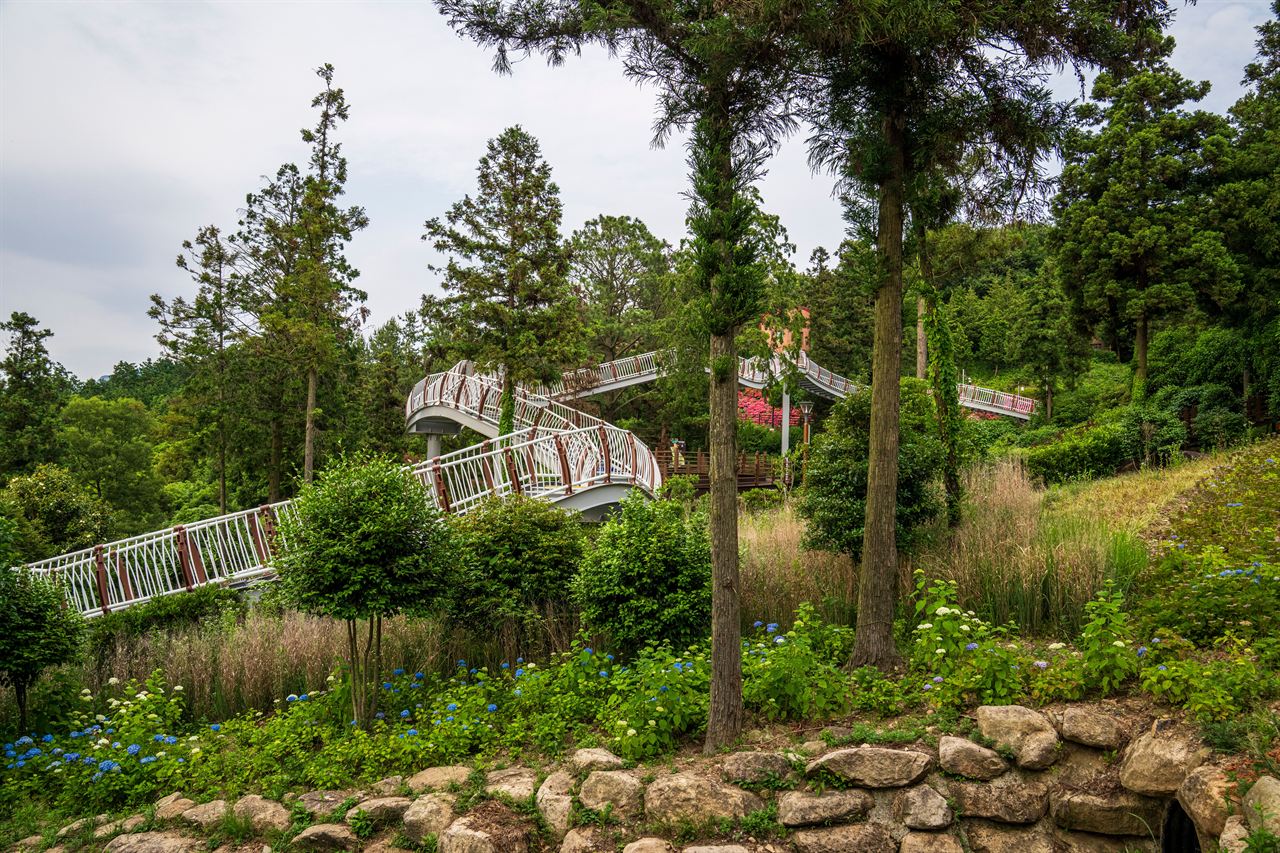
A pale railing cuts across a more open area, with low planting beneath it and trees rising behind. The contrast shifts the view from narrow gaps between trunks to a broader landscape. The bridge adds a horizontal curve to the forest’s vertical lines.
These openings give Jangheung Woodland more variety than a single forest photograph suggests. In a dense section, nearby bark fills the frame. Where the trees thin out, paths and buildings become part of the scene.
The bridge matters visually without turning it into a prescribed walking route. Its elevated line reveals how ground level, planting and tree height relate to one another.
Glass edges and a connection to wood culture
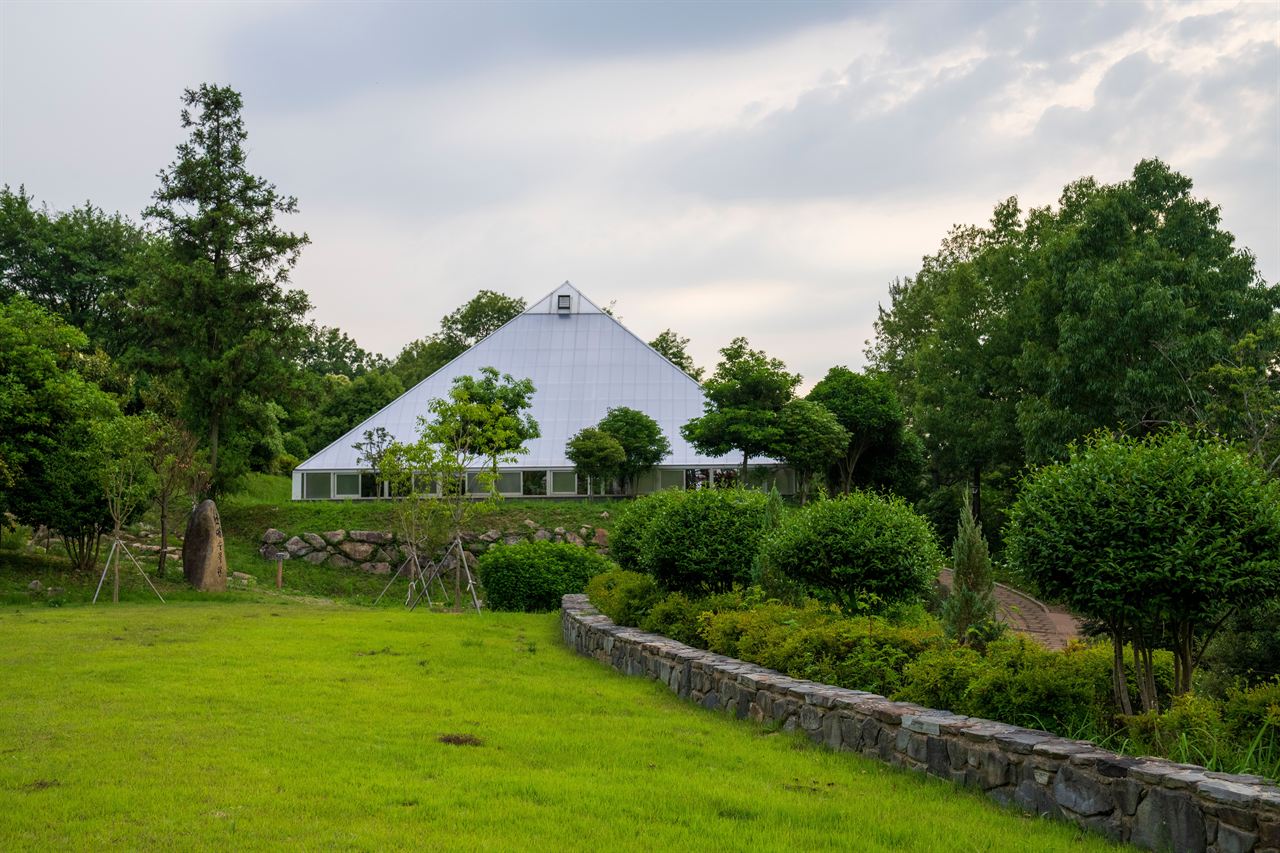
A pyramid-shaped glass roof appears beyond the lawn. Its straight edges contrast with the uneven outlines of branches, while a low stone border joins the landscaped ground to the surrounding trees. Architecture becomes another layer of the woodland.
The official Woodland exhibition introduction describes displays of wooden objects and local products, alongside spaces for activities involving items such as wooden whistles and insect models. It provides a connection between trees in the forest and wood as a practical material.
Those individual activities are separate from simply appreciating the setting. The broader idea is what makes the site distinctive: a tree can be seen as a living part of the forest and as the material behind a familiar object.
Exposed beams beneath a wooden roof
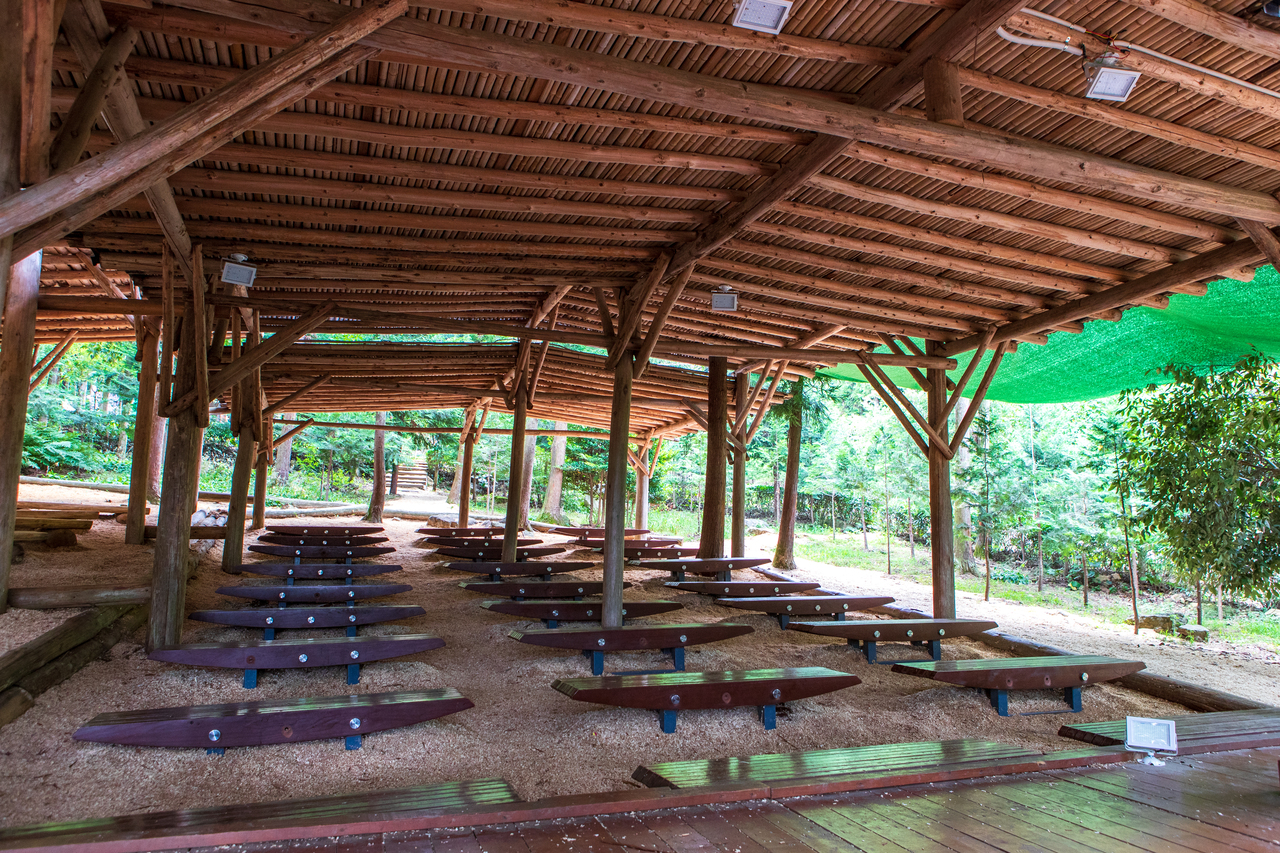
Under a shelter, posts support long beams and smaller roof members repeat overhead. Smooth surfaces replace the rough bark seen outside. The pattern is easy to follow from a vertical support to the horizontal pieces above it.
Built timber has a different rhythm from a stand of trees. Its connections are deliberate, and its repeated elements form a clear structure. Against the irregular forest beyond, that framework becomes especially legible.
Placing these scenes together gives the Woodland name some substance. Growing trees and a wooden roof are related materials, but they do not look or function in the same way.
Back to the earthen path
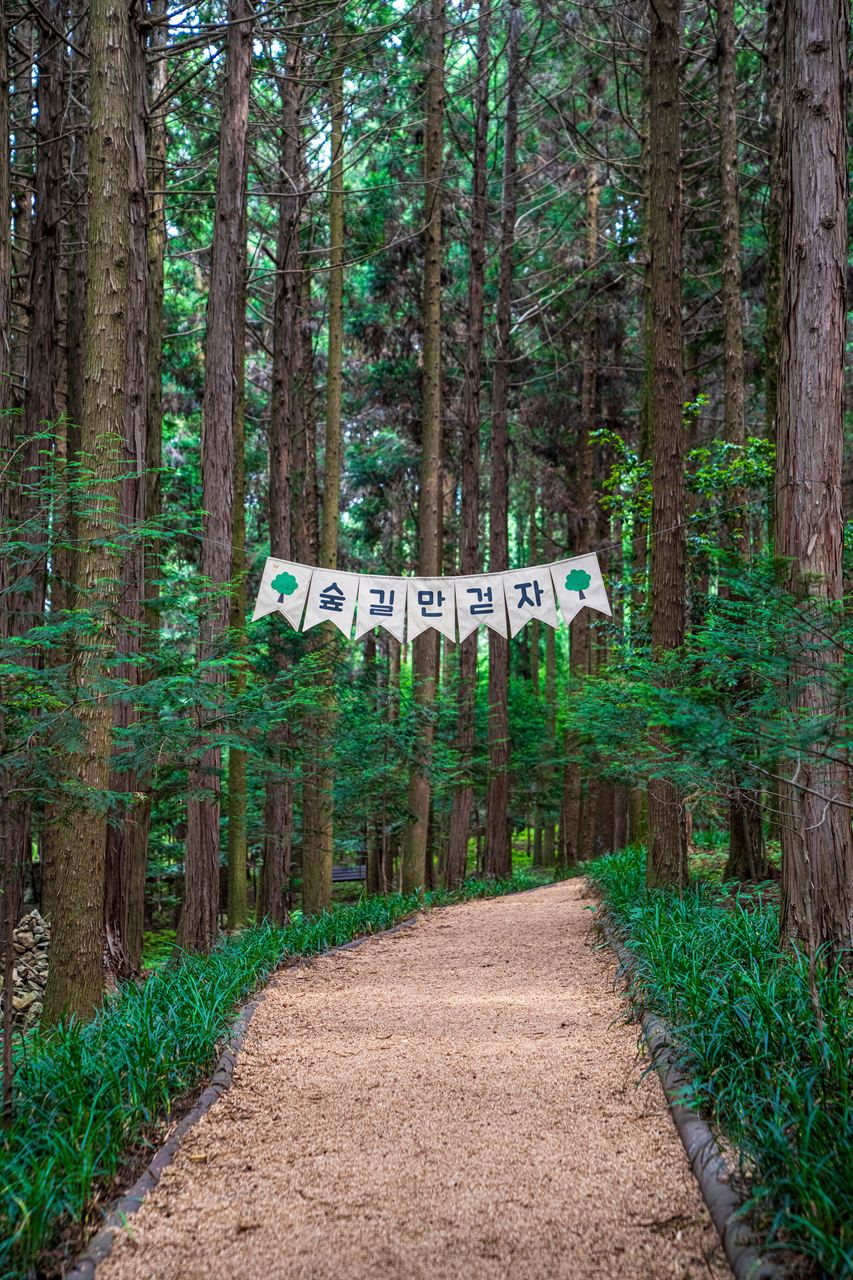
On the unboarded path, small changes in the ground return to view. The trail passes between trunks rather than arranging them around a straight corridor. After the clean lines of the shelter and boardwalk, the uneven spacing feels particularly noticeable.
For another view of tall conifers in the region, read about Jangseong Cypress Forest on Chukryeongsan. Jangheung’s paths and timber spaces give it a different emphasis from the depth of that planted forest.
What stays with this setting is the movement between forms of wood: trunks, boards, posts and rafters. They offer a reason to consider Jangheung beyond a single peak-foliage date, with several kinds of woodland detail to hold the eye.
Visitor Quick Facts: Jeongnamjin Cypress Forest Woodland
| Official Name | Jeongnamjin Cypress Forest Woodland (정남진 편백숲 우드랜드) |
|---|---|
| Hangul for Taxi / Map | 전남 장흥 편백숲 우드랜드 (180 Woodland-gil, Jangheung-eup, Jangheung-gun) |
| Operating Hours | 09:00–18:00 · Open year-round (per Korea Tourism Organization & operator listings) |
| Admission & Programs | Check the official operator site before arrival for current forest entry tickets and optional woodworking craft fees |
| Key Features | Elevated cypress boardwalks, pedestrian forest bridge, timber shelters, and Wood Culture Experience Center |
| Pair Nearby | Jangseong Cypress Forest · Baengnyeonsa Temple in Gangjin |
| Official Reference | Jeongnamjin Woodland Official Page |
Verified via Korea Tourism Organization and Jeongnamjin Woodland records. Lodging renovations and hands-on craft schedules vary seasonally.
Frequently Asked Questions
How is Jangheung’s Jeongnamjin Woodland different from Jangseong Cypress Forest?
While Jangseong’s Chukryeongsan forest focuses on long unpaved woodland trails deep across a mountain ridge, Jangheung’s Jeongnamjin Woodland integrates elevated timber boardwalks, pedestrian bridges, and woodworking exhibits right above Jangheung town.
Is Jeongnamjin Cypress Forest green in late November and winter?
Yes. Hinoki cypress is an evergreen conifer, so the canopy stays deep green through late autumn and winter, creating striking visual contrast with warm-toned wooden decks and bark.
Are the trails steep or accessible for casual walkers?
Although set on the foothills of Eokbulsan Mountain, the main wooden boardwalk loops wind gently among the trees, allowing visitors to enjoy forest views at an unhurried walking pace without mountain-climbing gear.
You May Also Like
by Google Adsense