Ecorium in Seocheon, South Korea: Desert Plants, Tropical Leaves and Glass-Roof Landscapes
Ecorium at the National Institute of Ecology, a meeting of climate exhibits, curved glass roofs and outdoor habitats
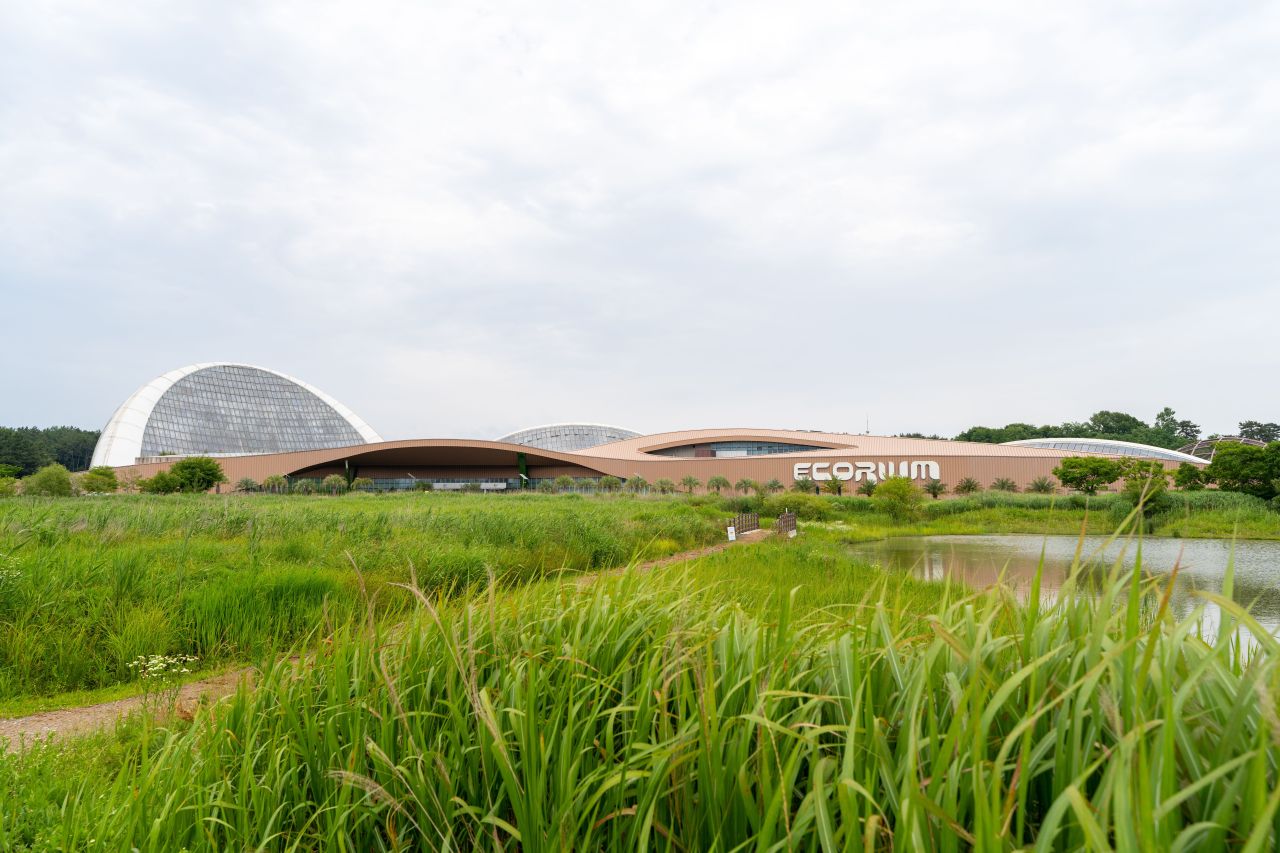
A long, low roof gives way to a much taller glass form. Plants grow beside the water in front, while other landscapes sit beneath the transparent enclosure. The setting brings distant climates into the outline of a single building.
Ecorium is an exhibition complex at the National Institute of Ecology in Seocheon, South Korea. It is organized around five climate themes: tropical, desert, Mediterranean, temperate and polar. The point is not just to identify plants, but to connect their shapes with the environments in which they live.
For a late-fall trip, that offers a different focus from chasing outdoor foliage. Broad leaves, water-storing stems and the glass structures around them make a compelling set of contrasts. Both the building and its plants are worth a closer look.
Ecorium’s changing roofline
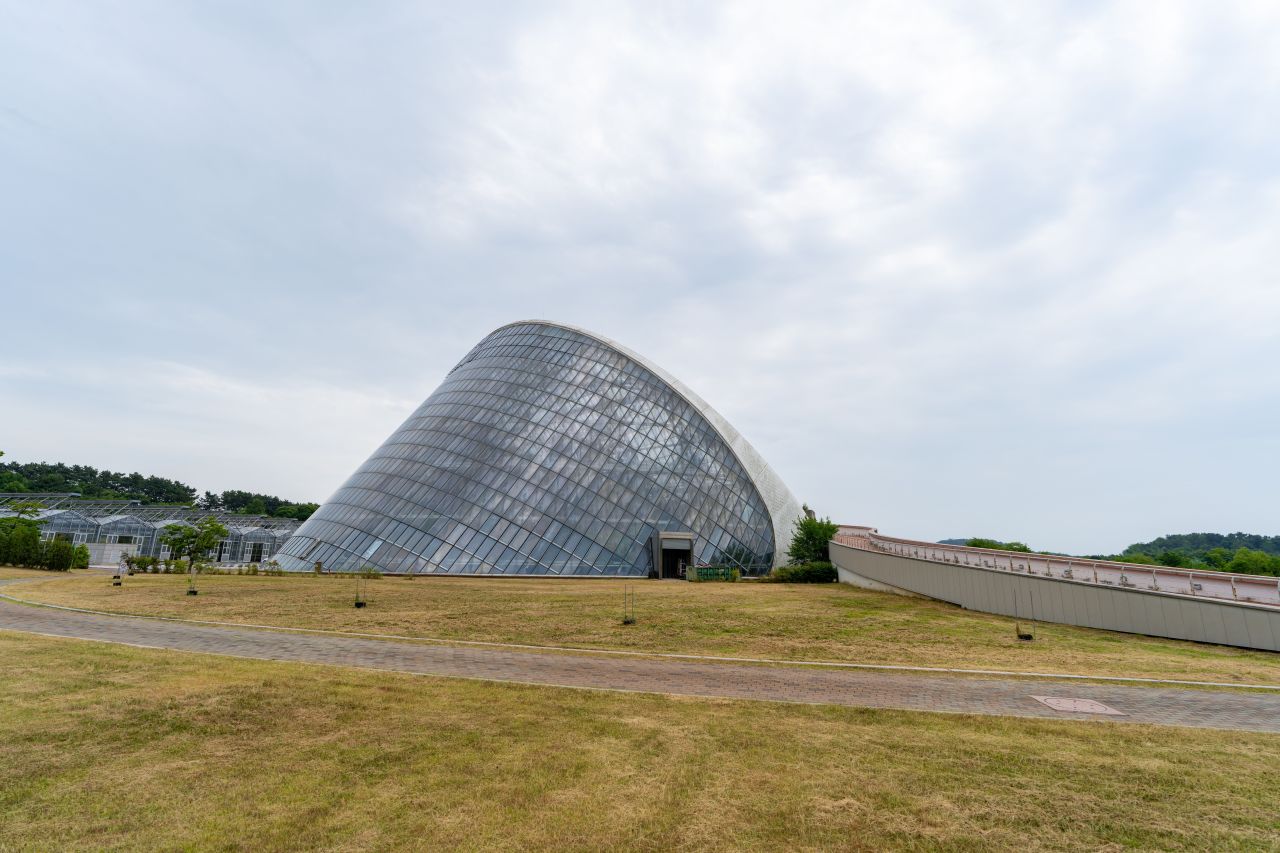
One glass enclosure rises steeply while the adjoining roof runs low across the grounds. The silhouette changes rather than repeating a row of identical boxes. From a distance, those heights become part of the surrounding lines of grass and trees.
The roof helps explain the relationship between architecture and living collections. This is a structure made to contain environments, not simply a covered hall. Its framing remains visible above the plants, adding a second pattern to the scene.
Looking at the exterior before concentrating on individual leaves gives the complex a useful scale. Small plant details sit inside much larger forms, each contributing something different to the visit.
Desert plants and the space between them
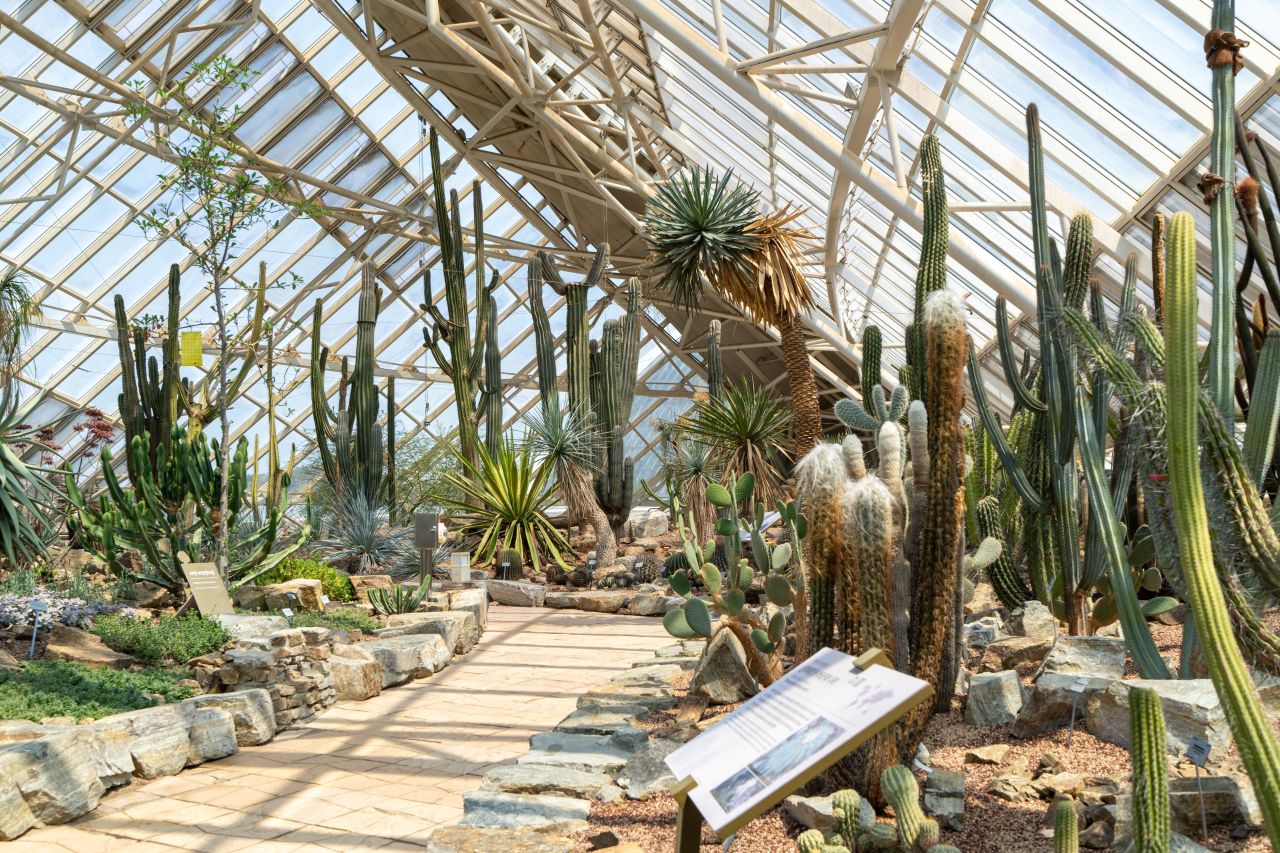
Cacti stand among rocks with generous gaps between the plants. Some stems are rounded, others rise like columns, and spines catch the light along their edges. The exposed ground makes it easier to follow an individual plant’s outline.
The Desert Biome presents organisms adapted to dry environments. Rather than treating the whole collection as one cactus display, notice the differences in stem thickness, surface and the direction of any leaves. Those details turn a familiar landscape into a closer study of form.
The spaces matter as much as the plants. With fewer layers of foliage hiding the view, the curves of a stem and the straight lines of the greenhouse frame stand out beside one another.
Layers of leaves in the Tropical Biome
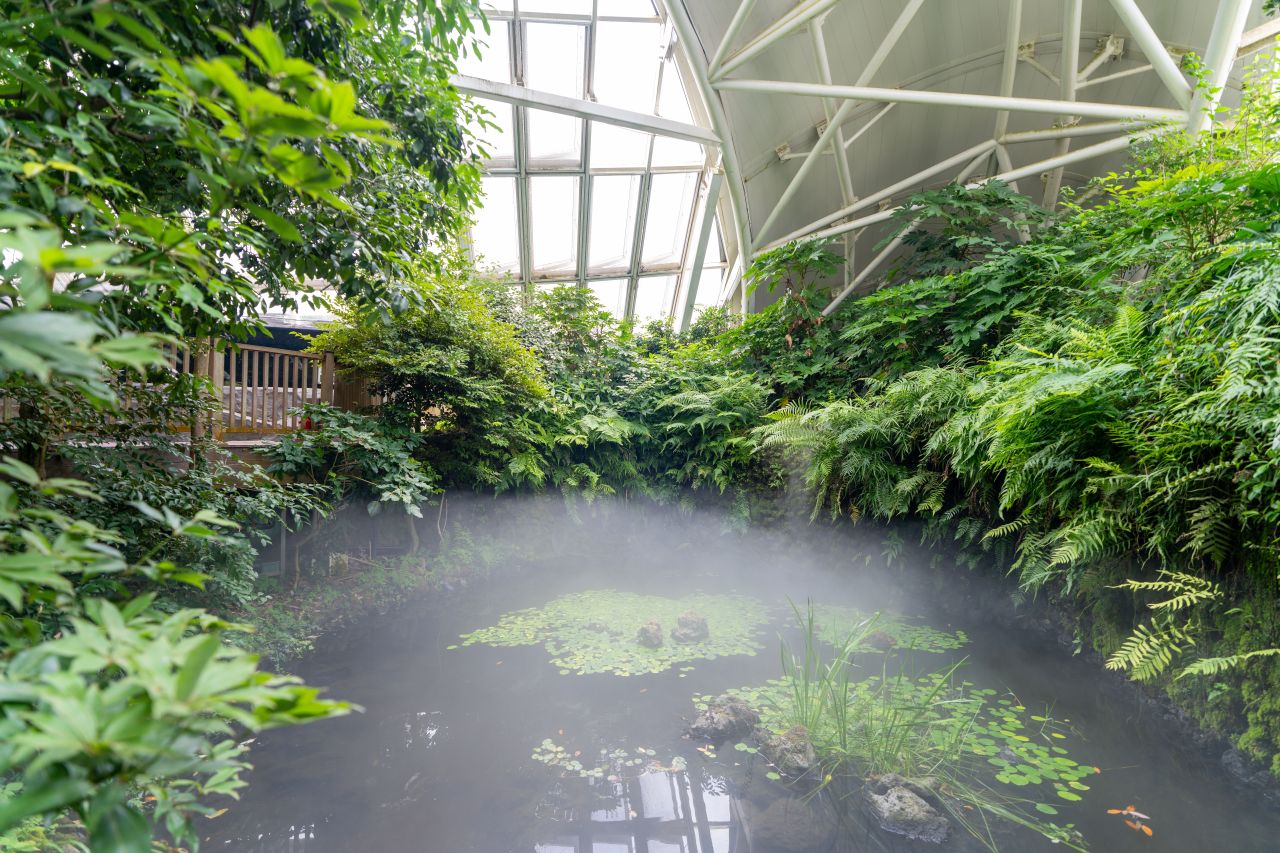
Broad leaves overlap with taller growth, dividing the greenery into bright foregrounds and darker spaces behind. The eye moves around what is partly hidden. It is a very different visual experience from the open gaps of the desert display.
The National Institute of Ecology’s Tropical Biome introduction describes recreated rain forests from Asia, Central and South America, and Africa, with plants arranged in vertical layers. That structure helps connect the appearance of the exhibit to the ecology it represents.
Going from thick stems to spreading leaves changes the questions a viewer asks. How much of the ground remains visible? Which plants reach above the others? The contrast makes the environmental themes tangible without requiring a list of every species.
A wider view from the water’s edge
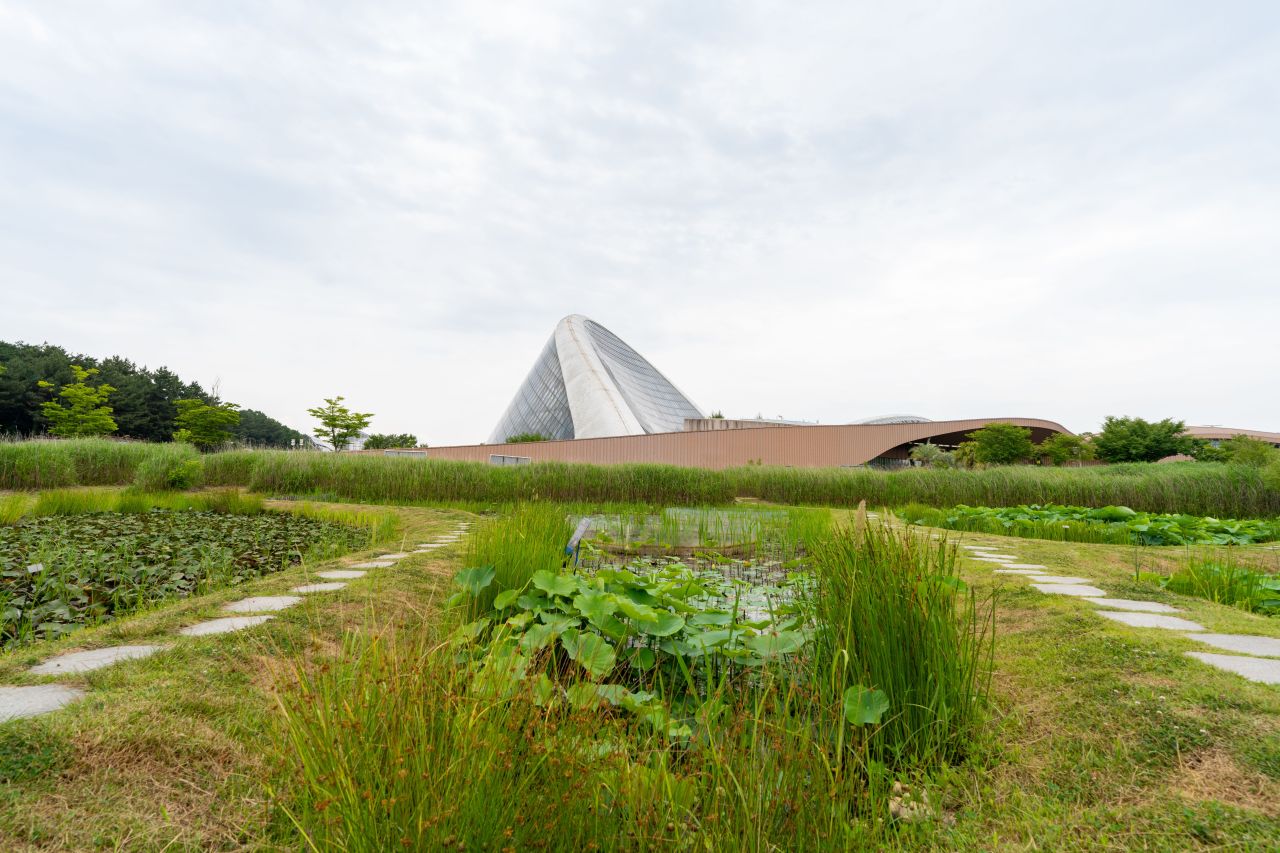
Beyond the outdoor waterside planting, the glass roof becomes a much smaller shape. Water and low vegetation take over the foreground. The building is still recognizable, but it no longer fills the scene.
The National Institute of Ecology extends beyond Ecorium itself. Seeing the grounds alongside the building makes the distinction between recreated indoor environments and the local outdoor season more apparent.
That distinction is especially interesting when planning a late-fall trip. Outdoor foliage and maintained indoor plant environments follow different rhythms. They do not need to look alike to belong in the same landscape.
Curves that connect the complex
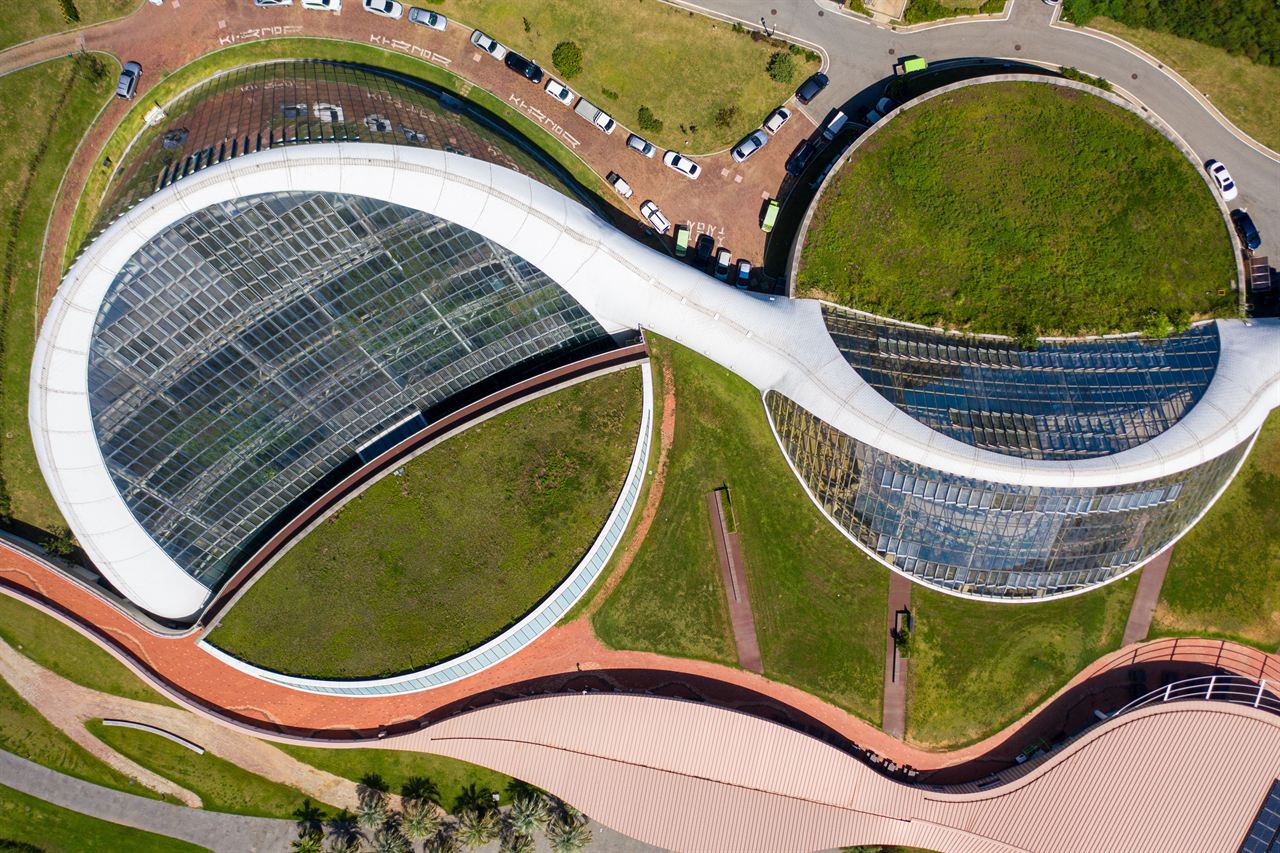
From above, the glass surfaces, adjoining roofs and planted spaces form one broad composition. Structures that seem separate at ground level become connected curves. The architecture helps express the idea of different environments held within a larger whole.
For another setting that joins plants and greenhouse architecture, explore Daea Arboretum in Wanju. Its hillside woodland setting offers a useful contrast with Seocheon’s climate-focused exhibits.
Ecorium’s appeal is in these changes of scale: a cactus stem, a canopy of leaves, a tall roof and a low stretch of water. Together, they make a strong alternative focus for a trip beyond the fall-foliage rush.
Visitor Quick Facts: Ecorium in Seocheon
| Official Name | Ecorium, National Institute of Ecology (국립생태원 에코리움) |
|---|---|
| Hangul for Taxi / Map | 충남 서천 국립생태원 에코리움 (1210 Geumgang-ro, Maseo-myeon, Seocheon-gun) |
| Hours & Closed Day | 09:30–17:30 (ticketing closes 1 hour prior; check seasonal winter hours) · Closed Mondays (or next weekday after a Monday public holiday) |
| General Admission | Adults (19–64): 5,000 KRW · Teens (13–18): 3,000 KRW · Children (5–12): 2,000 KRW (Under 4 & 65+ free with ID; optional 4D theater extra) |
| Transit Access | Directly connected by walkway from Janghang Station (Mugunghwa / Saemaeul trains on the Janghang Line from Yongsan Station, Seoul) |
| Pair Nearby | Sinseongri Reed Field in Seocheon |
| Official Website | National Institute of Ecology (NIE) Visitor Info |
Verified against the official National Institute of Ecology visitor schedule. Check NIE’s main notice board before departure for any temporary individual biome maintenance.
Frequently Asked Questions
Can you reach Ecorium in Seocheon from Seoul without renting a car?
Yes. Take a Korail Saemaeul or Mugunghwa train from Yongsan Station in Seoul directly to Janghang Station on the Janghang Line. The National Institute of Ecology has a dedicated pedestrian entrance right beside Janghang Station, making it one of Korea’s easiest regional eco-attractions to visit by rail.
Is Ecorium worth visiting in late autumn or winter?
Absolutely. While outdoor botanical gardens lose their leaves in late November, Ecorium’s climate-controlled glass conservatories maintain lush tropical foliage and desert landscapes year-round regardless of cold wind or rain.
How does Ecorium differ from standard botanical gardens in Korea?
Rather than displaying seasonal flowerbeds, Ecorium is organized scientifically around five global climate biomes—Tropical, Desert, Mediterranean, Temperate, and Polar—allowing visitors to experience dramatic shifts in plant height, leaf texture, and greenhouse architecture along one continuous indoor route.
You May Also Like
by Google Adsense