Daea Arboretum in Wanju: Fall Woodland, Hillside Greenhouses and Forest Exhibits
A mountain-framed arboretum walk that shifts from broad tree canopies to formal planting and small botanical specimens
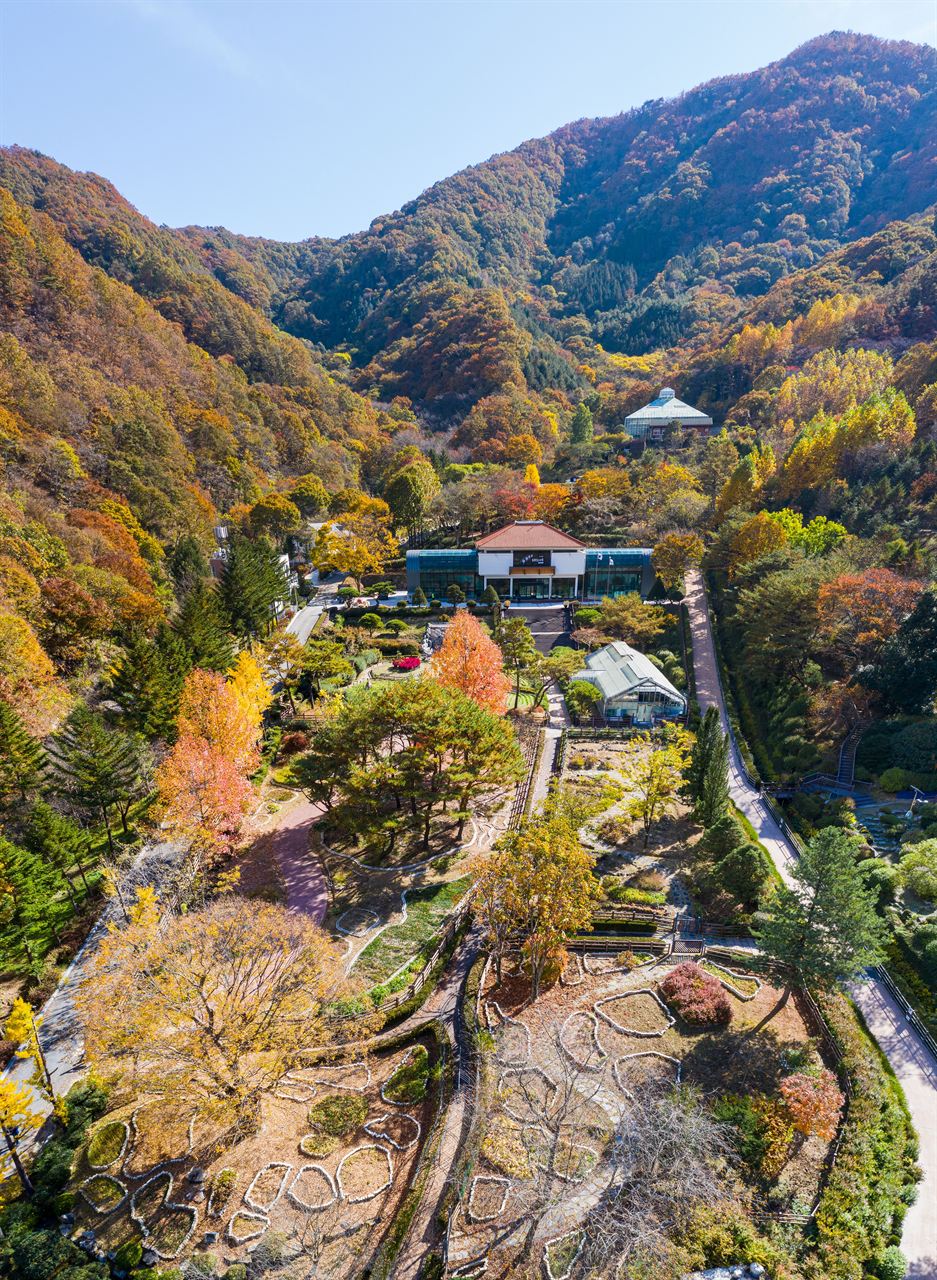
Wooded slopes wrap around the garden in several layers. Glass roofs sit among the trees, while lower planting and curving paths divide the foreground into smaller patterns. The mountain setting and the collected plants can be read together.
Daea Arboretum is a public arboretum in Wanju County, in Korea’s Jeonbuk region. It combines plant collections, forest conservation and education. A visit can shift between the large forms of the surrounding woodland and the close detail of a specimen or display.
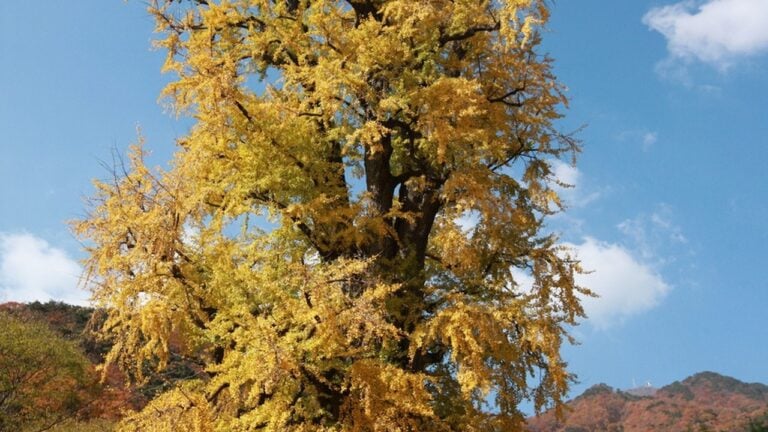
Later in fall, remaining leaves and more exposed branches contribute different outlines. The trees do not all move through the season at the same pace. That makes the relationship between the landscape, garden beds and indoor collections a more dependable subject than expecting one uniform peak-color scene.
See Daea Arboretum’s visitor building against the rising woodland
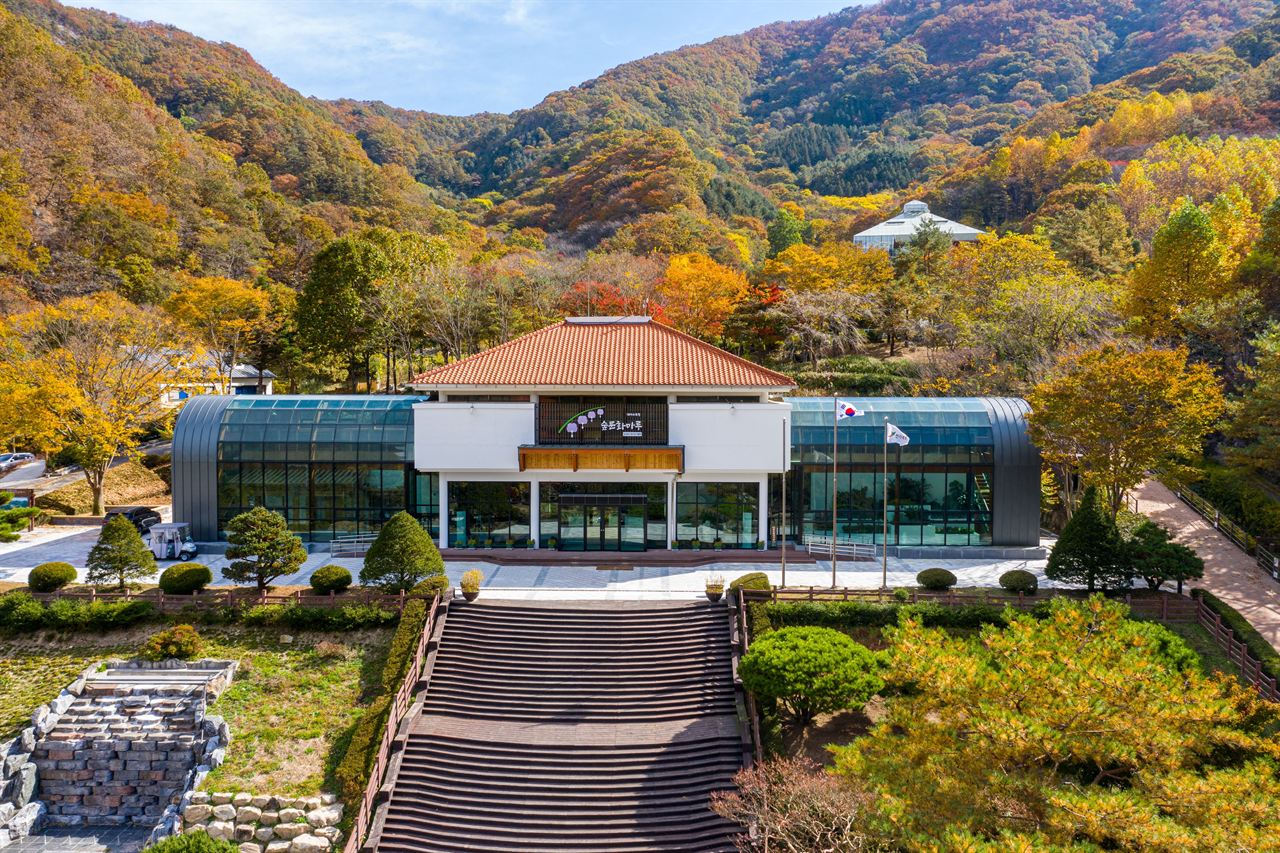
A broad staircase rises to an entrance between curved glass walls. Behind the building, the trees climb above the roofline. Stone steps, a relatively low facade and taller woodland form successive levels in the same view.
The arrangement makes the terrain easy to read. From the lower garden, the building does not replace the mountain background; it sits within it. The higher canopy helps show how closely the developed collection grounds are connected to the surrounding slope.
Glass catches the light around the entrance while the steps repeat a solid horizontal pattern. Those materials contrast with the less regular growth of the trees. Even before focusing on individual plants, the meeting of architecture and woodland provides several kinds of detail.
Compare a greenhouse roof with the curves of the hillside
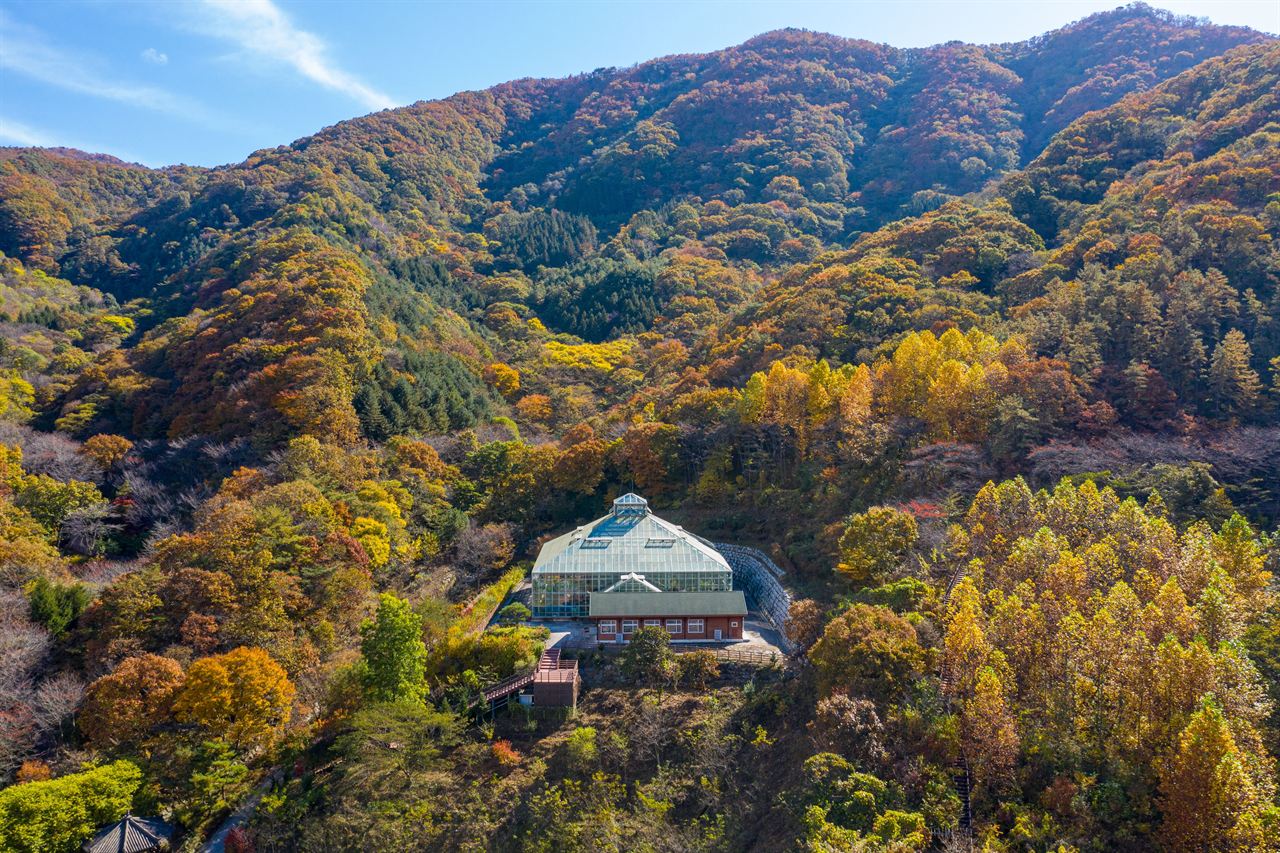
A glass roof occupies a small opening in the wooded hillside. Its straight divisions and the lines of the approach stand out among the rounded tree crowns. The contrast gives the building a clear form without separating it from its setting.
Daea Arboretum includes a tropical greenhouse and several themed plant spaces. Outdoor woodland and sheltered collections provide different environments for observation. Together they allow a visit to move between the scale of the forest and the shape of a single plant.
Looking at the greenhouse from outside is useful in its own right. The roof provides a reference for the height of nearby trees, and the wooded folds behind it become easier to distinguish. A small structure helps explain a much larger landscape.
Read formal planting beside the less regular tree canopy
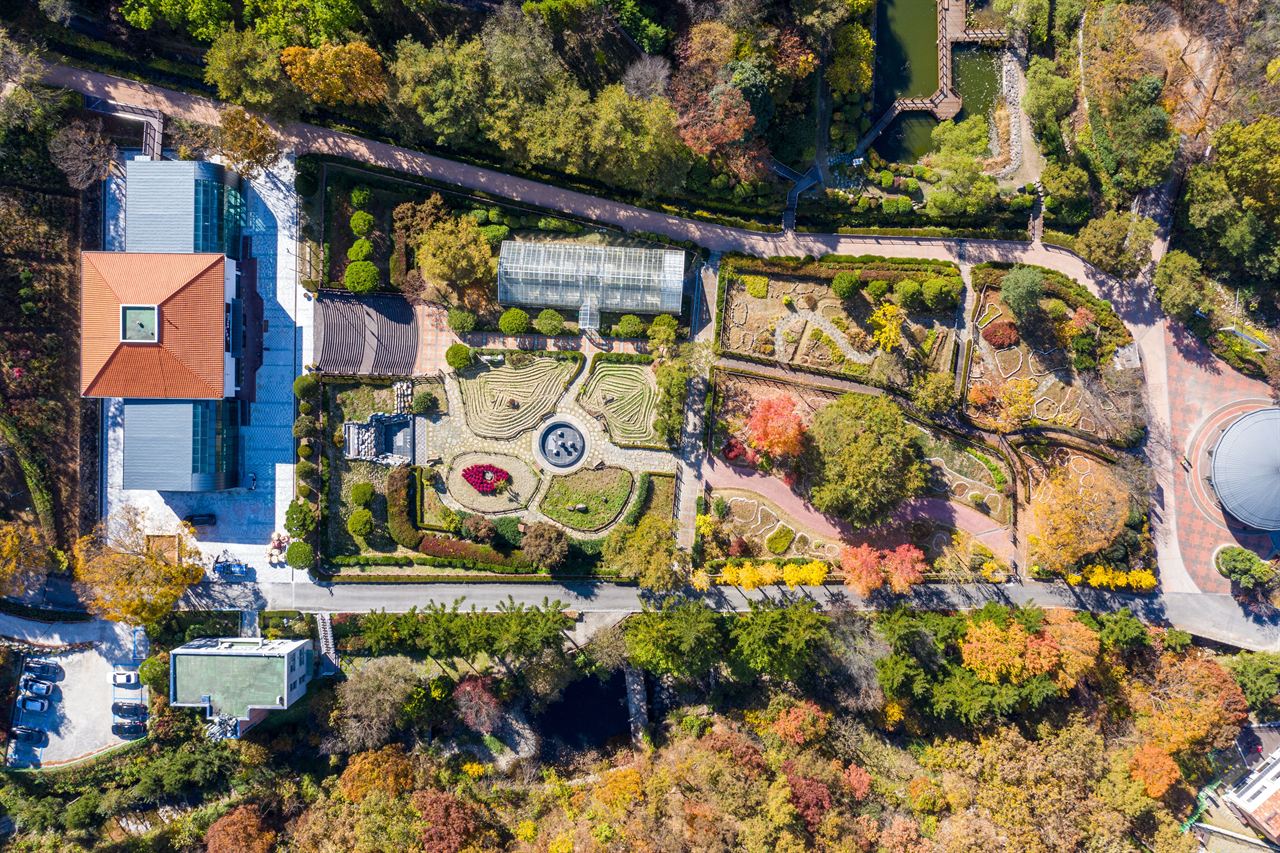
Low beds divide the garden into curves and small sections. Trees spread more freely around their edges. Carefully arranged outlines and growing canopies share the same space, making their differences especially apparent.
The arboretum’s official themed routes connect places such as the landscaped garden, Forest Culture Exhibition Hall, bonsai and sculpture collections, and tropical greenhouse. Each kind of space organizes attention differently, from a planted outline to an educational object.
The comparison remains interesting as seasonal color changes. A bed’s boundary can still be read when the brightest leaves have gone, and a partly exposed branch shows the tree’s structure. Looking across those scales gives the collection grounds more substance than a search for one photogenic tree.
Use forest exhibits to look beyond the surface of the scenery
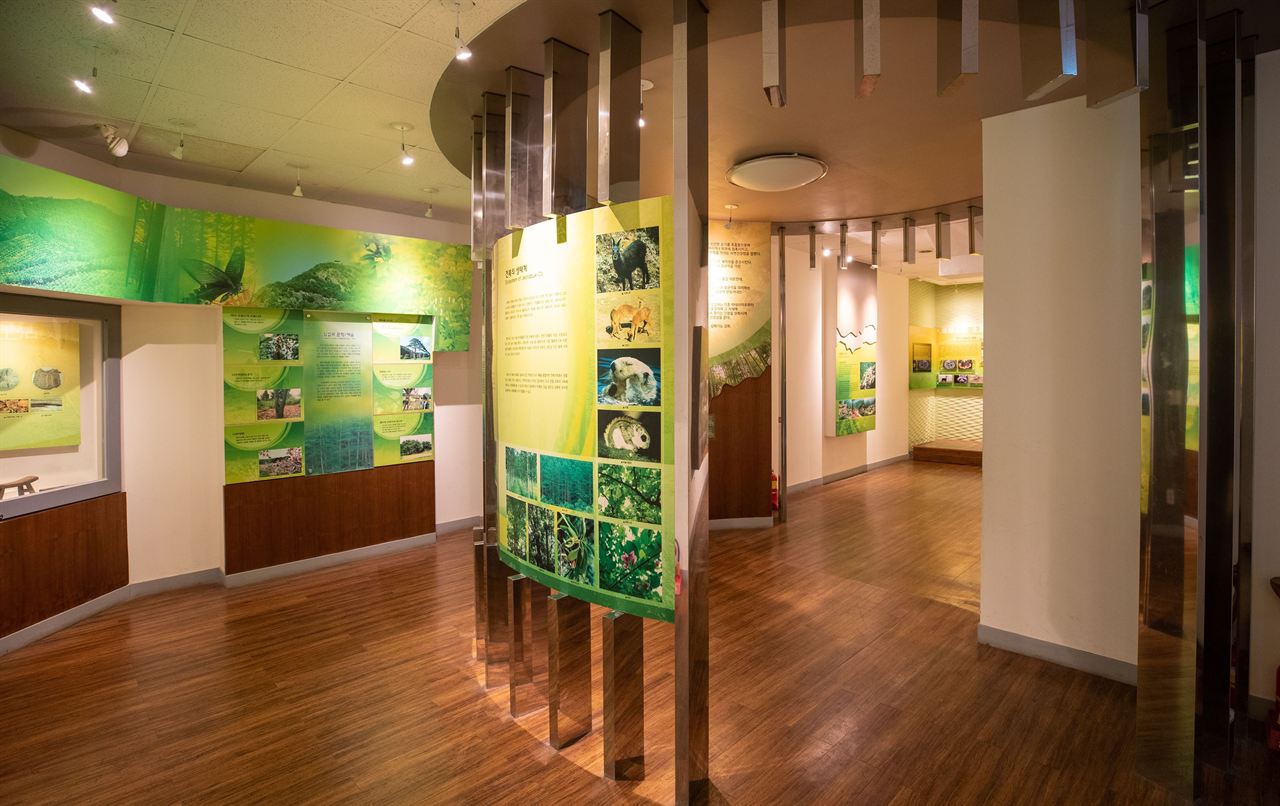
Pictures and written explanations bring forest plants and animals into the same display. Trees that appeared as a broad canopy outdoors become part of an environment shared with other living things. The subject shifts from a view to a set of relationships.
The arboretum’s educational facilities, including its Forest Culture Exhibition Hall, address forest history, culture, botanical specimens and ecology. Those subjects add context to the shapes and textures encountered along the garden paths.
Returning outside after looking at an exhibit can change what draws attention. Low plants beneath a larger tree, fallen material on the ground and openings between branches become parts of the same forest setting. The landscape offers more to observe once the eye has a few specific questions to follow.
Bring the wider forest back into focus beside small plant specimens
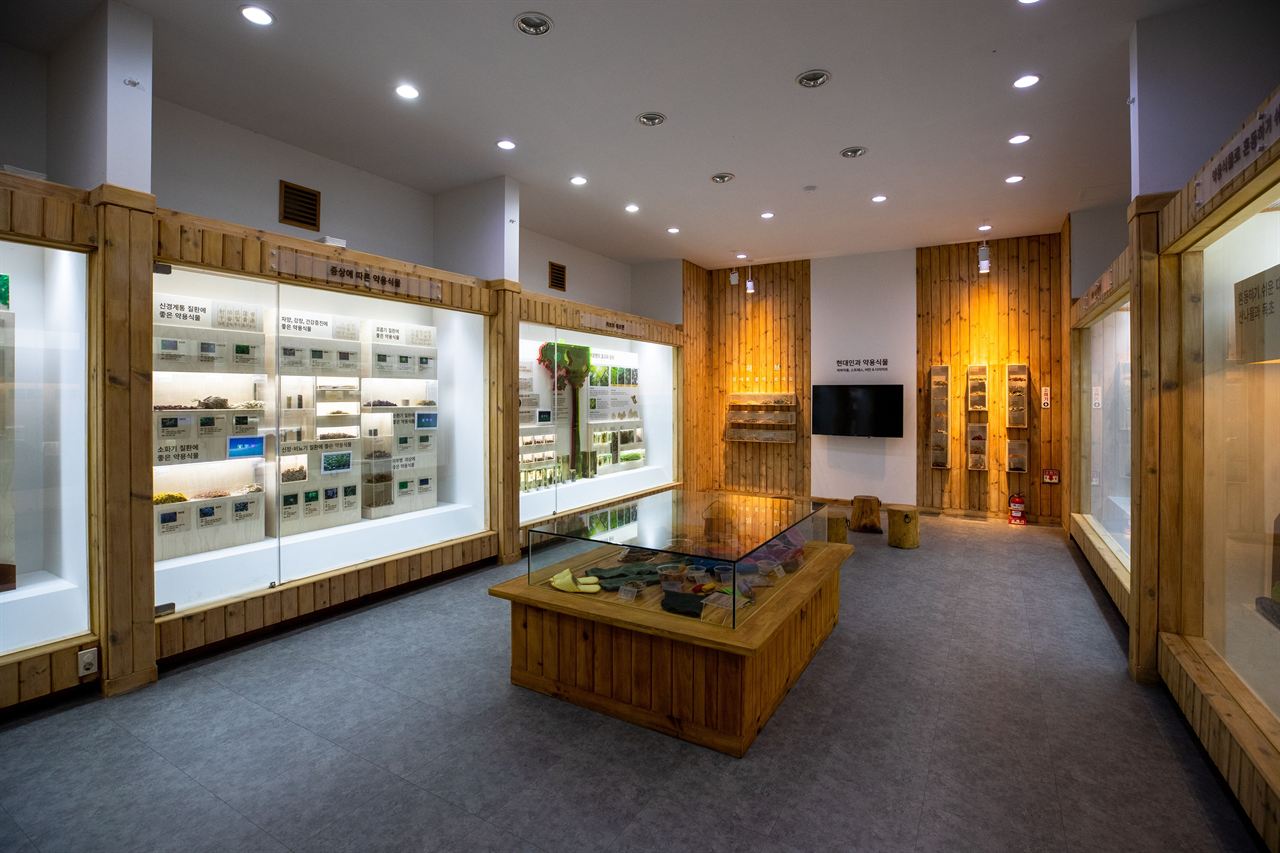
Small specimens occupy separate sections of a display, with wood-related exhibits nearby. Plants that overlap in an outdoor view are presented at a scale that allows closer comparison. A forest visit becomes an encounter with individual forms and materials.
Daea Arboretum’s official themed-route guide distinguishes visits around the collection grounds from walks that extend onto forest roads. That range reflects the place’s appeal: closely arranged plants and a much broader wooded setting belong to the same arboretum.
For a different arrangement of botanical spaces, explore Jeonju Arboretum’s pond paths and garden rooms. Its sequence of smaller gardens provides a useful contrast with Daea’s strong mountain enclosure.
Daea Arboretum suits a fall outing that leaves room for changing scales. A hillside canopy, the outline of a greenhouse, a curved bed and a small seed specimen each reveal something different. Together they make the surrounding forest feel more specific by the end of the visit.
You May Also Like
by Google Adsense