Piram Seowon in Jangseong: Painted Gates, Courtyards and a UNESCO Confucian Academy
Read the academy through its entrance pavilion, taegeuk patterns, Cheongjeoldang lecture hall and small buildings beside the courtyard
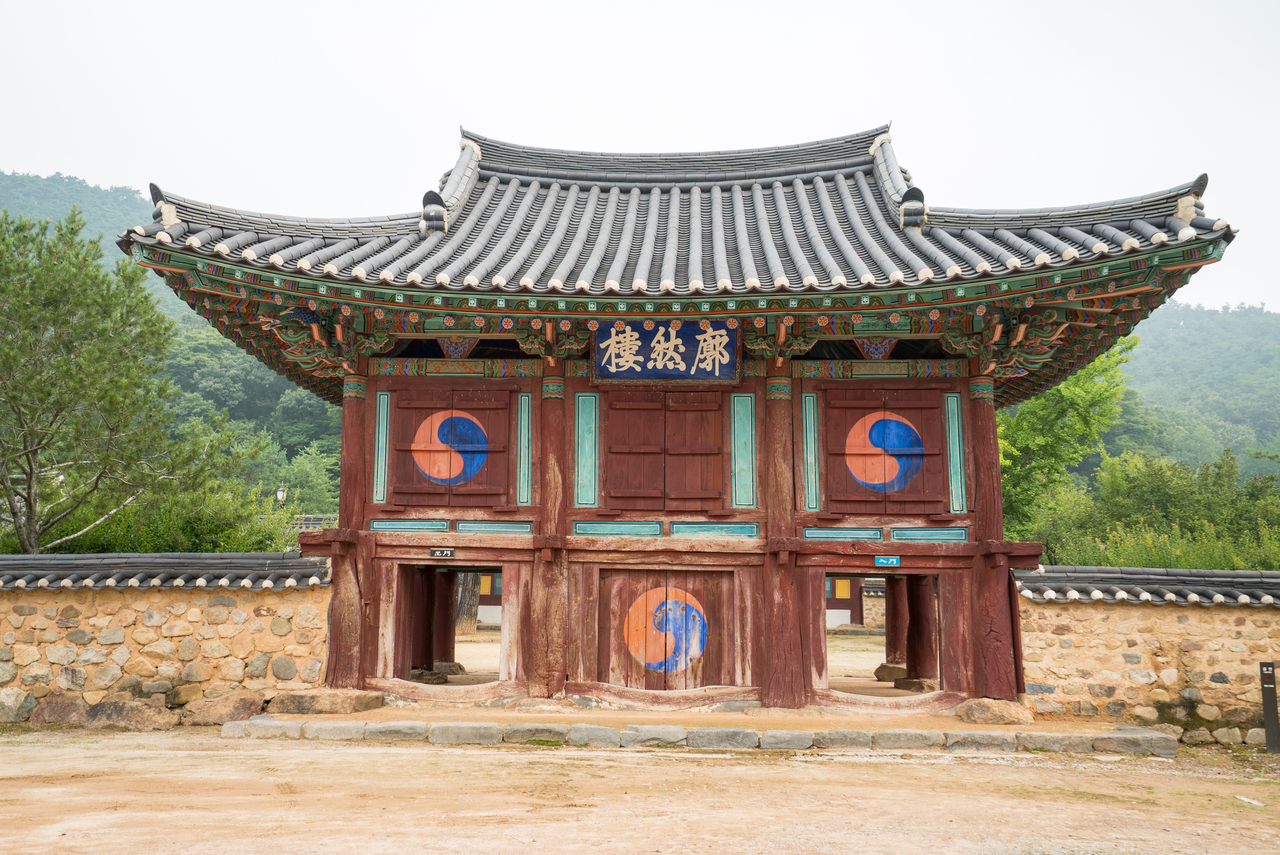
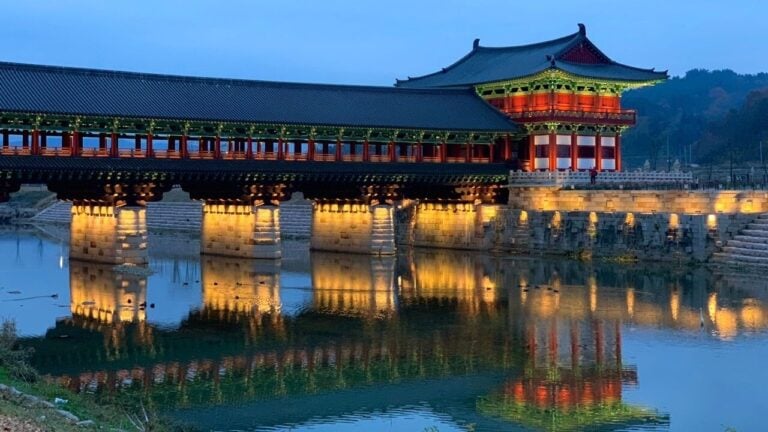
A low doorway sits beneath a much taller pavilion. Red posts divide the facade, circular patterns repeat across the doors, and a tiled roof spreads beyond the walls. The building announces itself through layers rather than sheer size.
Piram Seowon is a Confucian academy in Jangseong honoring the scholar Kim In-hu, also known as Haseo. It is one of the nine academies inscribed together as Seowon, Korean Neo-Confucian Academies, on UNESCO’s World Heritage List in 2019. Its interest lies in the connections between gateways, learning spaces and courtyards.
For a later-fall cultural visit, the architecture offers details beyond changing leaves. A roofline becomes clearer when branches thin; painted timber stands out under an overcast sky. Moving from the entrance to smaller surfaces gives the academy a more personal scale.
Find small taegeuk patterns under Piram Seowon’s eaves

The rounded ends of roof timbers carry divided red and blue circles. After the large patterns on the entrance doors, these smaller versions reward a second look overhead. The same motif appears at a different scale.
From a distance, the roof reads as one broad shape. Beneath it, individual pieces of wood become visible. Circular ends, horizontal beams and pale panels establish a rhythm that is easy to miss in a straight-on view of the whole building.
There is no need to decode every symbol before noticing how it is placed. Following a repeated shape from a door to an eave is a useful way to look closely at the academy. Color and structure can be understood together.
Look closely at the compact facade of Gyeongjanggak
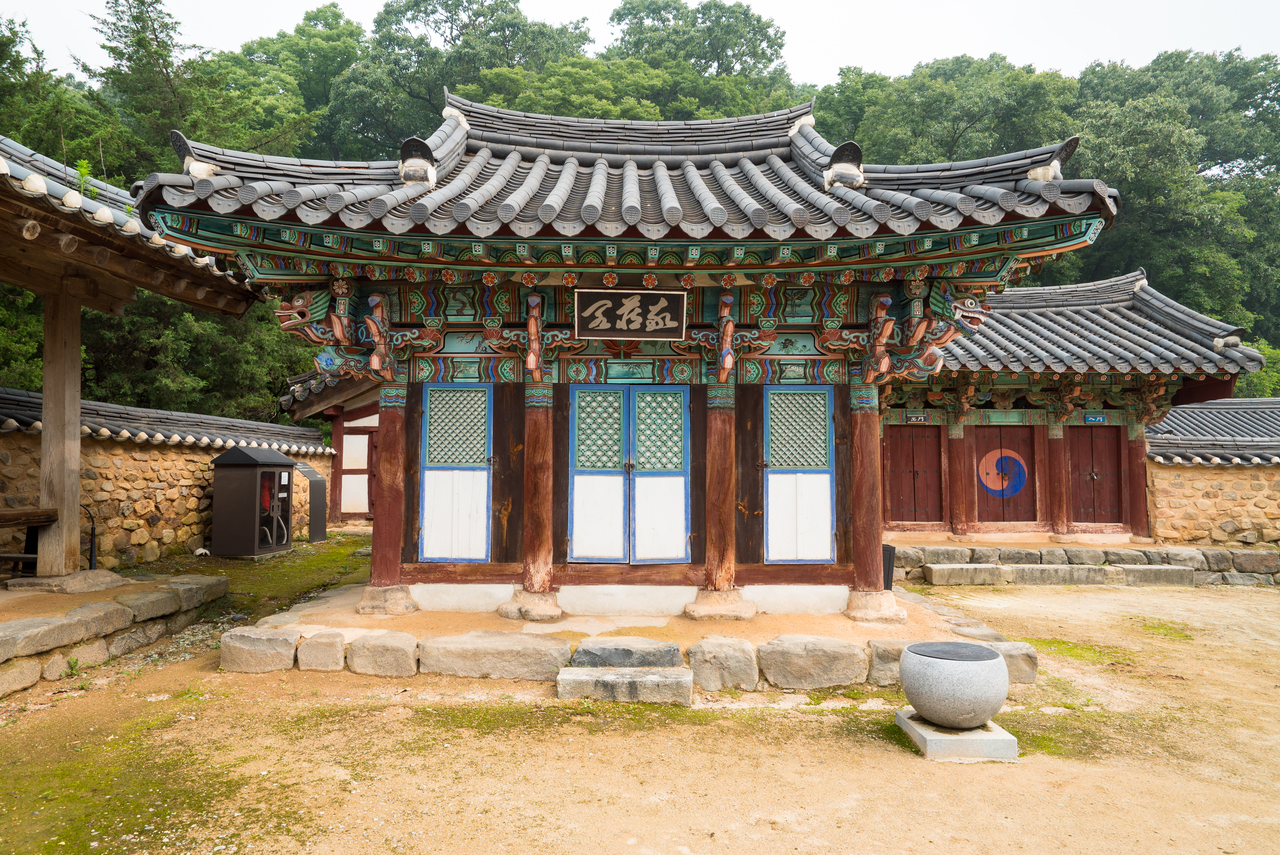
Blue doors line the front of a small building beneath richly painted roof supports. Red posts divide the openings, while a stone platform raises the timber above the ground. A neighboring eave cuts into one side of the view.
Gyeongjanggak belongs to the academy’s heritage-preservation setting. Its modest size is easy to overlook from across the courtyard, but its front contains a dense arrangement of lines and colors. A small building can hold as much visual detail as a larger hall.
Closed doors do not make the exterior unreadable. Compare the stone base with the timber above it, then follow the spacing of the posts and door panels. The building can be appreciated without treating a protected storage space as an open exhibition room.
See how Cheongjeoldang faces the inner courtyard
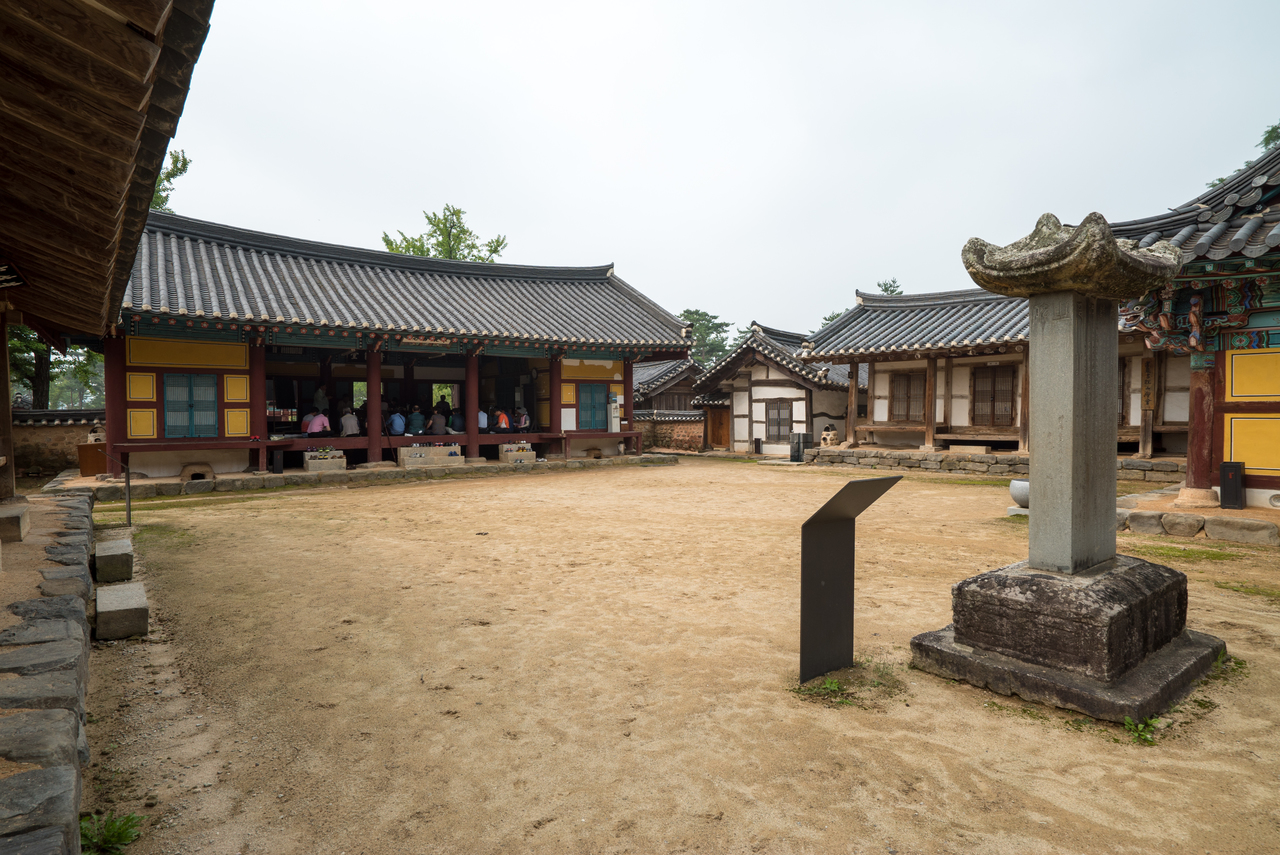
A stone monument stands to one side of a broad earthen courtyard. Beyond it, a long timber building opens onto a raised floor. Other roofs enclose the space from different directions, giving this scene a wider feel than the entrance facade.
Cheongjeoldang was the academy’s central teaching space. Its orientation toward the inner shrine, rather than simply toward the entrance pavilion, is a distinctive feature of the layout. Looking at what a hall faces can reveal more than treating the grounds as a straight sequence of buildings.
The open ground matters too. It separates the stone monument, the timber floor and the surrounding halls, allowing each to remain legible. The historic function of a learning space and its present-day role as a heritage destination can be considered without assuming that every room is open for entry.
Compare a painted symbol with the grain beneath it
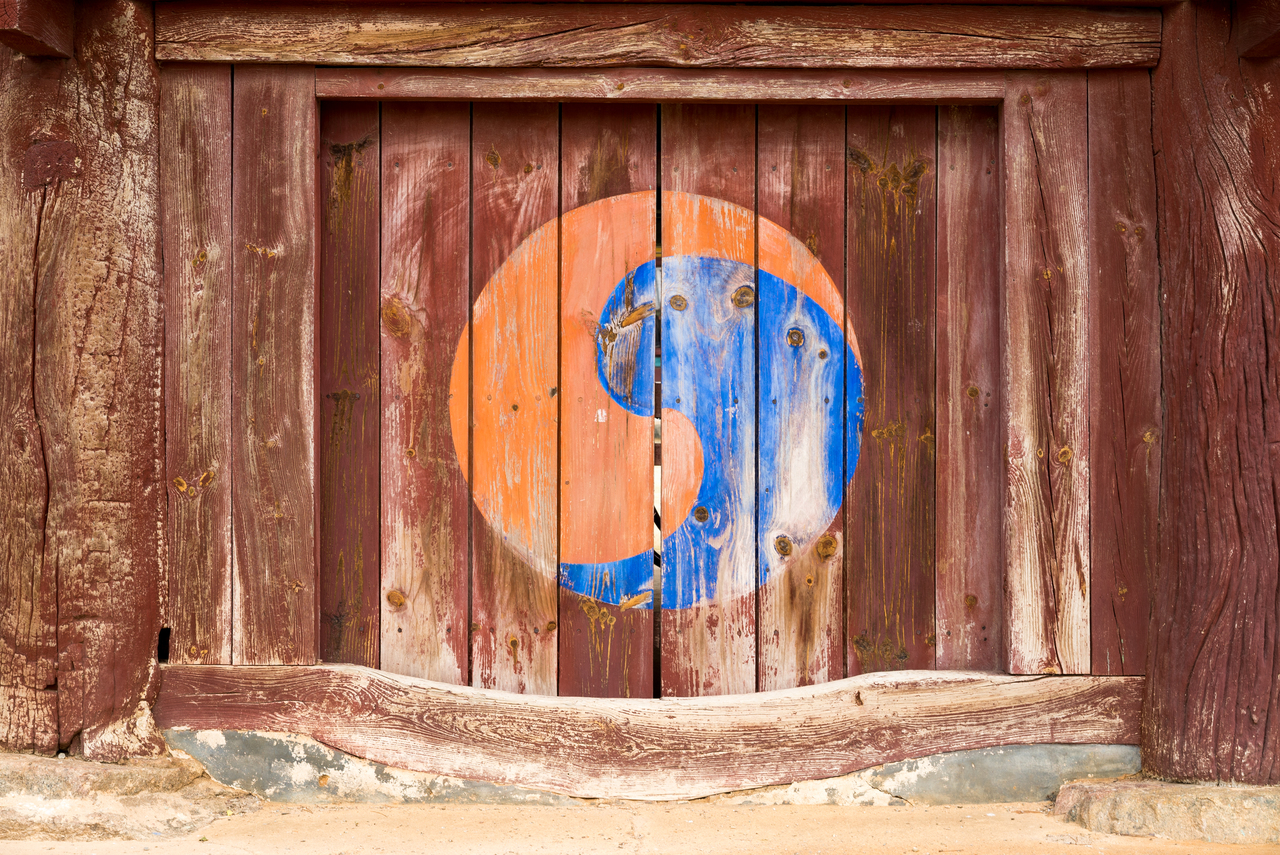
A red and blue circular pattern crosses several upright wooden boards. The joints between those boards remain visible through the painted surface. What first appears to be a single emblem becomes a collection of separate pieces of timber.
Paint gives the door its strong visual identity, but wood gives it texture. Board widths, shallow grooves and uneven surfaces introduce details that the symbol alone cannot explain. Returning to the large pattern after seeing the small rafter ends makes their difference in scale more apparent.
Historic buildings survive through care and repair. A weathered surface should not be read as proof that an entire structure has remained untouched. Material, pattern and construction offer more specific things to observe than a general impression of age.
Let the pine trees frame a smaller pavilion
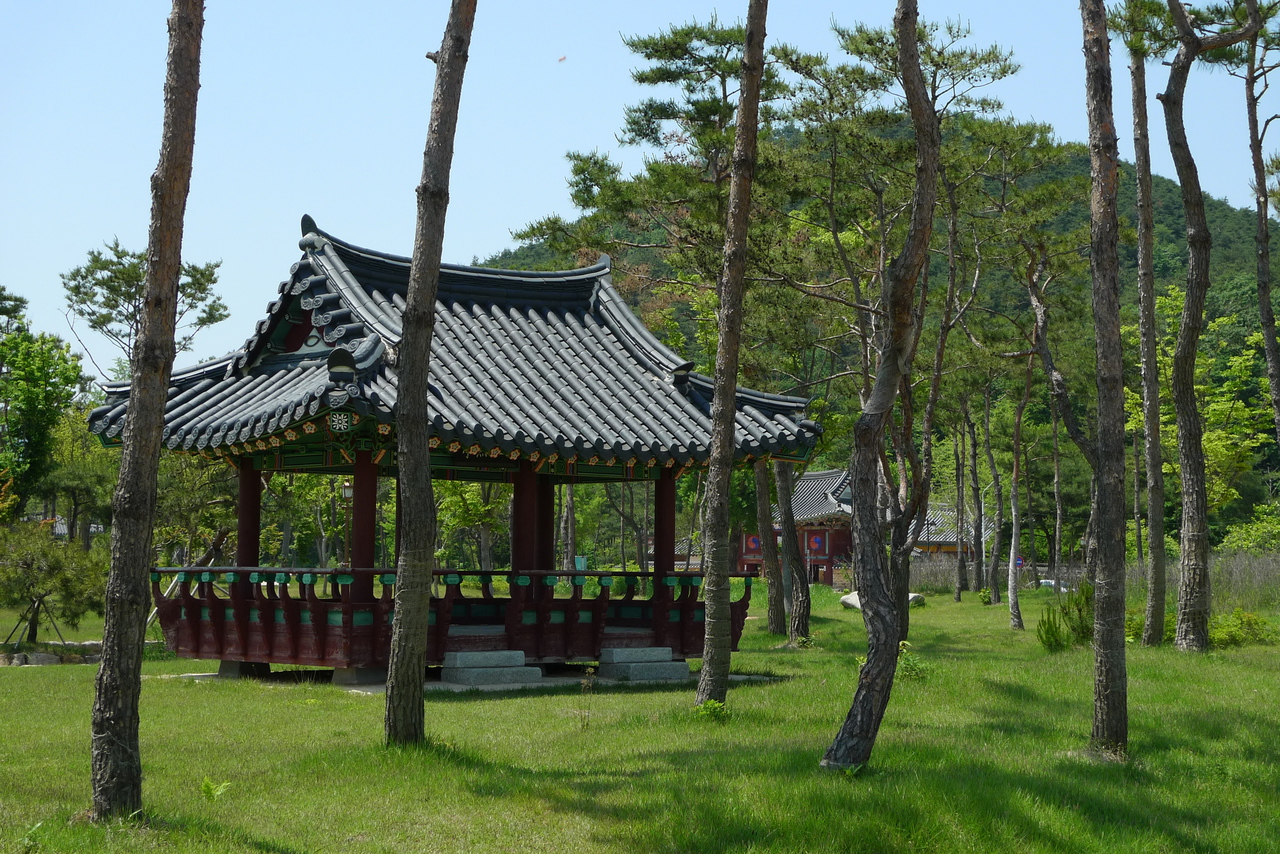
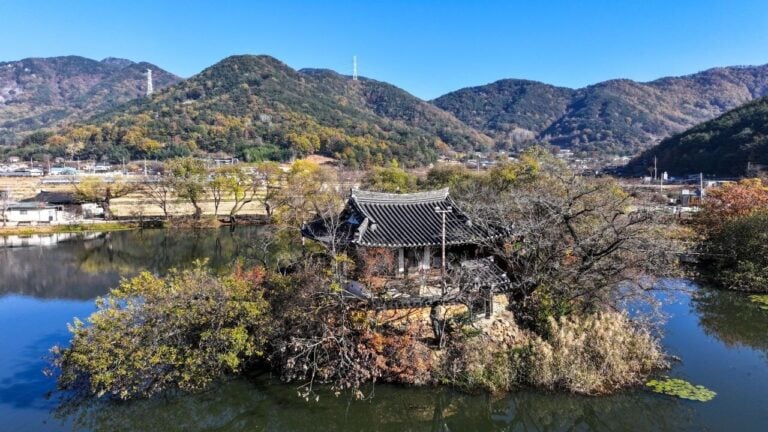
Slender pine trunks interrupt the outline of a low tiled roof. The trees lean at slightly different angles while the roof establishes a steady horizontal line. Here, vegetation frames the building more loosely than a courtyard wall does.
Jangseong County’s visitor introduction identifies Piram as a World Heritage academy. After looking at the academy’s gates and halls, this view of a pavilion among trees offers a quieter way to consider that relationship.
For a comparison with a lived-in traditional settlement, explore Yangdong Village’s tiled roofs, thatched houses and hillside lanes. An academy courtyard and a residential village organize buildings and open ground for different purposes.
The entrance roof may be the first image that stays with you. Smaller taegeuk patterns, door grain and a pavilion behind the pines add detail to that memory. At Piram Seowon, a large historical story is made approachable through things that can be seen at close range.
Visitor Quick Facts: Piram Seowon
| Official Name | Piram Seowon Confucian Academy (장성 필암서원) |
|---|---|
| Hangul for Taxi / Map | 전남 장성 필암서원 (184 Piramseowon-ro, Hwangnyong-myeon, Jangseong-gun) |
| Heritage Status | UNESCO World Heritage (Seowon, Korean Neo-Confucian Academies, 2019) & National Historic Site |
| Admission & Access | Free exterior courtyard entry · Flat level ground (check Jangseong-gun notices if visiting auxiliary exhibition rooms, as weekly closure days vary) |
| Key Structures | Hwagyeonnu Entrance Pavilion, Cheongjeoldang Lecture Hall, East/West Dormitories, Gyeongjanggak Royal Archive (exterior) |
| Pair Nearby | Jangseong Cypress Forest · Sosu Seowon in Yeongju |
| Primary References | UNESCO World Heritage Listing · Jangseong-gun Cultural Guide |
Verified via UNESCO World Heritage Centre and Jangseong-gun public records. Inner shrine enclosures and archive interiors may remain closed to preserve heritage structures.
Frequently Asked Questions
How is a Korean Seowon (Confucian academy) different from a Buddhist temple?
Unlike Buddhist temples centered around statue halls and pagodas on mountain slopes, a Neo-Confucian seowon was a private Joseon academy for scholarship and ancestral rites. Piram Seowon places learning spaces—Hwagyeonnu gate, dormitories, and Cheongjeoldang lecture hall—in front, with the memorial shrine secluded behind an inner wall.
What architectural detail should visitors look for at Hwagyeonnu Pavilion?
As you step beneath the raised wooden floor of Hwagyeonnu, look up at the exposed circular rafter ends under the eaves, which are painted with crisp red-and-blue taegeuk motifs framing the Hwagyeonnu calligraphy plaque.
What is the best half-day or full-day pairing with Piram Seowon in Jangseong?
Combine Piram Seowon’s flat historic courtyards with Jangseong Cypress Forest on Chukryeongsan Mountain. Together they offer a balanced day of UNESCO Joseon timber architecture and tall evergreen woodland trails within the same county.
You May Also Like
by Google Adsense