Cheongnyangsa Temple in Autumn: Rock Peaks, Courtyards and Layered Roofs
Cheongnyangsa Temple, Bonghwa — a mountain temple visit centered on architecture and rock scenery
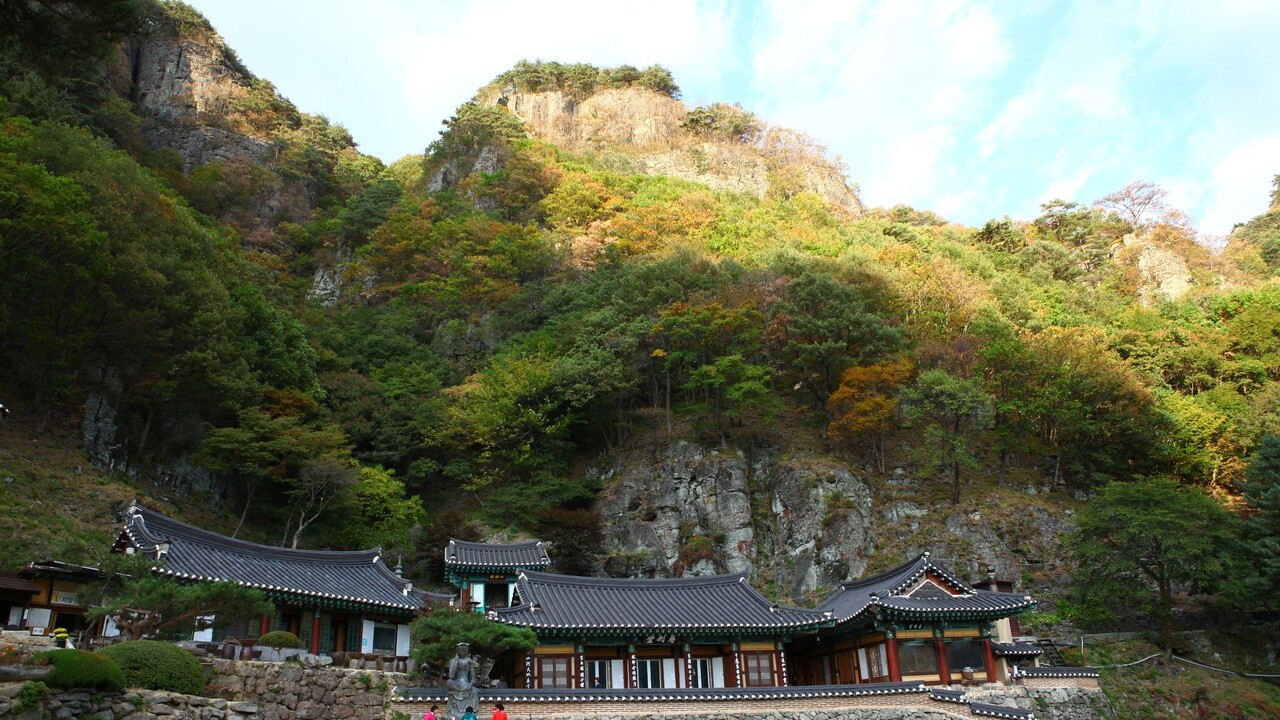
A wall of rock rises behind tiled roofs at Cheongnyangsa Temple. Trees fill the slopes between the buildings and the exposed stone. The result is a mountain scene with a temple inside it, rather than a temple with a distant mountain view.
For a Cheongnyangsa Temple autumn visit, the most useful question is what you want to see: the temple courtyards and rooflines, or a much larger hiking route. They require different plans. A visit focused on the temple still includes an uphill approach; it should not be mistaken for a level park walk.
The temple is in Myeongho-myeon, Bonghwa County, in North Gyeongsang Province. Its traditional founding date is 663. Bonghwa’s heritage account preserves both Wonhyo and Uisang founding traditions, so a single unqualified origin story would simplify the history.
Rock formations and rooflines provide a reason to consider the temple even when autumn color is uneven. Decide on the kind of visit first, then let the courtyards, painted wood and mountain frame guide your attention.
The uphill approach changes the view
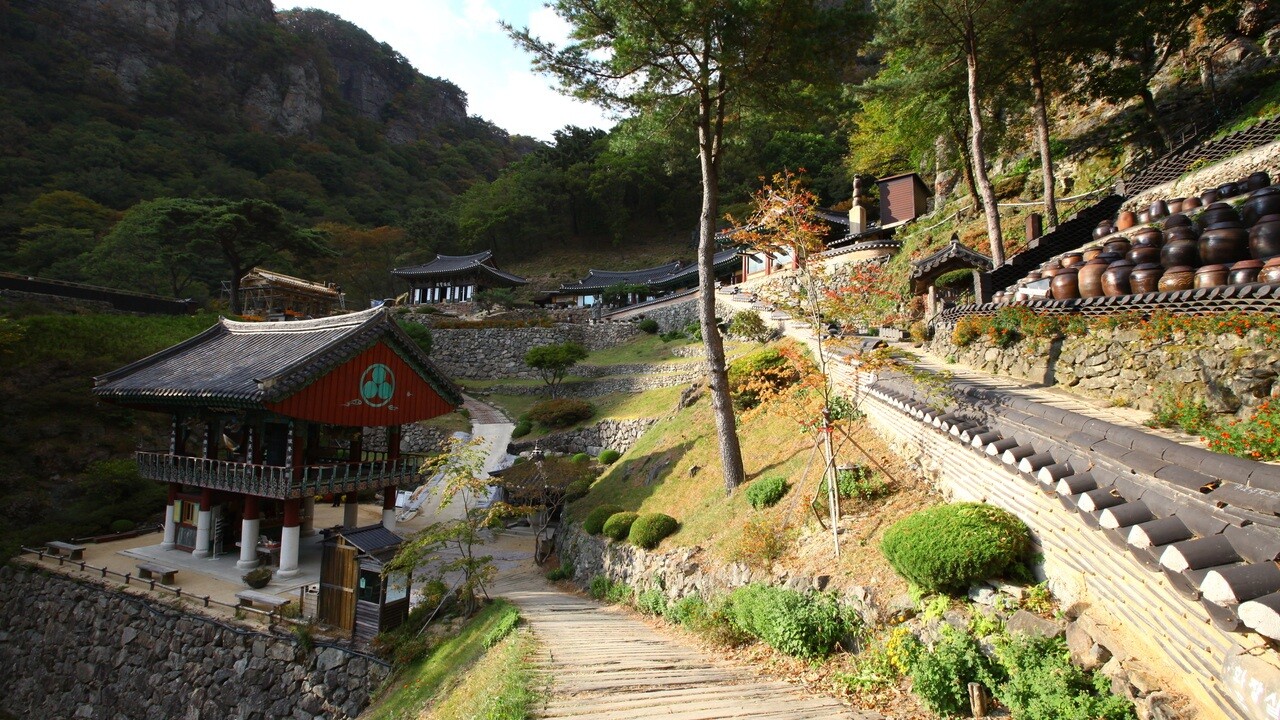
The approach reveals the buildings gradually. A stone wall follows the rising path, while roofs that initially sit above eye level become closer. The change in height is part of the temple’s setting, not just an obstacle before the main view.
For travelers used to the broad, level grounds of some urban temples, that distinction matters. Decide whether the approach suits your companions before adding more of the mountain to the day. The photographed slopes and changes in elevation are not a continuous flat promenade.
Cheongnyangsan’s suspension bridge is a separate mountain destination. A temple-focused visit does not automatically include it or a summit. Keeping those plans separate lets the temple’s own courtyards and architecture remain the main attraction.
Cheongnyangsa Temple autumn scenery from the courtyard
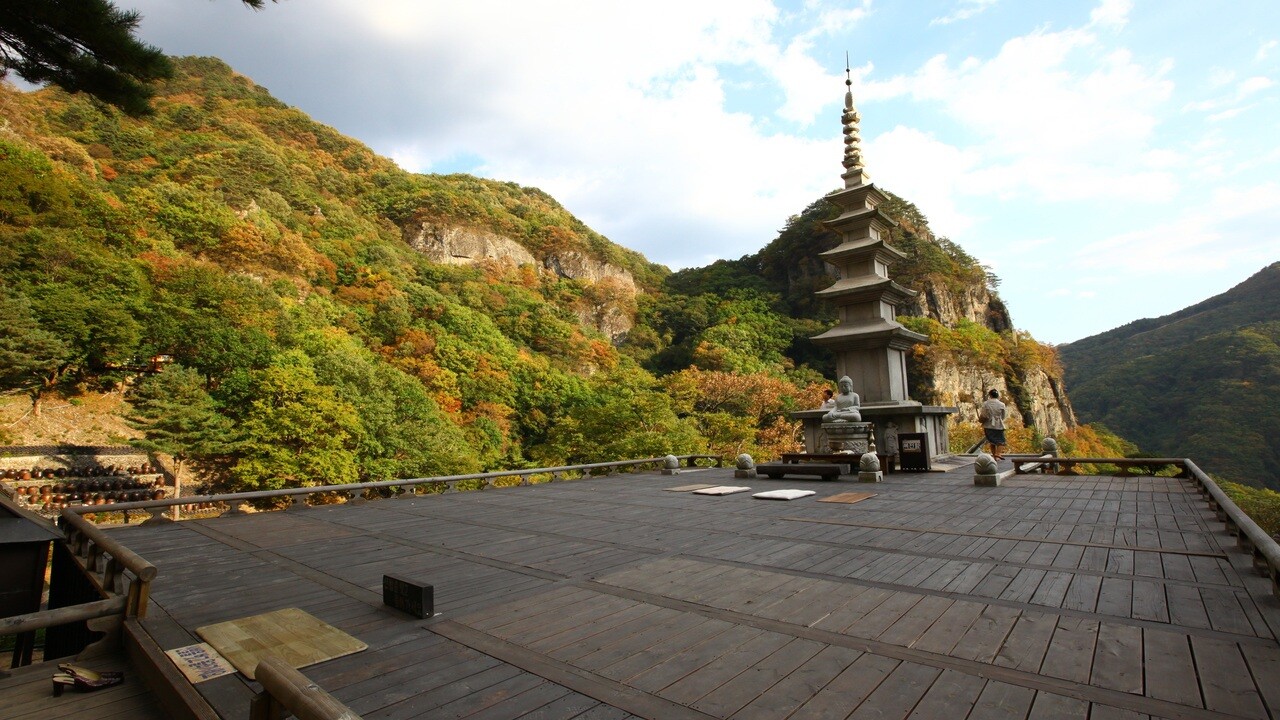
From the courtyard, the foreground and background have very different scales. A stone pagoda stands close by; the rock peaks rise much farther above it. Looking between them makes the mountain setting easier to read than a tight photograph of a single building.
Trees cover some slopes while leaving other rock faces exposed. When leaves change color, they emphasize that contrast. A hillside can contain green, yellow and darker patches at the same time without forming a uniform sweep of fall color.
No verified current peak date is established for the temple grounds. A regional foliage forecast is an estimate, and a nearby mountain observation is not a report from this courtyard. The reliable draw here is the arrangement of stone, trees and buildings.
Read the founding story separately from the buildings
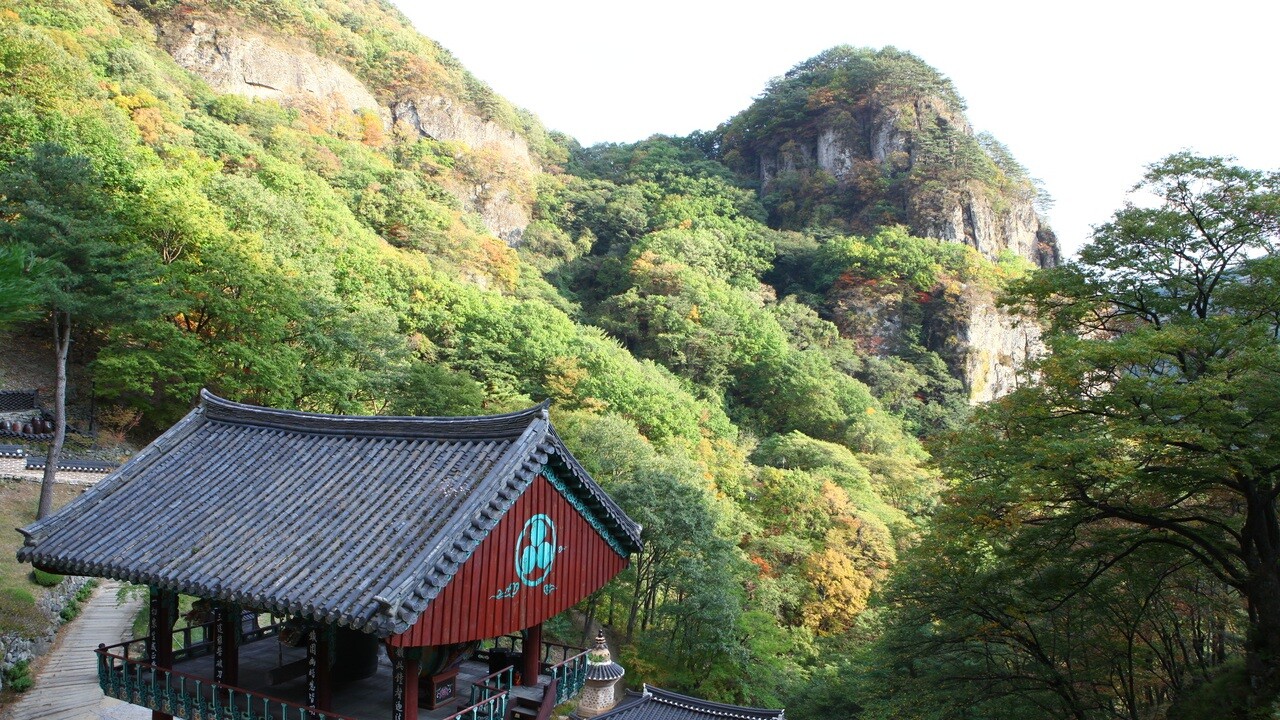
Painted wood and dark tiles bring the view back to human scale. Behind the roof, a rock face remains visible. The building and mountain occupy the same frame, which is one of the temple’s most distinctive visual features.
Bonghwa County’s heritage account explains that Yuribojeon Hall’s precise construction date is unknown after successive alterations. Its architectural form is thought to date to the late Joseon period. The temple’s founding date should not be treated as the age of every surviving structure.
The hall houses a Medicine Buddha, and its name plaque is traditionally attributed to King Gongmin. Those details add context to what visitors see. They are best approached as documented heritage and attributed tradition, rather than as proof that the current buildings have stood unchanged since the seventh century.
Layered roofs reveal the slope
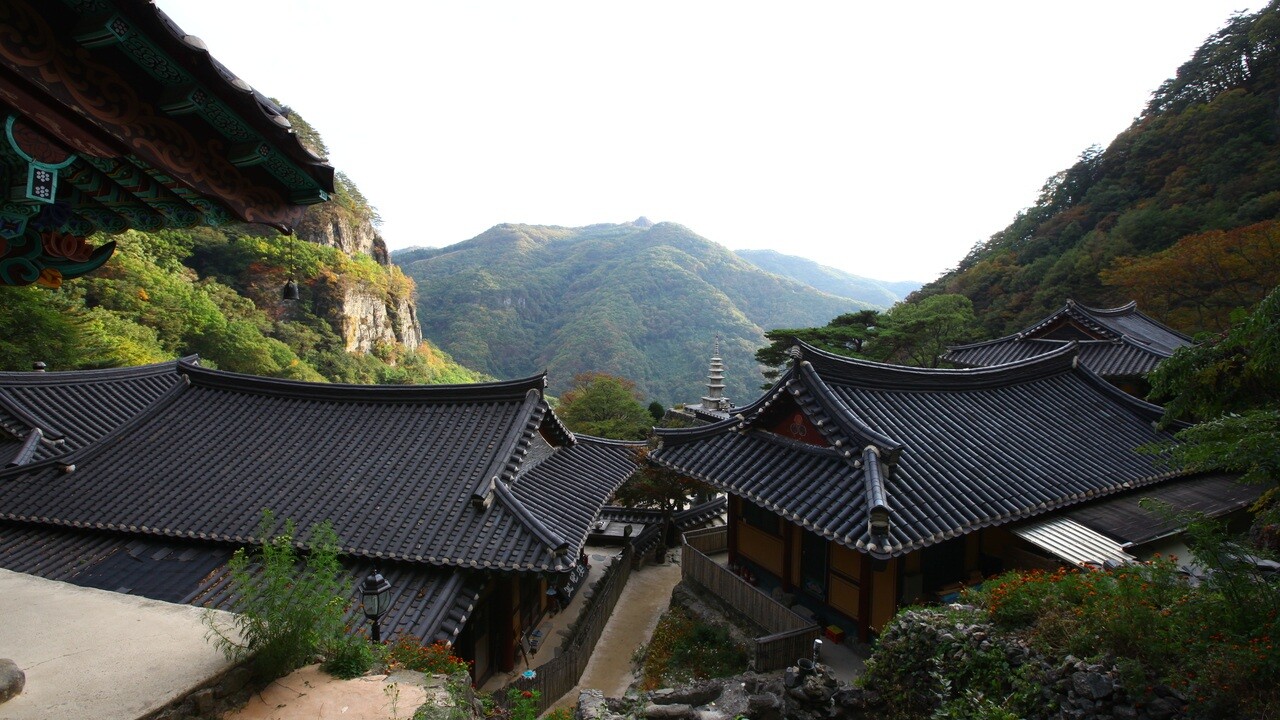
A higher viewpoint turns the roofs into overlapping lines. One roof ends where another begins, and distant ridges continue the pattern. The scene explains how the complex fits into its sloping site more clearly than a list of temple buildings.
Looking upward from a courtyard and downward across roofs gives two different readings of the same place. You do not need to turn every visit into a summit hike to notice that change. The useful movement is between close architectural details and the larger mountain frame.
Follow the paths and visitor areas that are actually open on site. A scenic photograph does not imply that residential quarters or every building are available to enter. This remains a working religious place as well as a destination for architecture and scenery.
Choose a temple visit for the scenery you want
The Korea Tourism Organization’s English temple overview offers a starting point for identifying Cheongnyangsa in Bonghwa. Use the location, not the name alone, when searching: similarly named temples can lead to a different destination.
If you are comparing Korean temple-and-rock landscapes, Juwangsan’s Daejeonsa and valley walk provides a different approach, with a gorge and waterfalls playing a larger role. This is a comparison between separate destinations, not a suggested combined outing.
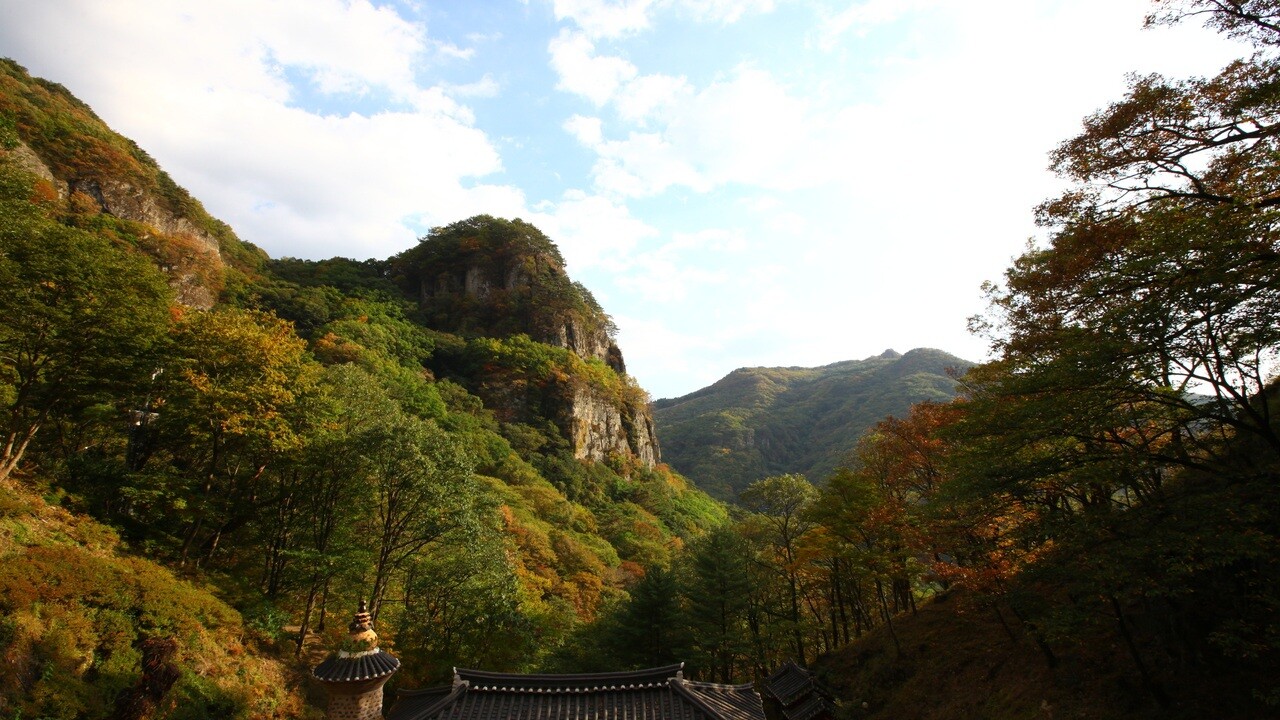
Cheongnyangsa suits a fall itinerary where the temple’s position matters as much as the leaves. The lasting scene is a small group of roofs beneath much larger rock peaks, with each change in viewpoint revealing a different relationship between them.
You May Also Like
by Google Adsense