Naejangsan Autumn Walk: Uhwajeong Pond, Maple Paths and Mountain Reflections
Naejangsan, Jeongeup — pond scenery and tree-lined paths below the mountain peaks
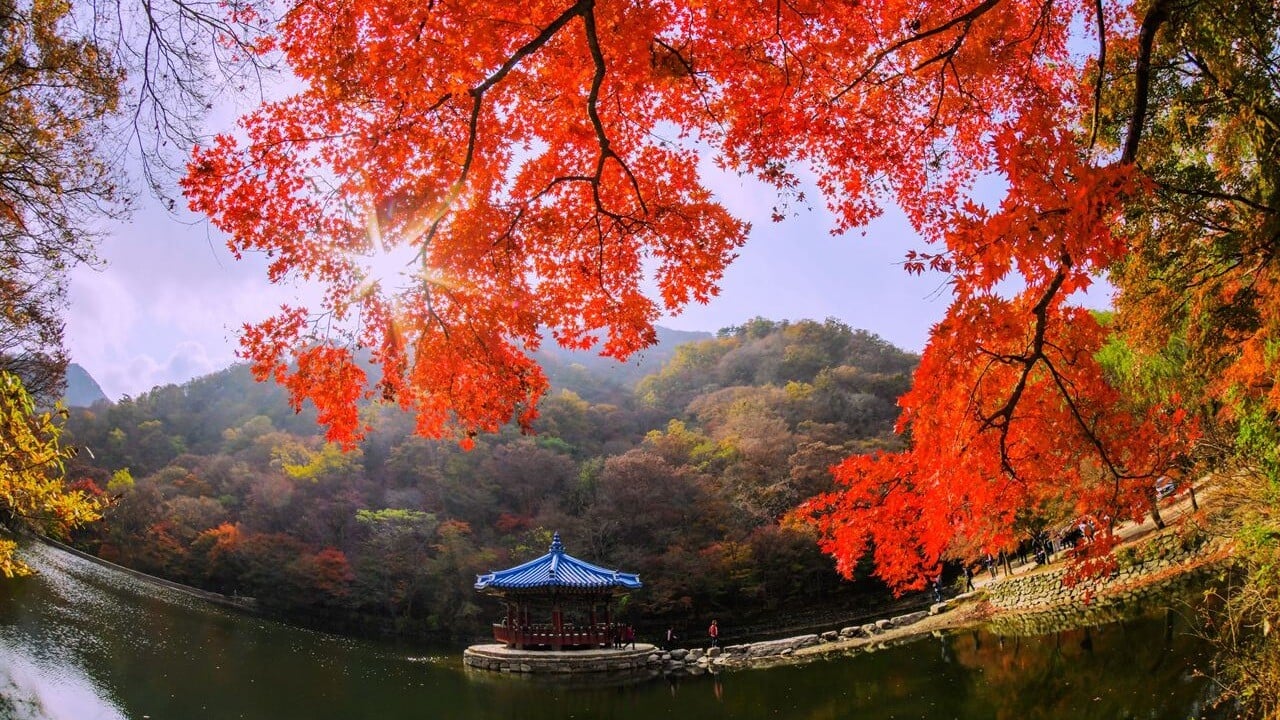
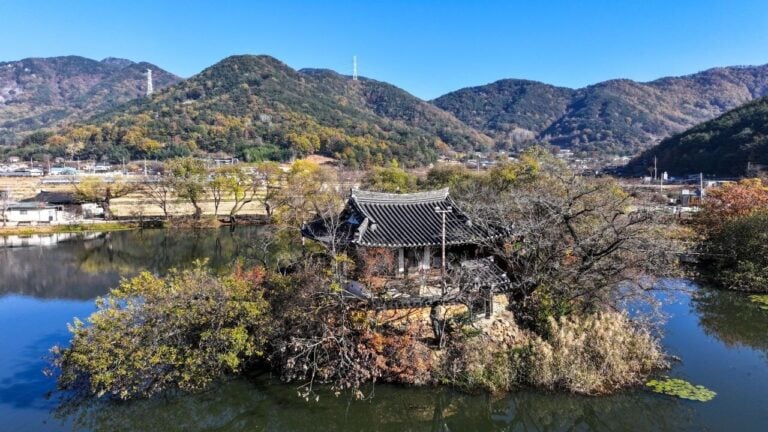
A blue pavilion appears below a broad canopy of red branches. At Uhwajeong Pond, the mountain scenery starts close to the water instead of at a summit. Trees, a small roof and their reflections create a scene that a distant ridge photograph cannot replace.
Naejangsan autumn travel can focus on this lower landscape in Jeongeup. Korea Tourism Organization’s English park overview describes a national park with seasonal forests, waterfalls and temples. Uhwajeong is a pavilion on a pond near the park entrance, rather than another name for the mountain itself.
Current leaf color and a verified local peak date at Uhwajeong are not established here. The photographs explain the setting. They do not show what a visitor will necessarily find on a particular day this year.
For a traveler deciding between a lower-level scenery visit and a mountain hike, the distinction matters. Pond views, tree-lined paths and rocky valleys belong to the same broad park, but they do not form one uniform route with the same terrain.
Tree branches turn the path into a layered scene
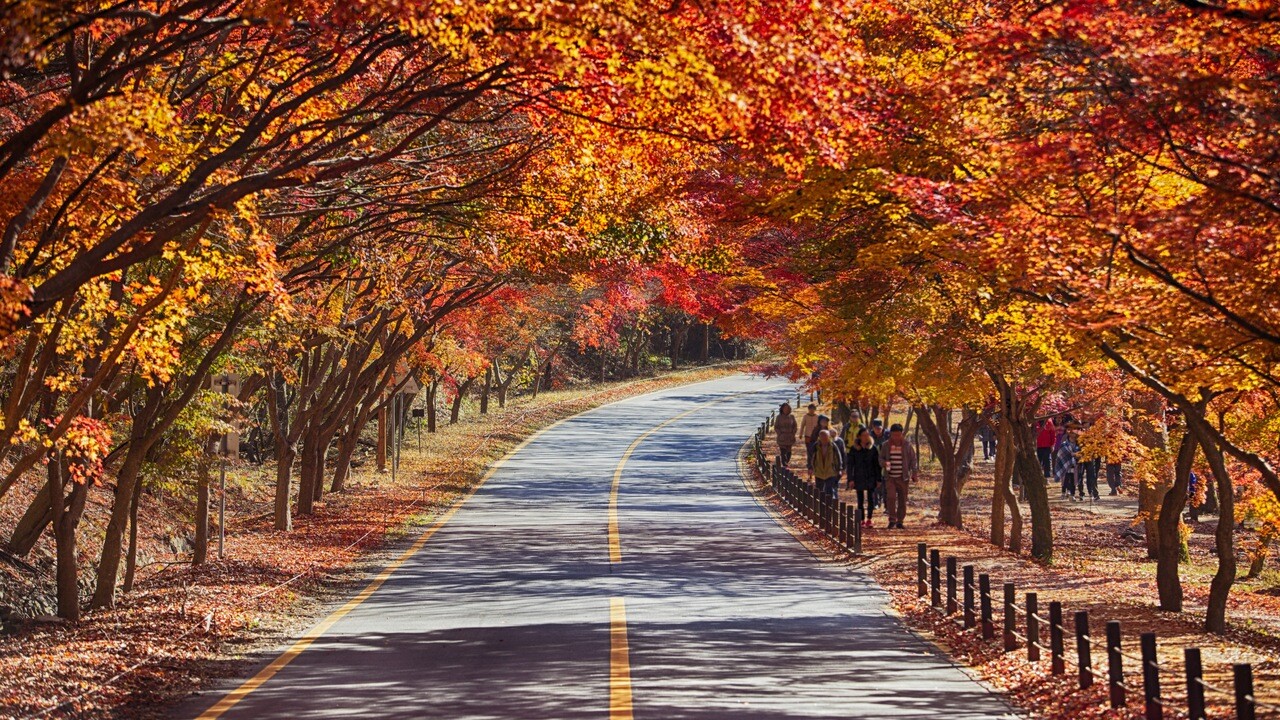
On the photographed curving road, branches extend toward one another above the walking space. The trunks create a repeated edge while the canopy becomes a loose ceiling. People in the distance help make that scale visible.
The visual effect is more than a band of red leaves. Sunlit foliage, darker branches and leaves below the trees give the path several layers. A close look at those layers adds something that a wide seasonal photograph leaves out.
This is a different way to see the mountain from the pond. Water gathers a broad outline; a tree-lined path brings branches and spacing closer. Moving between the two scales is part of understanding the lower landscape.
Naejangsan autumn scenery includes the walking space
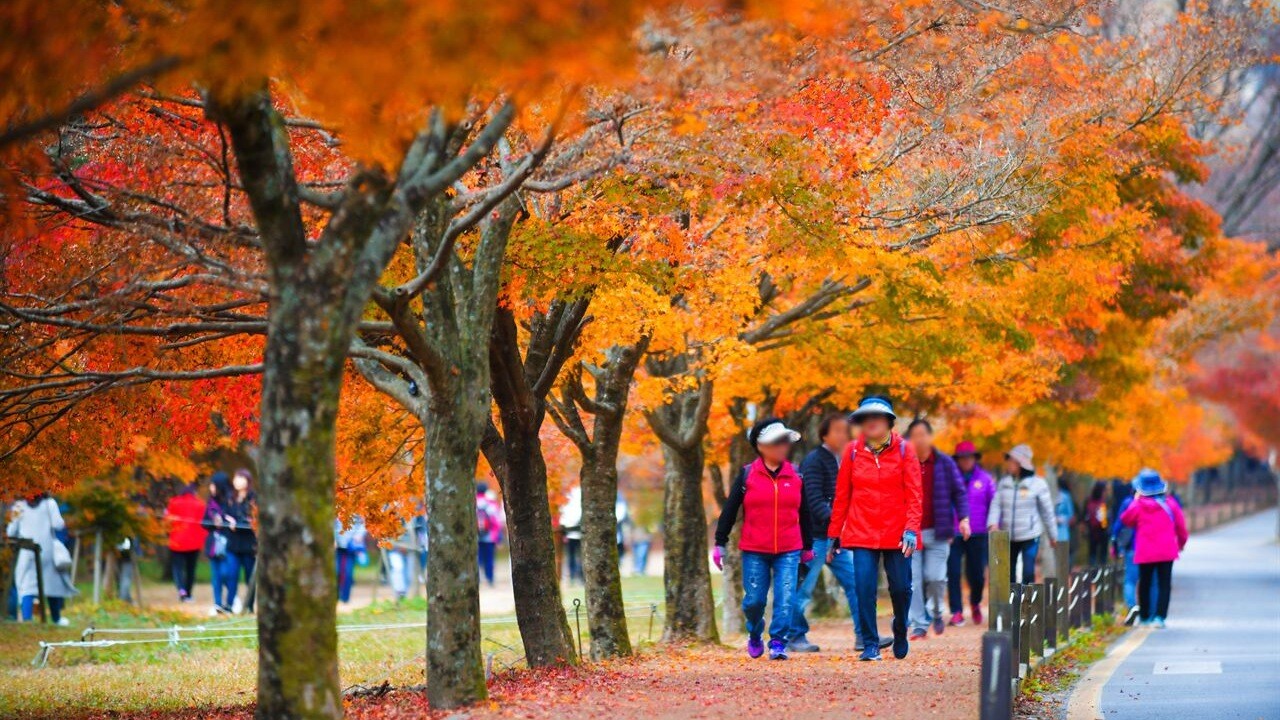
The people in this scene reveal the width of the path and the height of the trees. Without that reference, a dense canopy can read as an almost abstract wall of color. With it, the setting becomes a place with space between trunks.
A nearby tree allows the eye to follow individual branches. From farther away, several trees become one continuous edge. Those are complementary views, rather than separate attractions that need to be collected in a hurry.
The image is not a report of today’s crowds or foliage. It illustrates the relationship between people, trees and the path. Neither crowd levels nor a fully colored canopy can be promised from it.
Water adds a different rhythm below the trees
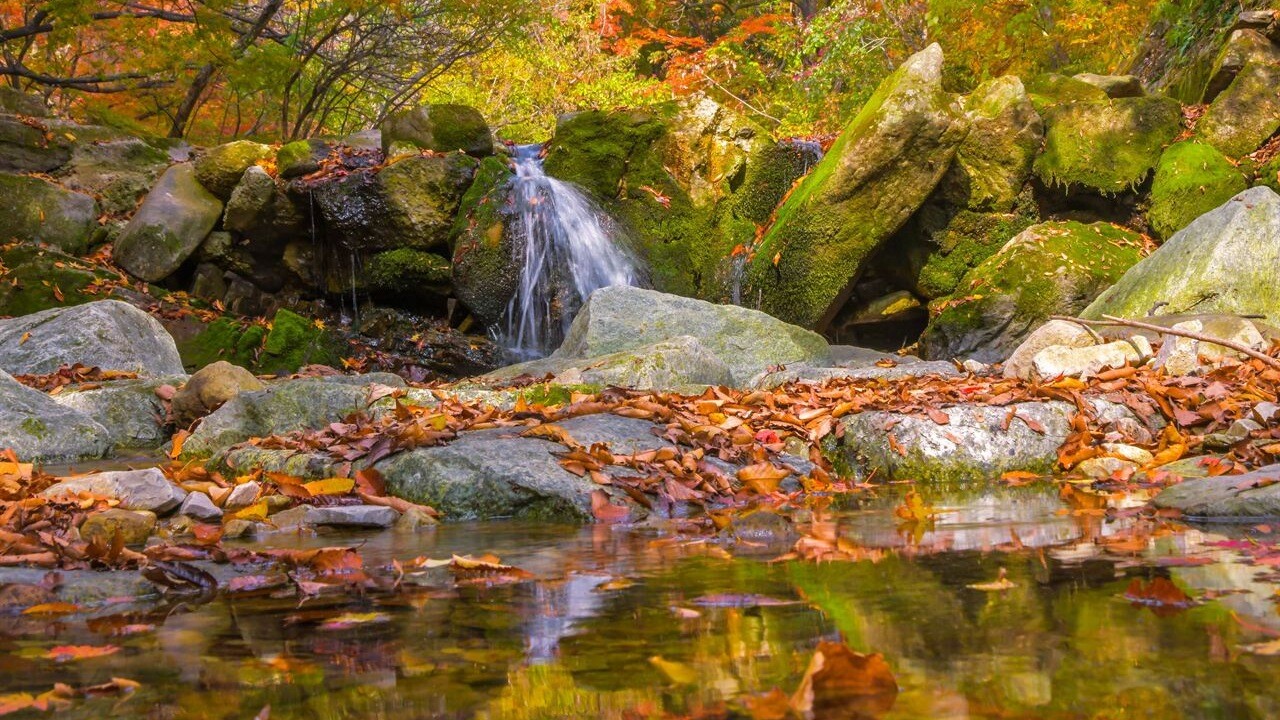
A small drop between rocks breaks the water into pale lines. Leaves collect along stone edges, and color appears again in quieter pools. This is a more enclosed composition than the broad surface around a pavilion.
The official park overview identifies waterfalls as part of Naejangsan’s scenery. A rocky valley and a pond-viewing area still require different route choices. The photographs should not be read as proof that every scene sits on one easy, continuous walking loop.
Looking down makes the forest feel less like a canopy alone. Rocks, moving water and fallen leaves give the lower part of the landscape its own structure. That remains useful even when a visit does not coincide with the brightest foliage.
Reflections repeat the shape of the mountain
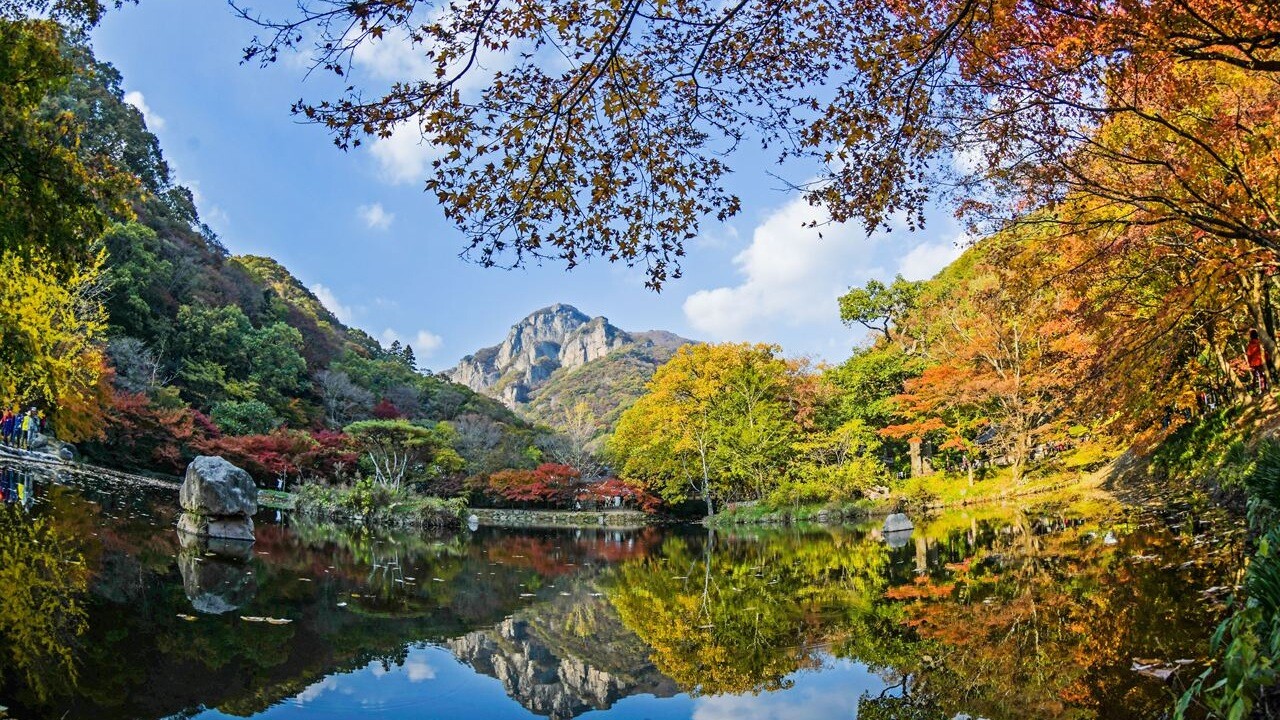
Still water can carry the outline of rock peaks beneath the real ridgeline. Trees frame both versions of the mountain, one rising above the bank and one extending below it. The relationship changes with the light and the position of the viewer.
A clear reflection is conditional on wind and the water surface. It is not a guaranteed mirror effect at every visit. The pavilion and the surrounding woodland still make the pond distinctive when that reflection is softer or broken.
For a separate temple-and-water composition, compare Baekyangsa Temple’s autumn reflections. Baekyangsa and Uhwajeong in Jeongeup are different places. Sharing a national park name does not make their approach or access arrangements interchangeable.
Read the 2026 date as a forest forecast
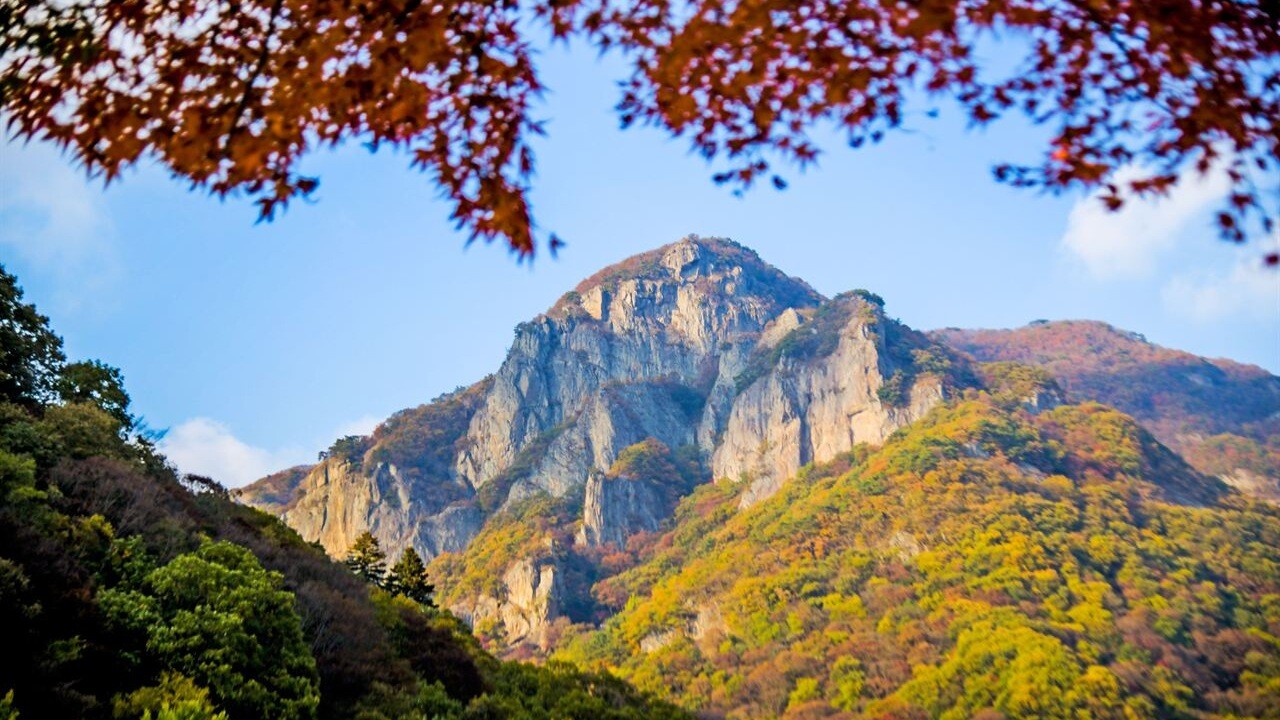
Korea Forest Service’s 2026 maple forecast map lists November 4 for Naejangsan. Its threshold is at least 50 percent color change in the relevant tree group. It is a mountain-level forecast, not a measured peak date for the trees beside Uhwajeong Pond.
A late-October trip therefore should not assume that every scene will match the red leaves in these photographs. Elevation, weather and the position of individual trees affect the progression. Park access may also change with adverse weather.
Uhwajeong offers a useful starting point for seeing how a small pavilion, tree rows and mountain reflections relate to one another. The scenery has several layers to notice, while current foliage and permitted routes remain separate questions for the actual travel date.
You May Also Like
by Google Adsense