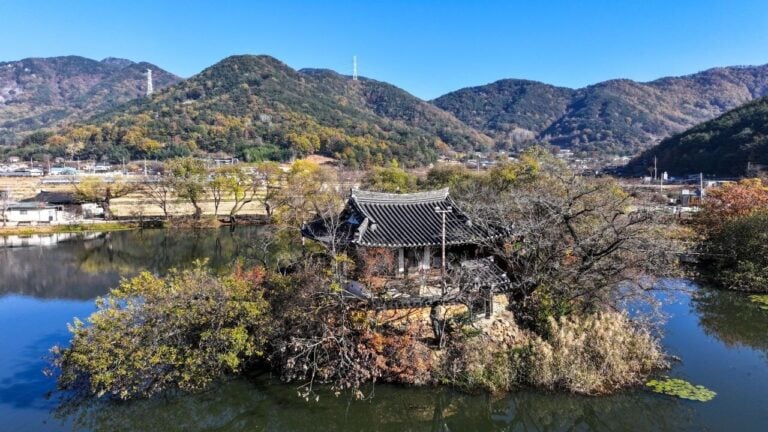
Gyeonggijeon Shrine in Jeonju: King Taejo’s Portrait, Bamboo and Autumn Courtyards
Gyeonggijeon Shrine, Jeonju — King Taejo’s portrait shrine within the city’s Hanok Village
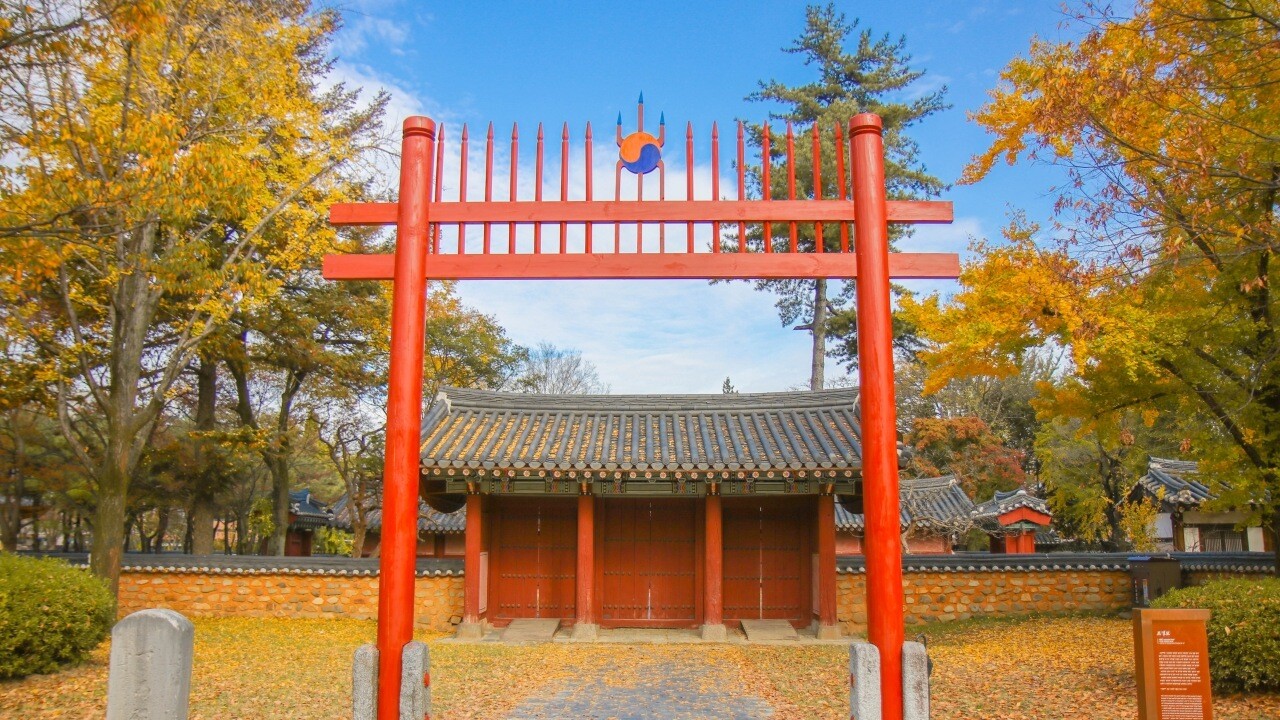
A red gate frames the path before a low tiled roof. Beyond it, walls and trees divide the grounds into smaller spaces. The view feels different from the lanes outside even though it remains within Jeonju Hanok Village.
Gyeonggijeon Shrine is a royal portrait shrine, not a Buddhist temple or a former royal residence. It was created to enshrine the portrait of King Taejo, the founder of the Joseon dynasty. That purpose helps explain the placement of its gates, main hall and courtyards.
Jeonju’s official heritage description dates the shrine’s establishment to 1410 and its rebuilding after wartime destruction to 1614. The site’s long history does not mean every visible building has survived unchanged since its founding.
For a fall walk, the most useful thread is the change in scale: a ceremonial entrance, a portrait setting, a tree above a wall, and a small gate enclosed by bamboo. These details give the shrine an identity beyond another stop with traditional roofs.
Gyeonggijeon Shrine and King Taejo’s portrait
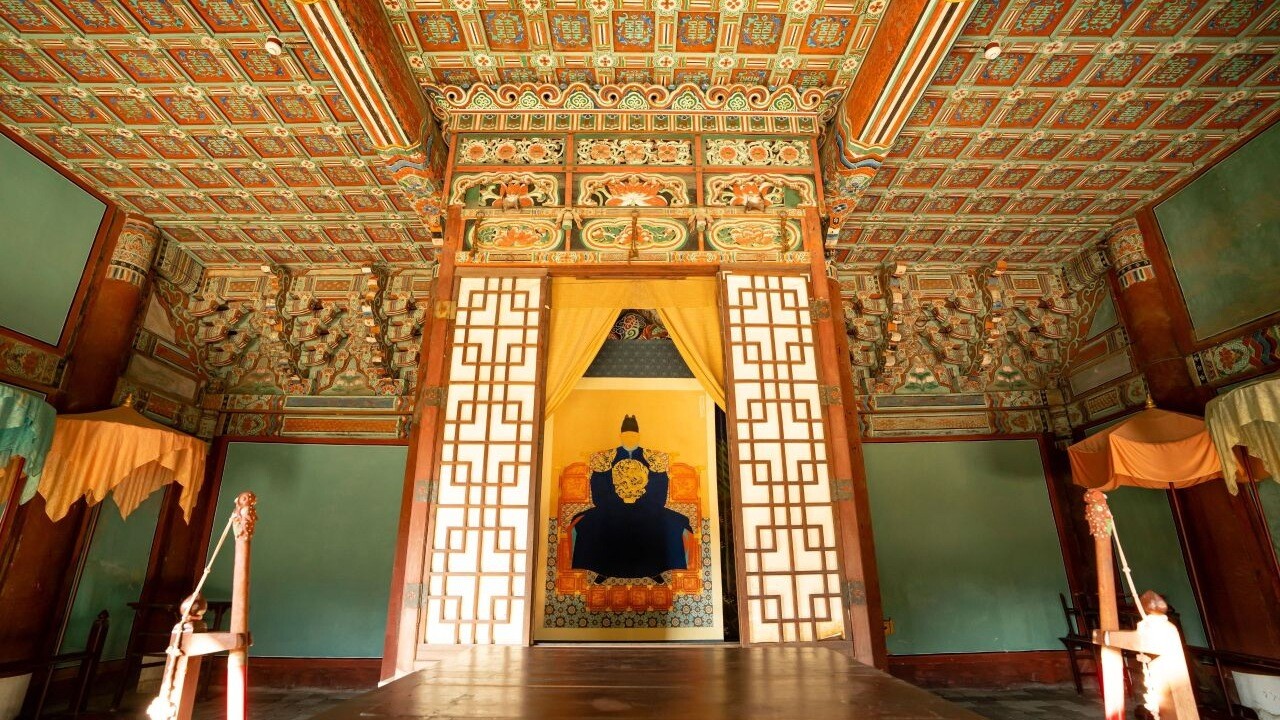
The portrait setting sits beneath a painted ceiling, with doors and columns directing attention toward the center. The interior gives the entrance sequence a purpose: the grounds were arranged around a royal image.
An eojin is a portrait of a king. At Gyeonggijeon, that idea is tied to Taejo and to the dynasty he founded. It distinguishes this space from the residential hanok buildings nearby.
The photograph illustrates the shrine setting; it does not establish whether a particular original portrait is currently on display. The meaning of the hall and the museum’s current exhibition arrangements are separate matters.
Trees above the stone walls
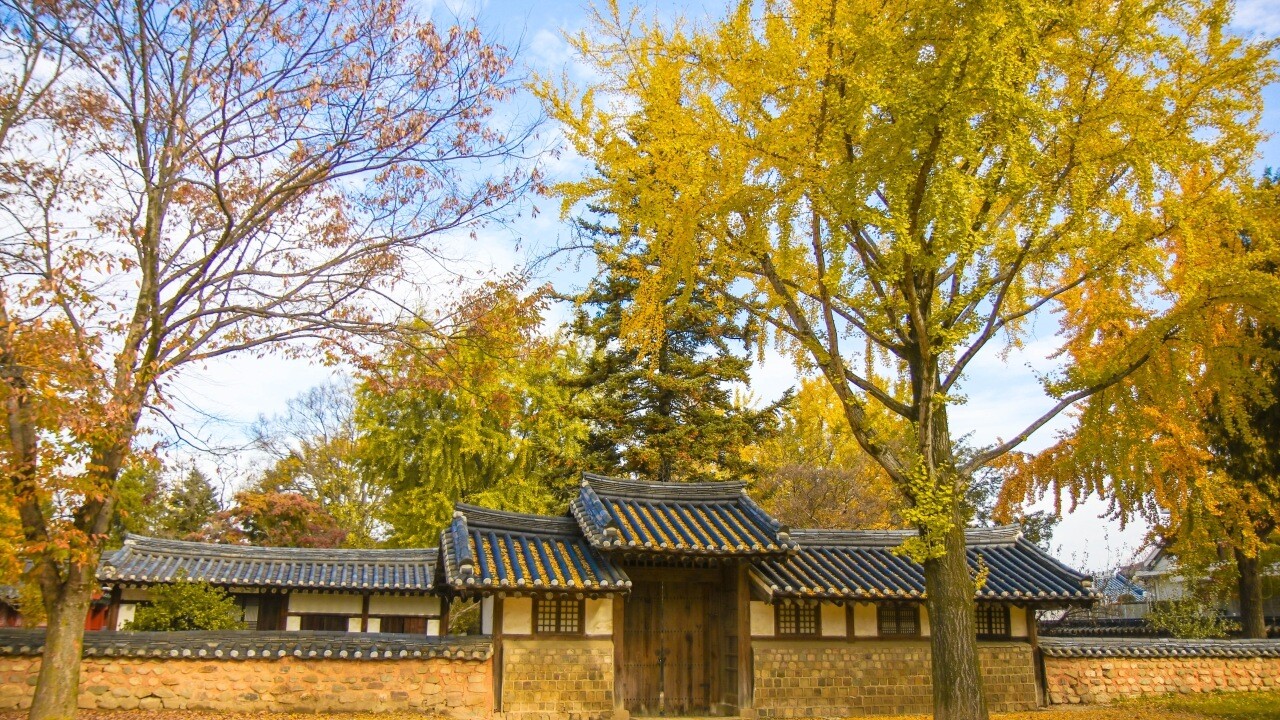
The wall stays low while a large tree rises above it. Straight rooflines make the branches appear even less regular. Looking at both together changes the scale of the courtyard.
A fall visit need not depend on every tree changing color at once. The contrast between wooden buildings, stone boundaries and taller foliage provides its own visual structure. The trees add another layer to an existing architectural order.
A side gate framed by bamboo
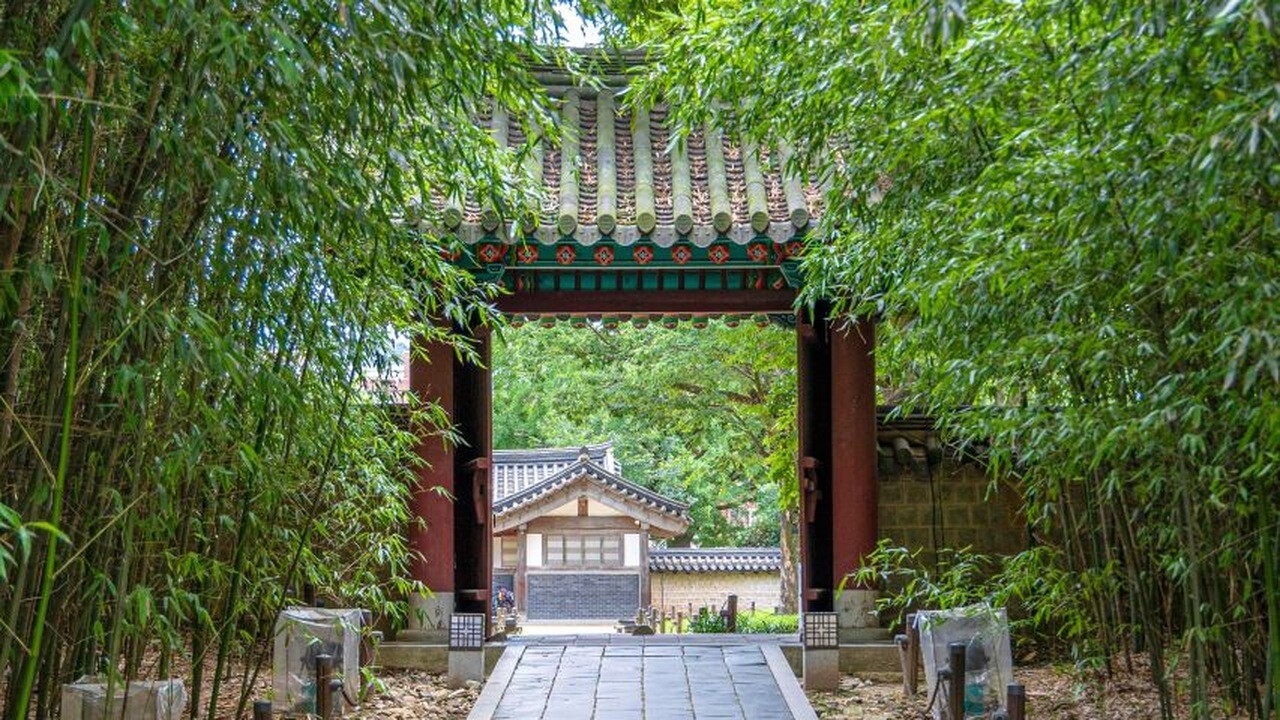
The side gate offers a narrower view than the red entrance. Bamboo encloses the approach, while a paved line leads toward the opening. Only part of the building beyond is visible.
This scene also adds green to the shrine’s seasonal palette. Bamboo and deciduous trees give different textures to the grounds; a fall landscape does not require a uniform carpet of yellow or red.
The smaller opening encourages a different kind of attention. Instead of taking in a whole facade, you notice the relationship between a doorway, a wall and the path that connects them.
Light across a wooden interior
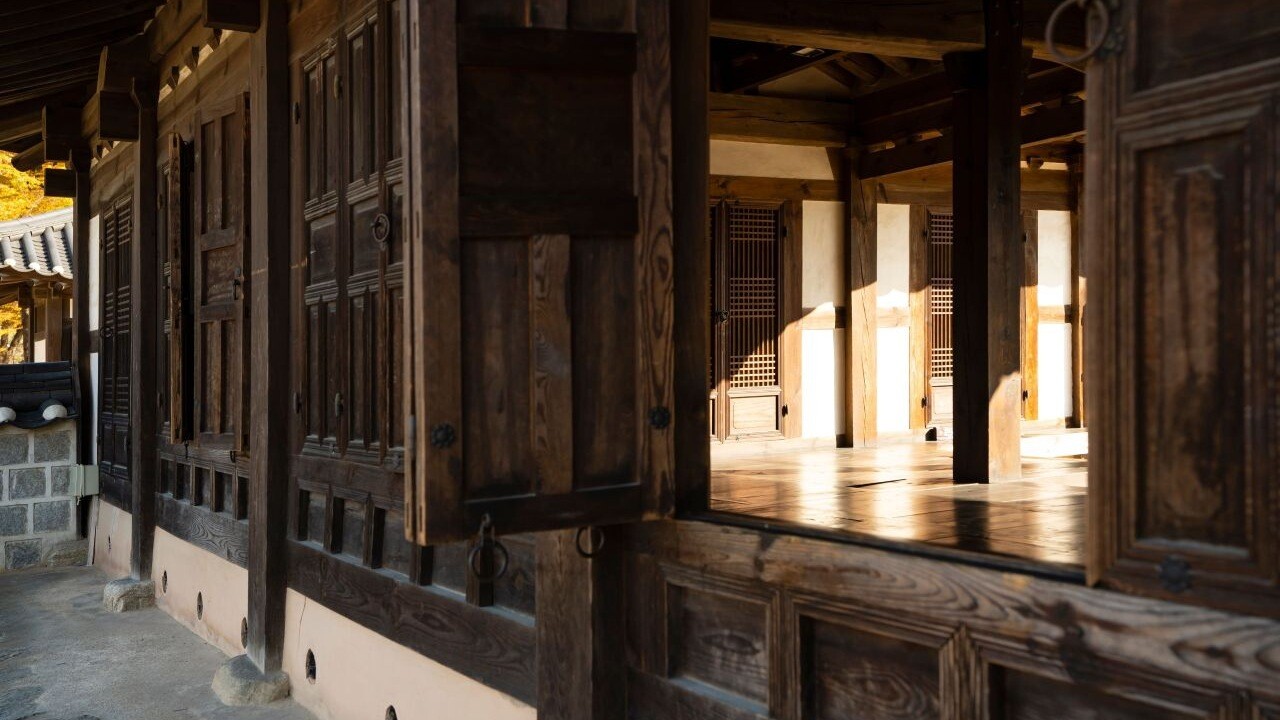
Light crosses the wooden floor in separate patches. Posts and doorframes divide the brighter exterior from the darker interior, revealing the grain and depth of the timber. It is a smaller scene than the main gate, but equally architectural.
These details make the visit more than a list of construction dates. A building’s openings show how space is connected and how the view changes from one threshold to another. The shrine can be read through those transitions.
A royal precinct within modern Jeonju
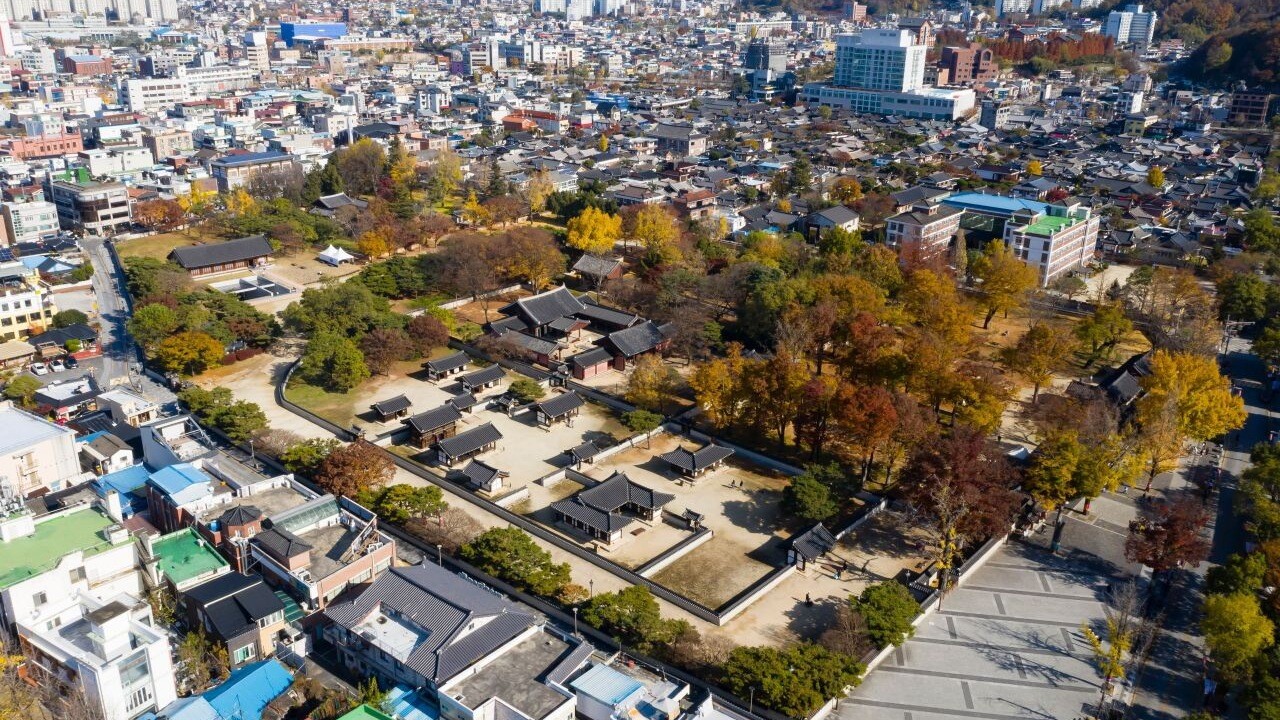
The overhead view shows the shrine close to surrounding streets and modern buildings. Its roofs and trees remain gathered within a defined precinct, while the city continues beyond the boundary. This is an urban heritage site rather than an isolated mountain complex.
For a different relationship between traditional architecture and daily life, Andong Hahoe Village’s homes and riverside setting provide a useful comparison. Gyeonggijeon’s central story is the royal portrait and the spaces arranged around it.
Within a Jeonju itinerary, the shrine rewards attention to entrances, enclosed views and courtyard scale. Autumn trees contribute color, but the deeper reason to stop is the distinctive purpose behind the walls.
You May Also Like
by Google Adsense