Gwanghalluwon Garden in Namwon: Ojakgyo Bridge, Pond Islands and Wanwoljeong Pavilion
Gwanghalluwon Garden, Namwon — traditional architecture, celestial symbolism and autumn waterside views
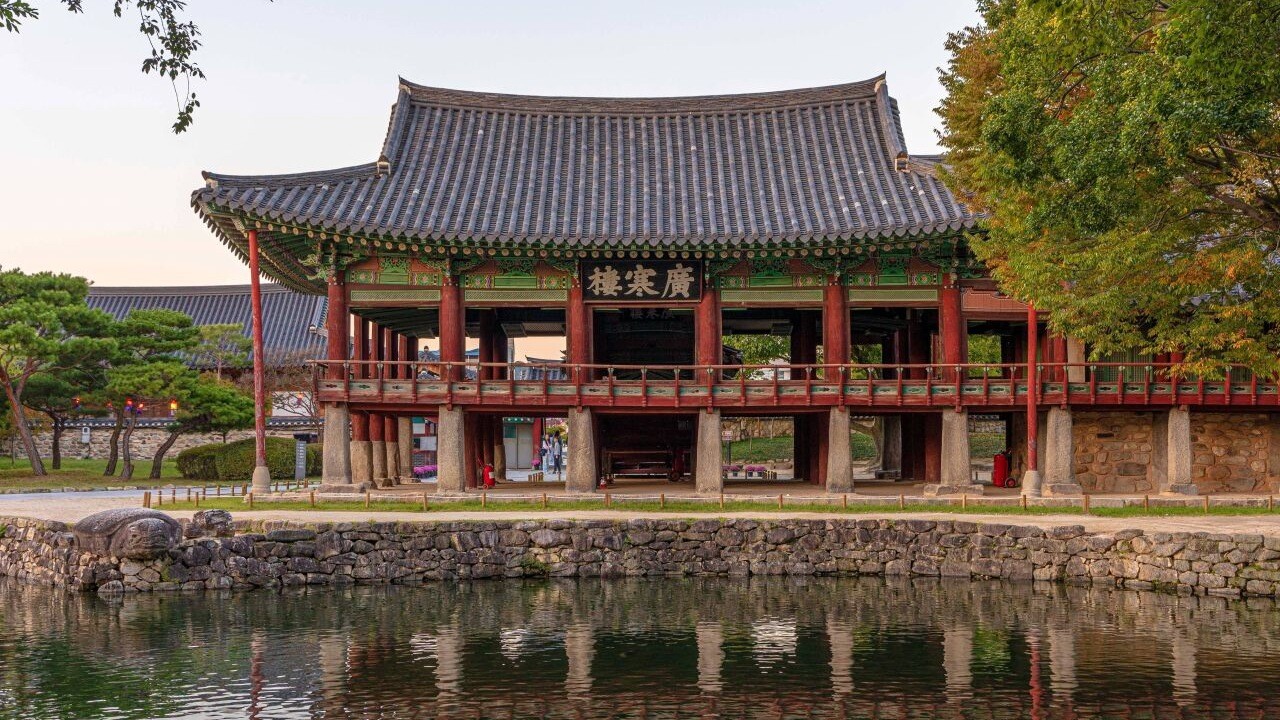
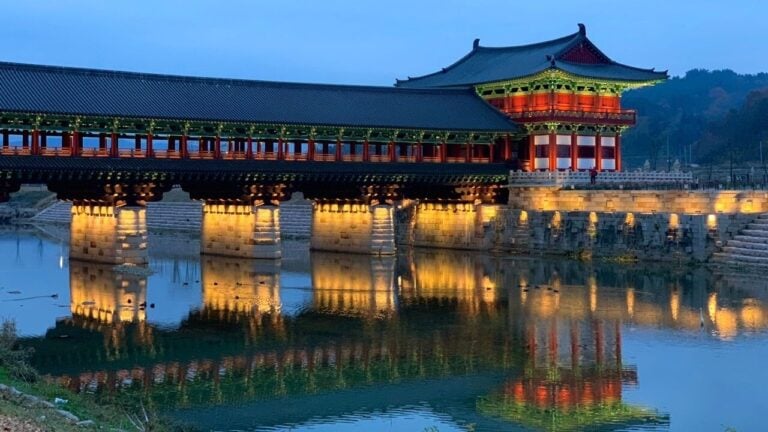
Red columns stand beneath a long tiled roof, then continue downward as reflections. A band of stone separates the building from its wavering image. Water gives the architecture another face.
Gwanghalluwon Garden in Namwon takes its name from Gwanghallu Pavilion, the large hall within the wider garden. The distinction matters: the hall is one structure within a setting of ponds, bridges, islands and other pavilions.
Namwon City’s official introduction explains the pond and islands through celestial imagery and the ideal of an earthly paradise. Water connects the different parts of the design instead of simply filling empty ground beside a famous building.
The garden is associated with the Korean story of Chunhyang, but its physical layout is worth understanding on its own. A high pavilion, a low stone bridge and a roof close to the pond offer different subjects within one autumn visit.
Gwanghalluwon Garden within Namwon
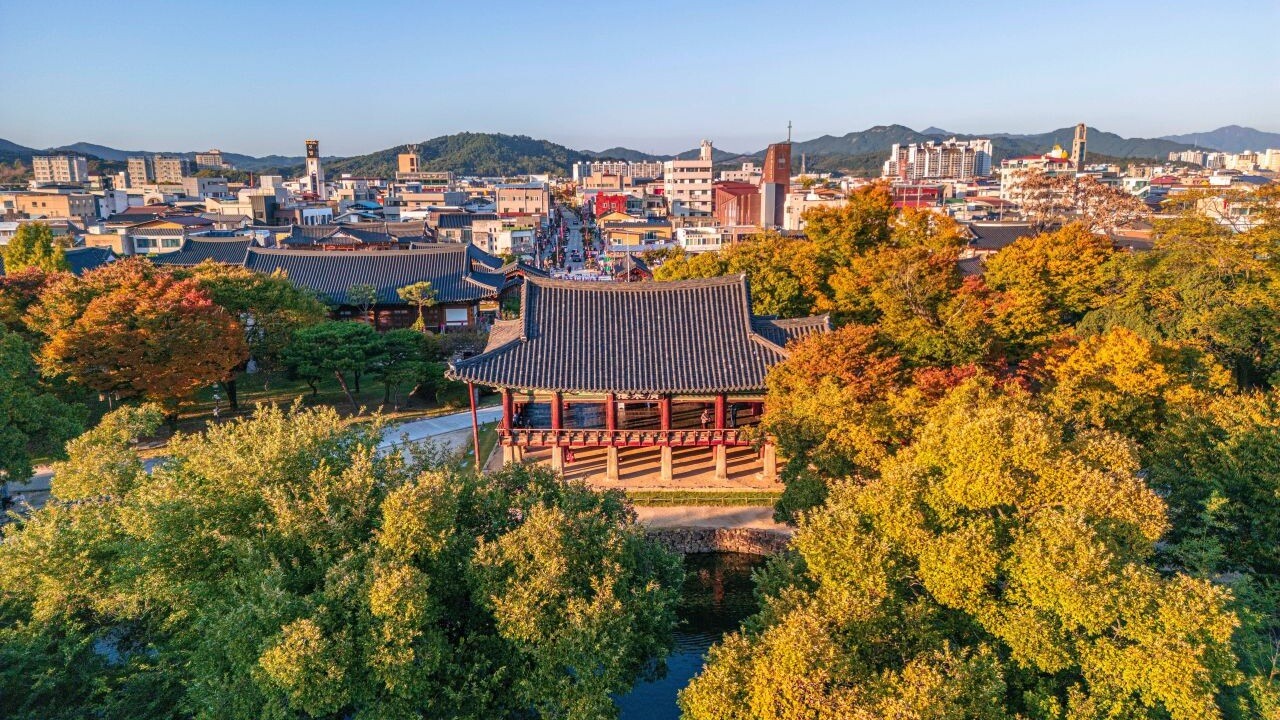
An elevated view shows ordinary city buildings beyond the garden’s canopy. This is not a remote mountain compound: the trees and ponds form a concentrated landscape within Namwon. Seasonal color makes the boundary especially visible.
The present Gwanghallu Pavilion was rebuilt in 1626 after destruction during the Japanese invasions. The city also records later repairs and expansion. The garden brings together several periods rather than preserving every part unchanged from one founding moment.
At water level, the surrounding streets recede behind branches and rooflines. The change of viewpoint explains how a garden near the city can still create a more enclosed visual world.
Ojakgyo Bridge and its four arches
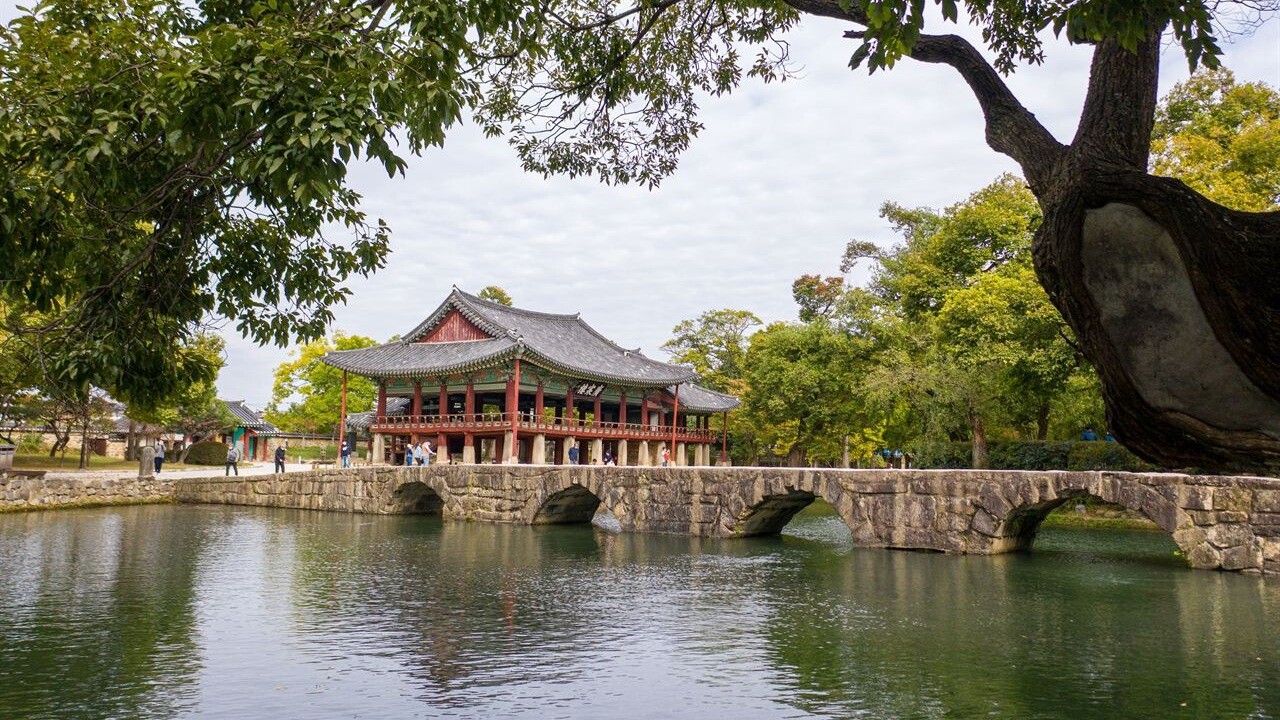
Ojakgyo runs low across the water. Its walking surface is level, while rounded openings break up the stonework underneath. The bridge’s horizontal line contrasts with the taller pavilion behind it.
The bridge has four arches. Its name refers to the legendary bridge where separated lovers Gyeonu and Jingnyeo meet, a story distinct from Chunhyang’s. Recognizing both layers helps explain why the garden contains more than one kind of romantic imagery.
A large waterside tree partly frames the bridge. The scene becomes more interesting where built geometry and irregular branches overlap, rather than when every structure is isolated from its surroundings.
Islands within the pond
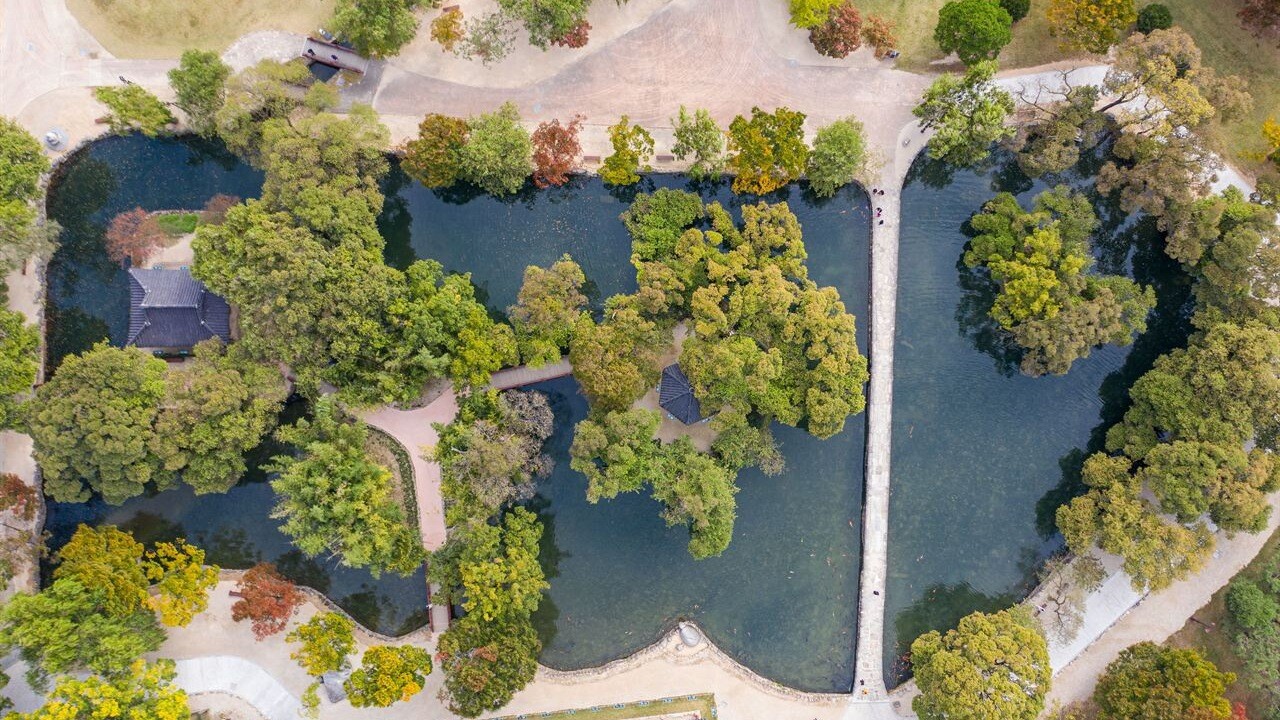
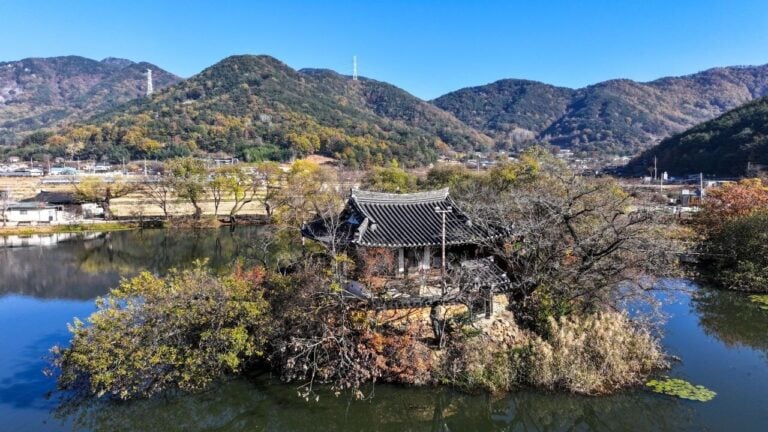
From above, the relationship between water and land becomes clear. Trees and small roofs occupy separate islands, while narrow bridges reconnect them. Views that feel independent at ground level belong to one larger arrangement.
Three islands evoke the legendary mountains of immortals. The symbolism has a visible form: pieces of landscape appear set apart by water yet linked by paths. It is a way to understand the design without treating the names as a list to memorize.
The layout changes the way the roofs read. A pavilion becomes part of a wooded island, while a bridge draws the eye from one patch of ground to another.
Wanwoljeong Pavilion’s different history
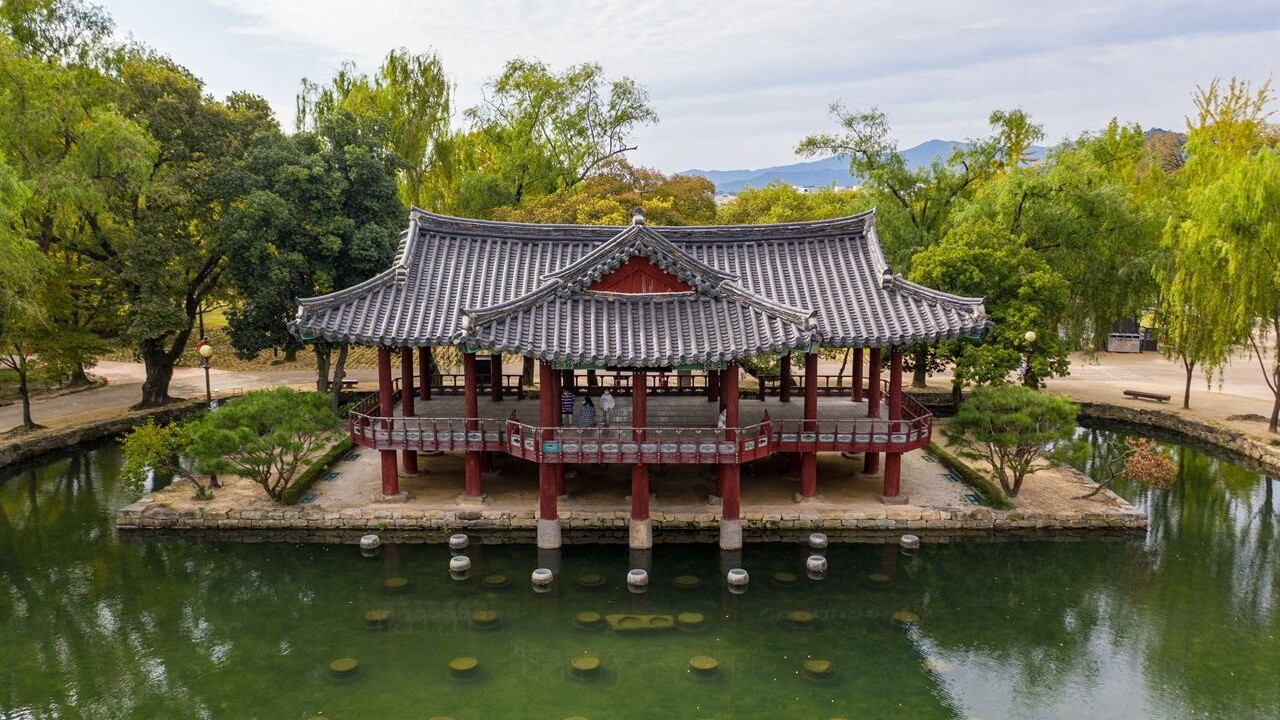
Wanwoljeong has an overlapping roofline and a central section projecting toward the water. Its columns bring the building close to the pond’s surface. The composition is different from Gwanghallu’s longer facade.
The city’s official Wanwoljeong guide dates this pavilion to 1971. Its traditional appearance should not lead to the assumption that every building in the garden dates to the Joseon period. Its moon-viewing name continues the wider garden’s celestial theme.
Roof shapes above and column reflections below make this a useful place to compare architecture with its watery image. The date adds context without reducing the view to a timeline.
Smaller bridges and spreading trees
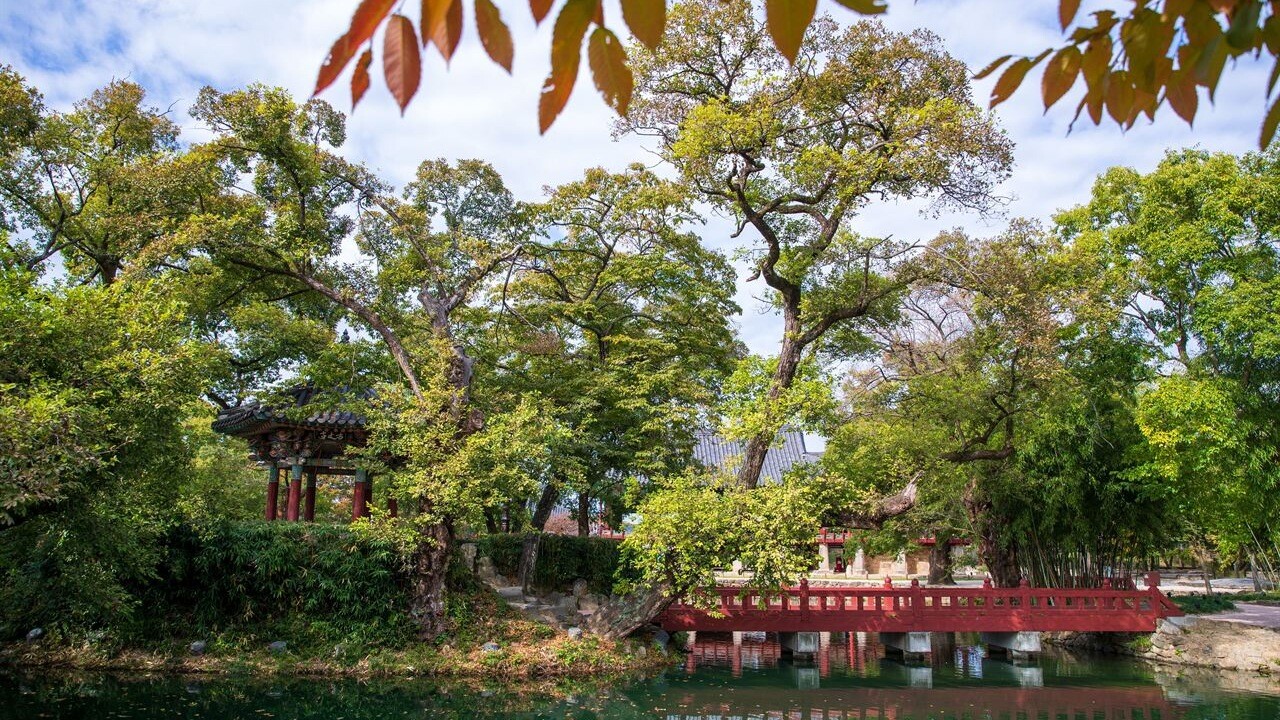
Away from the larger hall, a smaller red bridge sits beneath broad branches. Hanging foliage and a modest roof soften the edge of the water. The garden shifts from a building-centered view to a closer landscape.
For a different heritage setting, Gyeonggijeon Shrine in Jeonju organizes its spaces through walls, courtyards and a royal portrait. Gwanghalluwon Garden uses water, islands and bridges to establish its main relationships. They offer different ways to look at traditional Korean spaces.
Gwanghallu suits a fall visit that gives the garden more attention than a single pavilion photograph. The pond, four-arched bridge and later waterside pavilion make a connected story of architecture and landscape.
You May Also Like
by Google Adsense