Jusanji Pond in Cheongsong: Autumn Willows, Reflections and the Lakeside Path
Jusanji Pond, Cheongsong — a historic reservoir framed by willow trees, wooded paths and mountain slopes
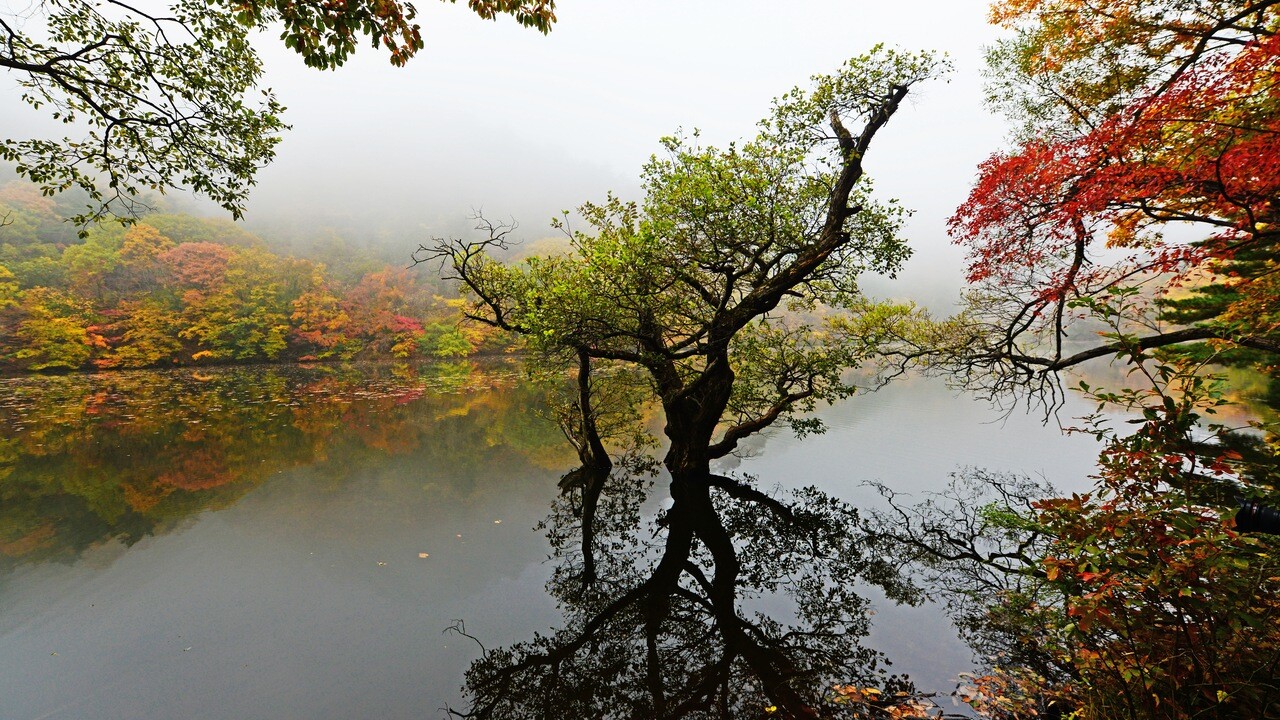
At the waterline, a branching tree appears to continue downward. The reflection carries the same irregular outline beneath the real canopy. Farther away, a band of woodland gathers around the reservoir.
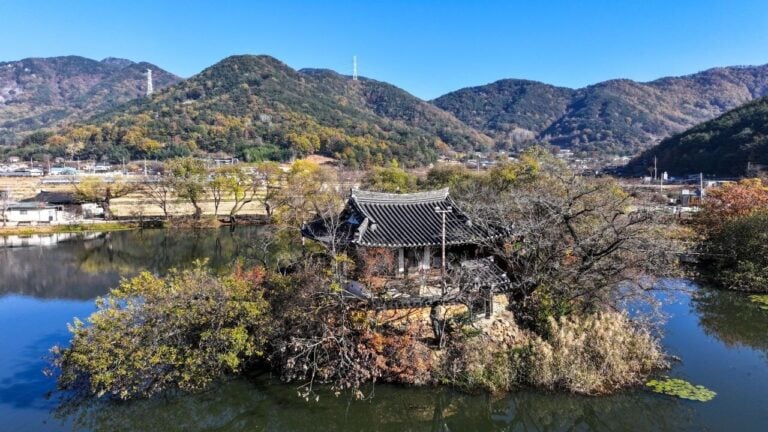
Jusanji Pond is in Cheongsong, in Korea’s southeastern mountain region. Its familiar English name calls it a pond, but it was created as an agricultural reservoir. That practical origin gives the woodland scene another layer of meaning.
The Korea Tourism Organization’s English introduction dates construction to 1720–1721. The setting has a long human history alongside the trees that now draw attention to the water.
A fall visit need not depend on mist or a perfectly mirrored surface. The shoreline path changes the relationship between nearby trunks, open water and the hills beyond, giving the small reservoir several distinct views.
Jusanji Pond’s wooded shoreline
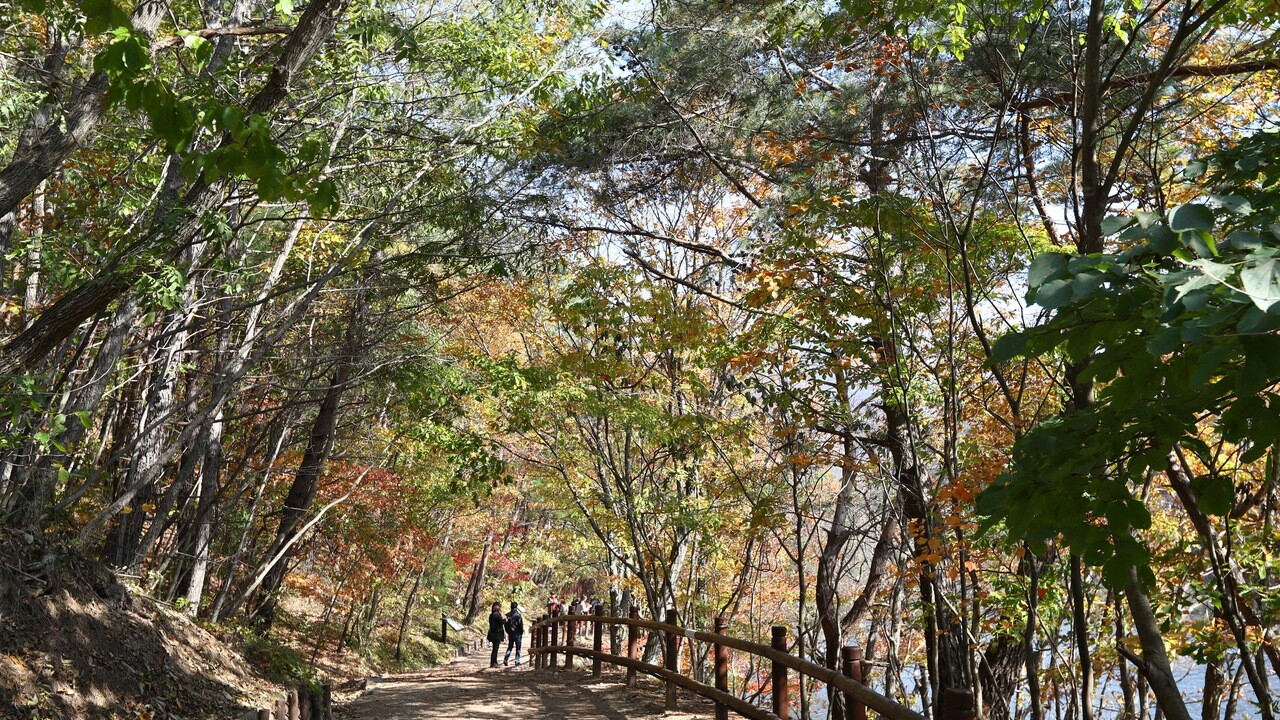
Trees stand close to the path, leaning across the direction of travel. A low railing follows the edge. Water appears through gaps rather than remaining fully visible at every point.
This brings the landscape to a smaller scale than the broad views of the reservoir. A nearby trunk can obscure an entire slope, then a few steps reveal the water again. The rhythm comes from partial views.
The shoreline scene is distinct from a full mountain hiking route. Exploring the pond does not describe or replace the different trails elsewhere in Juwangsan National Park.
Willows and their reflected branches
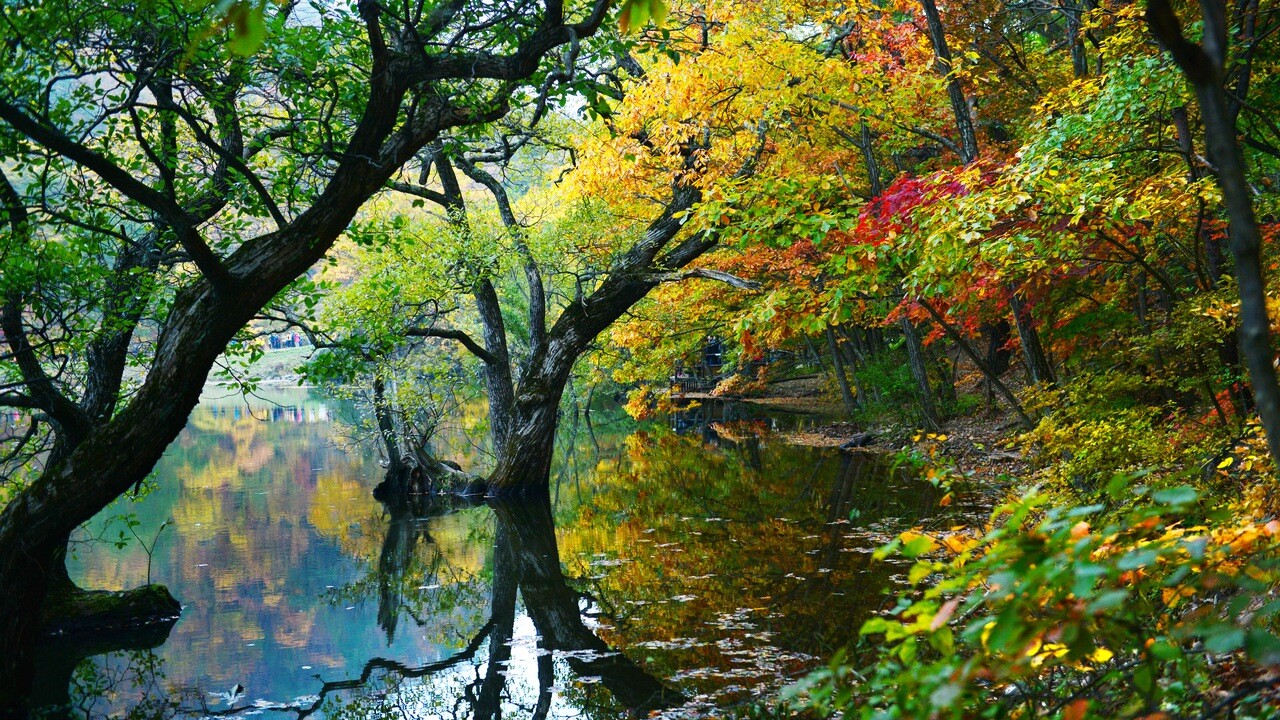
A dark trunk curves into the view, spreading finer branches toward the water. Their inverted outlines create a second canopy beneath the first. Yellow and green leaves add several layers around the edge.
Water level changes how much of a tree’s base is visible. Wind changes the clarity of its reflection. Those are part of the setting, so the photograph should not be read as a promise of the same waterline on a future visit.
Following one branch draws the eye across two versions of the same shape. The meeting point between a real trunk and its reflection gives this shoreline a subject that an ordinary woodland path cannot provide.
Open water beneath the hills
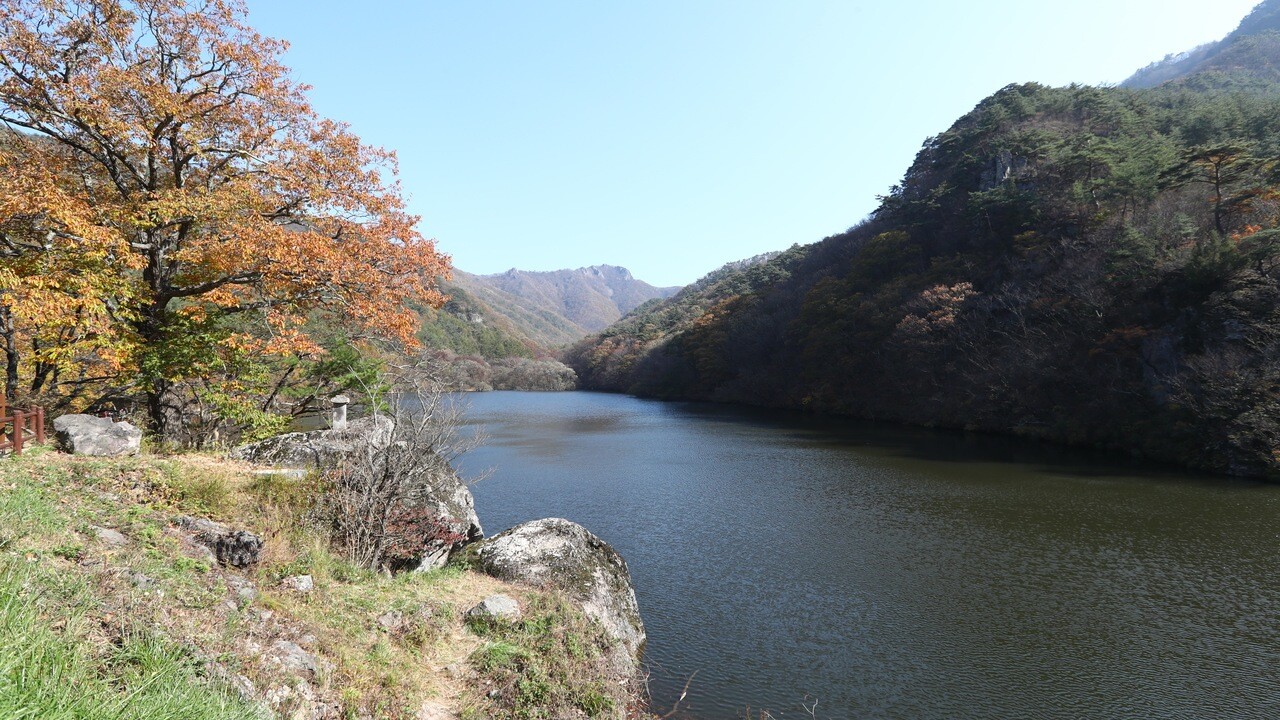
Where the foreground opens, the reservoir’s width becomes clearer. Light reaches one edge while the hill’s shadow darkens another part of the surface. The far slope defines the scene without a distant skyline.
The view is organized around water rather than a summit. Trees and rocks lean toward the same basin, drawing attention inward. It is a landscape that can be read from its edges.
Cheongsong County’s official Jusanji introduction also identifies the reservoir’s agricultural origin. Knowing why water was collected here changes the impression of a place that can look entirely natural at first glance.
People at the viewing rail
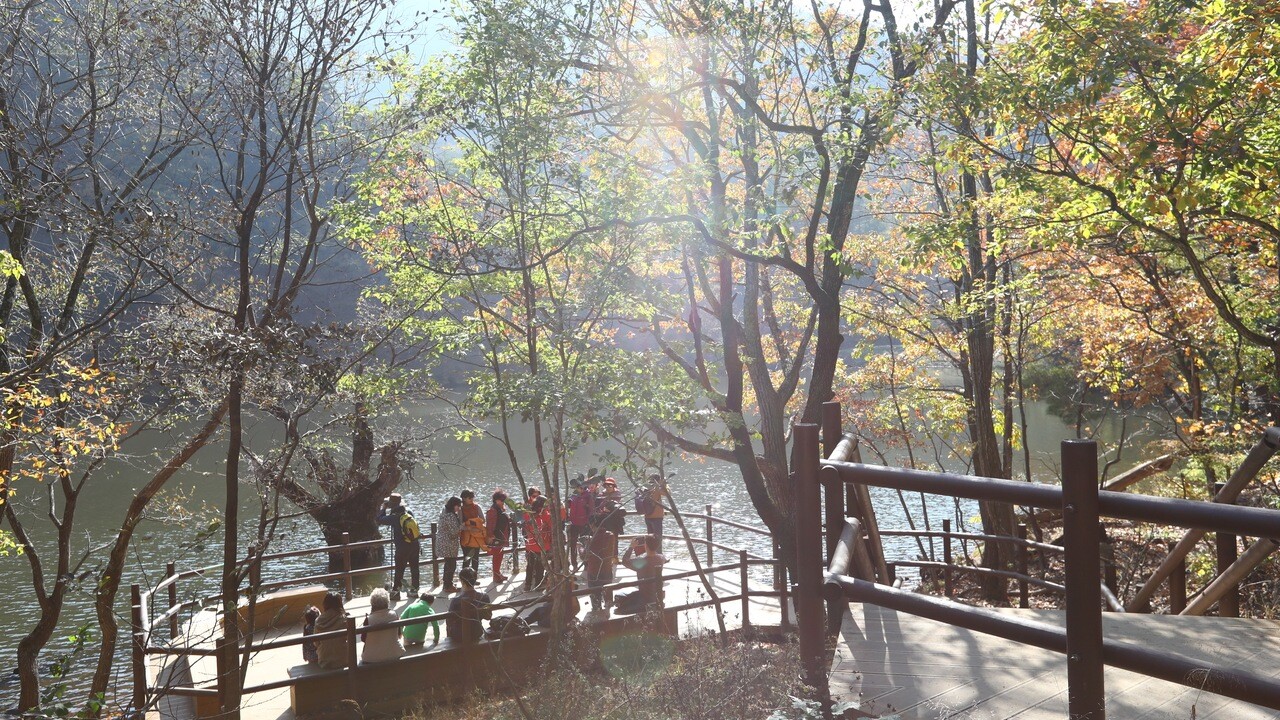
People near the railing provide a small point of scale beneath the branches. Their position turns attention outward from the path to the water. Brightness between the trunks adds another sense of distance.
A close composition around a willow and a wider view including the opposite bank tell different stories about the same reservoir. Neither needs to stand in for the entire landscape.
When reflections are less clear, the trees’ own shapes and the shoreline remain visible subjects. This makes the visit less dependent on one brief weather effect such as morning mist.
Autumn color between nearby trunks
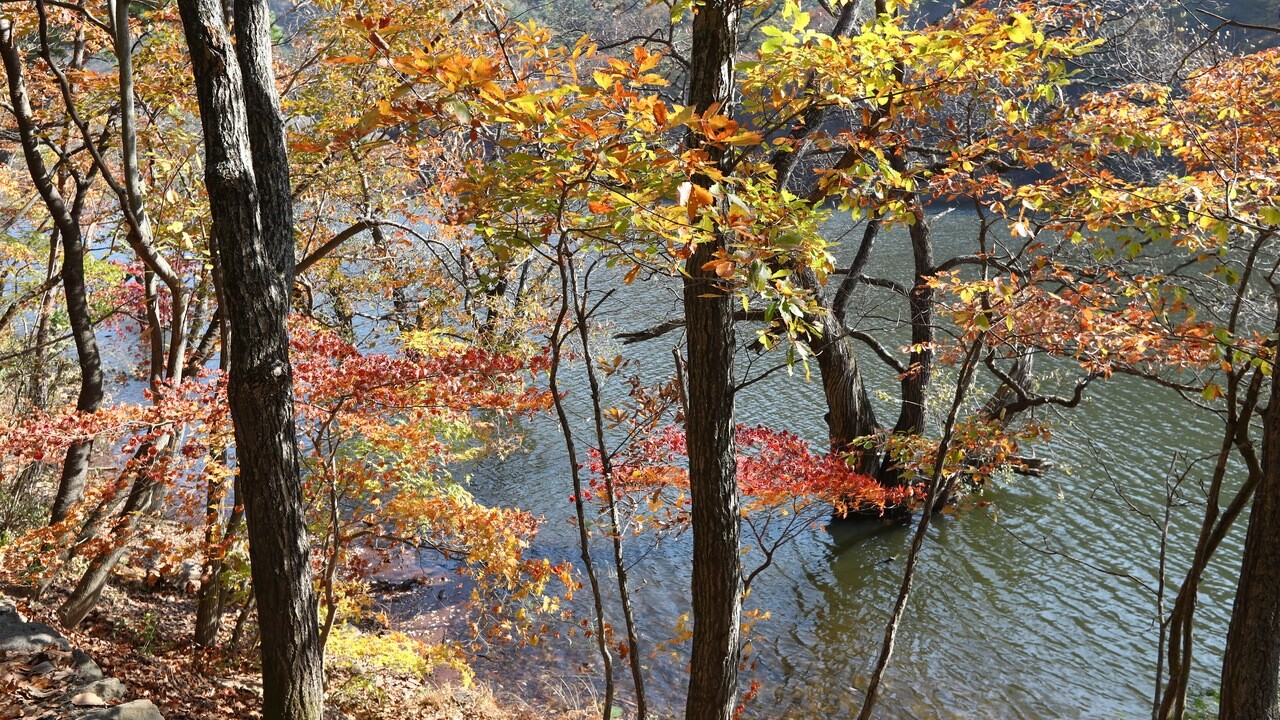
At the closest range, trunks divide the water into narrow openings. Yellow leaves remain overhead while red leaves collect below. The wide mountain view contracts into small patches of color and water.
For a contrasting Cheongsong landscape, Juwangsan’s Juwang Valley emphasizes rock gorges and waterfalls. Jusanji centers on a reservoir and its shoreline trees; the settings have different subjects and separate approaches.
Jusanji suits an autumn outing that gives time to changing viewpoints. A tree reflected in water, a shaded hillside and a gap between leaves offer several ways to see the pond without relying on a single forecast peak day.
You May Also Like
by Google Adsense