Unmunsa Temple in Cheongdo: Weeping Pine, Stone Walls and Autumn Courtyards
Unmunsa Temple, Cheongdo — a spreading pine, wooded approach and open timber architecture at a Buddhist nunnery
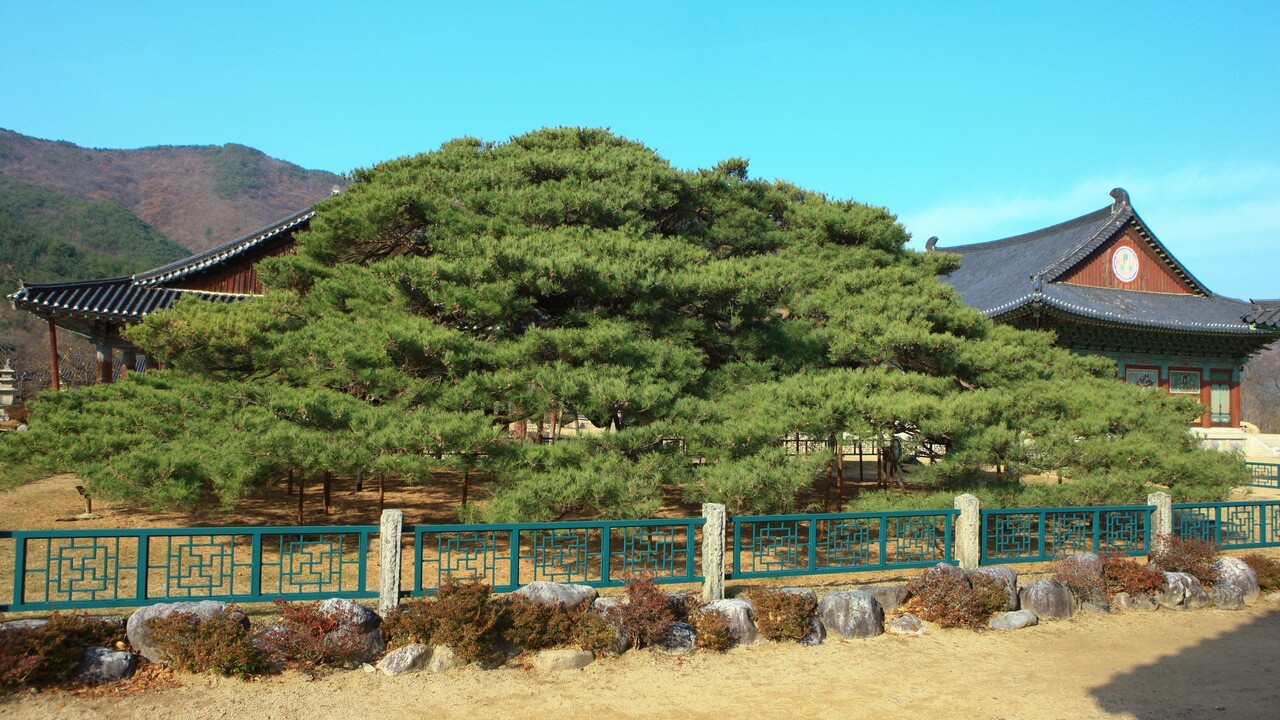
The pine extends sideways across the courtyard. Layers of green foliage remain below the rooflines behind it, with a protective fence marking the space around the tree. One canopy occupies a surprisingly broad area.
Unmunsa Temple is a Buddhist nunnery and educational temple in Cheongdo, South Korea. Its Weeping Pine gives a fall visit a strong visual focus alongside the long pine-lined approach and the buildings within the grounds.
The Korea Tourism Organization’s English guide identifies the protected pine among the temple’s natural and cultural features. Looking at its broad, low form offers a different experience from gazing upward at a tall forest tree.
The surrounding details bring other scales into view: stonework beneath a tiled wall, painted timber in an open pavilion and persimmons against a clear sky. Fall can be read through those differences as much as through leaf color.
Unmunsa Temple’s pine-lined approach
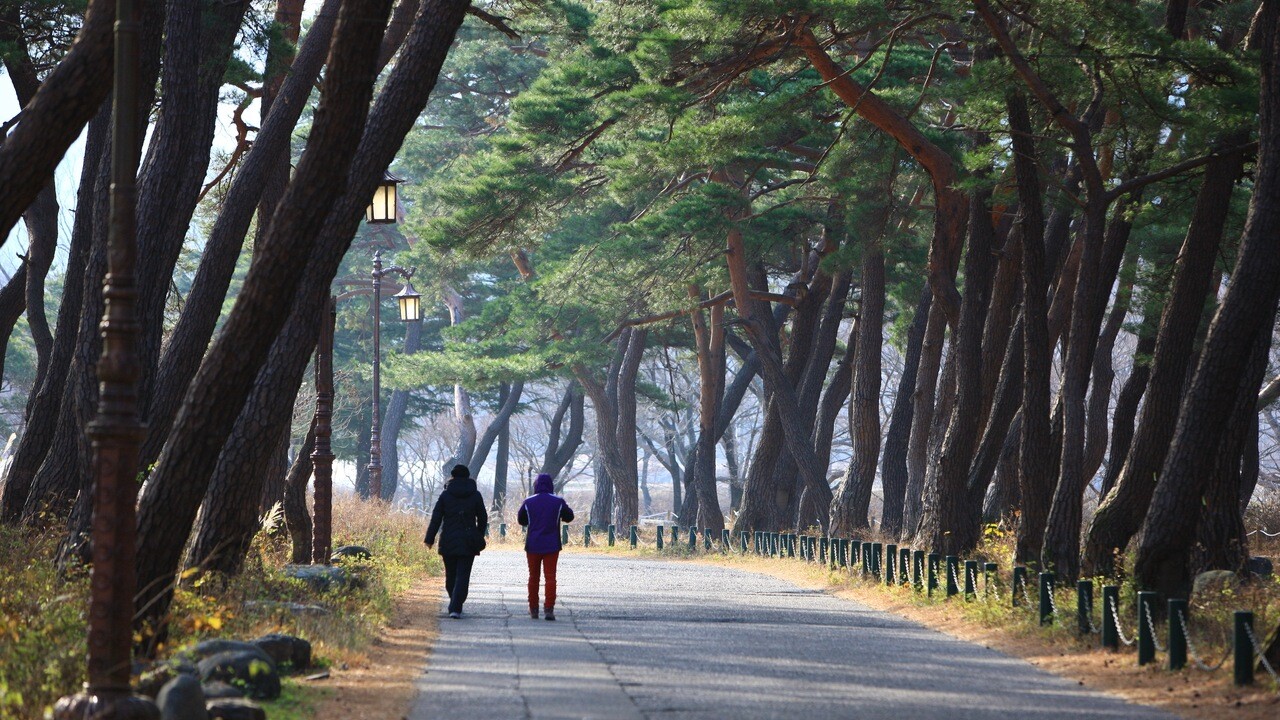
Trunks lean toward the route from both sides, and branches overlap overhead. Light and shade divide the surface below. Figures farther along the road make the depth between the trees apparent.
This planting creates a long direction through the landscape. It contrasts with the Weeping Pine inside the grounds, whose branches spread outward across a more concentrated space.
Evergreen foliage does not remove the season from the view. Dry grasses and fallen leaves add yellow and brown along the edges, while small openings of sky break up the canopy.
A low wall beneath the trees
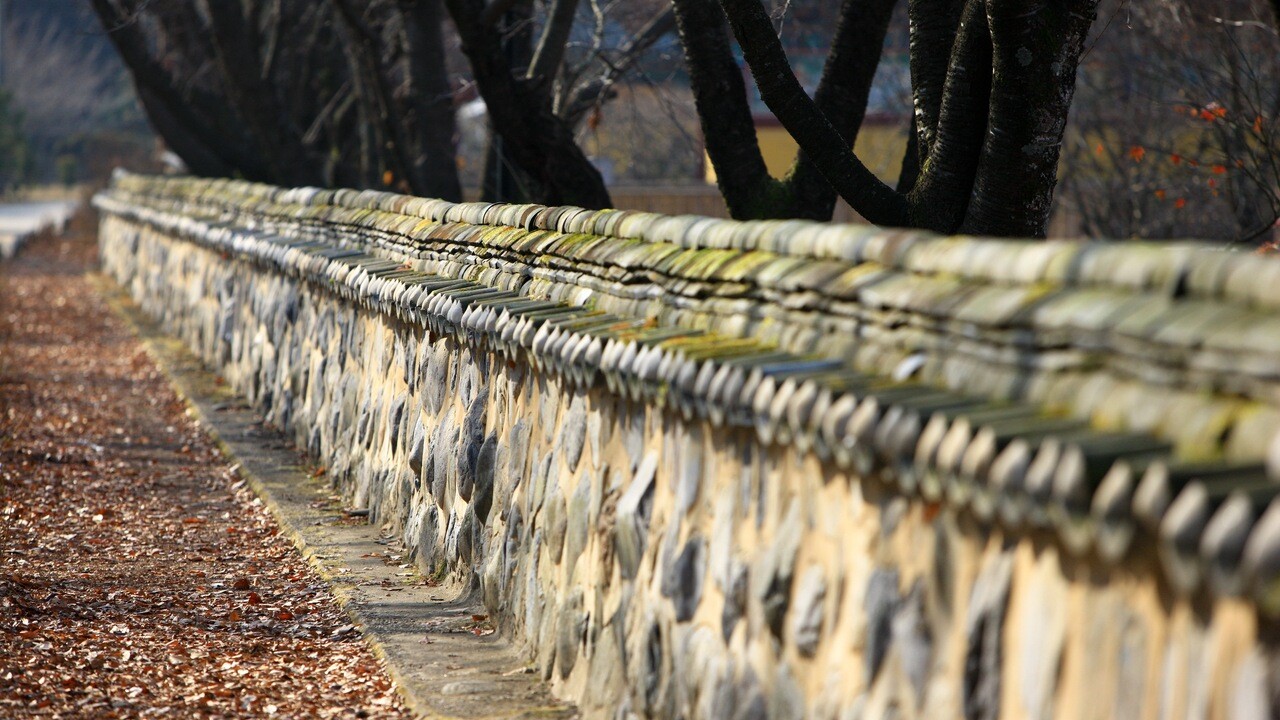
Different-sized stones support a neat line of tiles. Near the camera, their rough surfaces are distinct; farther away, they merge into a continuous boundary beneath the trees.
Because the wall is low, parts of the canopy remain visible above it. The structure divides space without replacing the larger wooded setting.
Fallen leaves and moss on the tile edges bring smaller textures into the view. They offer a quieter architectural subject than the front of a major hall.
Open columns at Manseru Pavilion
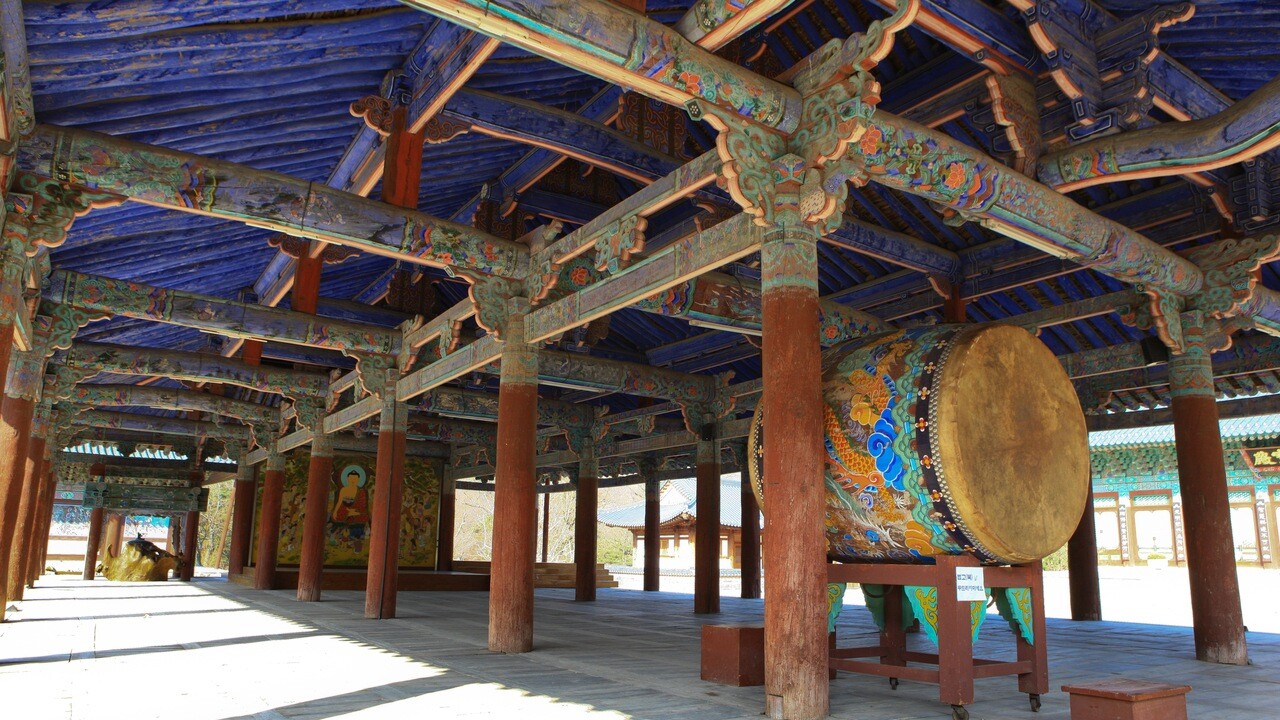
Red columns support blue and green painted timber. A large drum occupies one side, its round face contrasting with the repeated straight members of the structure.
The open gaps allow the brighter courtyard to remain part of the interior view. Architecture provides a frame, while light continues through it.
The temple’s own introduction describes its continuing role in Buddhist education and practice. Keeping to the open visitor route respects that setting while allowing the visible buildings and courtyards to be appreciated.
Stone tiers beside a long roofline
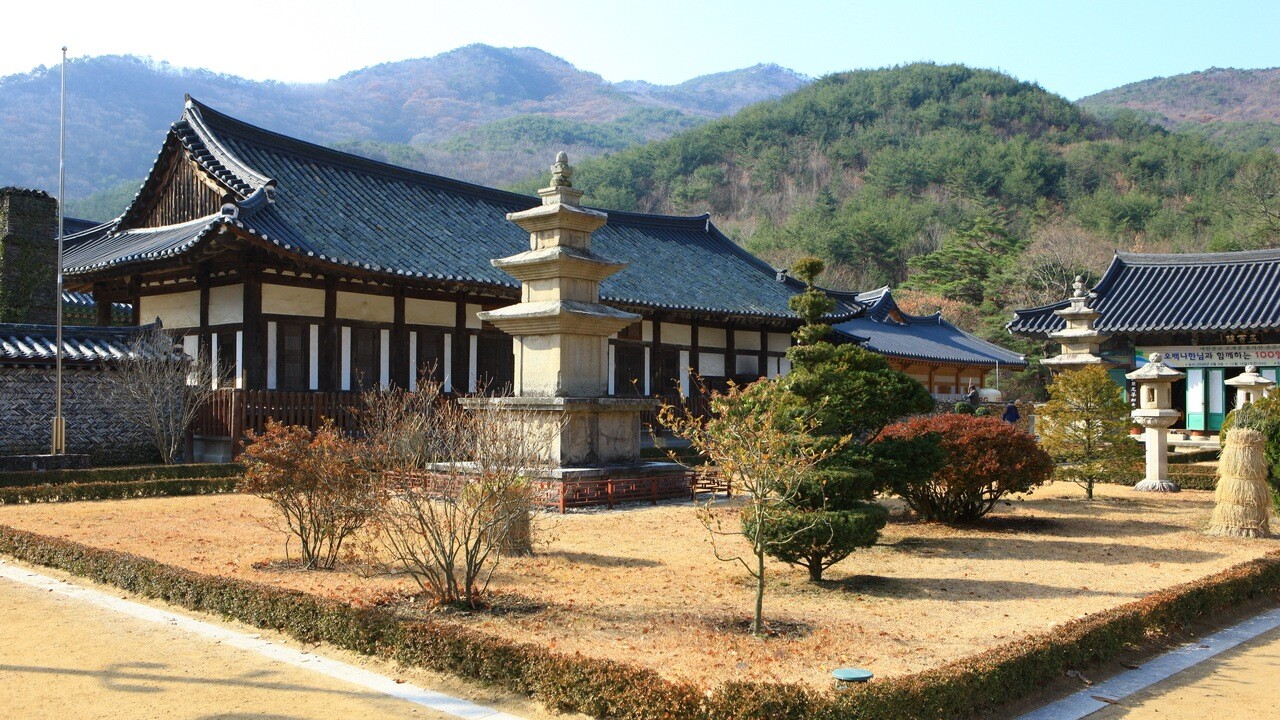
The pagoda rises in small stages while the hall spreads horizontally behind it. Low walls and open ground provide another level below both structures.
These forms add a different order to the pine’s irregular canopy. Stone tiers, repeated timber posts and extended eaves each create their own pattern within the grounds.
Looking between them helps keep the temple from becoming a single generalized image of old buildings. Its character lies partly in the different materials and scales placed close together.
Persimmons against an open sky
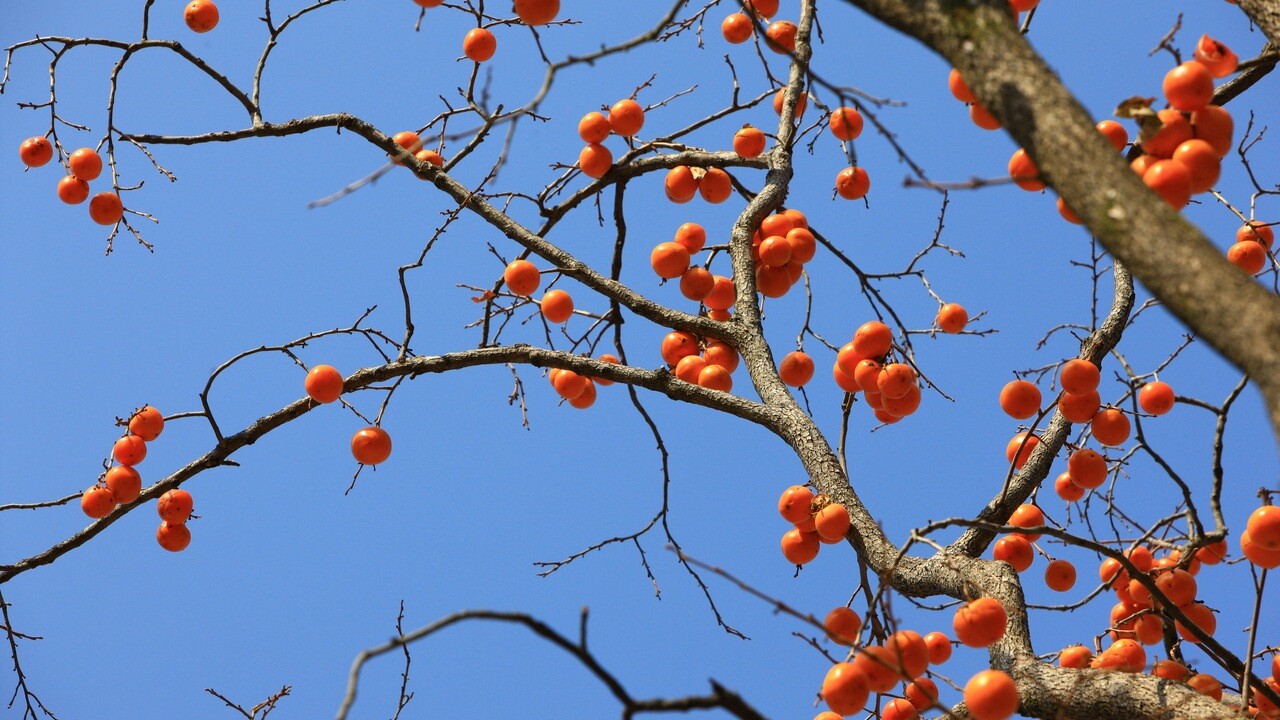
With few leaves around them, the orange fruit stands out against blue sky. Fine branches remain easy to trace between the larger shapes of the persimmons. The scene feels lighter than the dense pine canopy.
For another Gyeongsangbuk-do temple landscape, Buseoksa’s stone steps and mountain views offer a useful comparison. Its rising approach encourages a distant outlook, while Unmunsa often brings attention back toward a low tree or a nearby wall.
Unmunsa suits a fall visit centered on these changes of scale. The wooded approach, spreading pine and open timber spaces give it a coherent visual rhythm, with evergreen foliage and bare fruiting branches showing different stages of the season.
You May Also Like
by Google Adsense