Wiyangji Pond in Miryang: Wanjaejeong Pavilion and Quiet Fall Reflections
Wiyangji Pond, Miryang — five small islands, a tiled pavilion, and waterside views in a rural landscape
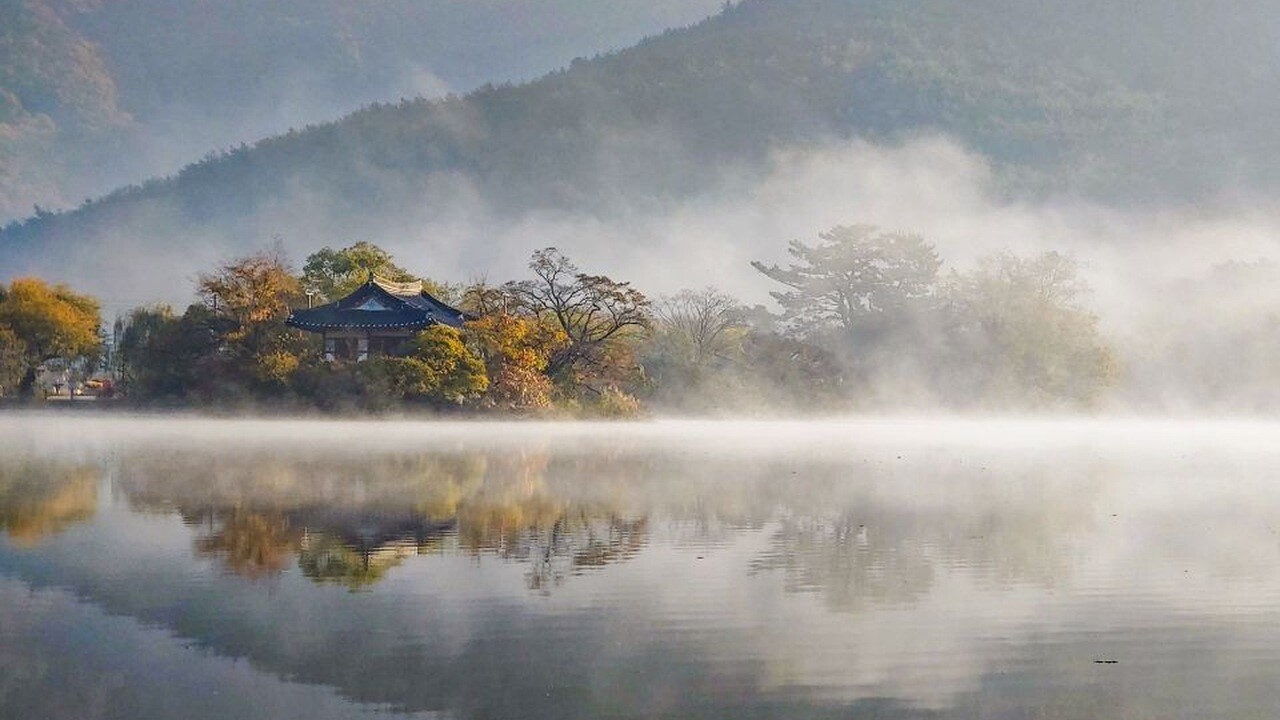
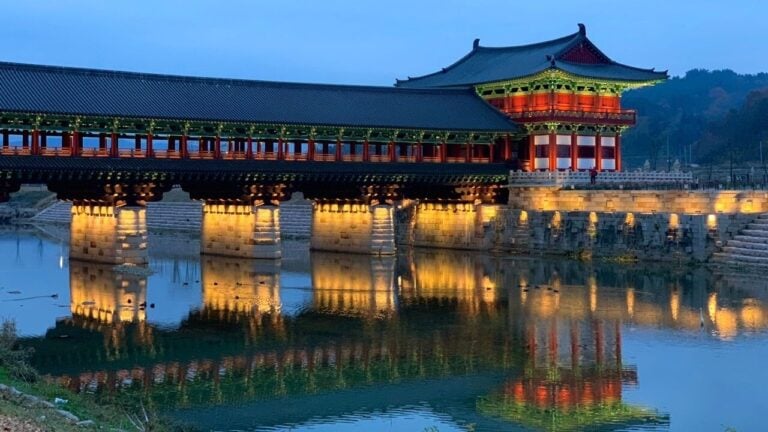
A tiled pavilion can appear twice at Wiyangji Pond: once among the island trees, and once in the water below. When the surface settles, the reflection brings an otherwise distant building into the foreground.
Wiyangji Pond, also called Wiyang Pond, sits in Bubuk-myeon, Miryang, in South Gyeongsang Province. Five small islands and Wanjaejeong Pavilion give this agricultural reservoir its distinctive outline.
The pond is especially known for its spring fringe-tree blossoms. Fall shifts the emphasis toward branches, changing leaves, and the relationship between the pavilion and the water. It is a different reason to make the trip.
For an early-November visit, think of a waterside landscape rather than a guaranteed wall of peak color. Mist and mirror-like water depend on conditions. The changing view of the islands remains interesting without either.
Wiyangji Pond belongs to a working rural landscape
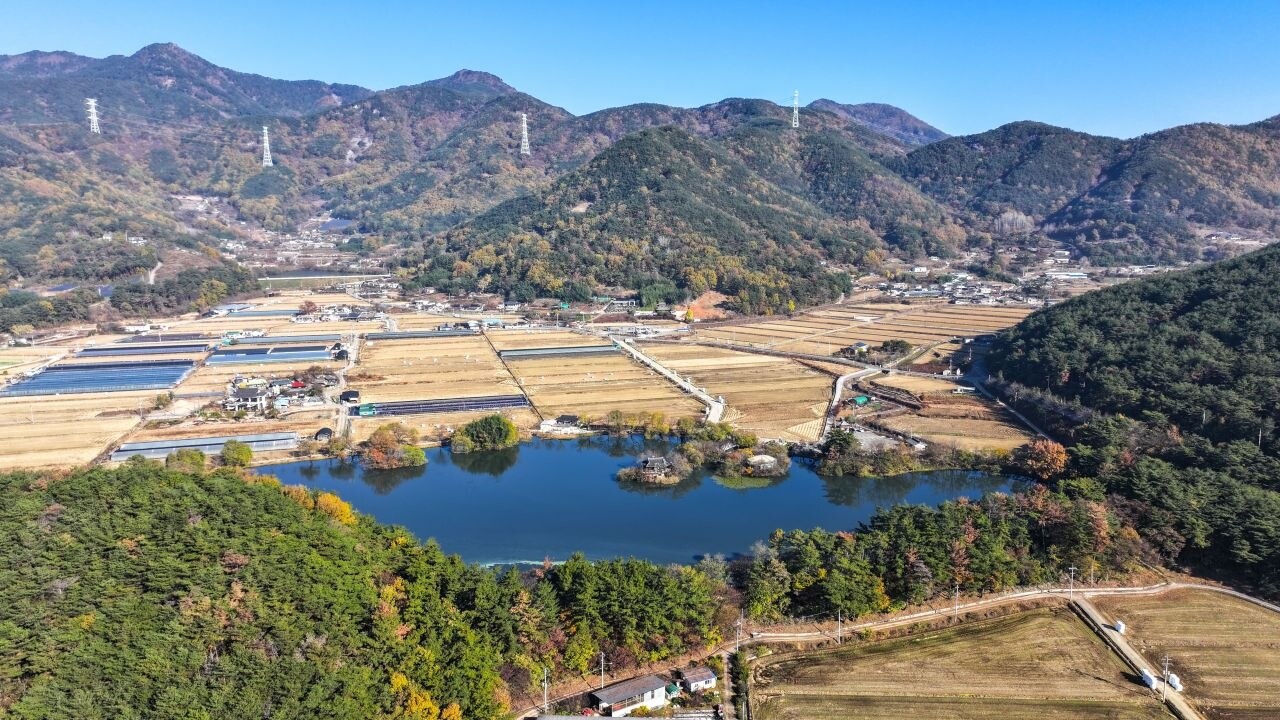
The aerial view places the pond among fields, roads, and low mountains. It can look like an ornamental garden at first, but the water originally served agricultural needs. The surrounding farmland is part of the place’s story.
Miryang City explains the name Wiyang as carrying the idea of serving the people. That background adds another layer to the islands and pavilion: this attractive body of water also had a practical role in local life.
At ground level, the complete outline disappears. Instead, you see part of an island between trunks, a roof above branches, or the mountain ridge across the water. The walk is made of these partial views, rather than a single elevated panorama.
Find the pavilion between the island trees
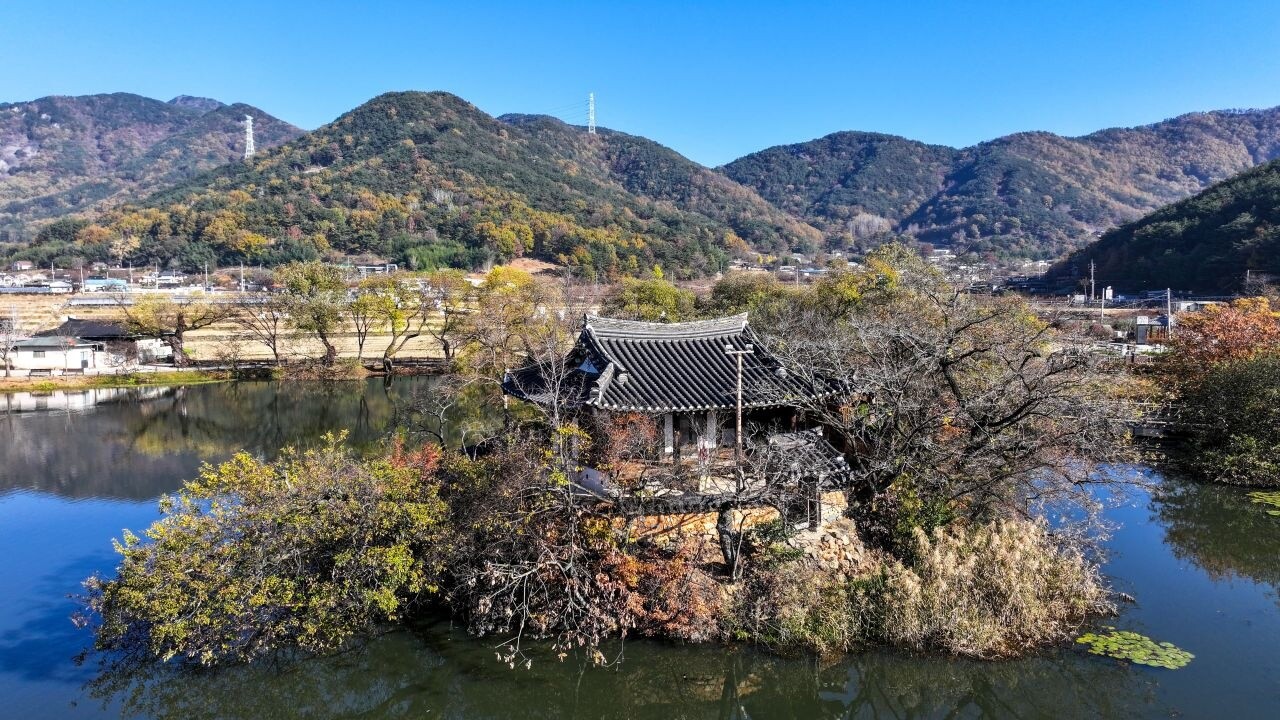
Wanjaejeong sits within a cluster of trees on one of the small islands. A closer view reveals the tiled roof and eaves, while a more distant position lets branches overlap the building. The pavilion changes shape as the foreground changes.
The city’s Wiyang Pond introduction identifies the five islands and pavilion as the defining features. This is a useful way to read the landscape: watch how those elements line up instead of searching only for one familiar photograph.
Viewing the pavilion from the shore does not depend on entering it. Keep a distinction between the public waterside experience and access to the building itself. The stretch of water in between is part of the composition.
Let the water determine the view
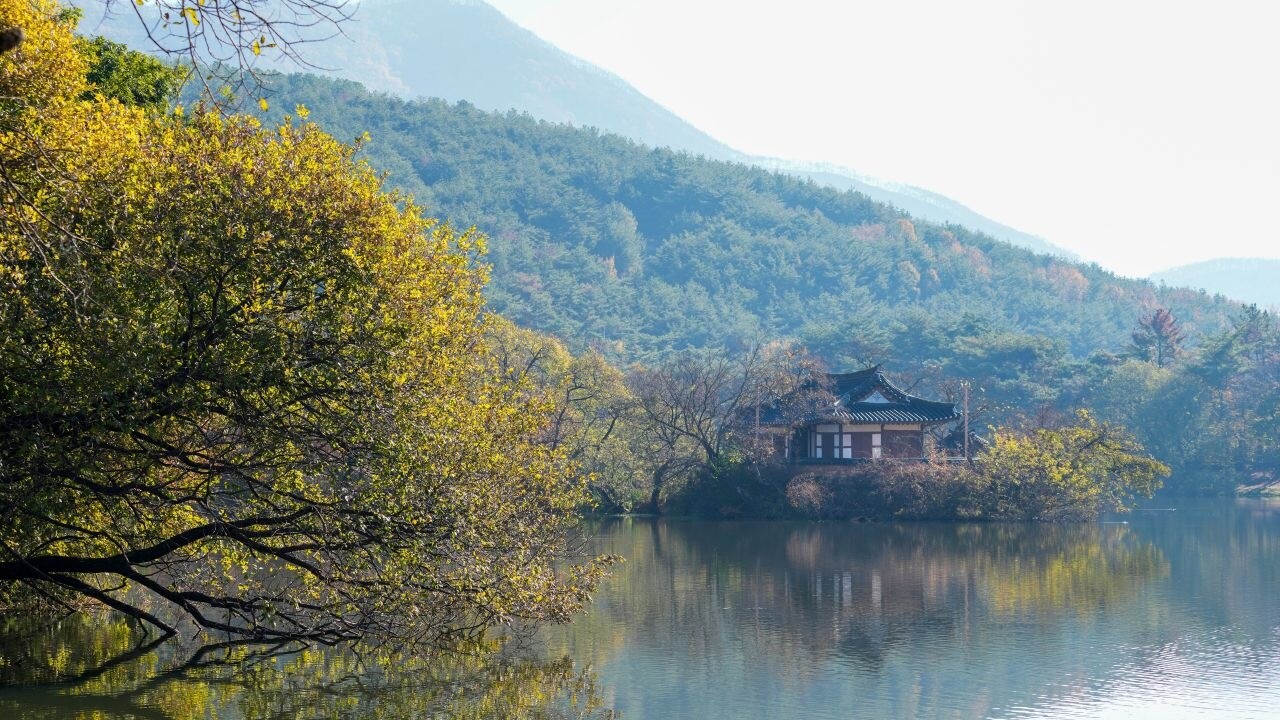
A reflection can extend the trees downward, doubling the lines of branches and roof. With nearby leaves framing the water, the small pavilion becomes the far point in a layered scene.
A little wind changes that arrangement. Ripples loosen the roof’s outline, and a different light angle can bring out the water’s color instead of a clear reflection. These variations are part of visiting a pond, rather than a failure to find the advertised view.
Fall also proceeds unevenly among the trees. Yellow leaves, green foliage, and sparse branches may share the same scene. An early-November travel window is a planning choice, not a verified peak-color date for the whole pond.
Turn toward the shore as well as the islands
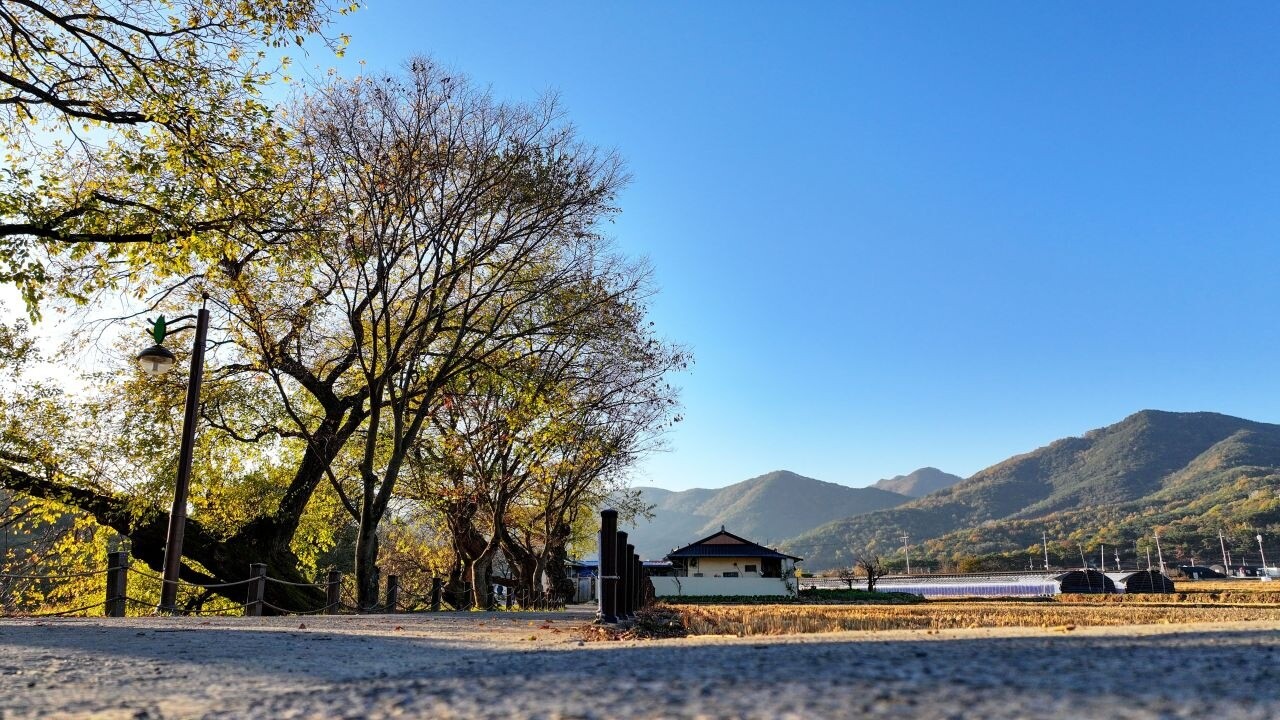
A low stone wall and trees along the edge give the walk its closer details. After concentrating on the islands, looking sideways brings trunks, branches, and the path itself back into view.
Moving along the water changes the foreground. A tree may conceal part of the pavilion, then a gap opens and the mountain ridge becomes visible behind it. Those small shifts give a short-looking shoreline more to hold your attention.
Travelers who know Wiyangji from photographs of white spring flowers may find fall surprisingly spare. The absence of blossoms makes the roofline and the trees’ structure easier to notice. Water and branches carry the scene.
Keep the visit focused on the water’s edge
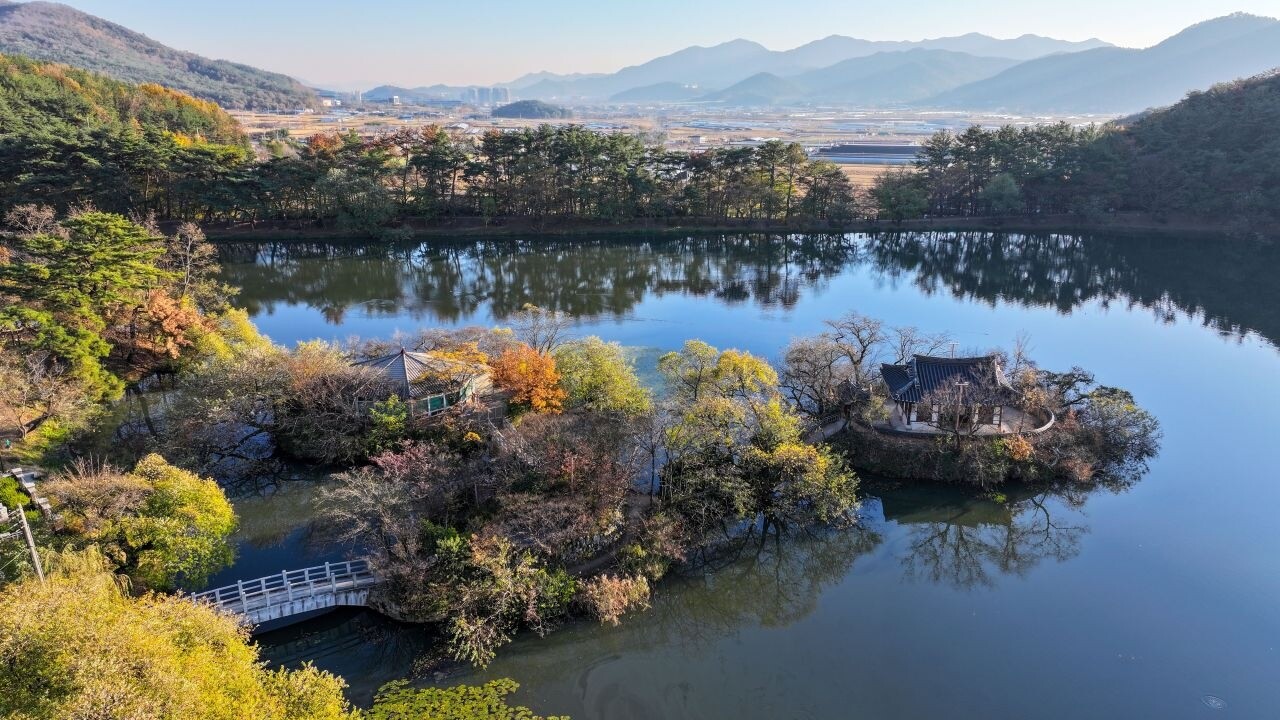
From the air, the bridge and islands form a clear pattern. On foot, you read that pattern through openings between the trees. The aerial photographs show the setting; they do not describe an elevated viewpoint available throughout the walk.
A walk with views of the islands and pavilion is different from access to every island structure or the building’s interior. Follow the areas actually open to visitors and enjoy the views from the shore.
For another southern Korean landscape shaped by water, compare Upo Wetland’s woodland paths and levees in Changnyeong. Wiyangji’s compact islands and pavilion offer a different scale from the wetland’s broad expanses.
Wiyangji suits travelers who want to slow an itinerary down for a while. You do not need to fit every island into one photograph. A roof, its reflection, and the trees around them can be enough to anchor a fall stop in Miryang.
You May Also Like
by Google Adsense