Daeheungsa Temple in Haenam: Mountain Courtyards, Stone Walls and Korea’s Tea Heritage
Daeheungsa Temple — a working Buddhist monastery beneath Duryunsan Mountain, with courtyards and a long connection to Korean tea culture
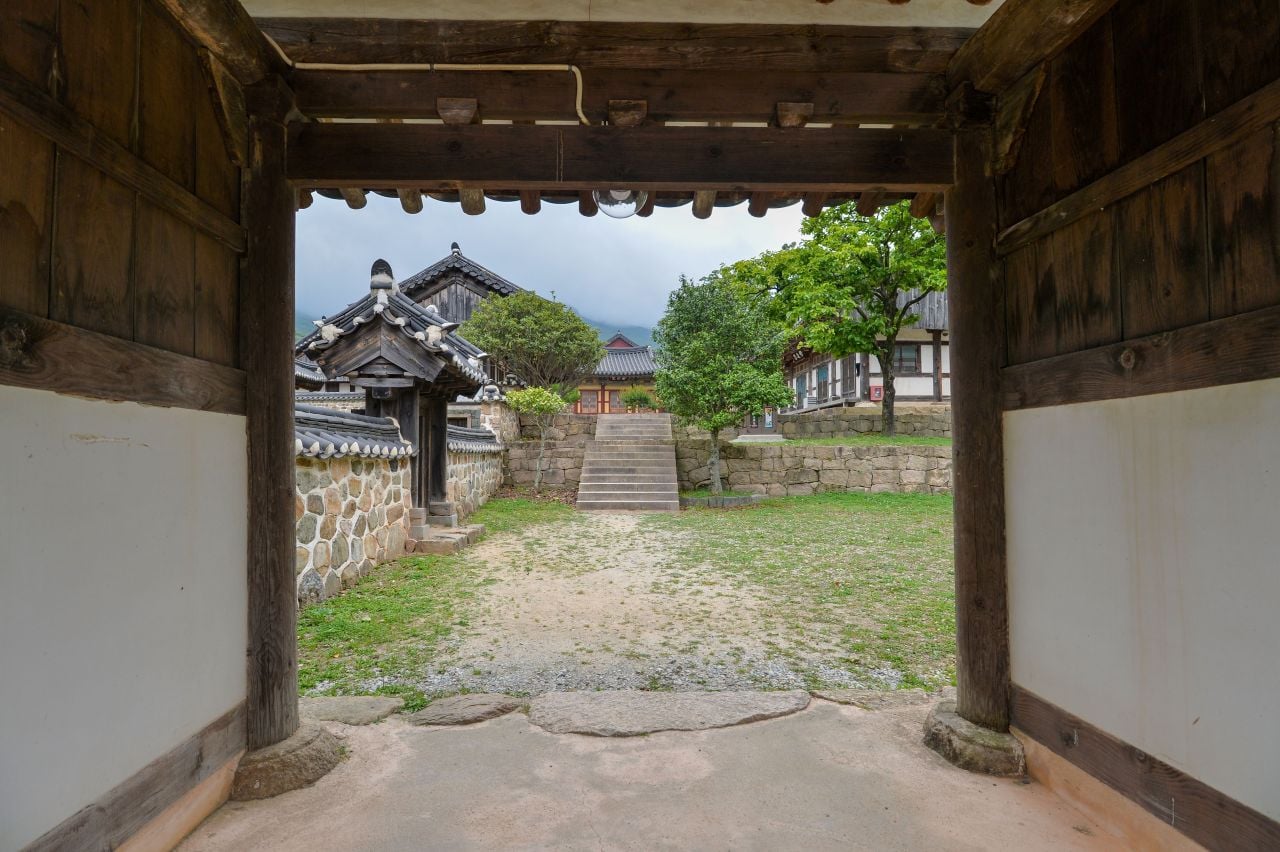
A gateway frames a small courtyard, with stone steps and another roof farther inside. At Daeheungsa Temple in Haenam, a building’s surroundings are part of the view from the first doorway.
The monastery lies beneath Duryunsan Mountain. Its grounds open through gates, low walls, and separate courtyards, so the picture changes as the viewer moves between enclosed and open spaces.
For a fall visit, that layout offers a way to appreciate the temple beyond a single foliage scene. Follow the lines of a roof, look through a doorway, then notice how the mountain reappears behind another hall. The architecture gives the walk a lasting framework.
Meet a different tradition at Daeheungsa Temple
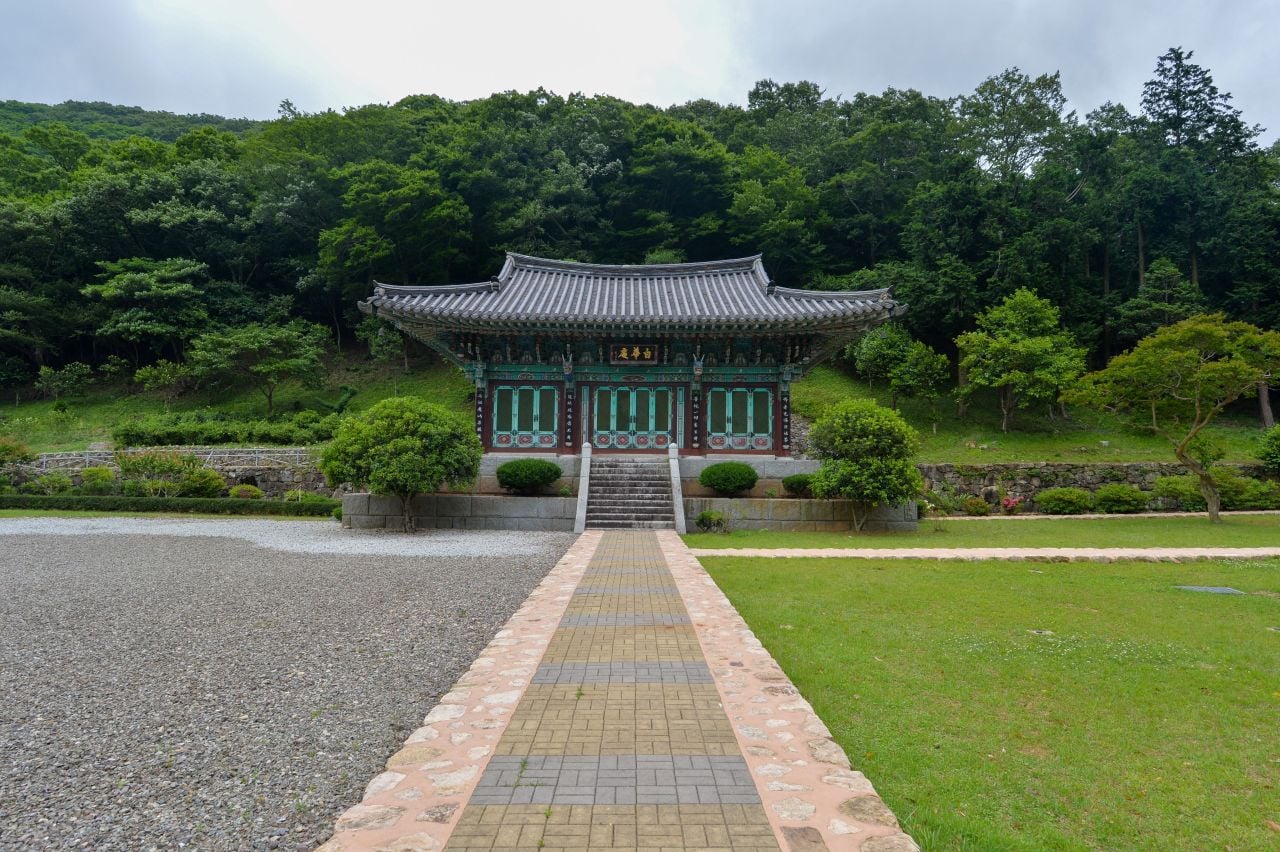
A straight stone approach leads to Pyochungsa Shrine. Its columns, doors, and signboard sit above the steps in a balanced frontal view, with trees rising behind the roof.
The temple’s official introduction describes Pyochungsa as a Confucian-style shrine, an unusual feature within a Buddhist temple. It honors Seosan Daesa, along with the monks Yujeong and Cheoyeong.
Different architectural traditions share the monastery’s grounds. Its northern, southern, and separate precincts also reveal a relatively free arrangement of halls and courtyards. Moving between them is part of the pleasure of reading the site on foot.
Trace the roofs above a low wall
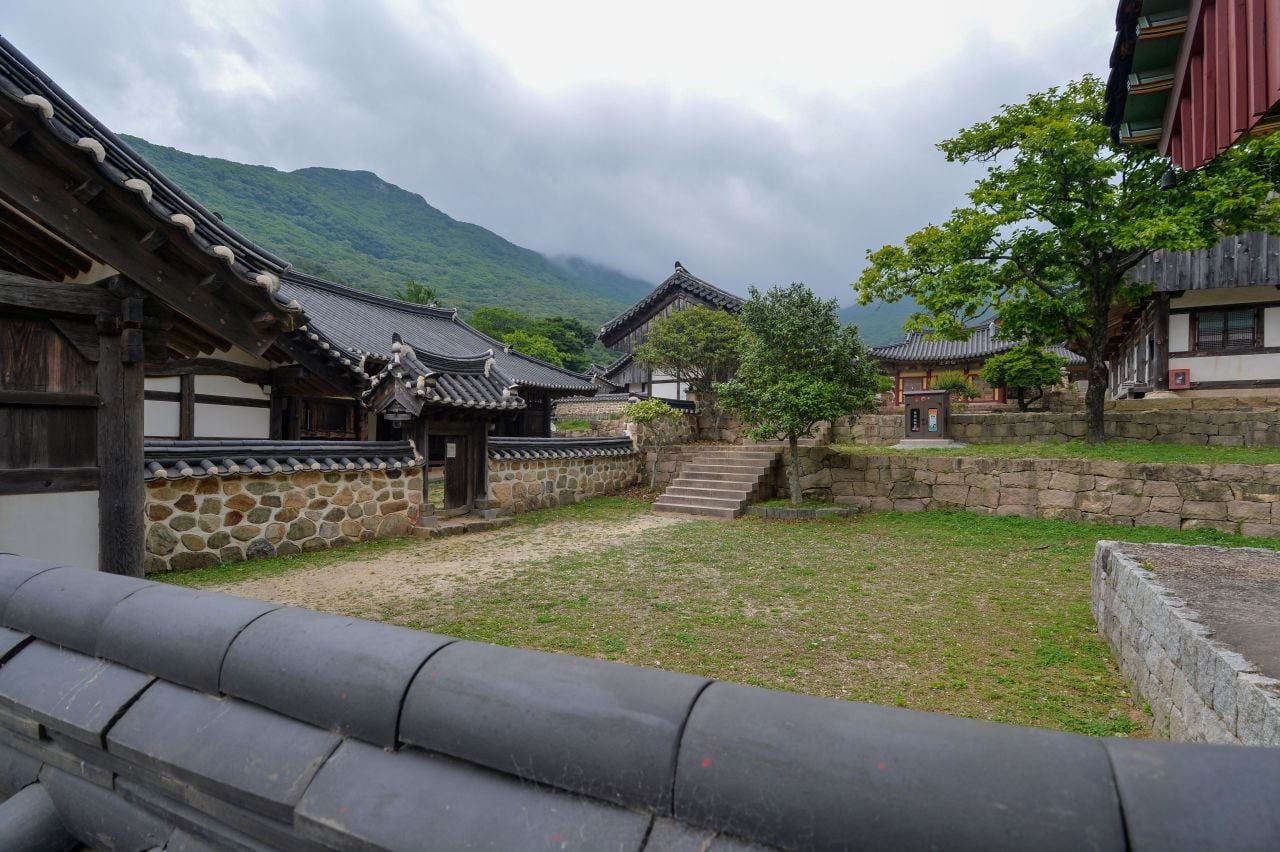
Along a low wall, the curve of the tiles continues in a narrow line. Beyond it, roofs face different directions and stand at different heights, hinting at spaces that are only partly visible.
Stone, earth, and wood meet at these boundaries. The end of a roof tile or the line of paving through a doorway gives the eye something smaller to follow after the broad view of a hall.
The spaces between the buildings matter as much as their facades. A patch of open ground sets off the next roof and makes the transition between courtyards readable. The temple becomes a composition of linked places rather than a checklist of monuments.
Read the mountain behind the side of a hall
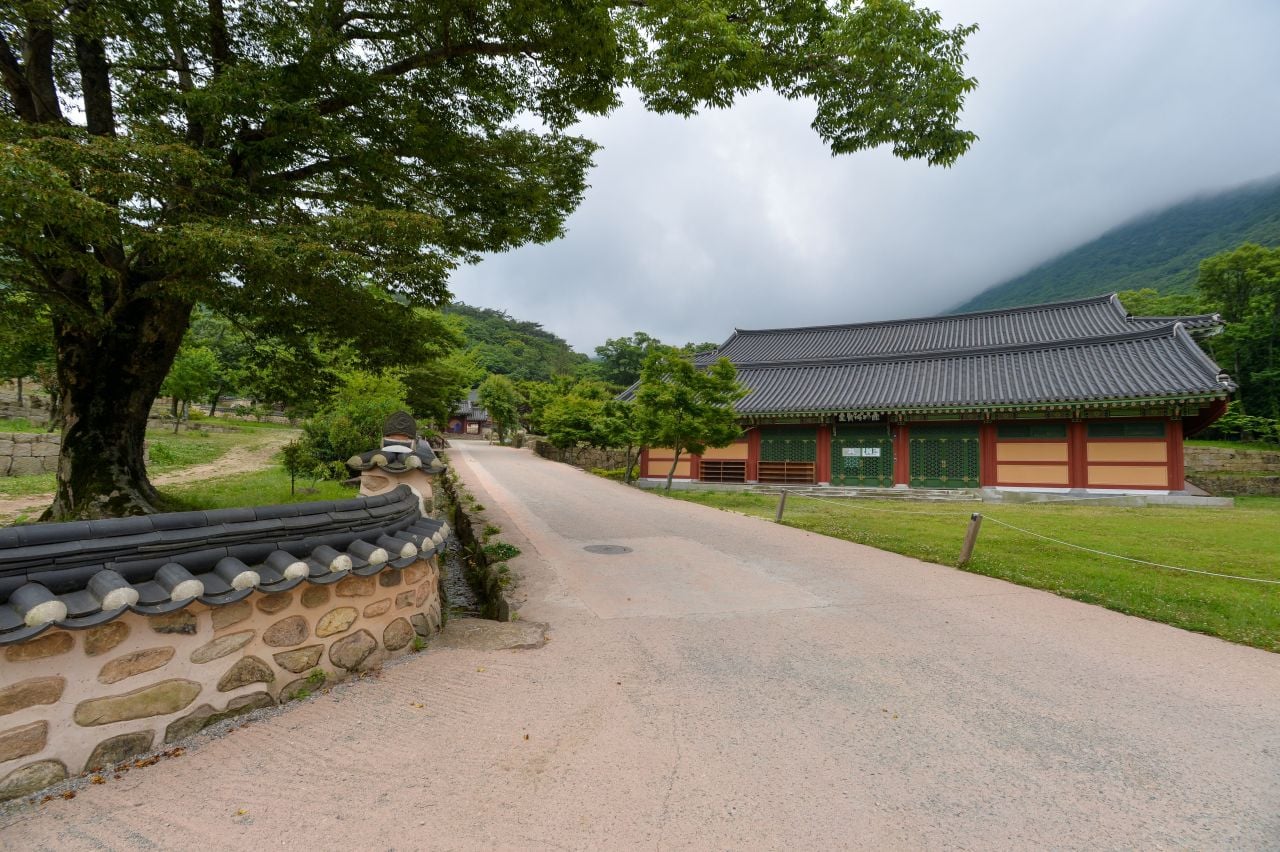
From beside a hall, the long line of the eaves takes over from the front facade. The mountain rises at a different scale behind it, placing the small courtyard within a much larger landscape.
Daeheungsa was inscribed on UNESCO’s World Heritage List in 2018 as part of Sansa, Buddhist Mountain Monasteries in Korea. That designation recognizes a living monastic tradition within its mountain setting.
The relationship is visible even in a view from the grounds. Horizontal beams and rooflines meet the irregular outline of the wooded slopes. Giving both elements room in the frame helps explain why the mountain is integral to the monastery’s character.
Pause at the meeting of stone, trees, and water
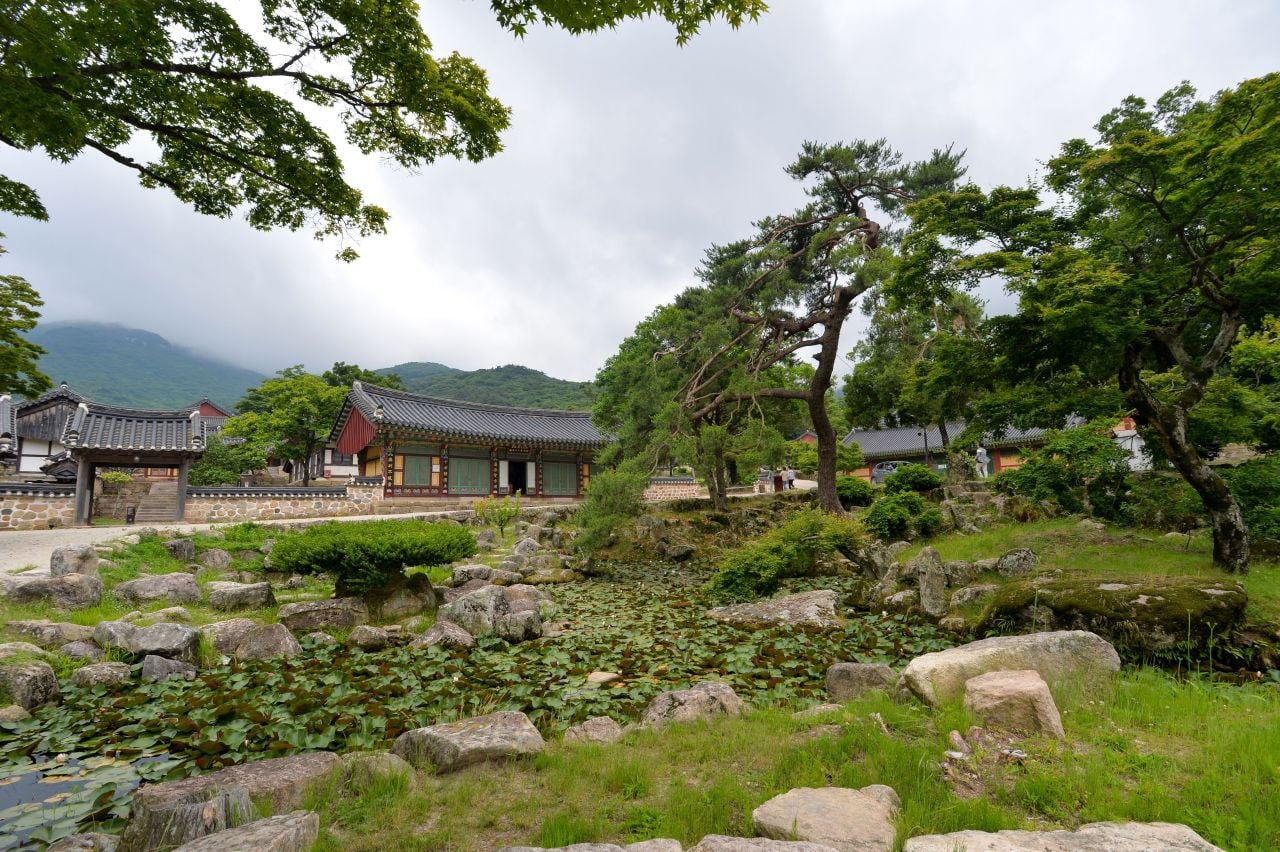
Near the watercourse, irregular stones and trees sit close to the orderly lines of the buildings. The textures are different, yet they share the same small scene between the halls.
The monastery’s history also brings together different strands of Korean Buddhism. It is associated with Seosan Daesa and the memory of monk soldiers, as well as Choui, a figure closely connected with Korean tea culture.
Choui practiced at Iljiam Hermitage, which is associated with Daeheungsa. That connection adds another dimension to the courtyards: tea, study, and religious practice form part of the place’s history. The courtyards give those stories a physical setting, from simple wooden details to spaces open to the mountain.
Notice the color above a working monastery’s courtyard
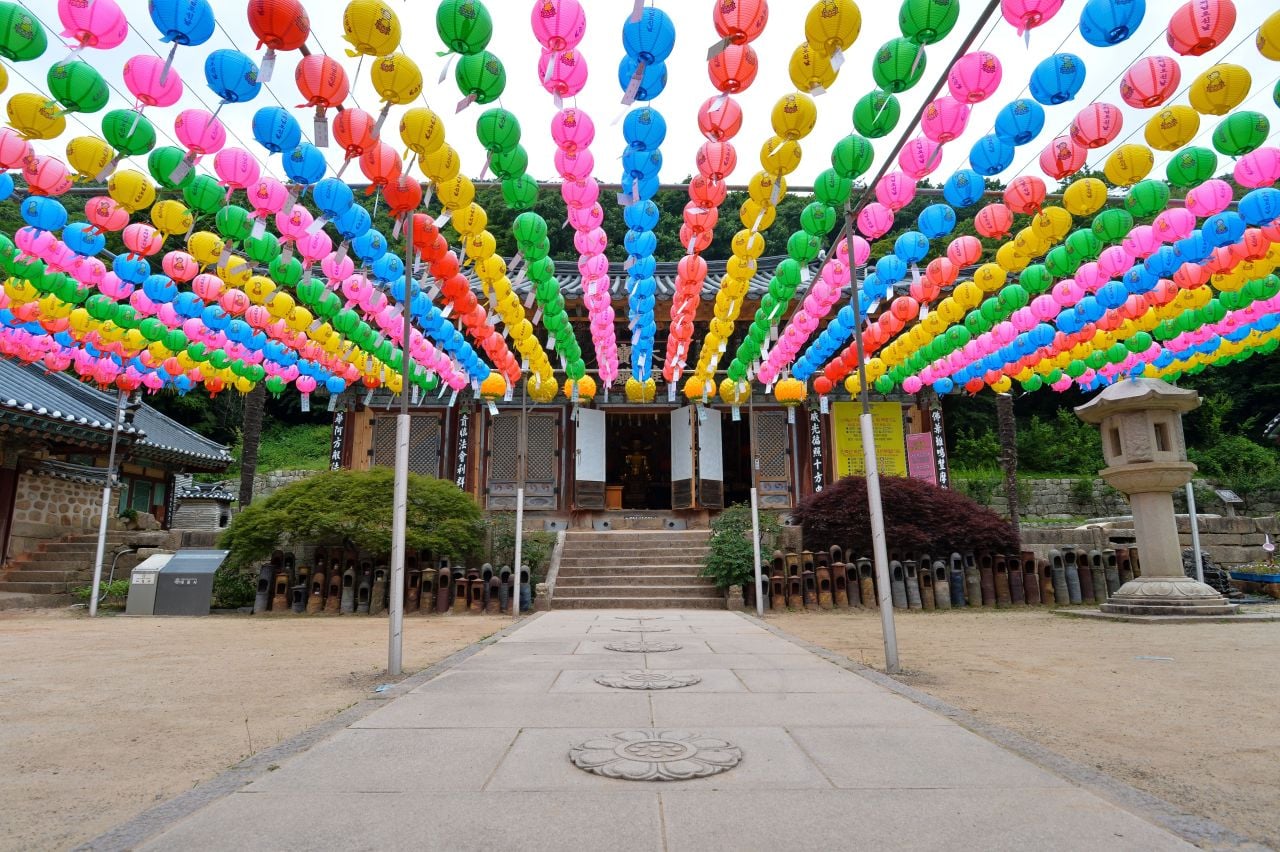
In a view with lanterns above the courtyard, their colors meet the painted details beneath the eaves. The open ground below and the closely spaced colors overhead create two very different patterns.
Daeheungsa continues to be a place of Buddhist practice. Korea Tourism Organization’s guide to Daeheungsa introduces the halls, the organization of the precincts, and Pyochungsa Shrine.
Another member of the same World Heritage inscription, Seonamsa Temple in Suncheon, offers a different relationship between bridges, gates, and courtyards. At Daeheungsa, the low walls and successive roofs keep drawing the eye back toward Duryunsan. It is that exchange between intimate spaces and a broad mountain setting that gives the walk its particular shape.
Daeheungsa Temple rewards attention to the spaces between its halls. Stone paths, gateways, water, and low tiled walls lead the eye from one courtyard to another, while the mountain holds the larger view together. It is a thoughtful focus for a Haenam outing centered on landscape and cultural history.
You May Also Like
by Google Adsense