Hongcheon Ginkgo Forest: Tree Rows, Leaves and Fall Scenery
Hongcheon Ginkgo Forest — tree rows and leaf shapes in a privately cultivated woodland
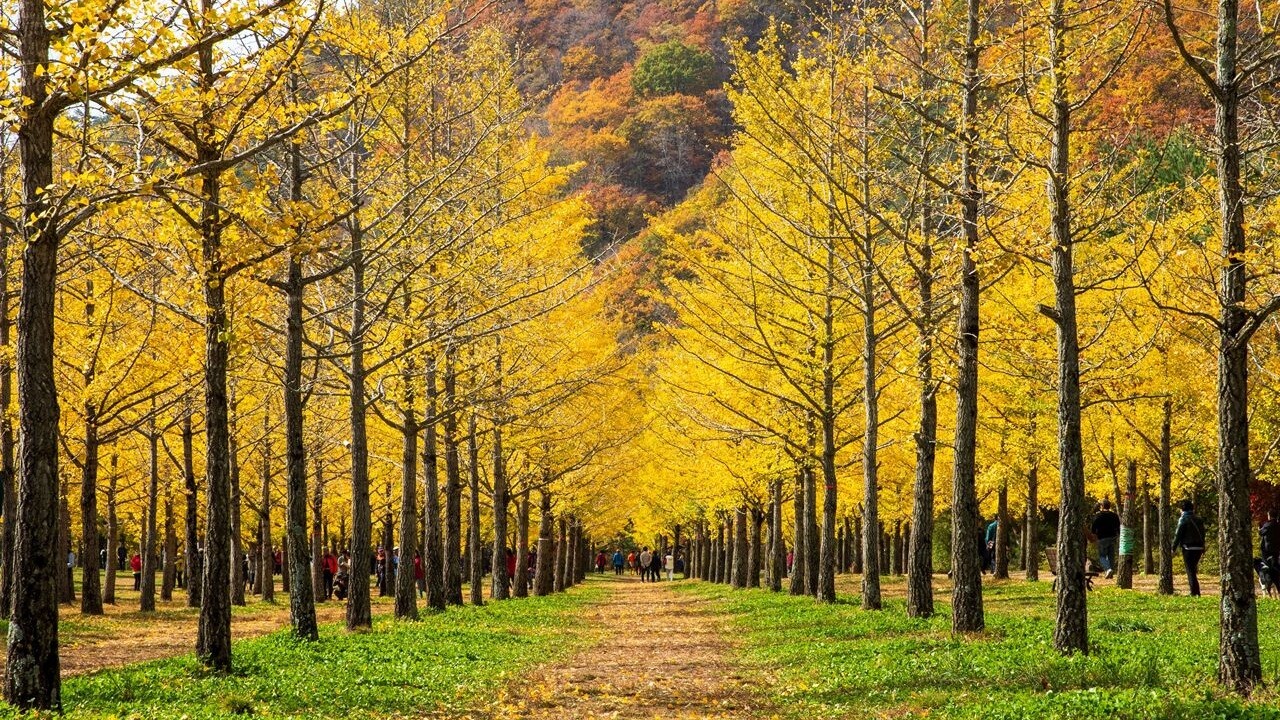
Rows of trunks make multiple paths appear inside Hongcheon Ginkgo Forest. Look down the center and the trees converge in the distance; look sideways and the same rows spread into another pattern. The layout gives the woodland its identity before any discussion of peak color.
Hongcheon Ginkgo Forest is in Gwangwon-ri, Nae-myeon, Hongcheon County, in Gangwon Province. Korea Tourism Organization describes approximately 2,000 ginkgo trees in a privately cultivated forest. It is a different kind of destination from a public riverside promenade lined with a single row of trees.
Official tourism information describes October as the usual opening season. Whether the forest will open in 2026, and its opening dates, have not been verified from an official announcement. A recurring seasonal listing is not confirmation of entry this year. This article introduces the woodland scenery, not currently available visiting dates.
Its fall scenery comes from the structure of the tree rows as well as the leaves. No verified current peak date is established here. The photographs illustrate those forms without establishing current leaf color or access.
The approach contains more than one fall color
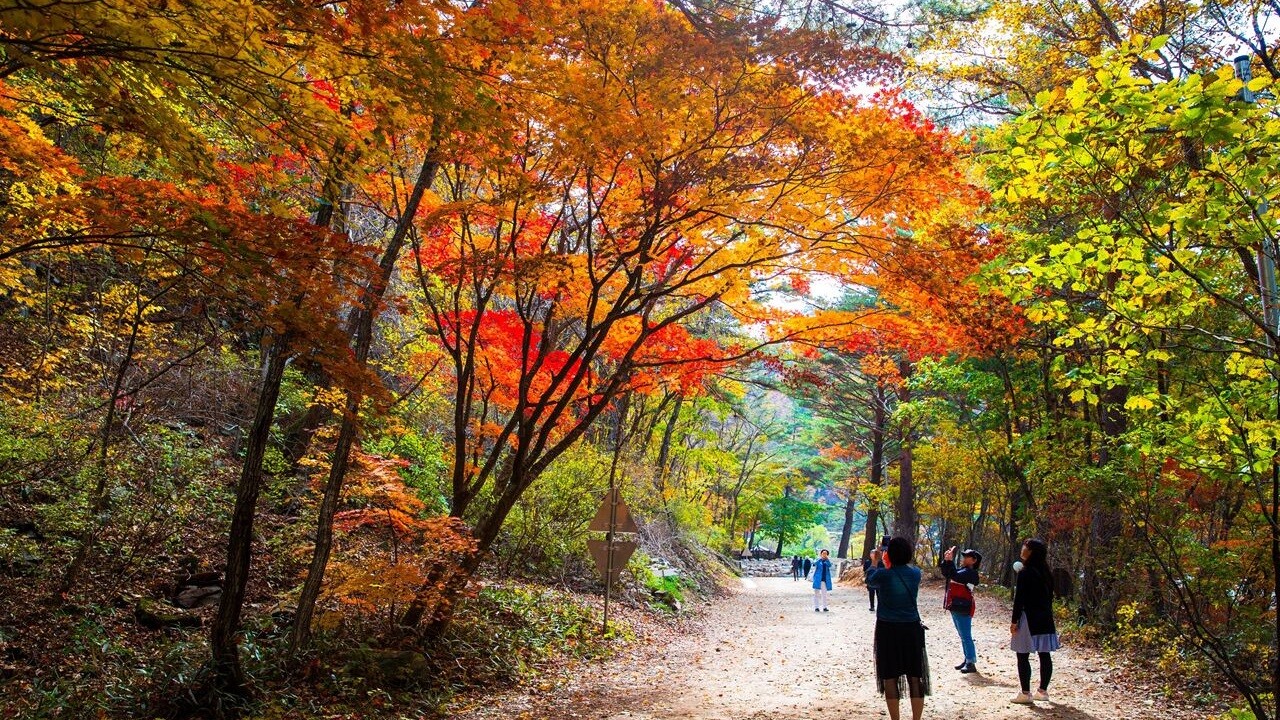
The photographed path includes red foliage and trees that still hold green leaves. The forest is not one uninterrupted yellow surface, and the route into its ginkgo rows can have a different character from the main view.
People on the path give the trees a sense of scale. From a distance, foliage can become an abstract band of color; a walking figure makes the width of the path and the height of nearby branches easier to understand.
The private setting changes how to plan. A scene of visitors inside the forest is not evidence of unrestricted access on every date. Seasonal permission to visit is part of the destination, not a minor detail to assume after choosing it.
Hongcheon Ginkgo Forest is defined by repeated rows
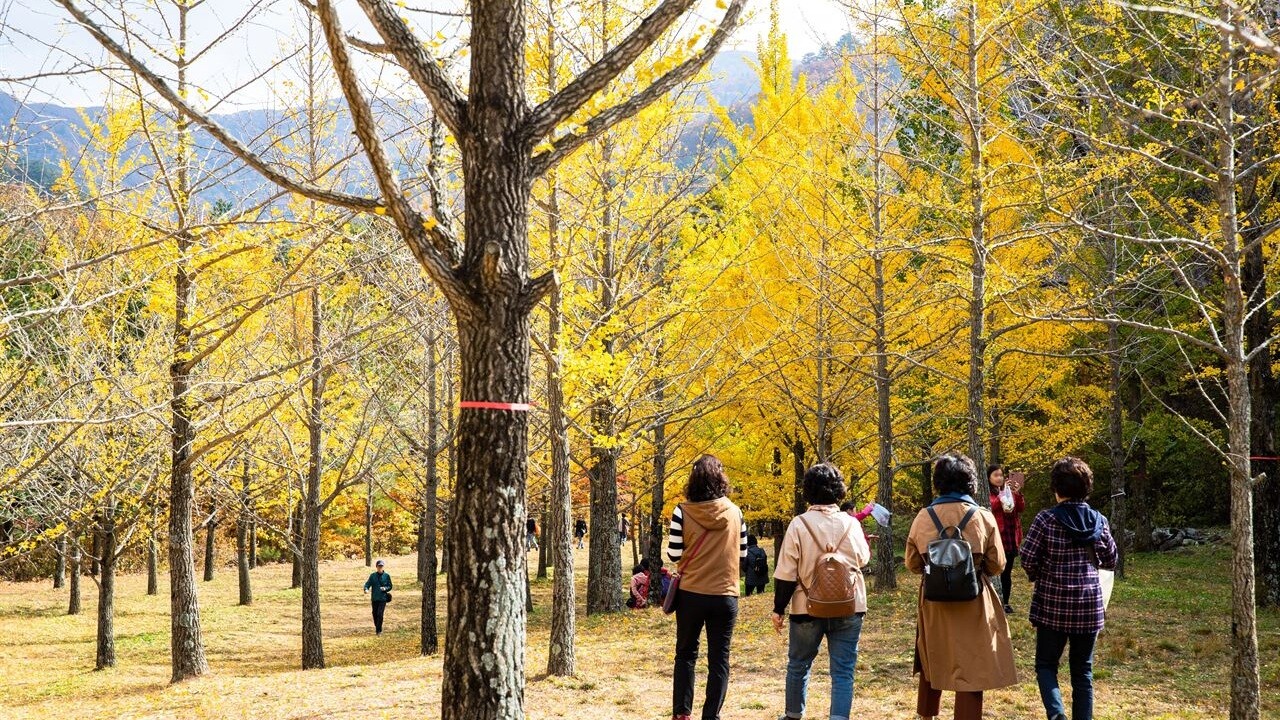
Korea Tourism Organization’s English description places the trees roughly five meters apart, about 16 feet. That repeated spacing helps explain why a view down one aisle feels different from a view across several rows.
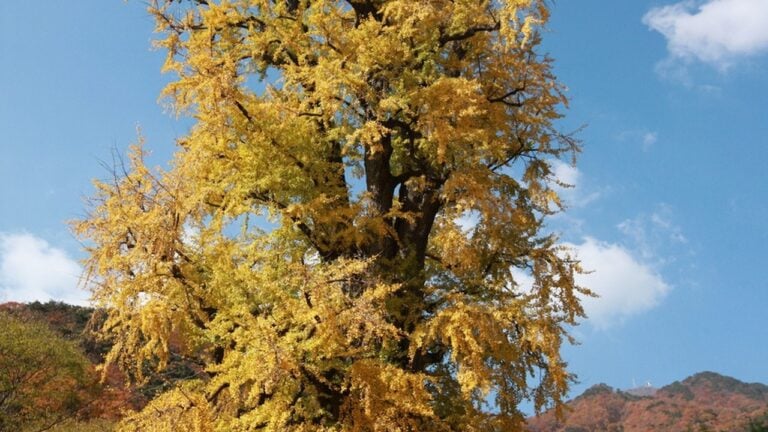
A single large ginkgo tree draws attention to its trunk and canopy. Here, the space between trees is equally important. Nearby trunks frame the more distant ones, producing depth even when the foliage is not uniformly bright.
This is a useful distinction for travelers comparing fall destinations. The attraction is a woodland you look into, rather than a long waterfront route with changing river views. That spatial pattern distinguishes the forest from a riverside ginkgo road.
Look closely at the fan-shaped leaves
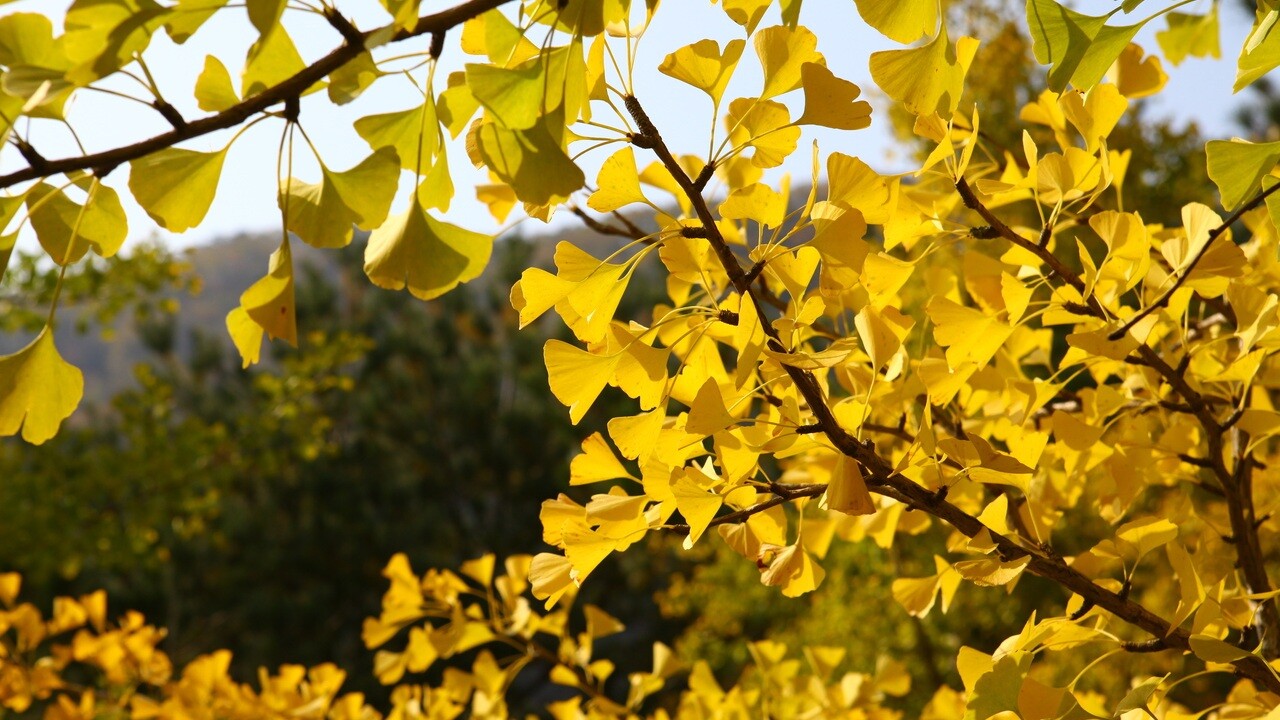
At close range, the broad yellow canopy breaks into small fan-shaped leaves. Branches overlap, and openings between the leaves reveal the forest behind them. A detail view adds something that a wide shot of an aisle cannot show.
Leaf color can vary across trees and across the season. Green and yellow may share a view, while weather and elevation influence the progression. A broad regional forecast cannot establish the exact condition of a particular tree here.
Treat a predicted peak as a forecast rather than a guarantee. The tree rows and leaf shapes remain useful ways to understand the woodland scenery. That leaves room for an autumn scene that differs from a fully yellow promotional photograph.
The forest floor becomes part of the view
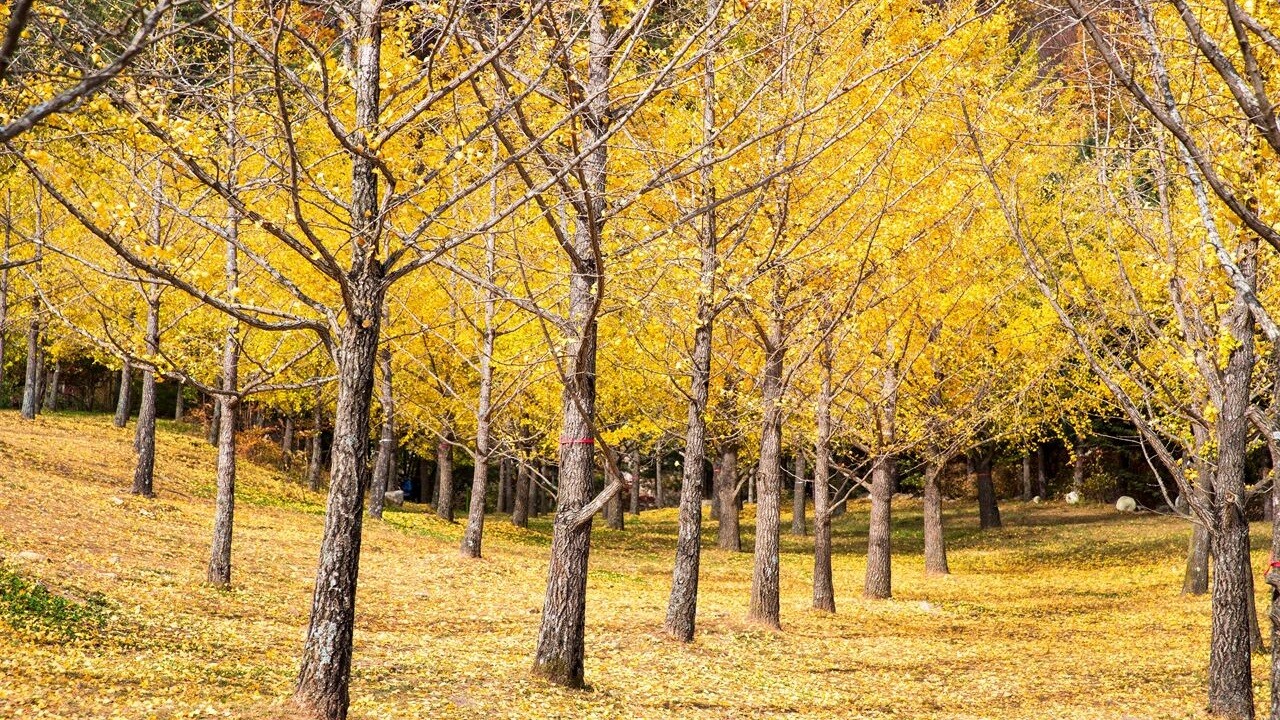
Lower your gaze and the forest gains another layer. Fallen leaves collect between trunks, while shadows repeat the spacing of the trees. The ground can become as visually important as the canopy overhead.
This changes the way a later-season scene reads. Fewer leaves on branches can make the rows more visible, while more leaves below them create a different texture. Neither the depth of leaf cover nor the timing of that change can be promised in advance.
Looking at the forest floor, the trunks and the canopy in turn gives a more complete picture than one tunnel-like photograph. The woodland’s defining pattern continues at several heights.
Separate photographed scenery from current access
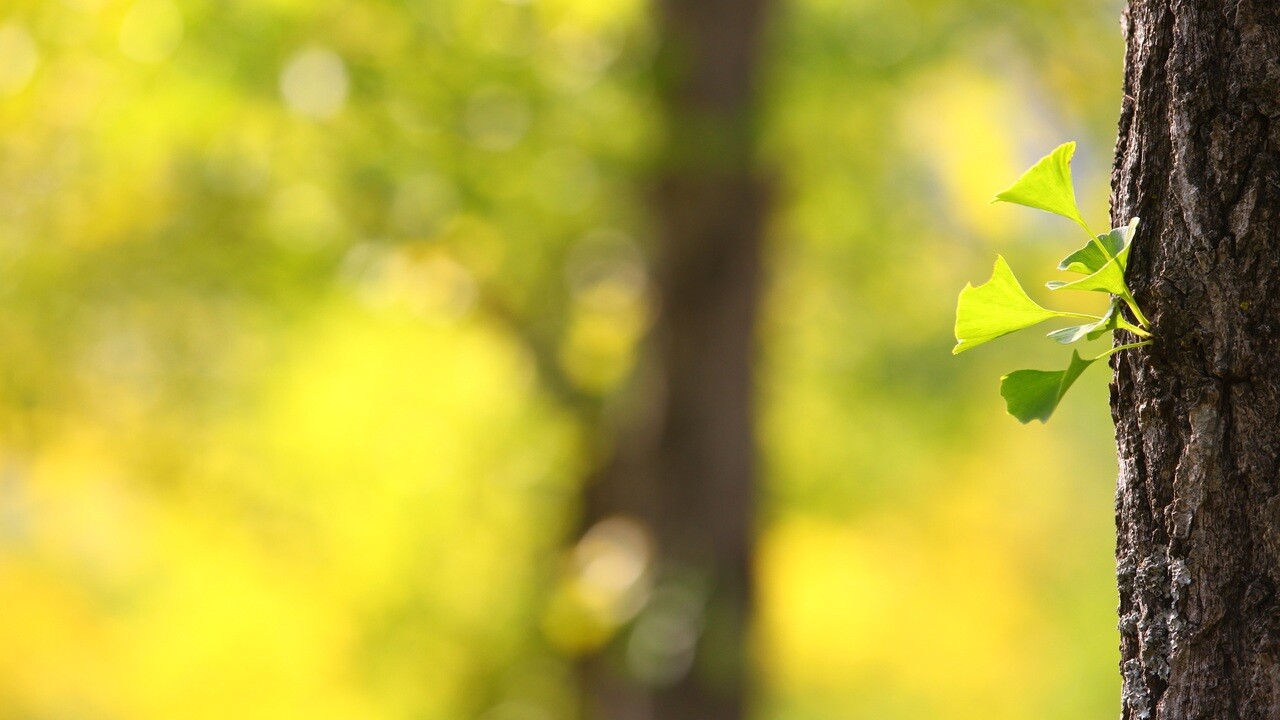
The official English forest overview identifies the location and recurring October access. The Korean-language KTO visitor listing gives +82-33-433-1259 as the inquiry number for seasonal entry details. These general listings do not establish whether the forest is open in 2026 or when entry is permitted. Any travel plan requires this year’s official confirmation from the operator or Hongcheon County.
For a different woodland composition, compare the setting with Mungwang Reservoir’s ginkgo trees and reflections. That is a separate destination in Goesan, with water and reflected trees shaping the view. The two settings have different geography and visual character.
Hongcheon’s photographed woodland is built around repetition: trunks in rows, leaves on branches and shadows on the ground. Those forms explain its distinctive character. The photographs do not establish current foliage conditions or permission to enter the forest.
You May Also Like
by Google Adsense