Gamaksan Aster Flowers: Purple Fields Beneath Wind Turbines
Geochang's Byeolbaram Hill brings autumn asters, mountain ridges and wind turbines into one view.
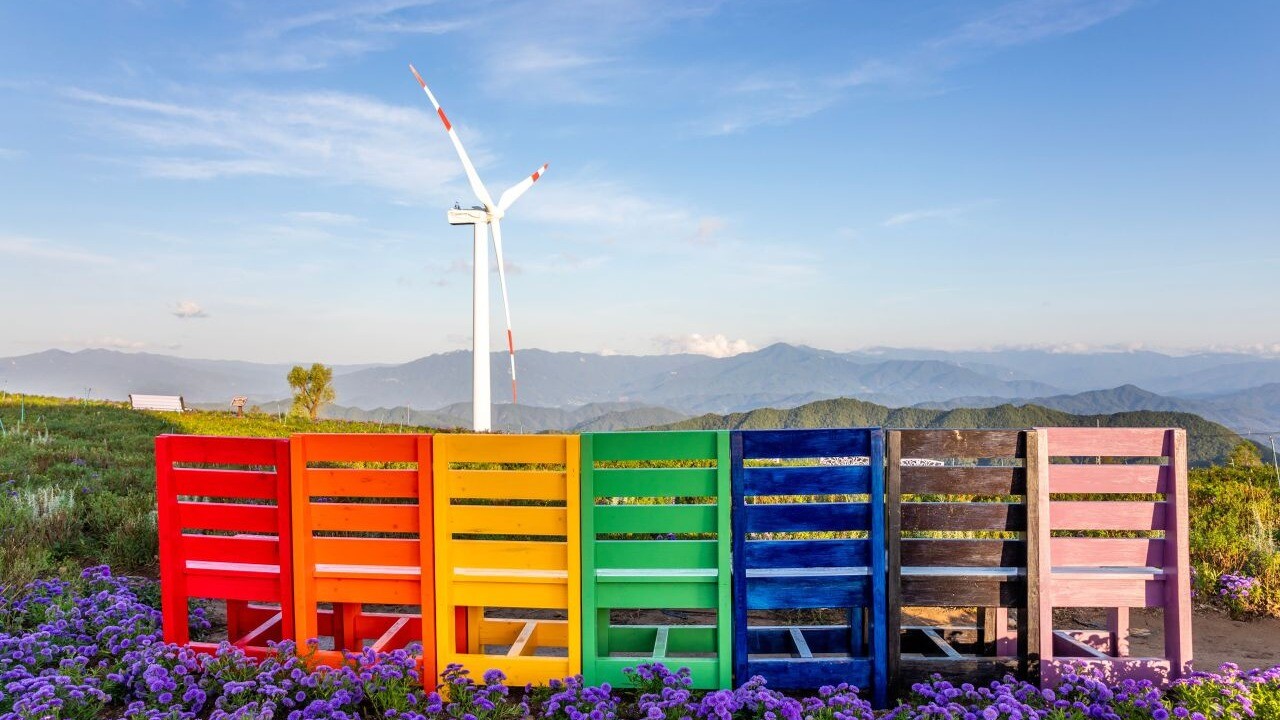
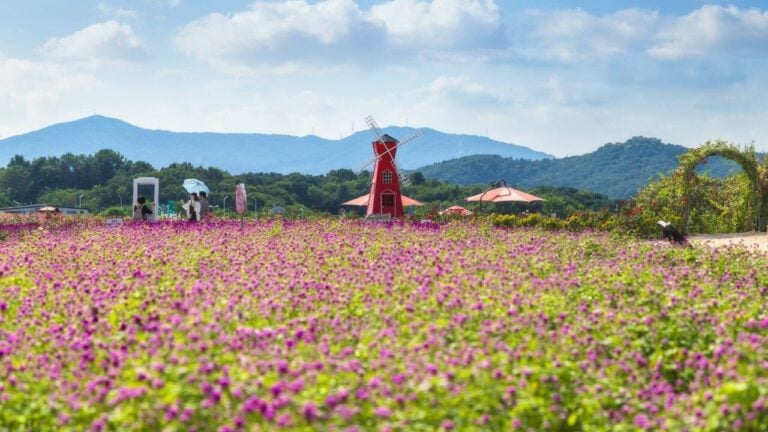
White wind turbines rise behind a field of purple flowers. The eye starts close to the blooms, travels over the hill and reaches the mountain ridges layered in the distance.
This is Byeolbaram Hill on Gamaksan in Geochang, where asters bloom at an elevation of about 900 meters. Here the flowers and the shape of the mountains fit into the same view.
The 2026 Gamaksan Flower and Star Festival runs September 18 through October 11. If you are planning a visit to its roughly five-hectare aster garden, check not only the flowers but also this year’s changed access arrangements.
Close to the flowers, purple fills the frame. Step back, and Geochang’s ridgelines come into view.
Aster Flowers Change With the Viewpoint
One aster bloom is small: slender petals surround a yellow center. Together, the flowers lay a wash of color over the low hill. That is why the garden feels different at its edge than it does from farther away.
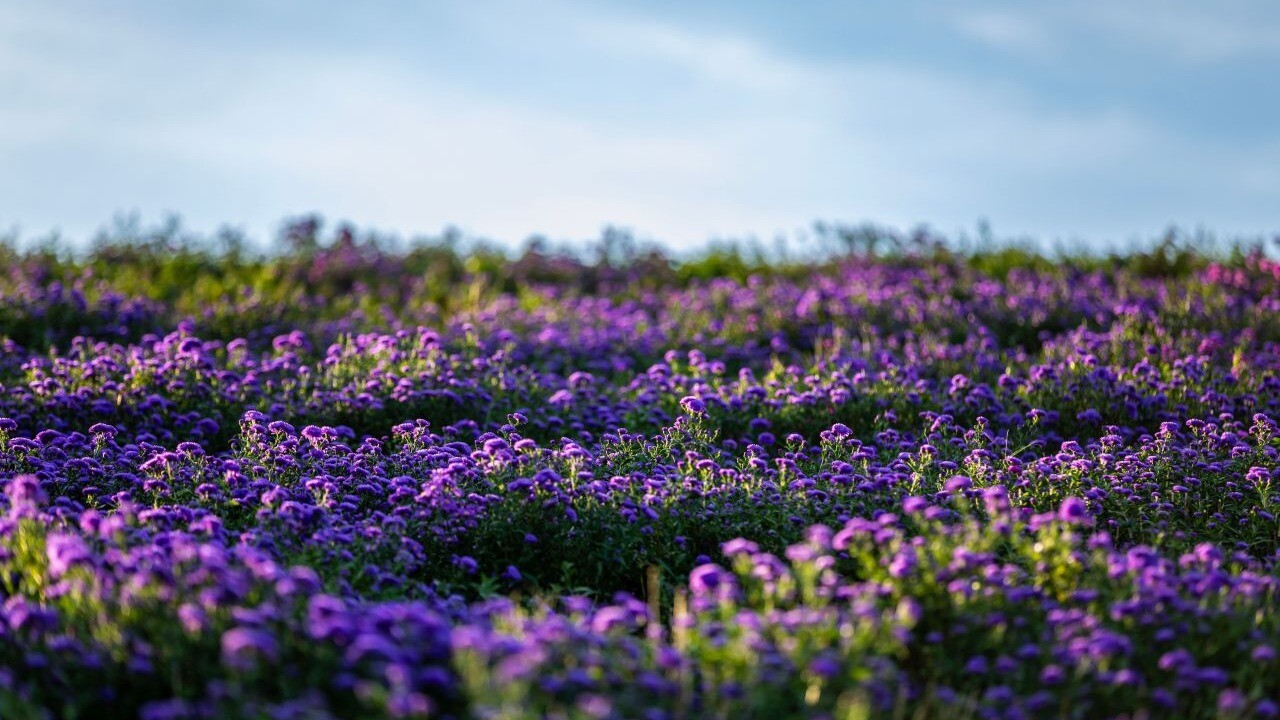
The two viewpoints make different photographs, too. Move close to see the shape of a flower; step back to place the mountains behind the field. You can change the composition from the paths without entering the flowerbeds.
The whole festival period does not mean the flowers will look the same every day. The photographs in this article were taken in September 2023 and provided by the Korea Tourism Organization. Use them to understand the setting and autumn scenery, not as a picture of this year’s peak bloom.
White Blooms Against a Purple Hill
In the photographs of Byeolbaram Hill, white flowers appear in front of the purple asters. Those layers of color make the near and far parts of the same slope stand apart.
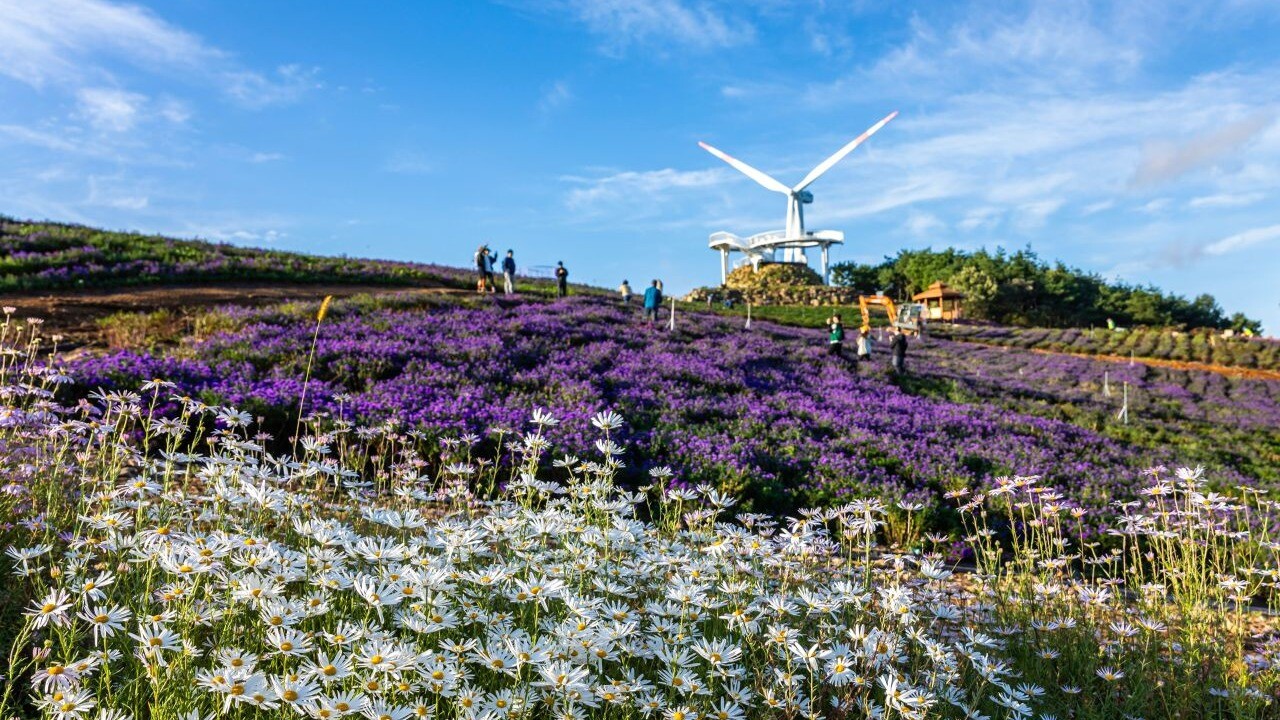
Flowers are not the entire landscape here. Paths between the beds, a rest area higher up and turbines reaching into the sky share the view. Leave some of that setting in a photograph, and it becomes recognizably Gamaksan rather than a close-up of any flower field.
Paths and Places to Pause on Byeolbaram Hill
Follow the path with your eyes and a place to rest appears beyond the beds. People walking between low flowers and tall structures give the hillside a sense of scale. This is a landscape that rewards turning back to look again midway through the walk.
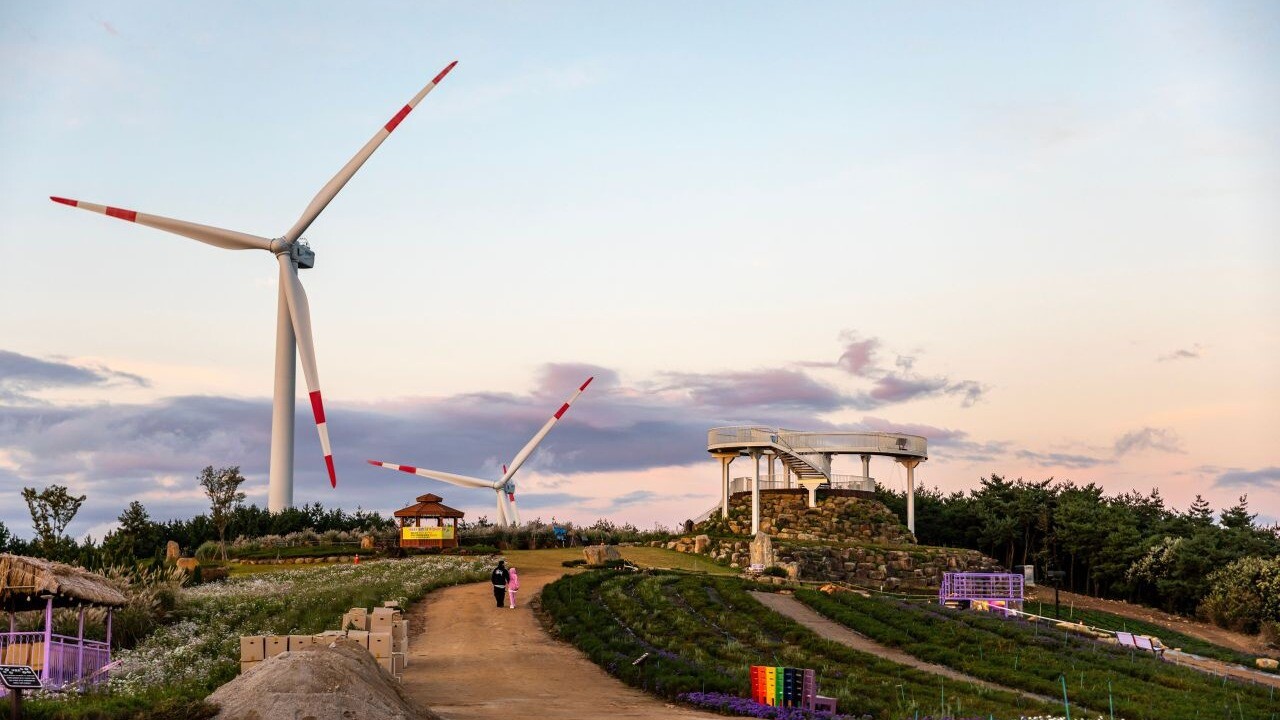
This year’s event information also mentions performances and a slow mailbox on the lawn. A letter left there is said to arrive the following September: a small way to revisit a day among the flowers next autumn.
Autumn at 900 Meters
Look up from the asters and the long blades of the wind turbines cross the sky. Against the mountain lines below the hill, they draw a pale shape that belongs to this place as much as the purple blooms do.
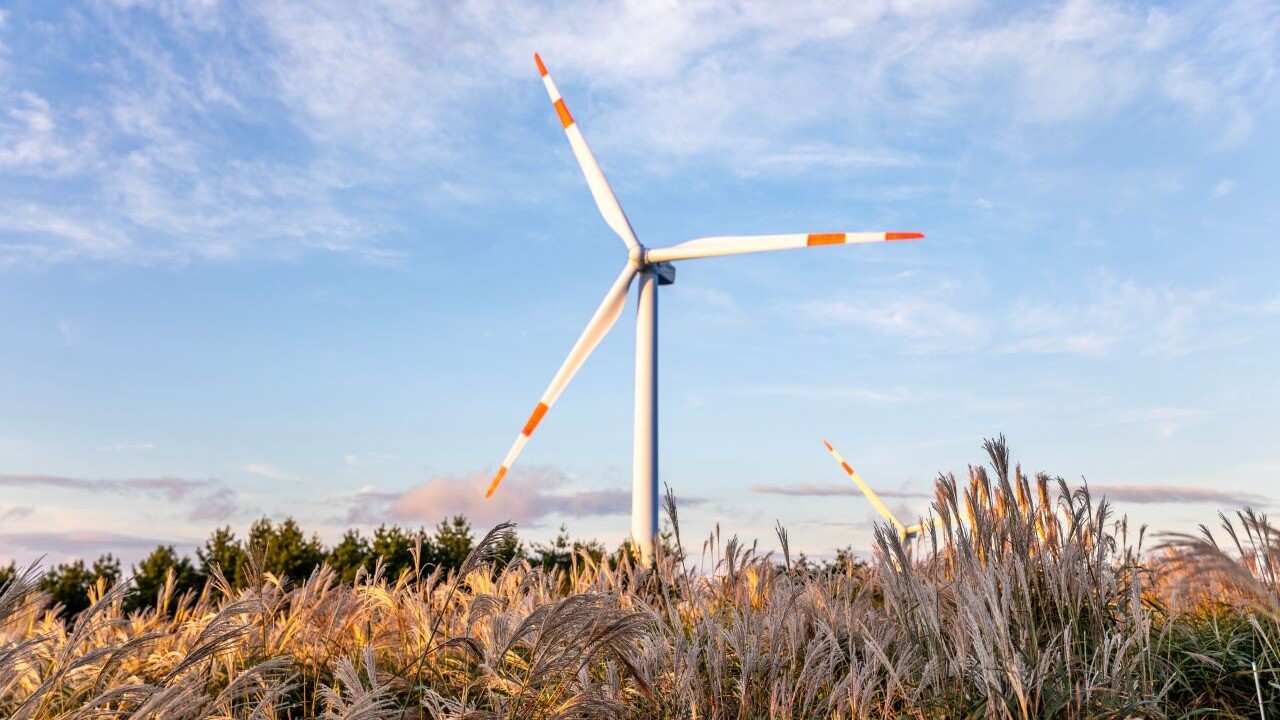
At this elevation, clothing that felt right on the plain may not be enough. A light outer layer helps when you stop to take photographs. If you stay until the light begins to fade, check the timing of your return transport in advance.
Getting to the 2026 Flower and Star Festival
The festival takes place around Byeolbaram Hill near the summit of Gamaksan, at 452 Yeonsusa-gil, Sinwon-myeon, Geochang-gun. Private cars going toward the summit require advance reservations in 2026. Visitors without one are directed to use a shuttle from the temporary parking area at the Geochang Advanced Industrial Complex.
On the September 18 opening day, general visitors must use the shuttle. Before setting out expecting to drive to the summit, check the official Flower and Star Festival site (Korean) for the departure point, reservations and last return service.
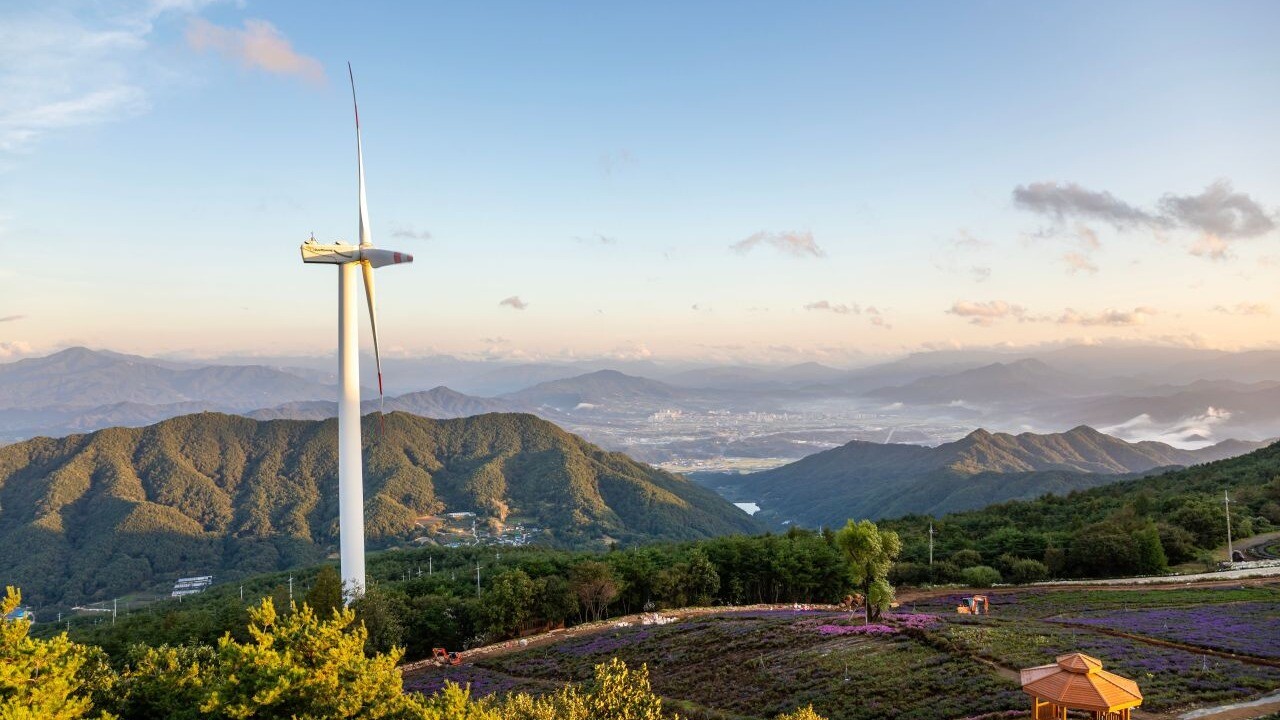
At Gamaksan, your gaze moves naturally from the flowers at your feet to the mountains beyond them. If you want both a purple garden and a wide autumn view, leave enough time to linger on Byeolbaram Hill.
Festival details were checked on September 13, 2026 against the Korea Tourism Organization’s 2026 guide (Korean) and the festival’s official site. Check the latest bloom and transport notices before visiting. Photographs: Korea Tourism Organization tourism photo API / Park Jang-yong (2023).
You May Also Like
by Google Adsense