Sinseongri Reed Field: An Autumn Riverside Walk in Seocheon
A Geum River reed landscape with low paths, curved decks and a different view from each height
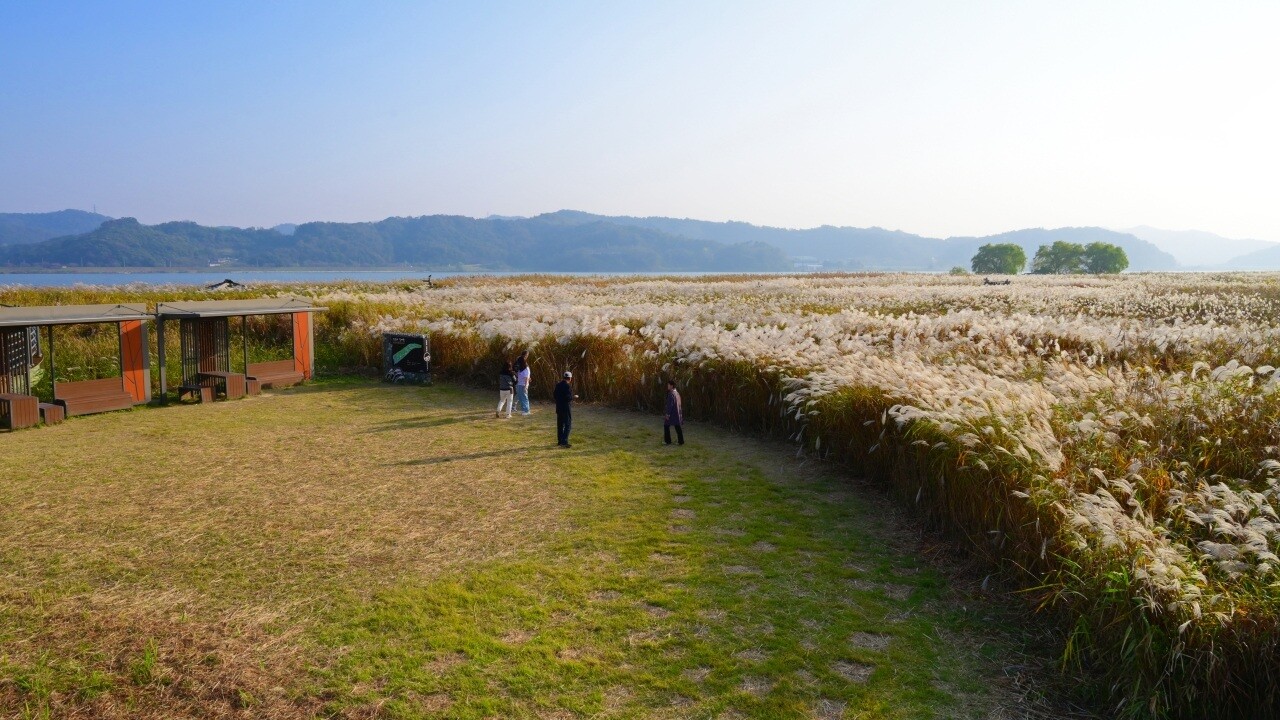
In a wide photograph, reeds form a textured surface beside open water. From a path within them, that same landscape becomes close and enclosed: individual stems, seed heads and a strip of sky ahead.
Sinseongri Reed Field in Seocheon, on South Korea’s Geum River, gives an autumn walk those contrasting scales. Curved decks add another viewpoint, raising the eye above parts of the field rather than keeping every scene at reed height.
For a visitor unfamiliar with the region, the attraction is a riverside wetland landscape, not a mountain silver-grass hike. It is also known as a filming location, but the river and the paths offer a reason to visit without needing to recognize a particular movie scene.
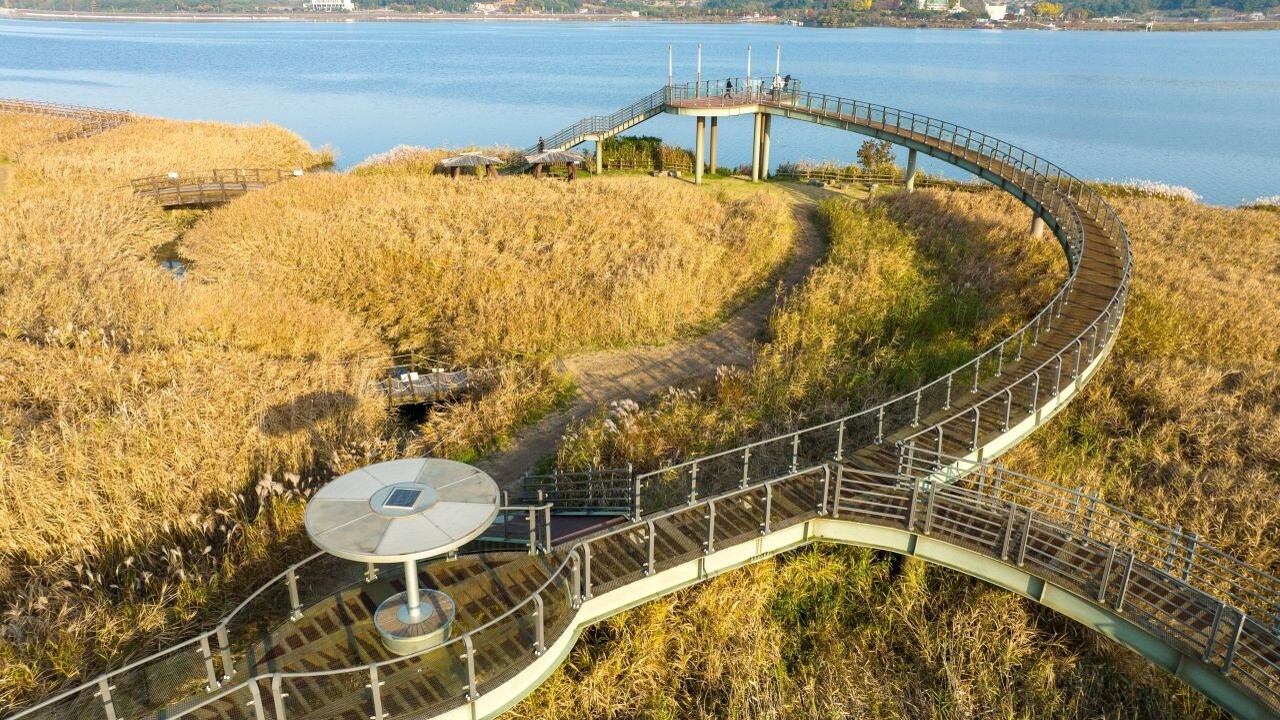
The deck creates a visible curve against the dense field. Beyond it, the river leaves a broad area of open space. Keeping both in view explains the setting more clearly than a close-up of seed heads alone.
This is a walk built around changing viewpoints. The low paths emphasize the plants themselves, while an elevated view reveals how the field sits beside the water. Neither perspective needs to replace the other, and the strongest photograph does not have to define the entire visit.
Sinseongri Reed Field: know the setting
Sinseongri is in Hansan-myeon, Seocheon-gun, Chungcheongnam-do. The Korean tourism listing identifies the site around Sinseong-ri 125-1, which distinguishes it from other famous Korean reed destinations.
Its location beside the Geum River is central to the experience. It should not be confused with Suncheon Bay farther south or described using photographs from a mountain silver-grass field. Similar autumn colors can belong to very different places.
The Korea Tourism Organization’s English destination page calls the site Sinseong-ri Reed Field and identifies it as a location for Joint Security Area. That association offers a cultural point of entry; it is not a promise of an organized film event or a set that remains unchanged.
A low path makes the landscape close
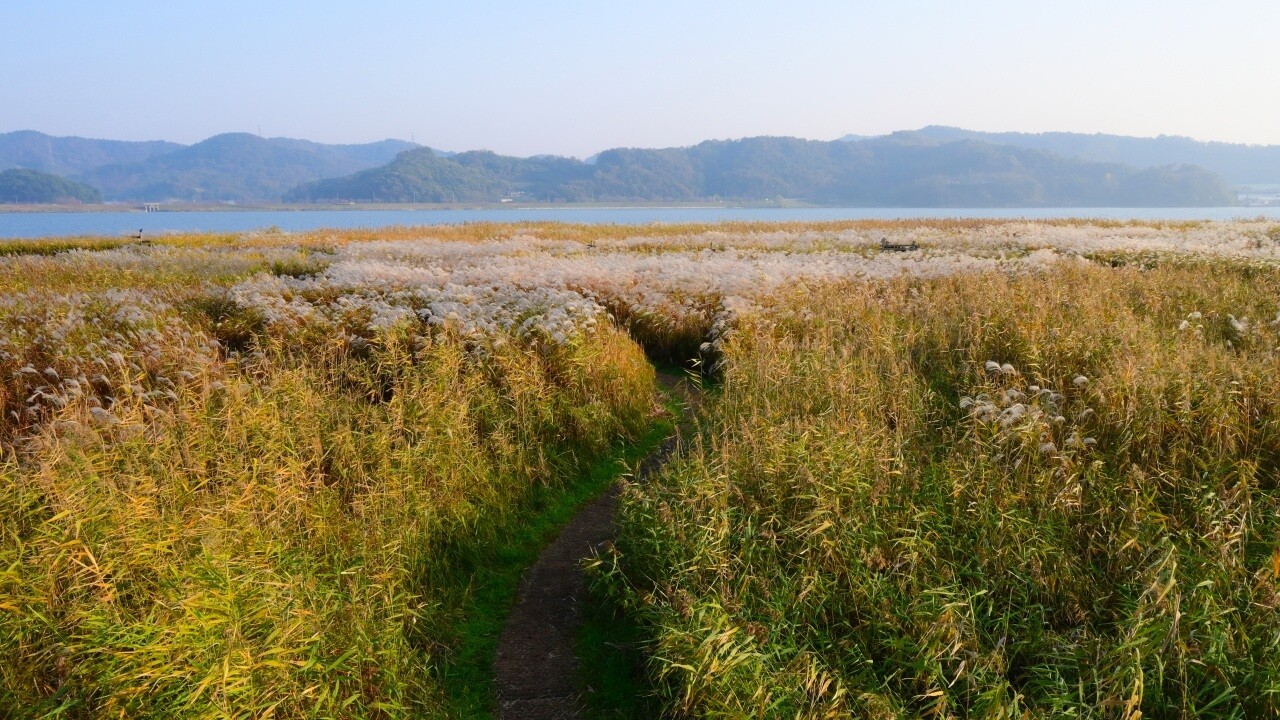
At ground level, the field is no longer one uninterrupted mass. The photograph shows a route between stems, with the distant hills and sky held above the plants. It is a closer, more contained scene than the view from a deck.
The seasonal appeal comes from the relationship between reeds and water. Reeds here are part of a river landscape; the site is not an oreum, a volcanic hill, or a mountain ridge of silver grass. That distinction helps when choosing among Korea’s autumn outings.
There is no verified live observation here establishing today’s reed color or an exact peak date. Autumn photographs show the destination’s seasonal character, while the appearance on a particular day depends on the actual plants, light and weather.
The curved deck opens the horizon
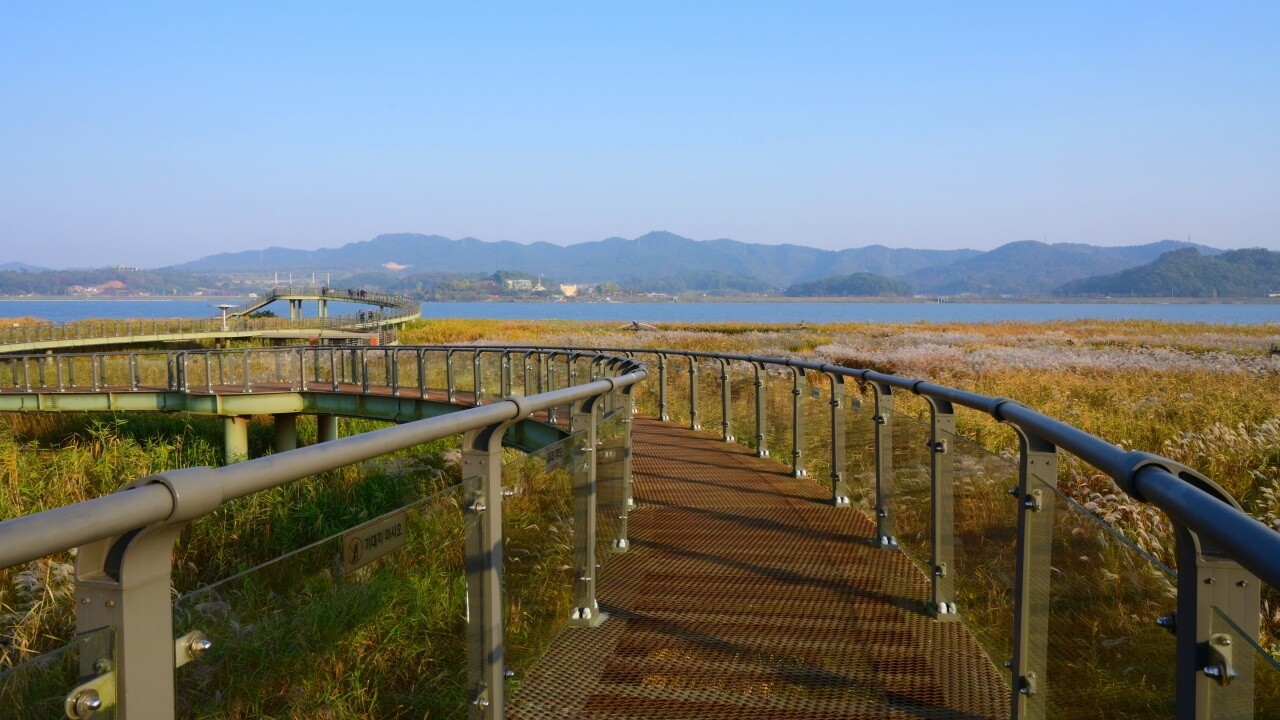
The railing carries the eye around the field toward the distant hills. Above the reeds, the walk becomes a view across their surface, giving the river landscape a different depth.
This is a useful contrast for a photo-centered visit: first look among the plants, then look over them. It avoids treating a single platform as the only worthwhile scene. The curve, the field and the horizon each contribute something different.
The photographs also show that the attraction includes built paths alongside natural vegetation. They should be understood as walking spaces shared with other people, rather than scenery to occupy indefinitely for one photograph.
Different heights mean different walking conditions
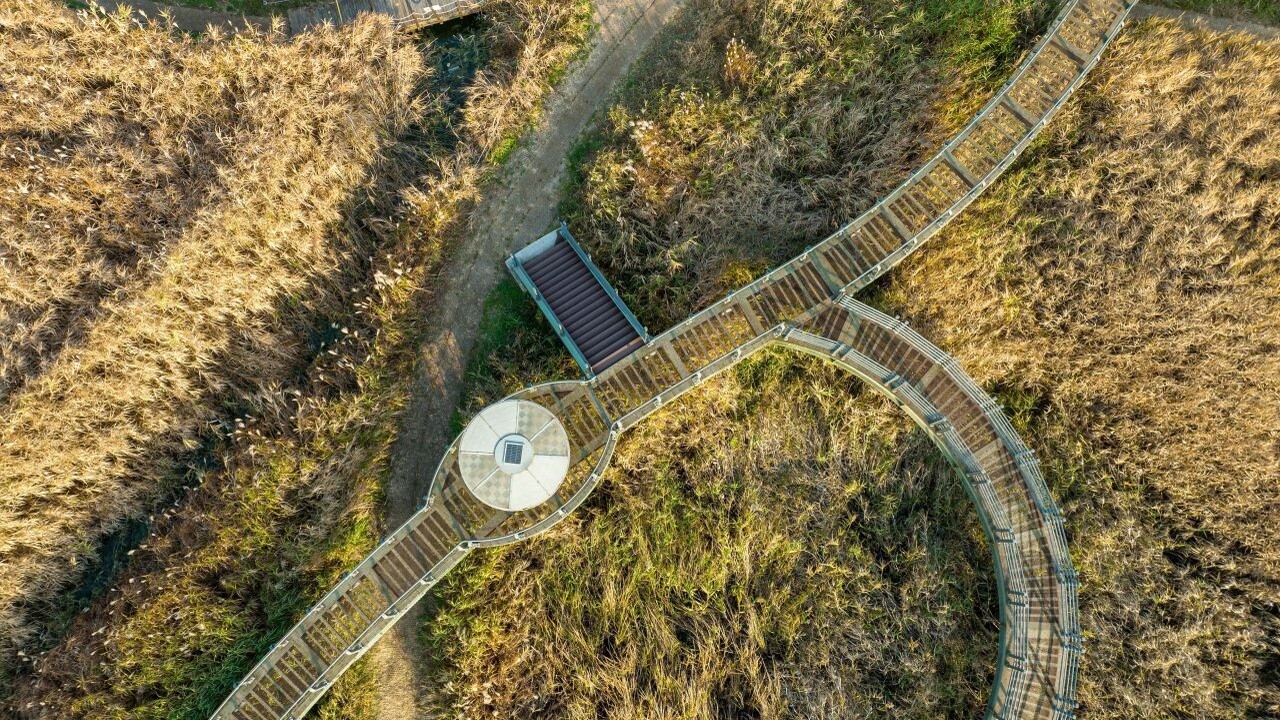
An overhead view reveals stairs and a junction between levels. A generally flat river setting does not establish that every deck is step-free or suitable for every mobility aid.
This introduction describes the landscape, rather than promising universal access to all structures. The photograph makes the change of height visible, so travelers can distinguish the idea of a flat reed field from the conditions on a particular built section.
For a comparison with a different Korean wetland, see the Suncheon Bay Wetland autumn walk. These are separate destinations in different regions, not neighboring stops along one route. The comparison is useful for deciding which kind of river or bay landscape to put at the center of a trip.
Leave room for the open water
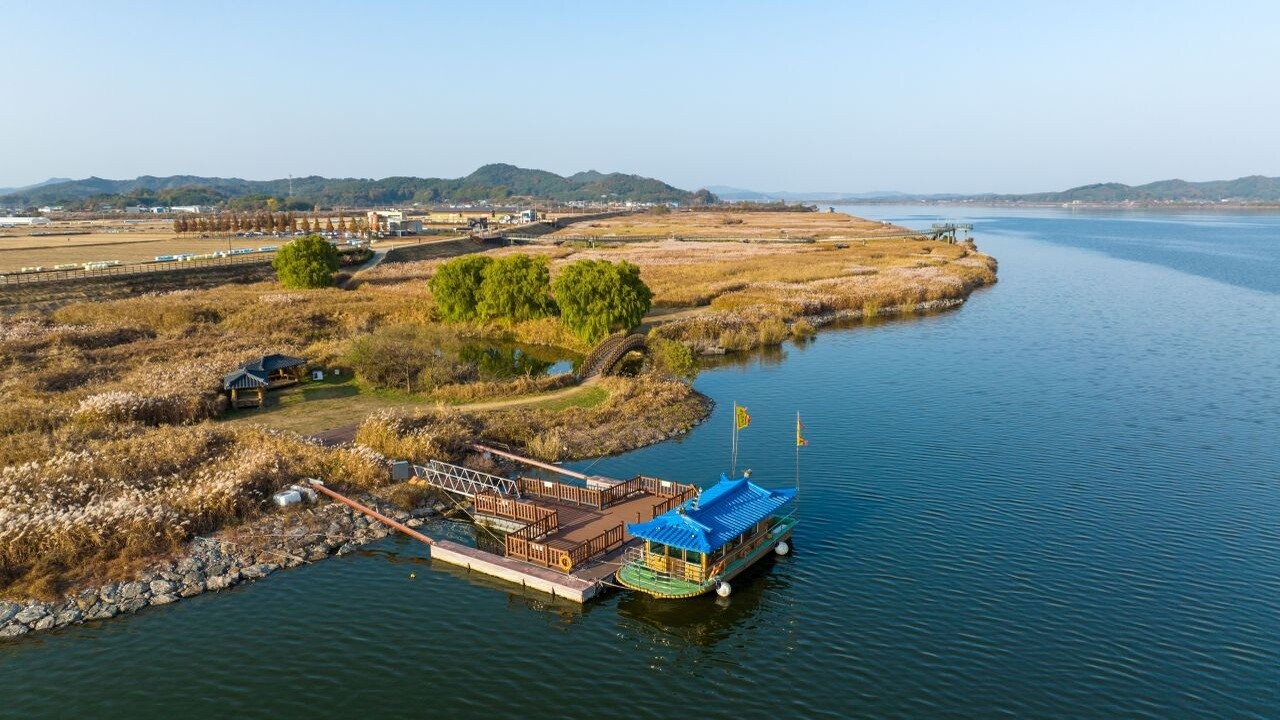
The wider scene returns the water to the frame. Reeds fill the land with detail, while the river provides a quieter surface and a clear edge. Together they make the field recognizable as a place, rather than an interchangeable autumn backdrop.
The Korean tourism description presents seasonal changes in the reeds and the site’s river setting. It does not establish a confirmed 2026 peak for a visit today. The landscape can be the reason for choosing the outing without making that unverified promise.
Sinseongri Reed Field suits an autumn itinerary that allows time for more than one viewpoint. A path among the plants and a pause above the water tell different parts of the same riverside story.
You May Also Like
by Google Adsense