Damyang Metasequoia Road in Fall: Tree-Lined Paths, Benches and Waterside Views
Damyang Metasequoia Road — a planted avenue seen through long perspectives and reflected trees
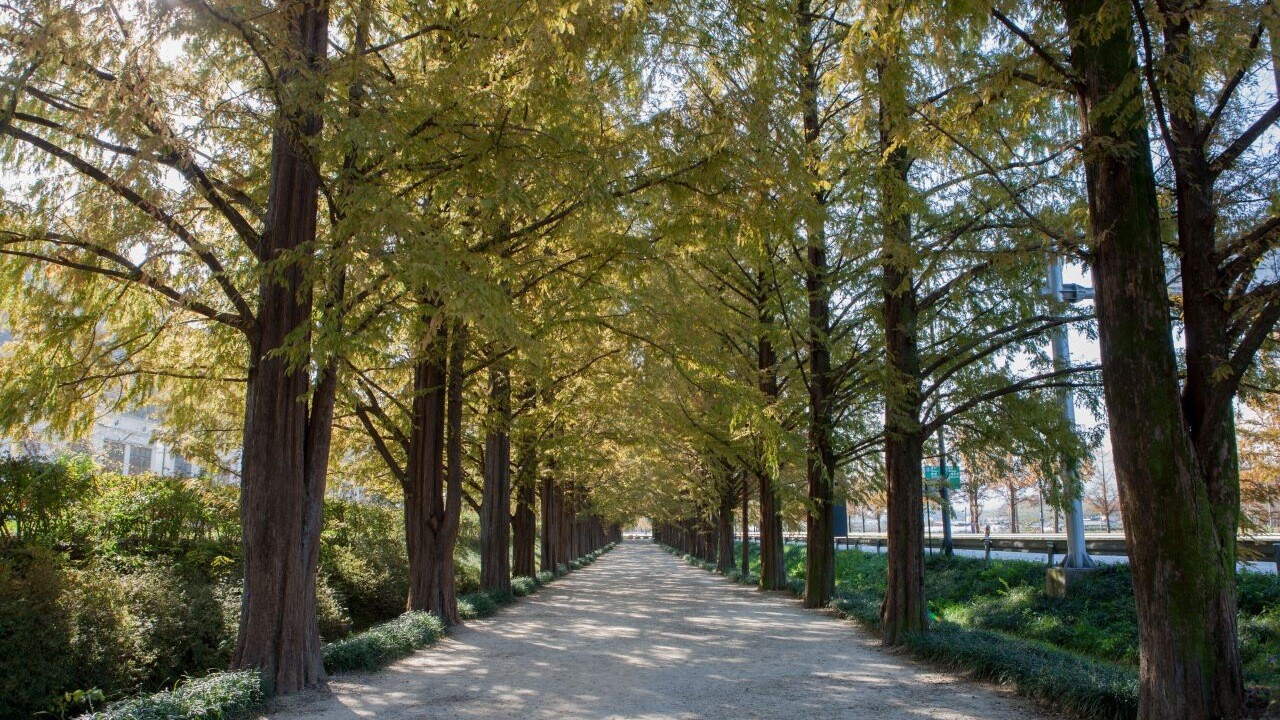
Rows of straight trunks narrow toward a distant point. Above them, branches meet across the path, turning a planted avenue into an enclosed view. The rhythm of the trees gives the landscape its structure before color enters the picture.
Damyang Metasequoia Road is a different subject from a mountain hike or a visit centered on one famous old tree. Its long perspective, lower resting places and waterside views invite changes in the scale of attention.
The Korea Tourism Organization’s official destination description traces the planting to the early 1970s. These rows began as roadside trees and developed into a distinctive landscape over time.
For a fall visit, looking beyond the standard center-of-the-path photograph opens up more possibilities. People show the trees’ height, a bench changes the foreground, and water creates a second version of the avenue.
Damyang Metasequoia Road’s long perspective
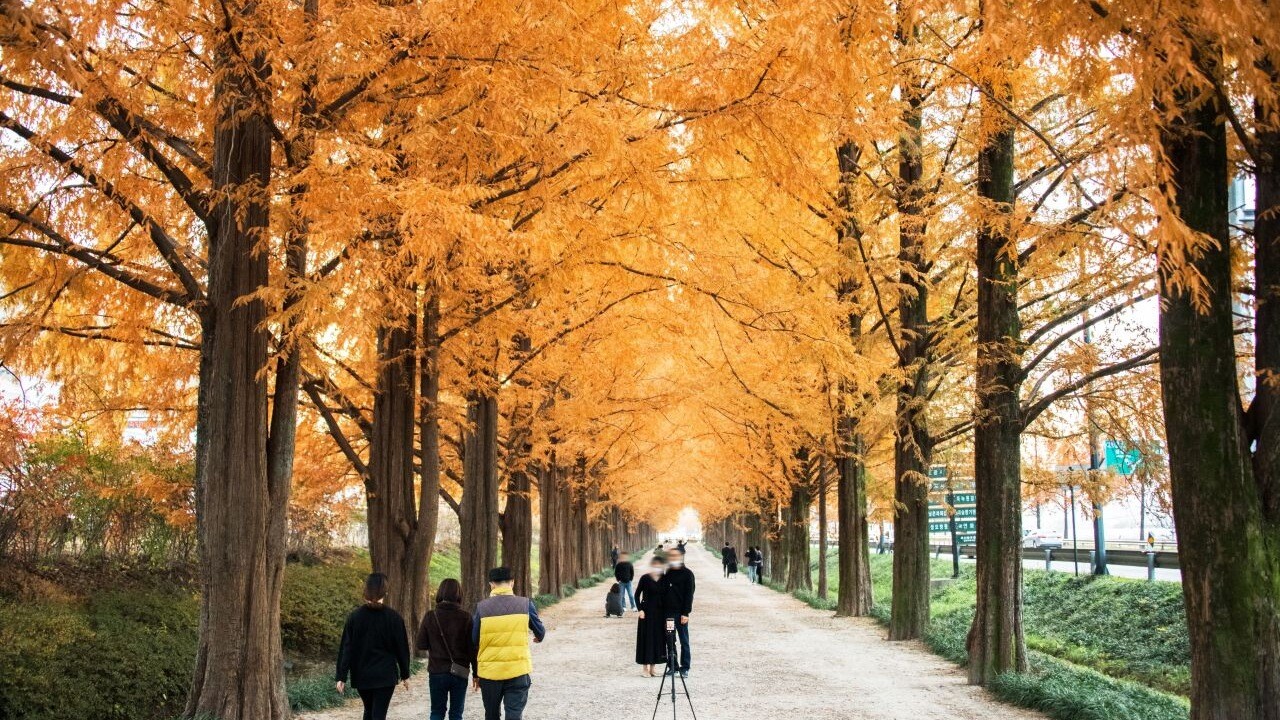
People on the path provide a useful sense of scale. Nearby trunks extend beyond the frame, while distant trees appear closer together. The avenue’s depth becomes visible through that repeated pattern.
This is a landscape shaped by a planted line rather than an open mountain horizon. The eye follows the same direction as the path, moving from one pair of trunks to the next.
The photographs show different stages of seasonal color. They illustrate the avenue’s possibilities, without establishing the leaf condition for a particular future date. The shape of the path remains a useful reason to visit independently of a guaranteed peak.
A lower view beside the benches
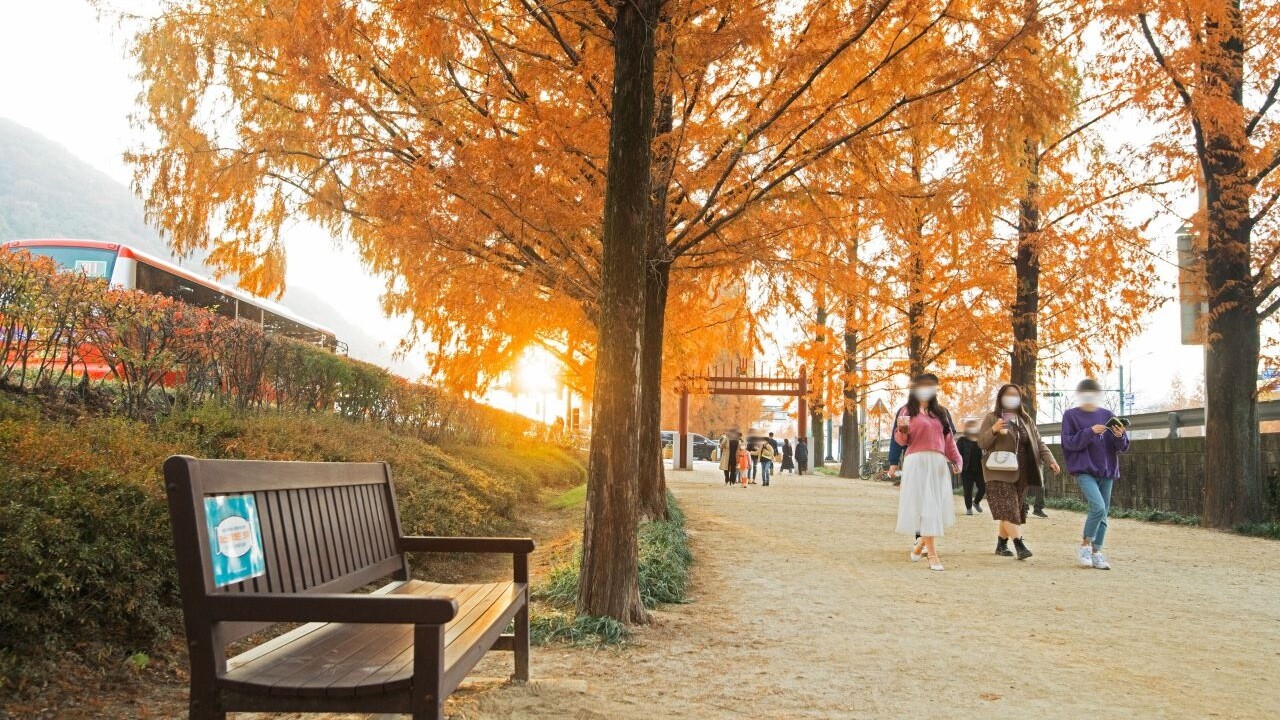
A bench brings the foreground closer. The width of a trunk becomes easier to compare with a place to sit, while walkers remain farther along the path. The scene contains both movement and pause.
That smaller scale makes a difference to the way the avenue reads. It becomes more than a corridor for one distant photograph: the trees also shelter spaces where people spend time.
The image describes this particular arrangement of bench, path and tree. It does not guarantee the current condition of every facility or imply that the avenue will be quiet on a chosen travel day.
Trunks, branches and shadows on the path
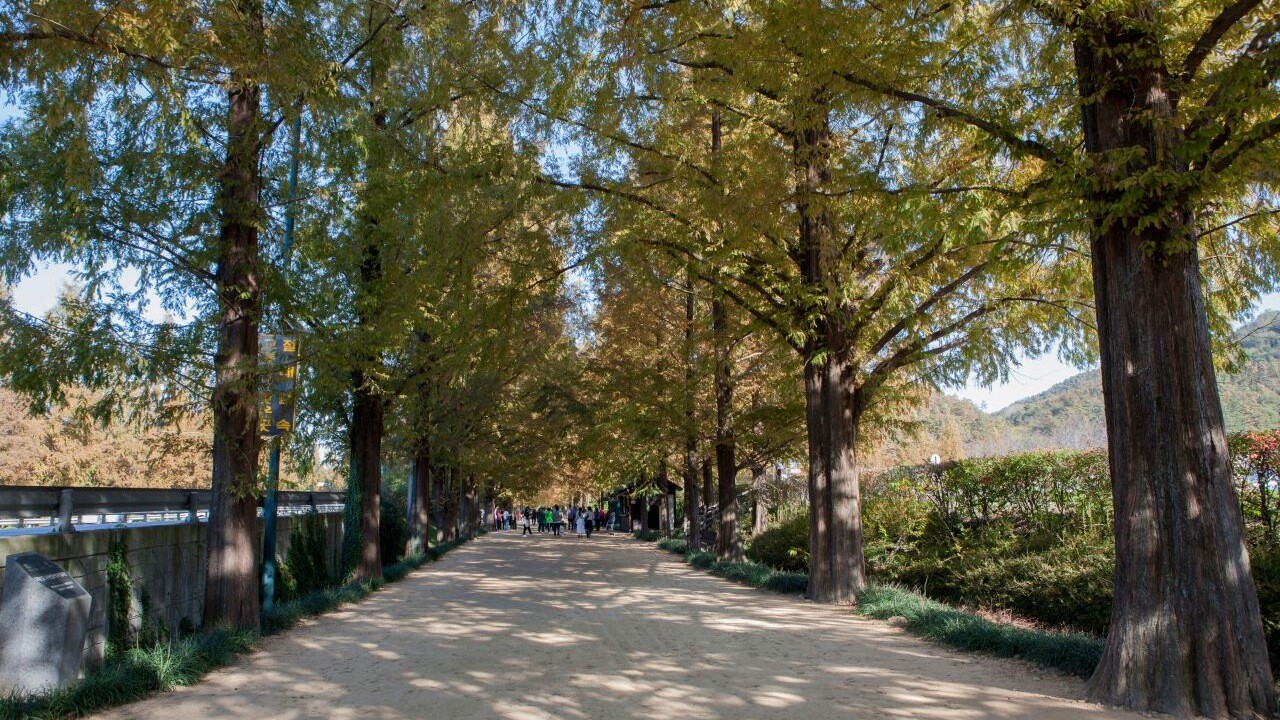
The trunks keep a regular direction while branches spread less predictably above them. Light passes through those branches in fragments, leaving another pattern on the ground. Even where leaves remain green, the avenue has a clear visual identity.
Damyang County’s official tourism course guide identifies Metasequoia Land as a visitor attraction. It is useful to distinguish that destination from the broader stretches of tree-lined road in the area.
Historical planting distances should not be presented as the length of a current visitor route. The photographed walking space provides a more reliable starting point than combining different road and park measurements into one figure.
Trees reflected beside the avenue
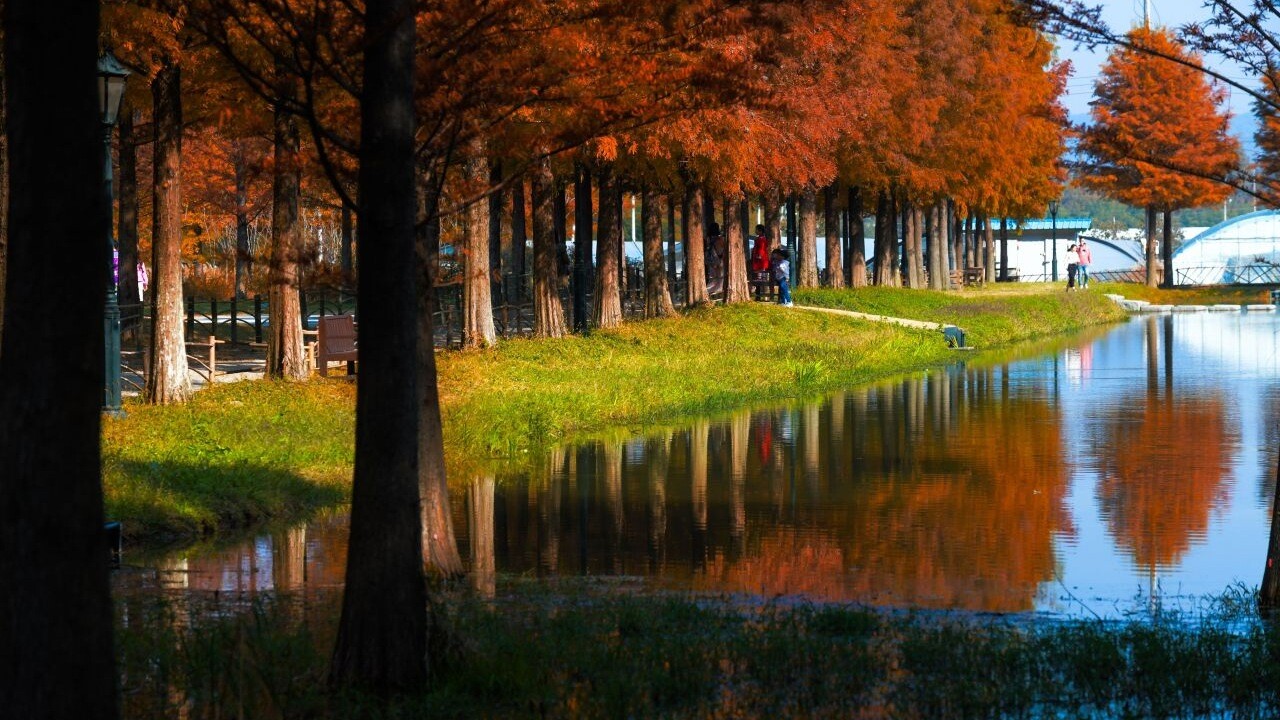
At the water’s edge, the vertical trunks extend downward as reflections. The perspective turns sideways, replacing the path’s distant vanishing point with a wider line of trees. It is another way to see the same type of landscape.
The boundary between trees and reflected trees becomes the main subject. A narrow strip of bank separates them, while the water repeats the color overhead.
Reflections depend on light and the surface of the water. The calm scene in a photograph is not a promise of identical conditions, but it explains why a view away from the center of the avenue can be worth noticing.
A different woodland from Juknokwon
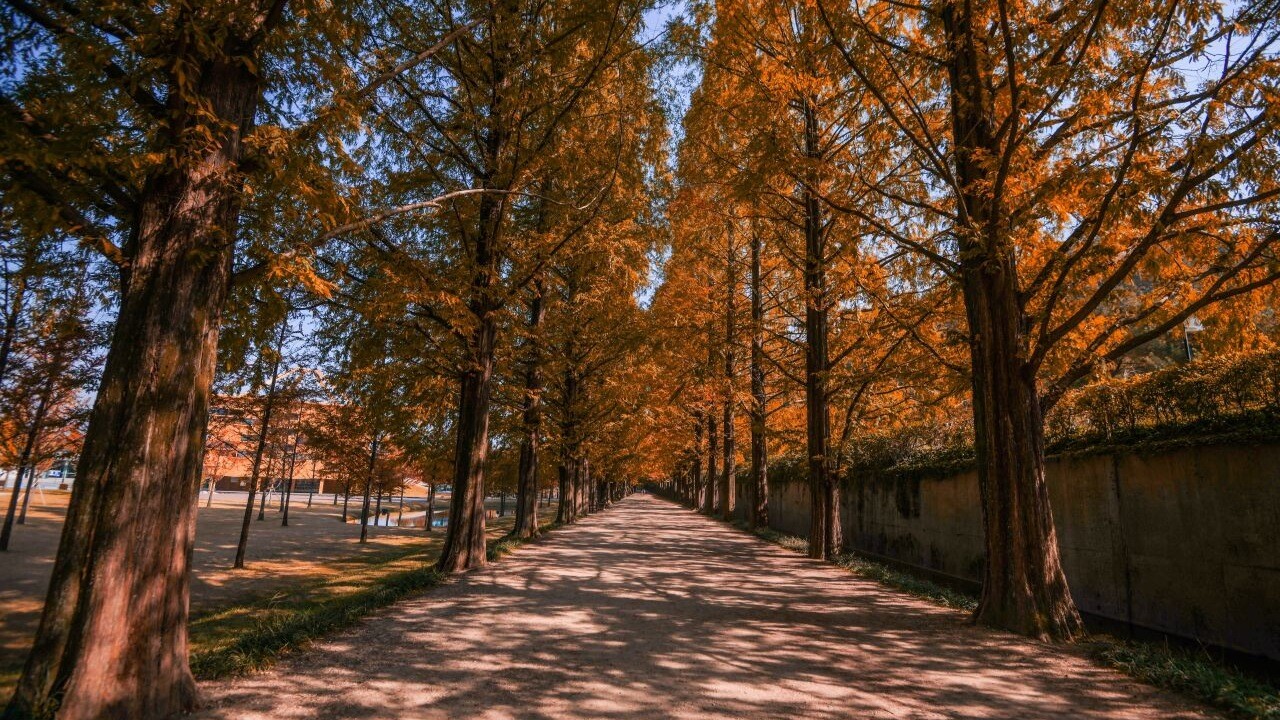
Damyang is also associated with Juknokwon’s bamboo paths, but the two settings are visually different. Bamboo produces a finer, denser rhythm; the metasequoia avenue gives thicker trunks more space and a clearer direction.
That distinction remains visible as the season changes. Color may thin out or deepen, while the trees’ spacing and the path’s long line continue to shape the scene. The choice between these landscapes can be about the kind of woodland you want to spend time in.
Damyang Metasequoia Road suits a fall outing that moves between a long view and closer details. The avenue, the bench and the waterside each offer another way to look at a planted landscape that has grown into its own identity.
You May Also Like
by Google Adsense