Hwaeomsa Temple in Gurye: Gakhwangjeon Hall, Painted Gates and Fall Courtyards
Hwaeomsa Temple, Gurye — layered roofs, stone terraces and changing views at the foot of Jirisan
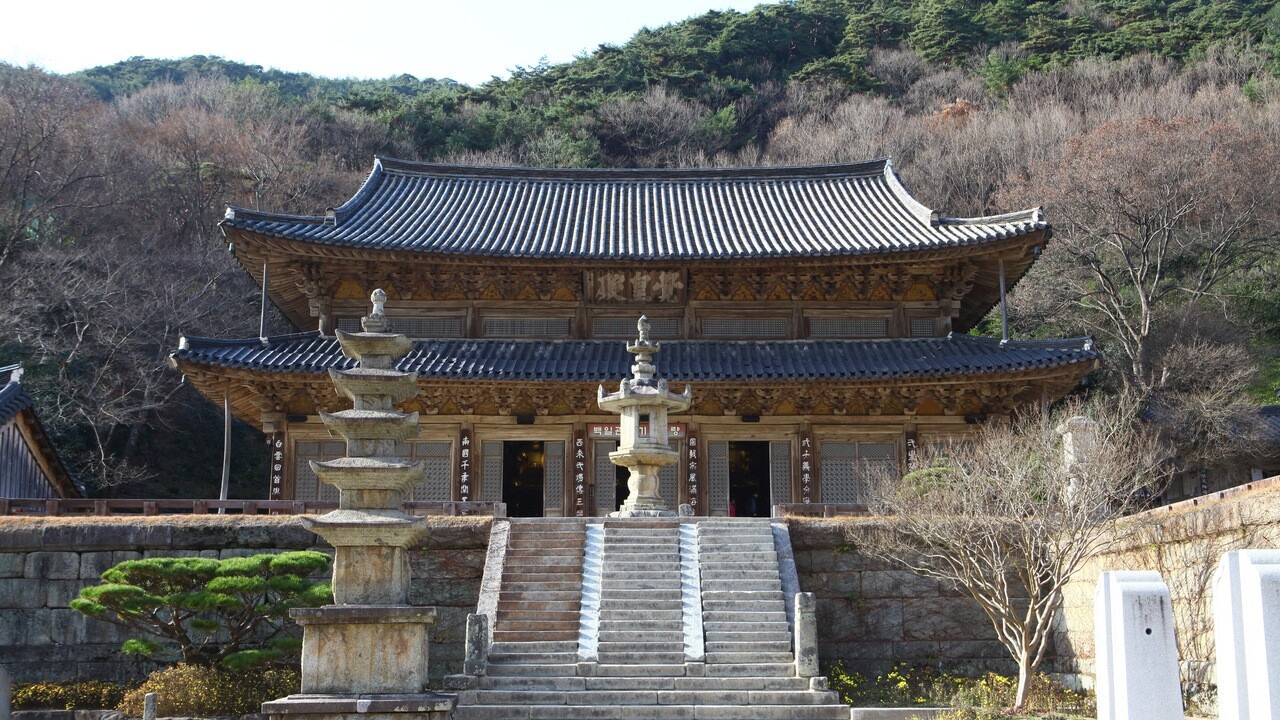
Two broad rooflines stretch across the facade. A stone pagoda and lantern stand at different heights in front, while the wooded slope rises behind. The composition holds several layers before the eye reaches the mountain.
Hwaeomsa Temple is a Buddhist temple in Gurye at the foot of Jirisan. For a fall visit, its architecture offers a strong focus alongside the changing leaves: gateways, terraces and large halls reveal the grounds a little at a time.
The Korea Tourism Organization’s English guide places the temple in its mountain setting and describes its reconstruction after wartime destruction. Its long history should not be confused with a claim that every visible wooden building dates from its founding.
The large halls are the destination within the grounds, but the approach matters too. A dark passage frames a distant roof; steps then widen the view into a courtyard. That sequence helps make the scale of Gakhwangjeon legible.
Hwaeomsa Temple’s painted Geumgangmun Gate
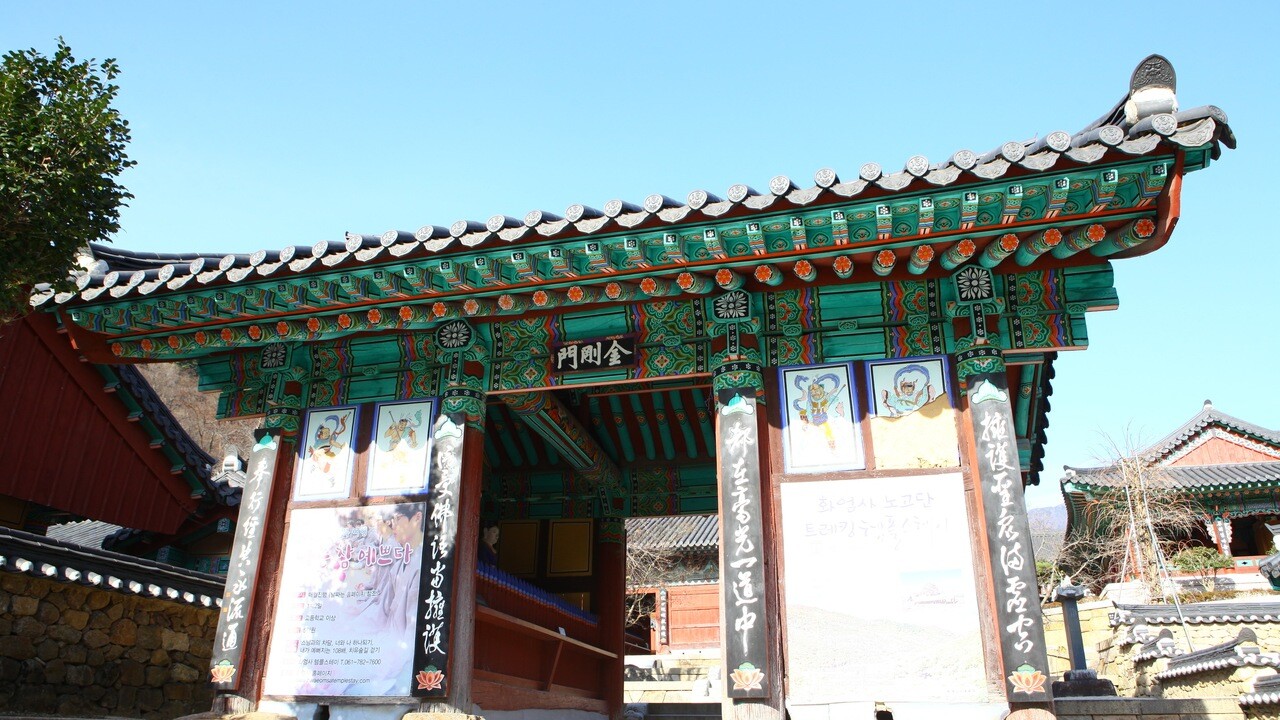
Green and red details crowd beneath the eaves, while the tiled roof turns upward at its corners. The passage below is much darker than the sky around it. Color and shadow give this relatively small structure a strong presence.
A temple gateway does more than display a name. It narrows the view and brings the visitor close to painted timber before revealing the next part of the grounds.
Geumgangmun is one gateway in a sequence, not a label for every gate inside the temple. Looking at each threshold separately keeps the architectural route clearer than treating them as interchangeable views.
A roof framed by a shaded threshold
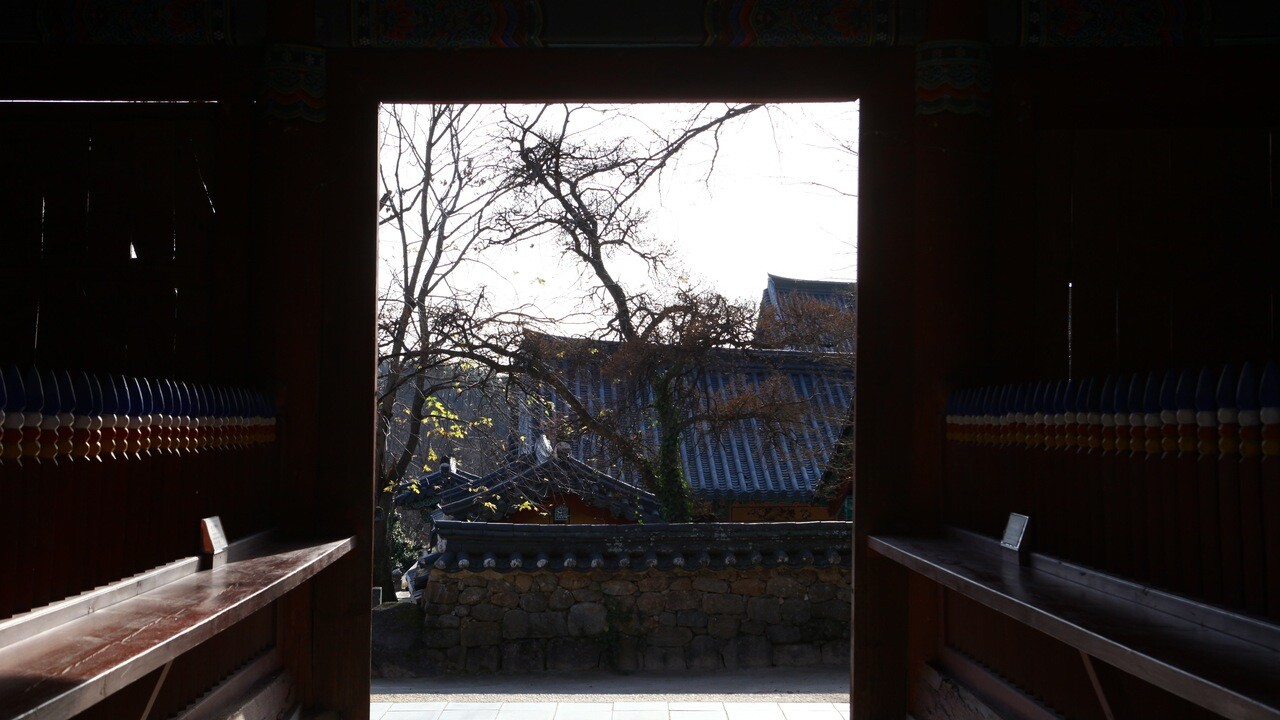
Dark railings and timber edges frame the brighter exterior. Outside, bare branches cross the sky above a roof. The view is compressed into a small opening, even though the grounds beyond are extensive.
Compared with the painted exterior of a gate, this angle relies on light. Details inside the passage recede into shadow, allowing distant shapes to stand out.
The same roof becomes a different subject after the threshold is crossed. This movement between enclosed and open views is part of Hwaeomsa’s appeal, rather than merely an interval between its better-known buildings.
Daeungjeon above the stone terrace
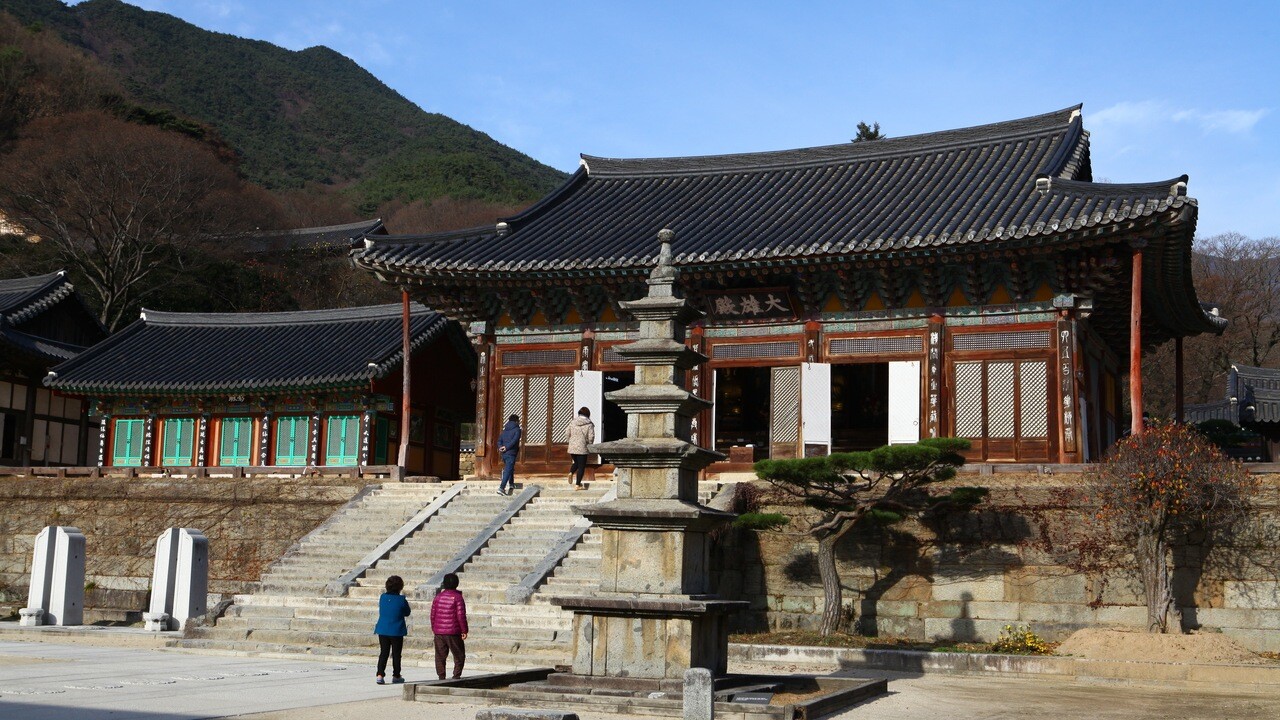
A wide flight of steps connects the courtyard with a raised hall. The pagoda builds upward in small stages, while Daeungjeon spreads horizontally beneath its roof. People near the steps provide a sense of scale.
Daeungjeon and Gakhwangjeon are separate halls. Distinguishing their roof forms and positions makes the temple easier to understand than assuming all large-hall photographs show the same building.
The stone bases, open ground and timber structures also deserve attention together. Each material handles light differently, making the courtyard more than an empty foreground for the hall.
Gakhwangjeon’s eaves and autumn branches
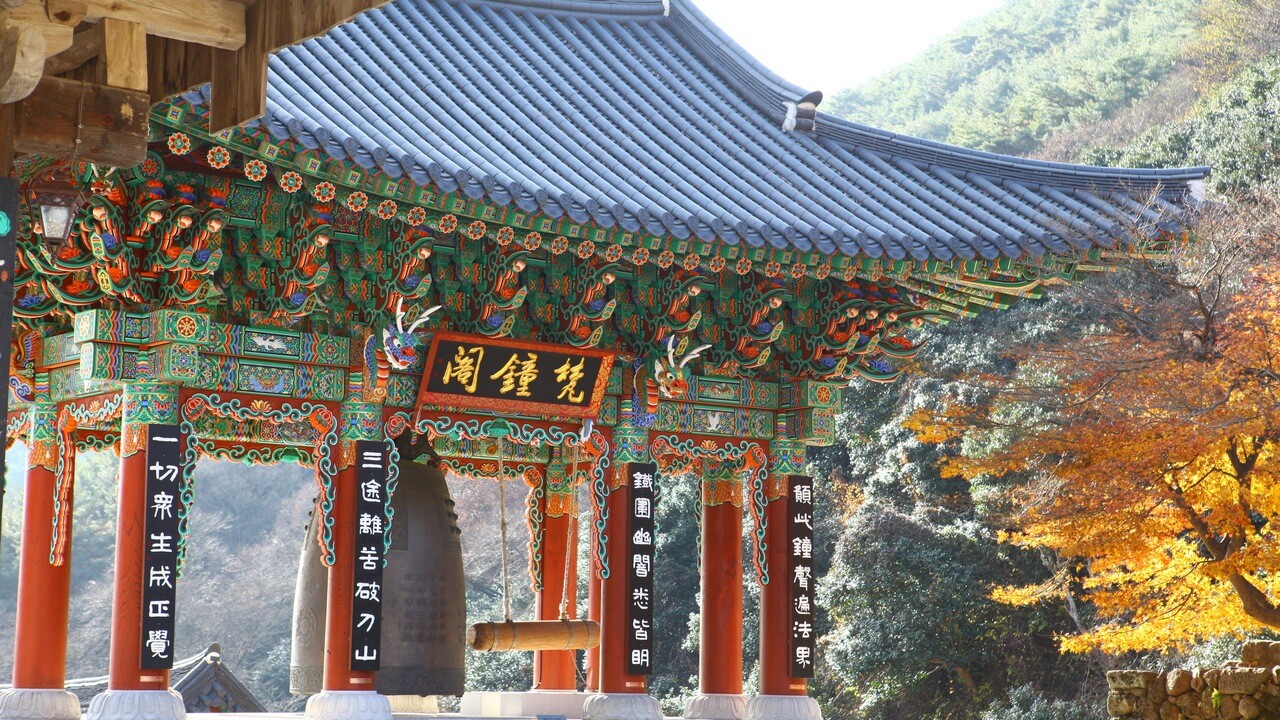
Up close, the broad facade resolves into brackets, columns and painted detail. Yellow branches cross the edge of the roof, adding irregular lines beside repeated timber elements.
The Korea Heritage Service’s description of Gakhwangjeon dates the rebuilt hall to 1702. Its exterior has two levels, while the interior rises through them as one open volume. The layered roofline does not indicate two ordinary stacked rooms.
That structural distinction adds meaning to the first wide view. The building’s mass comes from a large interior and an elaborate roof, while nearby foliage offers a much finer, changing texture.
Reading the space between the halls
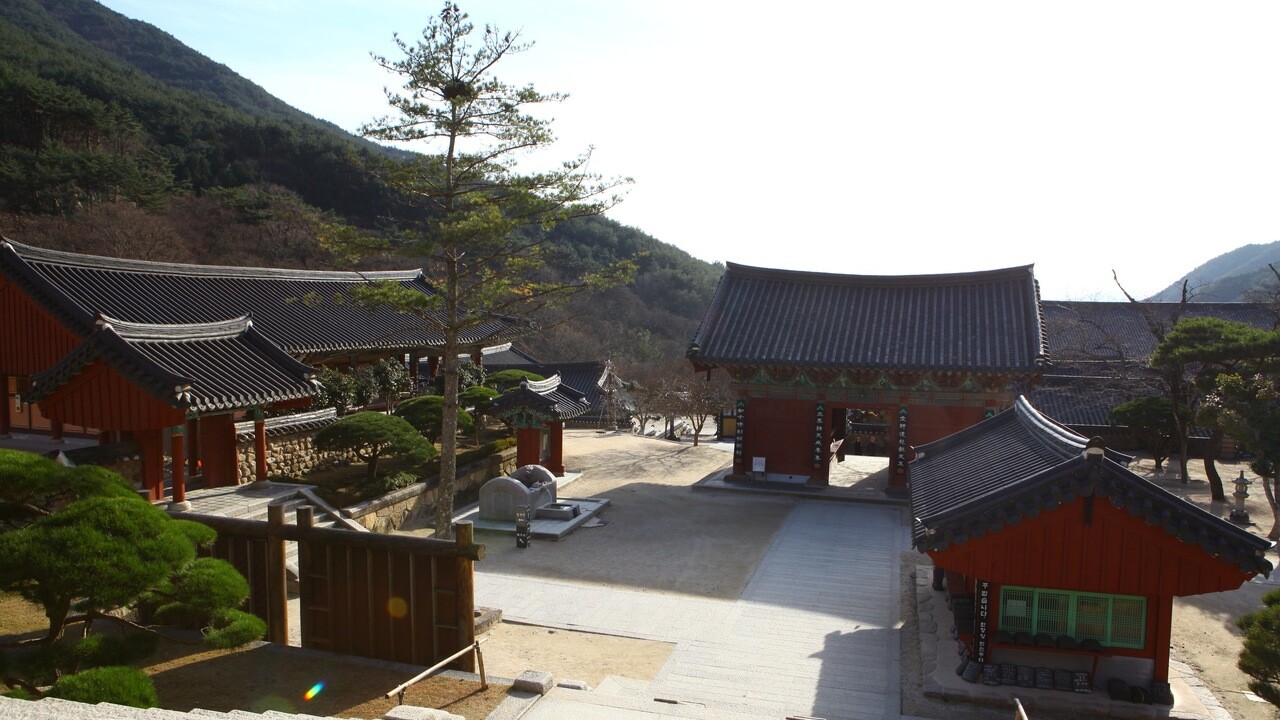
From higher ground, separate facades become parts of a larger arrangement. Gaps between roofs, the direction of steps and open courtyard surfaces are easier to see together.
For a different relationship between woodland and temple architecture, Naesosa Temple and its fir-tree approach offers a useful comparison. Hwaeomsa’s broad halls and stepped grounds give its setting a different rhythm.
Hwaeomsa works well as a fall visit focused on architecture as much as leaf color. Moving through a shaded gate, across stone terraces and toward the layered roofs gives the outing a clear visual progression, even when nearby trees are at different stages of change.
You May Also Like
by Google Adsense