Yangdong Village in Gyeongju: Hillside Lanes, Tiled Roofs and Thatched Houses
Gyeongju Yangdong Village, a living Korean heritage village shaped by hills, clan history, stone walls, and winding lanes
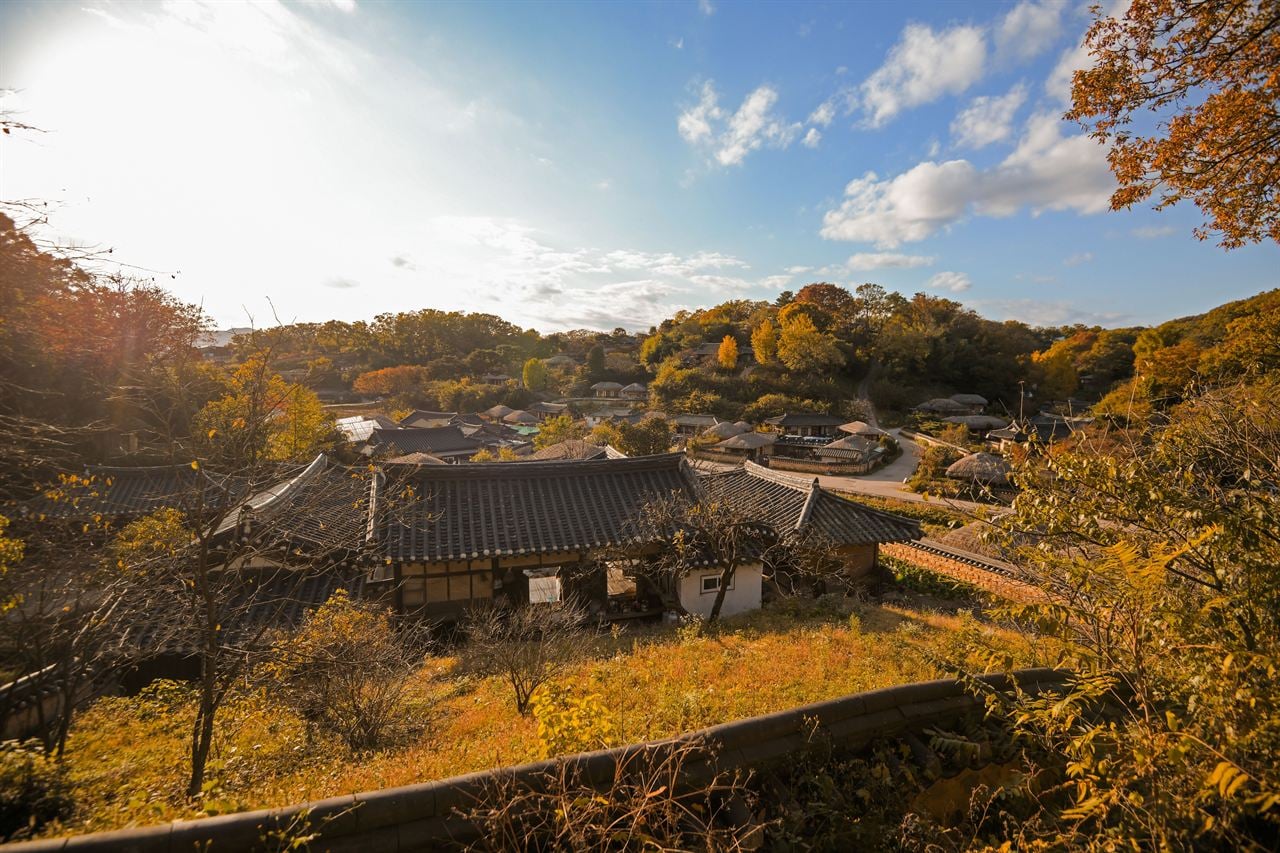
One tiled roof leads the eye toward another. Beyond a low wall, houses sit at different heights among trees, while narrow lanes divide and climb between them. The changing levels give this village much of its visual character.
Yangdong Village is in the Gangdong area of Gyeongju, beneath Seolchangsan Mountain. Its layout differs from a single, level street lined with historic buildings: the settlement follows slopes and valleys, with homes, walls, and paths forming a layered landscape.
For a fall visit, leaves are only one part of the picture. Rounded thatched roofs, long lines of tiles, stone boundaries, and trees beside houses provide several ways to look closely. Understanding how they fit together gives the walk more depth than a search for one colorful viewpoint.
Read Yangdong Village through thatch and tile
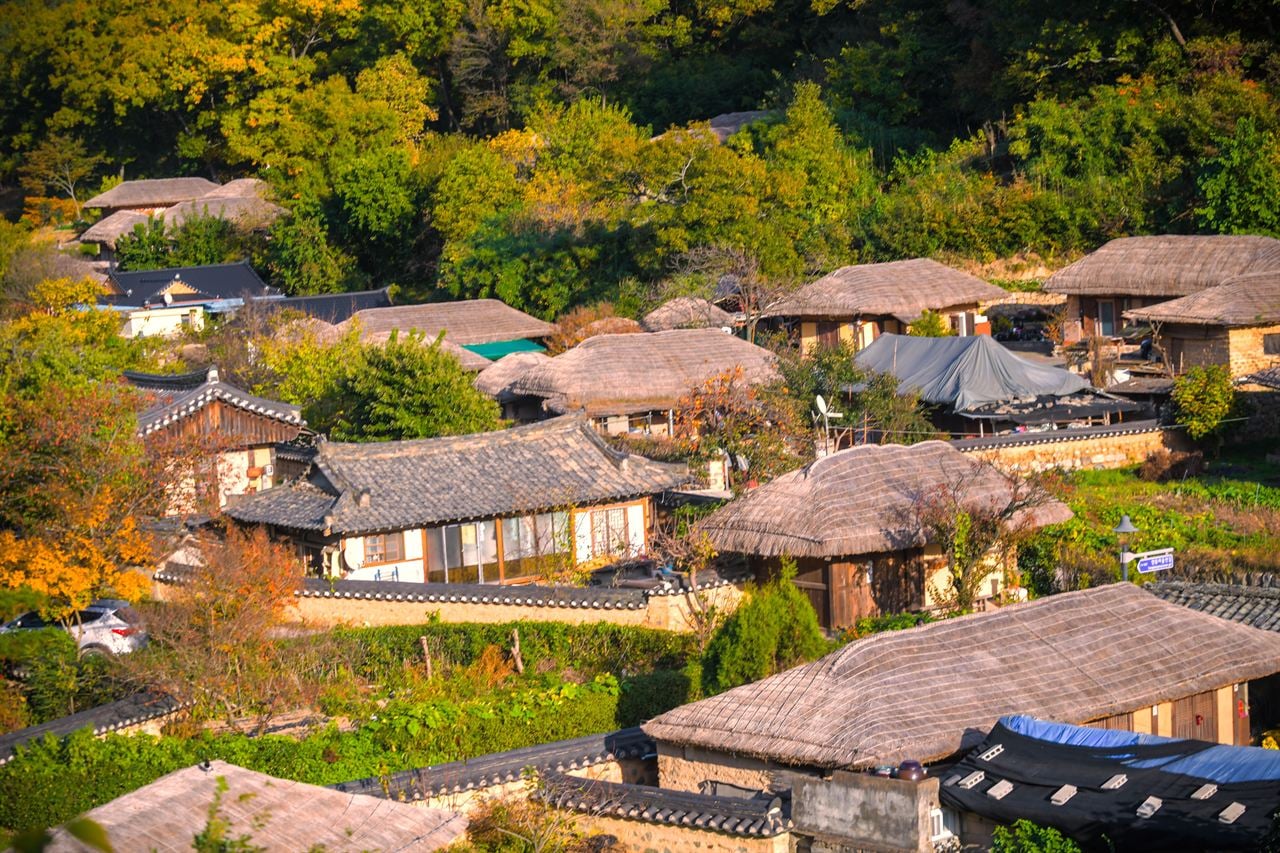
A thatched roof curves gently toward its edges, while a tiled roof repeats smaller curves along a longer line. Seen together, the two materials make the spaces between houses easier to read. A roof is part of a larger composition rather than an isolated object.
Yangdong developed as a clan village associated with the Wolseong Son and Yeogang Yi families. Its heritage includes homes and other buildings within a shared settlement. Family history is expressed through the arrangement of the village as well as through individual houses.
Changes in level also change the view. A roof partly hidden behind a wall may appear closer to eye level farther along a lane. Paying attention to those shifts reveals the relationship between buildings, paths, and the ground beneath them without turning the walk into a checklist of facades.
Notice a smaller fall scene beside the houses
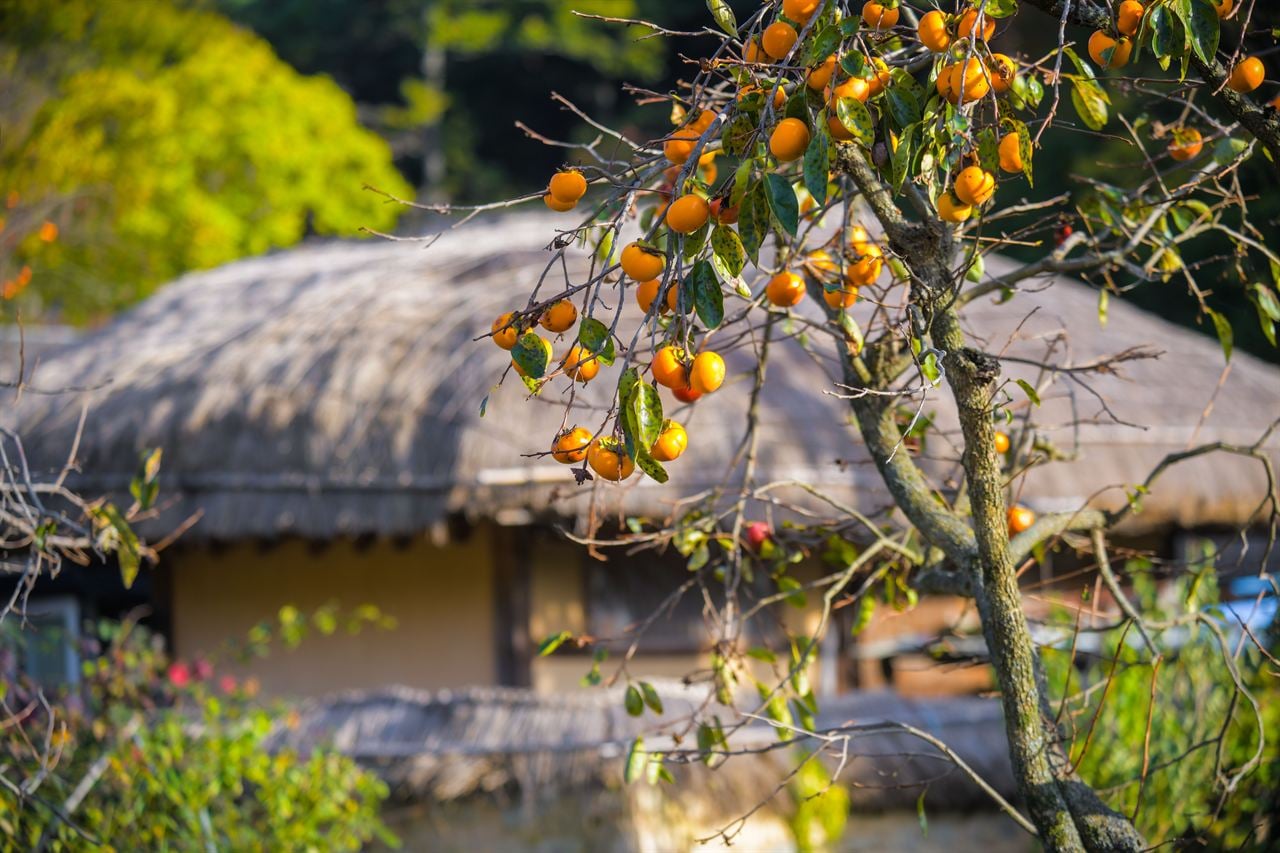
With a thatched roof behind them, persimmons bring the view down to a smaller scale. The bright fruit, slender branches, and remaining leaves stand out against the broader, softer surface of the roof.
This is a different kind of seasonal scene from a distant mountain covered in color. Trees beside homes and the materials of the buildings share the same frame. The contrast between orange fruit and brown thatch gives the eye something specific to follow.
After a wide view of many roofs, a close detail changes the pace of looking. Follow a branch toward its trunk, then return to the shape of the house behind it. The tree helps connect the architecture with the everyday landscape around it, without requiring one particular weather condition or foliage peak.
Read the boundary between a lane and a home
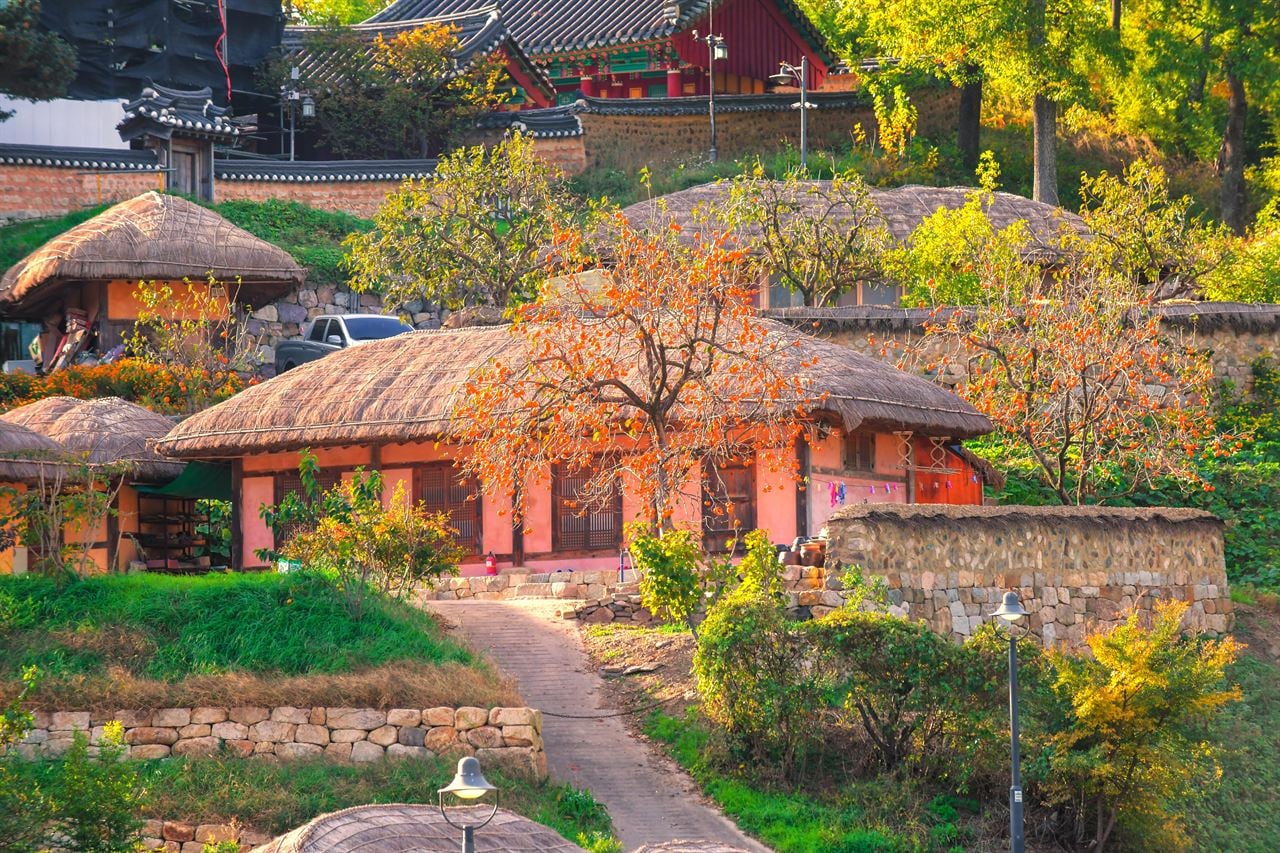
Stone steps lead toward a house, with walls and trees defining the spaces on either side. Here the view becomes more intimate: a doorway, the edge of a courtyard, and the turn in a path matter more than the overall outline of the village.
Yangdong remains a residential village. Admission to the village does not provide unrestricted access to its homes. Official visitor information requires permission for entering houses and distinguishes visitor areas from private living spaces. Following public lanes and designated areas is part of understanding the place as a community.
There is still plenty to notice from those shared spaces. Eaves visible above a wall, stones of different sizes, and the point where a lane divides all reveal how buildings meet the ground. Respecting the boundary keeps the focus on the relationship between daily life and the wider village setting.
See how the lanes link houses and small fields
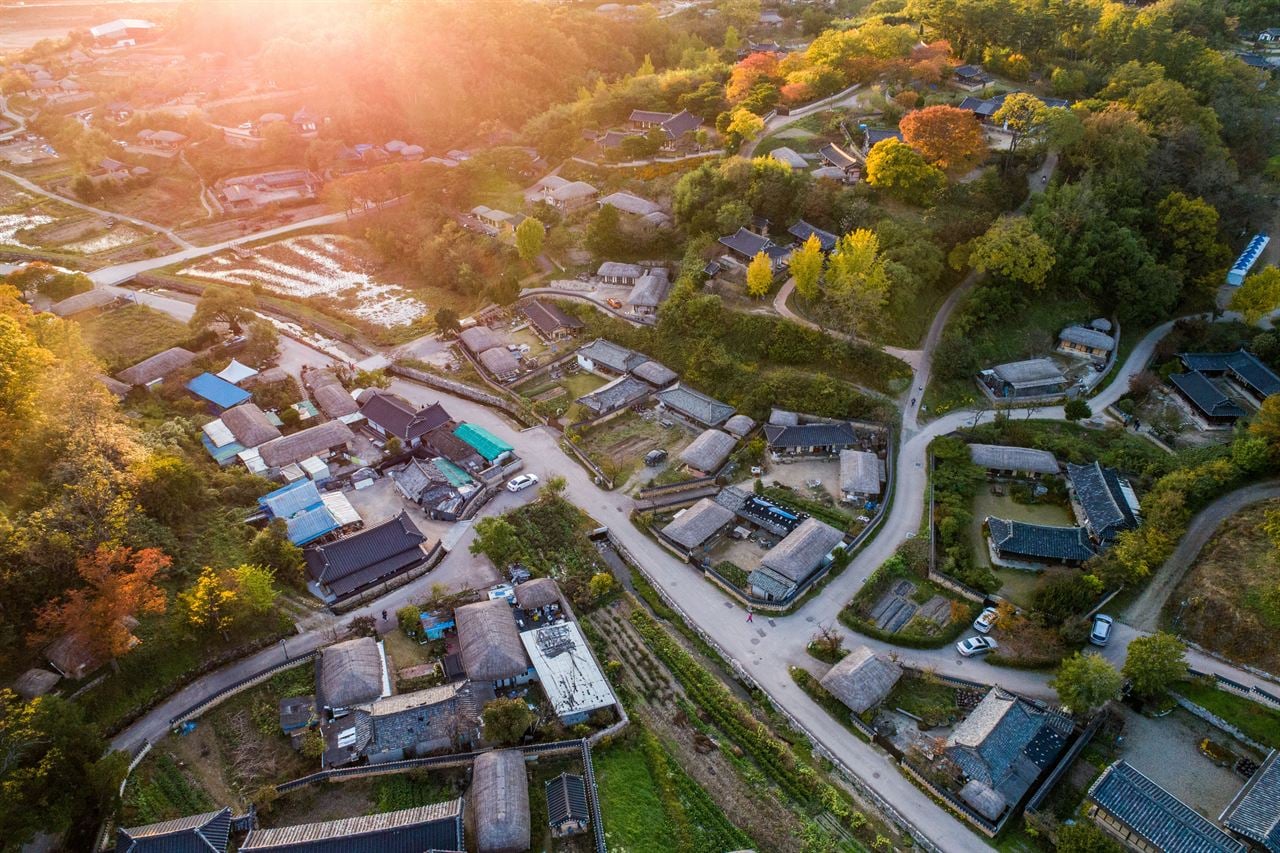
An aerial view shows lanes branching in several directions, with houses and patches of cultivated ground between them. Scenes that appear separate from within a lane become parts of a connected settlement when seen from above.
Gyeongju’s official introduction explains the village through the ridges and valleys extending from Seolchangsan Mountain. The terrain helps organize the houses and paths. Looking at the slope, neighboring trees, and open ground adds context to the shape of an individual roof.
An aerial photograph offers a different view from the one available on foot. Its value is in showing the larger arrangement. Back at lane level, the same idea encourages attention to how a wall or bend partly conceals the next space, and how changes in height open another view.
Place the village within its larger landscape
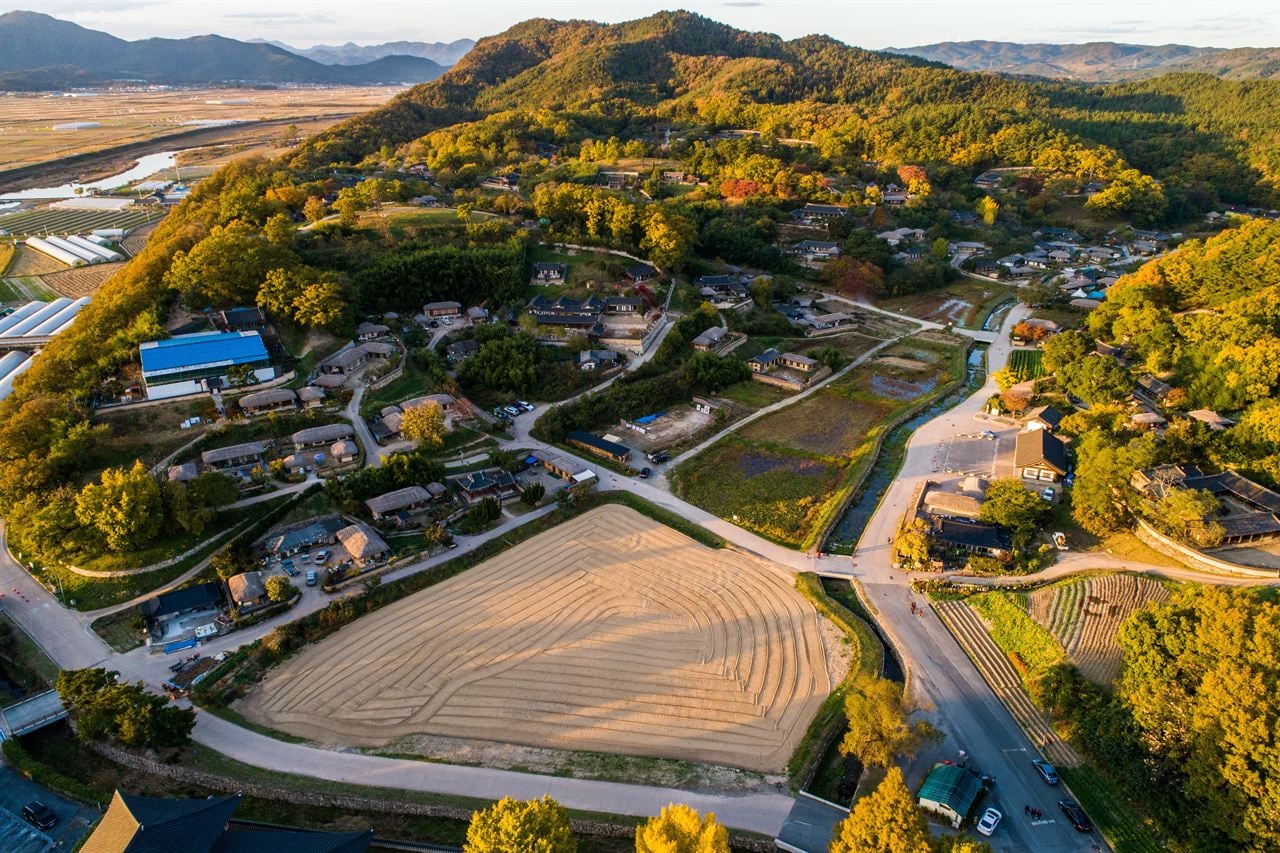
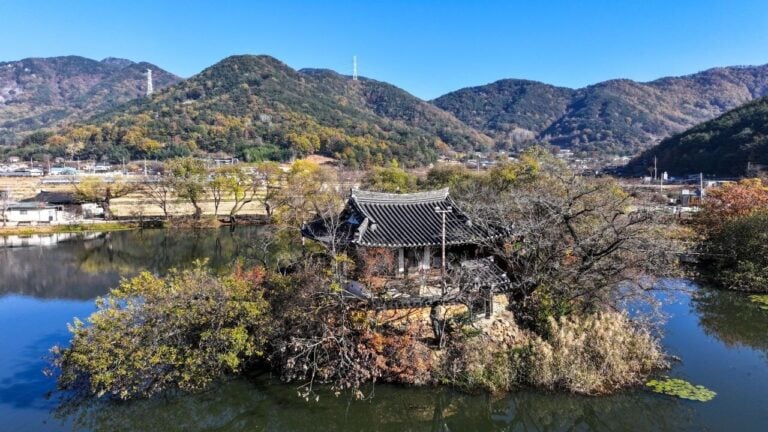
In the widest view, the houses share the frame with fields, water, and wooded hills. The settlement belongs to that larger landscape. Its buildings are not simply a collection of historic objects separated from their surroundings.
Yangdong and Andong Hahoe Village were inscribed on UNESCO’s World Heritage List in 2010. Their significance includes the relationship between clan traditions, domestic architecture, and the natural setting of Korean villages. That connection helps explain why the spaces around the houses deserve attention too.
The official Yangdong Village website provides seasonal visitor information. For a related view of Korean village landscapes, Andong Hahoe Village’s river setting and pine groves offer a useful comparison. Yangdong’s slopes and branching lanes provide a different thread to follow.
Yangdong Village rewards looking at several scales: one persimmon branch, the meeting of thatch and tile, a lane between walls, and a settlement spread across the hillside. Those views connect a fall outing with the place’s continuing life and cultural history.
After noticing a roof, look at the slope and path beside it. Moving between the details of a house and the wider arrangement of the village is a thoughtful way to appreciate this part of Gyeongju.
You May Also Like
by Google Adsense