Cheoneunsa Temple in Gurye: Suhongnu Pavilion, a Stone Bridge and Forest Courtyards
Cheoneunsa Temple in Gurye, where a creekside pavilion and pine-framed gateway meet the foothills of Jirisan
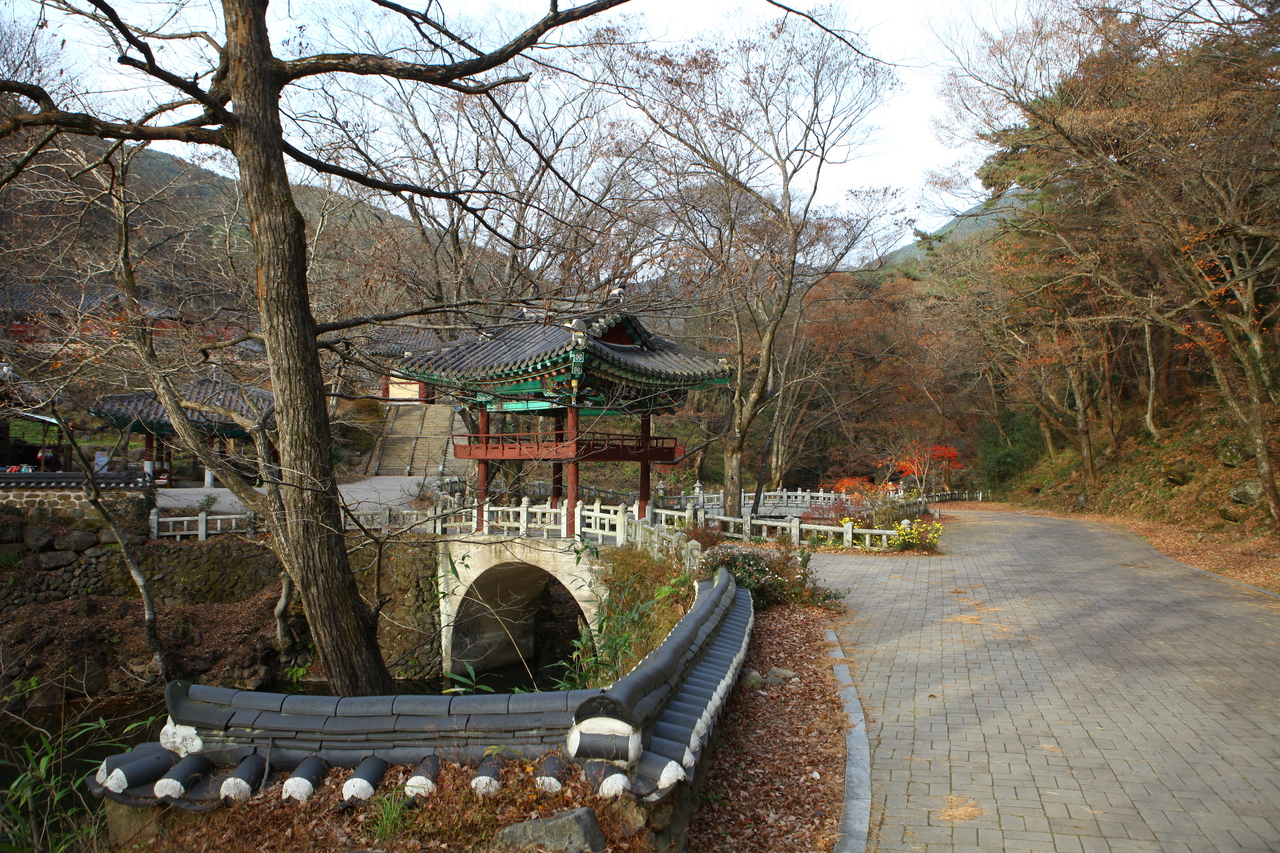
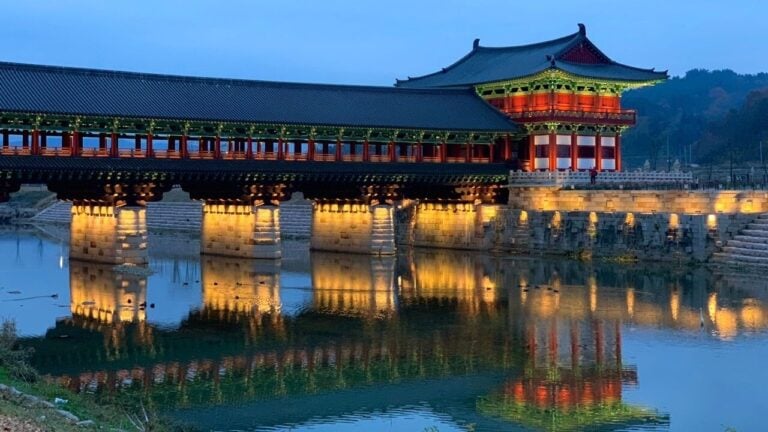
An arched stone bridge supports red columns and a broad tiled roof. Beneath the pavilion, a creek runs between rough rocks. Water and architecture share the same narrow space.
Cheoneunsa Temple stands in Gurye, near the southern foothills of Jirisan Mountain. Its pine-framed entrance, temple halls and creekside Suhongnu Pavilion offer a cultural walk shaped by the terrain around them.
The setting rewards attention beyond fall leaf color. Looking from a gateway to a courtyard, then back toward the water, reveals how the temple’s buildings connect with forest and stream. No particular foliage date is needed to make those relationships visible.
Find Cheoneunsa Temple through its pine-framed gateway
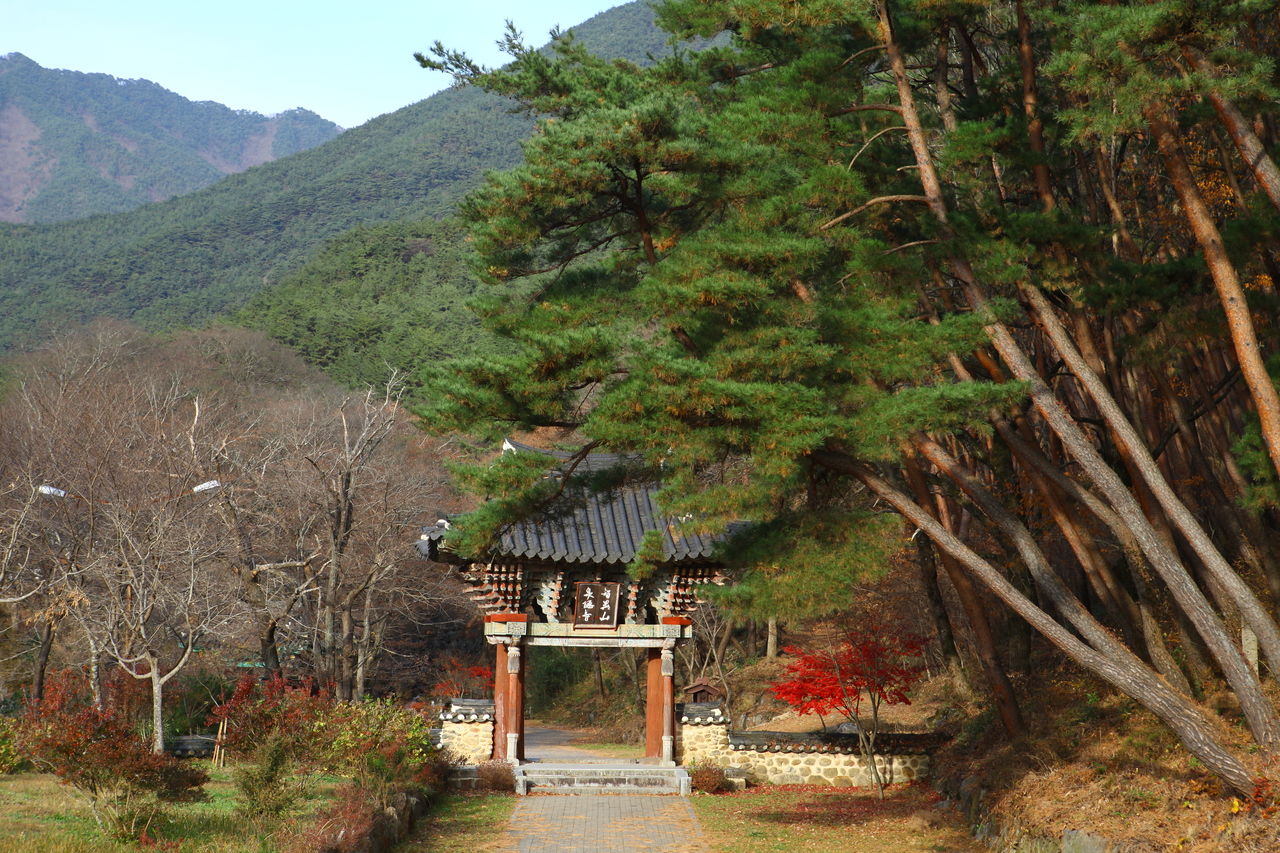
Pine branches spread around the roof of the Iljumun, the temple’s entrance gate. The structure marks a threshold while leaving the surrounding trees in view. Forest and architecture are present together from the start.
The nameboard identifies both Jirisan and Cheoneunsa. The location matters: this is the temple in Gwangui-myeon, Gurye, rather than a similarly named temple elsewhere in Korea. Including Gurye in a search keeps the different destinations distinct.
Before moving on, notice the contrast between the roof’s carefully drawn edges and the less regular branches. The entrance introduces a visual pattern that continues through the grounds: built forms framed by trees, with further spaces opening beyond them.
Look across the courtyard toward Geungnakbojeon Hall
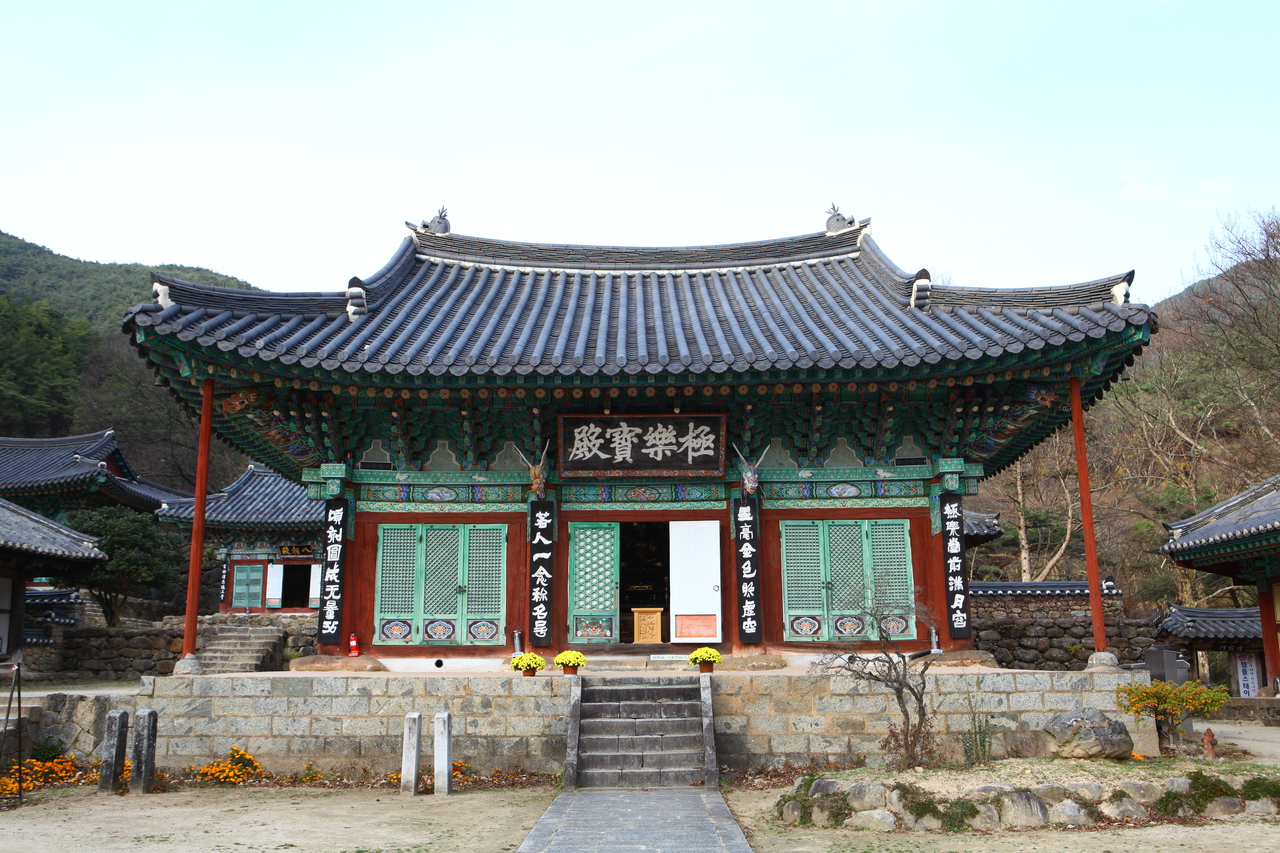
Stone steps lead toward a broad hall with a gently spreading roof. Red columns, green doors and painted brackets become clearer from the courtyard, bringing the building down from a distant roofline to a set of readable details.
Geungnakbojeon is the temple’s central hall. Its name distinguishes it from the other buildings around the grounds and gives a useful starting point for understanding the compound. The temple’s own architectural introduction provides that context.
Cheoneunsa remains a place of worship and practice. A visit can include time looking from the courtyard without assuming every interior is available for sightseeing or photography. The relationship between steps, hall and open ground is already a substantial part of the view.
Move closer to the gateway’s calligraphy and painted brackets
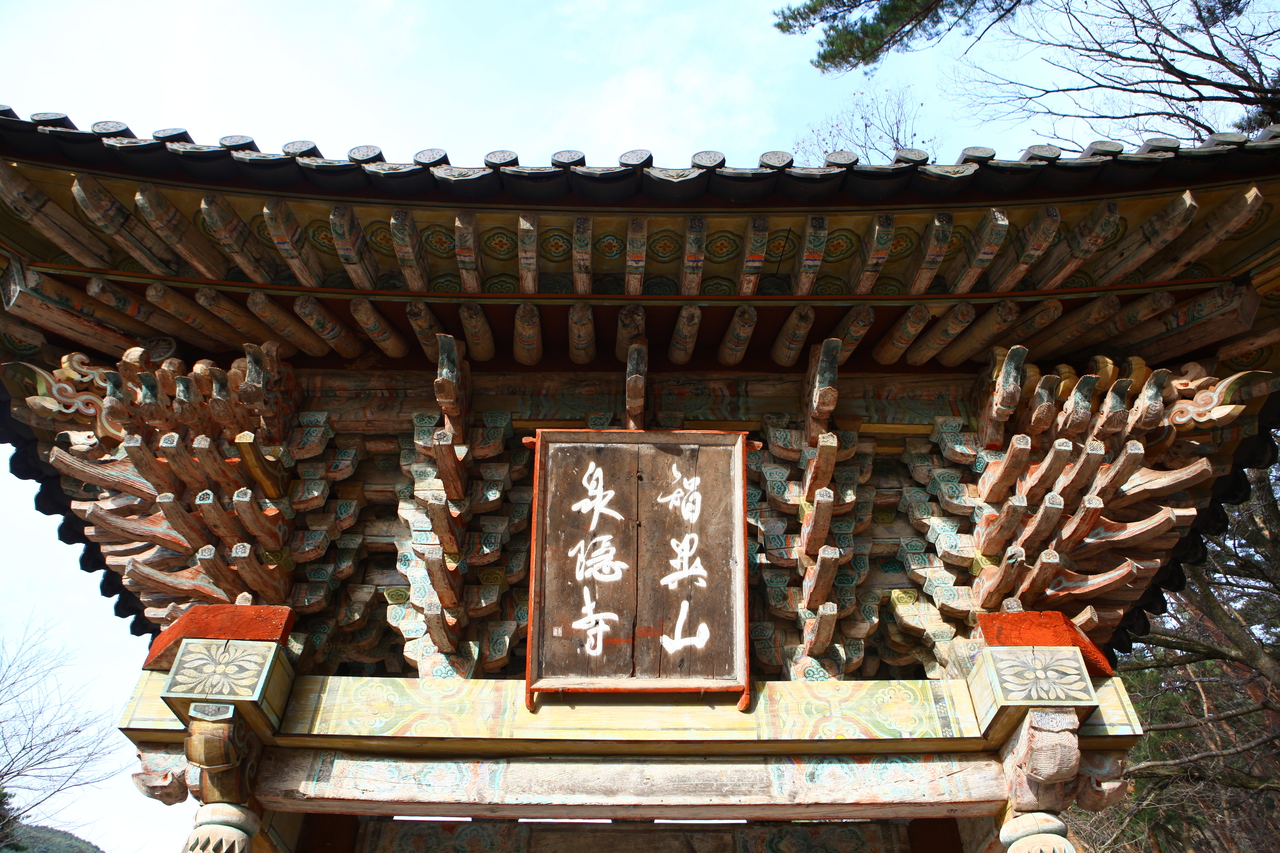
At close range, the gateway separates into a nameboard, layered timber and colored brackets. The broad outline seen from the path becomes a much smaller study of surfaces and connections.
Painted decoration, known as dancheong, follows the wooden structure rather than existing as a flat panel of color. Looking at where the pieces meet helps explain how the roof is supported. Green, blue and red emphasize the different edges.
This change of scale gives a temple walk variety. A wide courtyard view shows proportion; a close architectural detail shows workmanship. Alternating between them avoids treating every hall as another distant roof to photograph and pass.
Follow the tiled roofs toward the mountain backdrop
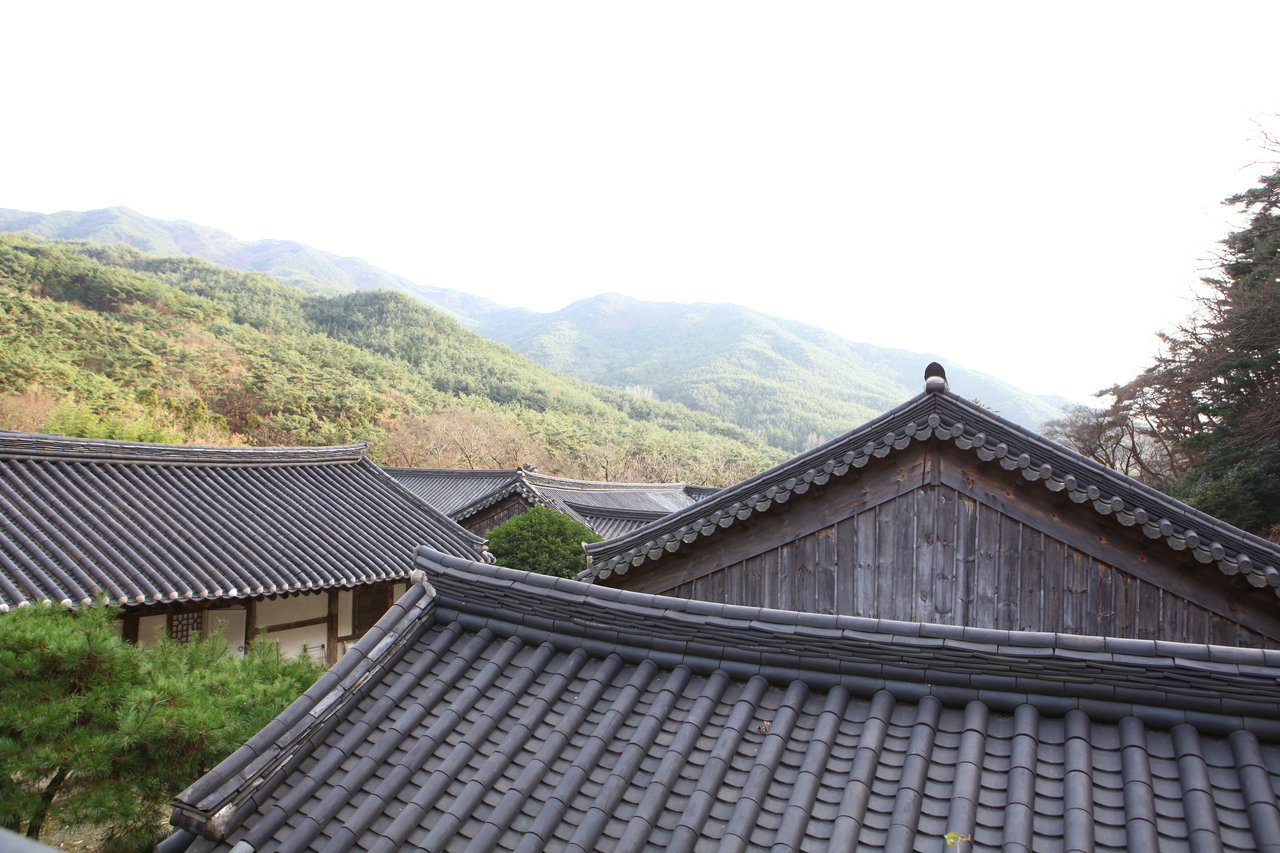
Curving roof tiles fill the foreground, with another gable and wooded slopes behind them. Buildings that appeared separate from the courtyard now form a layered group against the mountain.
The temple’s character comes partly from this arrangement. Similar roof heights connect the halls, while walls, trees and small gaps keep them from merging into one block. The landscape is visible through and above the architecture.
Branches and rooflines remain useful features to notice as the season changes. Rather than relying on one promised day of peak color, a fall visit can follow the transition from close tiles to distant ridges and back to the spaces between buildings.
Return to the creek for another view of Suhongnu Pavilion
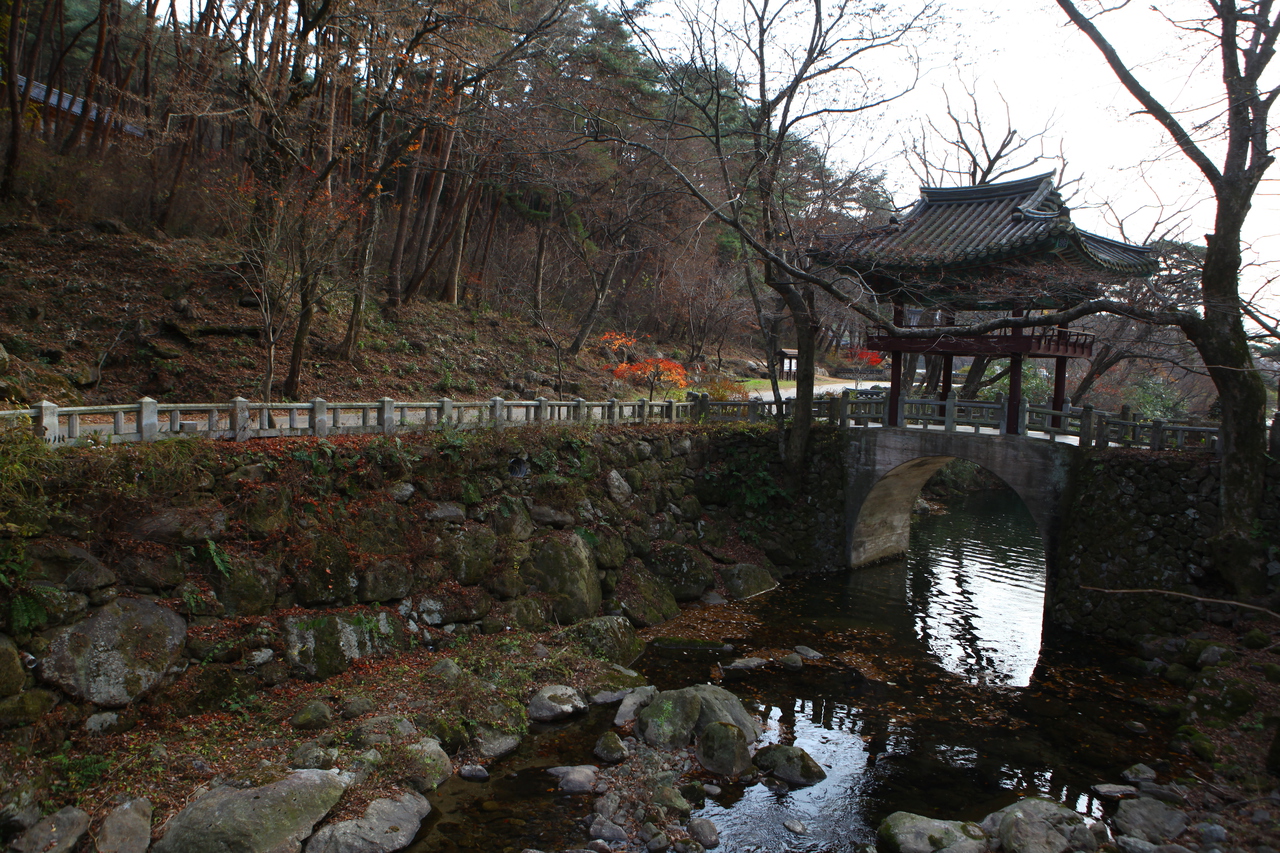
From beside the water, the stone arch becomes more prominent beneath the pavilion. Rough rocks contrast with the straight columns above, making the connection between a crossing and a place to pause especially clear.
Cheoneunsa’s official website introduces the temple’s history and buildings. After looking at the gate and halls, returning visually to Suhongnu shows how much the surrounding creek contributes to the identity of the place.
For a different arrangement of temple courtyards in southwestern Korea, Daeheungsa Temple in Haenam offers another mountain setting. At Cheoneunsa, the water passing beneath the pavilion gives the compound a particularly distinctive focal point.
Cheoneunsa Temple in Gurye suits an outing that combines a forest entrance, traditional architecture and a close creekside view. Its appeal comes from the way those elements meet, with changing autumn scenery adding another layer to the walk.
You May Also Like
by Google Adsense