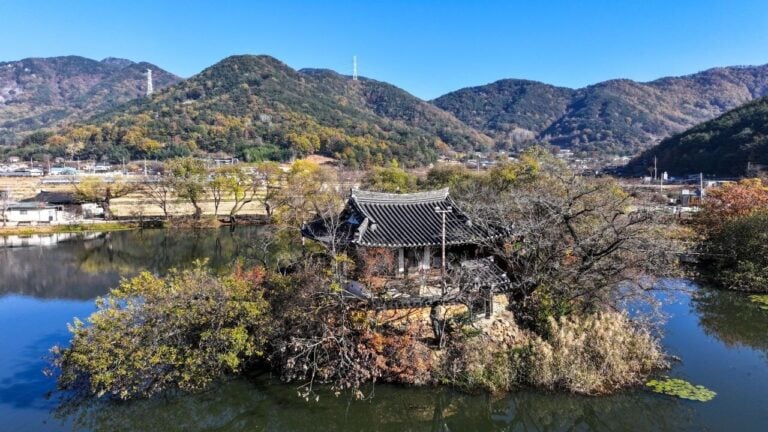
Mulhyanggi Arboretum in Osan: Pond Views, Woodland Paths and a Plant Library
Mulhyanggi Arboretum in Osan, a public garden linking mature trees, themed planting and spaces for learning about forests
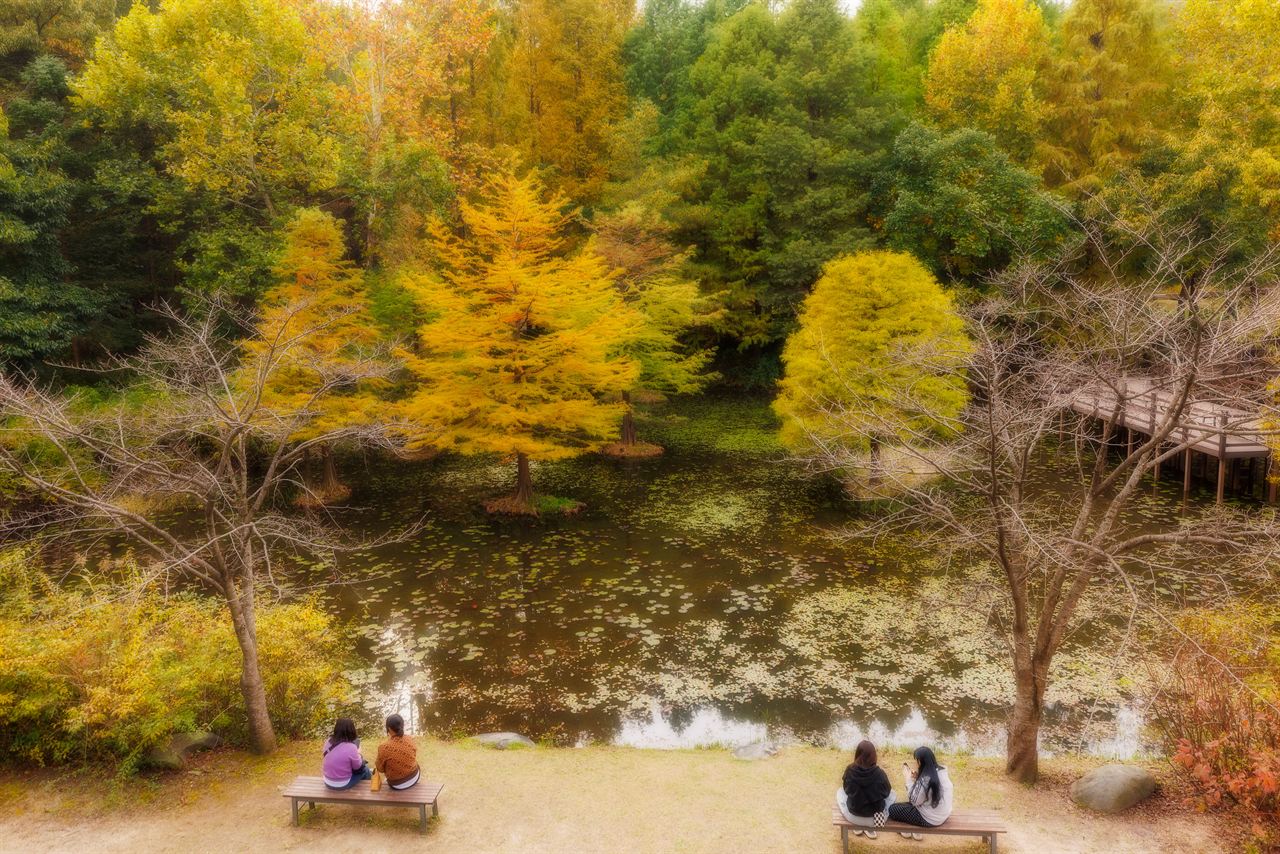
Yellow foliage overlaps darker green crowns around the pond. Fallen leaves gather on the water, and the benches face the trees rather than a building or a broad paved square.
Mulhyanggi Arboretum is a public arboretum in Osan, south of Seoul. Opened in 2006, it brings together woodland, water and themed planting around the relationship between plants and people. Its educational spaces are part of that landscape rather than a separate reason to visit.
The walk moves between different scales: large trees overhead, small plants beside the path and views framed by buildings. That sequence makes the garden interesting beyond a search for a particular shade of fall foliage.
Walk beneath the mature trees at Mulhyanggi Arboretum
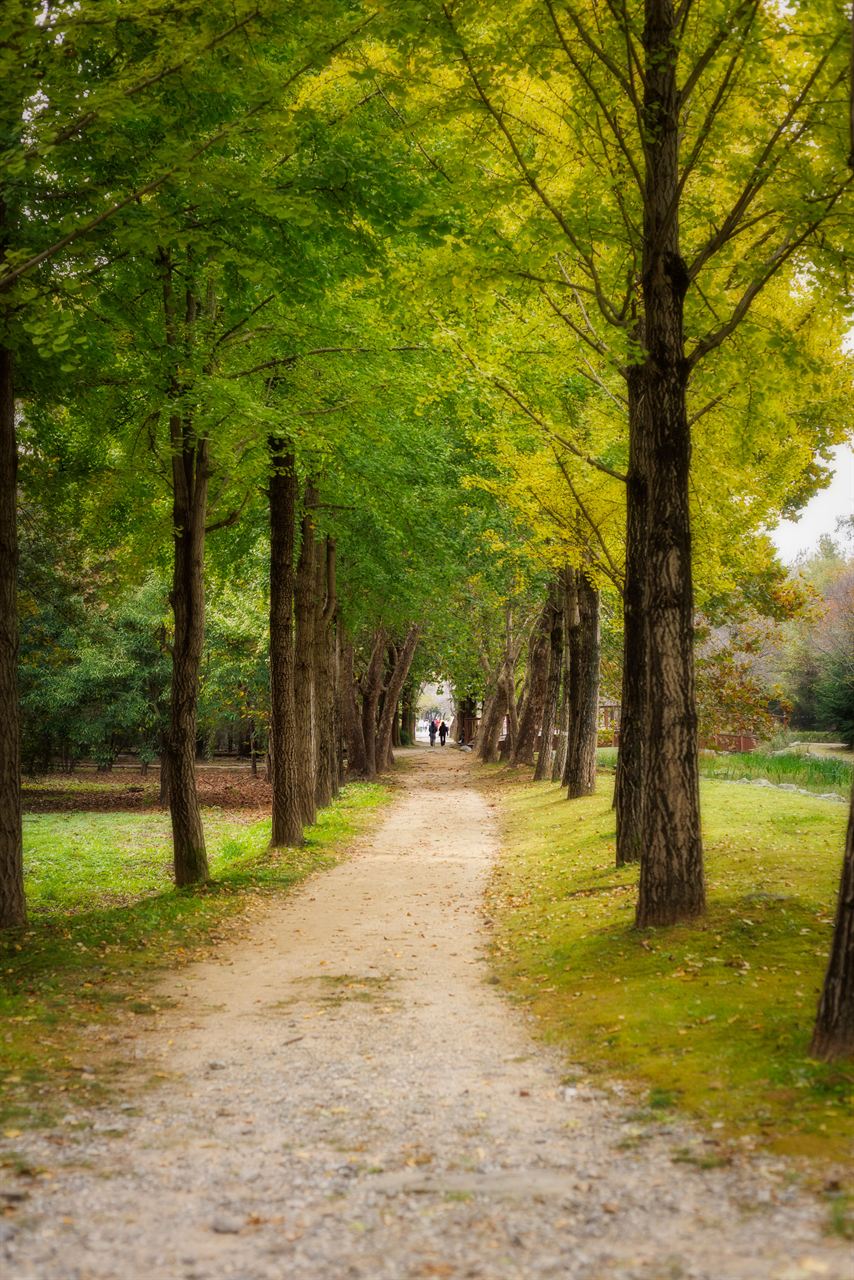
Substantial trunks line both sides of the path, while branches meet above it. The more distant part of the walk appears between the nearer trees, giving the scene a sense of depth.
The arboretum developed on land previously used for forestry research. Established trees remain part of the setting alongside more deliberately arranged themed gardens. The result is a public green space where a broad woodland canopy and detailed planting can be encountered on the same walk.
Looking at the spaces between trunks is as useful as looking up at their height. The rhythm of the planting, the width of the path and the light reaching the ground all contribute to the view. The forest becomes a collection of individual forms rather than a single wall of greenery.
Compare the planting at ground level with the canopy
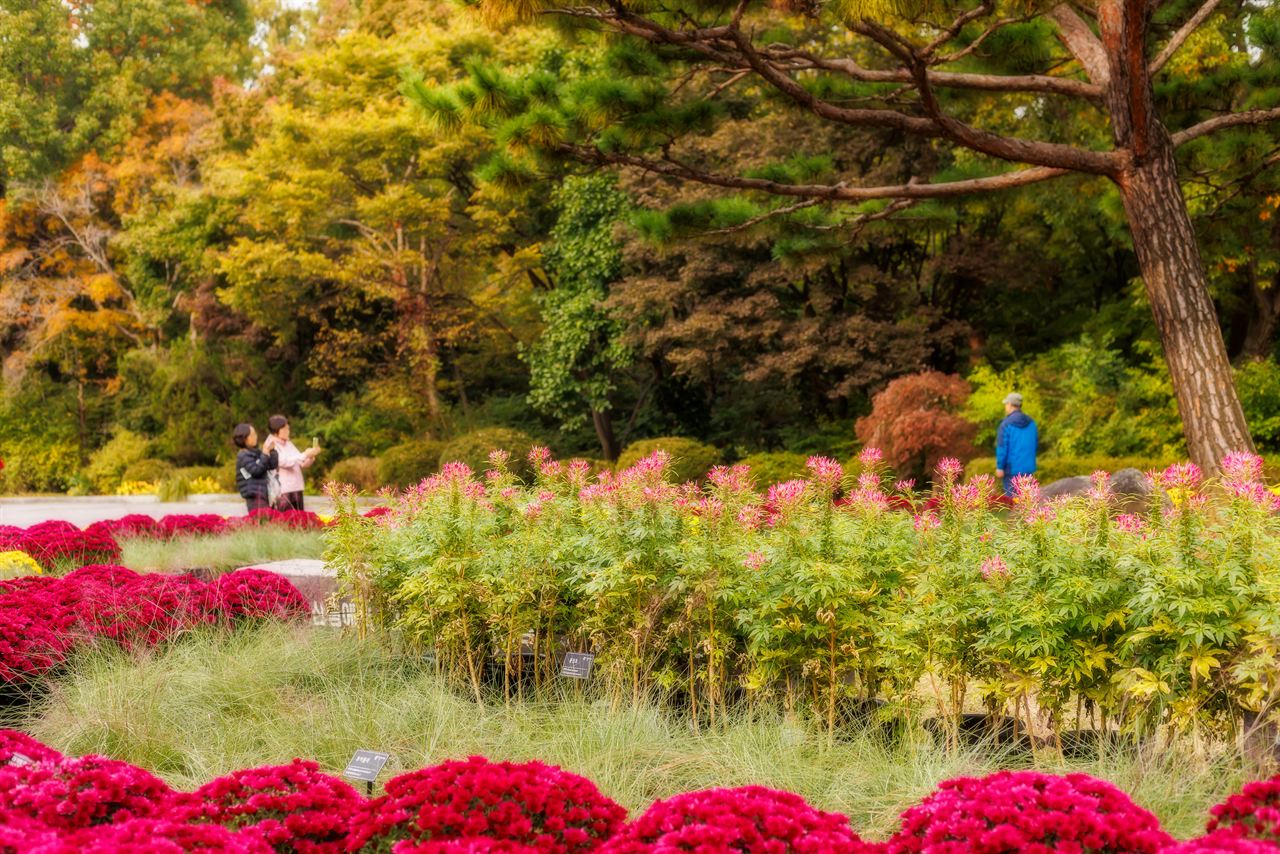
Low plants gather in the foreground, while larger trees provide a higher backdrop. The overlap connects a cultivated garden scene with the woodland beyond it, so the two do not feel like unrelated parts of the visit.
Mulhyanggi contains themed areas including aquatic plants, wetland ecology and maples. Organizing plants by habitat or characteristics gives a visitor more to look for than color alone. Leaf shape, height and the amount of space a plant occupies can make a bed worth a closer look.
Flowering and seasonal displays change with weather and planting decisions. A late-season walk can also focus on leaves, seed heads and stems. Those forms help explain how the garden changes through the year without depending on every flower bed looking the same on each visit.
Notice the change of setting beside the glass entrance
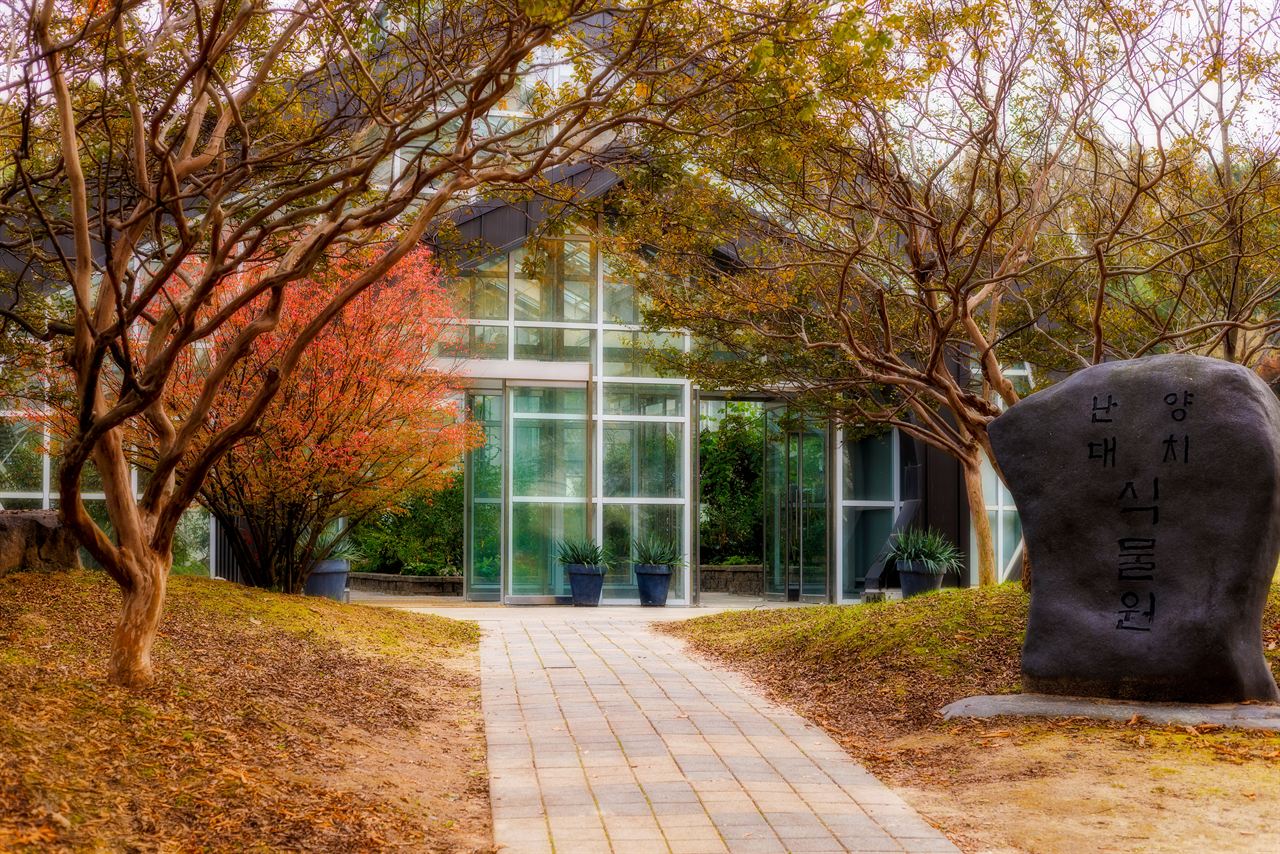
A path between trees reaches a glass entrance. Outside branches and planting beyond the doors share the same view, drawing attention from the broad canopy to the shapes of closer leaves.
The warm-temperate plant area presents plants associated with milder conditions, allowing a comparison with the outdoor woodland in Gyeonggi Province. The contrast is botanical as well as visual: different leaves and growing habits occupy a more closely arranged setting.
Looking from the closer planting back toward the outdoor trees makes the change in growing environment more apparent. The leaves and branching forms offer a comparison with familiar street trees. Different plant spaces give the arboretum several scales of observation within one visit.
Connect the woodland scene with the forest exhibition building
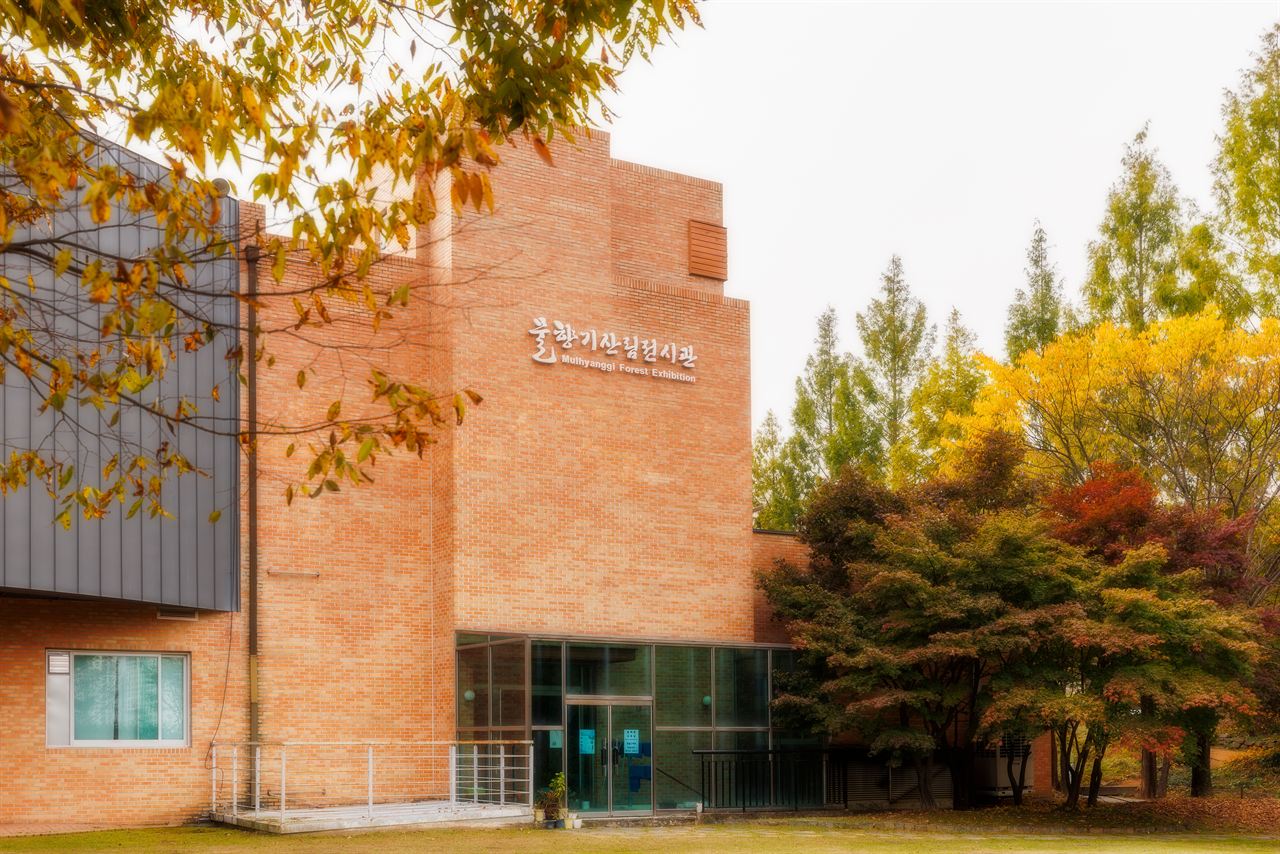
The brick building stands close to the trees, with branches extending across the edge of the view. It introduces a different way of encountering the forest after the open paths and planting beds.
The forest exhibition space addresses woodland and wetland ecology and the relationship between people and nature. Its role fits the arboretum’s broader theme. A visitor can move from looking at a tree or a waterside planting area to considering how those elements belong to an ecosystem.
The useful contrast is between direct observation and interpretation. A view of leaves and branches offers detail; a display can provide context for that detail. Together, the outdoor setting and educational spaces explain why Mulhyanggi is an arboretum rather than simply a large neighborhood park.
See the trees again through the plant library’s windows
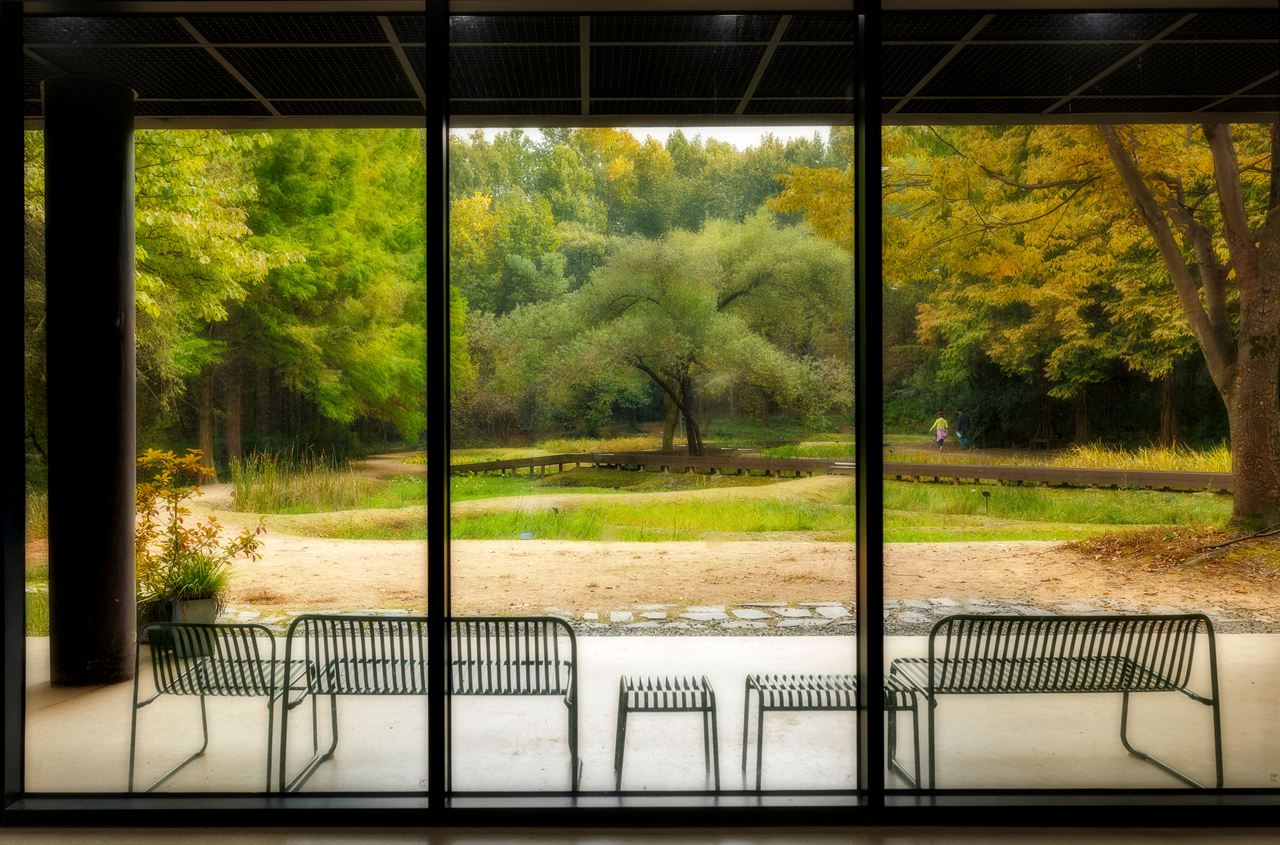
The window frames divide the woodland into separate views. Benches, paths and branches appear within those borders, giving the same trees a different composition from the view along an outdoor trail.
Gyeonggi’s official Mulhyanggi Arboretum introduction places water, trees and people at the center of the site. A space devoted to plants and books adds another way of relating to that landscape, with the woodland remaining visible through the glass.
For another public-facing plant collection, Jeonju Arboretum’s pond paths and garden rooms provide a comparison. Its pond paths and smaller garden spaces show another arrangement of planting, offering a comparison with Mulhyanggi’s larger woodland canopies and educational spaces.
Mulhyanggi Arboretum suits a fall walk that connects large trees with smaller observations. The pond, woodland paths and framed views leave a clearer impression when they are seen as different parts of one living landscape.
You May Also Like
by Google Adsense