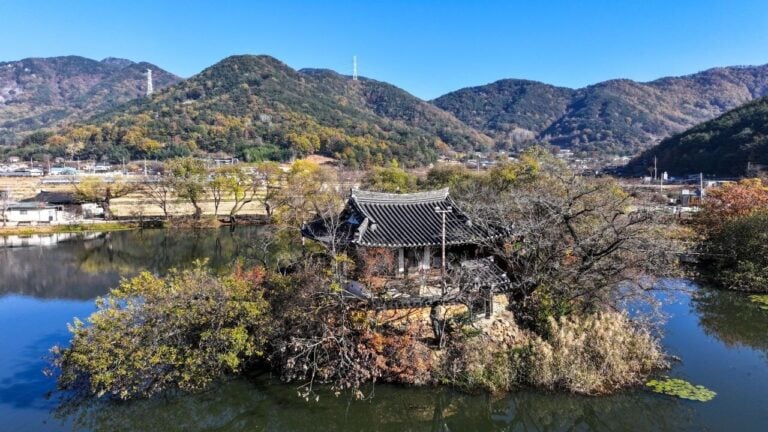
Baengnyeonsa Temple in Gangjin: Evergreen Camellia Forest, Stone Stupas and Bay Views
Explore the wooded setting on Mandeoksan Mountain, from camellia trunks and scattered stupas to tiled roofs overlooking Gangjin Bay
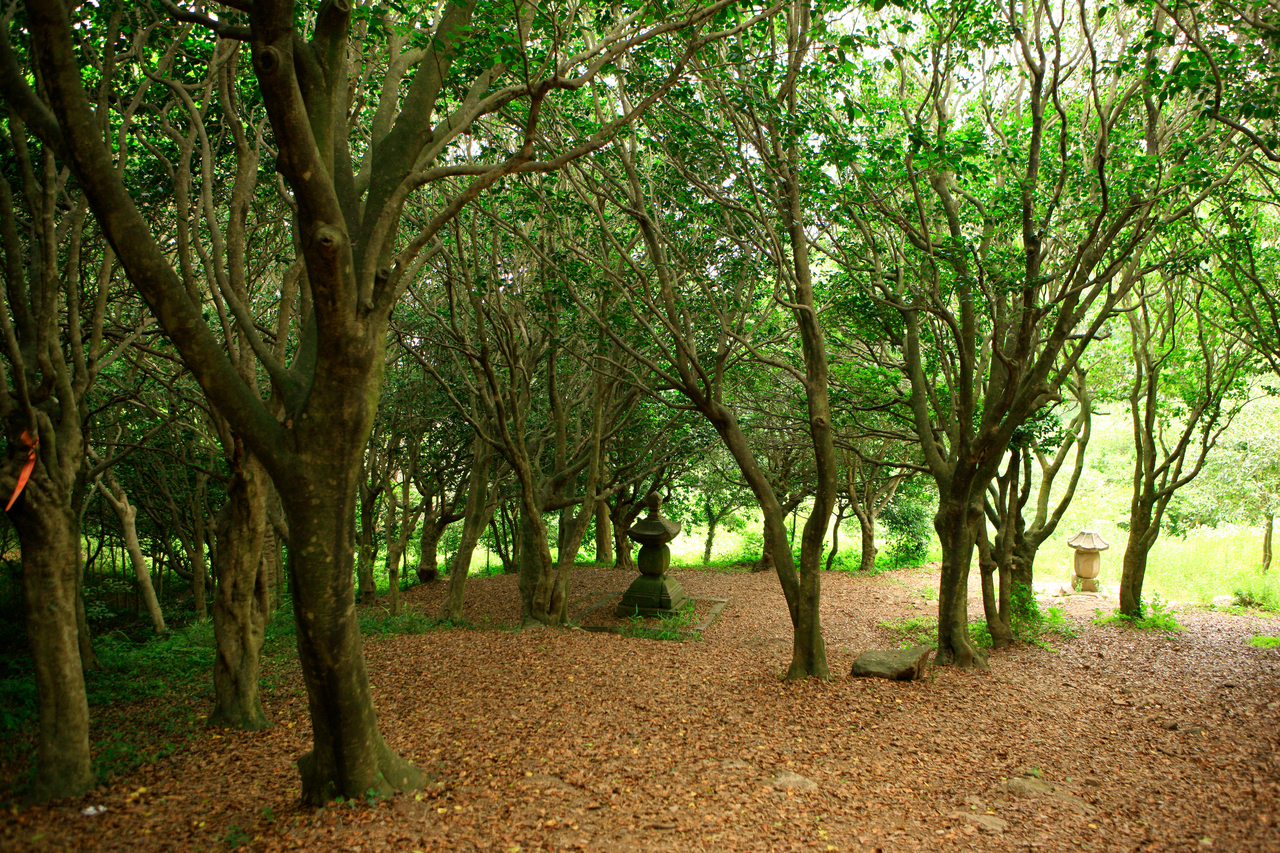
Low branches spread into a layered canopy. Small stone monuments stand between the trunks, and fallen leaves cover parts of the ground. The dense green overhead is the first feature of this woodland, even without flowers.
Baengnyeonsa Temple stands on the slopes of Mandeoksan Mountain in Gangjin County, in southwestern Korea. Its protected camellia forest forms an evergreen setting around the temple, while gaps between the buildings open toward Gangjin Bay.
The name camellia can bring an expectation of a woodland covered in red blossoms. Flowering and evergreen foliage are different attractions, however. For a later-fall visit, the trunks, stone monuments and relationship between roofs and water offer a fuller way to understand the place than assuming a particular bloom.
Look through Baengnyeonsa Temple’s rooflines toward Gangjin Bay
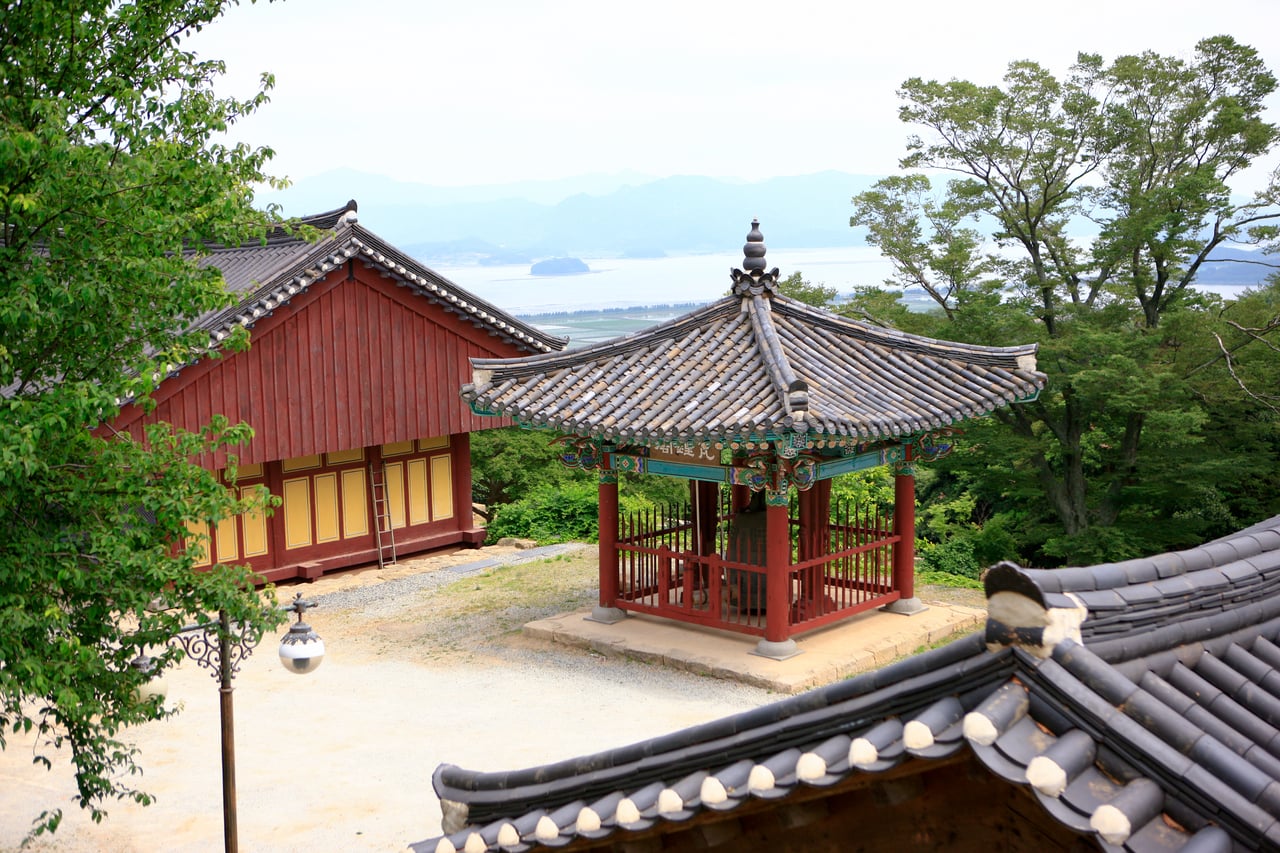
A compact tiled roof stands in front of the side wall of another building. Farther back, pale water meets a low ridge. Close roof tiles and the broad, flatter surface of the bay bring two different scales into one view.
Baengnyeonsa belongs both to the woodland and to the open coastal landscape below. Its buildings do not completely close off the view. Their arrangement leaves intervals where the bay appears between painted timber, foliage and roof edges.
Those gaps can be as revealing as a building’s main facade. Following an eave sideways brings trees, mountain and water into changing relationships. A visit that begins under a canopy can turn outward toward the wider landscape once it reaches the temple grounds.
Find the forest’s depth around its scattered stone stupas
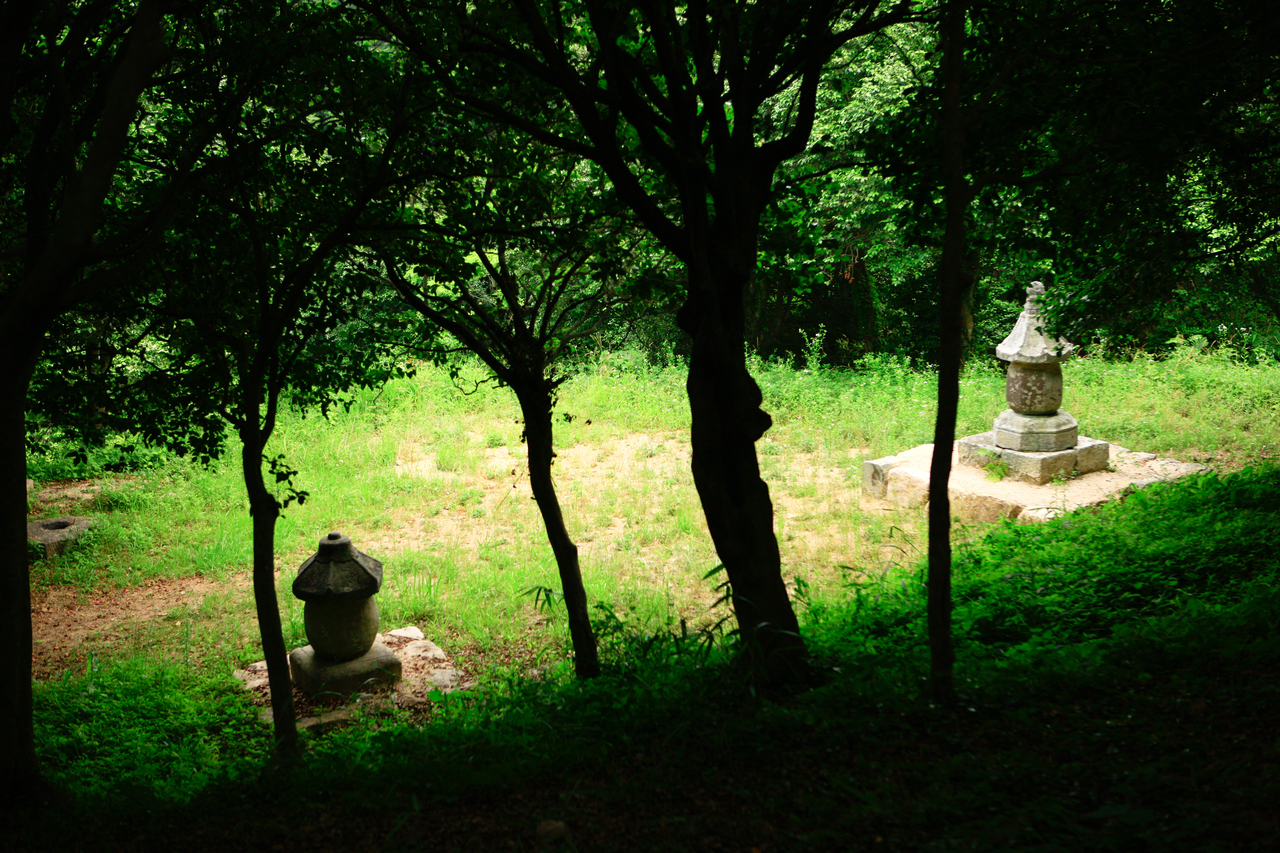
Small stone monuments stand at different distances beneath the trees. One is close to the foreground, while another occupies a brighter opening farther back. Trunks and shadow make their separation easy to read.
These stupas commemorate Buddhist monks. Here they are encountered within the wooded terrain rather than as a single object isolated in an open square. Looking at the stone also brings the surrounding canopy and the space between trees into focus.
The camellia forest is protected as a Natural Monument. Its interest extends beyond a brief flowering period: branching patterns, overlapping leaves and shifts between shade and light give it a distinct form. Observe it from established paths and respect the boundaries of protected woodland.
Notice how a doorway changes the scale of the bay
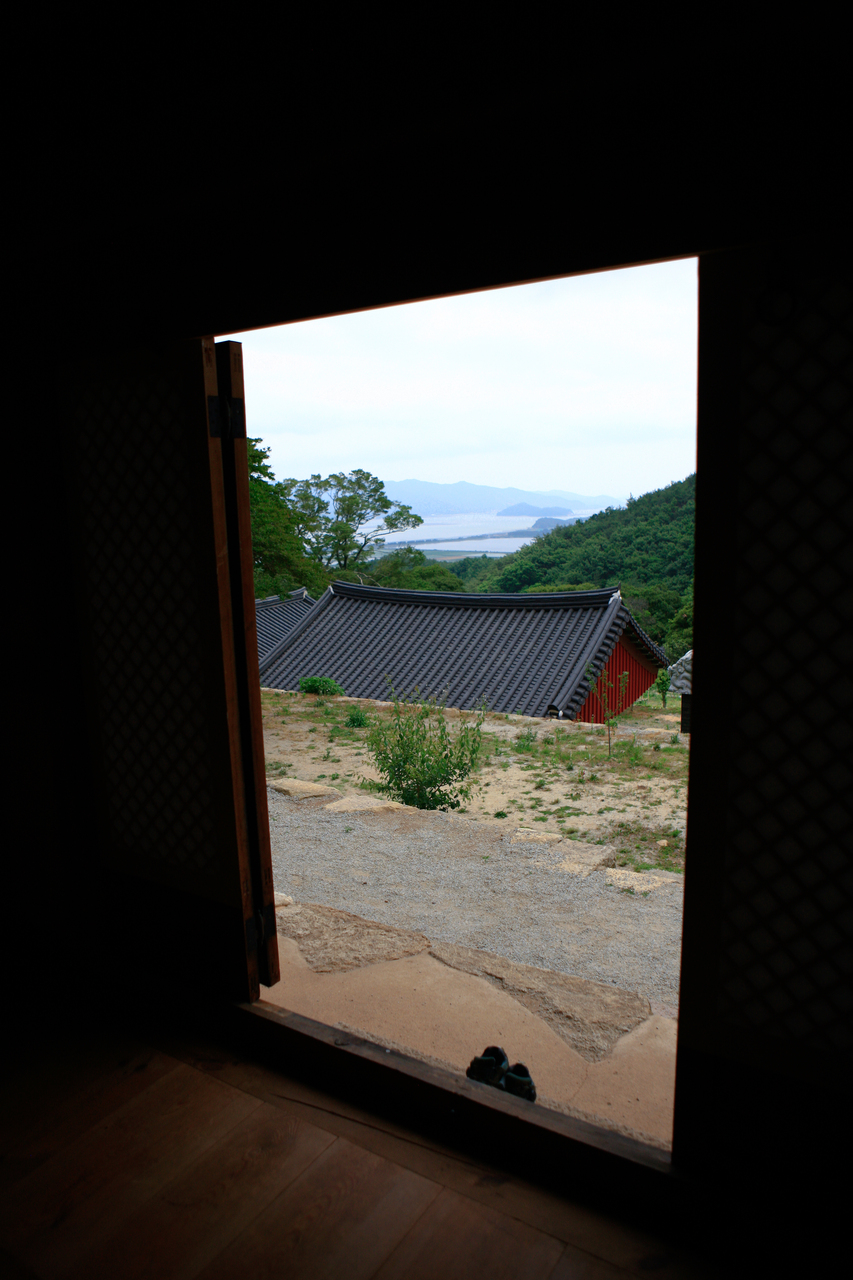
A dark doorframe encloses a lower roof and a strip of water. A broad landscape becomes a smaller rectangle. The contrast brings the curve of the tiles and the brightness of the bay into sharper focus.
The same body of water looks different from an open courtyard and from a narrow architectural opening. A timber boundary gathers the distant scene into something closer and more intimate. Building and landscape are difficult to separate at Baengnyeonsa.
Temple halls remain religious spaces. A photograph taken through a doorway does not imply that every interior is open to visitors. Similar relationships can be observed from permitted exterior areas, where eaves and walls frame the view without requiring entry into a prayer space.
Compare a lattice door with the living forms of the woodland
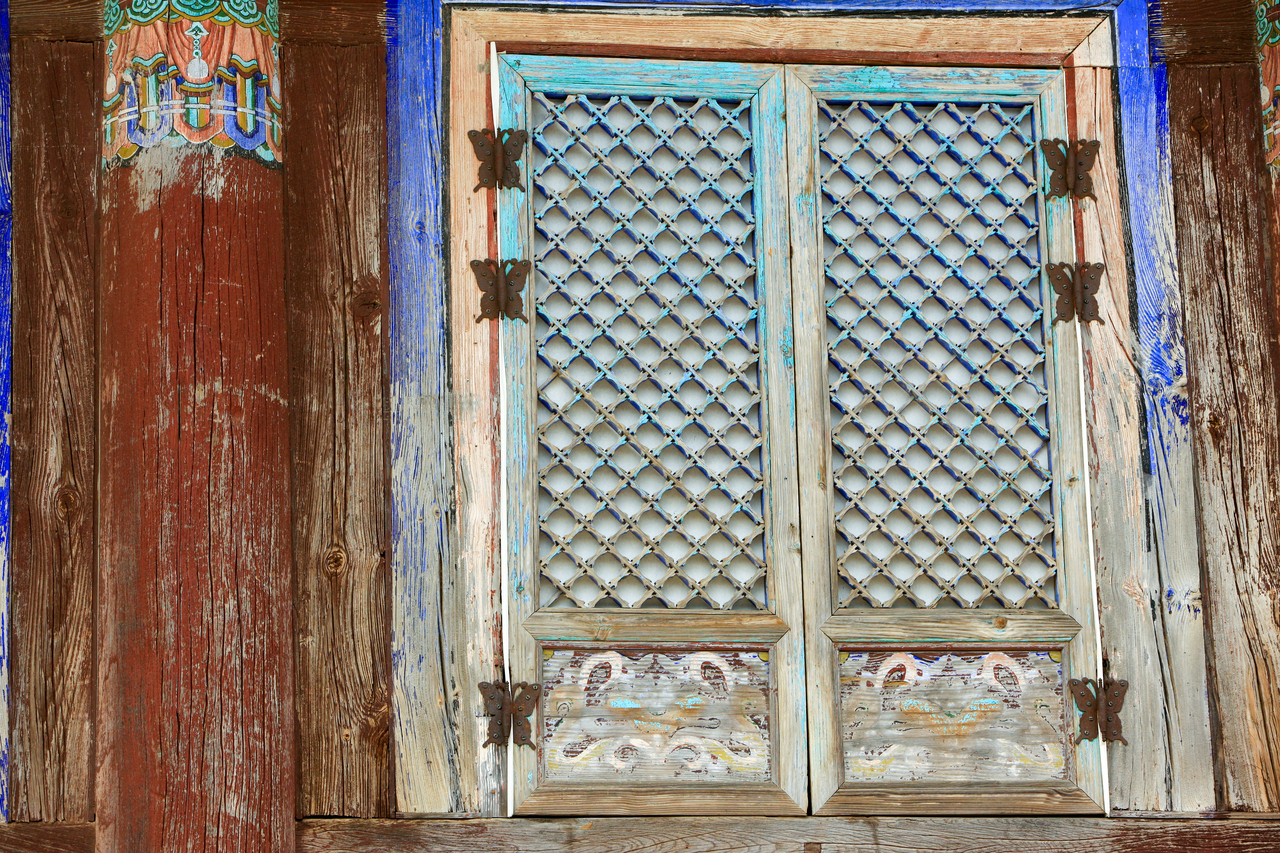
Slender wooden members cross at angles inside a heavier frame. Color collects in several layers around the edges. After the branching forms of the forest, the door introduces a more deliberate pattern made from the same basic material.
Timber architecture reveals wood arranged for a different purpose from a growing tree. The frame, repeated lattice and placement of metal fittings show how the structure was made. Moving from the whole roof to a door changes the scale at which the temple is understood.
Historic religious buildings continue through repair and care. The surface visible at one moment does not permanently define their appearance. Looking at pattern and material is more informative than treating a weathered panel as proof that the entire temple has remained unchanged.
Connect the wooded roofs with Gangjin’s tea heritage
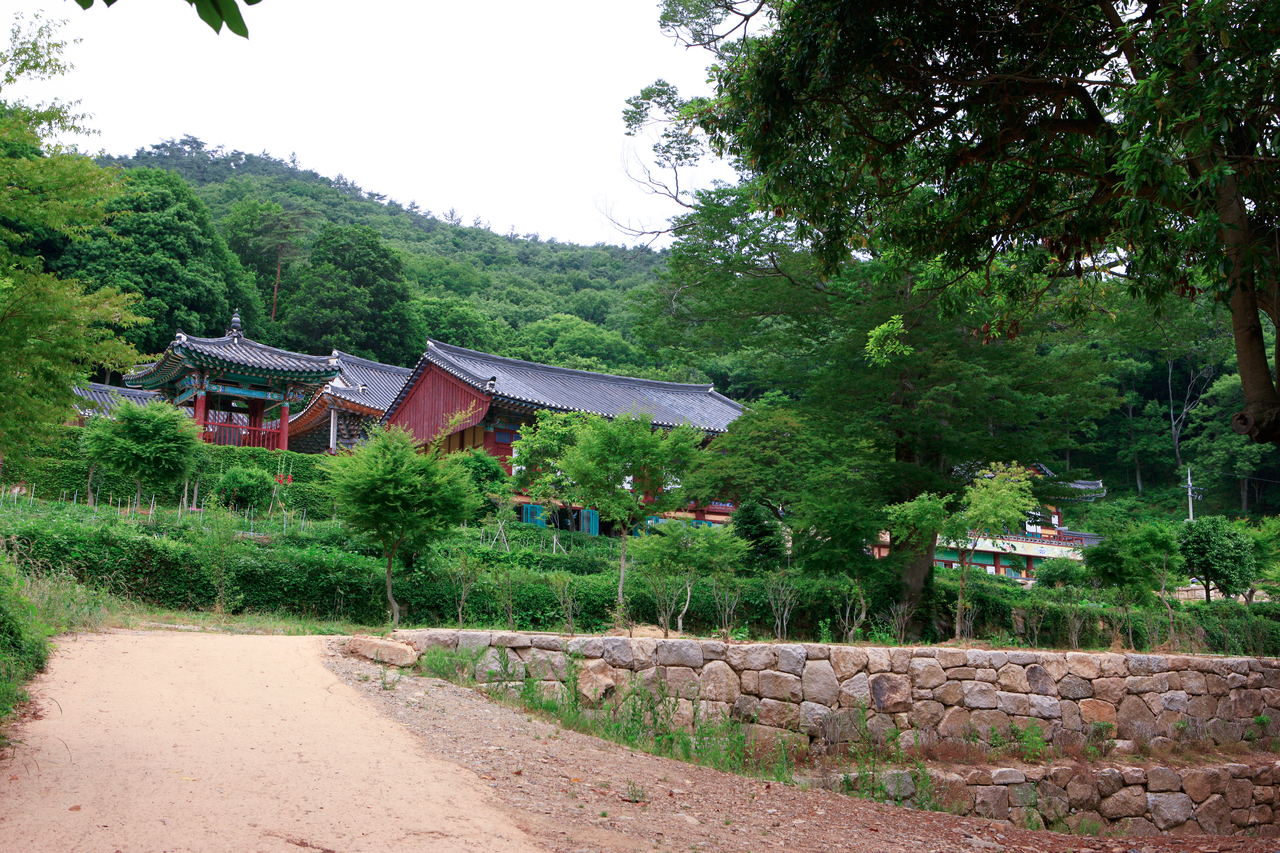
A long roofline appears between trees above a low stone wall. Only part of the building is visible. Rather than standing apart from the hillside, the temple reads as one element within a larger wooded setting.
The Korea Heritage Service’s Baengnyeonsa and Dasan Chodang landscape entry connects this area with the friendship of scholar Jeong Yak-yong, known as Dasan, and the monk Hyejang, as well as its tea culture. That history gives the forest and bay a human dimension.
For another southern temple landscape associated with tea, read about Daeheungsa Temple’s courtyards in Haenam. Its arrangement of mountain, halls and open spaces provides a different perspective on the region’s Buddhist architecture.
Baengnyeonsa can remain memorable for its branching camellias before a single flower appears. Stone stupas, latticework and the bay beyond the roofs add other points of attention. Together they give the visit substance beyond a particular season’s brightest moment.
You May Also Like
by Google Adsense