Mihwangsa Temple in Haenam: Dalmasan Rock Ridges, Timber Doors and Open Courtyards
Explore a southern Korean temple through Daeungbojeon Hall’s woodwork, low stone walls and the rocky mountain behind its roofs
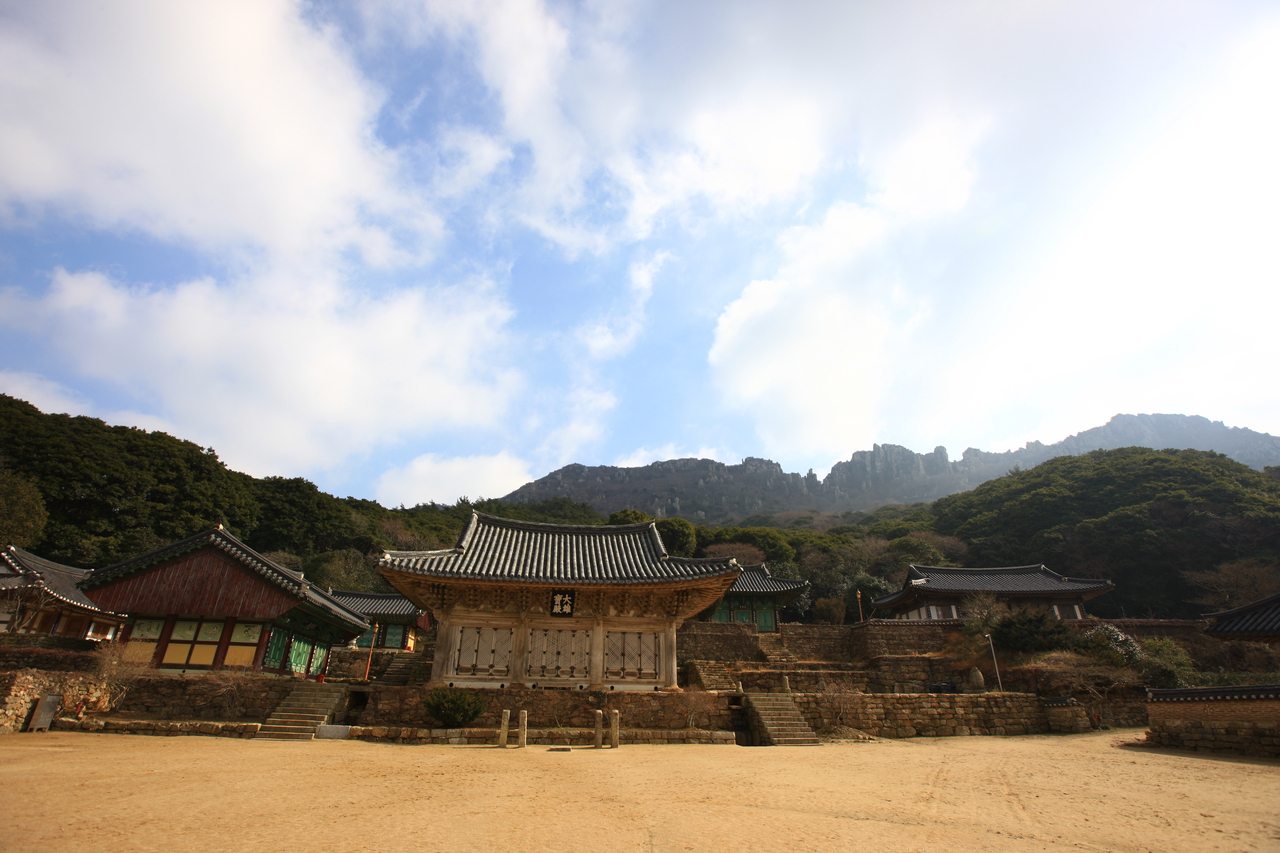
A timber hall stands beyond a broad, open courtyard. Behind its roof, an uneven rock ridge rises against a much larger expanse of sky. Building and mountain occupy different heights while remaining part of one clear composition.
Mihwangsa Temple sits on the western side of Dalmasan Mountain in Haenam, near the southern end of mainland Korea. Its halls, low walls and earthen courtyards create a setting that can be appreciated both from a distance and through close details in the woodwork.
A later-fall visit need not depend on catching the most vivid leaves. Thinner branches can make a wall or roof easier to see. At Mihwangsa, the contrast between irregular rock formations and deliberately shaped timber gives the landscape substance beyond a short foliage window.
Look at the timber lattice on Mihwangsa Temple’s main hall
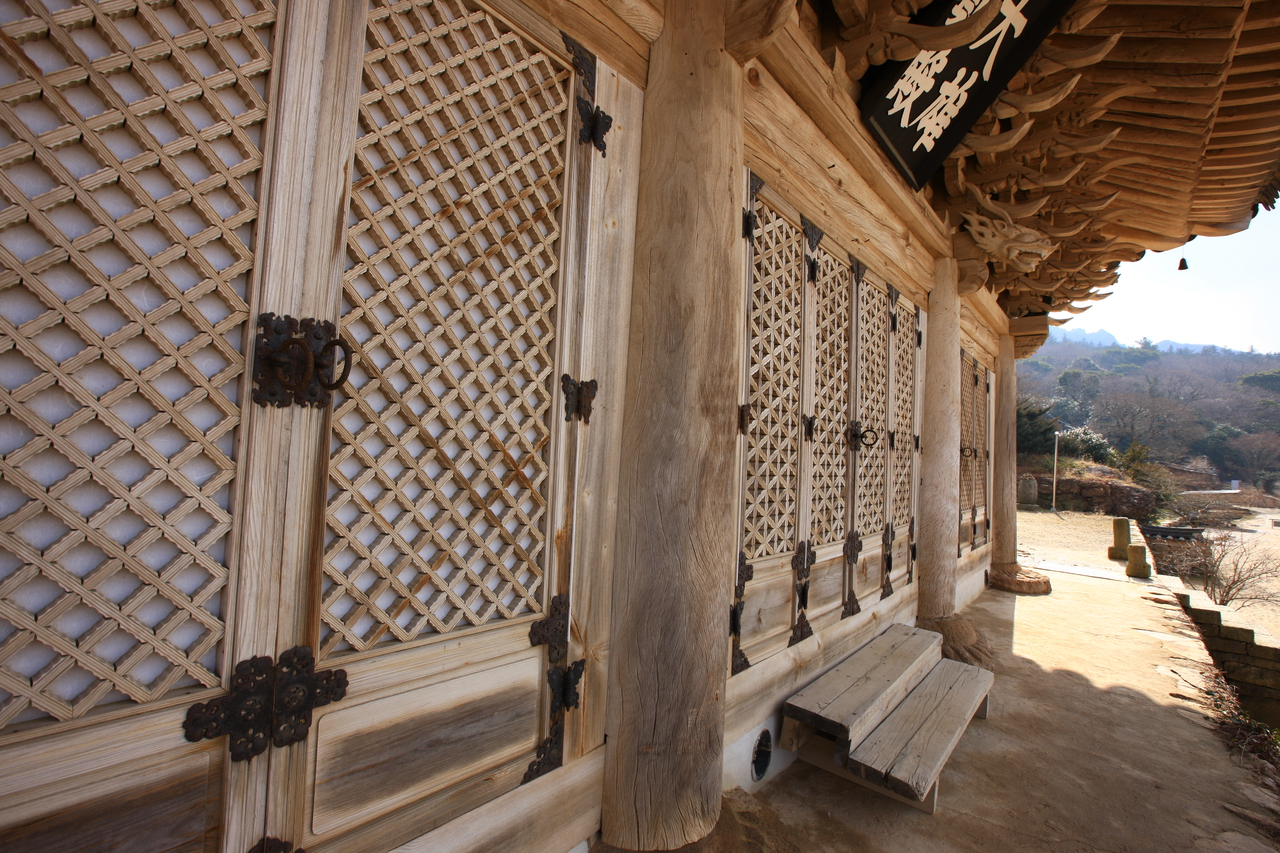
Narrow wooden members cross diagonally within the doors. Heavier posts divide the panels, while low stepping stones follow the edge below. Overhead, an extended eave gives the facade depth.
Daeungbojeon is the temple’s central Buddhist hall. Grain, spacing and the meeting of large and small timbers provide a close view of its construction. The repeated fine lines of the lattice feel quite different from the broad posts beside them.
The doors belong to an active religious building. Appreciating their exterior does not require assuming that the interior is open for casual entry. A single panel offers plenty to notice: crossed members, the weight of a frame and the way the wood catches the light.
See how timber brackets carry the roof beyond the wall
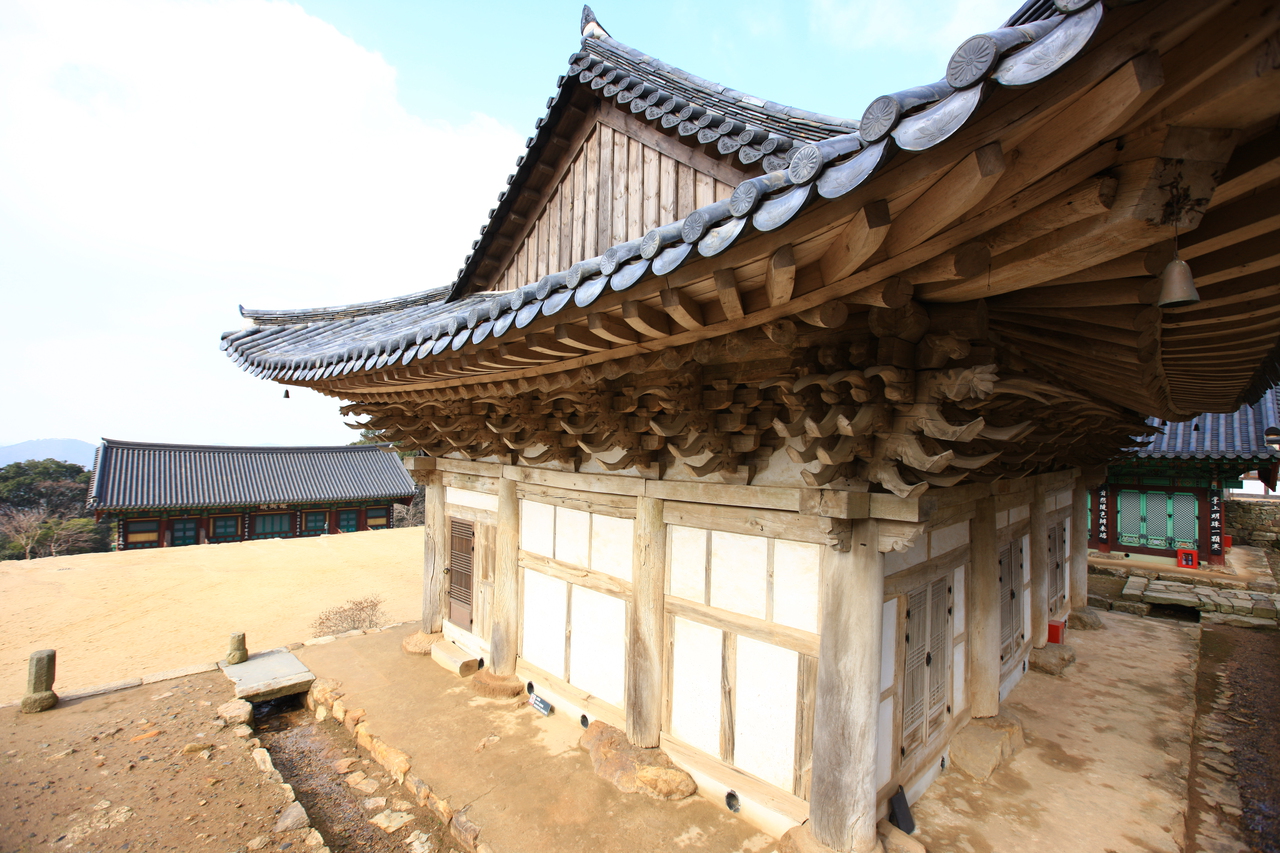
Several layers of timber project beneath the roof. Rafters extend outward while other members cross below them. The eave casts a deep shadow that makes the structure appear more intricate from the side than it does from across the courtyard.
The Encyclopedia of Korean Culture’s entry on Mihwangsa Daeungjeon describes a multiple-bracket structure, with roof supports above and between columns. The technical name is less important than noticing how separate wooden elements work together.
Compare a front view of the roof outline with a closer look beneath an eave. Similar timber colors allow differences in direction and shadow to become more noticeable. Historic halls also continue through conservation and repair; their surfaces should not be treated as a promise that every detail remains unchanged.
Notice the jars beside a long, low building
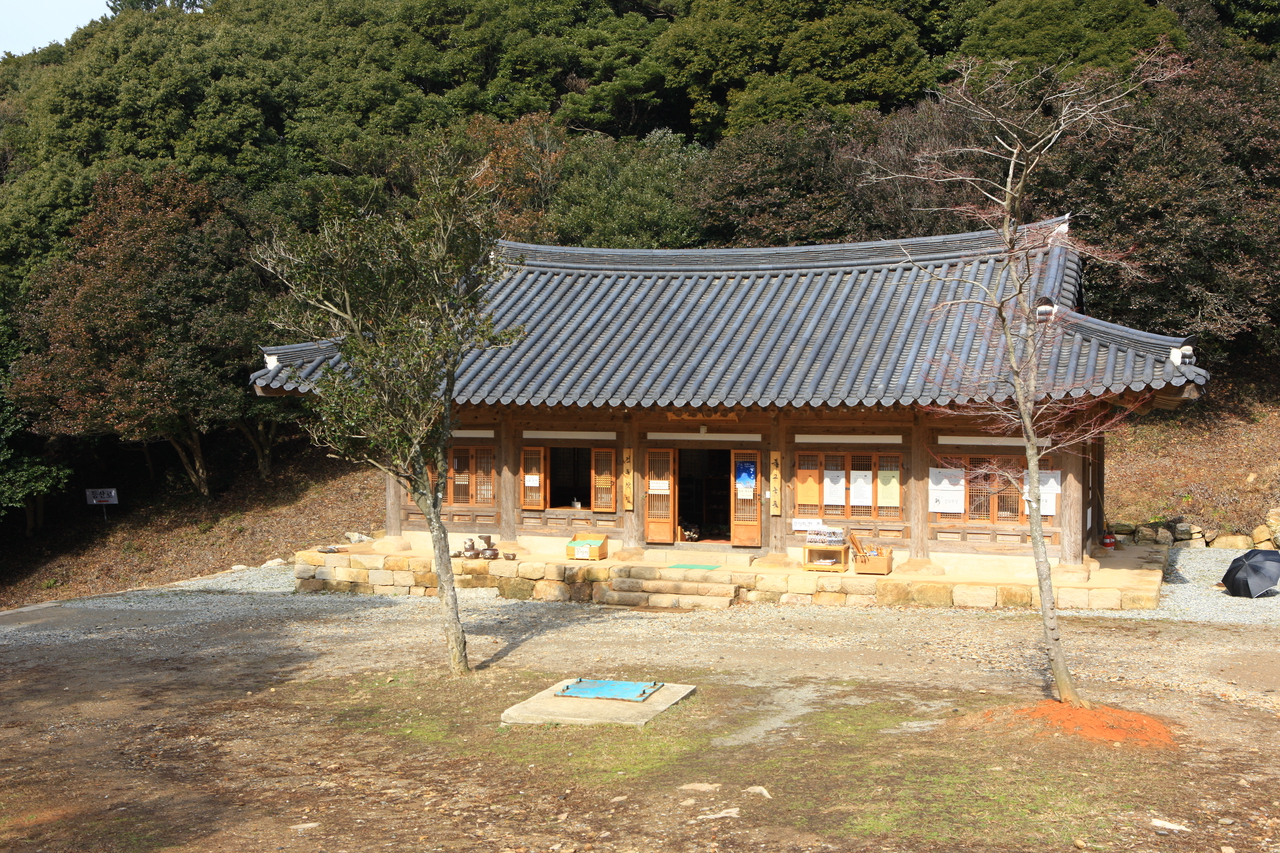
White wall panels alternate with dark timber beneath a long tiled roof. In front, jars gather behind a low wall. Their rounded forms introduce another scale beside the extended line of the building.
A temple landscape includes spaces for daily life as well as its principal worship halls. Long side walls, small doors and enclosed edges make those other uses visible from the outside. The compound is more than an isolated architectural monument.
The jars and rows of roof tiles also offer a comparison of curved forms. One belongs to small movable objects; the other repeats across a much larger roof. Observe the arrangement without treating residential or working spaces as public rooms to enter.
Compare a small painted hall with the rough stone around it
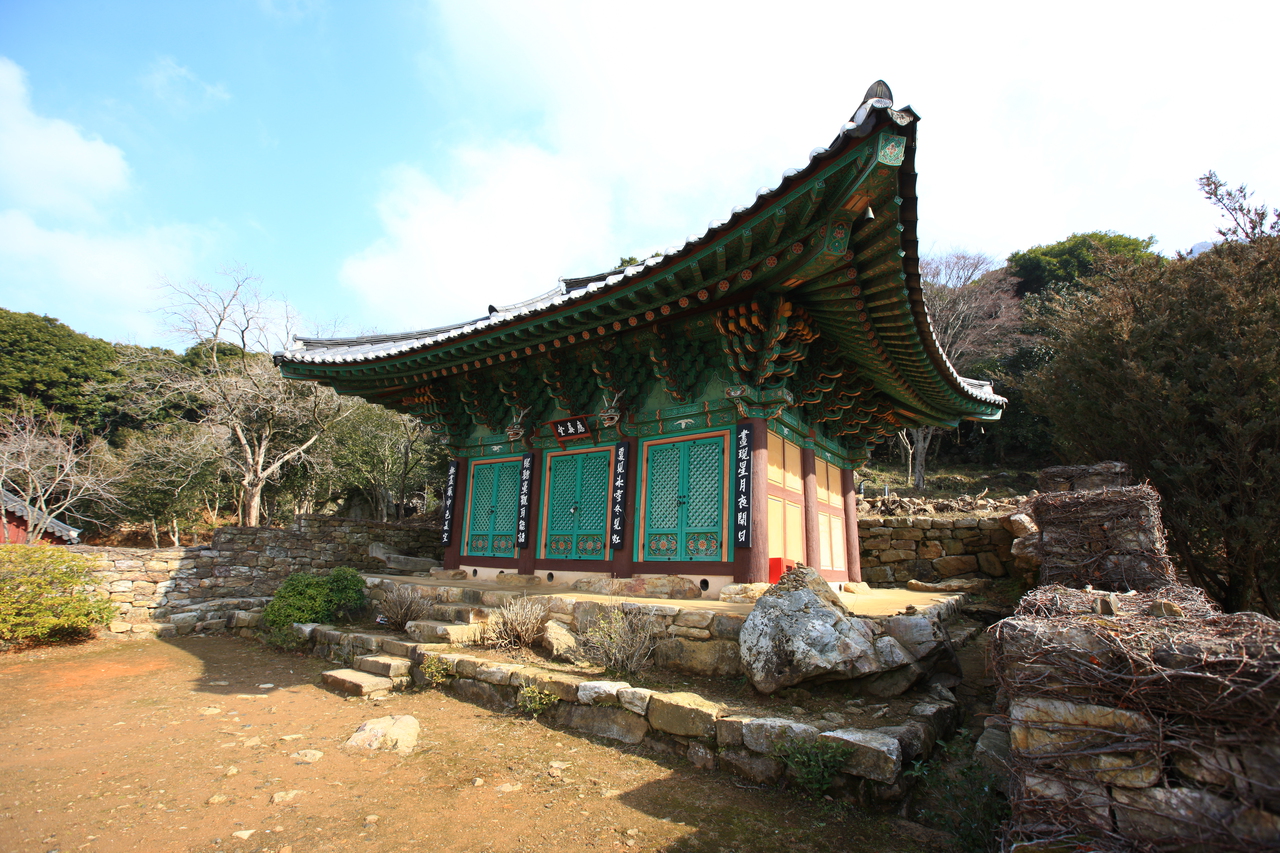
Rough stones support a smaller hall, and a tree with exposed branches stands nearby. Green-painted woodwork sits close to irregular rocks. Seen from lower ground, the height of the building’s base becomes part of its character.
Eungjindang is another hall within the Mihwangsa setting. Compared with the broader courtyard around the main hall, the surrounding terrain and walls feel closer. Buildings in the same temple can relate to the hillside in quite different ways.
Branches and foliage change with the season, but the relationship between a hall, its base and the slope remains a useful subject. There is no need to assume a fixed arrangement of autumn colors. The small scale of this corner makes the fit between building and terrain especially easy to notice.
Step back to bring Dalmasan above the roofs again
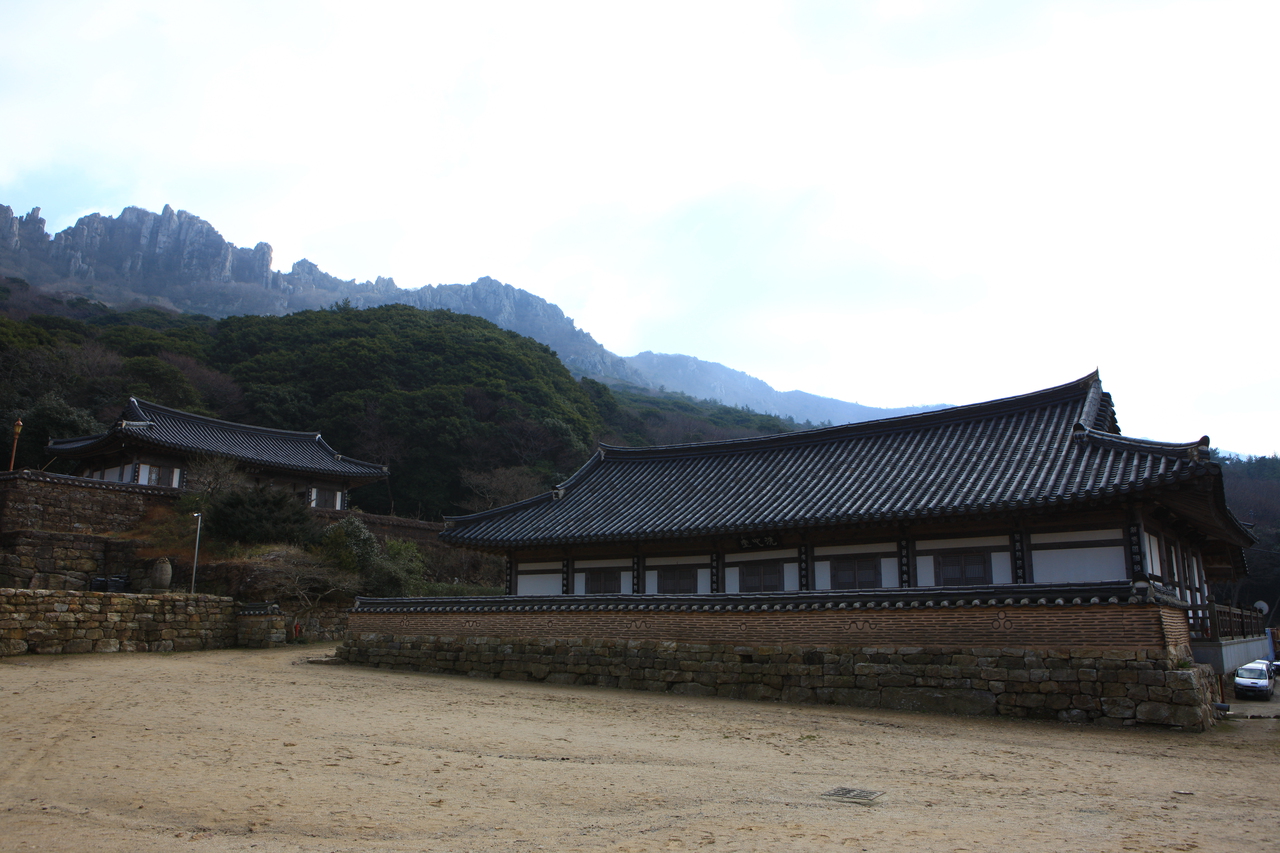
A sharp rock silhouette rises beyond a long roof. The foreground courtyard is broad and relatively level; the distant ridge is uneven. Each makes the other’s shape easier to read.
For a different temple setting in the same county, explore Daeheungsa’s gates, stone paths and linked courtyards in Haenam. Comparing the two places draws attention to how roofs, walls and open ground respond to different mountain surroundings.
Mihwangsa is memorable at more than one distance. Fine lattice, layered roof supports and the long side of a building provide close details. From the courtyard, Dalmasan gathers those smaller scenes into a larger landscape of timber, stone and sky.
Visitor Quick Facts: Mihwangsa Temple
| Official Name | Mihwangsa Temple (해남 미황사) |
|---|---|
| Hangul for Taxi / Map | 전남 해남 미황사 (164 Mihwangsa-gil, Songji-myeon, Haenam-gun) |
| Visiting & Entry | Daytime courtyard access (sunrise to sunset recommended) · Free general admission (Temple Stay requires advance booking) |
| Must-See Details | Daeungbojeon Hall woodwork & carved lotus stone bases, Eungjindang stone steps, Dalmasan rock backdrop, earthenware jar terrace |
| Pair Nearby | Daeheungsa Temple in Haenam · Nogudang House in Haenam |
| Primary References | Mihwangsa Official Site · VisitKorea Profile |
Verified via Korea Tourism Organization, Encyclopedia of Korean Culture (AKS), and Mihwangsa Temple records. Please observe quiet temple etiquette in active worship courtyards.
Frequently Asked Questions
How does Mihwangsa Temple compare with Daeheungsa Temple in Haenam?
Daeheungsa sits tucked deep inside forested valleys on Duryunsan Mountain, unfolding across stream bridges and shaded courtyards. Mihwangsa rests higher on the exposed western flank of Dalmasan Mountain, pairing bare timber temple halls with dramatic jagged rock peaks and open coastal horizons.
What makes Daeungbojeon Hall at Mihwangsa architecturally special?
Unlike many Korean temple halls painted in bright exterior pigments, Daeungbojeon draws the eye to natural aged wood grain, finely joined geometric lattice doors, complex multi-cluster roof brackets, and granite column bases carved with lotus petals and sea creatures.
Can independent travelers visit Mihwangsa without booking a Temple Stay?
Yes. Day visitors are welcome to walk the courtyards and admire the exterior architecture free of charge during daylight hours; reservations are only required for overnight Temple Stay programs.
You May Also Like
by Google Adsense