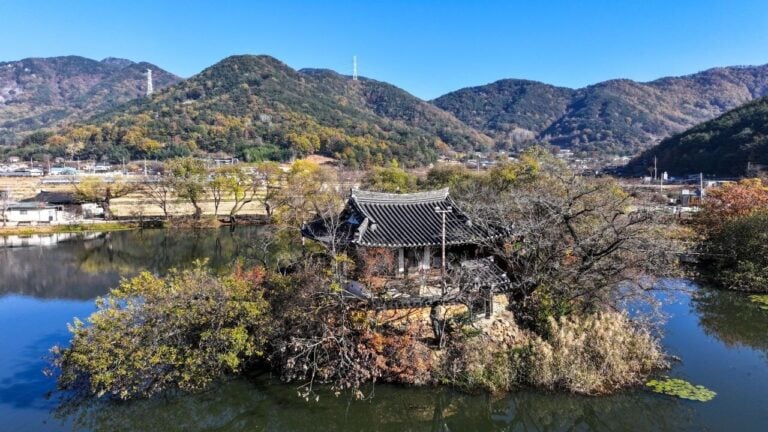
Samneung Forest in Gyeongju: Curved Pines and Three Silla-Era Royal Tombs
Samneung Forest and the three royal tombs in Bae-dong, on the western foothills of Gyeongju’s Namsan Mountain
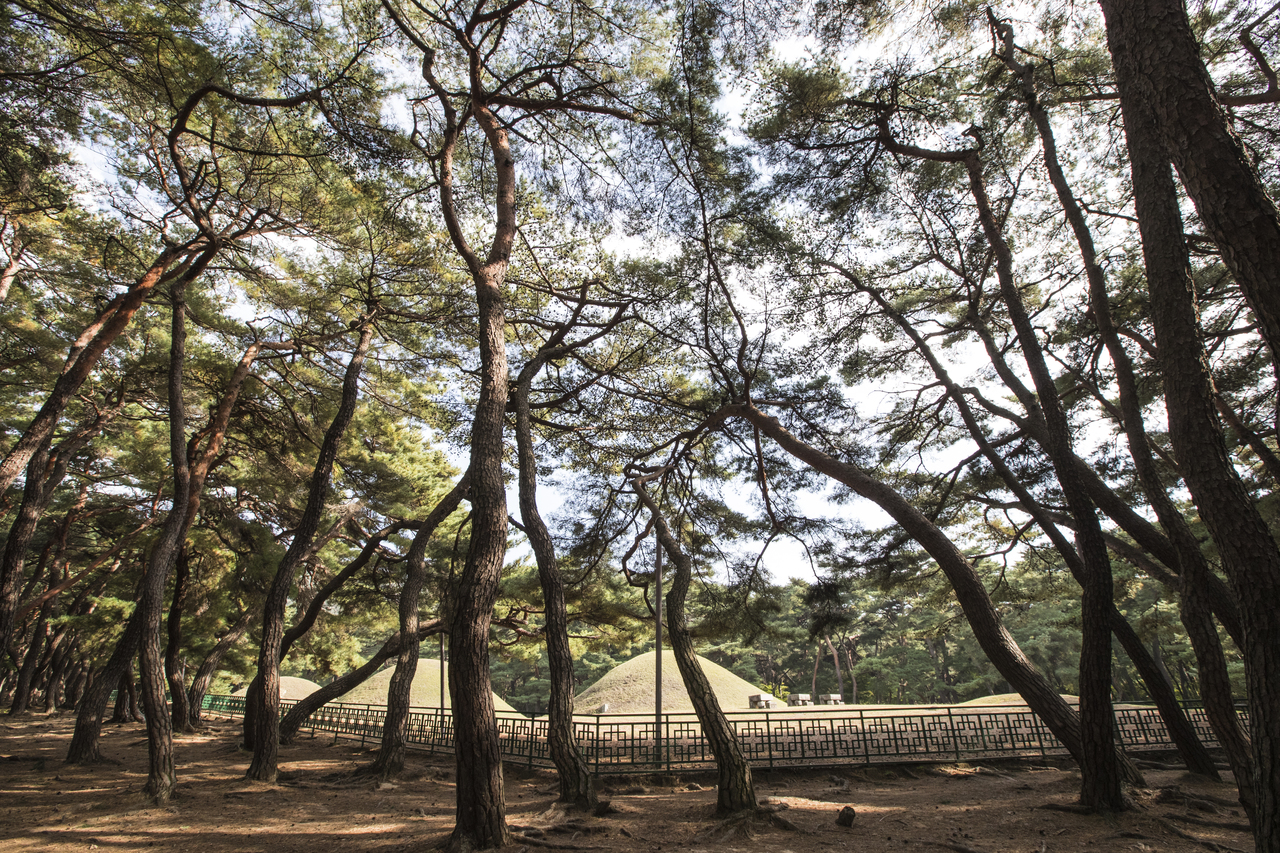
The pines rise, bend and change direction again. Behind their trunks, a rounded burial mound sits much lower in the landscape. The curves of the trees and the gentle arc of the earth belong in the same view.
Samneung Forest surrounds the three royal tombs in Bae-dong, at the western foot of Namsan Mountain in Gyeongju. Rather than presenting the mounds as isolated monuments in an open field, the setting reveals them between layers of pine trunks.
When planning a late-November visit to Gyeongju, there is more to look for than brilliant maple leaves. Bark, roots and the spaces between the trees hold their own interest. These shapes give the forest a strong character beyond a single moment of fall color.
Samneung Forest and its leaning pines
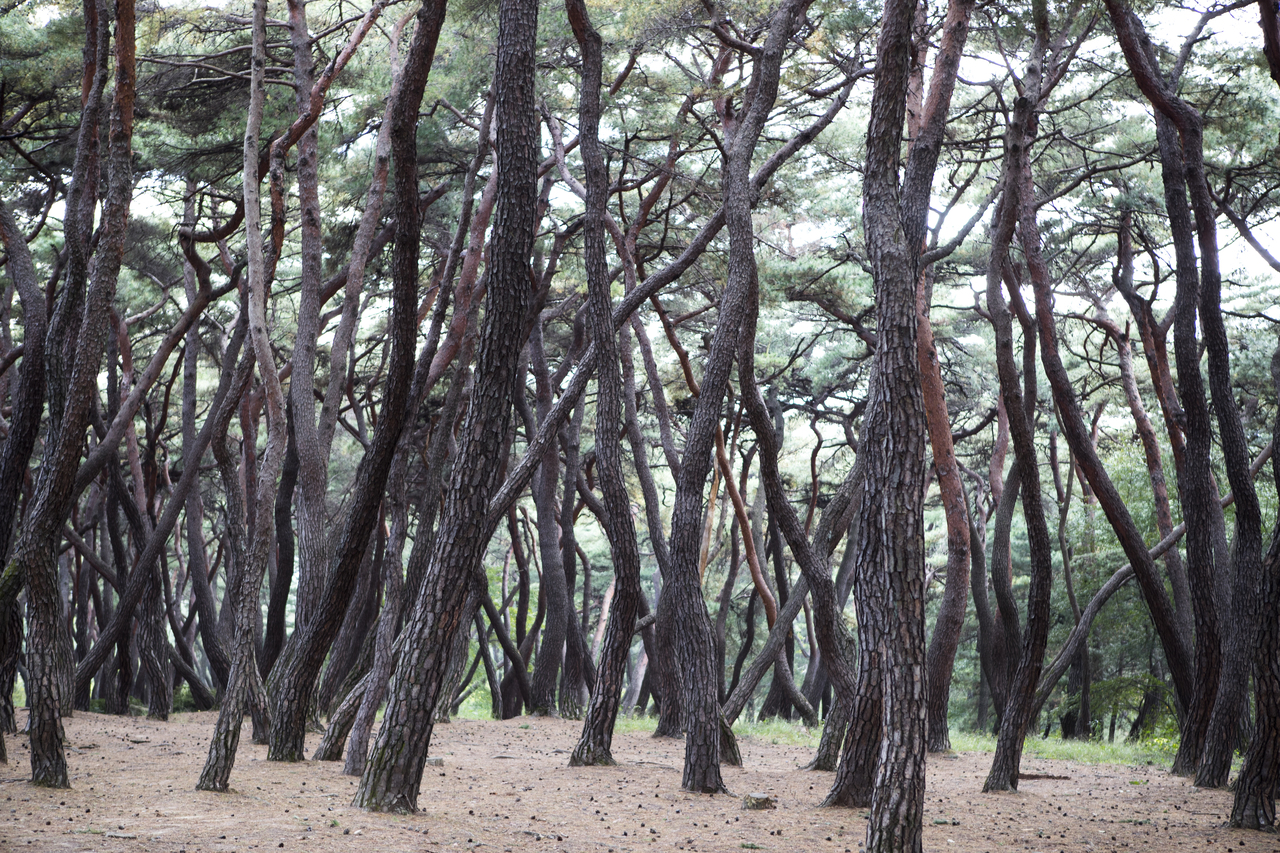
One trunk angles right while the tree behind it leans the other way. There is no simple repetition of straight vertical lines. Different widths and curves interrupt the view, making the eye pause before reaching the background.
Reddish-brown bark adds another kind of detail. A broad trunk near the viewer and a thin branch farther away can share a similar curve without appearing identical. Each tree changes the pattern slightly.
In denser sections, only part of a mound is visible. The gaps become frames for the historic site. Looking between near trunks and distant grass reveals the setting in layers rather than as a single panorama.
Rocks and roots at ground level
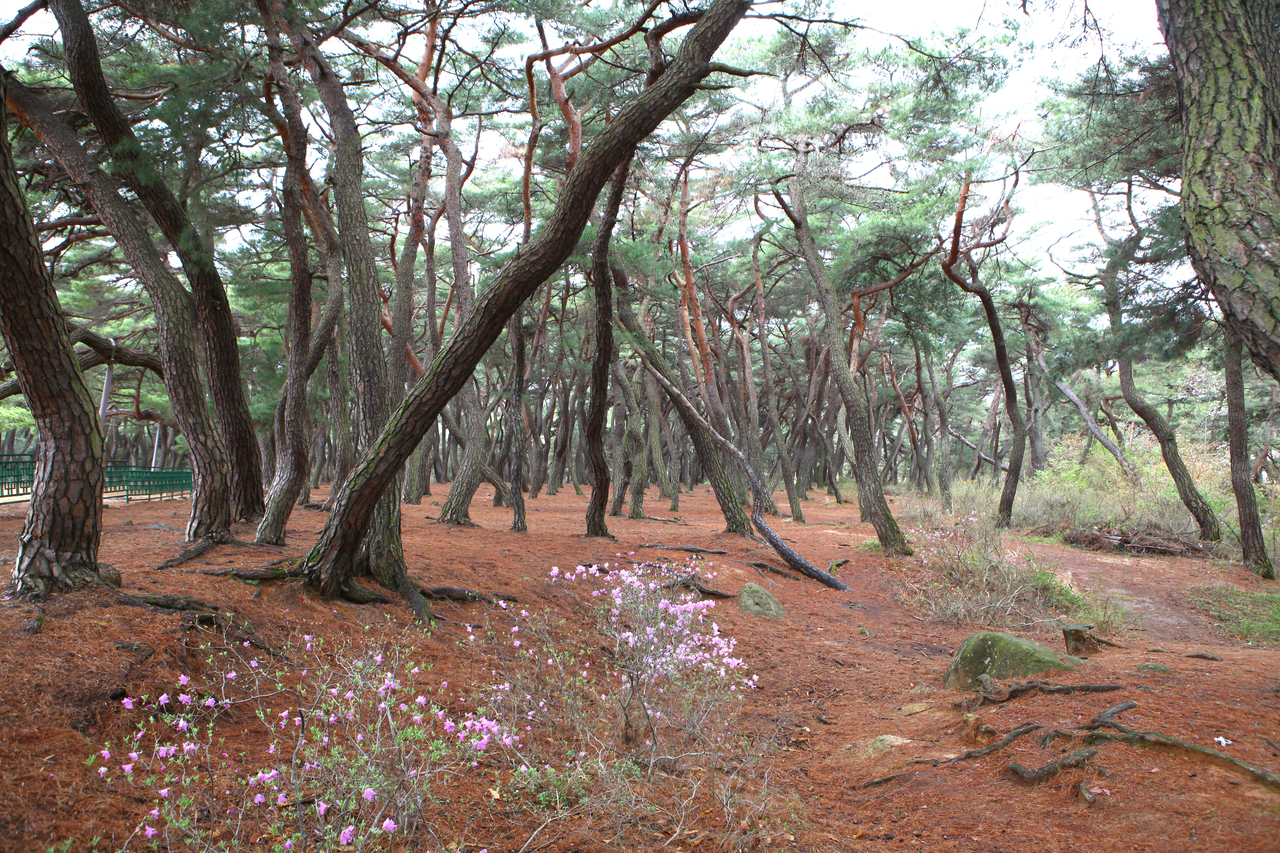
Below the canopy, exposed roots cross the uneven ground between stones. Gray rock, pine bark and the reddish forest floor make three distinct surfaces. It is a quieter subject than the sweeping trunks, but an important part of the scene.
The lower slopes of Namsan bring woodland and rock together. Following a root toward a trunk connects the ground to the branching forms overhead. The forest becomes more than a backdrop to the tombs.
Samneung is often associated with atmospheric photographs, but its appeal does not depend on mist appearing. The relationships between roots, stone and trunks remain interesting in ordinary light. They are details a broad view can easily miss.
Three mounds below the tree line
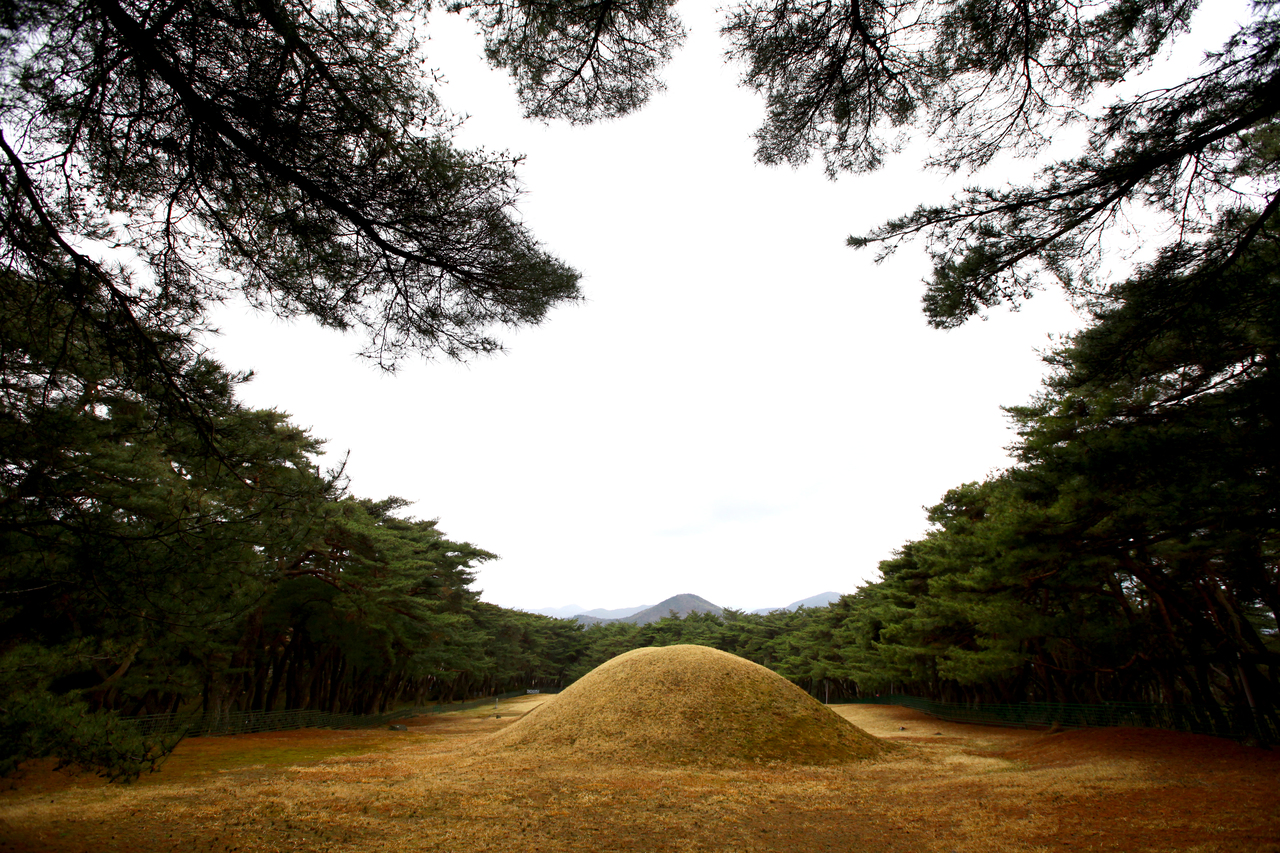
Where the trees recede, rounded mounds rise gently from the grass. They contrast with the much taller pines without competing for the same height. The scene brings together two different kinds of curve.
The Korea Heritage Service description of the Bae-dong tombs identifies three circular earthen mounds arranged east to west. They are traditionally associated with Kings Adalla, Sindeok and Gyeongmyeong, but their occupants are not securely established by surviving records.
That distinction leaves room to appreciate the site without treating a traditional attribution as a confirmed identity. The low shapes of the mounds and the surrounding woodland create a memorable historic landscape on their own.
Following a trunk upward
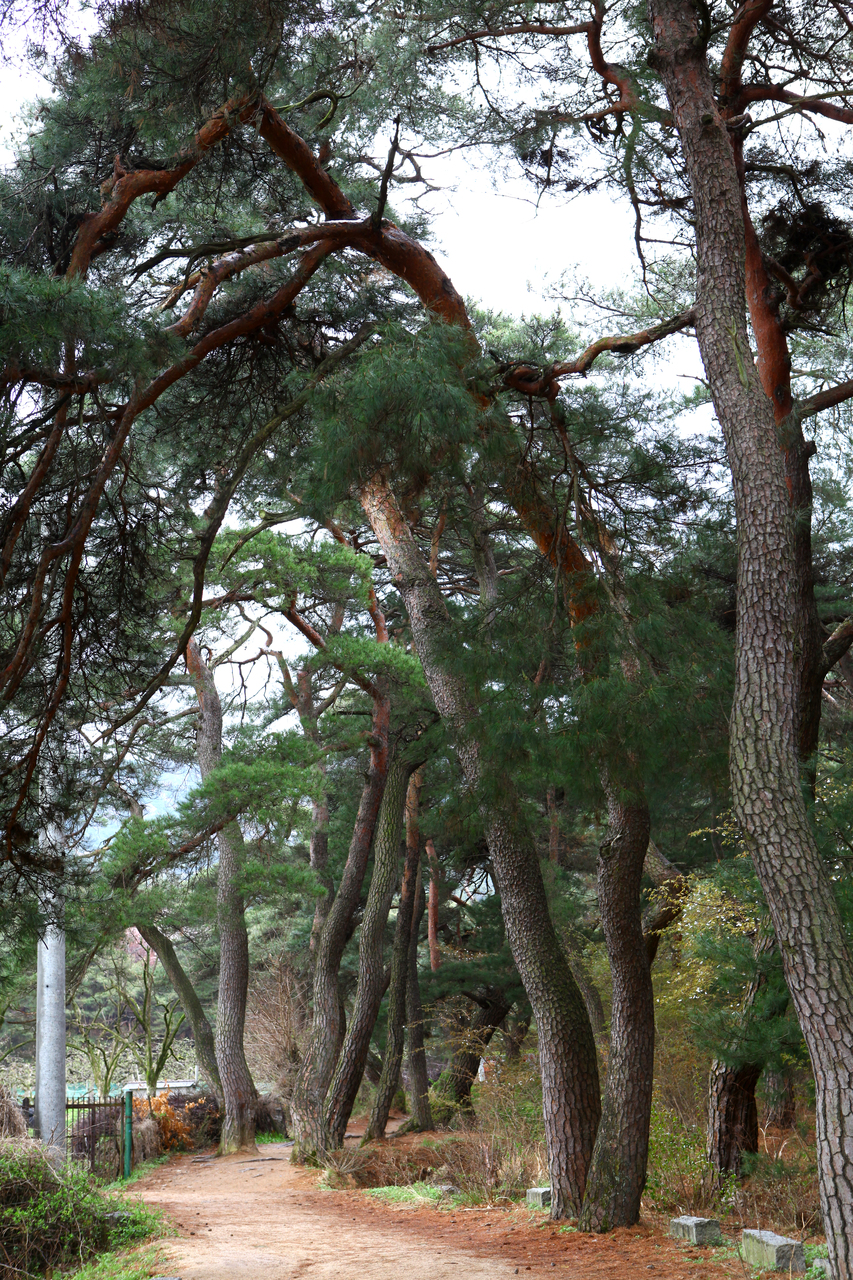
A taller view connects the thick lower trunk to its bends and finer branches above. The proportions change as the eye rises. What seems like a dense group of trees from a distance becomes a series of individual forms.
Foreground trunks are broad, while those farther away appear narrow beneath the shared canopy. Small pieces of sky remain between the branches. Those gaps help reveal depth even where the forest floor is partly hidden.
As neighboring deciduous trees change through fall, the pines offer a different set of details to notice. The attraction is not a substitute for a missing peak-foliage scene; it is a reason to look more closely at the forest that is already there.
A historic landscape seen through the gaps
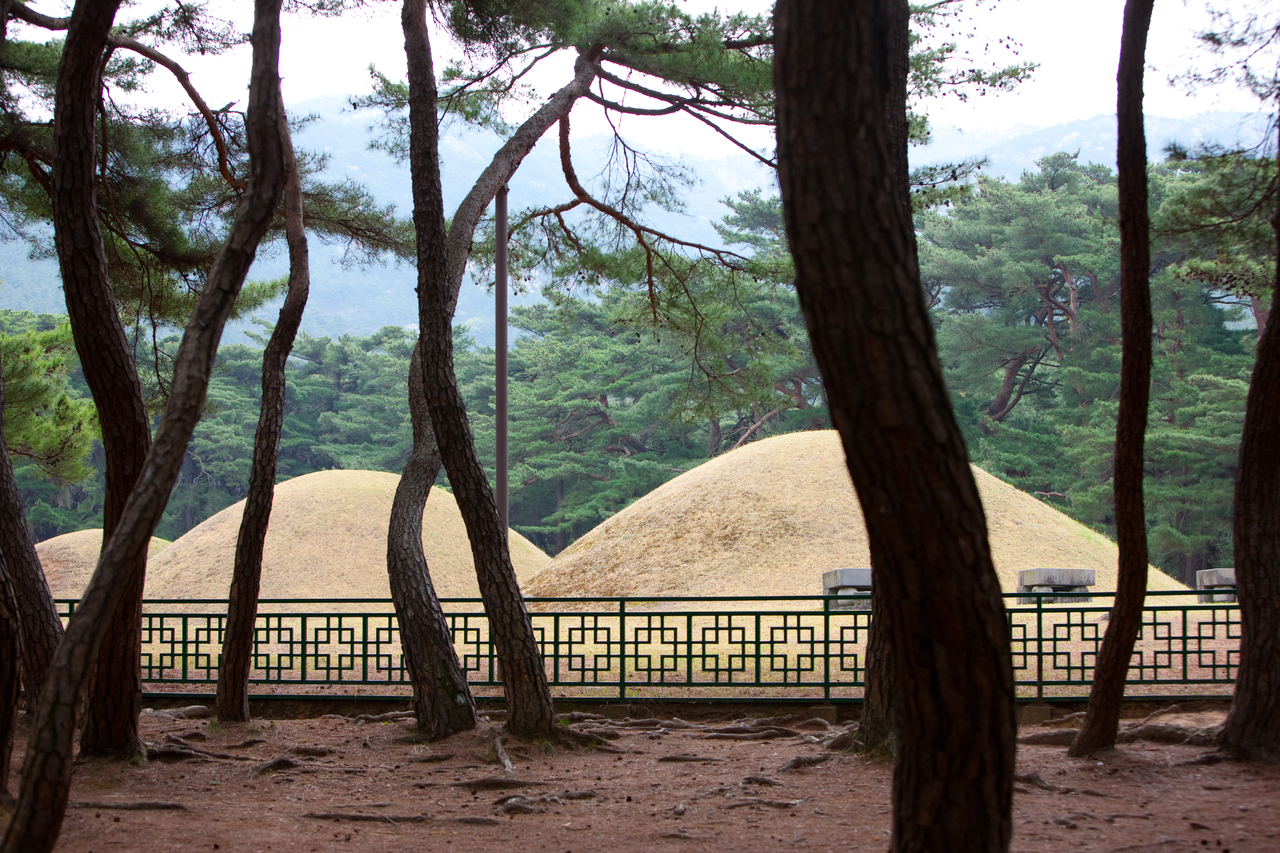
A mound appears between two dark trunks, with a clear separation between the near trees and distant grass. That spacing makes the burial mound feel both low and far away. The composition depends on the forest and the monument being seen together.
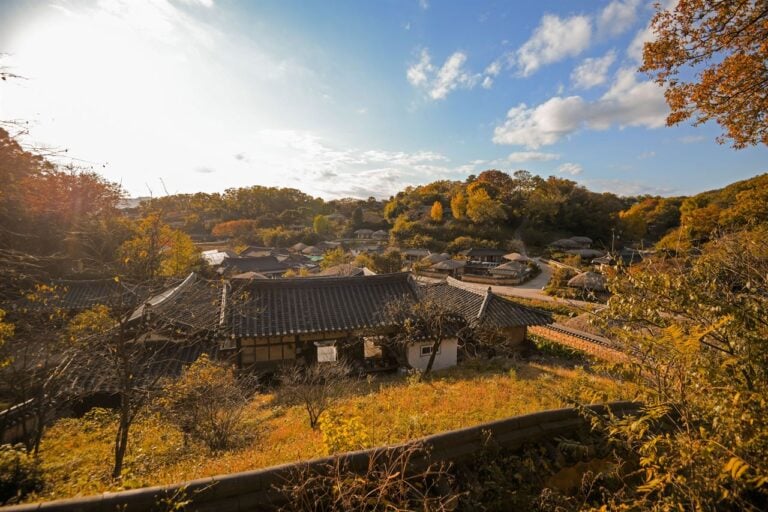
For another historic Gyeongju landscape, read about Yangdong Village’s hillside lanes and traditional roofs. Its houses show a different way that human history settles into the shape of the land.
Samneung’s lasting image is a relationship rather than one object: a curved trunk, an opening, a rounded mound and roots along the ground. Together, they make a thoughtful focus for a Gyeongju trip beyond the busiest days of fall foliage.
Visitor Quick Facts: Samneung Forest
| Official Name | Royal Tombs in Bae-dong, Gyeongju / Samneung Forest (경주 배동 삼릉) |
|---|---|
| Hangul for Taxi / Map | 경주 배동 삼릉 (San 73-1, Bae-dong, Gyeongju-si, Gyeongsangbuk-do) |
| Heritage Status | National Historic Site (three circular earthen mounds aligned east to west) |
| Hours & Admission | Open year-round · Free exterior access to the pine forest and tomb grounds (no tomb interior entry) |
| Terrain & Footwear | Gentle woodland dirt paths with exposed pine roots and low stones; comfortable walking sneakers recommended |
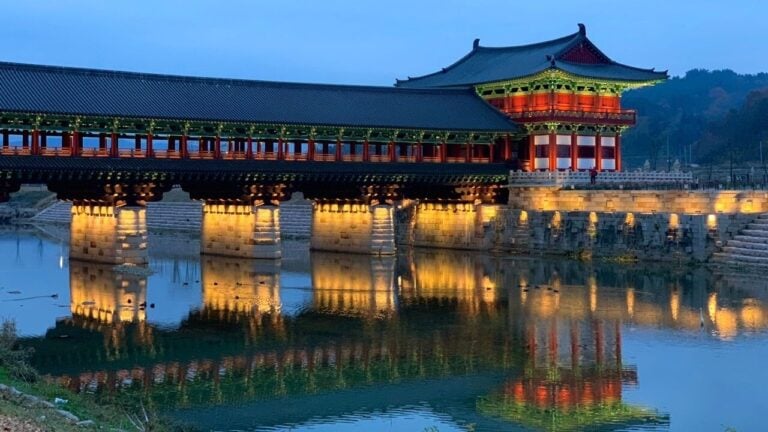
| Pair Nearby | Bulguksa Temple · Yangdong Folk Village · Woljeonggyo Bridge at Night |
| Primary Source | Korea Heritage Service Official Record |
Verified against Korea Heritage Service & Korea Tourism Organization public records. If continuing onto upper Namsan hiking trails during November–December fire-prevention weeks, check Gyeongju City trail notices first.
Frequently Asked Questions
How is Samneung Forest different from Daereungwon Tomb Complex in downtown Gyeongju?
Daereungwon features monumental grassy mounds set in wide, manicured urban park lawns near Hwangridan-gil. Samneung Forest sits quietly at the western base of Namsan Mountain, where gnarled, leaning pine trunks surround three smaller mounds in a natural woodland setting.
Do I need hiking boots to visit Samneung Forest?
No specialized hiking boots are needed if you are only exploring Samneung Forest and the three royal tombs at the base of the mountain. Standard walking shoes or sneakers with decent grip handle the uneven tree roots and gentle earthen paths comfortably.
Whose tombs are inside Bae-dong Samneung?
According to the Korea Heritage Service, the three circular mounds are traditionally attributed to Silla Kings Adalla, Sindeok, and Gyeongmyeong of the Park clan, though surviving historical records do not conclusively confirm the occupants.
You May Also Like
by Google Adsense