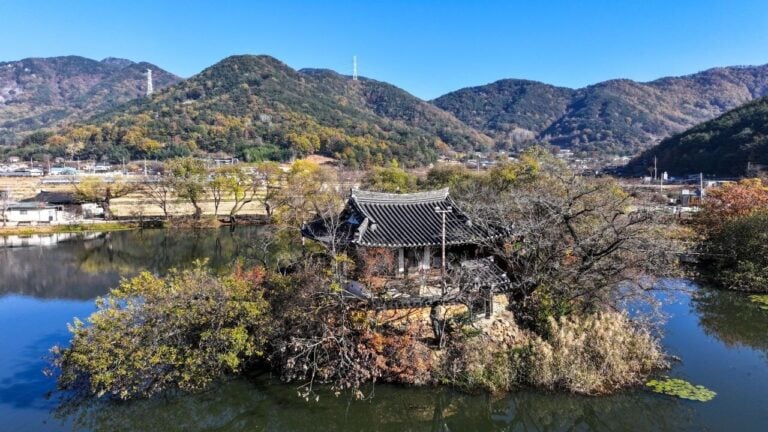
Gyeongsangnam-do Arboretum in Jinju: Fall Topiary, Pond Views and Indoor Gardens
A Jinju arboretum walk connecting clipped greenery, sheltered plant collections, woodland paths and petrified wood
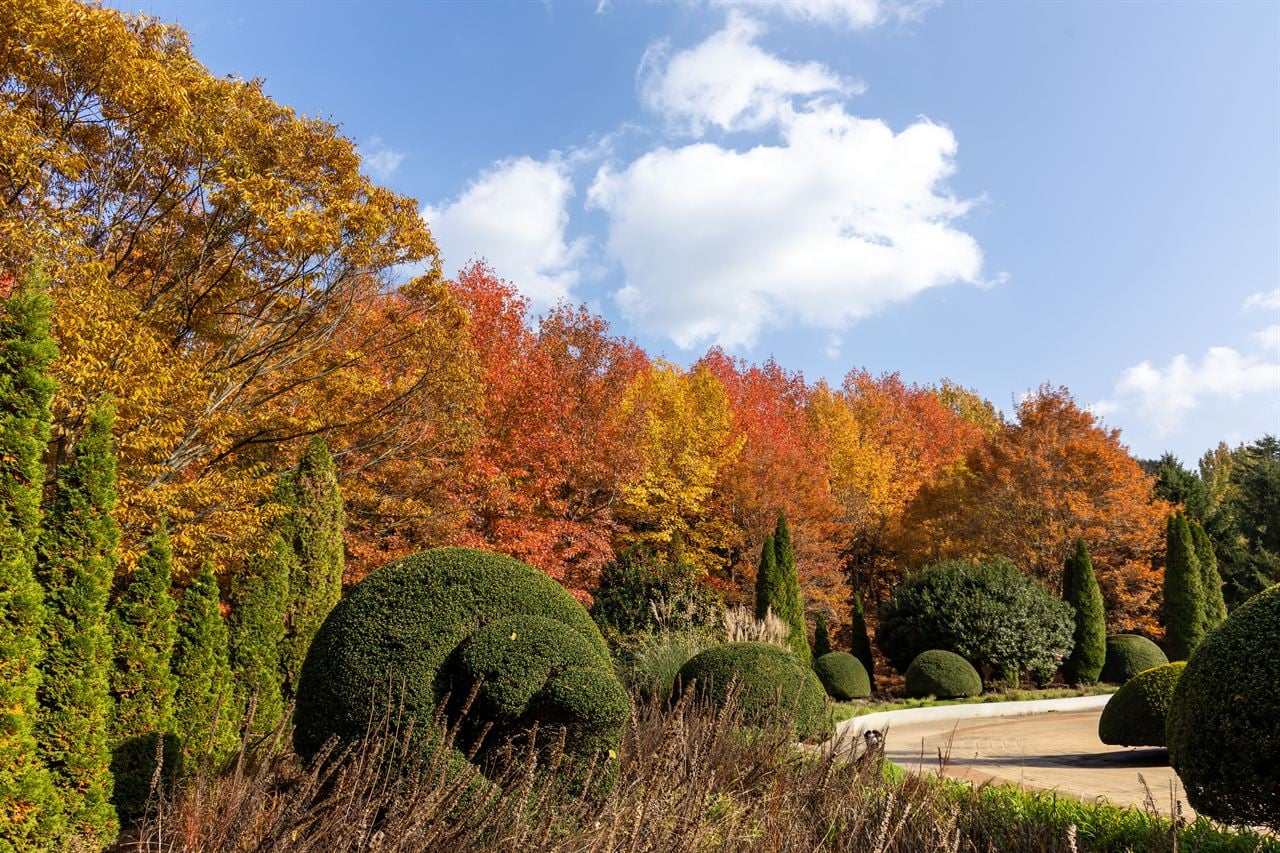
Rounded greenery gathers beside the path, with red and yellow foliage rising behind it. Carefully clipped outlines and more freely spreading branches share the same view. Their different shapes make the seasonal color more noticeable.
Gyeongsangnam-do Arboretum is a botanical garden in Jinju, in southern Korea. A walk here can connect shaped trees, sheltered plant collections and pond scenery, with woodland and educational displays adding other ways to look at the landscape.
Fall is a useful time to notice those contrasts. Evergreen forms do not disappear when neighboring leaves change color. Looking at both gives a garden visit more variety than a search for one uniformly red stretch of trees, especially as the season moves toward its later weeks.
Look closely at the indoor planting at Gyeongsangnam-do Arboretum
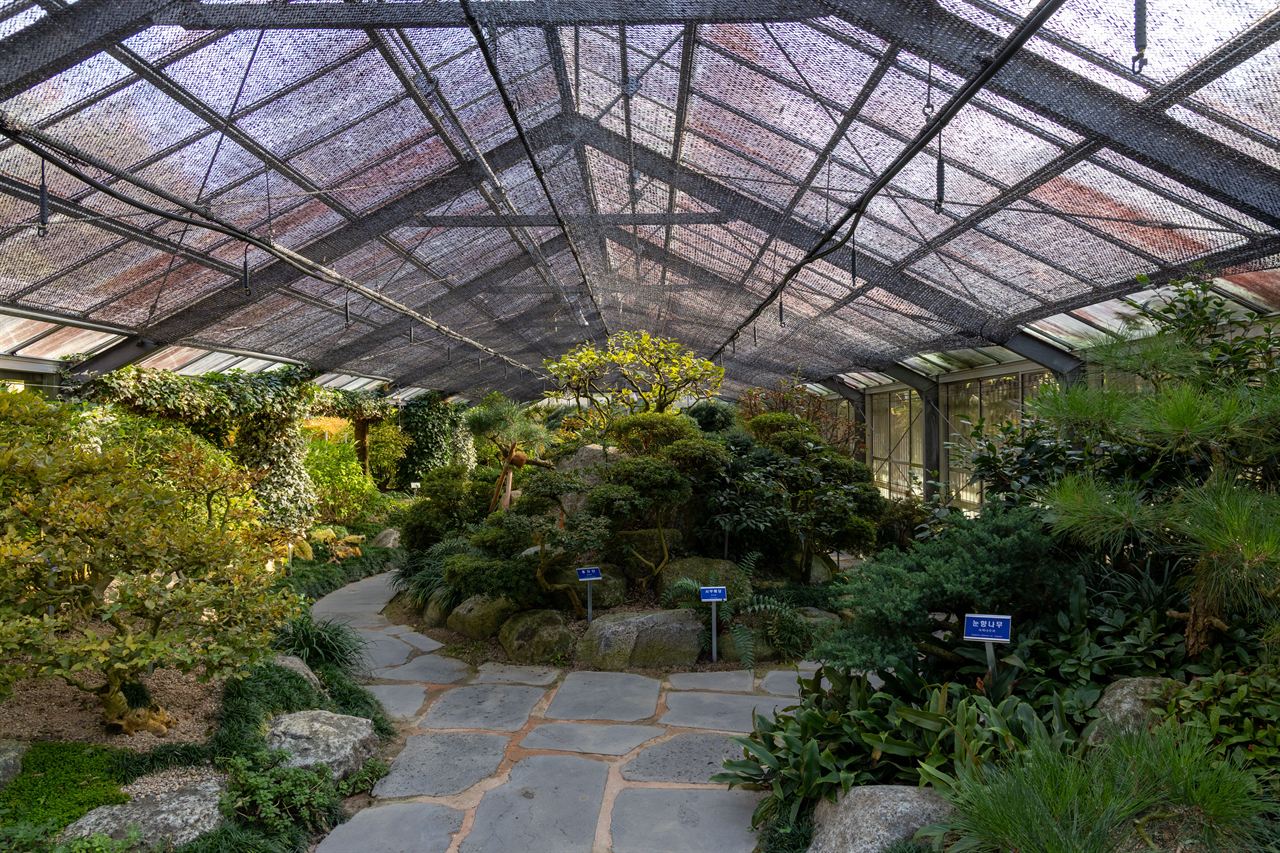
A stone path bends between low plants and branching trees beneath a shaded roof. Labels sit close to the planting. The setting brings individual leaves and growing forms into view after the broader outlines of the outdoor garden.
The arboretum places an emphasis on plants associated with Korea’s southern region, alongside other collections and themed spaces. That botanical role gives the landscape a purpose beyond seasonal decoration. Different kinds of plants can be compared at a scale that makes their individual characteristics visible.
Height and spacing matter as much as color in a planted interior. A spreading branch leaves an opening above a lower plant, while rounded foliage provides a denser edge beside the path. Reading those relationships makes the small collection feel deeper than its footprint suggests.
Bring the view down to the water beside the wooden wheel
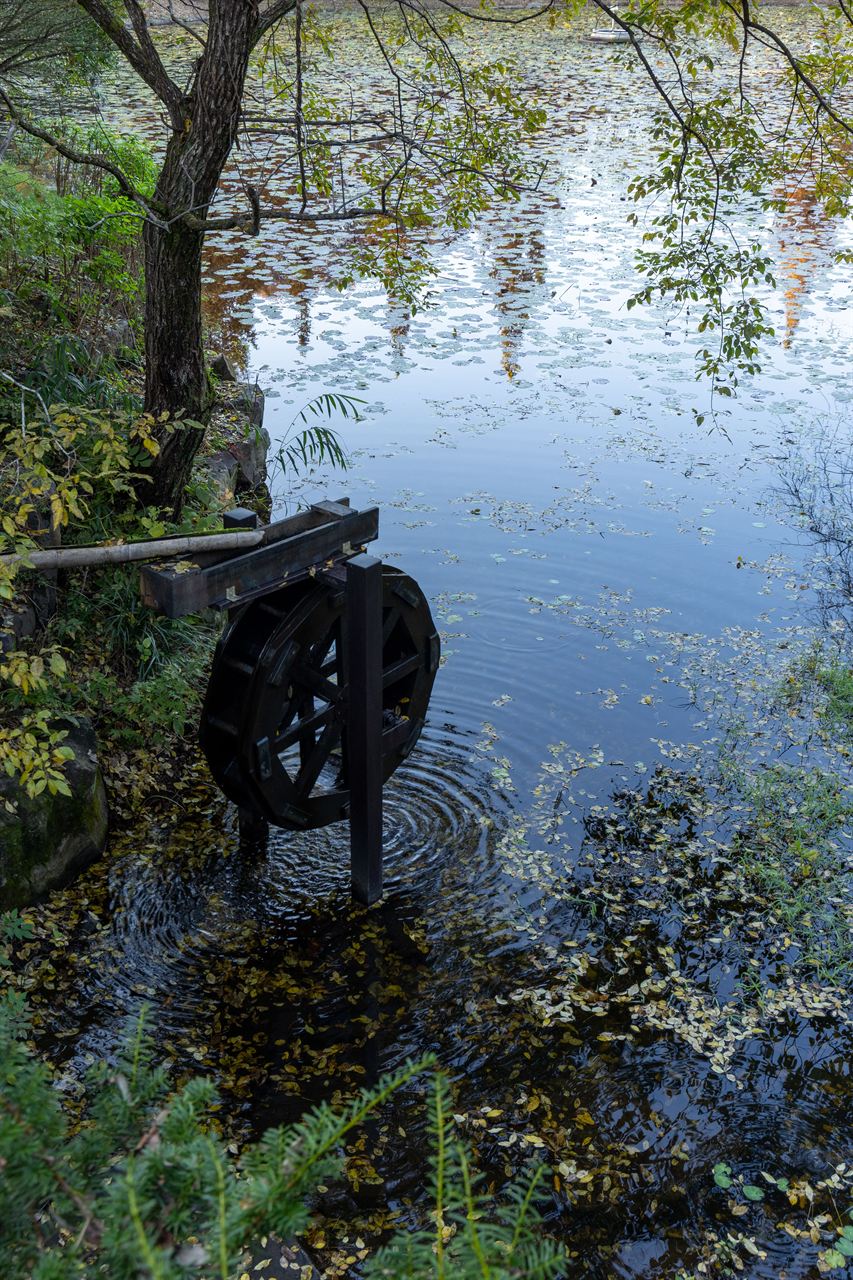
A wooden wheel stands close to the pond beneath low branches. Floating vegetation divides the surface into different textures, with the trees across the water providing a more distant background. The scene has several layers without needing a wide view.
After looking upward at tree crowns, the waterside changes the direction of attention. Open water, gathered leaves and the line of the bank become the main features. The wheel provides a clear wooden form beside the less regular shapes of the planting.
A still waterside scene can be interesting without a dramatic reflection or a blanket of colorful leaves. The relationship between the branches above and the plants on the surface gives the pond its own composition. It is a smaller, more enclosed way to experience the garden.
Follow the railings into a more wooded setting
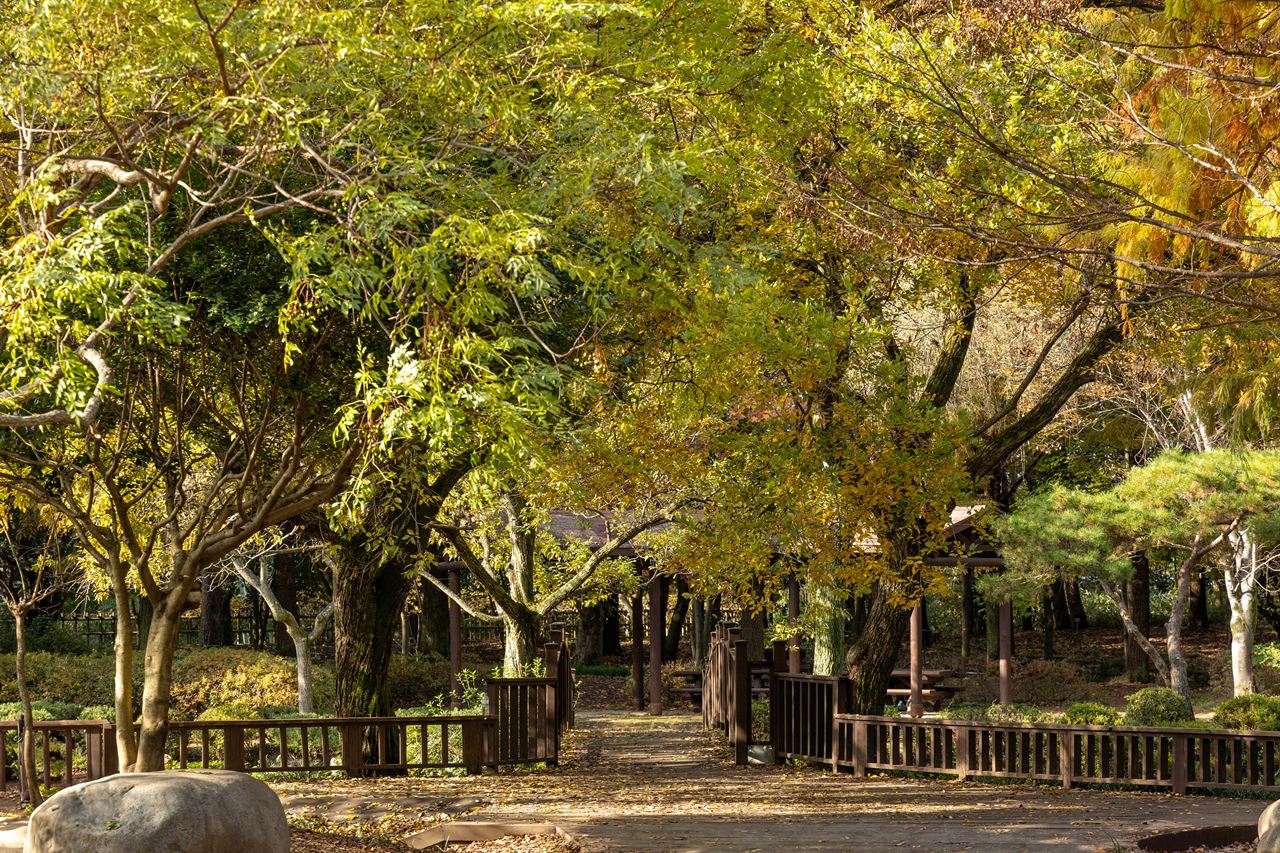
Wooden railings define the edge of a path, with a covered shelter farther back. Branches overlap above and beside the route. The view narrows compared with the open topiary scene, making the spaces between trees more apparent.
A mixed arboretum can shift between deliberately shaped planting and areas where the trees form a broader wooded setting. Moving between those kinds of spaces changes the experience of the walk. A precise clipped outline gives way to layers that cannot be read all at once.
Later in fall, partly bare branches can reveal those layers more clearly. A green crown and a more open neighboring tree create different screens for the view beyond. Their contrast remains useful even when the strongest leaf color is limited to only part of the collection.
Compare living trees with the forms preserved in petrified wood
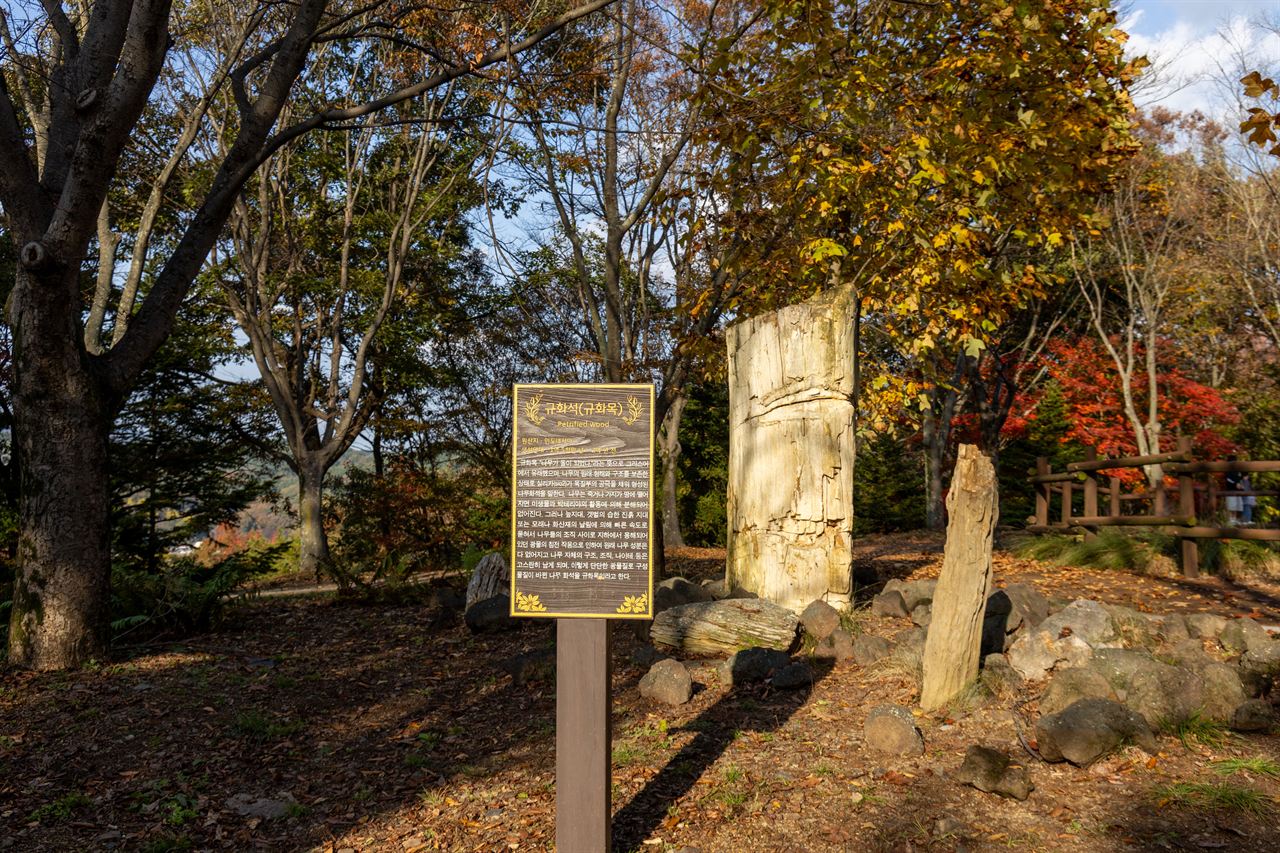
An upright trunk-shaped specimen and a smaller piece stand in an outdoor display. Their forms resemble the trees nearby, but the surface and exposed cross section have a different texture. The display interrupts the sequence of living plants without leaving the subject of trees.
Petrified wood forms when mineral material replaces the original wood structure. The resulting fossil can preserve recognizable features of a trunk. It gives the visitor something familiar to compare with the living trees encountered along the paths.
The comparison changes the time scale of a garden walk. Leaves show a seasonal cycle, while a preserved trunk draws attention to structure and traces that remain. The display offers a concrete reason to pause beyond the expectation of finding another colorful tree.
See the pond again through a frame of maple branches
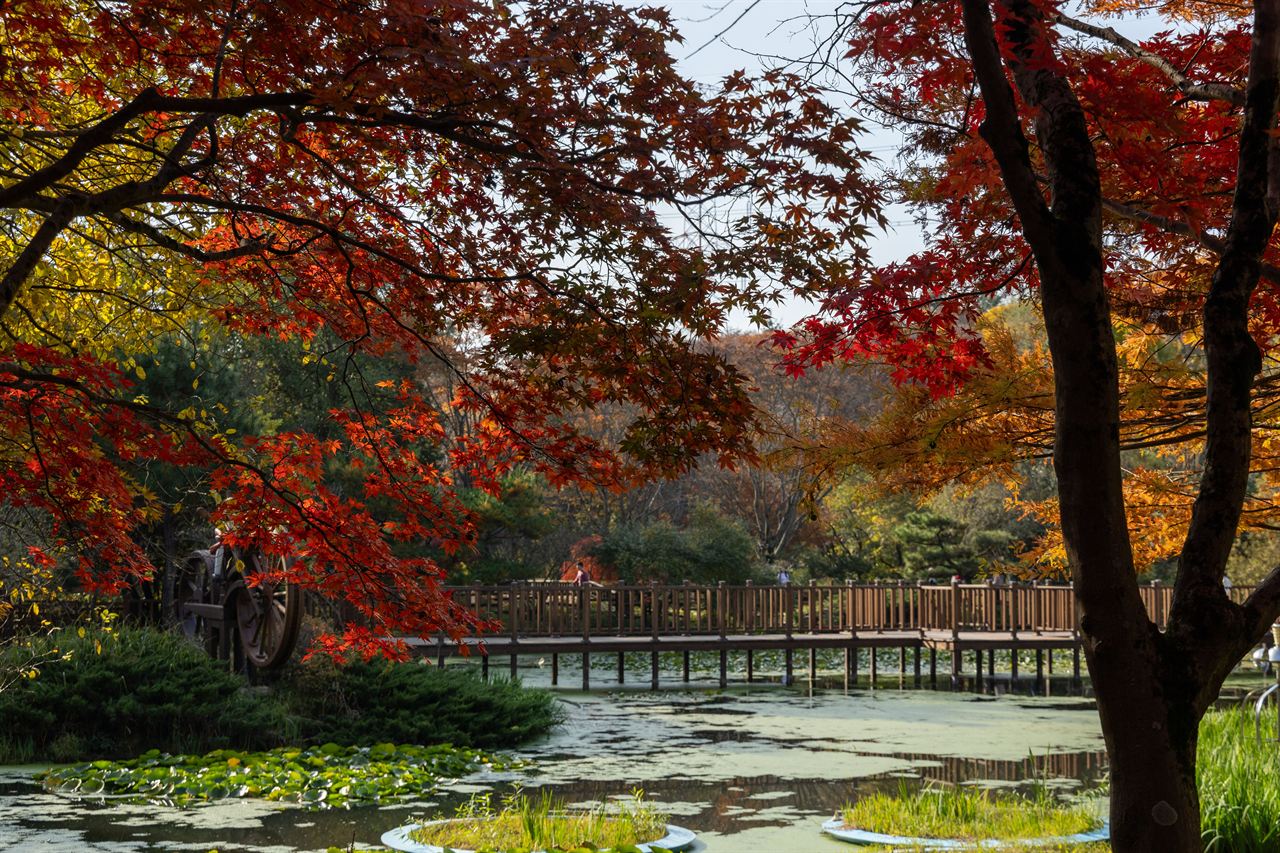
Red leaves fill the near branches, while a wooden bridge runs across the more distant water. The pond becomes a background seen through foliage rather than the immediate foreground. The change of viewpoint gives a familiar part of the garden a different shape.
Gyeongsangnam-do’s official announcement schedules the arboretum’s 2026 fall festival for October 31 through November 22. Those are event dates, not a promise that every tree will be at peak color. Species and weather affect how much foliage remains and how it looks.
For another way to compare trees and water in a public collection, explore Mulhyanggi Arboretum’s pond and woodland paths in Osan. Its mature canopies and educational spaces provide a different arrangement of features within the same broad type of destination.
Gyeongsangnam-do Arboretum suits a fall outing that leaves room for several kinds of observation. Clipped greenery, nearby leaves, woodland layers and preserved wood each bring a different scale into focus, while the pond connects the walk back to the changing trees.
You May Also Like
by Google Adsense