Muju Autumn Foliage Drive: Jeoksangsan and Anguksa Temple
Each mountain bend opens onto another autumn scene, from a quiet lake to a temple at the road’s end.
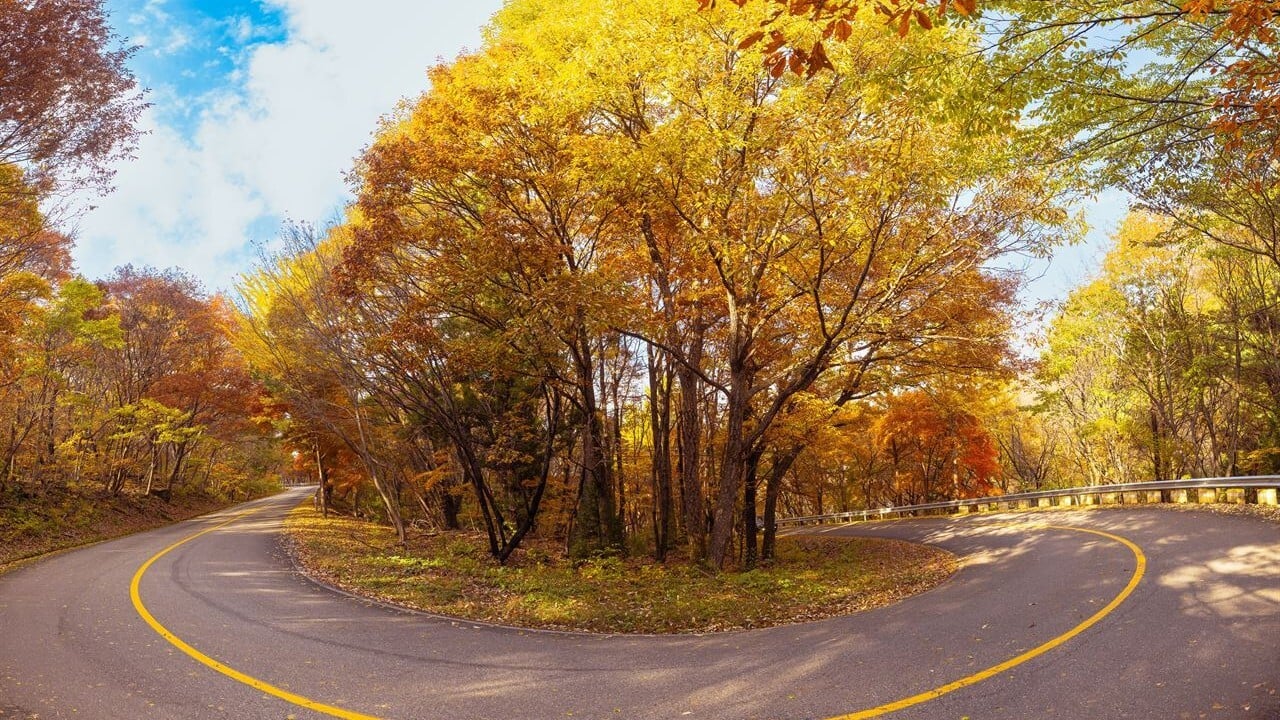
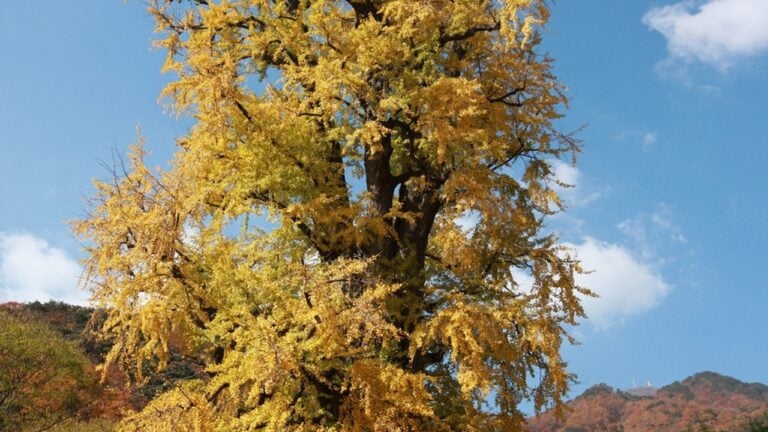
Muju autumn foliage begins on the Jeoksangsan road long before the final destination. Beyond one broad curve, yellow woods draw close to the car; around the next, the light deepens into red. In Muju, the climb itself becomes part of the scenery.
The paved mountain road links Jeoksang Lake, the Jeoksangsanseong Historical Archive and Anguksa Temple. Muju County presents it as a tourism route, while the Korea Tourism Organization highlights it as an autumn foliage drive.
This is less a journey built around one long walk than a sequence of bends, lake views, history and temple grounds. Stopping briefly at each place lets the landscape unfold at a pace that can suit different travelers.
Muju Autumn Foliage on the Slopes of Jeoksangsan
Jeoksangsan Mountain is 1,034 meters above sea level and is said to have been given the name meaning ‘red skirt’ because of the reddish cliffs surrounding its slopes. In fall, autumn leaves are added, so the name and scenery naturally overlap.
The drive begins by entering the inside of the mountain along the Jeoksangsan Mountain access road. The road has many curves and some sections are not wide enough, so it is better to divide the roles of those who view the fall foliage and those who drive. Drivers must focus on oncoming vehicles and curved sections rather than the scenery, and must take photos at a place where they can stop safely.
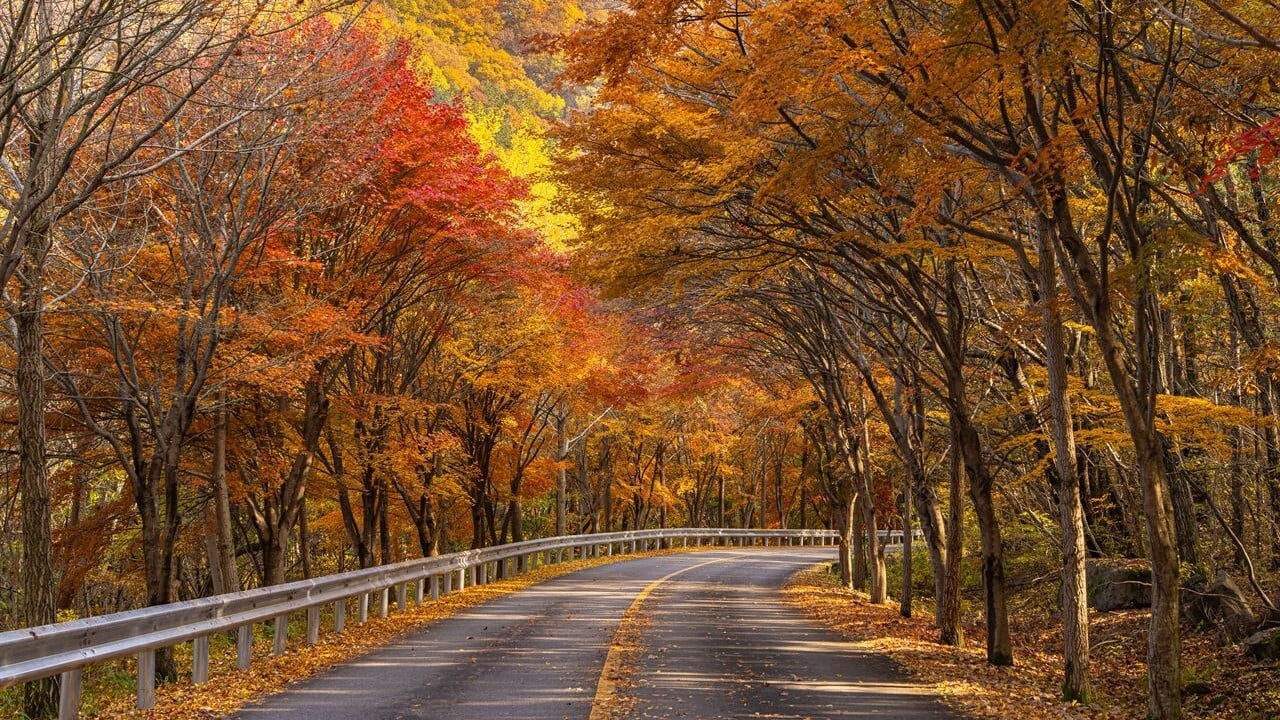
During the fall foliage season, there may be a lot of traffic and road conditions may change. For this year’s travel conditions and fall foliage progress, you should check the notices posted in Muju-gun and Deogyusan National Park just before departure.
A Quiet Lake High Above the Autumn Valley
As you climb the curved road, Jeoksang Lake appears in a basin about 800m above sea level. It is an artificial lake created as an upper reservoir of the Muju Pumped Storage Power Plant. The water opens between red and yellow forests, creating a wide scene that is different from the autumn leaves that fill the car window.
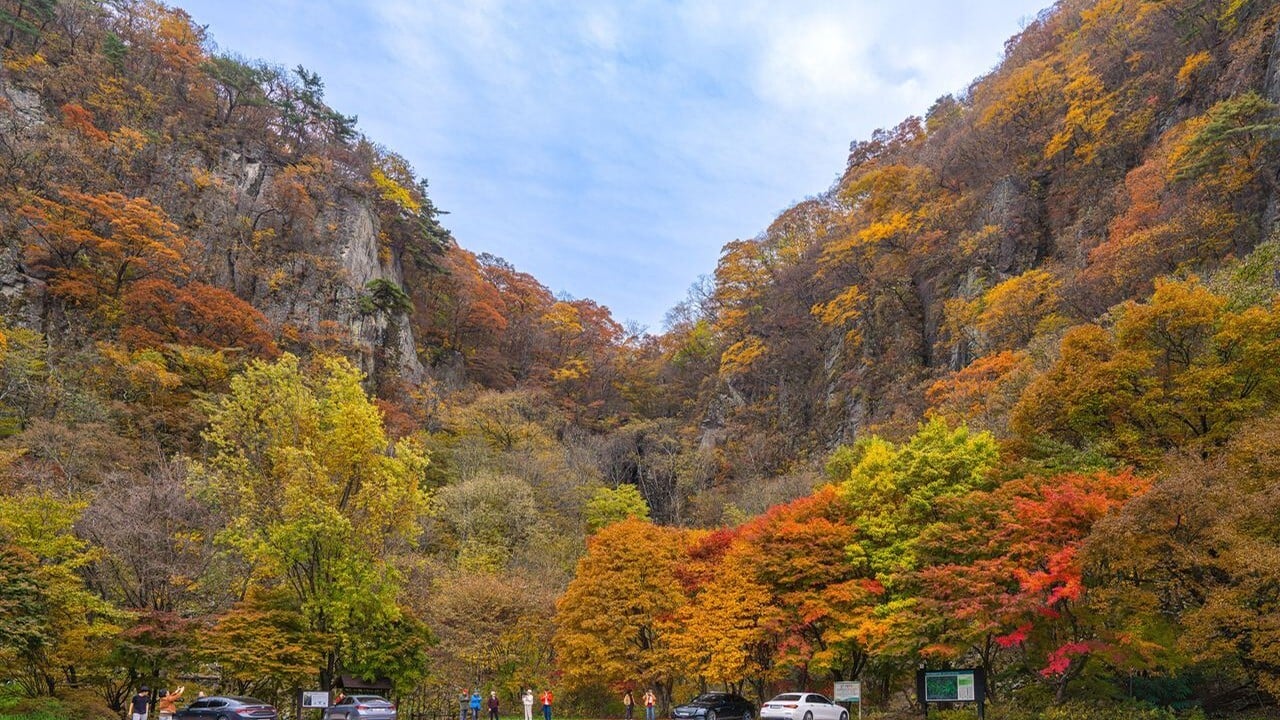
Around the lake, you can see the changes in the landscape created by the mountain path and water surface. However, you must remain in designated parking and viewing spaces around power generation facilities and roads and do not enter restricted access areas. If you are accompanying your parents, it is a good idea to split the itinerary by first resting around the lake and then moving on to the next location.
A Historic Archive Hidden Among the Leaves
Near Jeoksang Lake stands the restored Jeoksangsanseong Historical Archive. It was one of the mountain archives established to safeguard the Annals of the Joseon Dynasty, with Jeoksangsan’s steep terrain and fortress serving as natural defenses. The building adds a layer of history to a drive that might otherwise be remembered only for its scenery.
Step out of the car near the archive and the lake, autumn leaves and tiled roofs enter the same view. Even a brief understanding of why the records were kept on this high mountain changes the meaning of the road.
Slowing Down at Anguksa Temple
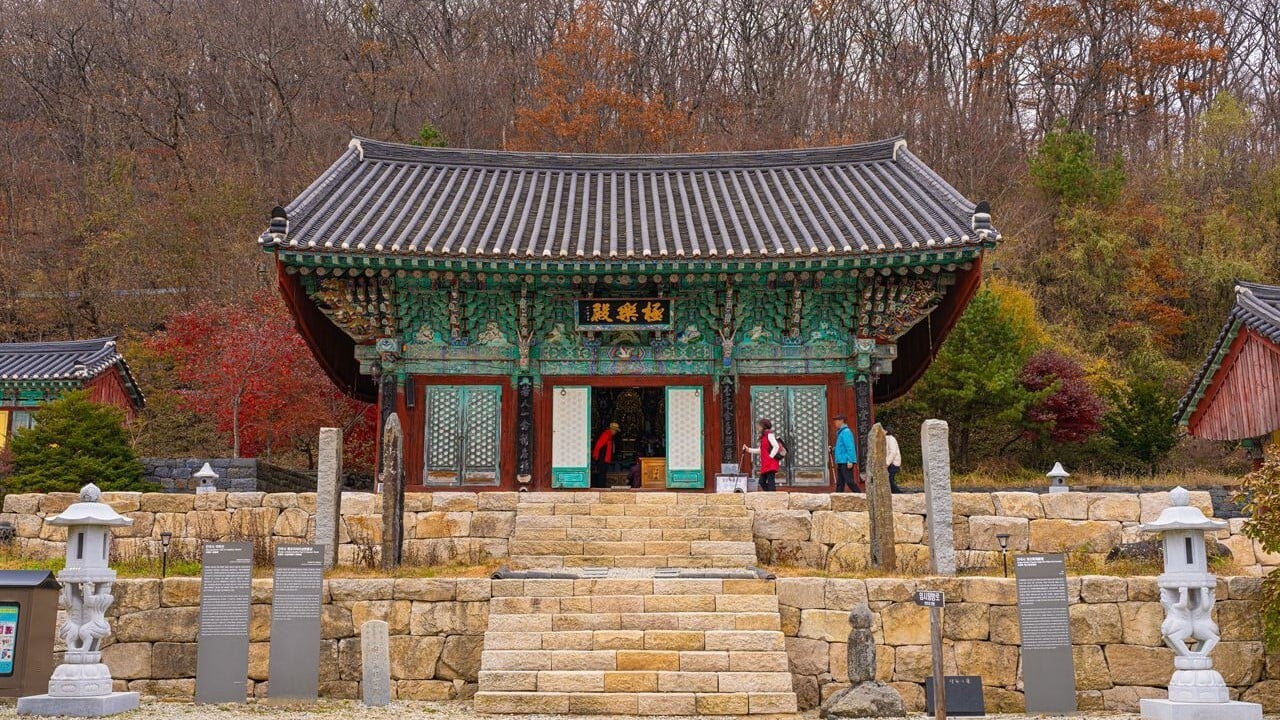
Anguksa Temple is located at the end of the road. The Muju-gun tourist guide introduces the Jeoksangsan Mountain Drive in the order that connects Jeoksang Lake, the Jeoksangsanseong Historical Archive and Anguksa Temple. This is the point where the car journey turns into a quiet walk as you reach the mountain temple.
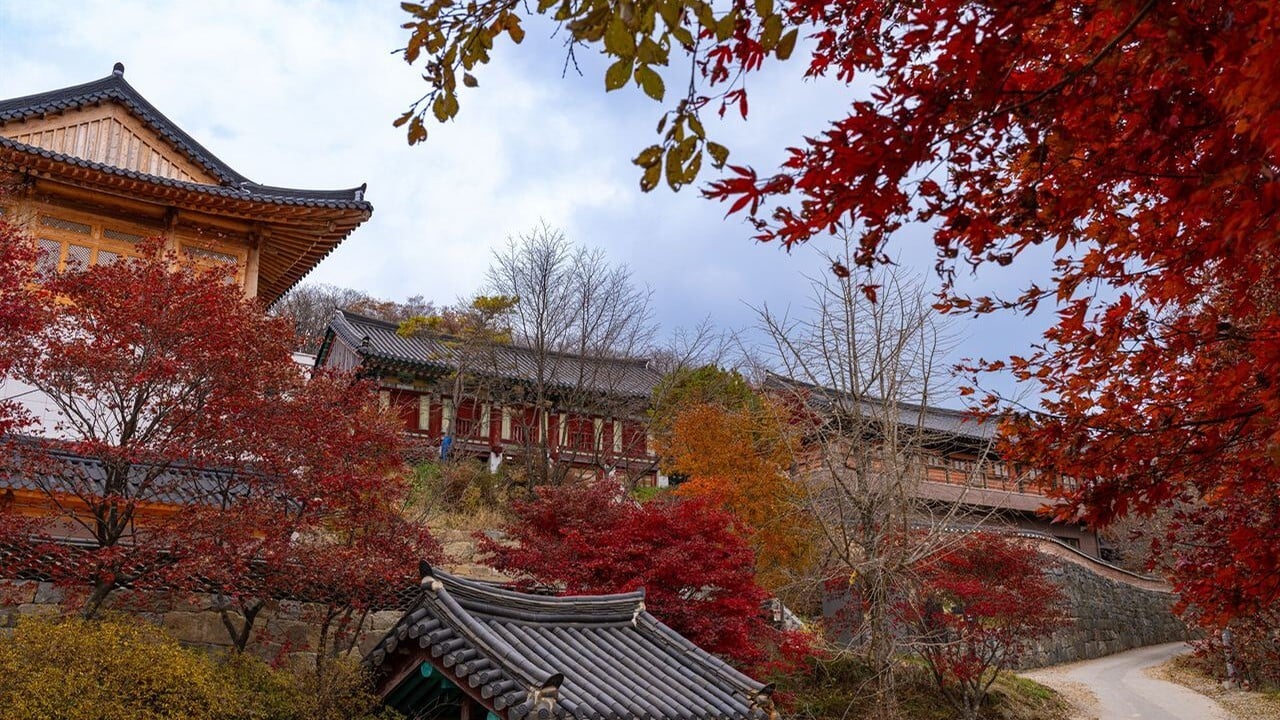
View the leaves and temple halls from within the grounds without blocking worshippers and other visitors. Stairs, slopes, and floors covered with fallen leaves can be a burden depending on the walking condition of your companions, so decide on the walking range on site. The option of walking further to Anryeomdae is a separate hike. The Korea Tourism Organization introduces it as an observation point that can be reached by walking about a 10-minute mountain path from Anguksa Temple, but you should not conclude that it is a light walk just by looking at the short time.
When to Visit and How to Check Road Restrictions
The season of red leaves on Jeoksangsan Mountain varies each year depending on temperature and weather, and there is also a difference in the speed of color change at the bottom of the mountain and at higher elevations. Rather than relying on just one date, it is more accurate to check official notices and the local fall foliage status right before departure.
The advantage of Jeoksangsan Mountain is that various heights of the mountain can be reached by car. At the same time, it’s easy to forget that you have to come back down the way you came up. As the sun sets, mountain roads quickly get dark, and wet leaves or fog can make driving difficult. It is convenient to enter the mountain in the morning and come down when it is light.
Muju-gun’s existing information states that you can travel to Anguksa Temple by car, but this does not guarantee year-round access. Vehicle access range may vary depending on weather, construction, and traffic management during fall foliage season, so check the notices on the day. The conditions for large vehicles are different from passenger cars.
Muju autumn foliage on Jeoksangsan is not remembered as a single destination. Climbing up the red mountain path, taking a breather in front of a quiet lake, passing the site of old records, and reaching the mountain temple, the entire flow becomes one journey.
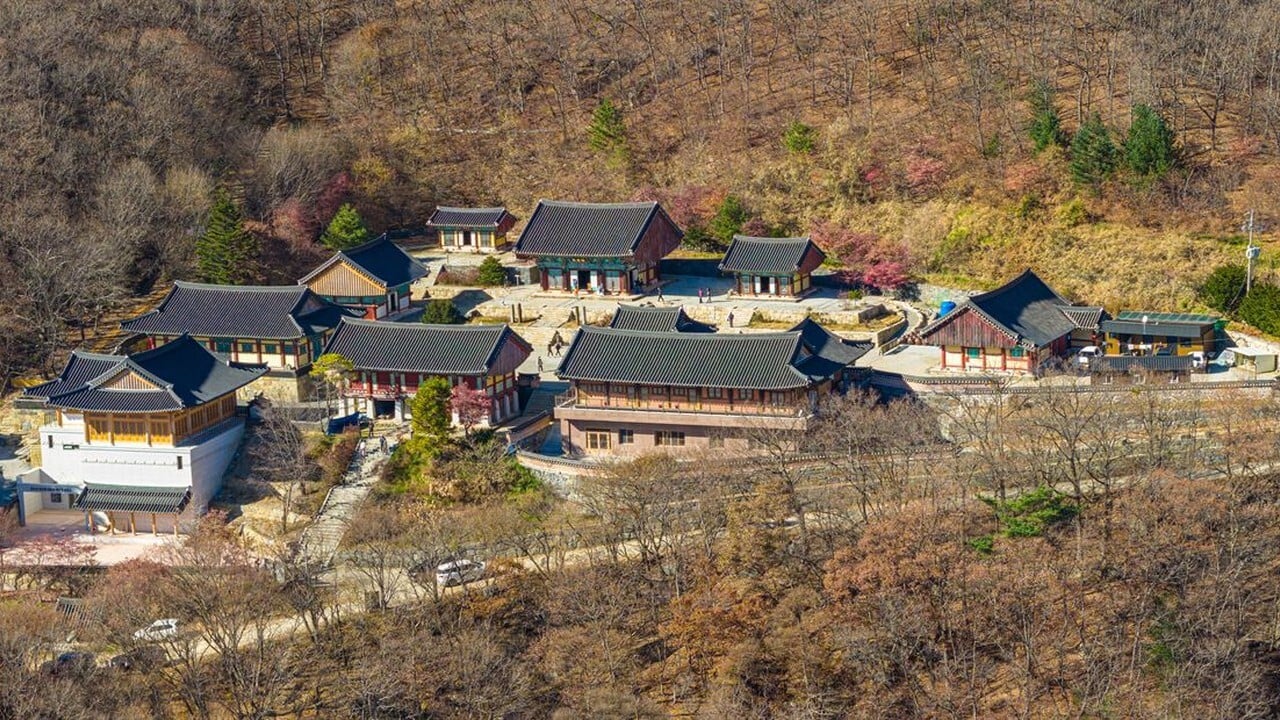
For a contrasting mountain walk, the Odaesan National Park autumn trail follows a valley on foot. On Jeoksangsan, choose a driving route with more reasons to slow down rather than one that is easy to speed through. At Jeoksangsan Mountain, autumn lasts longer when you’re not in a hurry to look at the scenery over the next bend.
Before leaving, review Muju County’s Jeoksangsan visitor guide and the Korea Tourism Organization’s Jeoksangsan article. Check the latest Muju County and Deogyusan National Park notices for road restrictions and areas open on the day of your visit.
You May Also Like
by Google Adsense