Naganeupseong Folk Village in Suncheon: Thatched Houses, Stone Walls and Lanes
Naganeupseong Folk Village in Suncheon, a living traditional settlement inside a stone-walled Joseon town
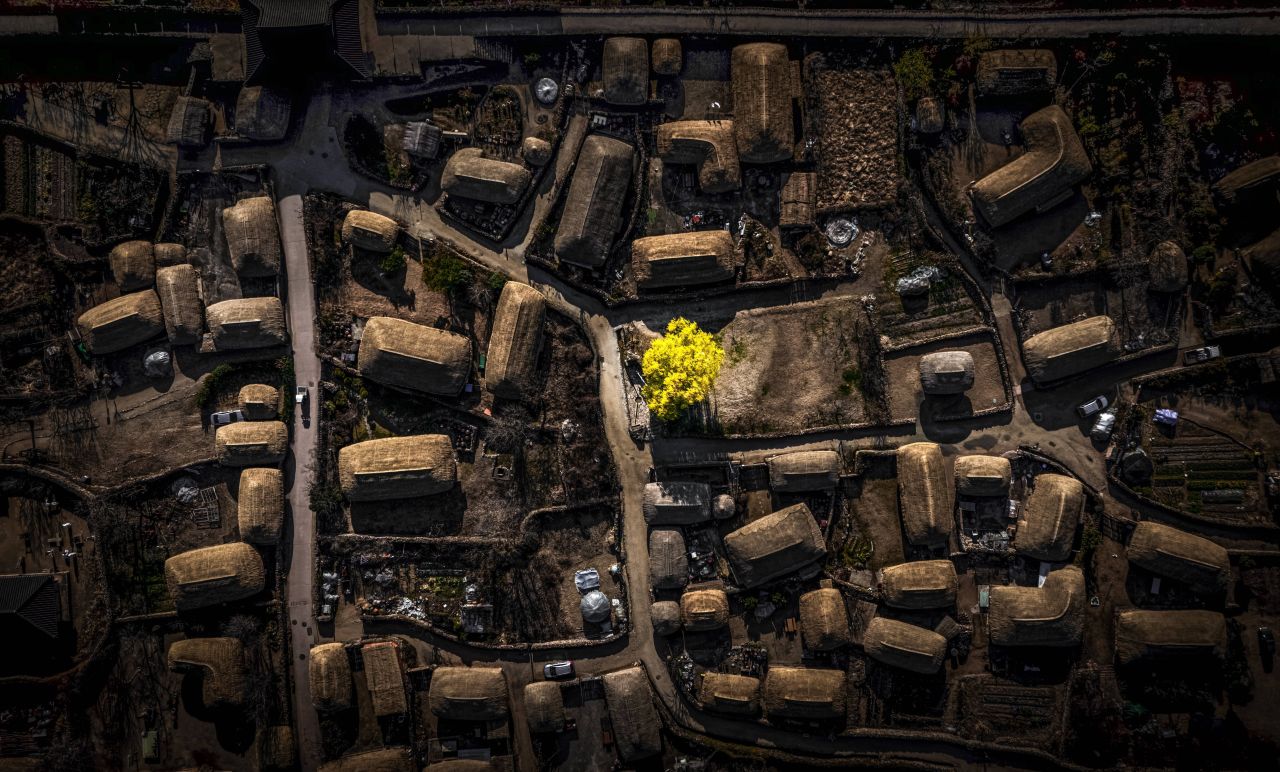
Rounded roofs turn in different directions, with narrow lanes and small yards filling the spaces between them. A bright tree interrupts the earth-toned buildings and makes the pattern of the settlement especially clear.
Naganeupseong Folk Village is a preserved walled town in Suncheon, in southwestern Korea. Residents continue living within the historic setting. The large gateway introduces its defensive scale; inside, low walls and thatched houses bring the view back to everyday life.
The spaces between buildings matter as much as individual landmarks. Following the relationship between lanes, courtyards, homes and public buildings offers a clearer understanding of the town than treating it as a collection of old roofs.
Begin at the stone gateway of Naganeupseong Folk Village
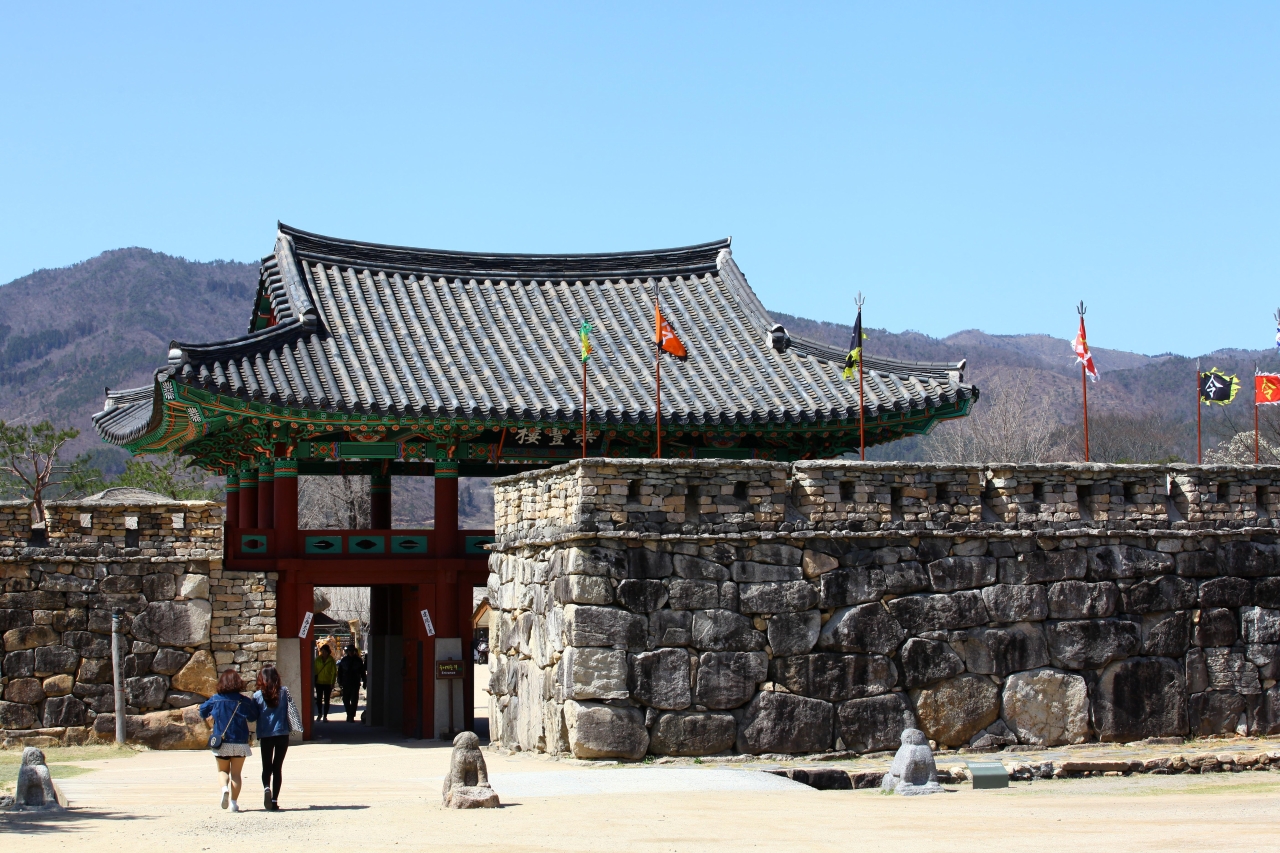
Large stones form the lower wall, with smaller pieces filling the gaps. Above them stand red columns and a tiled roof. Before the houses come into view, the gateway establishes the thickness and height of the town’s boundary.
The official history traces the first earthen fortification to 1397 and describes its seventeenth-century rebuilding in stone under local magistrate Im Gyeong-eop. The town’s present character reflects more than one period of construction and care.
Passing through the gate changes the scale quickly. A boundary built for defense gives way to the lower forms of domestic buildings. The contrast between enclosing wall and modest home is one of the clearest ways to understand the place.
Look closely at the thatched houses and low walls
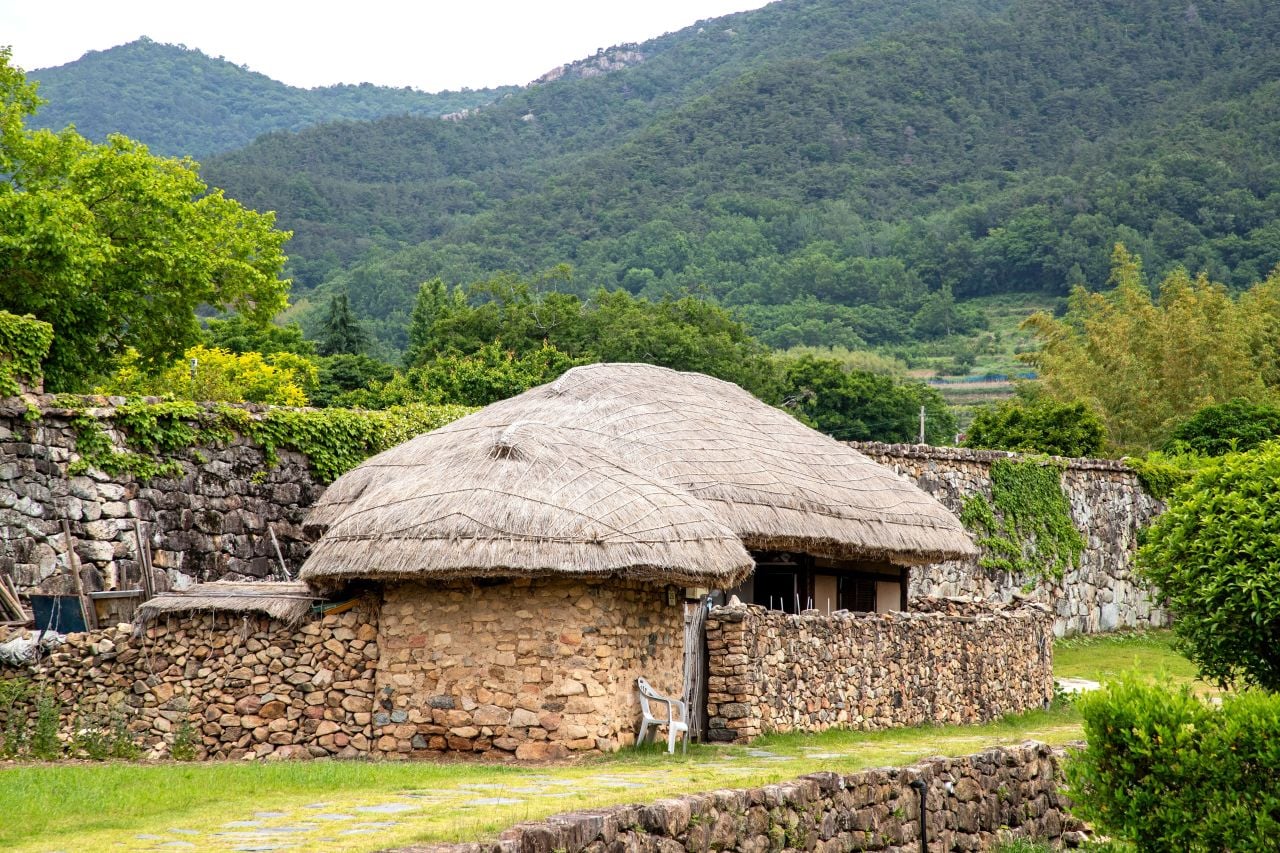
A gently rounded roof hangs over pale earthen walls, while a low stone enclosure defines the edge of the house. After the gateway’s larger masonry, these materials create a more intimate view.
The traditional houses known as choga take their name from their thatched roofs. At Naganeupseong, the texture of the straw, the surface of the earth and the uneven stones are useful details to notice. They reveal how the buildings are put together without requiring an architectural vocabulary.
This is also a residential setting. Looking from the public lanes is different from entering a private yard. The continued presence of everyday life is part of the village’s meaning, rather than an incidental feature of a sightseeing backdrop.
Notice jars and laundry as well as the rooftops
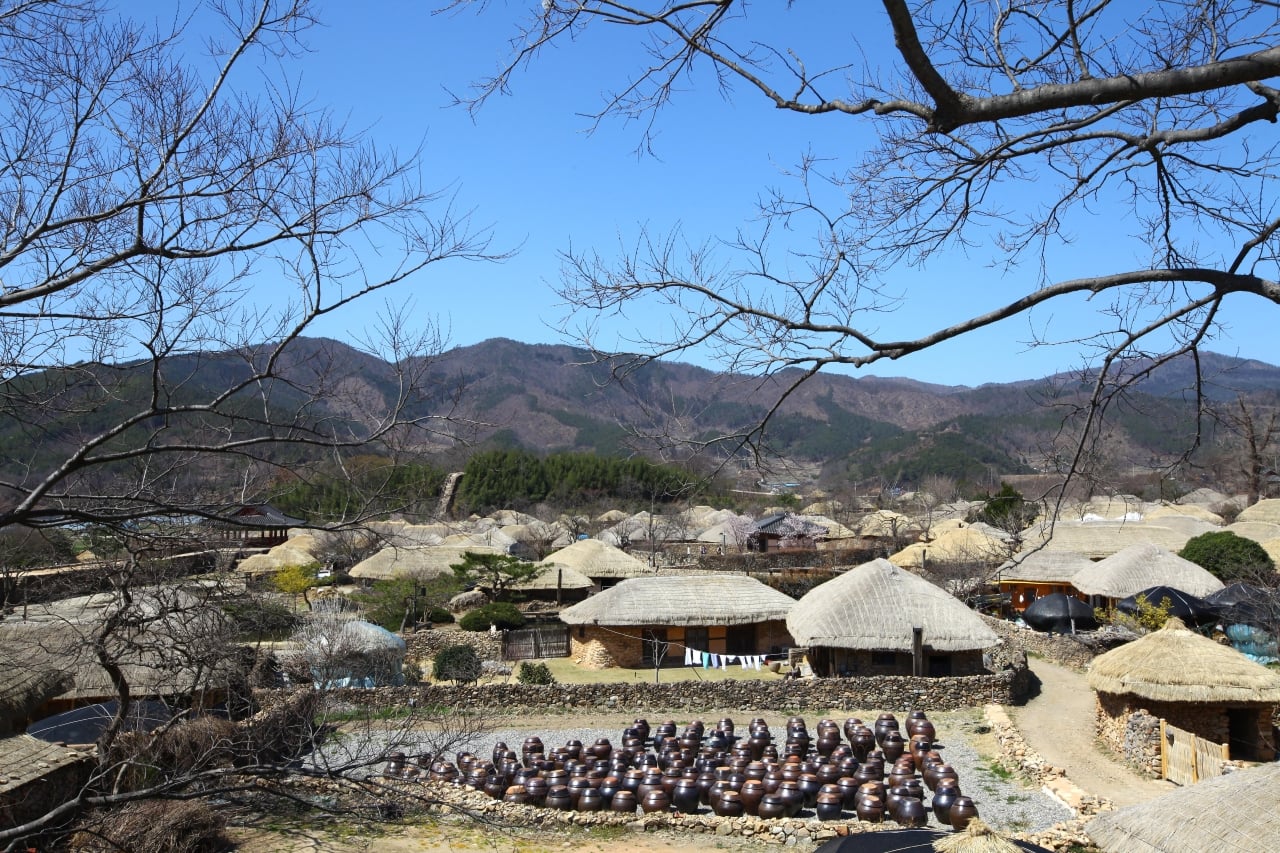
Rounded storage jars gather in an open space, with laundry hanging behind them. The view shifts from the scale of a town wall to objects and routines associated with an individual household.
Traditional architecture can make Naganeupseong look like a film set, but that impression is incomplete. Visitor spaces and residents’ lives share the same enclosure. The houses are part of a settlement, not simply isolated display buildings.
Small arrangements help communicate that distinction: where jars are placed, how a low wall meets a lane and how much space separates neighboring roofs. Alternating between a broad panorama and these close details gives the visit more depth.
Find tiled buildings among the thatched roofs
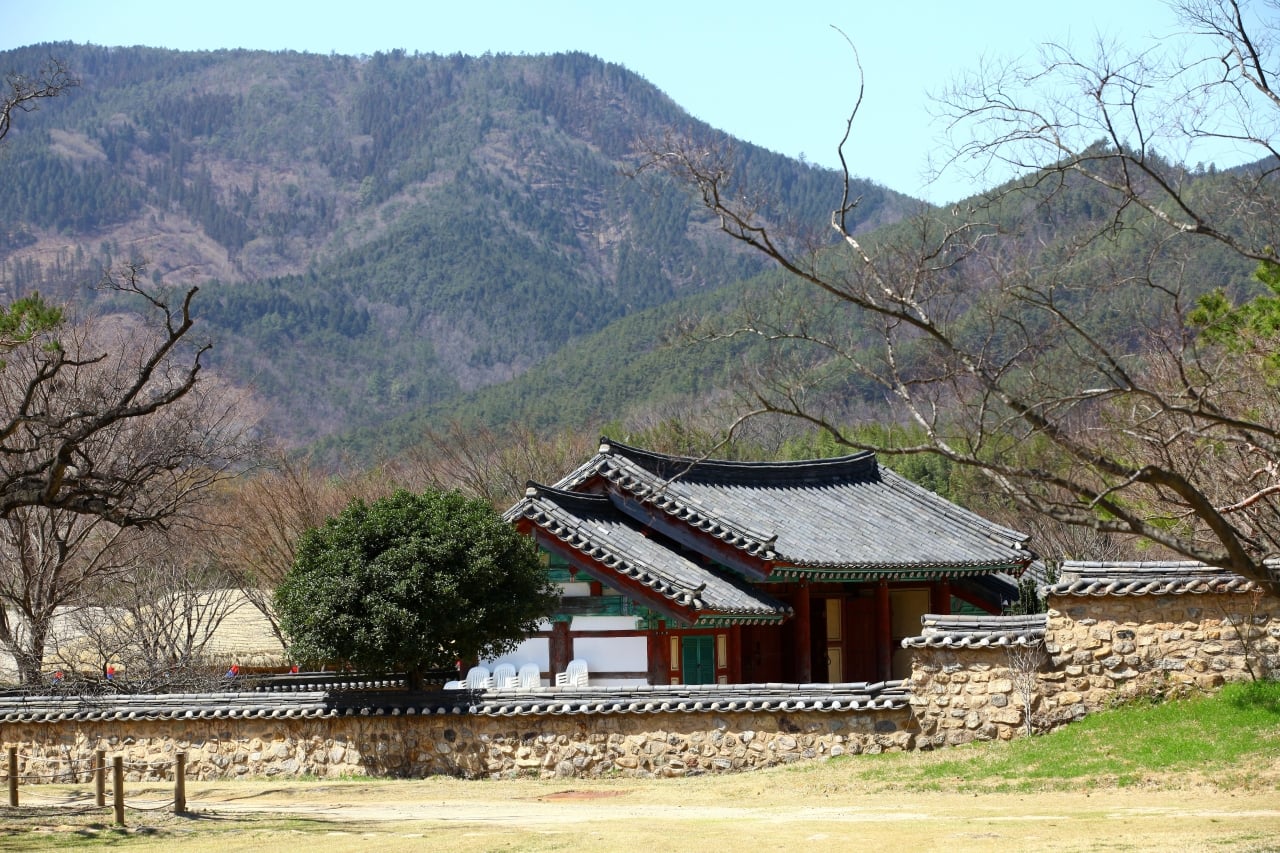
Tiled roofs introduce another outline among the softer curves of thatch. Pale walls and painted timber create a different rhythm from the earth-toned houses, while the mountain remains visible beyond the compound.
An eupseong was a fortified local administrative town as well as a place to live. Naganeupseong’s history includes the magistrate’s office and guesthouse, alongside its residential areas. Public duties and domestic routines occupied neighboring parts of the town.
Rather than trying to memorize every building name, notice the different proportions of roofs, walls and courtyards. A small household yard and a space associated with public life do not work at the same scale. Seeing both helps explain the settlement’s structure.
Read the town from the wall-level path
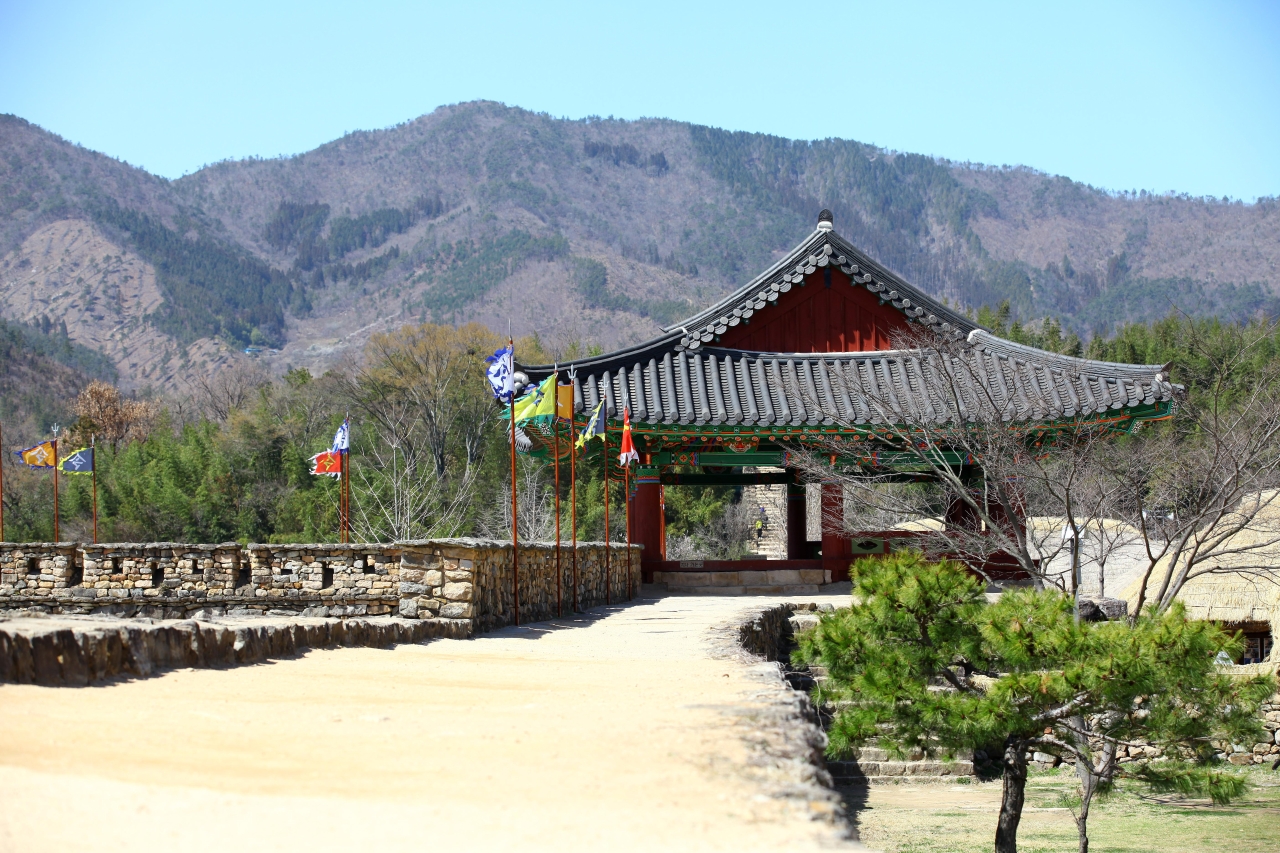
At a higher viewpoint, separate roofs and lanes become parts of one settlement. Through the gateway, another stretch of wall is visible, while the lower houses gather beside it.
Naganeupseong’s official introduction records a wall length of 1,410 meters, or about 0.9 miles. The enclosure gives the homes and administrative spaces on the surrounding plain a clear shared boundary.
For a traditional village shaped by different terrain, Yangdong Village’s hillside lanes and valleys offer a useful comparison. Naganeupseong’s defining relationship is between the stone-walled town and the daily life inside it.
Naganeupseong Folk Village rewards a cultural outing that moves between those scales. The broad defensive wall, a narrow lane and a group of household jars each reveal a different part of the same living place.
You May Also Like
by Google Adsense