Songgwangsa Temple in Suncheon: Covered Stone Bridge, Cypress Woods and Painted Halls
A temple walk on Jogyesan Mountain, from the covered bridge at Cheongnyanggak Pavilion to gates, cypress trunks and carved stone details
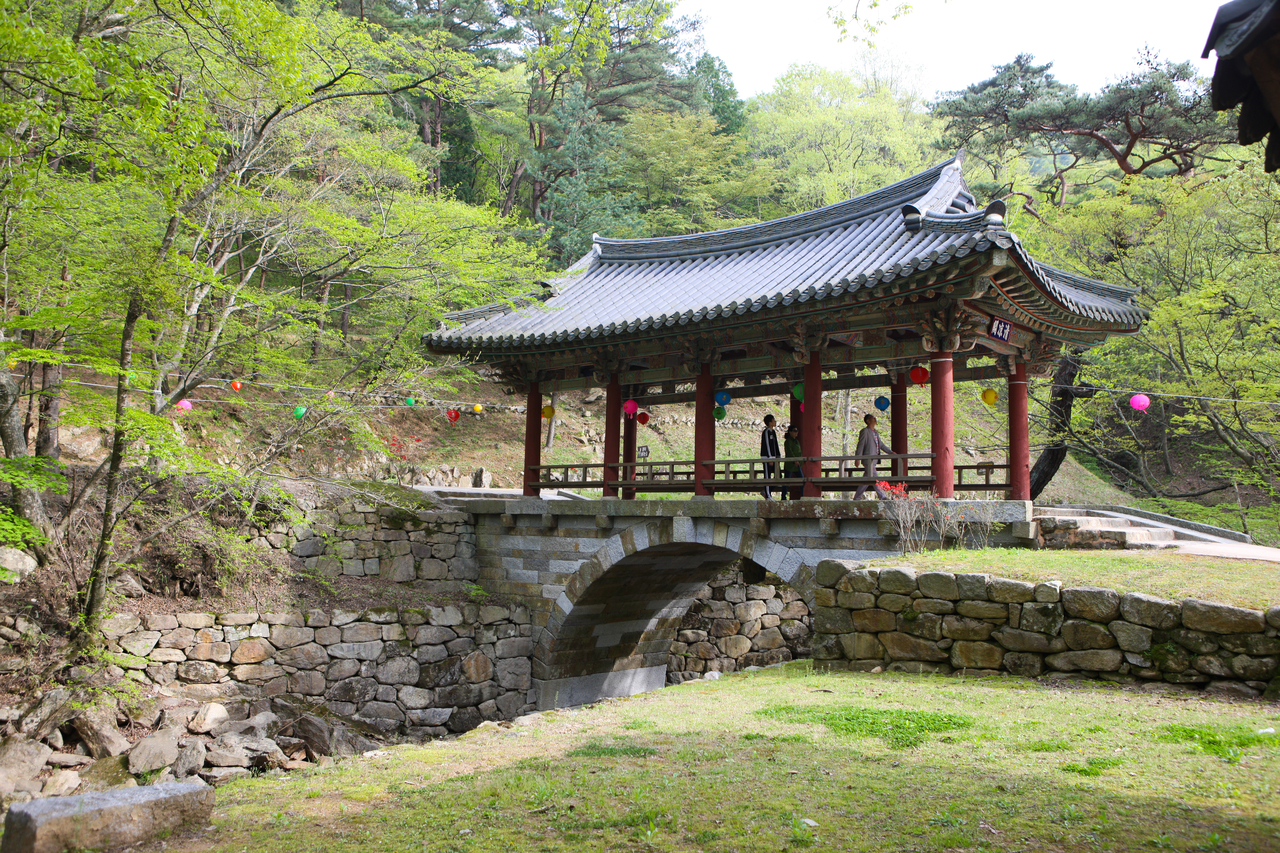
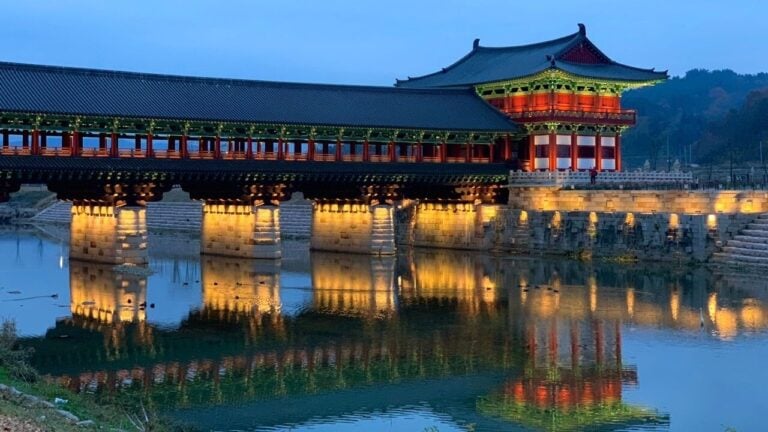
A stone arch carries a line of wooden pillars, with a tiled roof stretching above them. The bridge and pavilion form one structure. Water runs below while open bays frame the crossing, giving the small scene more than one level to explore.
Songgwangsa Temple stands on the slopes of Jogyesan Mountain in Suncheon, in southwestern Korea. The approach brings together water, woodland and temple architecture before the visitor reaches the larger halls. The covered bridge at Cheongnyanggak Pavilion makes that relationship particularly easy to see.
For a late-fall temple outing, those built forms offer interest beyond a particular leaf-color window. Branches, rooflines and the surface of the stone remain part of the scene as foliage changes. Looking between the broad setting and smaller details gives the walk a purpose beyond finding a single seasonal view.
Find the boundary beneath Songgwangsa Temple’s Jogye Gate
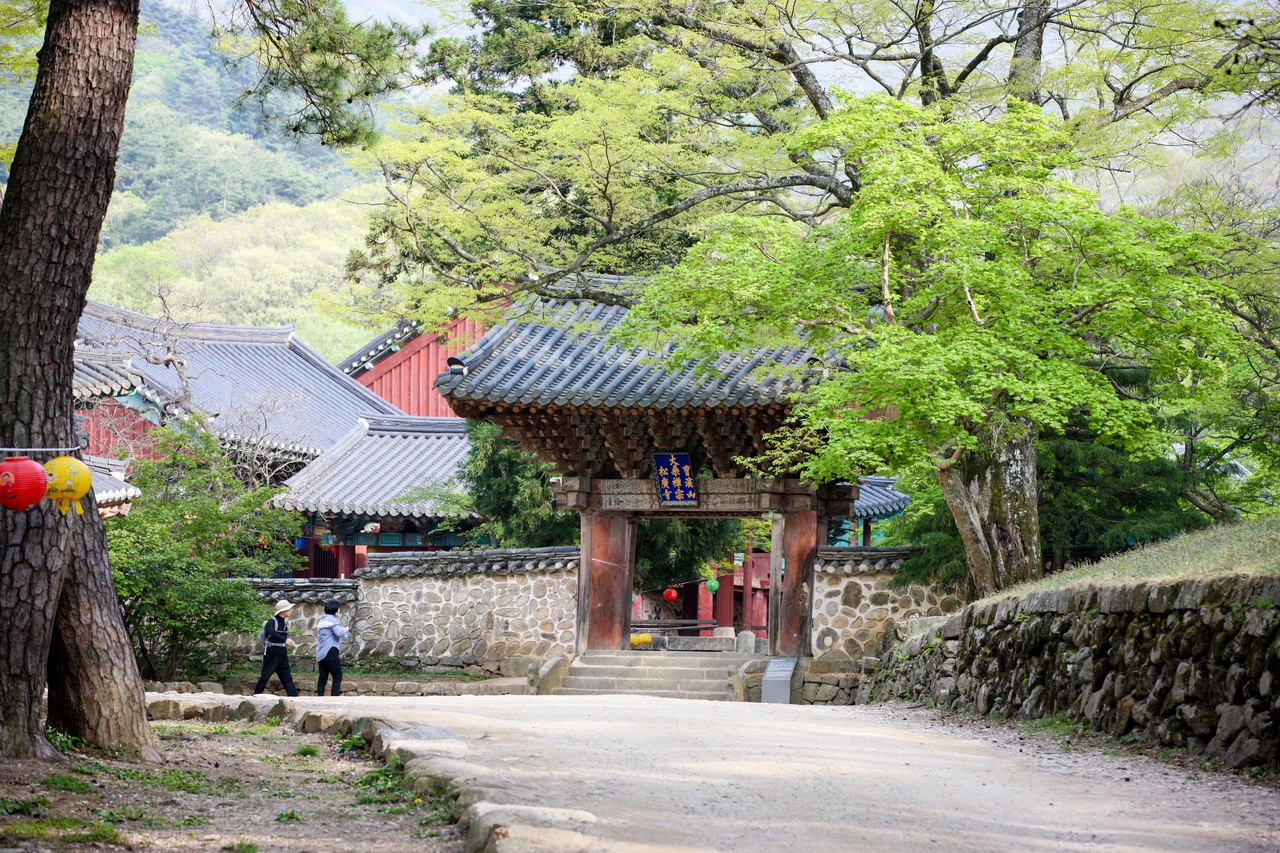
Two pillars support a broad roof at the end of an unpaved approach. Low walls continue to either side, with other roofs partly visible behind them. The open space beneath the gate is as noticeable as the timber and tiles above it.
Jogye Gate is the temple’s first gateway, also described as its iljumun, or one-pillar gate. Rather than closing the approach with a solid wall, the structure marks a transition through its pillars and roof. It changes how the space is read without hiding everything beyond it.
From a distance, the gate belongs to a larger composition of trees and stone walls. Closer up, the painted timber and supporting members become individual details. Those two scales help connect the wooded approach with the more deliberately organized spaces inside the temple grounds.
Compare the rooflines with the upright trunks of the cypress woods
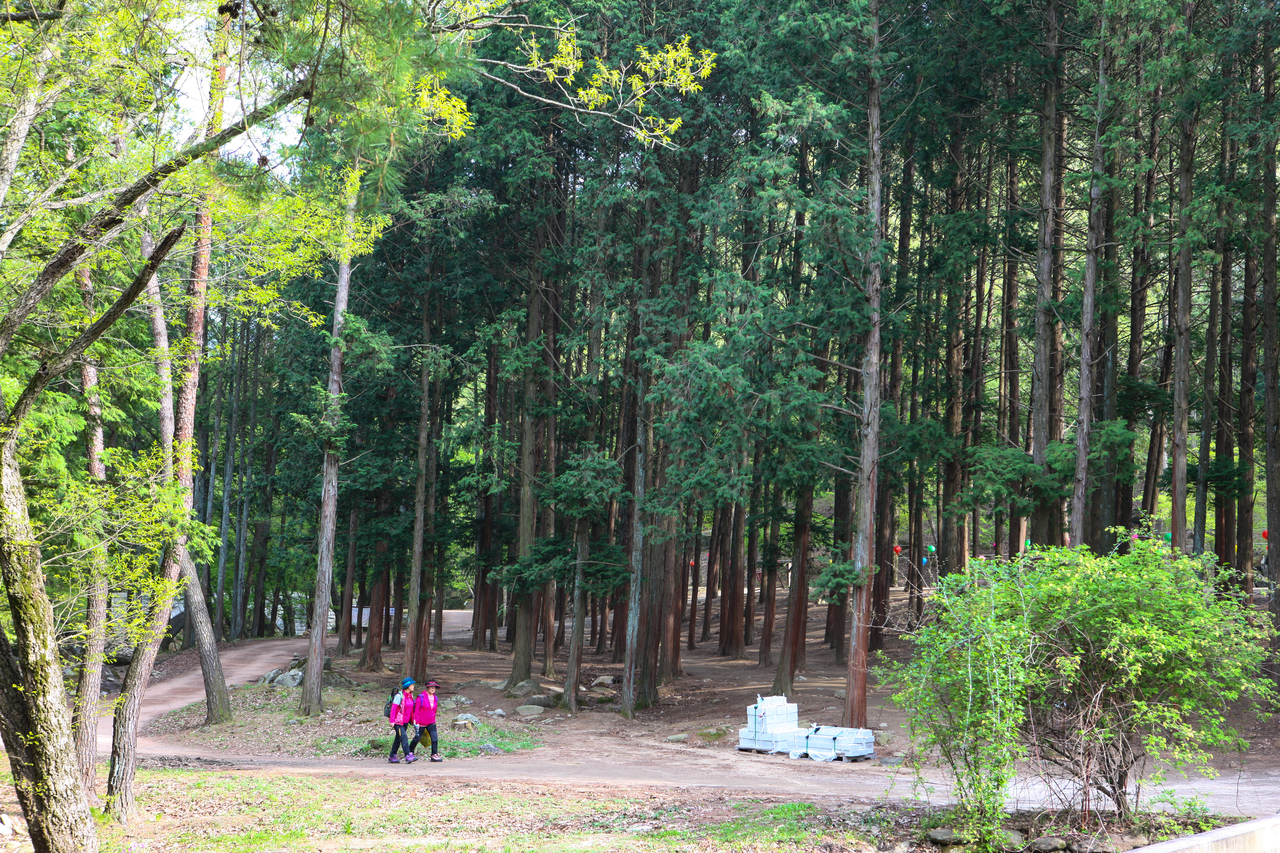
Long trunks rise in similar directions, while a path curves through the spaces between them. The ground remains relatively open below the denser canopy. After looking at horizontal roof edges, the eye follows a set of vertical lines.
The evergreen trees contribute a different kind of presence from neighboring deciduous foliage. Their canopies provide a visual background as other trees change through fall. That contrast makes the woodland more varied than a single wall of seasonal color.
Spacing between the trunks gives the scene depth. A nearby tree hides part of another, then the path opens a view farther into the stand. The cypress woods add another texture to a temple landscape already shaped by flowing water and carefully arranged timber buildings.
Look under the layered eaves of Seungbojeon Hall
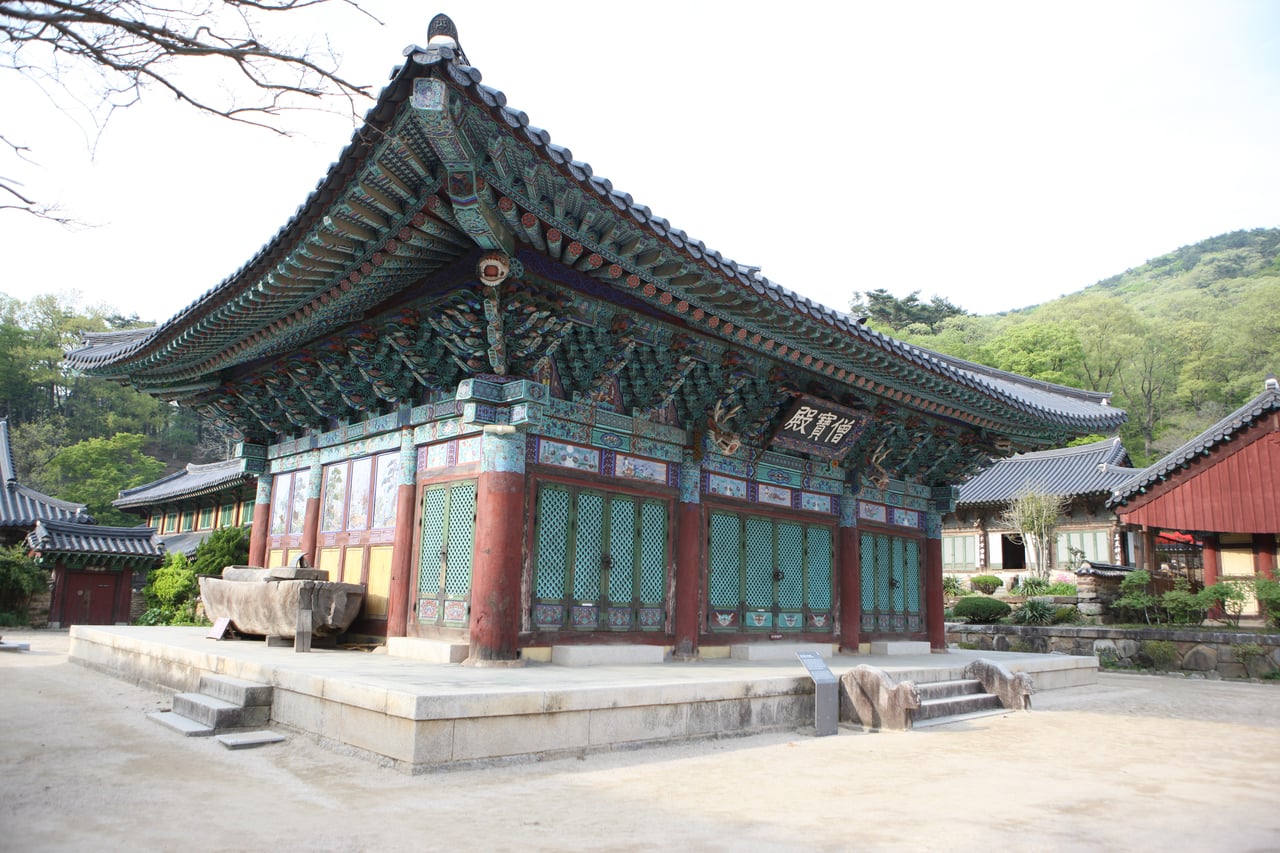
Red pillars rise from a stone platform beneath densely layered eaves. Green, blue and red painted decoration follows the repeated wooden members. The roof appears as a single form from farther away, but reveals many smaller elements close to the building.
Songgwangsa is one of Korea’s Three Jewel Temples, together with Haeinsa and Tongdosa. It represents the Sangha, the Buddhist monastic community. That identity provides context for the halls and courtyards, including the name Seungbojeon.
The exterior can be read from the steps upward: stone, pillars, doors and the supporting structure beneath the roof. Each material changes the scale of attention. Songgwangsa is an active religious site, so observing the buildings should respect prayer areas and the boundaries of individual halls.
Notice the changing proportions of the smaller halls
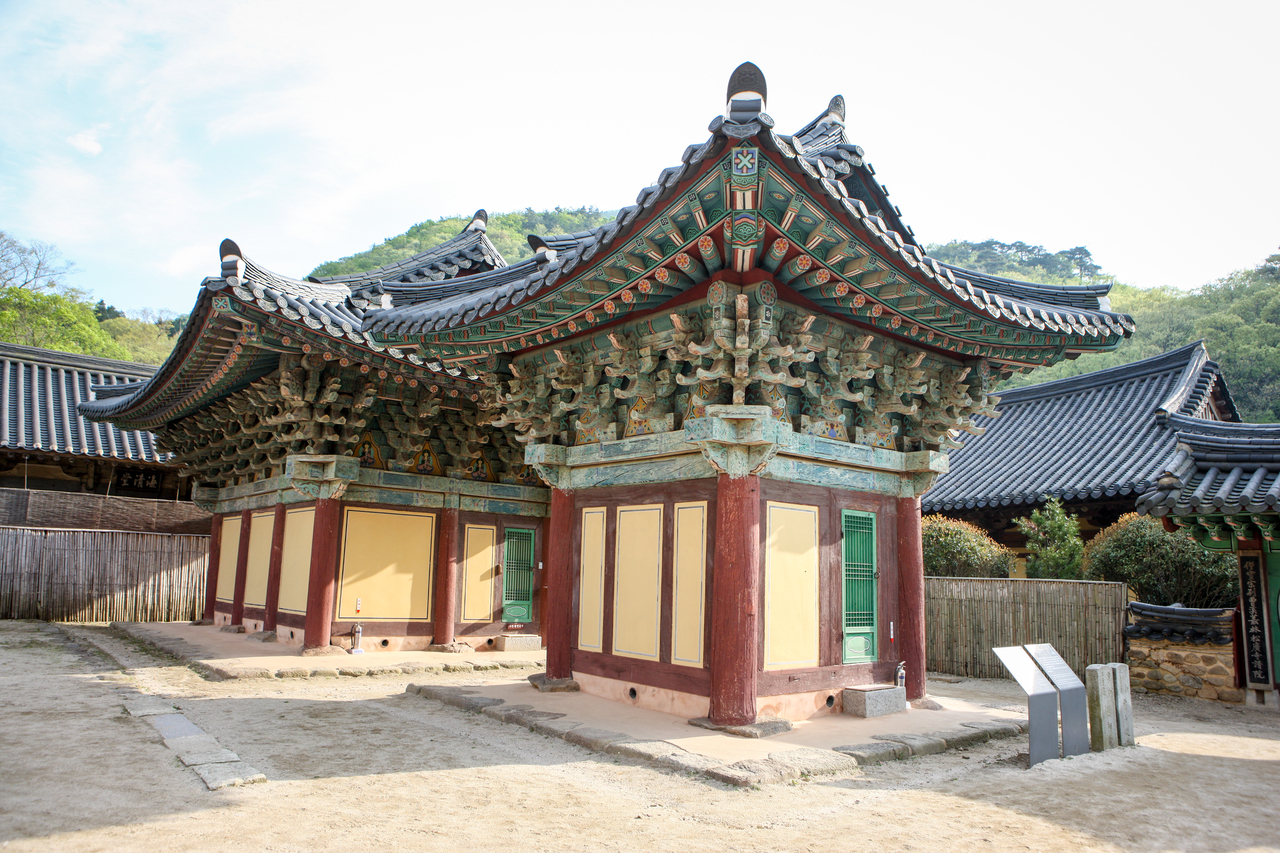
A compact hall stands in front of a longer roofline. Yellow wall panels, red pillars and green doors gather within a relatively small space. The overlapping forms make the difference in the buildings’ proportions particularly visible.
The view of Yaksajeon and Yeongsanjeon offers a useful counterpoint to a larger hall. A shorter facade concentrates the painted details, while the neighboring building draws the eye along a longer wall. The temple becomes an arrangement of buildings rather than one dominant front elevation.
The spaces between roofs matter, too. A strip of sky or the direction of a nearby wall helps explain how the halls fit together. Looking at those gaps brings the courtyard into the composition instead of treating it merely as the space through which to reach the next building.
Finish at the small carved creatures beside the steps
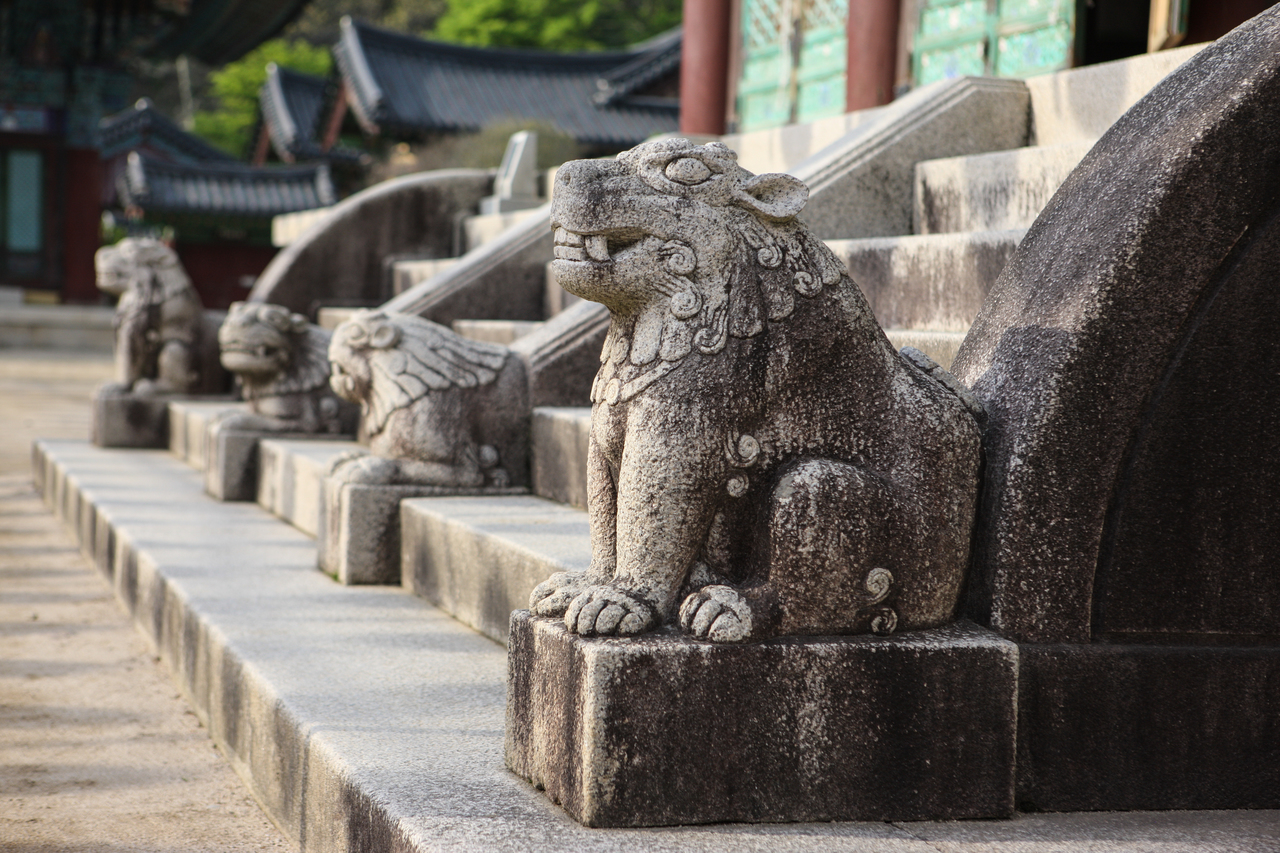
Small stone creatures sit along the edge of the steps. Rounded eyes, open mouths and curling lines give the solid material an expressive surface. These details ask for a closer view than the roofs and tree crowns encountered elsewhere in the grounds.
The Academy of Korean Studies’ Songgwangsa entry identifies Cheongnyanggak as a building placed over an arched stone bridge in the valley. After comparing larger structures with small carvings, the stone arch at the crossing becomes another form to read closely rather than simply a route across the water.
For a different relationship between a pavilion, stone bridge and woodland, see Cheoneunsa Temple’s Suhongnu Pavilion in Gurye. The comparison shows how similar architectural elements can form distinct temple settings.
Songgwangsa rewards a visit that moves between scales. A roof over water, upright cypress trunks, painted eaves and a carved stone face each reveal a different part of the same place. Together they give the walk substance even when the season’s strongest foliage has moved on.
You May Also Like
by Google Adsense