Yongmunsa Ginkgo Tree: A Golden Autumn Day Trip to Yangpyeong
One ancient ginkgo turns into a golden forest beneath the slopes of Yongmunsan Mountain.
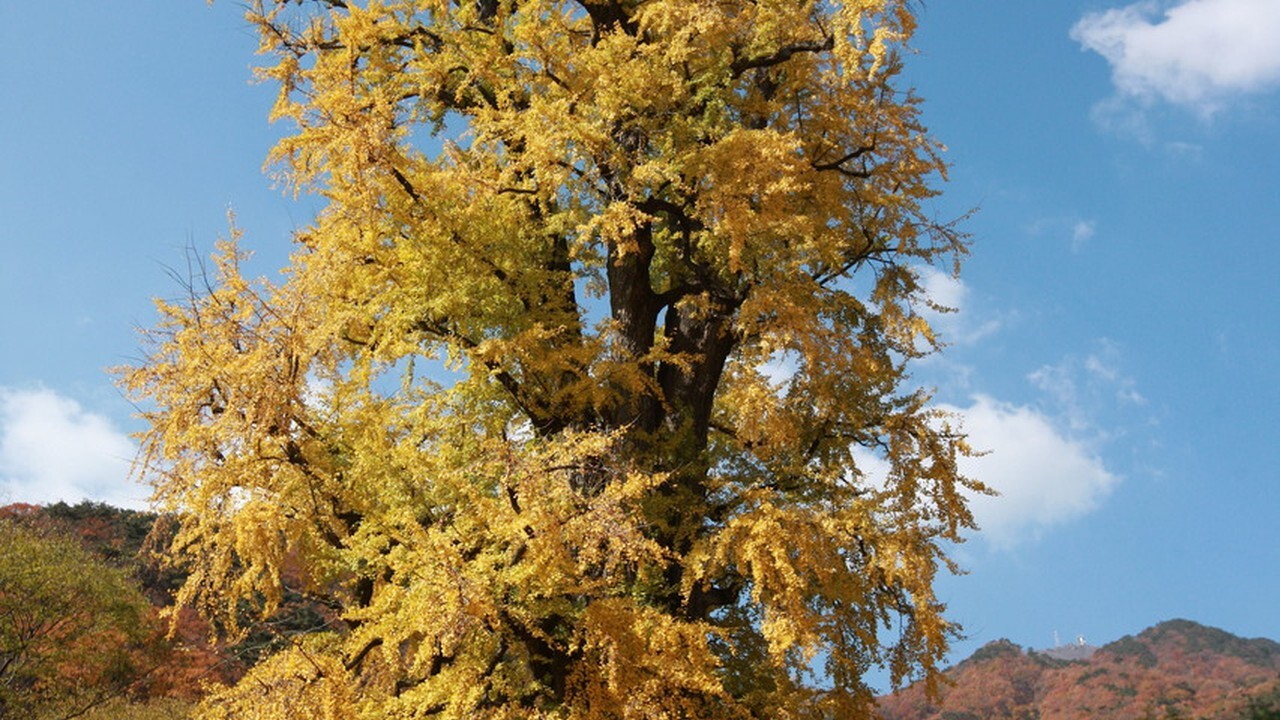
The Yongmunsa ginkgo tree brings a search for autumn color in Yangpyeong to a quiet stop before a single tree. As the season deepens, red and yellow leaves gather along the streamside path, while the immense ginkgo at Yongmunsa Temple begins to resemble a small golden forest of its own.
The temple sits on the lower slopes of Yongmunsan Mountain in Yangpyeong, Gyeonggi-do. Its ginkgo tree is designated a Natural Monument and managed by Yangpyeong County, making it more than a beautiful backdrop to the temple grounds.
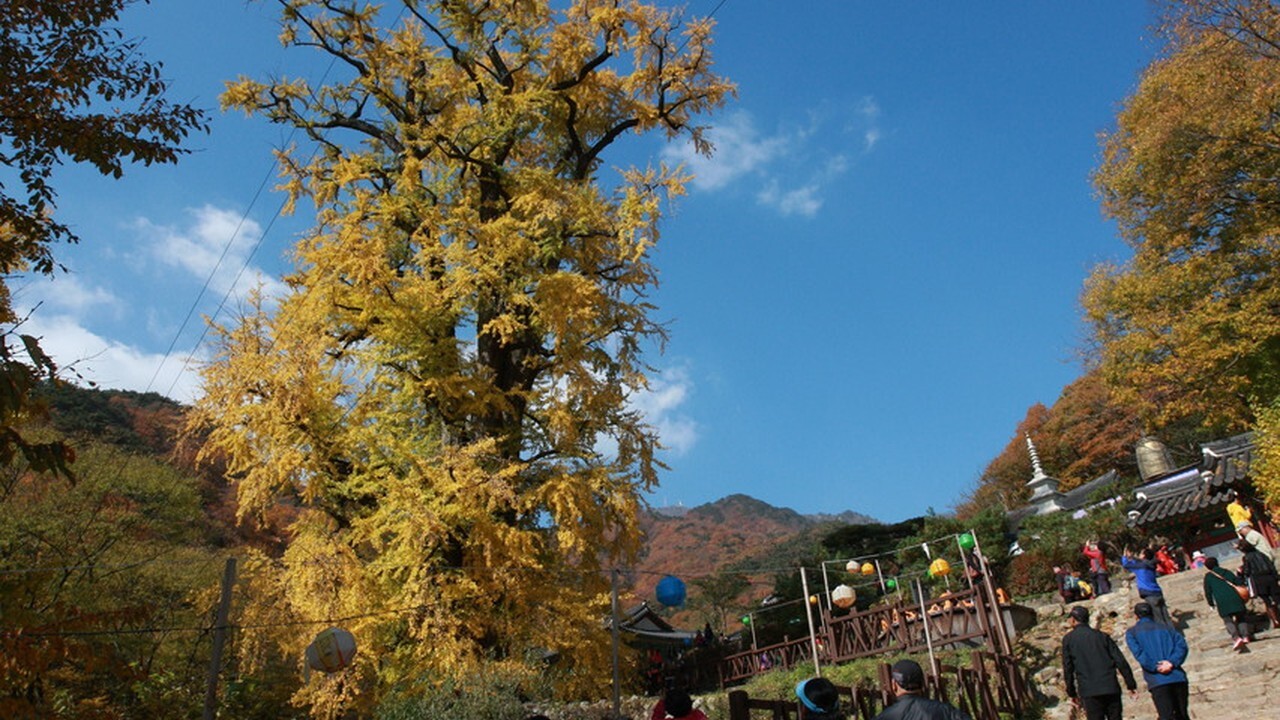
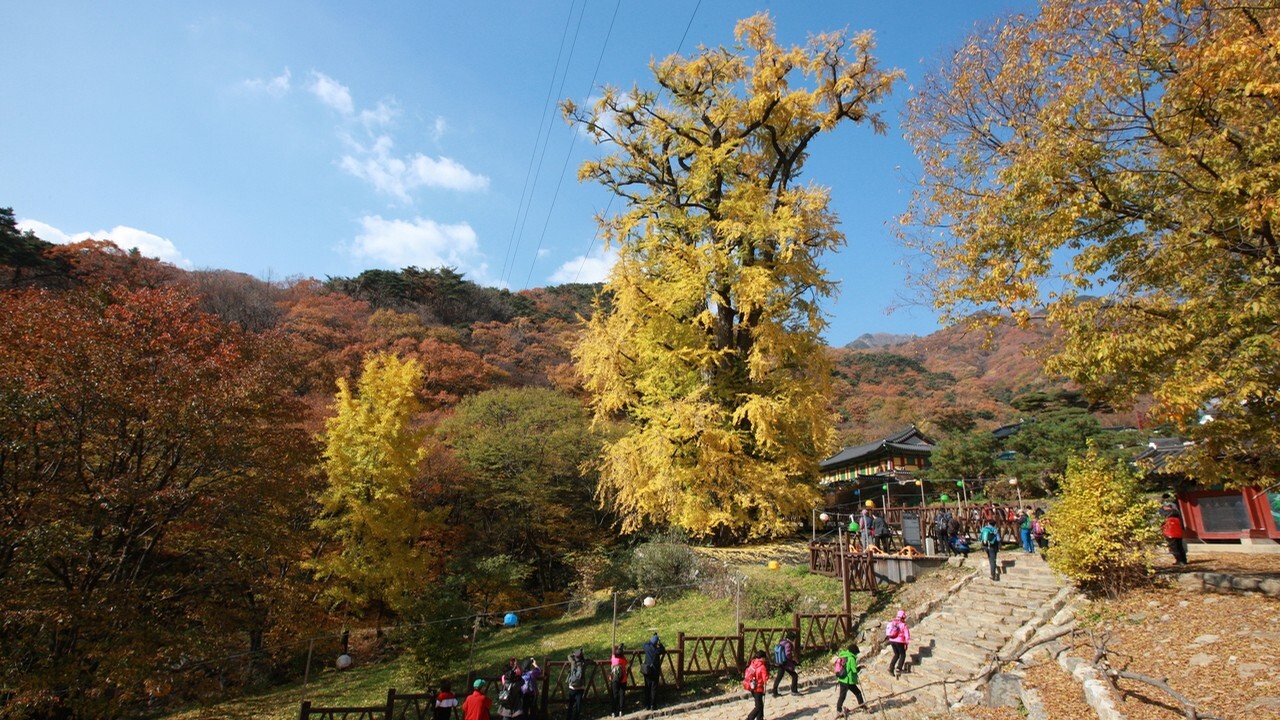
The tree is known to stand about 42 meters tall. Its crown is difficult to take in with a single glance, and its age and scale form a striking contrast with the low temple roofs below.
The Forest Path Into Yongmunsa Temple
On the road from Yongmunsan Tourist Site to Yongmunsa Temple, Yongmuncheon Stream flows side by side. The route introduced by the Korea Tourism Organization is a well-maintained walking path with a relatively gentle slope. Since the flow passes through forests and valleys and reaches the temple, the time to get there is more important than the destination, which makes the fall trip.
The route leading to the temple along Yongmuncheon Stream allows you to look at the forest and waterway together. Even if you choose a single ginkgo tree as your destination, you are experiencing autumn at a mountain temple even before you reach there.
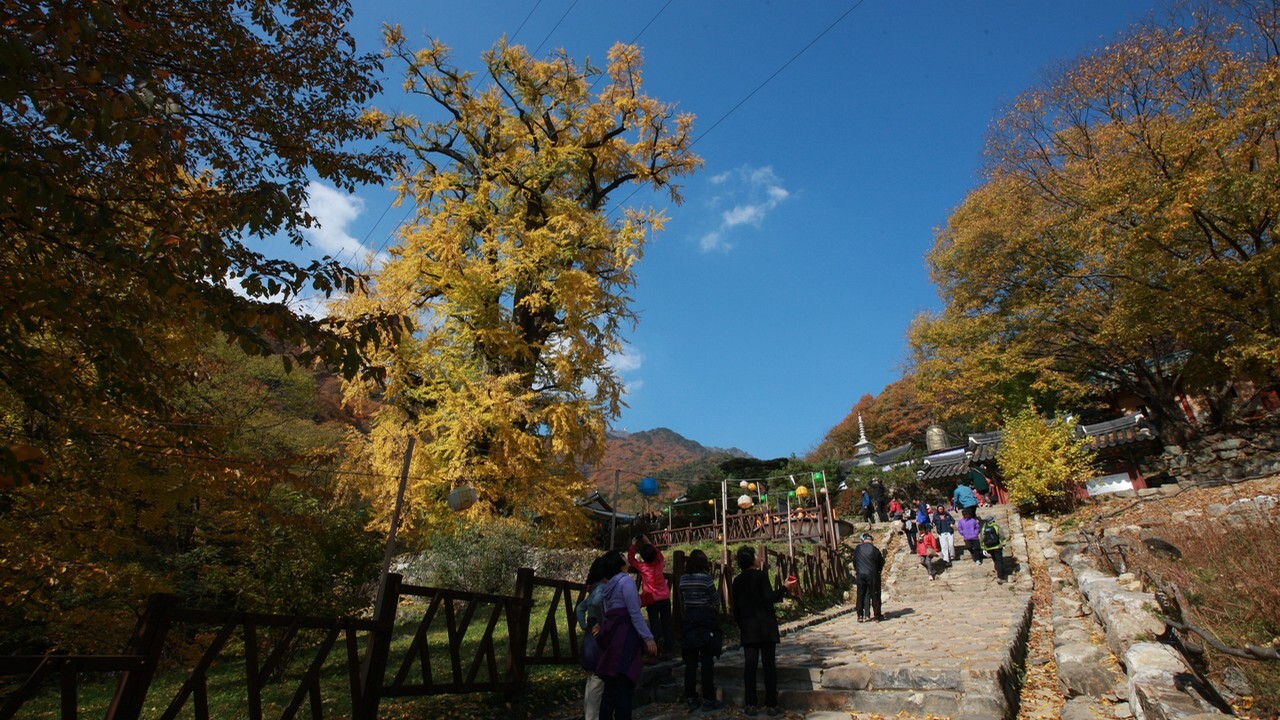
The announcement that the trail is gentle does not mean it will be easy for all visitors. Since you have to keep walking up to the temple, if you are with your parents, it is better to think about the distance to return and the time to rest first. In late fall, you should also look out for wet fallen leaves and temperature changes.
If you are planning to visit Yangpyeong’s famous autumn foliage spots with your parents, it is better not to calculate the time of arrival at the entrance of the tourist attraction as the time of arrival at the mountain temple. If you slowly look at the valley and forest while climbing, and leave time to stay in front of the ginkgo tree and the distance to come down, it becomes an unhurried fall walk.
When One Ginkgo Tree Becomes a Golden Forest
As you get closer to the precincts, the ginkgo trees come into view before the surrounding buildings. On the National Heritage Portal, this tree was designated as a natural monument on December 7, 1962, and its location is recorded as 626-1 Sinjeom-ri, Yongmun-myeon, Yangpyeong-gun. Yangpyeong Yongmunsa Ginkgo Tree National Heritage Information
The age of the ginkgo tree at Yongmunsa Temple is estimated to be about 1,100 years. The numbers alone represent a long period of time, but here, those years are conveyed through size rather than chronology. Branches branching from the thick trunk spread toward the sky, and the people standing underneath them and the temple naturally become smaller.
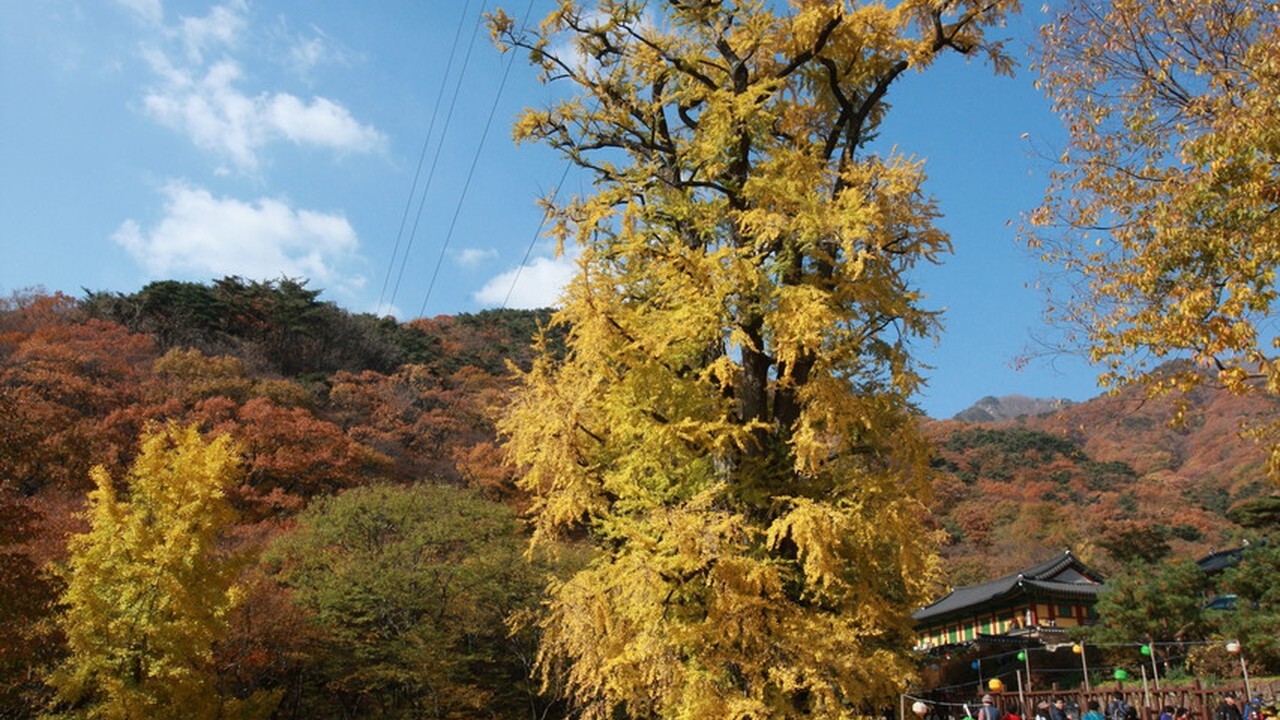
In fall, the yellow leaves on the trees and the leaves on the ground form a scene. Because the appearance of the leaves is different when they are fully colored and after they have fallen in the wind, the scenery varies greatly depending on the date of visit even in late fall.
Legends That Lengthen the Tree’s Story
There are two legends about the ginkgo tree. The story goes that it was planted by Prince Maui, the son of King Gyeongsun, the last king of Silla, on his way to Geumgangsan Mountain, and that it grew in the spot where the cane used by Master Uisang was placed.
Rather than deciding which story is true, it is natural to read it as a trace showing how people who looked at the old tree understood the time. There is also a story that the temple survived during a fire, and this tree remained as a symbol of Yongmunsa Temple.
The old legend and the current protective fence are placed in one place. There is also a reason why you should look at it from a certain distance instead of getting close and touching it.
When the Yongmunsa Ginkgo Tree Turns Yellow
The timing of the fall foliage of the ginkgo trees at Yongmunsa Temple is not the same every year. The Korea Tourism Organization’s latest fall introduction shows the golden scenery of November, but the dates of past photos should not be taken as the peak time of the year. Before departure, it is necessary to check recent photos and on-site notices of Yongmunsa Temple or Yangpyeong-gun. Korea Tourism Organization Yongmunsa Temple Fall Introduction
A temple is a religious space. During the fall foliage season, there may be a lot of people trying to take pictures with one tree in the background, but it is best to keep a protective fence and a distance that does not block the route of worship. The attitude of reducing the traces left on other people and trees is more important than the time spent.
Operating hours and admission conditions may change. Be sure to check the operating hours and parking conditions in the official information just before your visit.
Autumn at Yongmunsa Temple takes on a different pace from a trip that quickly sweeps across the entire mountain. It is time to walk along the path next to the valley, look up at the height of a tree between low pavilions, and slowly examine the colors created by fallen leaves.
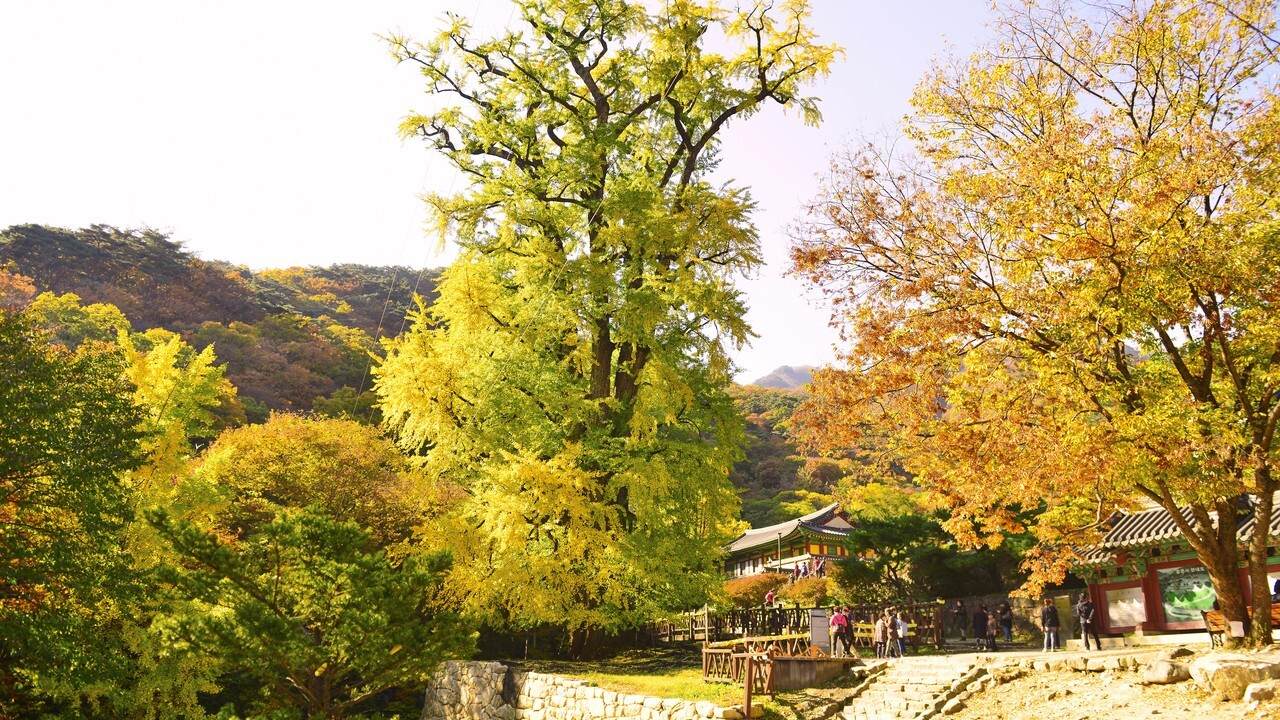
For one vivid autumn scene in Yangpyeong, set aside time for this mountain temple in late fall. The ancient ginkgo becomes a measure of the season just before its yellow leaves begin to fall.
If you want to compare a walking tour centered around ginkgo trees with other autumn scenery, you can also check out the Namhansanseong autumn drive, which follows the fortress walls and winding paths.
You May Also Like
by Google Adsense