Bijarim Forest in Jeju: Ancient Trees, Red Paths and Volcanic Stone Walls
Bijarim Forest in Gujwa, Jeju, where old evergreen trees meet red woodland paths and dark stone walls
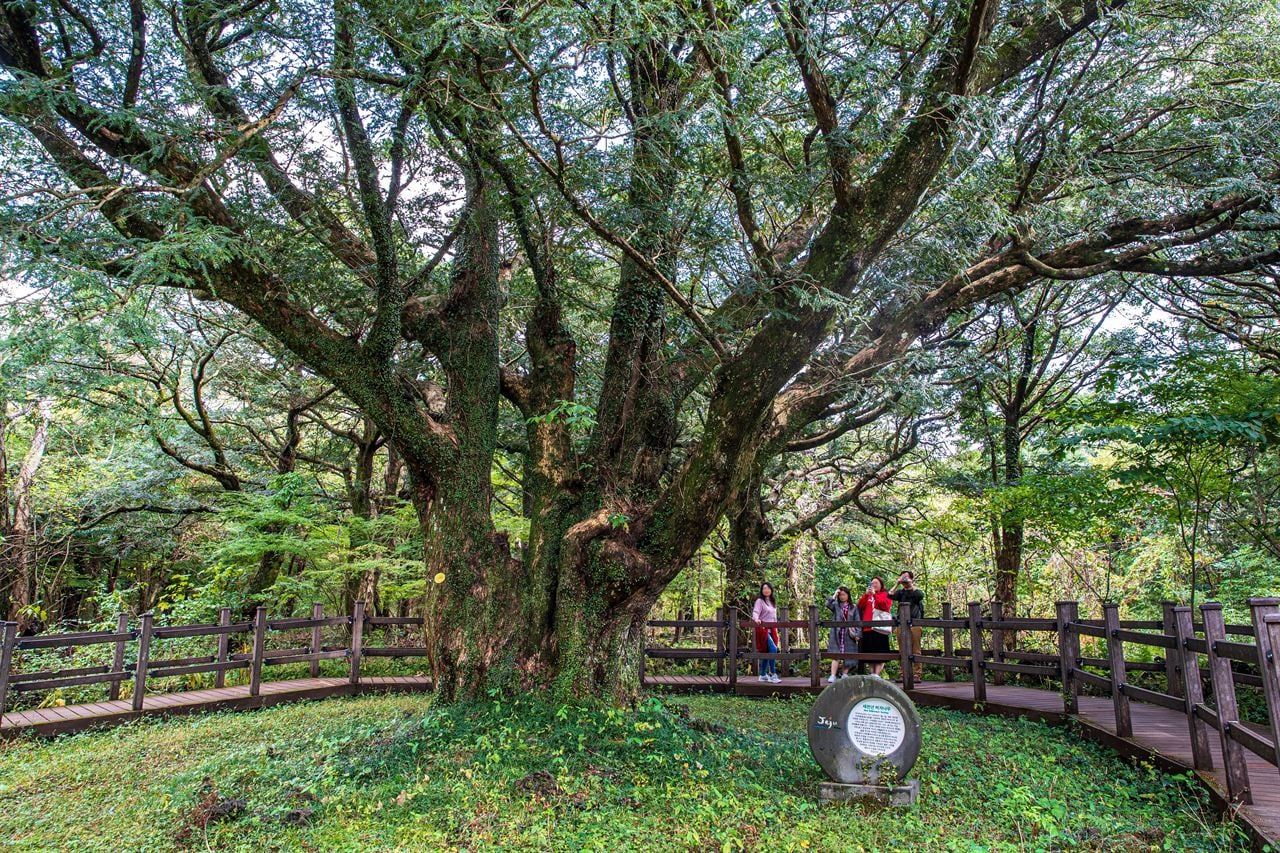
A broad trunk divides into several substantial branches close to the ground. They spread across the view, overlapping nearby trees, while the vegetation and viewing deck below give a sense of scale.
Bijarim Forest is a protected grove in Pyeongdae-ri, Gujwa, on Jeju Island. Jeju Tourism Organization describes trees between 500 and 800 years old growing here. Their age becomes more tangible in the thickness of a trunk and the direction of its branches.
For a late-fall outing, the forest offers more to consider than a particular leaf color. Evergreen trees, dark stone walls and red paths give the landscape several distinct layers. Looking between them reveals variety within a largely green setting.
Start with the name stone at Bijarim Forest
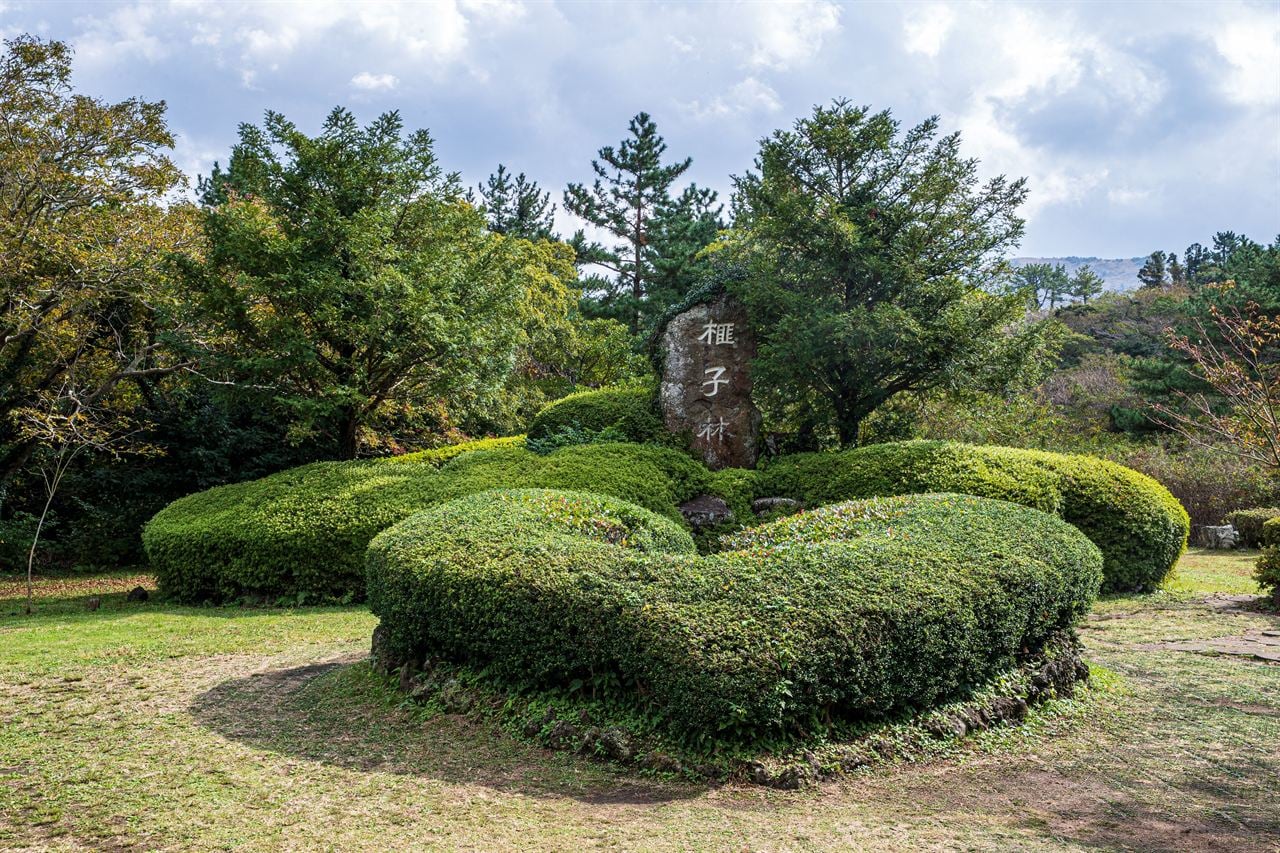
An inscribed stone rises among low planting at the entrance. The relatively open ground contrasts with the overlapping branches farther inside, introducing a gradual change in the density of the landscape.
Bijarim takes its name from the bija trees growing in the grove. Its location in Pyeongdae-ri, Gujwa, distinguishes it from other Jeju forests and from the road called Bijarim-ro. The similar names should not be treated as interchangeable destinations.
The entrance establishes the place before the individual trees take over the view. Moving from a small name marker to the scale of a large trunk gives the walk a clear visual progression without requiring a long list of landmarks.
Follow the contrast between red paths and dark stones
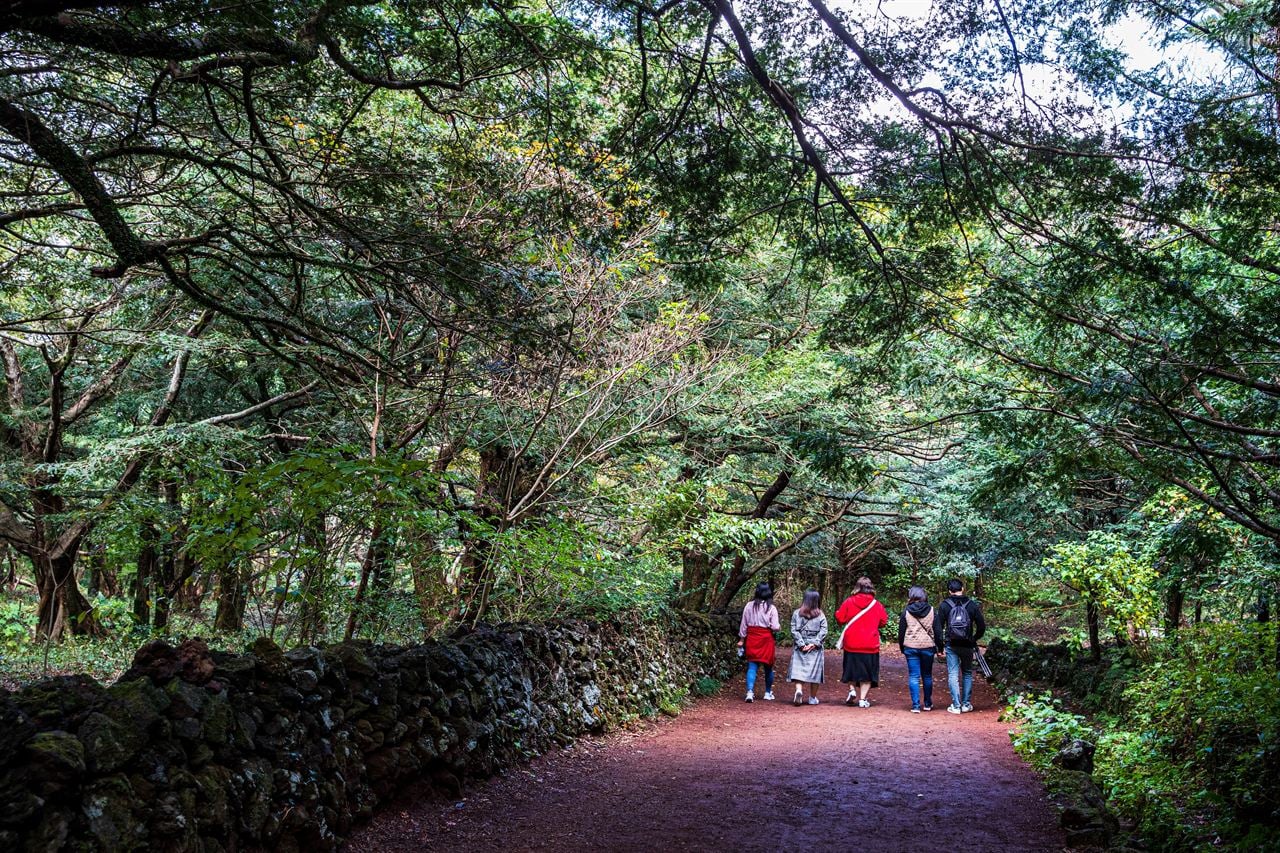
A reddish path runs beside a low dark wall. Overhead, branches cross in several directions, creating a more irregular pattern above the clearer line at ground level.
Jeju Tourism Organization describes volcanic-scoria paths in the forest and notes that surfaces differ between sections. The materials underfoot contribute to the setting as much as the trees themselves. Red ground, dark stones and green foliage make the separate layers easy to notice.
An unfamiliar tree species need not prevent a close reading of the place. The height of a wall, the space between trunks and the canopy above are visible relationships. They give the walk structure before individual plant names become important.
Notice the boundary between the path and the growing forest
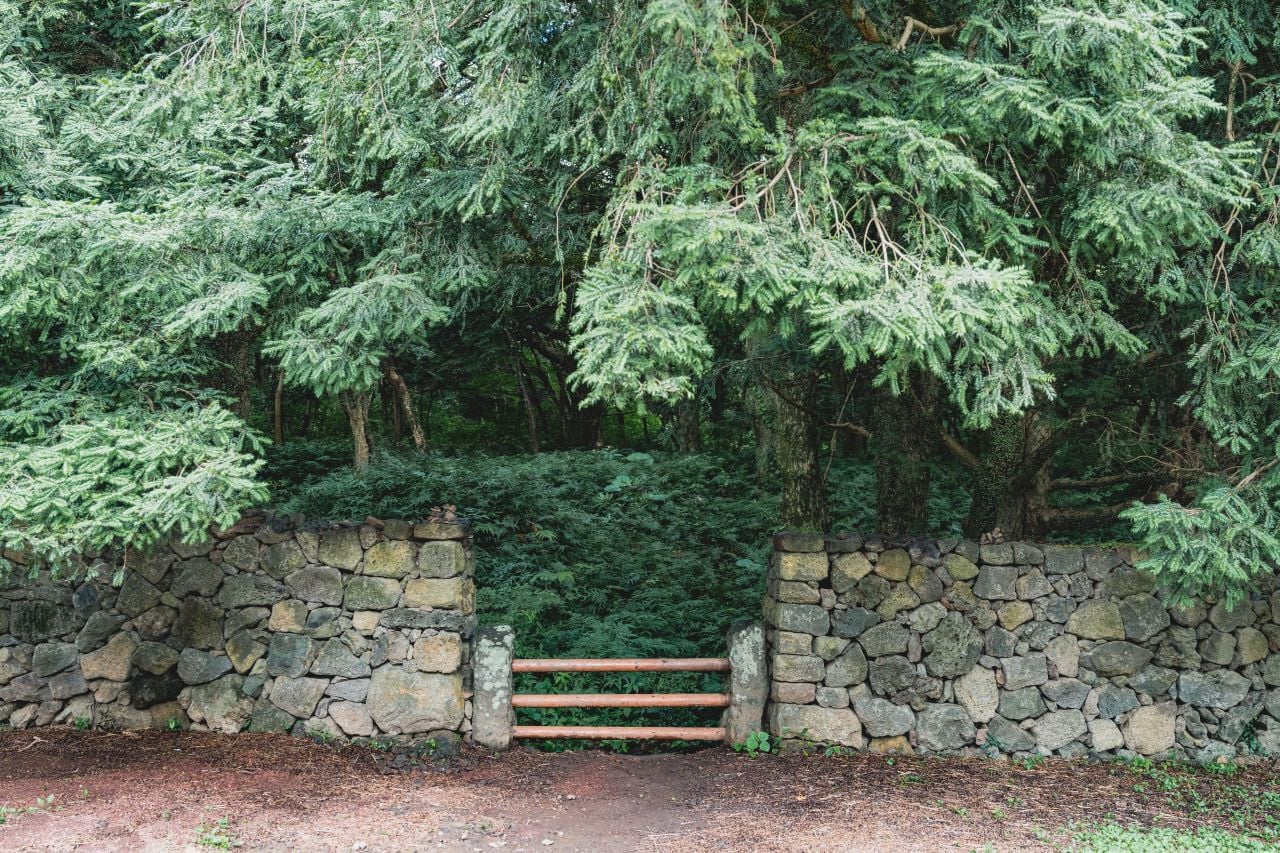
A wooden rail spans an opening in a low stone wall. Behind it, smaller plants and trunks continue into a darker layer of woodland. The forest is not limited to the few large trees that first draw attention.
Bijarim is a protected place where old trees grow in their wider setting. Walls and rails help make the relationship between the walking route and the vegetation visible. They are part of how the grove is experienced, as well as part of the composition of the view.
Looking from the path allows time to appreciate branching forms without needing to touch a tree or enter the ground around it. Beyond an individual trunk, successive layers of growth give the grove more depth than a single landmark photograph can convey.
Use the light to see the woodland in layers
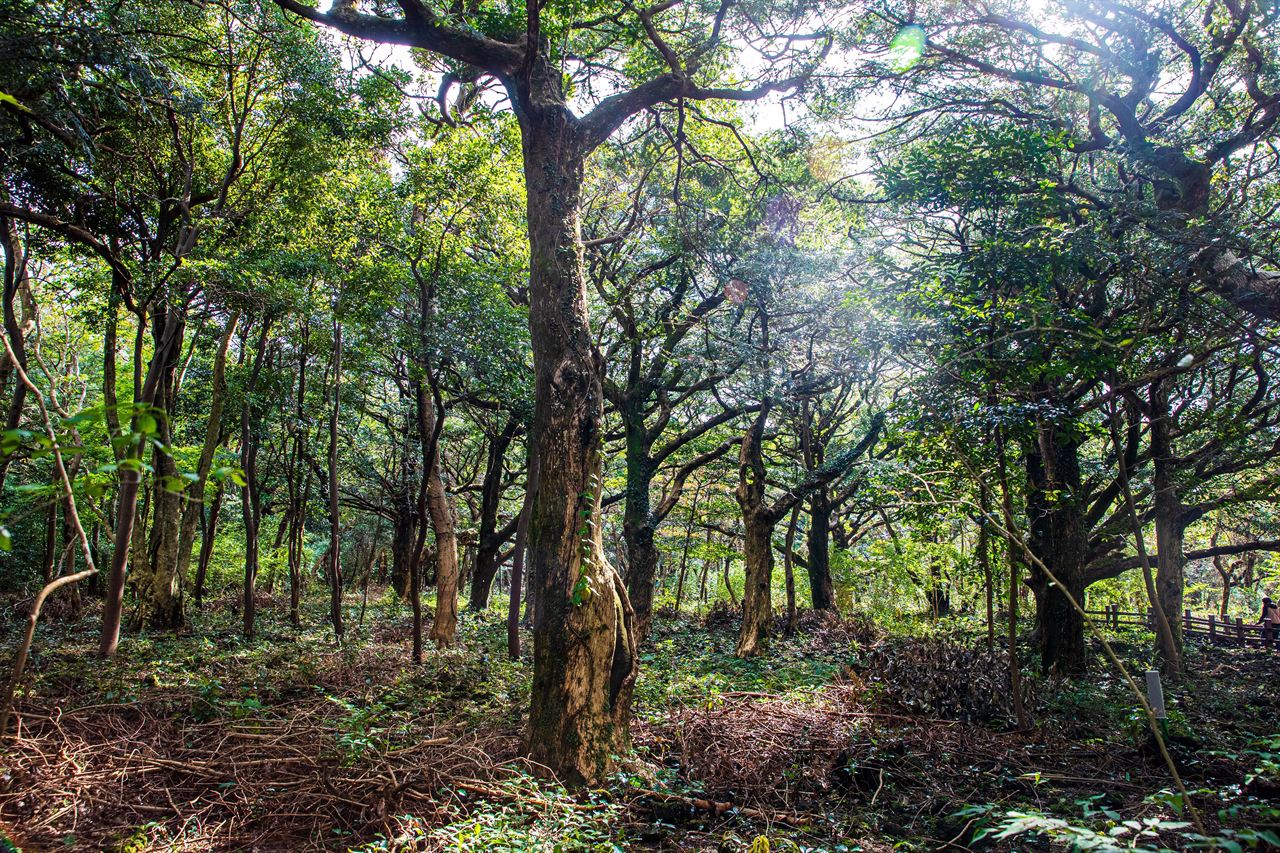
Leaves brighten where light reaches them, while a closer trunk remains dark. What initially appears to be a continuous green mass separates into different distances and textures.
A large old tree is only part of that scene. Smaller trunks and the branches behind it fill the surrounding spaces. Looking sideways after a broad frontal view reveals a different arrangement without moving to another attraction.
The grove’s name emphasizes the bija trees, but Jeju Tourism Organization also describes other tree species growing here. Noticing the mixture keeps the forest from becoming a single repeated image. Its variety lies in different heights, surfaces and patterns of light.
Let the curving path connect the close views
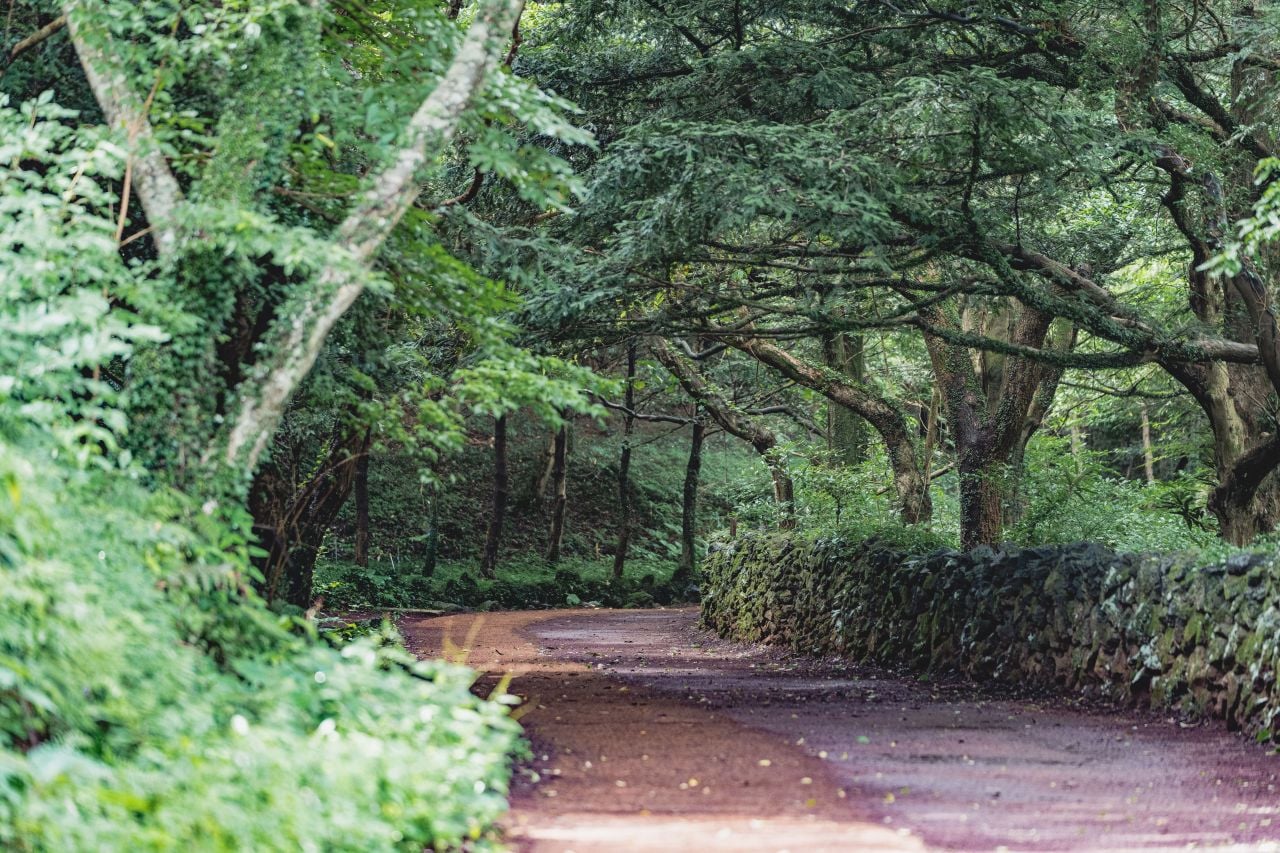
The path bends gently between trees, with a wall following its direction. Branches conceal part of the next view, unlike the more open ground near the entrance.
Jeju Tourism Organization’s Bijarim guide introduces both the old trees and the forest paths. A close look at one substantial trunk gains context from the changing density of the woodland around it.
For another view of southern Korea’s greenery, Wando Arboretum combines warm-temperate forest with greenhouse displays. Bijarim’s particular focus is the relationship between its old trees, volcanic-island materials and the paths through the grove.
Bijarim Forest suits a late-fall walk for travelers interested in tree forms and woodland layers. Its appeal comes from trunks, stones and branches surrounding the route, rather than a promise of red leaves on a particular date.
You May Also Like
by Google Adsense