Wando Arboretum: Evergreen Forest Walks, Palm Trees and a Subtropical Greenhouse
Wando Arboretum in southwestern Korea, where a warm-temperate forest meets greenhouse palms, cacti and waterside paths
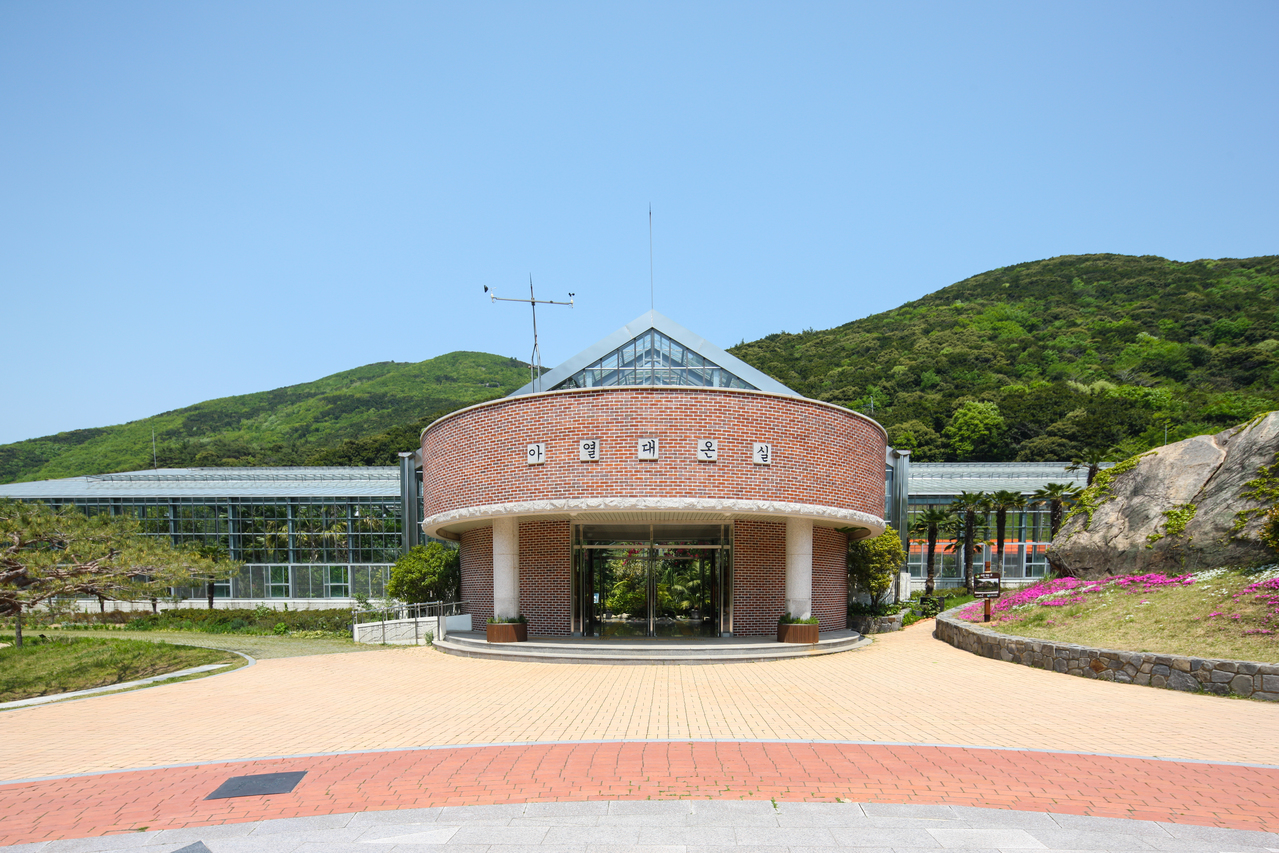
A rounded brick entrance stands in front of a long glass roof. Beyond it, woodland covers the slope. Outdoor trees and plants beneath glass create two distinct green landscapes within the same arboretum.
Wando Arboretum, in southwestern Korea, centers on the conservation and study of warm-temperate forest plants. Its evergreen woodland and subtropical greenhouse invite different ways of looking: at the layers of a whole forest, then at the shape of an individual leaf or stem.
For a late-fall trip, that offers an alternative to planning everything around peak red foliage. The interest here is the contrast between forest and greenhouse, with greenery, plant forms and changing scale giving the visit its structure.
Begin with the woodland paths at Wando Arboretum
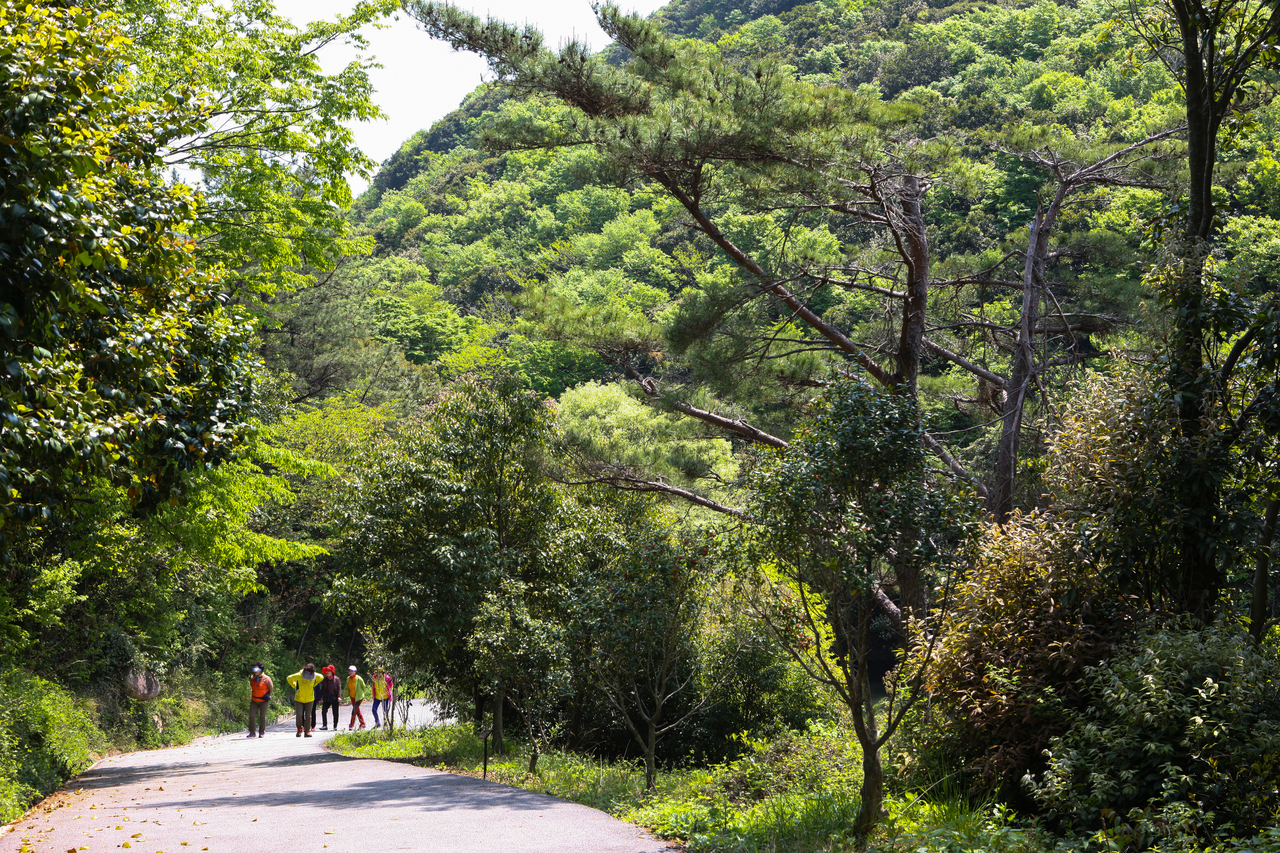
Trees of different heights gather on both sides of a broad path. Upright trunks meet spreading pine branches, while closer leaves form a lower layer beside the route. The path provides a clear line through a much more irregular landscape.
Warm-temperate forest develops in a relatively mild climate. Evergreen broadleaf trees, an important part of Wando’s setting, retain their leaves as the seasons change. That gives the woodland a different character from a mountain chosen mainly for a brief period of red foliage.
Looking at the forest in layers helps make those differences visible. A high canopy, a nearby cluster of leaves and the light reaching the ground occupy separate parts of the same view. Even within a largely green scene, texture and brightness create variety.
Move beneath glass for a closer view of leaves
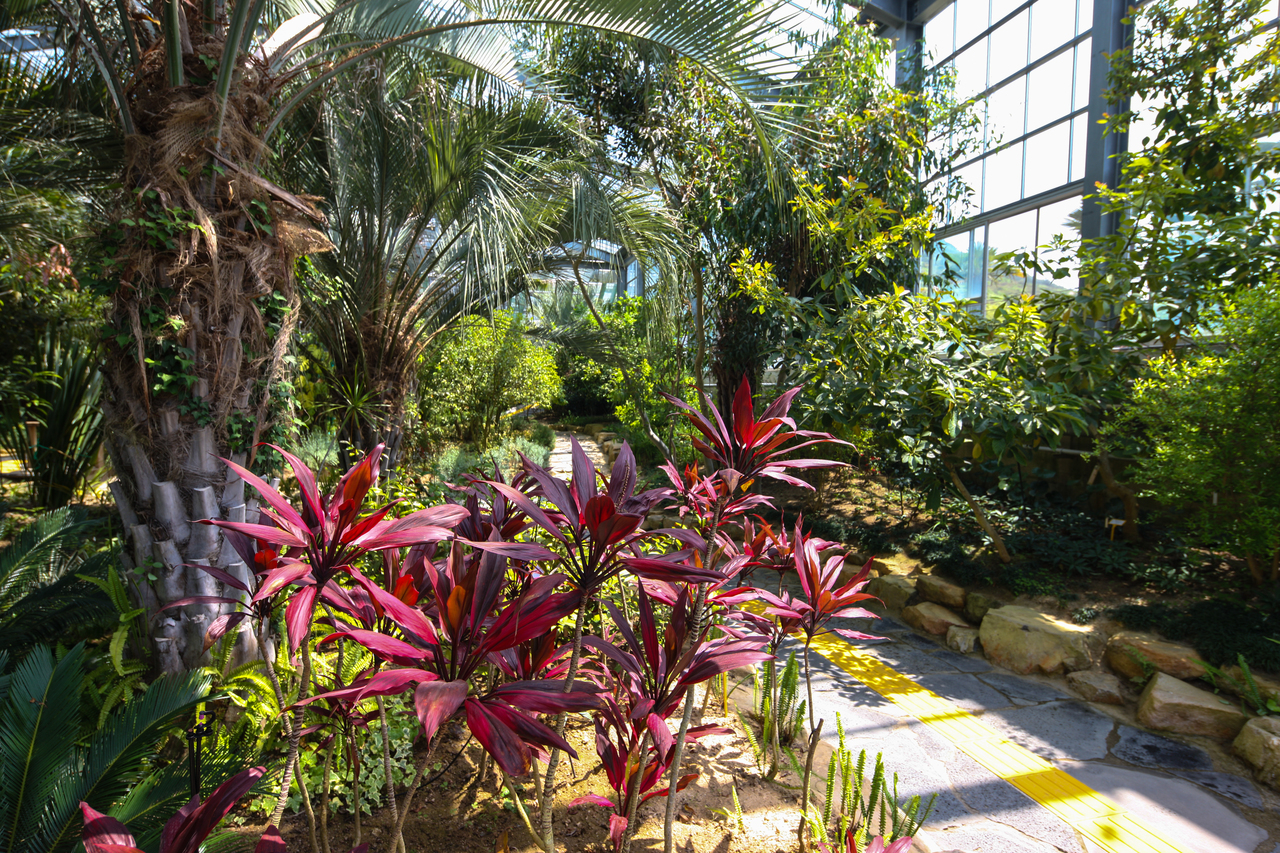
Inside the greenhouse, broad and narrow leaves overlap at close range. Red-toned foliage and brighter greens break up the planting, with a passage running between them. The scale changes from a wooded slope to individual plants beside the visitor.
The arboretum’s official facility guide describes tropical and subtropical plants as well as cacti in the greenhouse. This is a cultivated display environment, offering another perspective after the outdoor woodland. The two settings belong to the same visit but tell different botanical stories.
Leaves provide plenty to notice without relying on a particular flowering season. Edges, veins and the spacing between plants bring detail into focus. The broad green mass of the forest becomes a collection of distinct surfaces and forms.
Look up at the palms and the greenhouse structure
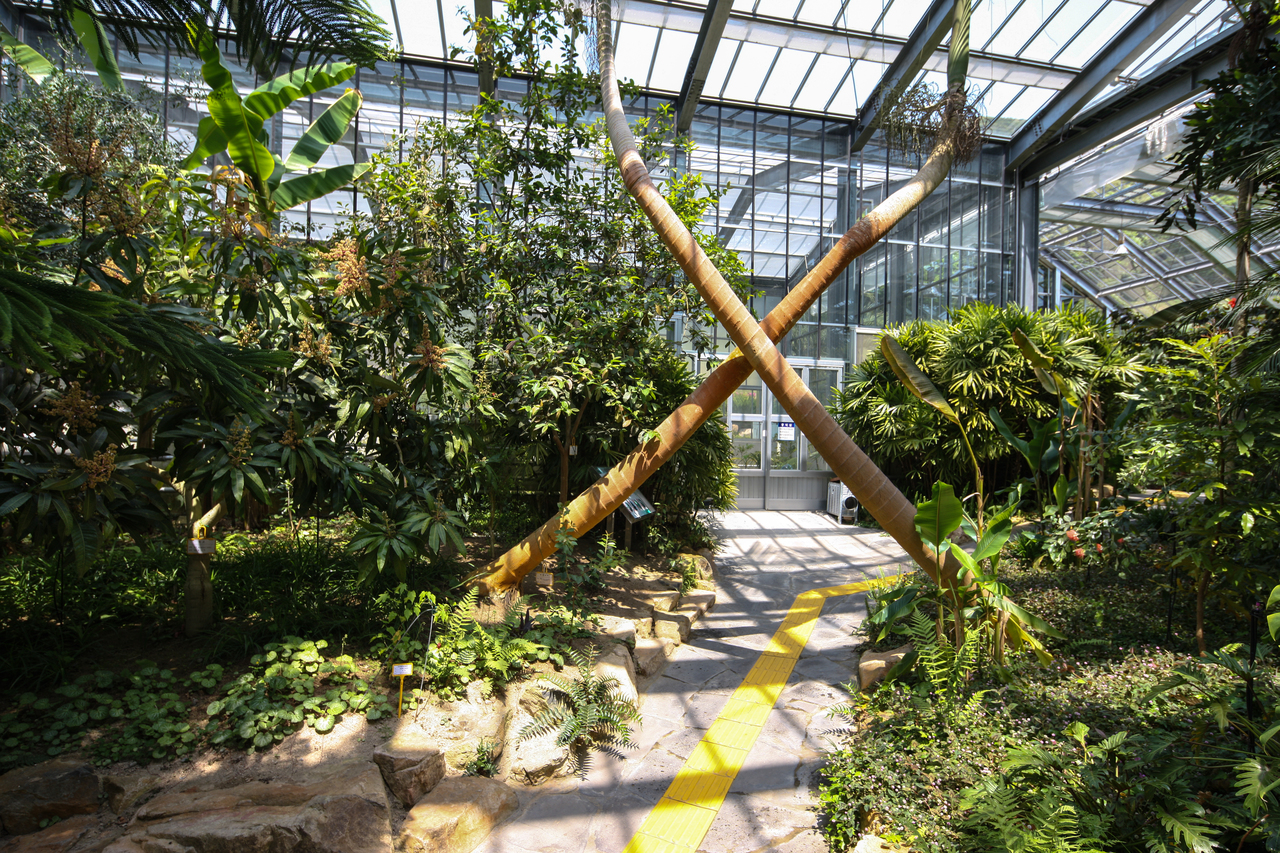
Long trunks cross beneath the glass, drawing attention upward. The growth of the plants and the straight framework of the greenhouse appear together, making the height of the room part of the scene.
A greenhouse is experienced vertically as well as along its pathways. Looking from lower foliage toward a palm crown changes the view more than simply moving to the next display. The roof gives a visible measure of the space the plants occupy.
That contrast also connects back to the forest outside. There, many branches combine into a canopy. Here, a few tall forms stand out beneath a built structure. Alternating between close leaves and the roofline makes the difference particularly clear.
Notice shapes and shadows in the cactus display
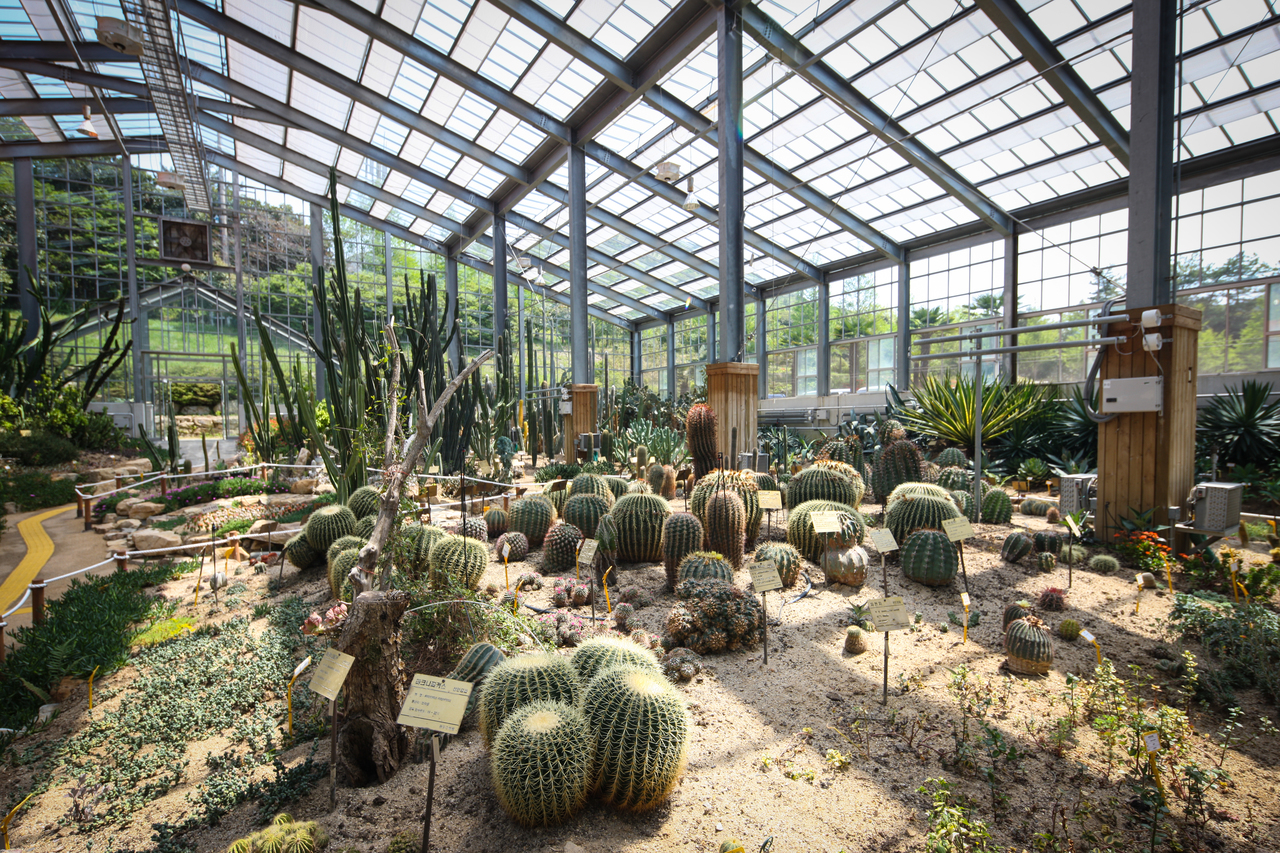
Rounded cacti sit in front of taller, column-shaped forms. Against the pale planting surface, their outlines become easy to distinguish. Spines and shadows introduce finer patterns than the broad leaves elsewhere in the greenhouse.
The change in texture gives this section a different rhythm. Rather than following overlapping foliage, the eye moves from one defined shape to another. A low sphere, a narrow upright stem and the regular lines of the glass roof offer contrasting structures.
The displays are best appreciated from the designated path, with space between visitors and the plants. Their forms are worth examining without touching or waiting for flowers. The interest lies in how each plant occupies its patch of light and ground.
Return outdoors to the waterside pavilion
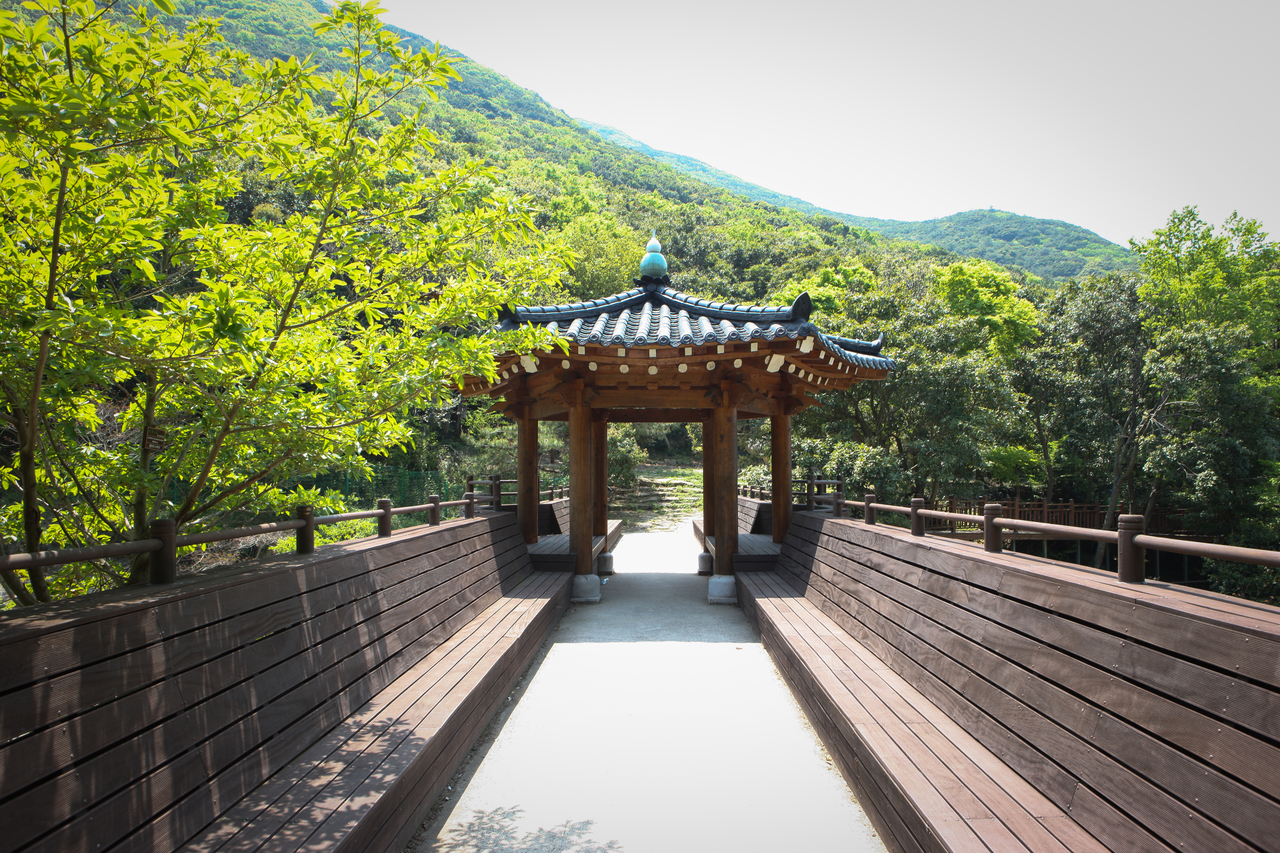
A wooden deck leads toward a small pavilion, with trees enclosing the view. After the greenhouse’s close plant details, the scene expands again to include a path, water and the surrounding woodland.
Wando Arboretum’s official facility guide brings together the greenhouse, forest museum, woodland paths and waterside spaces. The arboretum can be understood as a landscape with several kinds of observation, rather than only an indoor collection.
For a different relationship between vegetation and water in southwestern Korea, Suncheon Bay Wetland’s reed paths and waterways offer another setting. Wando’s distinctive contrast is between evergreen woodland and plants displayed beneath glass.
Wando Arboretum suits a late-fall outing for travelers interested in greenery as well as leaf color. Forest layers, palm trunks, cactus shapes and a quiet waterside structure provide several ways to look at the season without depending on a promised foliage peak.
You May Also Like
by Google Adsense